Are Carbon Infrared Heaters Safe: Expert Safety Tips
Thinking about buying a carbon infrared heater? You might be wondering, Are Carbon Infrared Heaters Safe? Expert Local Safety Tips are crucial for everyone.
It can seem a bit tricky to figure out the best way to use them safely, especially when you’re just starting. Don’t worry, we’ll make it super simple. We’ll walk through everything you need to know, step by step, so you can enjoy your new heater with total peace of mind.
Let’s get started and find out how to keep your home warm and safe.
Understanding Carbon Infrared Heaters and Safety
Carbon infrared heaters are a popular choice for many homes because they heat objects directly rather than the air. This means they can warm up a room faster and more efficiently. However, like any heating appliance, safety is a top concern for homeowners.
People often ask, Are Carbon Infrared Heaters Safe? Expert Local Safety Tips are essential to ensure you’re using them correctly. This section will break down what makes these heaters work and why understanding their safety features is important for everyone.
How Carbon Infrared Heaters Work
Carbon infrared heaters produce infrared radiation, similar to the sun’s rays, which warms objects and people it touches. This is different from traditional convection heaters that warm the air. The infrared waves are a form of electromagnetic radiation.
They travel through the air and are absorbed by surfaces, including your skin. This absorption causes the surfaces to heat up.
The heating element in these heaters is usually a carbon fiber filament. Carbon fiber is chosen because it’s a strong and efficient material that can withstand high temperatures and emit infrared radiation effectively. When electricity passes through the carbon filament, it heats up and glows, emitting infrared waves.
These waves then spread out from the heater.
The intensity and wavelength of the infrared radiation depend on the temperature of the filament. Higher temperatures produce shorter, more intense waves, while lower temperatures produce longer, gentler waves. Most carbon infrared heaters are designed to emit wavelengths that are easily absorbed by the human body, providing a comfortable and pleasant warmth.
This direct heating method also means that drafts or air movement don’t significantly affect the warmth you feel.
The Science Behind Infrared Heat
Infrared radiation is part of the electromagnetic spectrum, falling between visible light and microwaves. It’s a form of energy that travels in waves. When these waves strike an object, their energy is absorbed, causing the object’s molecules to vibrate faster.
This increased molecular motion is what we perceive as heat.
The key benefit of infrared heating is its efficiency. Because it heats objects directly, there’s less heat loss to the surrounding air compared to convection heating. Imagine standing in the sun on a cool day; you feel warm even if the air temperature is low.
Infrared heaters work on a similar principle.
There are different types of infrared radiation, categorized by their wavelength: near-infrared, mid-infrared, and far-infrared. Near-infrared has the shortest wavelength and the highest energy, producing a strong, penetrating heat. Mid-infrared has a longer wavelength and provides a gentler, more widespread warmth.
Far-infrared has the longest wavelength and is often used for therapeutic purposes, providing deep, soothing heat without feeling intense.
Carbon infrared heaters typically emit a combination of these wavelengths, with a focus on mid and far-infrared to provide comfortable, radiant warmth. The specific mix of wavelengths can influence the type of warmth experienced, from a more intense heat to a softer, more ambient feel. Understanding this science helps explain why these heaters are perceived as different from other heating methods.
Common Safety Concerns Addressed
When people ask, “Are Carbon Infrared Heaters Safe?” they often worry about a few key things. One common concern is the risk of burns. Since the heating element gets very hot, it’s important to keep a safe distance.
Most good quality heaters have protective grilles to prevent direct contact with the hot surfaces.
Another worry is fire hazards. Like any electrical appliance, faulty wiring or improper use can lead to fires. This is why using certified products and following manufacturer guidelines is so important.
Overheating is also a possibility if the heater is placed too close to flammable materials like curtains or furniture. Proper ventilation and clearance are vital.
Electrical safety is paramount. Ensure the heater is plugged into a properly grounded outlet and that the cord is not damaged. Avoid using extension cords if possible, as they can sometimes overheat.
If you notice any strange smells, sounds, or sparks, unplug the heater immediately and have it checked by a professional.
Finally, some people wonder about the effect of infrared radiation on health. Scientific studies have generally shown that the infrared radiation emitted by these heaters is safe for humans. It’s the same kind of radiation we get from the sun, but without the harmful UV rays.
However, it’s always a good idea to avoid staring directly at the glowing elements for extended periods, as this can be uncomfortable for the eyes.

Ensuring Safe Operation of Your Heater
Knowing how your carbon infrared heater works is the first step. The next important part is learning how to operate it safely every day. This involves simple checks and mindful placement of the appliance.
We will go over the best practices to make sure your heater is always working in a way that keeps your home and family protected. Following these tips is key to answering the question, Are Carbon Infrared Heaters Safe? Expert Local Safety Tips are designed to be easy to follow.
Proper Placement and Clearance
Where you put your carbon infrared heater makes a big difference in its safety. Always place the heater on a stable, level surface. This prevents it from tipping over, which could be a fire hazard or cause damage.
Ensure there’s enough space around the heater for air to circulate freely. Manufacturers usually recommend a minimum clearance, often around 1 to 3 feet, from walls, furniture, curtains, and any other combustible materials.
Avoid placing the heater in areas where it could be bumped or knocked over, such as high-traffic walkways or near doors that open frequently. If you have pets or small children, be extra cautious about placement. Some heaters come with tip-over protection, which automatically shuts off the unit if it falls.
Even with this feature, it’s best to position it where it’s unlikely to be disturbed.
Never cover the heater with blankets, clothing, or any other materials. This blocks airflow and can cause the heater to overheat, posing a significant fire risk. The protective grilles are there to prevent burns, but they can still get hot.
Be mindful of this, especially if children or pets are around.
Consider the room layout. If the heater is intended to warm a specific area, position it to direct the infrared rays effectively. However, always prioritize safety clearances over optimal heat direction.
A safe heater is more valuable than a slightly warmer spot that carries risks.
Electrical Safety Checks
Electrical safety is a critical aspect of using any heating appliance, including carbon infrared heaters. Always plug the heater directly into a wall outlet. Avoid using extension cords or multi-plug adapters whenever possible.
Extension cords can sometimes be rated for lower amperage than the heater requires, leading to overheating and potential fire hazards. If an extension cord is absolutely necessary, ensure it is heavy-duty and properly rated for the heater’s wattage.
Regularly inspect the power cord for any signs of damage, such as fraying, cuts, or exposed wires. If you find any damage, do not use the heater. Contact the manufacturer or a qualified electrician for repair or replacement.
A damaged cord is a serious electrical hazard.
Ensure the wall outlet you are using is in good condition and properly grounded. Older homes may have outdated wiring that is not equipped to handle the power demands of modern heating appliances. If you are unsure about the condition of your home’s electrical system, it’s wise to have it inspected by a qualified electrician.
Never touch the heater or its plug with wet hands. Water conducts electricity, and this can lead to electric shock. Keep the heater away from water sources like sinks, bathtubs, or swimming pools.
Also, be sure to turn off and unplug the heater when it is not in use, or when cleaning or moving it.
Using the Heater Responsibly
Responsible use of your carbon infrared heater involves simple habits that ensure both effectiveness and safety. Always follow the manufacturer’s instructions provided with your specific model. These instructions contain important details about operation, maintenance, and safety warnings tailored to that particular heater.
Do not leave the heater running unattended for extended periods, especially if you are sleeping or leaving the house. While many modern heaters have safety features, it’s always best practice to supervise their operation. This allows you to quickly address any unusual smells, sounds, or signs of overheating.
When the heater is not in use, always turn it off and unplug it from the power outlet. This prevents accidental activation and saves energy. Store the heater in a safe place, away from moisture and out of reach of children and pets, if possible.
Ensure it is cool before storing.
Avoid modifications. Never try to alter the heater’s design or internal components. If a part of the heater seems to be malfunctioning, it’s better to seek professional repair or consider replacing the unit rather than attempting a DIY fix.
For example, if the thermostat seems inaccurate, do not try to adjust it yourself; consult the manual or the manufacturer.
Regularly clean the heater according to the manufacturer’s recommendations to prevent dust buildup, which can sometimes contribute to overheating or reduced efficiency. A clean heater operates more safely and effectively.
Tips for Local Safety and Maintenance
Ensuring your carbon infrared heater is safe goes beyond just plugging it in and turning it on. Local safety considerations and regular maintenance play a huge role. By taking a few extra steps, you can feel confident that your heater is a reliable source of warmth.
These Expert Local Safety Tips are crucial for long-term peace of mind.
Regular Inspection and Cleaning
Just like any appliance in your home, your carbon infrared heater needs regular checks to keep it working well and safely. This includes looking for any visible damage to the casing or power cord. A quick visual inspection before each use can catch minor issues before they become major problems.
Dust and debris can accumulate on the heating elements and grilles. This buildup can reduce the heater’s efficiency and, more importantly, create a fire hazard if it overheats. Most manufacturers recommend cleaning the heater with a soft, dry cloth.
Always make sure the heater is unplugged and completely cool before you start cleaning. Never use water or harsh cleaning chemicals, as these can damage the heater and create electrical hazards.
Pay close attention to the protective grille. Ensure it is clean and free of obstructions. If the grille appears bent or damaged, it may not offer adequate protection against accidental contact with the hot elements.
In such cases, it’s best to have the heater repaired or replaced.
Some models may have filters that need cleaning or replacement. Check your user manual for specific instructions on filter maintenance. A clean heater operates more safely and is more likely to last longer.
Think of it like an oil change for your car; regular maintenance keeps everything running smoothly.
When to Call a Professional
While most users can handle basic safety checks and cleaning, there are times when it’s essential to call in a professional. If you notice any unusual smells, such as a burning odor, or if the heater starts making strange noises like buzzing or sparking, unplug it immediately and do not use it. These are signs of a potential electrical issue or internal malfunction that could be dangerous.
If the power cord is damaged, and you’re not comfortable or equipped to replace it safely, a qualified electrician can handle this task. Likewise, if the heater consistently fails to heat up, overheats, or its controls seem to be malfunctioning, professional diagnostics are recommended. Do not attempt to repair the internal components yourself unless you have specific expertise.
Faulty thermostats or safety shut-off mechanisms can be particularly dangerous. If you suspect these are not working correctly, it’s crucial to have them checked. A professional can test these safety features to ensure they function as intended.
Trying to fix these yourself can lead to serious accidents.
Consider professional servicing, especially if the heater is used frequently or is several years old. A technician can perform a more thorough inspection, identifying potential problems that might not be obvious to the average user. They can ensure all safety features are operational and the heater is in optimal condition for safe use.
Understanding Local Regulations and Certifications
In some areas, there might be local regulations or building codes that apply to the use of portable heating appliances, including carbon infrared heaters. While less common for small, portable units, it’s always good practice to be aware of any specific rules in your town or city, especially if you are installing a permanent or semi-permanent heating solution. This ensures you are compliant with local safety standards.
When purchasing a carbon infrared heater, look for certification marks from recognized safety organizations. In North America, this typically includes certifications like UL (Underwriters Laboratories) or ETL (Intertek). These certifications indicate that the product has been tested and meets specific safety standards.
A heater without such certifications may not have undergone rigorous safety testing.
These certifications are a good indicator that the manufacturer has followed safety protocols during the design and manufacturing process. For example, UL certification means the product has been evaluated for fire, electric shock, and other potential hazards. This is a key factor when answering the question, Are Carbon Infrared Heaters Safe?
Expert Local Safety Tips often include checking for these marks.
Reading reviews from other consumers in your region can sometimes provide insights into local experiences or any specific safety concerns that have arisen. While not a substitute for official certifications, community feedback can offer practical perspectives on how a heater performs and if any common issues have been reported. Always prioritize products from reputable brands that clearly display their safety certifications.
Comparing Carbon Infrared Heaters to Other Heating Methods
When you’re deciding on a heating solution, it’s helpful to compare different types of heaters. Carbon infrared heaters have their own unique set of advantages and disadvantages compared to other common heating methods. This comparison will help you understand where they fit in and how their safety profile stacks up.
Understanding these differences can really help answer the question, Are Carbon Infrared Heaters Safe? Expert Local Safety Tips highlight these comparisons.
Carbon Infrared vs. Convection Heaters
Convection heaters, like space heaters that use fans and coils, primarily heat the air in a room. They work by circulating warm air, which then heats up objects and people. This can lead to uneven heating, with the air near the ceiling often being warmer than the air near the floor.
It can also make the air feel dry.
Carbon infrared heaters, on the other hand, use radiant heat. They warm objects and people directly. This means the warmth is felt almost instantly when you are in the path of the infrared rays.
It’s more like standing in sunlight. This direct heating is often perceived as more comfortable and efficient because it doesn’t rely on heating the entire volume of air.
In terms of safety, both types of heaters require careful handling. Convection heaters can sometimes blow dust around, which might be a concern for people with allergies or asthma. Infrared heaters don’t circulate air in the same way, which can be an advantage in such cases.
However, the heating elements in infrared heaters can get hotter, so clearance is extremely important.
The energy efficiency can vary. Infrared heaters are often more efficient for zone heating, where you want to warm a specific area. Convection heaters might be better for heating an entire room evenly, but they can also lose heat faster as warm air escapes.
Here’s a quick look:
| Feature | Carbon Infrared Heater | Convection Heater |
|---|---|---|
| Heating Method | Radiant Heat (heats objects) | Convection Heat (heats air) |
| Warmth Speed | Instant direct warmth | Slower, circulates air |
| Air Quality | Less air movement, less dust circulated | Can circulate dust and allergens |
| Primary Safety Concern | Surface burns, fire hazard if too close to combustibles | Overheating if blocked, tip-over risk |
| Efficiency | Good for zone heating | Good for heating entire rooms |
Carbon Infrared vs. Ceramic Heaters
Ceramic heaters are another popular type of portable heater. They use a ceramic element that heats up and then distributes the heat, often with a fan. Like convection heaters, they primarily heat the air.
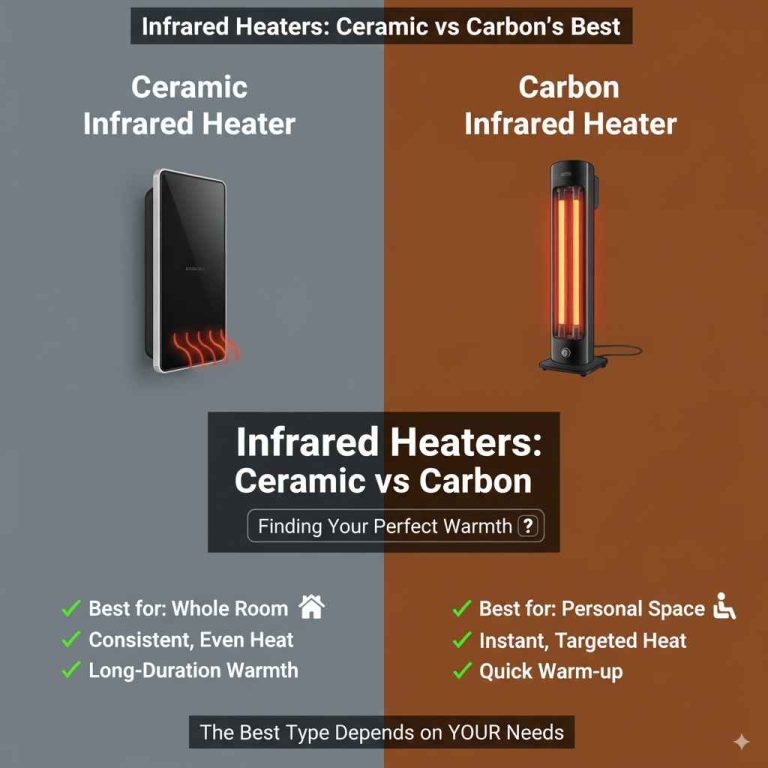
Carbon infrared heaters provide radiant heat, directly warming surfaces and people. Ceramic heaters provide more of a dispersed, warm air feeling. This means that with a ceramic heater, you feel the warmth as the air heats up around you.
With an infrared heater, you feel the warmth on your skin almost immediately when you’re in its range.
When it comes to safety, both require attention. Ceramic heaters can also get quite hot, and their fans can blow dust around. The hot surfaces of ceramic elements need clearance from flammable materials, similar to infrared heaters.
The main difference in safety often comes down to their design. Many ceramic heaters have safety features like automatic shut-off if they overheat or are tipped over. Carbon infrared heaters also come with these features, but the radiant heat can feel more intense on the skin, so being aware of distance is key.
Energy efficiency is also a consideration. Infrared heaters can be more energy-efficient for targeted heating because they warm people directly. Ceramic heaters might use more energy to heat the air in a large space.
For personal comfort in a small area, infrared is often preferred.
Consider this comparison:
- Heating Feel: Carbon infrared offers a penetrating warmth on surfaces and skin. Ceramic offers a more ambient, warm air feeling.
- Speed of Warmth: Infrared is quick for direct warmth. Ceramic takes a bit longer as it heats the air first.
- Dust Circulation: Both can circulate dust, though fan-assisted ceramic heaters might do so more noticeably.
- Burn Risk: Both have hot surfaces. Carbon infrared elements can get very hot, requiring good clearance.
Carbon Infrared vs. Halogen Heaters
Halogen heaters are a type of radiant heater that uses halogen bulbs to produce heat and light. They are known for providing quick, intense heat. You can often see the glowing bulbs, which emit a bright red or orange light.
Carbon infrared heaters also provide radiant heat, but they typically use carbon fiber elements that are less visible and emit a gentler, more widespread warmth. Halogen heaters tend to provide a more focused beam of heat, making them effective for smaller areas or for quickly warming a person.
Safety-wise, both require careful placement. The bulbs in halogen heaters can get extremely hot and are a significant fire risk if too close to flammable materials. They can also shatter if exposed to moisture or a sudden temperature change.
Carbon infrared heaters, while also hot, often have a more diffused heat output and can be designed with safety grilles that offer better protection against accidental contact than some simpler halogen heater designs. However, the intensity of heat from a halogen bulb means you need to maintain a substantial distance.
In terms of energy use, halogen heaters are very efficient at converting electricity into heat, but because their heat is so focused, they might not be the best for heating a whole room. Carbon infrared heaters offer a good balance of efficiency and broader radiant coverage.
Key differences include:
- Light Emission: Halogen heaters produce visible light; carbon infrared heaters often produce less visible light or a softer glow.
- Heat Intensity: Halogen heat is often more intense and focused. Carbon infrared heat is typically more diffused and gentle.
- Element Type: Halogen uses bulbs; carbon infrared uses carbon fiber filaments.
- Safety Considerations: Both require clearance, but the very intense heat and fragile nature of halogen bulbs can be a greater concern for some.
Living Safely with Your Carbon Infrared Heater
Making sure your carbon infrared heater is safe to use is about more than just following the manual; it’s about adopting habits that protect your home and family. Expert Local Safety Tips empower you to enjoy the benefits of this heating technology without worry. We’ll cover what to do day-to-day and how to ensure your heater is always a reliable and secure part of your comfort.
Everyday Safety Habits
Developing simple daily habits makes a big difference in safely using your carbon infrared heater. Always ensure the heater is unplugged before you clean it or move it. This simple step prevents accidental shocks or short circuits.
When you’re finished using it for the day, make it a routine to turn it off and unplug it from the wall socket.
Keep the area around the heater clear. This means no toys, papers, clothing, or furniture too close. A good rule of thumb is to keep at least 3 feet of space around the unit.
This allows for proper airflow and prevents heat from building up against nearby objects, which could start a fire.
Teach everyone in your household about heater safety. Make sure children understand not to touch the heater, even when it’s off, as it can remain warm for some time. Explain why keeping things away from it is important.
This shared understanding helps prevent accidents.
Listen to your heater. If it starts making unusual noises or smells, turn it off immediately and unplug it. Don’t try to guess what’s wrong; this is a sign that it needs attention.
It’s better to be safe and get it checked out.
By integrating these simple practices into your daily routine, you ensure your heater remains a safe and effective way to stay warm. This approach directly addresses the core question of whether Are Carbon Infrared Heaters Safe? Expert Local Safety Tips confirm they are, with proper use.
Dealing with Humidity and Water
Water and electrical appliances do not mix, and this is especially true for heating devices like carbon infrared heaters. It’s absolutely critical to keep your heater away from any sources of moisture. This includes bathrooms, laundry rooms with washing machines or dryers, and even kitchens near sinks or dishwashers.
The risk of electric shock is very high if water comes into contact with the heater’s electrical components.
Never operate your heater in damp or wet conditions. Even if the heater itself is not directly splashed, high humidity can sometimes affect electrical components over time. If you accidentally spill a liquid near the heater, immediately unplug it and let it dry out completely for at least 24 hours before attempting to use it again.
It’s often best to have it inspected by a professional to ensure no internal damage has occurred.
Some people might think a heater can help dry clothes. This is a dangerous practice. Placing clothing or other fabrics over or too close to the heater to dry them can block airflow, cause overheating, and lead to fires.
Always use appropriate drying methods for laundry, such as a clothes dryer or drying rack in a well-ventilated area away from heat sources.
The moisture in the air can also affect how effectively the heater works. While infrared heat itself doesn’t rely on air for transfer, excessive humidity can sometimes impact the longevity of electronic components. Ensure the room where you use the heater is reasonably dry and well-ventilated for optimal and safe performance.
Travel and Storage Safety
If you plan to move your carbon infrared heater to different rooms or take it with you when traveling, safety is paramount. Before unplugging the heater, always turn it off and allow it to cool down completely. This prevents damage from sudden temperature changes and reduces the risk of burns when handling it.
When unplugging, always grip the plug itself, not the cord. Pulling on the cord can damage the wires inside and create a safety hazard. Inspect the cord and plug for any damage before each use, especially if you’ve recently moved or stored the heater.
For storage, clean the heater as recommended by the manufacturer. Store it in its original packaging if possible, or in a sturdy box that will protect it from dust and physical damage. Keep it in a dry, safe location, away from extreme temperatures or moisture.
Garages or basements can be suitable if they are dry.
If you are traveling with the heater, ensure it is packed securely to prevent damage during transit. Check the voltage and plug type compatibility if traveling internationally. Using a heater with the wrong voltage can damage the unit and be a fire risk.
Always adhere to any airline or transportation regulations regarding portable heating devices.

Frequently Asked Questions
Question: Are carbon infrared heaters safe for children and pets?
Answer: Carbon infrared heaters can be safe for children and pets if used with caution. Always keep them out of reach, maintain recommended clearance from flammable materials and living beings, and never leave them unattended. Consider models with tip-over protection and protective grilles.
Teach children to avoid touching the heater.
Question: Can I leave my carbon infrared heater on overnight?
Answer: While many modern carbon infrared heaters have safety features like automatic shut-off, it is generally not recommended to leave any portable heater running unattended overnight. For maximum safety, turn it off and unplug it before going to sleep.
Question: Do carbon infrared heaters use a lot of electricity?
Answer: Carbon infrared heaters vary in wattage, typically ranging from 400 to 1500 watts. Their energy consumption depends on their size and the setting you use. They can be more energy-efficient for heating specific areas than for heating entire rooms, compared to some other heater types.
Question: What should I do if my carbon infrared heater smells funny?
Answer: If your carbon infrared heater emits an unusual smell, such as burning or chemical odors, turn it off immediately and unplug it from the power outlet. Do not use the heater. Contact the manufacturer or a qualified technician for an inspection, as it could indicate a safety issue.
Question: Are the infrared rays from these heaters harmful?
Answer: The infrared rays emitted by carbon infrared heaters are generally considered safe for humans and pets. They are similar to the heat we feel from the sun but without the harmful UV radiation. Avoid staring directly into the glowing elements for extended periods, as this can be uncomfortable for your eyes.
Conclusion
Are Carbon Infrared Heaters Safe? Expert Local Safety Tips confirm that these heaters are safe when used correctly. Proper placement, regular cleaning, and electrical awareness are key.
Always follow manufacturer guidelines and seek professional help if needed. Enjoy comfortable warmth with confidence.