Why Your Water Heater Takes Too Long to Heat
If your water heater takes too long to heat, first separate tank recovery from fixture delivery: hot water that returns in under 20 minutes points to a plumbing or mixing problem, not a failed heater. Miss that split and you may replace the wrong part while the real fault keeps wasting time and money. This guide shows how to test recovery, check fixtures and mixing valves, and narrow the problem to the heater, pipes, or controls.
Why does hot water arrive late?
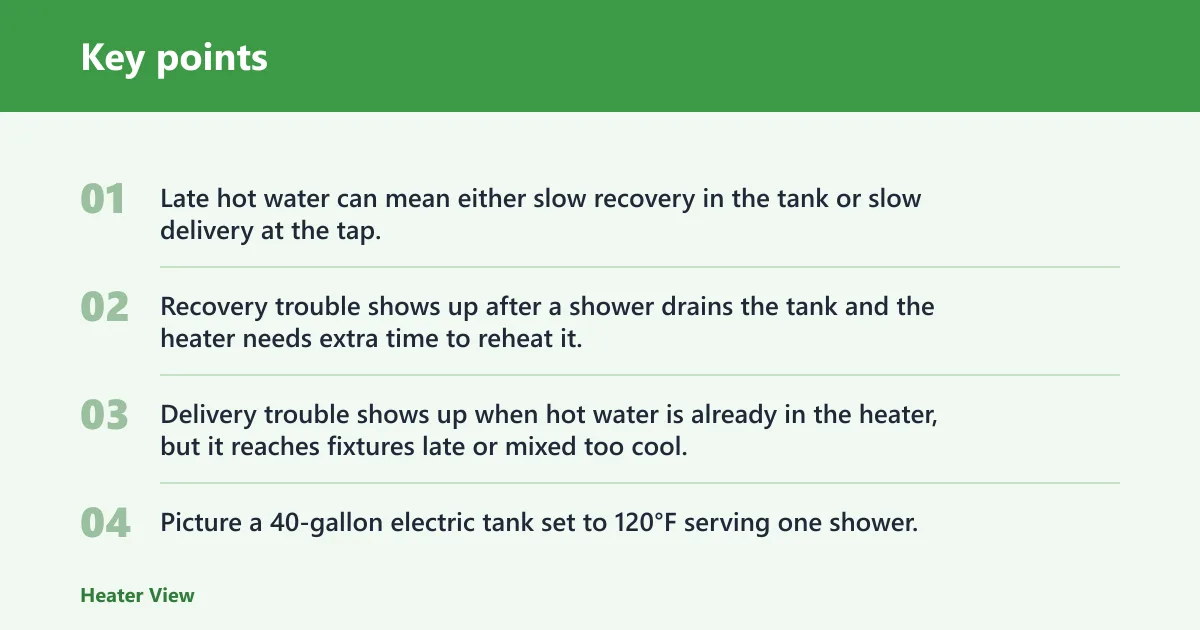
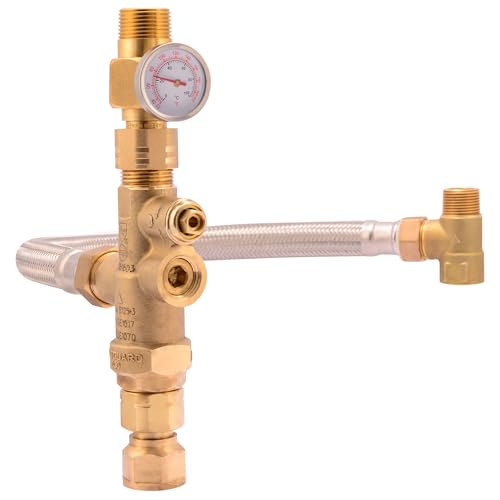

Late hot water can mean either slow recovery in the tank or slow delivery at the tap. Recovery trouble shows up after a shower drains the tank and the heater needs extra time to reheat it. Delivery trouble shows up when hot water is already in the heater, but it reaches fixtures late or mixed too cool.
What normal delay feels like
A standard gas tank usually starts sending warmer water back within a short shower interval, while an electric tank often recovers more slowly because it heats in stages. If hot water returns at the faucet within about 10 to 20 minutes after heavy use, the heater may be working and the complaint may point to pipe length, a mixing valve, or a large fixture load.
Picture a 40-gallon electric tank set to 120°F serving one shower. If the first shower is hot but the second one 15 minutes later is weak, that pattern points more toward recovery limits than a cold-water leak in the house lines. If the sink gets hot right away but the shower stays lukewarm for a long run, the issue often sits at the fixture or the mixing valve.
When the symptom points to the tank
Slow recovery is more likely when the water cools after normal use, the tank outlet stays hot, and the delay repeats no matter which fixture you open. Slow delivery is more likely when only one branch is late, or when hot water arrives quickly at some fixtures but not others. That split matters because the fix may be inside the heater, not in the piping.
Hot water diagnosis matrix
This matrix helps separate symptom pattern from likely cause before you buy parts. Start with the pattern that matches what you see at the tap, then move to the first check listed.
| Symptom | Likely cause | Applicable heater type | First check | Tool needed | DIY or call a pro |
|---|---|---|---|---|---|
| Hot water is late at every fixture, but the tank recovers after a normal draw | Long pipe run, mixing valve issue, or fixture cross-connection | Tank or tankless | Compare hot at a nearby sink to a far shower | Thermometer, stopwatch | DIY if you can isolate fixtures; call a pro for hidden cross-connections |
| Water is hot, then turns cool after 5 to 15 minutes of use | Dip tube crack or tank size mismatch | Tank | Check whether hot water fades faster at showers than faucets | None, then flashlight | Call a pro if the dip tube may need replacement |
| Recovery slows after heavy use, but first draw is hot | Weak element, burned-out thermostat, or sediment at tank bottom | Electric tank | Verify setpoint and element operation | Multimeter | DIY only if power can be shut off and panels are accessible; otherwise call a pro |
| Recovery is slow and the burner cycles poorly or not at all | Igniter failure, weak flame, or gas supply problem | Gas tank | Watch for ignition, flame shape, and burner cycling | Flashlight | Call a pro |
| Hot water runs out early, especially during back-to-back showers | Demand exceeds tank size or flow rate is too high | Tank | Compare fixture gallons per minute to tank size | Bucket, timer | DIY for demand check; pro if resizing or piping changes are needed |
| Water gets too hot, then cools, then overshoots again | Thermostat control fault or mixing valve problem | Electric or gas tank | Check setpoint and outlet temperature | Thermometer, multimeter | Call a pro if the temperature and pressure relief valve has lifted or leaks |
Thermostat and element problems
Many residential tanks are set around 120°F, though some users set them a bit higher for longer runs. On electric models, the upper and lower thermostats work in sequence: the upper thermostat controls the upper element first, then hands off to the lower element once the top section is hot. If that handoff fails, recovery gets sluggish or uneven.
Upper and lower element roles
The upper element heats the top of the tank first so usable hot water reaches fixtures sooner. The lower element heats the rest of the stored water after the upper section is satisfied. Wattage varies by model, commonly around 4,500 watts on many residential units, so a failed element can leave the tank partially heated and make recovery feel much slower than expected.
-
Check the setpoint.
Turn off power at the breaker before removing access panels, then verify the thermostat setting is near 120°F unless the manufacturer or local code says otherwise. A setting that sits far below that can feel like slow heating even when the heater is working.
-
Test each element.
Use a multimeter to check continuity and compare readings against the maker’s specifications. A burned-out element usually shows no continuity or an open circuit, and the tank may produce lukewarm water, short draws, or a long wait after heavy use.
-
Inspect thermostat response.
Look for a thermostat that never clicks off, fails to energize one element, or produces a wide temperature swing. If the water runs far above setpoint or never reaches it, the thermostat may be stuck or out of calibration.
Signs of failure
On electric models, a failed upper element can make the tank seem dead because the top never heats enough to feed the lower section. A failed lower element often leaves the first draw hot but shortens the useful supply. If the upper thermostat fails, the lower part of the tank may stay cold even after the heater has run for a long time.
Can sediment make water heat slowly?
Yes. Sediment can collect at the bottom of the tank, where it acts like an insulating layer between the burner or element and the water. That cuts heat transfer, makes recovery slower, and can add popping or rumbling noises as trapped water flashes under the buildup.
Drain-and-flush maintenance
Draining and flushing can help when sediment is the main fault, especially in hard-water areas. If the drain water carries visible grit, flakes, or cloudy debris, the tank likely needs more than a quick rinse. Heavy sediment can also shorten tank life by keeping the bottom metal hotter and more stressed.
-
Shut off heat source.
Turn off power to an electric heater or set a gas control to pilot as directed by the manufacturer. Close the cold supply if needed, then attach a hose to the drain valve and route it to a safe drain point.
-
Flush until clear.
Open the drain and let several gallons out, then refill in short bursts until the discharge runs clearer. If sediment keeps returning quickly, the unit may need more frequent service than an occasional flush.
A common first-timer mistake is blaming slow recovery on age alone when the bottom of the tank is packed with debris. In hard-water homes, sediment buildup can show up sooner and can make a decent heater act weak long before the tank shell itself fails.
Why does hot water run out early?
Hot water can disappear early when the dip tube is cracked, the fixture demand is too high, or the tank is simply too small for the load. A broken dip tube can dump incoming cold water near the top of the tank, where it mixes with hot water and shortens the usable supply.
Dip tube failure and cold mixing
The dip tube should carry cold inlet water to the bottom of the tank. If it cracks or breaks, cold water can mix near the outlet and cool the water leaving the tank faster than normal. That failure often feels like good hot water at first, followed by a sudden drop during one shower.
Flow rate and fixture demand
Shower demand is usually higher than faucet demand, and two fixtures running at once can drain a tank fast even when the heater is fine. A showerhead near 2.5 gpm can empty usable hot water much faster than a hand-washing sink, and a 40-gallon tank may feel small if two showers run back to back.
Suppose a family notices the water is hot at the kitchen sink but fades during a 10-minute shower. If the heater is set to 120°F and the sink still stays hot, the problem may be the shower’s flow rate, not the burner or elements. If both fixtures fade at the same time, suspect a tank-side fault.
Gas burner, insulation, and standby loss
Gas models add a burner or igniter to the list of likely faults. If ignition is weak, delayed, or absent, the tank may recover slowly even though the thermostat is calling for heat. Burner flame quality matters too; a lazy yellow flame, frequent cycling, or sooting points to maintenance trouble or supply issues.
Ignition failure and flame quality
On a gas heater, listen for the ignite sequence and look for clean burner lighting. Repeated clicking without steady ignition, a flame that lifts or wavers, or a burner that shuts off too early can all leave the tank underheated. Those symptoms usually call for a technician because gas work carries safety risk.
Tank insulation and room temperature
Older units often lose more heat through the jacket and fittings, especially in cool basements or garages. That standby heat loss does not usually cause a long first recovery by itself, but it can make hot water fade sooner between uses and make the heater cycle more often than a newer, better-insulated tank.
Why is the water too hot?
Water that is too hot usually points to a thermostat problem, a control that sticks closed, or a mixing valve that is set too high or failed open. On electric units, one thermostat can hold the upper element on too long. On gas units, the control may overshoot and keep heating after the water has already reached the target temperature.
Temperature and pressure relief valve warnings
The temperature and pressure relief valve is a safety device, not a comfort control. If it leaks, spits, or lifts from overheating, treat the heater as unsafe until the cause is found. That valve is part of the code-related safety path, so a problem here changes the repair decision fast.
-
Measure outlet temperature.
Run hot water into a cup or bucket and check it with a thermometer. If the outlet is much higher than the setpoint, the control may be sticking, or the mixing valve may be out of range.
-
Inspect the relief valve.
Look for moisture, corrosion, or signs of recent discharge around the valve and discharge pipe. Any active leak, repeated lifting, or heat damage means the unit needs professional attention before more troubleshooting.
When should I call a plumber for a slow water heater?
Call a plumber when the heater shows gas ignition trouble, relief-valve leakage, repeated breaker trips, visible corrosion, or a suspected dip tube failure that cannot be confirmed safely. Call sooner if the unit is old enough that repair value is low, or if the tank itself shows rust at seams, the base, or the relief-valve outlet.
Slow heat is one problem. Unsafe heat is another. If the tank overheats, leaks around safety fittings, or produces water that swings from cold to scalding, stop treating it like a simple performance issue and move to a repair decision based on safety and age.
Frequently asked questions
Why does my water heater take so long to heat water?
Long heat time usually comes from one of two places: the tank is recovering slowly, or hot water is reaching fixtures slowly. Electric tanks point first to elements and thermostats; gas tanks point first to ignition, burner quality, or gas supply. If hot water returns within 10 to 20 minutes, check delivery before replacing parts.
Why is my water heater taking longer to get hot?
Longer warm-up can mean sediment at the tank bottom, a weak element, a thermostat that is not switching correctly, or a gas burner that is not firing well. It can also mean the demand is higher than the tank size or that a fixture is blending in cold water before the hot stream reaches you.
Can sediment make a water heater heat slowly?
Yes. Sediment blocks heat transfer at the bottom of the tank, so the heater works harder and takes longer to warm the stored water. Hard-water homes face this more often. A drain-and-flush can help if the buildup is light to moderate, but heavy buildup may need professional cleaning or tank replacement.
Does a bad thermostat cause slow water heating?
Yes. A thermostat that sticks, misreads temperature, or fails to switch the upper and lower elements in order can make an electric tank recover slowly or unevenly. Most residential setpoints sit near 120°F. If the water never reaches that range or swings far above it, test the control with a multimeter.
Why does hot water run out too soon?
Hot water can run out early because the tank is too small, the fixture demand is too high, or the dip tube has failed and is mixing cold water into the hot outlet. Back-to-back showers expose the problem fastest. If one fixture stays hot while another fades, the issue may sit in the branch piping or fixture.