Electric Baseboard Heaters Vs Convection: Essential Guide
Choosing between electric baseboard heaters and convection heaters boils down to your specific needs for warmth, energy use, and installation ease. Electric baseboard heaters offer simple zone control and consistent heat, while convection heaters provide faster, whole-room warmth. This guide will help you compare them to find the perfect fit for your home.
Welcome! Thinking about how to best keep your home cozy can sometimes feel a little overwhelming, especially when faced with different heating options. If you’re wondering about electric baseboard heaters versus convection heaters, you’re not alone. Many homeowners find themselves looking for clear answers to make the right choice. Don’t worry; we’re here to break it all down in a way that’s easy to understand. We’ll explore what makes each type tick, their pros and cons, and how to pick the one that’s just right for your comfort and your wallet. Let’s get your home warm and inviting!
Understanding Your Heating Options: Electric Baseboard Heaters vs. Convection
When we talk about heating a room, two common types of electric heaters often come up: electric baseboard heaters and convection heaters. While both use electricity to generate heat, they do it in different ways, leading to distinct heating experiences.
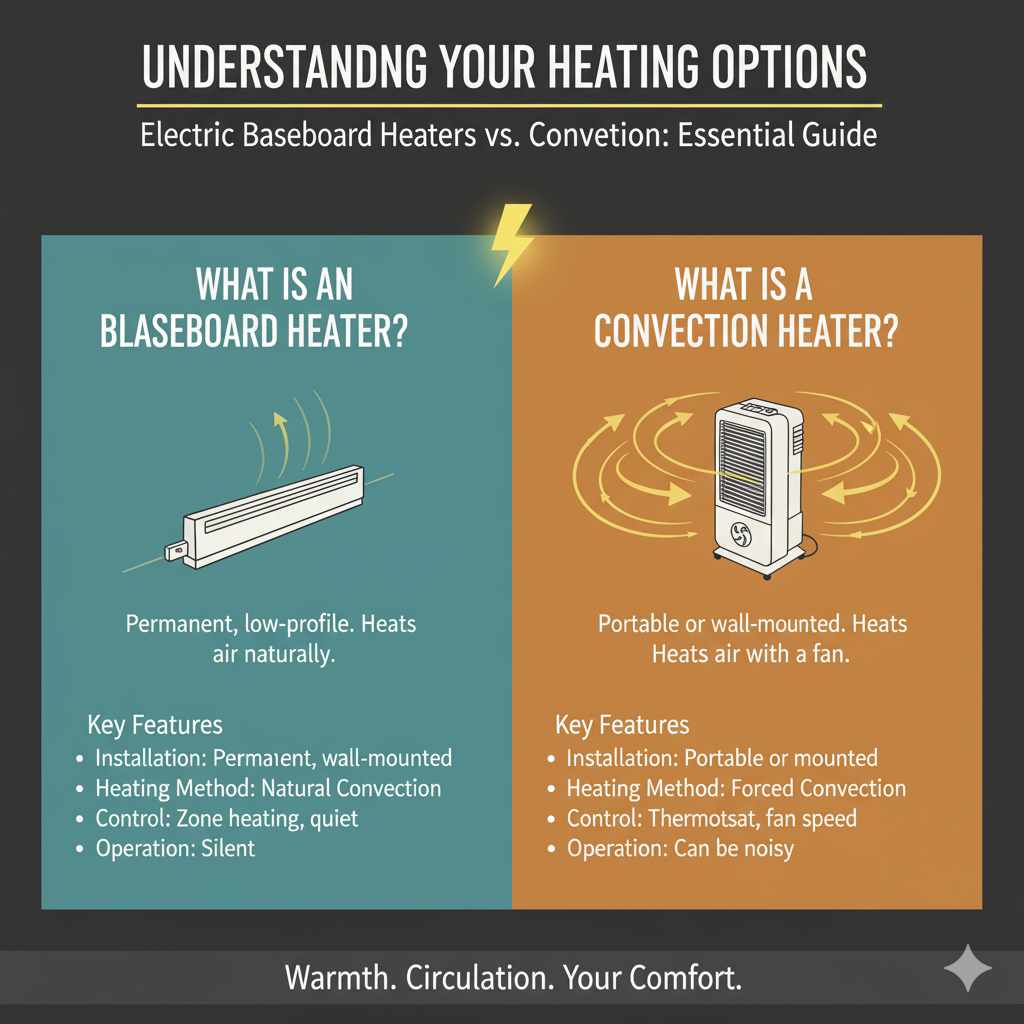
What is an Electric Baseboard Heater?
Electric baseboard heaters are long, slender units typically installed along the bottom of walls, just like their name suggests – along the baseboard. They work by drawing in cool air from the room, heating it with electric elements inside, and then releasing that warm air. This process often happens naturally as warm air rises and cooler air sinks, creating a gentle flow of heat.
How they work:
Inside a baseboard heater, electric resistance coils get hot when electricity flows through them. A metal finned tube surrounds these coils. As the coils heat up, they transfer heat to the fins. Cooler room air is drawn into the bottom of the unit. It passes over the hot fins, heats up significantly, and then rises out of the top of the heater, warming the room. This natural movement of air is called convection, so baseboard heaters are a type of convection heater, but they are designed for a specific, low-profile application.
Key Features of Electric Baseboard Heaters:
- Installation: Usually mounted permanently along walls.
- Heating Method: Primarily convection, with some radiant heat also emitted.
- Control: Each unit typically has its own built-in thermostat or can be connected to central thermostats. This allows for excellent zone heating, meaning you can control the temperature in individual rooms.
- Appearance: Designed to be unobtrusive, fitting into the room’s decor.
- Operation: Quiet operation as there are no fans involved in the basic models.
What is a Convection Heater?
Convection heaters are designed to heat a space quickly and efficiently by circulating air. They are available in various forms, including portable units with fans and larger, permanently installed units. The core principle is to heat air and then actively move it around the room.
How they work:
Convection heaters work by drawing cool air into their base. Inside, an electric heating element warms this air.
A fan then pushes the heated air out into the room, creating a quicker and more powerful circulation of warm air compared to passive convection from a baseboard heater. This rapid air movement helps to raise the temperature of an entire room relatively fast.
Key Features of Regular Convection Heaters (especially fan-powered portable ones):
- Installation: Many are portable, allowing you to move them where needed. Some are designed for wall mounting.
- Heating Method: Primarily forced convection with a fan.
- Control: Often come with adjustable thermostats and fan speed settings.
- Appearance: Varies widely, from compact portable units to larger upright models.
- Operation: Can generate some noise due to the fan.
Electric Baseboard Heaters vs. Convection: A Detailed Comparison
Now that we know the basics, let’s dive deeper into how electric baseboard heaters and convection heaters stack up against each other in key areas. This will help you see where each one shines and where it might fall short for your home heating needs.
Heating Speed and Evenness
Electric Baseboard Heaters: These heaters provide a more gentle and consistent heat. Because they rely on natural convection (warm air rising), it can take a little longer for a room to reach the desired temperature. However, once warm, the heat is usually spread quite evenly throughout the space, providing a comfortable, steady warmth without drafts.
Convection Heaters (Fan-Assisted): With their built-in fans actively pushing heated air, convection heaters can warm up a room much faster. This is great if you need to heat a space quickly. However, some people notice that the heat can be less even, with warmer spots near the heater and cooler spots further away, or they might feel a slight draft from the fan.
Energy Efficiency and Costs
This is a big one for any homeowner! Both types of heaters are technically 100% efficient in converting electricity to heat. This means every kilowatt-hour (kWh) of electricity they consume is turned into heat. The real difference in energy cost comes down to how they heat and how you use them.
Electric Baseboard Heaters: Because they heat passively and slowly, they can be very efficient for maintaining a temperature in a well-insulated room that doesn’t need rapid heating. Their advantage lies in zone control. If you can set back the temperature in unused rooms, you significantly save energy. A smart thermostat, like some models offered by Energy.gov’s thermostat recommendations, can further optimize this. The upfront cost of installation for electric baseboard heaters can be higher due to professional wiring needs.
Convection Heaters (Fan-Assisted): Their faster heating can be efficient if you only need heat for short periods in a specific room. However, if a fan is constantly running to maintain a higher temperature, it can use more electricity over time compared to a baseboard heater that just cycles its heating element. Portable convection heaters have a lower upfront cost but require you to be mindful of their placement and usage to avoid excessive energy consumption.
Installation
Electric Baseboard Heaters: These usually require professional installation. They are permanently mounted to walls and need to be hardwired into your home’s electrical system. This can be a significant factor in the overall cost and effort involved. However, once installed, they are a permanent fixture.
Convection Heaters (Fan-Assisted): Many convection heaters, especially portable units, are plug-and-play. You simply plug them into a standard electrical outlet. This makes them incredibly easy to set up and move around as needed. Some models are designed for wall mounting, which might require more involved installation similar to baseboard heaters but often with simpler wiring.
Comfort and Noise Level
Electric Baseboard Heaters: They are known for their quiet operation. Since they don’t have fans, they are ideal for bedrooms or quiet living areas where noise can be a disturbance. The heat they produce is often described as gentle and consistent.
Convection Heaters (Fan-Assisted): The fan in these heaters can produce a noticeable hum or whirring sound. While many modern fans are very quiet, it’s something to consider if you are sensitive to noise. The rapid air circulation can sometimes create a slight draft, which some people find less comfortable than the steady heat from baseboard units.
Zone Heating Capabilities
Electric Baseboard Heaters: This is where baseboard heaters truly excel. Because each unit can often have its own thermostat, you can precisely control the temperature in individual rooms. This is perfect for homes where different family members prefer different temperatures or for ensuring unused rooms are kept cooler, saving energy. This granular control is a significant benefit for personalized comfort and efficiency.
Convection Heaters (Fan-Assisted): While portable convection heaters allow you to heat a specific room when needed, they generally don’t offer the same fine-tuned, room-by-room control as a system of baseboard heaters. You can set the thermostat on the unit, but you’d need a separate unit for each room you want to control independently, which can become cumbersome and less integrated.
Pros and Cons at a Glance
To make your decision easier, here’s a quick breakdown of the advantages and disadvantages of each type:
Electric Baseboard Heaters
Pros:
- Excellent for zone heating – control each room’s temperature precisely.
- Quiet operation (no fans).
- Provides consistent, gentle heat without drafts.
- Unobtrusive, low-profile design.
- Safe when installed and used correctly (elements are enclosed).
- Long lifespan when properly maintained.
Cons:
- Higher upfront installation costs due to hardwiring.
- Can take longer to heat a room compared to fan-assisted units.
- Less effective for quickly heating very large or poorly insulated spaces.
- Surface can get hot to the touch; safety caution needed with young children or pets.
- Requires electrical work for installation.
Convection Heaters (Fan-Assisted)
Pros:
- Heats rooms quickly due to fan-forced air circulation.
- Many portable models are easy to set up and move (plug-and-play).
- Lower upfront cost for portable units.
- Good for supplemental heating in a specific area when needed.
- Some models offer different heat settings and fan speeds.
Cons:
- Fan can create noise.
- Can create a noticeable draft.
- Heat distribution may be less even than baseboard heaters.
- Can be less energy-efficient if used to constantly heat large spaces due to fan usage.
- Portable units require careful placement to avoid tripping hazards or fire risks.
- May need multiple units for whole-home heating, which can be inefficient.
Choosing the Right Heater for Your Home
The best heating solution for you really depends on your specific situation. Let’s consider some common scenarios.
When to Choose Electric Baseboard Heaters:
- You want precise temperature control in every room: If you have a home office that needs to be warmer than other rooms, or a guest room that you only heat occasionally, baseboard heaters with individual thermostats are ideal.
- Quiet operation is a priority: For bedrooms, nurseries, or living areas where peace and quiet are important, the silent operation of baseboard heaters is a major advantage.
- You’re building a new home or doing a major renovation: This is the best time to install baseboard heaters as the wiring can be integrated seamlessly.
- You need gentle, consistent background heat: If you prefer a steady, comfortable temperature that’s maintained without much fluctuation, baseboard heaters are excellent.
- Safety is a top concern, and you want enclosed elements: When properly installed, the heating elements in baseboard heaters are protected. Always check for manufacturer safety recommendations and consider installing heating safety tips from the NFPA.
When to Choose Convection Heaters (Fan-Assisted):
- You need supplemental heat quickly: If your main heating system struggles in a particular room or you need to warm up a space fast, a portable convection heater is a great option.
- You need a heating solution for a rental or a space where permanent installation isn’t possible: Portable convection heaters are perfect for renters or temporary heating needs.
- Budget for upfront costs is limited: Portable convection heaters are generally much cheaper to purchase than installing a whole system of baseboard heaters.
- You want to heat only one or two specific areas: If you just need to take the chill off a bathroom or a small den occasionally, a portable unit is practical.
- You don’t mind a bit of fan noise: If some background noise isn’t an issue for you, a convection heater will work well.
Installation and Safety Tips
No matter which type of heater you choose, proper installation and safe usage are paramount. Always follow the manufacturer’s guidelines and consult with a qualified professional when necessary.
Electric Baseboard Heater Installation and Safety:
- Professional Installation: It’s highly recommended to have electric baseboard heaters professionally installed. This ensures they are wired correctly and safely, meeting all local electrical codes. Incorrect wiring can lead to fire hazards or damage to your electrical system.
- Clearances: Always ensure there is adequate clearance around the heater. Keep furniture, curtains, rugs, and other combustible materials at least a few inches away from the unit. The Consumer Product Safety Commission frequently issues warnings about clearance issues leading to fires.
- Thermostat Placement: If your heaters are controlled by wall thermostats, ensure they are not placed in direct sunlight or near drafts, as this can lead to inaccurate temperature readings and inefficient operation.
- Cleaning: Regularly dust and vacuum around and inside the heater (when it’s turned off and cool) to prevent dust buildup, which can reduce efficiency and pose a fire risk.
Convection Heater Installation and Safety:
- Placement: For portable units, place them on a hard, level surface away from foot traffic to avoid tripping. Keep them at least a few feet away from flammable materials like bedding, curtains, or furniture. Never place them under electrical outlets or near water sources.
- Power Cords: Inspect the power cord regularly for any damage. Do not use extension cords unless absolutely necessary, and ensure they are rated for the heater’s wattage.
- Overheating Protection: Most modern convection heaters have built-in overheat protection and tip-over switches. Familiarize yourself with these safety features.
- Ventilation: Ensure the heater has adequate airflow. Don’t block the air intake or the outlet vents.
- Supervision: Never leave a portable heater running unattended, especially in a room with children or pets.
Table: Electric Baseboard vs. Convection Heater Quick Comparison
Here’s a simple table to help visualize the main differences:
| Feature | Electric Baseboard Heater | Convection Heater (Fan-Assisted) |
|---|---|---|
| Primary Heating Method | Natural Convection (passive) | Forced Convection (fan-powered) |
| Heating Speed | Slower, steady heat | Faster heat-up |
| Noise Level | Very quiet (no fan) | Can produce fan noise |
| Zone Heating | Excellent (individual room control) | Good for spot heating; integrated zone control is less common |
| Portability | Not portable (permanently installed) | Many models are portable |
| Installation Complexity | Requires professional hardwiring | Plug-and-play for portable units; some wall-mounts require wiring |
| Upfront Cost | Higher for full system installation | Lower for portable units |
| Energy Use Pattern | Efficient for maintaining steady temps; benefits from zone setbacks | Efficient for quick heating bursts; fan can increase energy use for continuous heating |

Frequently Asked Questions (FAQ)
Q1: Are electric baseboard heaters expensive to run?
A1: Electric baseboard heaters convert 100% of electricity to heat, but electricity can be more expensive per unit of energy than other fuel sources like natural gas. Their running cost depends heavily on electricity prices, how well-insulated your home is, and how you use zone heating. Using them with proper thermostat settings and for zone heating can make them more cost-effective.
Q2: Can I use a convection heater and an electric baseboard heater in the same room?
A2: You can, but it’s generally not necessary or efficient. If you have electric baseboard heaters installed, they are designed to be your primary heat source for that room. Adding a portable convection heater might lead to energy waste as both units try to manage the room temperature.
Q3: Which type of heater is better for a bathroom?
A3: For a bathroom, safety is key. Electric baseboard heaters are a good option for consistent warmth, provided they are installed correctly and kept clear of water. A wall-mounted fan-assisted convection heater designed for bathrooms can also provide quick heat. For any bathroom installation, ensure it complies with local electrical codes for wet areas.
Q4: How many electric baseboard heaters do I need for a room?
A4: The number of heaters depends on the room’s size, insulation, window area, climate, and ceiling height. A common guideline is to calculate the room’s volume in cubic feet and determine the required wattage per cubic foot. It’s best to consult with a heating professional for an accurate calculation for your specific home.
Q5: Are convection heaters safe to leave on all night?
A5: Most modern convection heaters have safety features like automatic shut-off if they overheat or are tipped over. However, it’s always a good practice to ensure the area around the heater is clear and to consult the manufacturer’s instructions. Never leave any portable appliance unattended for extended periods unless specifically designed for such use.
Q6: What is the lifespan of these heaters?
A6: Electric baseboard heaters, when properly installed and maintained, can last 20 to 30 years or even longer. Fan-assisted convection heaters, especially portable ones with moving parts like fans, might have a shorter lifespan, typically around 5 to 15 years, depending on usage and quality.
Conclusion
Navigating the world of home heating doesn’t have to be complicated. We’ve explored electric baseboard heaters and convection heaters, highlighting their distinct ways of warming your home. Electric baseboard heaters offer quiet, consistent, and precise zone heating, making them a great choice for comfortable, energy-conscious whole-home comfort, especially when installed as part of a renovation or new build. On the other hand, fan-assisted convection heaters are ideal for quick, portable warmth and supplemental heating needs, offering a more budget-friendly upfront solution for occasional use.
By understanding how each type works and considering your home’s specific needs—whether it’s consistent temperature, rapid heating, quiet operation, or ease of installation—you can confidently select the heating solution that will keep your home a warm and welcoming sanctuary. Prioritize safety, follow installation guidelines, and enjoy your cozy space!