Are Electric Garage Heaters Expensive To Run? Real Numbers
Lots of folks worry about the cost of keeping their garage warm. It makes sense. You want that nice, cozy space, but not at a crazy high electric bill.
That’s why people ask, “Are electric garage heaters expensive to run?” It’s a really common question, and the answer isn’t a simple yes or no. It depends on a few things.
We’ll look at how much power they use. We’ll also talk about how that power turns into money spent. You’ll learn what makes some heaters cost more than others.
We’ll help you understand what to expect. And, importantly, we’ll share ways to keep those running costs down. So, let’s dive in and get you the real numbers.
Running an electric garage heater can be expensive if not used wisely, but it’s often more affordable than people fear, especially for smaller spaces or occasional use. Costs depend on heater wattage, garage size, insulation, thermostat settings, and how long it’s on. Small, portable heaters for short periods are generally low cost.
Larger, permanently installed units for continuous use will cost more.
Understanding Electric Garage Heater Costs
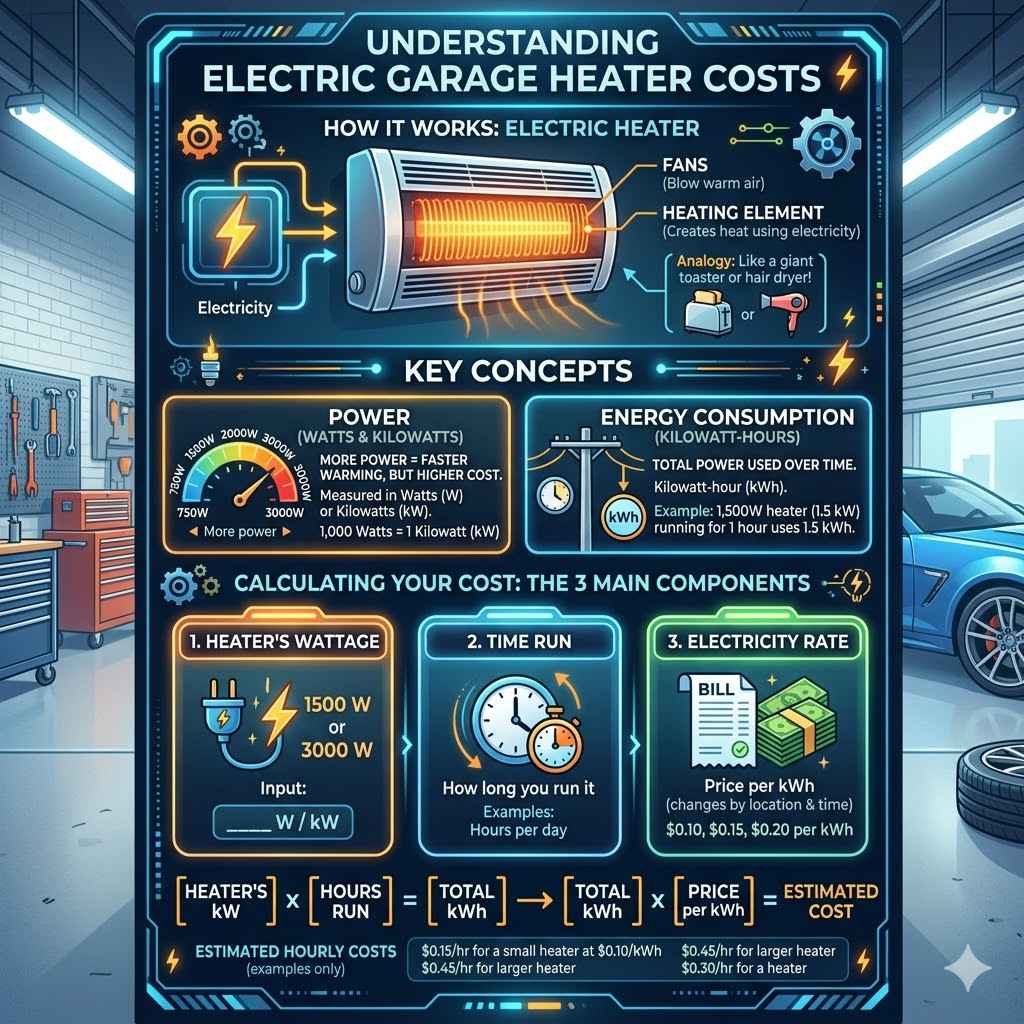
Electric garage heaters work by using electricity to create heat. Think of a toaster or a hair dryer. They use electricity, too.
The more power a heater uses, the faster it can warm a space. But using more power means it costs more money. This power is measured in watts (W) or kilowatts (kW).
A kilowatt is 1,000 watts. Electric companies charge you for the total power you use over time. This is measured in kilowatt-hours (kWh).
So, if a heater uses 1,500 watts (or 1.5 kW) and you run it for one hour, you use 1.5 kWh. Your electric bill shows the price per kWh. That price changes by location and time.
So, to figure out the cost, you need three main things: the heater’s wattage, how long you run it, and your local electricity rate. These are the core numbers for understanding the expense.
How Much Power Do They Use?
Electric garage heaters come in many sizes. Smaller ones might be 500 watts. Bigger ones can be 5,000 watts or even more.
Most common portable electric garage heaters are between 1,000 and 1,500 watts. These are good for heating up a small to medium-sized garage space for a few hours.
Permanent, built-in electric garage heaters can be much more powerful. Some models go up to 5,000 watts or 7,500 watts. These are meant for larger garages or for when you need to keep the garage warm all the time.
They have higher heating power, but also use more electricity when they run.
For example, a 1,500-watt heater running for one hour uses 1.5 kWh. A 5,000-watt heater running for one hour uses 5 kWh. That’s a big difference.
The longer you run the more powerful heater, the more electricity it uses up.
Wattage vs. Kilowatt Hours
Wattage (W): This is the heater’s power rating. It tells you how much power it can use at any given moment.
Kilowatt-hours (kWh): This is how much energy you actually use over time. It’s wattage divided by 1,000, then multiplied by the hours you run it.
Example: A 1500W heater is 1.5 kW. Running it for 2 hours uses 1.5 kW * 2 hours = 3 kWh.
Calculating Your Running Costs: A Simple Formula
The easiest way to know the cost is to use a simple formula. It looks like this:
Cost = (Heater Wattage / 1000) x Hours Used x Cost Per kWh
Let’s break this down. First, you need your heater’s wattage. Most are listed on the heater itself or in the manual.
Then, decide how many hours you plan to use it. Finally, find your electricity rate. You can usually see this on your monthly electric bill.
Look for the price per kWh.
For instance, let’s say you have a 1,500-watt heater. You want to use it for 4 hours. And your electricity costs $0.15 per kWh.
Here’s how the math works:
Cost = (1500 / 1000) x 4 hours x $0.15/kWh
Cost = 1.5 kW x 4 hours x $0.15/kWh
Cost = 6 kWh x $0.15/kWh
Cost = $0.90
So, for that specific scenario, it would cost about 90 cents to run the heater for 4 hours. This seems pretty reasonable for many people.
Now, let’s try a bigger heater. Imagine a 5,000-watt heater used for the same 4 hours, with the same $0.15/kWh rate:
Cost = (5000 / 1000) x 4 hours x $0.15/kWh
Cost = 5 kW x 4 hours x $0.15/kWh
Cost = 20 kWh x $0.15/kWh
Cost = $3.00
That’s $3.00. It’s more, but still might be worth it depending on your needs. This shows how wattage has a big effect.
Quick Cost Check Table
| Heater Wattage | Hours Used | Cost Per kWh | Estimated Cost |
|---|---|---|---|
| 1500W (1.5 kW) | 3 Hours | $0.12 | $0.54 |
| 1500W (1.5 kW) | 8 Hours | $0.20 | $2.40 |
| 5000W (5.0 kW) | 2 Hours | $0.15 | $1.50 |
Factors That Impact Running Costs
The simple formula is a great start. But many other things affect how much you actually spend. These can make your costs go up or down significantly.
It’s important to think about them.
Garage Size and Insulation
A small, well-insulated garage will need less heat. It also holds the heat longer. A big, drafty garage with no insulation is like heating the outdoors.
The heater will have to run much more often. This means higher electricity use and bills.
Think about the walls, ceiling, and especially the garage door. Are there gaps? Is there any insulation?
Even adding weatherstripping around the door can make a big difference. A better-sealed garage means your heater works less. This saves you money and energy.
Thermostat Settings and Usage Habits
How warm do you really need the garage? Setting the thermostat too high makes the heater work overtime. For most people, keeping a garage at 50-60°F (10-15°C) is enough.
This is much cheaper than trying to keep it at 70°F (21°C) like your home.
Also, when do you use the garage? If you only need heat for an hour or two when you work on a project, the cost will be low. If you want to keep it warm all day, every day, the costs will add up fast.
Smart usage is key to managing costs.
Myth vs. Reality: Electric Garage Heating Costs
Myth: All electric garage heaters are incredibly expensive to run, costing hundreds of dollars a month.
Reality: Costs vary wildly. Small heaters used for short periods can be very cheap. Large heaters used constantly in poorly insulated spaces can be expensive, but that’s not the universal case.
Myth: You can’t afford to heat your garage with electricity.
Reality: With the right heater, usage habits, and a well-sealed space, electric heating can be a budget-friendly option for many.
Climate and Outside Temperature
Where you live matters a lot. If you live in a place with mild winters, your heater won’t need to run as much. In very cold climates, the heater will be on much more often.
This is true for any heating system, but it’s especially noticeable with electric heaters.
The colder it gets outside, the harder the heater has to work to maintain the desired temperature inside. If it’s -10°F (-23°C) outside, your heater will run much longer than if it’s 30°F (-1°C).
Type of Electric Heater
There are different types of electric heaters. Some are just basic resistance heaters, like a coil getting hot. Others use fans (convection or forced air) to spread the heat.
Some use infrared to heat objects directly.
Forced-air heaters might warm a space faster. But they use more energy to run the fan. Infrared heaters can be efficient for spot heating.
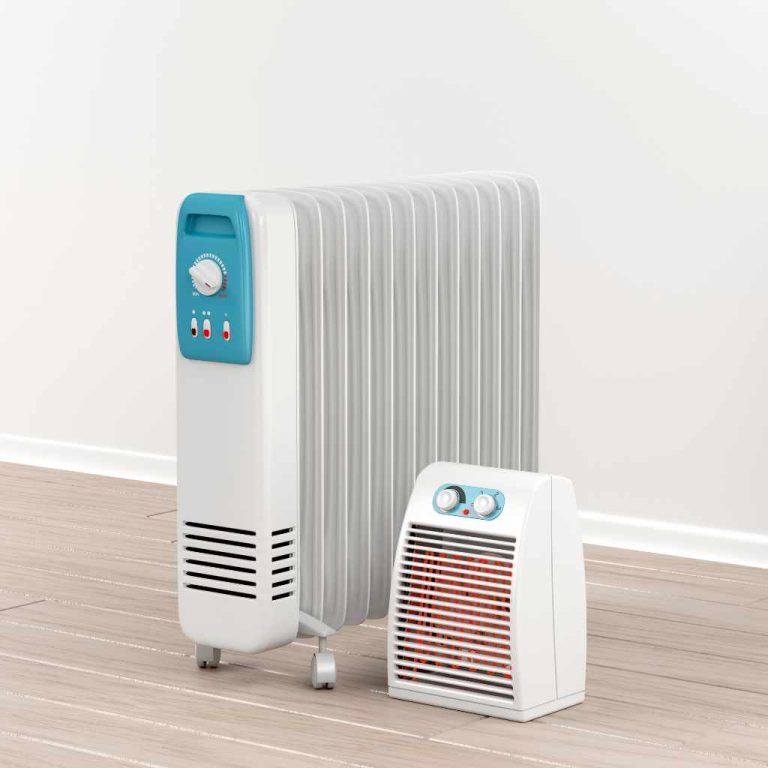
But they don’t heat the air itself as much. For general garage heating, many people find good results with a simple ceramic or oil-filled radiator style. These tend to be less power-hungry than high-wattage forced-air units.
Personal Experience: The Drafty Garage Dilemma
I remember one winter, probably about five years ago now. I’d just bought my first house. It had a detached two-car garage.
I had this idea of turning it into a workshop. I pictured myself tinkering on projects, safe and warm, even when it was freezing outside. So, I bought a shiny new 1,500-watt portable electric garage heater.
It looked like a little tank, sturdy and with a powerful fan.
The first time I plugged it in, I was so excited. I set the thermostat to what I thought was a nice, cozy 65°F (18°C). Within about 30 minutes, the garage felt warm.
I could feel the heat from the fan blowing. I spent a happy hour organizing my tools, feeling like a DIY king. Then, the electric bill arrived.
My jaw dropped. It was much higher than I expected. I started to panic.
Was this electric heater going to cost me a fortune? I looked at the heater, then at the gaps around my garage door. I noticed how cold the air felt coming from under the big metal door.
It was like I was trying to fill a sieve with water. The cold air was getting in, and the warm air was leaking out.
That was my big mistake. I had a good heater, but a terrible space. I realized the heater was running almost constantly.
It was fighting against the cold trying to get in. I felt a bit foolish, but also determined. I spent a weekend adding weatherstripping to the door and sealing other drafts.
I also lowered the thermostat setting to 55°F (13°C). The next month’s bill was much better. It taught me a big lesson: the heater is only part of the equation.
The garage itself matters just as much.
Personal Story Insight: Drafty Garage Cost
Problem: Heater ran constantly in an unsealed garage.
Experience: High electric bill, feeling of panic and mistake.
Solution Used: Sealing drafts, lowering thermostat.
Result: Lowered costs, more efficient heating.
When is an Electric Garage Heater “Expensive”?
So, when does the cost become a problem? Generally, it’s when you use a high-wattage heater for long periods in a poorly insulated space. Or if your local electricity rates are very high.
Let’s look at some scenarios where costs could be high:
- Scenario 1: The All-Day Warmer. You have a 5,000-watt heater. You set it to 70°F (21°C). Your garage is large and has no insulation. Electricity costs $0.25/kWh. Running this for 12 hours a day would cost: (5000/1000) x 12 hours x $0.25/kWh = 5 x 12 x $0.25 = $15.00 per day. That’s about $450 a month. This is definitely expensive.
- Scenario 2: The Occasional User. You have a 1,500-watt heater. You only turn it on for 2 hours when you work in the garage on Saturdays. Your electricity is $0.15/kWh. Cost: (1500/1000) x 2 hours x $0.15/kWh = 1.5 x 2 x $0.15 = $0.45 per use. This is very affordable.
The key is understanding your specific situation. Calculate your own costs using the formula. Then decide if that number works for your budget.
For many, especially with smart usage, it does.
When Costs Add Up: The “Expensive” Zone
High Wattage Heaters: 3000W and above.
Long Run Times: 6+ hours per day.
Poor Insulation: Drafty doors, uninsulated walls/ceiling.
High Electricity Rates: Over $0.20 per kWh.
High Temperature Settings: 70°F (21°C) or higher.
Tips to Keep Your Electric Garage Heater Running Costs Low
The good news is there are many ways to manage and reduce the cost of running your electric garage heater. It’s all about being smart with your choices and how you use it. These tips can make a real difference.
1. Choose the Right Wattage Heater
Don’t buy a heater that’s too powerful for your space. A 5,000-watt heater for a single-car garage might be overkill. It will use a lot of energy.
For small to medium garages (up to 400 sq ft), a 1,500-watt heater is often enough. For larger spaces, consider a higher wattage, but remember the cost.
Look for heaters with adjustable thermostats. This is crucial. It means the heater will cycle on and off as needed.
It won’t just run full blast all the time. Some heaters also have variable heat settings.
2. Improve Garage Insulation and Sealing
This is the most important tip. A well-sealed and insulated garage acts like a thermos. It keeps the heat in and the cold out.
This means your heater doesn’t have to work as hard. Focus on:
- Garage Door: Add weatherstripping around the edges. Install a bottom seal to block drafts. Consider an insulated garage door if yours is old and thin.
- Walls and Ceiling: If possible, add insulation to the walls and ceiling. This makes a huge difference.
- Windows and Doors: Seal any gaps around windows and other doors that lead into the garage.
These steps might have an upfront cost, but they save you money month after month on heating bills. They also improve comfort.
Quick Scan: Energy Saving Checklist
Sealed Garage Door? Yes No
Insulated Walls/Ceiling? Yes No
Thermostat Used? Yes No
Lower Temp Setting? Yes No
Targeted Heating? Yes No
3. Use a Thermostat Wisely
As mentioned, get a heater with a good thermostat. Set it to a modest temperature. For most people, 50-55°F (10-13°C) is enough for occasional use or just to prevent pipes from freezing.
If you’re going to be working in the garage for a few hours, you can temporarily turn it up. Then turn it back down when you’re done.
Consider a smart thermostat if possible. Some portable heaters have them built-in. Or you might be able to use a smart plug with certain heaters.
This lets you schedule heating times. You can also control it remotely.
4. Heat Only When Needed
Do you really need to heat the garage all the time? For many, the answer is no. If you only use the garage for a few hours on weekends, turn the heater on only during that time.
If your goal is just to prevent pipes from freezing in extreme cold, a very low setting might be all you need. A small, low-wattage heater might even do the trick for just that purpose.
Think about when you are actually in the garage. Heat it up then. Turn it off or set it much lower when you are not there.
This is simple but very effective for saving money.
5. Zone Heating or Targeted Heating
If you have a very large garage, heating the whole space might be inefficient. Instead, consider directing the heat where you need it most. Portable heaters are good for this.
You can move them closer to where you’re working.
Infrared heaters are excellent for zone heating. They heat objects and people directly, not the air. This means you feel warm even if the air temperature is lower.
This can save energy because you don’t need to heat the entire volume of air in the garage.
6. Monitor Your Electricity Rates
Electricity prices can change. Some areas have peak and off-peak rates. If you have such a plan, run your heater during off-peak hours when electricity is cheaper.
This can take a bit of planning but can lead to noticeable savings over time.
Check your utility company’s website. They often have information about rate plans and how to save energy. Understanding your electricity costs is the first step to controlling them.
Real-World Context: What Does This Mean for You?
This all boils down to a few practical points. If you’re looking to just take the chill off your garage for a couple of hours a week, an electric heater is likely quite affordable. A 1,500-watt unit used for 2-3 hours, with average electricity costs, might only be a dollar or two per use.
That’s very manageable.
However, if you envision your garage as a year-round, climate-controlled workshop or living space, you need to be more strategic. That’s where insulation, smart thermostat use, and choosing the right wattage become critical. Heating a large, uninsulated garage to a comfortable home temperature 24/7 with electricity will be expensive.
It’s not the heater’s fault; it’s the demand placed upon it.
Think about your daily routine. Do you park your car in there? Do you need to work on hobbies?
Do you store sensitive items? Your answers will guide how much heat you need and for how long. This will help you predict and manage costs.
Scenario Analysis: Cost Outlook
Occasional Use (e.g., weekend hobbyist): Low to moderate cost. A 1500W heater for a few hours is very affordable.
Regular Use (e.g., daily workshop): Moderate to high cost. Depends heavily on insulation and thermostat settings.
Full-Time Climate Control (e.g., gym, office): Potentially high cost. Requires excellent insulation and potentially a higher-wattage, more efficient system.
When is it “Normal” vs. “Concerning”?
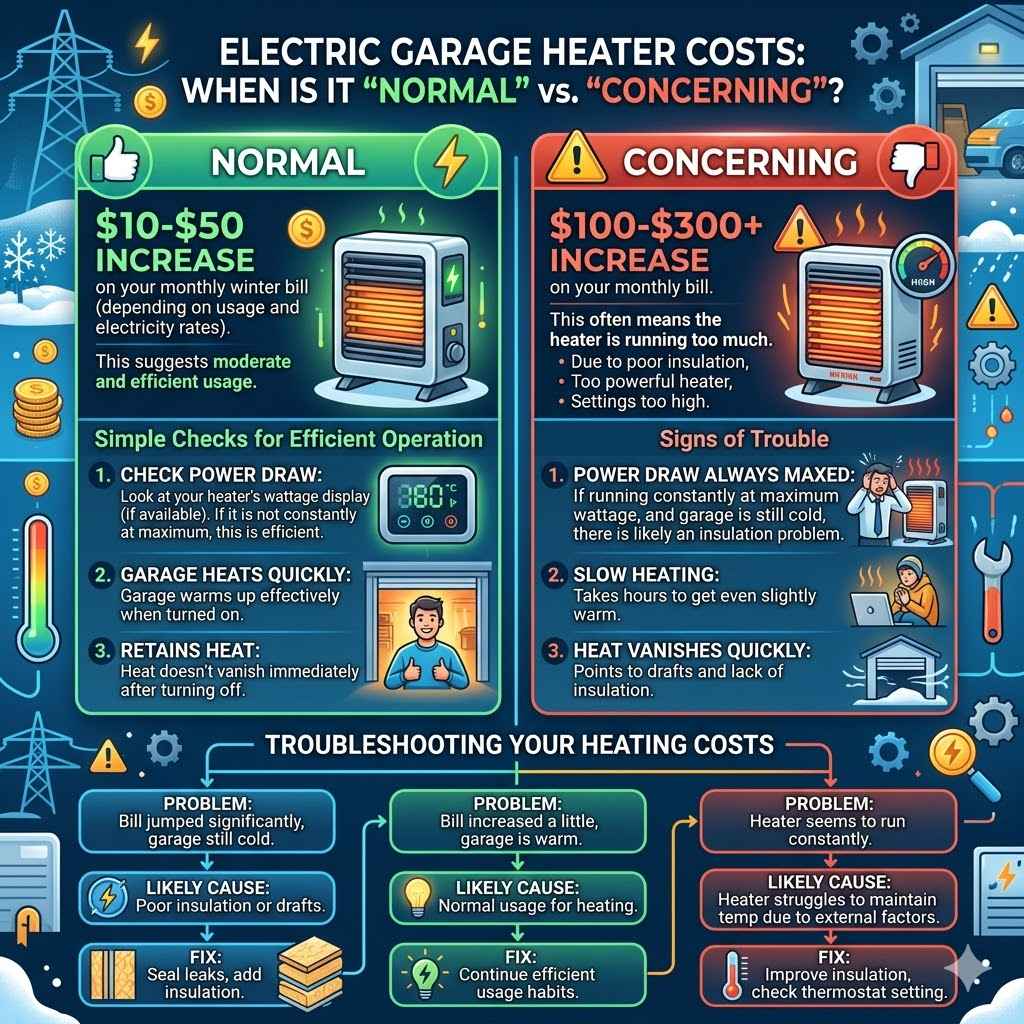
It’s normal for your electric bill to go up when you start using an electric garage heater, especially during colder months. The degree to which it goes up is the key.
- Normal: A $10-$50 increase on your monthly bill during the winter, depending on usage and electricity rates. This suggests you are using the heater moderately and efficiently.
- Concerning: A $100-$300+ increase on your bill. This often means the heater is running too much. It could be due to poor insulation, a heater that’s too powerful, or settings that are too high.
Simple checks include looking at your heater’s power draw. Many modern heaters have digital displays that show wattage. If it’s constantly at its maximum setting, and your garage is still cold, you likely have an insulation problem.
Or, perhaps the heater isn’t powerful enough for the space, though that’s less common for cost issues than the opposite.
Another check is how quickly the garage heats up. If it takes hours to get even slightly warm, or if the heat vanishes as soon as the heater turns off, that points to drafts and lack of insulation.
Troubleshooting Your Heating Costs
Problem: Bill jumped significantly, garage still cold.
Likely Cause: Poor insulation or drafts.
Fix: Seal leaks, add insulation.
Problem: Bill increased a little, garage is warm.
Likely Cause: Normal usage for heating.
Fix: Continue efficient usage habits.
Problem: Heater seems to run constantly.
Likely Cause: Heater struggles to maintain temp due to external factors.
Fix: Improve insulation, check thermostat setting.
Frequently Asked Questions About Electric Garage Heater Costs
Can I heat my whole garage with a small electric heater?
A small electric heater (like 1,500 watts) can heat a small to medium-sized garage if it’s well-insulated and sealed. For larger garages, or ones with poor insulation, it might only take the edge off the cold or heat a small zone. You might need a more powerful heater or multiple units for full coverage.
How much does it cost to run a 1500 watt garage heater per hour?
To find the cost per hour, use this: (1500 watts / 1000) x Your Cost Per kWh. If your electricity costs $0.15 per kWh, it costs 1.5 kW x $0.15/kWh = $0.225 per hour. So, about 23 cents per hour.
Is an electric garage heater cheaper than a gas heater?
This depends. Electric heaters have a lower upfront cost and are easier to install. However, gas heaters (like propane or natural gas) can often be cheaper to run per hour because natural gas is usually less expensive than electricity.
But they require gas lines or tanks and ventilation.
What is the most energy-efficient type of electric garage heater?
For general air heating, modern ceramic or oil-filled radiators are quite efficient as they provide steady heat. Infrared heaters are very efficient for targeted heating because they heat objects directly, reducing wasted energy on heating the air. Always look for models with good thermostats and energy-saving features.
How long does it take to heat a garage with an electric heater?
It varies a lot. A 1,500-watt heater in a small, well-sealed garage might take 30-60 minutes to feel noticeably warmer. In a large, uninsulated garage, it might struggle to reach a comfortable temperature at all, or take many hours.
Insulation and size are the biggest factors.
Should I leave my electric garage heater on all the time?
Only if necessary for specific reasons, like preventing extreme cold damage to tools or pipes. For comfort or general warmth, it’s usually more cost-effective to turn it on only when you need it. Using the thermostat to cycle it on and off at a lower set point is better than leaving it on high.
Conclusion: Making Your Garage Cozy, Smartly
So, are electric garage heaters expensive to run? The answer is, they can be, but they don’t have to be. By understanding wattage, your electricity rates, and how to combat heat loss, you’re in control.
Choose the right heater for your space. Make sure your garage is sealed up tight. Use the thermostat wisely.
Heat only when you need it.
With these smart steps, you can enjoy a warmer, more comfortable garage without breaking the bank. It’s about making informed choices and using your heater efficiently.