Why Is My Garage Heater Not Working? (Fix It Fast)
A garage heater not working can stem from simple issues like power interruptions, blown fuses, or thermostat malfunctions. Often, a quick check of these common points can restore heat. If problems persist, it might indicate a more complex internal component failure or a safety shut-off activation.
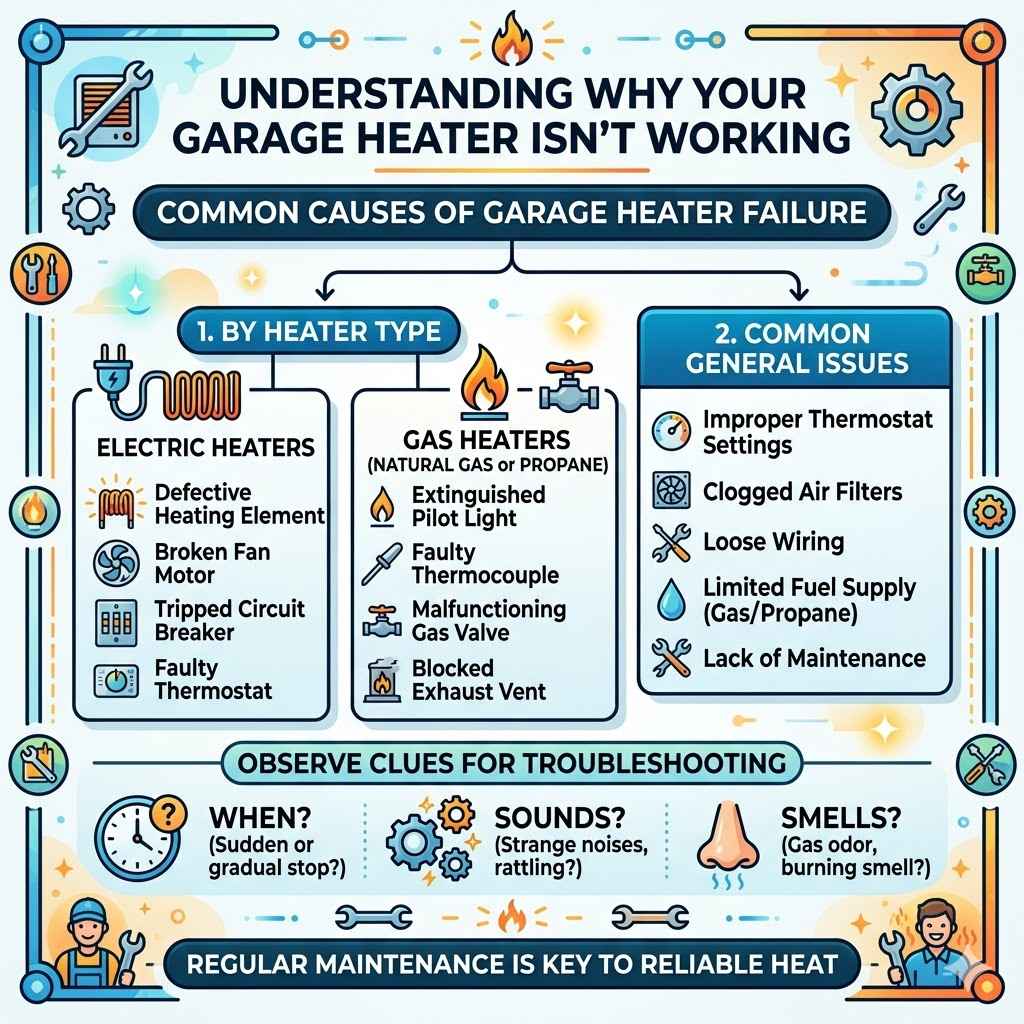
Understanding Why Your Garage Heater Isn’t Working
Garage heaters are great for extending the use of your garage. They let you work on cars, do hobbies, or just store things without worrying about freezing temperatures. But what happens when that cozy warmth disappears?
It’s usually not a total mystery. Most of the time, there’s a clear reason why the heat stops.
These heaters can run on electricity, propane, or natural gas. Each type has its own parts that could fail. An electric heater might have a problem with its heating element or its fan.
A gas heater could have issues with its pilot light, gas valve, or exhaust. Understanding the basic setup helps you figure out the possible causes.
Think about when it stopped working. Did it happen suddenly, or did it seem to be struggling before? Was there a strange noise or smell?
These little details can be big clues. Knowing what to look for makes troubleshooting much easier. It saves you time and worry.
My Garage Heater Story: A Cold Morning Revelation
I remember one winter morning, it was brutally cold outside, probably well below freezing. I had planned to finally tackle that woodworking project I’d been putting off. I headed to the garage, eager to get started, picturing the warm, comfortable space I’d created with my trusty electric garage heater.
I flipped the switch, and… nothing. Just the hum of the garage light. No fan, no warm air.
Just that biting cold air rushing in when I opened the door.
Panic, then annoyance, set in. I had specific plans! I opened the heater’s manual, which felt about as thick as a phone book.
I stared at the diagrams, trying to find anything that made sense. I checked the outlet – it had power. I checked the circuit breaker – it wasn’t tripped.
This was confusing. I felt a little silly, but also frustrated that my planned productive day was turning into a cold, unproductive one. I finally realized I might need to dig a little deeper than just the obvious stuff to get my warm garage back.
Common Causes for Garage Heater Failure
When your garage heater decides to take an unexpected break, it’s usually due to one of a few common culprits. Let’s break them down so you can start to pinpoint what’s going on.
Power Supply Issues
This is the most frequent offender. For electric heaters, check if it’s plugged in securely. Next, look at your home’s breaker box.
A tripped breaker will need to be reset. If it trips again right away, there might be a short circuit or an overloaded circuit. For gas or propane heaters, they might still need electricity for the fan or ignition.
So, checking the power source is always step one.
Thermostat Problems
The thermostat is like the brain of your heater. If it’s set too low, or if it’s broken, the heater won’t turn on. Some thermostats have batteries that need replacing.
Others might be dirty and not sensing the temperature correctly. Make sure it’s set to a temperature higher than the current room temperature. Try turning it up way high to see if that kicks the heater on.
Safety Features and Sensors
Modern heaters have built-in safety features to prevent fires or other dangers. If a heater senses it’s overheating, or if its safety sensors are blocked or faulty, it will shut off. This is often a protective measure.
Sometimes, debris like dust or cobwebs can block these sensors. Gently cleaning them might help. For gas heaters, a flame sensor issue can also stop operation.
Internal Component Failure
Over time, parts can simply wear out. For electric heaters, the heating element itself might have burned out. The fan motor could also fail, meaning no air is moved.
For gas heaters, the gas valve or the igniter could be the issue. These are more serious problems that often require professional repair or replacement of the unit.
Knowing these common issues gives you a starting point. It helps you avoid calling a repair person for something as simple as a tripped breaker.
Troubleshooting Your Electric Garage Heater
Electric garage heaters are pretty straightforward. They use electricity to create heat and a fan to push that heat out. So, when one stops working, we look at the things that make it go.
Check the Power Source
First, ensure the heater is plugged firmly into the outlet. If it’s a plug-in unit, try a different outlet to rule out a problem with the first one. If your heater is hardwired, this means it’s connected directly to your home’s electrical system.
In this case, you’ll need to check the circuit breaker. Find your home’s breaker box. Look for a switch that is in the ‘off’ position or somewhere in the middle.
Flip it all the way to ‘off’ and then back to ‘on’. If it was already ‘on’, you might try flipping it off and on again.
Inspect the Thermostat Settings
Your heater’s thermostat controls when it turns on and off. Make sure it’s set to a higher temperature than what the room is currently. For example, if it’s 50 degrees in your garage, set the thermostat to 60 or 70 degrees.
Some thermostats have a simple dial, while others are digital. If it’s digital, check the batteries and
Look for Overheat Protection
Most electric heaters have a safety feature that shuts them off if they get too hot. This is usually a small button or a reset mechanism. It’s often located on the back or bottom of the unit.
If the heater shut off due to overheating, this button might have popped out. Press it firmly to reset it. Ensure that nothing is blocking the heater’s air intake or output vents.
Dust, boxes, or curtains can cause it to overheat. Clean any obstructions.
Listen and Look for Fan Issues
When the heater should be on, you should hear the fan running. If you don’t hear the fan, the heating element might be fine, but the air isn’t moving. This can also trigger an overheat shut-off.
If the fan is running but no heat is coming out, then the heating element is the likely problem. This usually means the element has burned out and needs to be replaced. This is a repair that might need a professional.
Remember to always unplug the heater before you do any cleaning or inspection of its parts. Safety first!
Troubleshooting Your Gas or Propane Garage Heater
Gas and propane heaters involve a few more moving parts and safety considerations. They use a fuel source to generate heat, and they need to vent exhaust gases outside. This makes troubleshooting a bit more complex.
Check the Fuel Supply
For propane heaters, make sure the propane tank is not empty. Sometimes the gauge can be a little off. Try turning the valve on the tank fully open.
For natural gas heaters, ensure the gas supply valve to the heater is open. If you have other gas appliances in your home that are working, the main gas line is likely fine. If multiple gas appliances aren’t working, you might have a problem with your main gas supply.
Pilot Light Issues
Many older gas heaters use a pilot light, a small, constant flame that ignites the main burner. If the pilot light is out, the heater won’t produce heat. Most pilot lights have a simple ignition system.
You’ll need to follow the manufacturer’s instructions carefully to relight it. This usually involves holding down a button while lighting it, and then continuing to hold it for a short time to heat up a thermocouple. The thermocouple is a safety device that senses the pilot flame; if it’s faulty, it won’t keep the pilot lit.
Thermostat and Control Board
Similar to electric heaters, gas heaters have thermostats. These can be simple dials or more complex electronic control boards. Check the thermostat settings and ensure it’s calling for heat.
If the thermostat seems fine, the problem might be with the control board. This is the ‘brain’ that tells the gas valve to open and the igniter to spark. Control boards can fail, especially due to power surges or age.
Ventilation and Safety Sensors
Gas heaters need proper ventilation to exhaust carbon monoxide and other fumes. If the vent is blocked, a safety sensor will shut off the heater. Check the exhaust vent outside to make sure it’s clear of snow, debris, or bird nests.
The heater itself also has sensors, like a flame sensor, that monitor the combustion process. If these sensors detect a problem, the heater will not operate. Cleaning these sensors gently with a soft brush can sometimes fix the issue, but often a professional is needed.
Working with gas appliances requires extra caution. If you smell gas, leave the area immediately and call your gas company or emergency services. Never try to repair gas lines yourself.
Understanding Your Heater’s Components
Getting to know the parts of your heater can make a big difference in understanding why it’s not working. It’s like knowing the basic anatomy of a car to know if it’s making a funny noise.
Heating Element/Burner
This is the part that actually creates the heat. In electric heaters, it’s usually a coiled wire that glows red hot. In gas heaters, it’s the burner assembly where the gas is ignited.
If this part fails, no heat will be produced.
Fan/Blower Motor
This part moves the air. For electric heaters, it blows the heated air into your garage. For gas heaters, it often helps with combustion and ventilation, and also circulates warm air.
If the fan isn’t working, heat can build up and cause the safety shut-off to engage, or no warm air will be distributed.
Thermostat
This is the control device that tells the heater when to turn on and off based on the set temperature. It’s like the temperature sensor for your home. A faulty thermostat won’t signal the heater correctly.
Safety Switches and Sensors
These are crucial for preventing accidents. They include overheat limit switches, flame sensors (for gas), tip-over switches, and tip-over sensors. They monitor various conditions and shut the heater down if something is unsafe.
Sometimes, these can be triggered accidentally or can malfunction themselves.
Control Board/Ignition System
This is the central nervous system of the heater. It receives signals from the thermostat and safety switches to control the gas valve, igniter (for gas), and fan. Electronic control boards can be complex and prone to failure due to electrical issues or age.
Understanding these parts helps you talk to a repair person if needed, or even identify simple fixes yourself.
Real-World Scenarios Where Heaters Fail
It’s not just about the parts failing. Sometimes, the environment or how we use things plays a big role. Let’s look at some common situations where garage heaters run into trouble.
The Dusty Garage Effect
Many garages are dust magnets. Woodworking, car maintenance, or just general storage can stir up a lot of fine particles. This dust can get into the heater’s components.
It can coat heating elements, reducing their efficiency and causing them to overheat. Dust can also clog fan blades, making the motor work harder and eventually leading to failure. Importantly, dust can interfere with safety sensors, causing the heater to shut down unnecessarily.
Accidental Obstructions
Garages often become dumping grounds for things we don’t have space for elsewhere. Boxes, old furniture, bikes, or even stored cars can end up too close to the heater. Most heaters need a certain amount of clear space around them to operate safely and efficiently.
If the air intake or output vents are blocked, the heater can overheat and shut off. This is a common reason for a heater to suddenly stop working, especially after things have been moved around in the garage.
Power Surges and Fluctuations
Our homes’ electrical systems aren’t always perfectly stable. Power surges, caused by lightning strikes, faulty appliances, or even grid issues, can wreak havoc on electronic components. A surge can easily fry a thermostat or a control board in a heater.
If your heater is plugged into the same circuit as other sensitive electronics, it’s more vulnerable. Using a surge protector can help, but it’s not always foolproof.
Moisture and Corrosion
Garages can be damp places, especially in certain climates. Water or high humidity can lead to corrosion on electrical contacts and internal components. This corrosion can cause poor connections, leading to intermittent operation or complete failure.
It can also damage motors and other parts over time. If your garage is prone to moisture, it’s wise to choose a heater designed for such environments and ensure it’s well-maintained.
Wear and Tear Over Time
Like any appliance, garage heaters have a lifespan. Components like heating elements, fan motors, and igniters are subject to wear and tear. After several years of regular use, these parts may simply fail.
This is normal aging. Often, a heater that is 10-15 years old might start having more frequent issues. It’s usually more cost-effective to replace an older unit than to repair it extensively.
When to Worry: Signs Your Heater Needs More Than a Quick Fix
Most of the time, a heater not working is a fixable problem. But sometimes, the issue is a sign of something more serious. It’s important to know when to stop troubleshooting and call a professional, or even consider replacing the unit.
Persistent Tripping Breakers
If you reset a breaker and it trips again within minutes or hours, there’s an electrical fault. This could be a short circuit in the heater or a problem with your home’s wiring. Don’t keep resetting it.
This is a safety hazard.
Strange Noises or Smells
A new grinding, squealing, or banging noise from the fan motor means it’s likely failing. A smell of burning plastic or electrical wires is a serious warning sign of an electrical fire risk.
Gas Leaks or Strong Gas Odors
If you smell natural gas or propane strongly when the heater should be off or running normally, this is an emergency. Leave your home immediately and call your gas company. Never try to locate a gas leak yourself.
Visible Damage or Corrosion
If you see cracked wires, burnt components, or heavy rust and corrosion on internal parts, the heater may not be safe to operate. This kind of damage can be extensive and costly to repair.
Heater Still Won’t Work After Basic Checks
If you’ve gone through the simple steps like checking power, thermostat, and fuel, and the heater still isn’t functioning, it’s likely an internal component failure that requires specialized knowledge to diagnose and repair.
Trust your gut. If something feels unsafe or seriously wrong, it probably is. It’s always better to be safe than sorry.
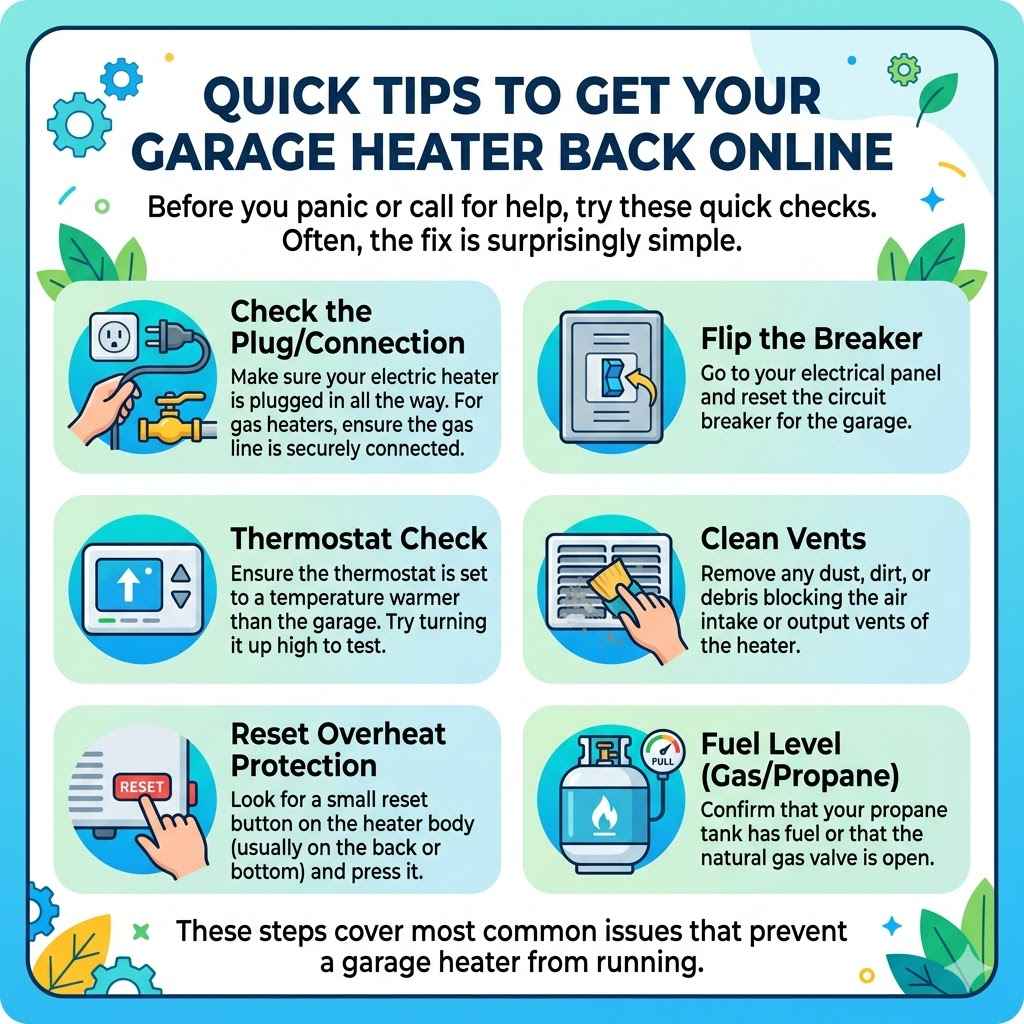
Quick Tips to Get Your Garage Heater Back Online
Before you panic or call for help, try these quick checks. Often, the fix is surprisingly simple.
- Check the Plug/Connection: Make sure your electric heater is plugged in all the way. For gas heaters, ensure the gas line is securely connected.
- Flip the Breaker: Go to your electrical panel and reset the circuit breaker for the garage.
- Thermostat Check: Ensure the thermostat is set to a temperature warmer than the garage. Try turning it up high to test.
- Clean Vents: Remove any dust, dirt, or debris blocking the air intake or output vents of the heater.
- Reset Overheat Protection: Look for a small reset button on the heater body (usually on the back or bottom) and press it.
- Fuel Level (Gas/Propane): Confirm that your propane tank has fuel or that the natural gas valve is open.
These steps cover most common issues that prevent a garage heater from working.
Frequently Asked Questions About Garage Heaters Not Working
Why is my electric garage heater blowing cold air?
If your electric garage heater is blowing cold air, it typically means the fan motor is working, but the heating element has failed or is not receiving power. It could also be that the overheat protection has tripped, preventing the heating element from engaging. Check for a reset button on the unit.
My gas garage heater won’t ignite. What should I do?
First, check your fuel supply (propane tank level or natural gas valve). Then, ensure the thermostat is calling for heat. If the pilot light is out, carefully attempt to relight it, following your heater’s manual.
If it won’t stay lit or the main burner doesn’t ignite after relighting, it could be a faulty thermocouple, igniter, or gas valve, which requires professional attention.
Can a dirty filter stop my garage heater from working?
While many garage heaters don’t have traditional filters like HVAC systems, they do have air intake grilles that can get clogged with dust and debris. If these are blocked, airflow is restricted, which can lead to overheating and the heater shutting itself off. Cleaning these grilles is important for proper operation.
What does it mean if my heater keeps shutting off?
Frequent shut-offs usually point to an overheat condition. This can be caused by blocked vents, a malfunctioning fan motor, or a faulty thermostat or sensor. For gas heaters, it could also be an issue with the flame sensor or gas pressure.
It’s a sign the heater is trying to protect itself from damage or a dangerous situation.
Is it safe to leave a malfunctioning garage heater plugged in?
If your garage heater is malfunctioning, especially if it’s making strange noises, smelling odd, or tripping breakers repeatedly, it’s best to unplug it or turn off the power at the breaker. A faulty unit can pose a fire risk or electrical hazard.
How often should I service my garage heater?
For optimal performance and safety, it’s recommended to have your garage heater serviced annually. This includes checking the fuel lines, ignition system, safety controls, and cleaning components. For electric heaters, a yearly check of the heating element, fan, and wiring is a good idea.
Final Thoughts on Your Garage Heater Woes
Dealing with a heater that’s not working is a hassle, especially when you need that warmth. By understanding the common causes and trying some simple troubleshooting steps, you can often get it back up and running. Remember to always prioritize safety and call a professional when in doubt.
A warm garage makes all the difference!