Can A Garage Heater Be Too Big? Yes, Here’S Why It Matters
Yes, a garage heater can indeed be too big. Oversizing a heater can lead to inefficient operation, short cycling, poor humidity control, wasted energy, and discomfort. Proper sizing ensures the heater runs efficiently, maintains a consistent temperature, and effectively manages moisture, making it a better choice for your garage.
Understanding Garage Heater Sizing
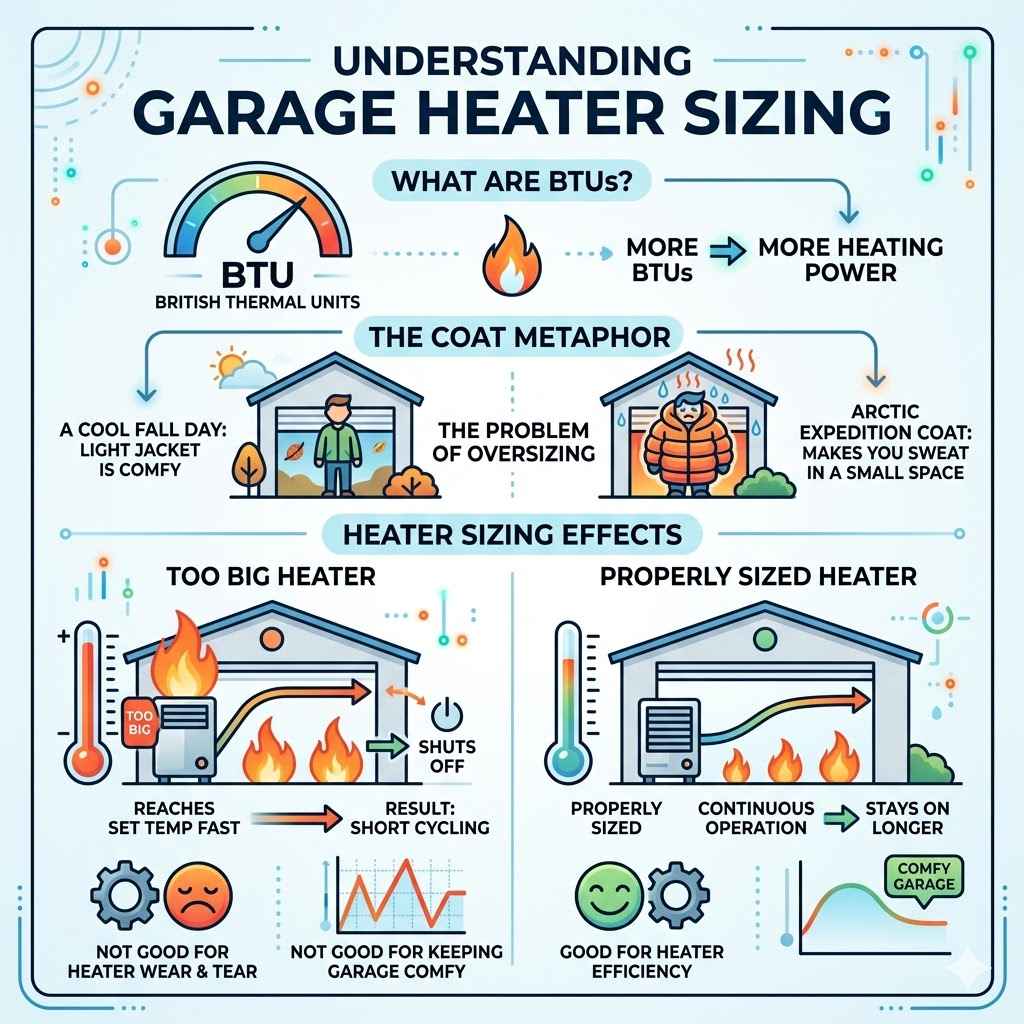
When you look at garage heaters, you’ll see numbers like BTUs. This stands for British Thermal Units. It’s a measure of heat.
More BTUs mean more heating power. It sounds simple: more power is good. But your garage is not a giant warehouse.
It has specific needs.
Think of it like wearing a coat. A very thick, down-filled coat is great for an arctic expedition. But if you’re just walking to your car on a cool fall day, that same coat will make you sweat and feel miserable.
Your garage heater is similar.
A heater that’s too big for your space tries to heat it up very quickly. It reaches the set temperature fast. Then, it shuts off.
This is called short cycling. It’s not good for the heater. It’s also not good for keeping your garage comfy.
Why Heater Size Matters So Much
The main goal is a comfortable, stable temperature. A heater that’s too powerful will overshoot the target temperature. It heats the air much warmer than you set.
Then it stops. The air cools down a bit. The heater turns back on.
It does this over and over.
This constant on-and-off is hard on the heater’s parts. It can make it wear out faster. It also uses more electricity than it should.
You’ll see this in your energy bills. Plus, the temperature in your garage won’t feel steady. It will swing from too hot to too cool.
The Downsides of an Oversized Heater
Let’s break down the specific problems that come with picking a garage heater that’s too large. These issues can really affect how you use your garage and how much money you spend.
Problem 1: Short Cycling
This is a big one. Your heater blasts heat to reach the set point. It hits it super fast.
Then, poof, it shuts off. The garage cools. The heater fires up again.
This cycle repeats. It doesn’t let the heater run as intended.
Imagine trying to read a book but someone keeps snatching it away every few minutes. That’s what short cycling does to your heating system. It’s a jarring experience.
Problem 2: Poor Humidity Control
Heaters do more than just warm the air. They can also affect the moisture in the air. When a heater runs for a long time, it can help dry out the air.
This is good in damp climates.
But an oversized heater that short cycles doesn’t run long enough to do this properly. It might heat the air, but it doesn’t have time to remove moisture. This can leave your garage feeling clammy.
High humidity can lead to mold and mildew growth. It can also damage stored items like tools or cars.
Problem 3: Wasted Energy and Higher Bills
It seems backward, but a bigger heater can cost you more money. The constant starting and stopping uses extra energy. Also, the heater is working harder than it needs to.
It’s like driving a huge truck to the grocery store when a small car would do. You use way more gas.
The heater might have a powerful fan too. Even when it’s not actively heating, the fan might run. This uses electricity.
So, you’re paying for heat you don’t really need and for a system that’s not running efficiently.
Problem 4: Uneven Temperature Distribution
When a heater is too big, it can create hot spots. The air right near the heater gets very warm. Then, the heater shuts off.
The cooler air in the rest of the garage mixes in. This means you might have areas that are too hot and others that are still chilly.
It’s like having a single small fan trying to cool a whole stadium. The air near the fan is cool, but everyone else is still warm. You want a gentle, even warmth throughout the space, not blasts of heat followed by coolness.
Problem 5: Reduced Comfort
All these issues combined lead to one main thing: less comfort. Your garage won’t feel cozy. It will feel unpredictable.
One minute it’s too hot. The next it’s a bit cool. This makes it hard to enjoy working on projects or even just getting your car out on a cold morning.
Comfort is about consistency. It’s about knowing that the space will feel pleasant whenever you enter it. An oversized heater fights against that steady feeling.
How to Find the Right Size Heater
So, how do you avoid these pitfalls? It all comes down to knowing your garage and doing a little math. Don’t worry, it’s not rocket science!
We can break it down simply.
The most common way to size a heater is by calculating the BTUs needed per square foot. This depends on several factors. These factors include how well your garage is insulated.
It also depends on how cold it gets where you live. And how often you open the garage door matters too.
Quick-Scan Table: BTU Needs Based on Insulation
| Insulation Level | BTUs Per Square Foot (Estimate) |
|---|---|
| Poorly Insulated (No insulation, drafty) | 40 – 50 |
| Moderately Insulated (Some insulation, some drafts) | 30 – 40 |
| Well Insulated (Good insulation, sealed well) | 20 – 30 |
Note: These are estimates. Local climate and usage habits can affect needs.
First, measure your garage. Get the length and width. Multiply them to find the square footage.
Let’s say your garage is 20 feet long and 20 feet wide. That’s 400 square feet (20 x 20 = 400).
Now, decide on your insulation level. Most garages fall somewhere in the middle. Let’s assume moderate insulation.
You’ll use the 30-40 BTUs per square foot range.
For a 400 sq ft garage with moderate insulation, you might need:
400 sq ft * 35 BTUs/sq ft = 14,000 BTUs.
So, a heater around 14,000 BTUs would likely be a good fit. You would then look for heaters in that range.
Factors That Influence Heater Size
The simple square footage calculation is a starting point. Several other things can change the number of BTUs you actually need. It’s important to think about these to get it just right.
Insight Panel: Key Sizing Factors
Climate Zone: Colder areas need more BTUs. Very cold regions might push you to the higher end of the range. Warmer climates might need less.
Insulation Quality: How well your garage is sealed makes a big difference. Drafty doors, windows, or walls let heat escape. Good insulation keeps heat in.
This means you need less power.
Garage Door Usage: Do you open your garage door many times a day? Each time you do, warm air escapes and cold air rushes in. Frequent use means you might need a slightly bigger heater.
Ceiling Height: Most calculations assume standard 8-foot ceilings. If you have a very tall garage, you have more air to heat. This might require a bit more power.
Windows and Doors: Any openings are potential points for heat loss. The number and size of windows and doors matter.
Desired Temperature: What temperature do you want to maintain? A warmer desired temperature means more BTUs. Just keeping the chill off requires less.
For example, if you live in Minnesota and have an uninsulated garage, you might need to aim for the higher end of the BTU range, perhaps even a bit more than the basic calculation suggests. If you live in Florida and have a well-insulated garage you only use occasionally, you might be able to go a little lower.
When is a “Bigger” Heater Actually Okay?
There are times when a slightly larger heater isn’t a bad thing. It’s not about grabbing the absolute biggest unit you can find. It’s about having a little buffer.
This is especially true if you have factors that increase heat loss.
One such factor is frequent garage door opening. If you use your garage as a workshop and open the door often for materials, people, or ventilation, the temperature will drop quickly. A heater with a bit more power can recover faster.
Another time it might be okay is if you have a very high ceiling. Standard calculations are often based on an 8-foot ceiling. If yours is 12 feet or higher, there’s a lot more air volume.
You might need a bit more heat to fill that space effectively.
It also depends on the type of heater. Some heaters are designed to heat a space more gently over a longer period. These might be more forgiving if they are slightly oversized.
Others are designed for quick bursts of heat.
However, even with these considerations, it’s crucial not to go overboard. A heater that’s twice the calculated size is almost certainly too big. You’re looking for a sensible margin, not a huge leap.
Personal Experience: The “Too Big” Heater Mistake
I remember a few years back. I was setting up a small workshop in my detached garage. It was a standard two-car size, maybe 400 square feet.
I figured since I was going to be tinkering in there during the colder months, I needed some serious heat. I went to the hardware store and saw this powerful propane heater. It was rated for something like 30,000 BTUs.
It felt like a beast, perfect for the job, I thought. I lugged it home, hooked it up, and turned it on.
The heat was immediate. It was almost too much, like standing too close to a bonfire. I set the thermostat to a comfortable 65 degrees.
Within minutes, the gauge was soaring. The heater clicked off. I waited.
The garage felt intensely hot for about 15 minutes. Then, the heat started to fade. I could feel a chill creeping back in.
The heater would roar back to life, blast me with intense heat again, and then shut off. This went on all afternoon. The temperature would swing wildly.
I found myself constantly adjusting my clothing. I was either sweating or shivering. It was exhausting.
Plus, I noticed a faint smell of propane even though there were no leaks. It was making the air feel a bit dry and stale too. I realized then that my powerful heater was just making the space uncomfortable and inefficient.
It was a classic case of too much of a good thing. I ended up selling that heater and buying a much smaller, correctly sized electric one that kept the space evenly warm without the drama.
Types of Garage Heaters and Sizing
The type of heater you choose can also affect how its size plays out. Different heating technologies have different ways of distributing warmth.
Card Grid: Heater Types and Sizing Considerations
Electric Heaters
Pros: Easy to install, clean, good for smaller spaces. Often come with thermostats. Good for precise temperature control.
Cons: Can be costly to run in larger spaces. Sizing is critical as they have fixed outputs.
Sizing Tip: Look for models with adjustable thermostats. Ensure the wattage (often listed alongside BTUs) matches your calculated needs. 1000 watts roughly equals 3400 BTUs.
Propane/Natural Gas Heaters (Forced Air or Radiant)
Pros: Powerful, can heat large spaces quickly. Fuel is often cheaper per BTU.
Cons: Require ventilation (crucial for safety!), installation can be complex. Risk of CO poisoning if not properly vented. Radiant heaters heat objects directly, which can be good but also cause hot spots.
Sizing Tip: Be extra cautious with these. Proper ventilation is non-negotiable. An oversized unit here can be dangerous if it struggles to vent properly due to short cycling.
Infrared Heaters (Radiant)
Pros: Heat objects and people directly, not just the air. Feel warm even if the air temperature is cooler. Good for spot heating or when the door is opened often.
Cons: Don’t heat the entire space evenly if only one is used. Can be inefficient if the space is not well-sealed.
Sizing Tip: Think about coverage area more than just raw BTUs. One large radiant heater might be less effective than two smaller ones placed strategically.
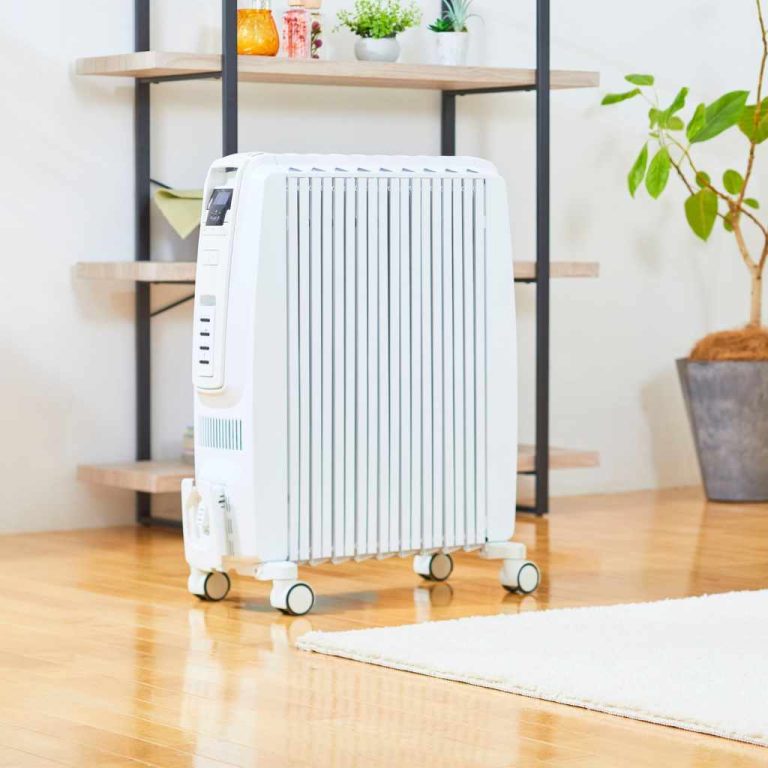
Oil-Filled Radiators
Pros: Silent operation, gentle heat, good for maintaining a steady temperature. Low risk of fire.
Cons: Slow to heat up. Best for spaces that don’t need rapid heating or drastic temperature changes.
Sizing Tip: These are less about power and more about consistent output. Ensure the wattage is sufficient for your space’s minimum needs. They tend to be less prone to extreme short cycling if sized reasonably.
No matter the type, the principle remains the same: match the heater’s output to the needs of your specific garage space.
What This Means For Your Garage
Having a heater that’s too big isn’t just an abstract problem. It has real-world impacts on your garage and what you do in it. Understanding these can help you make a better choice.
Myth vs. Reality: Heater Sizing
Myth
Bigger heater always means warmer garage.
Reality
Too big a heater causes short cycling, poor comfort, and wasted energy. The ideal size provides steady, efficient warmth.
For instance, if you plan to use your garage as a workout space, you need consistent temperatures. Constant swings from hot to cold are distracting. You might be mid-set and feel a blast of heat, or start to shiver as the heater shuts off.
This interrupts your rhythm.
If you store sensitive items, like classic cars, electronics, or furniture, extreme temperature swings can be bad for them. They can cause materials to expand and contract. This can lead to cracks or damage over time.
Consistent, moderate heat is usually best for preservation.
And for simple tasks like parking your car, you want it to be a comfortable transition. You don’t want to walk into an oven or a freezer. A properly sized heater makes the whole experience more pleasant.
Simple Checks and When to Worry
How can you tell if your heater might be too big? Here are a few simple checks you can do.
Observational Flow: Signs of an Oversized Heater
- Listen: Does the heater turn on and off very frequently? Like every 10-20 minutes? That’s a strong sign of short cycling.
- Feel: Is the garage always either too hot or too cool? Does the temperature swing wildly from one extreme to another?
- Look: If it’s a gas heater, are you concerned about proper ventilation due to rapid on/off cycles?
- Check Bills: Are your energy bills surprisingly high, even when you’re not using the heater much?
If you notice these signs, your heater is likely too big or its thermostat isn’t set correctly. Sometimes, just adjusting the thermostat setting can help. But if the cycling is very rapid, the size is the main issue.
When should you really worry? If you have a gas or propane heater and notice:
A persistent smell of gas. Yellow flames instead of blue flames from the burner.
* Signs of soot around the heater or vent. These are signs of incomplete combustion or venting issues. An oversized heater might struggle to vent properly.
This is a serious safety concern. Always prioritize safety with any heating appliance.
Quick Fixes and Tips
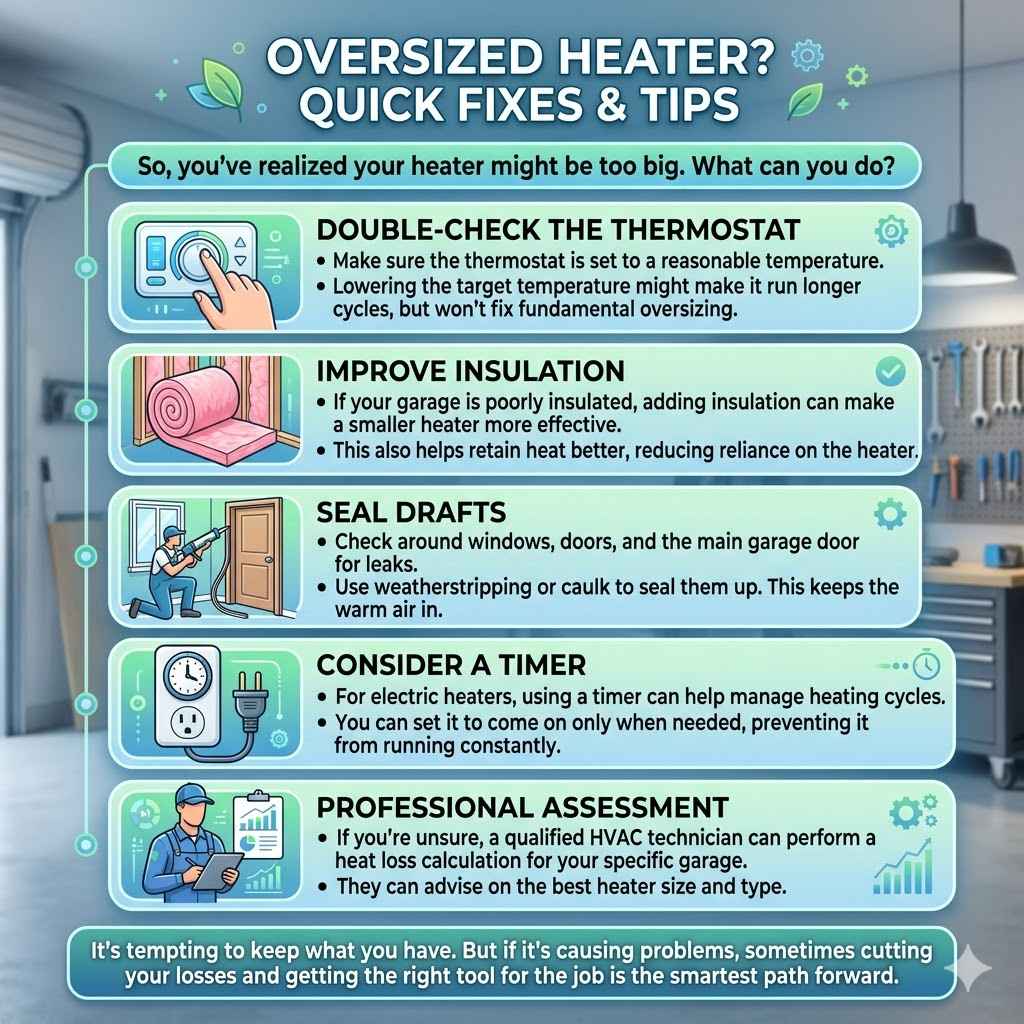
So, you’ve realized your heater might be too big. What can you do?
Stacked Micro-Sections: What to Do
Double-Check the Thermostat: Make sure the thermostat is set to a reasonable temperature. Lowering the target temperature might make it run longer cycles, but won’t fix fundamental oversizing.
Improve Insulation: If your garage is poorly insulated, adding insulation can make a smaller heater more effective. This also helps retain heat better, reducing reliance on the heater.
Seal Drafts: Check around windows, doors, and the main garage door for leaks. Use weatherstripping or caulk to seal them up. This keeps the warm air in.
Consider a Timer: For electric heaters, using a timer can help manage heating cycles. You can set it to come on only when needed, preventing it from running constantly.
Professional Assessment: If you’re unsure, a qualified HVAC technician can perform a heat loss calculation for your specific garage. They can advise on the best heater size and type.
It’s tempting to keep what you have. But if it’s causing problems, sometimes cutting your losses and getting the right tool for the job is the smartest path forward.
Frequently Asked Questions
Can an electric garage heater be too big?
Yes, an electric garage heater can definitely be too big. Just like gas heaters, an oversized electric heater will heat the space too quickly and shut off. This leads to frequent short cycling, inefficient energy use, and inconsistent temperatures.
It can also put unnecessary wear on the heating elements and thermostat.
How do I calculate the right size garage heater in BTUs?
To calculate the right size, you first find your garage’s square footage (length x width). Then, multiply that by an estimated BTU requirement per square foot. This estimate varies based on insulation (20-30 for good, 30-40 for moderate, 40-50 for poor).
For example, a 20×20 ft (400 sq ft) garage with moderate insulation might need around 14,000 BTUs (400 x 35). Consider climate and usage too.
What happens if my garage heater is too powerful?
If your garage heater is too powerful, it will heat the space very quickly and then shut off. This is called short cycling. It causes the temperature to swing from too hot to too cool, wastes energy, can lead to poor humidity control, and may reduce the lifespan of the heater.
Should I get a heater with a thermostat or just a simple on/off one?
A heater with a thermostat is highly recommended. It allows you to set a desired temperature, and the heater will cycle on and off automatically to maintain it. This is much more efficient and comfortable than a simple on/off unit that you have to manage manually.
It also helps prevent overheating or constant running.
Is it better to have a slightly smaller heater than one that is too big?
Generally, yes. It is better to have a heater that is slightly undersized or perfectly sized than one that is significantly too large. A slightly undersized heater will run more often to maintain temperature, but it will do so more efficiently and with longer, more consistent cycles.
An oversized heater’s short cycling is detrimental.
What are the safety risks of an oversized gas garage heater?
An oversized gas garage heater can pose safety risks, especially regarding ventilation. If it short cycles frequently, it may not have enough time to properly vent combustion byproducts like carbon monoxide (CO). This can lead to CO buildup in the garage, which is extremely dangerous.
Always ensure adequate ventilation and proper installation for any gas heater.
Conclusion
Choosing the right size garage heater is key. It’s not just about having enough heat. It’s about having the right amount of heat, delivered efficiently and comfortably.
An oversized heater might seem like a powerful solution, but it often creates more problems than it solves. By understanding your garage’s needs and doing a simple calculation, you can find a heater that keeps your space warm, saves energy, and lasts longer. Your comfort and your wallet will thank you.