Do Garage Heaters Use a Lot of Electricity
Many people wonder, “Do Garage Heaters Use a Lot of Electricity?” It’s a common question, especially if you’re thinking about keeping your garage warm without a huge surprise on your electric bill. It can seem a bit tricky to figure out, but don’t worry! We’ll walk through it step by step so you can easily understand how much electricity your garage heater might use.
We’ll look at the different things that affect this and help you make a smart choice.
Understanding Garage Heater Electricity Use
When people ask, “Do garage heaters use a lot of electricity?”, they’re usually concerned about the cost of running them. Garage heaters are designed to heat a large, often uninsulated space, which can be a challenge for any heating system. The amount of electricity a garage heater consumes depends on several factors, including the heater’s wattage, how often it runs, and how well your garage is insulated.
Understanding these elements will help you gauge the potential energy draw.
This section will break down the core components that influence an electric garage heater’s power consumption. We will explore the role of wattage and discuss how different types of heaters compare. You will learn what factors contribute to higher or lower electricity usage so you can make informed decisions about heating your garage.
Wattage Explained
Wattage is a measure of electrical power. It tells you how much energy an appliance uses per second. For a garage heater, a higher wattage means it uses more electricity to produce heat.
For example, a 1500-watt heater uses more power than a 1000-watt heater when both are running at full capacity.
It’s important to match the heater’s wattage to the size of your garage and how cold it gets where you live. A small heater might not be enough for a large garage in a cold climate, meaning it might run longer to try and reach the desired temperature. This continuous running can actually lead to more electricity use than a more powerful heater that heats the space quickly and then cycles off.
Consider this: a 1500-watt heater running for one hour uses 1.5 kilowatt-hours (kWh) of electricity. If your electricity costs $0.15 per kWh, running that heater for an hour would cost $0.225, or about 23 cents. This simple calculation can help you start to estimate your potential costs.
Types of Electric Garage Heaters
Electric garage heaters come in various forms, each with its own energy consumption profile. Understanding these differences helps answer the question, “Do garage heaters use a lot of electricity?” for your specific situation.
- Convection Heaters These heaters warm the air, which then circulates around the garage. They are generally good at maintaining a steady temperature but can take longer to heat up a large space initially. Their energy use depends on how long they need to run to achieve the desired warmth.
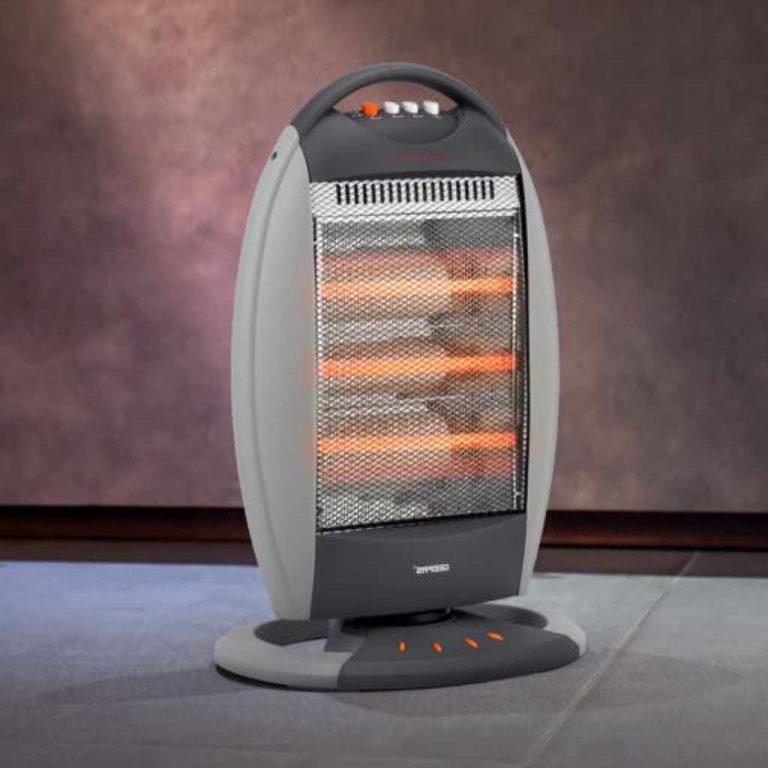
- Radiant Heaters These heaters emit infrared radiation, which directly heats objects and people in their path, much like the sun. They provide quick warmth in their immediate vicinity and are efficient for spot heating, meaning they might use less electricity if you only need to heat a small area of your garage.
- Fan-Forced Heaters These are common and often portable. They use a heating element and a fan to blow warm air into the space. While they heat up a space quickly, the fan uses some additional electricity, and they might run more frequently in larger or less insulated areas.
The choice between these types can influence your electricity bill. For instance, a radiant heater might be more energy-efficient for personal comfort while working in one spot, whereas a convection heater might be better for keeping the entire garage at a consistent, moderate temperature.
Insulation Matters Greatly
The insulation of your garage plays a huge role in how much electricity your heater will use. A well-insulated garage will hold heat much better than one with little to no insulation. This means your heater won’t have to work as hard or run as often to maintain a comfortable temperature.
Think of your garage like a thermos. A well-insulated thermos keeps your drink hot for a long time. An uninsulated garage is like an open cup; the heat escapes quickly.
If your garage walls, ceiling, and door are drafty, warm air will escape, and cold air will come in. This forces your electric heater to constantly battle the outside temperature, leading to significantly higher electricity consumption.
Adding insulation, sealing air leaks around doors and windows, and even upgrading to an insulated garage door can make a big difference. These improvements can reduce the runtime of your heater, directly lowering your electricity bills and answering the question “Do garage heaters use a lot of electricity?” with a more favorable response.

Factors Affecting Electricity Consumption
Beyond the type of heater and insulation, several other elements directly impact how much electricity your garage heater consumes. Understanding these nuances will give you a clearer picture of your potential energy usage and costs. We will explore ambient temperature, thermostat settings, and the size of your garage.
These factors work together to determine the workload placed on your electric heater. For example, a very cold outdoor temperature combined with a high thermostat setting will naturally require more energy than a mild day with a modest temperature preference. By managing these variables, you can gain better control over your garage heating expenses.
Ambient Temperature and Heater Runtime
The outdoor temperature has a direct and significant impact on how long your garage heater needs to run. On a frigid winter day, your heater will have to work much harder and longer to raise the temperature inside your garage to a comfortable level. Conversely, on a milder day, it will reach and maintain your desired temperature more easily and with less runtime.
Imagine you set your garage heater to 50 degrees Fahrenheit. If the outside temperature is 0 degrees Fahrenheit, the heater has to generate a substantial amount of heat to bridge that 50-degree gap. If the outside temperature is 30 degrees Fahrenheit, the gap is only 20 degrees, meaning the heater needs to expend less energy over time.
This principle applies to all electric garage heaters.
For instance, a 1500-watt heater might run 70% of the time when it’s 10 degrees Fahrenheit outside but only 25% of the time when it’s 40 degrees Fahrenheit outside, assuming the same thermostat setting. This difference in runtime directly translates to a significant variation in electricity usage.
Thermostat Settings
The temperature you set on your garage heater’s thermostat is a critical driver of its electricity consumption. Every degree you increase the setpoint requires the heater to run longer or at a higher output to maintain that temperature. Finding a balance between comfort and energy efficiency is key.
A common mistake is setting the thermostat too high. While it might feel nice to have a toasty garage, it significantly increases the electrical load. For example, heating your garage to 70 degrees Fahrenheit will consume considerably more electricity than heating it to 45 degrees Fahrenheit.
For many, the goal is simply to prevent freezing and make the space usable, not necessarily to match indoor home temperatures.
Consider this scenario: setting your thermostat to 50°F might mean your 1500-watt heater runs for 3 hours a day. If you raise that to 65°F, the runtime could easily double or triple, leading to a substantial increase in your electricity bill. It’s often wise to set the thermostat as low as comfortably possible for your needs.
Size of the Garage
The physical size of your garage directly correlates with the amount of heat needed and, consequently, the electricity consumed by your heater. A larger space requires more energy to warm up and maintain a consistent temperature compared to a smaller one.
A heater that is perfectly adequate for a single-car garage might struggle to heat a large two-car or three-car garage, especially if it’s poorly insulated. When a heater is undersized for the space it needs to heat, it will have to run continuously without ever reaching the desired temperature. This constant operation uses a lot of electricity without providing effective warmth.
For example, a small 500-watt portable heater might be sufficient for a small workshop area or a compact garage. However, to adequately heat a 600-square-foot two-car garage, you might need a heater rated at 5,000 watts or more, especially in colder climates. This larger wattage and longer potential runtime means higher electricity use.
Here’s a general guideline, though actual needs vary based on insulation and climate:
| Garage Size (Sq Ft) | Recommended Heater Wattage (Approximate) |
|---|---|
| 200-300 | 1500-2500 watts |
| 300-500 | 2500-5000 watts |
| 500+ | 5000+ watts (or multiple heaters) |
This table illustrates how larger spaces demand more powerful heating solutions, directly impacting electricity consumption.
Estimating Your Electricity Bill
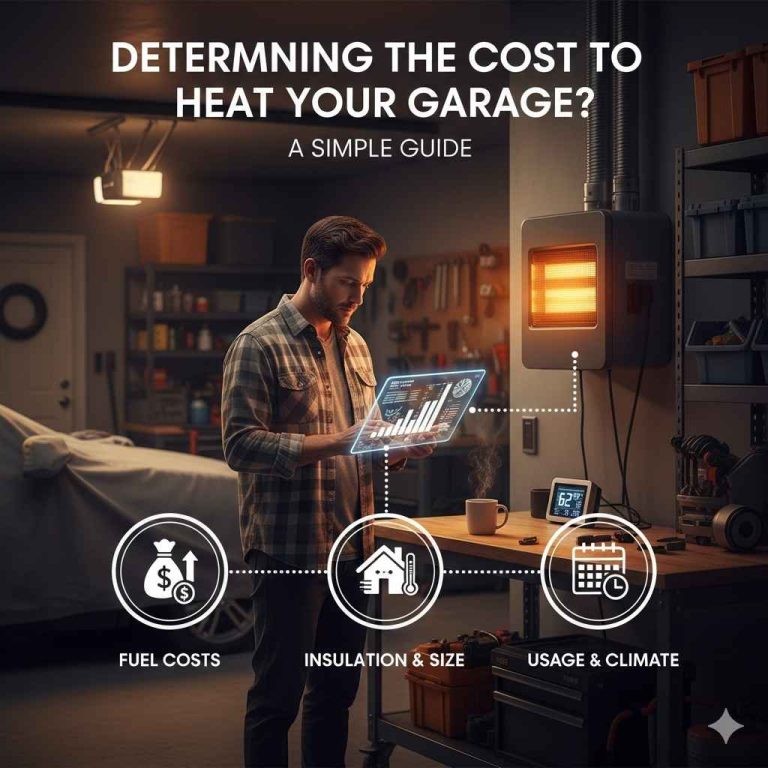
Now that we’ve covered the factors, let’s look at how to estimate what “Do garage heaters use a lot of electricity?” might mean for your actual bill. This involves a few simple calculations and understanding your local electricity rates. It’s not as complicated as it sounds, and a little bit of math can go a long way in predicting costs.
We’ll guide you through the process of calculating kilowatt-hours (kWh) and then applying your utility’s rate to get a clear cost estimate. This practical approach will demystify the numbers and give you confidence in managing your garage heating expenses effectively.
Calculating Kilowatt-Hours (kWh)
To estimate your electricity usage, you need to calculate the total kilowatt-hours (kWh) your garage heater will consume. This is the standard unit that utility companies use to measure and bill electricity. The formula is quite straightforward.
You multiply the heater’s wattage by the number of hours it runs each day, and then divide by 1000. This conversion to kilowatts is the first step in determining your energy consumption.
For instance, if you have a 1500-watt heater and you estimate it will run for 8 hours a day, the calculation would be:
(1500 watts * 8 hours) / 1000 = 12 kWh per day.
This 12 kWh represents the energy used over that 8-hour period. To find the monthly usage, you would multiply this daily figure by the number of days in the month (e.g., 12 kWh/day * 30 days = 360 kWh per month).
Understanding Your Electricity Rate
Your local electricity rate is the price per kilowatt-hour (kWh) that your utility company charges. This rate can vary significantly depending on your location, the time of day (if you have time-of-use pricing), and your specific energy plan. Knowing this rate is crucial for converting your kWh usage into a dollar amount.
You can usually find your electricity rate on your monthly utility bill. It’s often listed as dollars per kWh or cents per kWh. For example, a common rate might be $0.15 per kWh.
If your rate is higher, your heating costs will naturally be higher for the same amount of energy consumed.
Let’s use the previous example of 12 kWh per day for a 1500-watt heater running 8 hours. If your electricity rate is $0.15 per kWh, the daily cost would be:
12 kWh * $0.15/kWh = $1.80 per day.
On a monthly basis, this would be approximately $1.80/day * 30 days = $54.00 per month. This calculation provides a tangible estimate of the running cost.
Sample Scenarios
To illustrate how different usage patterns affect electricity costs, let’s look at a couple of scenarios for a 1500-watt electric garage heater with an electricity rate of $0.15 per kWh.
Scenario 1: Light Use
The garage is moderately insulated, and the goal is to keep it just above freezing (around 35-40°F). The heater runs for an average of 4 hours per day.
Daily kWh: (1500 watts * 4 hours) / 1000 = 6 kWh
Daily Cost: 6 kWh * $0.15/kWh = $0.90
Monthly Cost (30 days): $0.90/day * 30 days = $27.00
Scenario 2: Heavy Use
The garage is poorly insulated, and the desired temperature is higher (around 60°F) to make it comfortable for extended work. The heater runs for an average of 10 hours per day.
Daily kWh: (1500 watts * 10 hours) / 1000 = 15 kWh
Daily Cost: 15 kWh * $0.15/kWh = $2.25
Monthly Cost (30 days): $2.25/day * 30 days = $67.50
These scenarios highlight how significantly usage and insulation affect the answer to “Do garage heaters use a lot of electricity?” for your specific situation.
Tips for Efficient Garage Heating
Answering “Do garage heaters use a lot of electricity?” with a resounding “yes” can be disheartening, but there are many practical ways to reduce that consumption. These tips focus on maximizing heat retention and using your heater only when and where it’s needed. Implementing even a few of these strategies can lead to noticeable savings on your electricity bill.
We will explore simple yet effective methods, from physical improvements to smart usage habits. The goal is to make your garage warmer without making your energy bills uncomfortably high. By being mindful of how you heat your space, you can achieve a more comfortable garage environment efficiently.
Improve Garage Insulation and Sealing
As mentioned before, improving your garage’s insulation and sealing air leaks is the single most impactful step you can take to reduce electricity consumption for heating. A well-sealed and insulated garage acts like a barrier, keeping the warm air in and the cold air out. This means your heater works less, uses less electricity, and your garage stays warmer for longer periods.
Focus on the garage door first. Many standard garage doors offer very little insulation. Adding an insulated garage door or an insulation kit can make a significant difference.
Also, check for drafts around the door frame, windows, and where the garage meets the house. Weatherstripping and caulk are inexpensive solutions that prevent heat loss.
You can also insulate the walls and ceiling of your garage. Common insulation materials like fiberglass batts or spray foam can be installed to create a thermal barrier. Even adding rigid foam board insulation to the interior walls can boost your garage’s R-value (a measure of thermal resistance).
These upgrades might require an initial investment, but they pay for themselves over time through reduced energy bills.
Use a Programmable Thermostat
A programmable thermostat is an excellent tool for managing garage heating efficiently. It allows you to set different temperature schedules for different times of the day or week. This means you can program it to heat the garage only when you need it, and to a lower, less energy-intensive temperature when it’s not in use.
For example, if you only use your garage for a few hours in the morning and a few hours in the evening, you can set the thermostat to lower the temperature significantly overnight and during unoccupied hours. Then, program it to gradually warm up before you plan to use the space. This avoids wasting energy heating an empty garage to a higher temperature.
Consider setting a base temperature, like 40°F, to prevent freezing. Then, schedule it to rise to a more comfortable 55°F or 60°F an hour before you typically use the garage. This smart scheduling drastically reduces the overall runtime of the heater, directly answering the question “Do garage heaters use a lot of electricity?” with a more positive outcome.
Some smart thermostats can even be controlled via a smartphone app, offering greater flexibility and control.
Zone Heating and Spot Heating
If you only need to heat a specific area of your garage, consider using spot heating or zone heating rather than trying to warm the entire space. This is particularly effective if you have a large garage but primarily work or spend time in one particular section.
Spot heaters, like portable radiant heaters or small infrared heaters, are designed to warm a limited area directly. They don’t waste energy heating unused parts of the garage. If you’re working on a car in one bay, a spot heater directed at your workspace can provide sufficient warmth without needing to heat the entire garage to the same temperature.
This approach is far more energy-efficient than running a large heater that attempts to warm the entire volume of air. Imagine trying to warm a stadium with a single hairdryer; it’s ineffective. Similarly, trying to heat a large, uninsulated garage with a small heater or not targeting your heat where you need it will lead to prolonged runtimes and higher electricity bills.
Zone heating ensures that the energy you use is focused on your immediate comfort.
Regular Maintenance of Your Heater
Just like any appliance, your electric garage heater will perform more efficiently when it is well-maintained. Dust and debris can accumulate on heating elements and fans, reducing their effectiveness and forcing them to work harder. Regular cleaning and checks can prevent this and help ensure your heater is running as intended.
Before each heating season, take some time to clean your heater. Unplug it, remove any visible dust or lint from the heating elements and vents using a soft brush or vacuum cleaner attachment. Check for any loose wires or damaged components.
If your heater has a filter, clean or replace it according to the manufacturer’s instructions.
A clean heater can distribute heat more effectively, requiring less runtime to reach your desired temperature. For instance, a heater with clogged vents might only be able to push out a fraction of its intended airflow, leading to longer cycles and increased energy use. Proper maintenance is a simple step that directly contributes to answering the question “Do garage heaters use a lot of electricity?” in a more efficient way.

Frequently Asked Questions
Question: Are electric garage heaters more expensive to run than gas heaters?
Answer: Generally, electric garage heaters can be more expensive to run per unit of heat produced compared to natural gas heaters because electricity is often a more expensive energy source than natural gas. However, electric heaters are typically cheaper to purchase and install, and they don’t require ventilation or fuel lines.
Question: Can I use a regular indoor space heater in my garage?
Answer: While you can use some indoor space heaters in a garage, it’s often not ideal. Garages can be colder, dustier, and more prone to moisture than indoor living spaces. Dedicated garage heaters are often built to withstand these conditions and may offer higher wattage for more effective heating.
Question: How much electricity does a 1500-watt heater use in an hour?
Answer: A 1500-watt heater uses 1.5 kilowatt-hours (kWh) of electricity in one hour. This is calculated by dividing the wattage by 1000.
Question: Should I leave my garage heater on all the time?
Answer: Leaving a garage heater on all the time is usually not the most energy-efficient approach. It’s better to use a thermostat to maintain a set temperature or only heat the garage when it’s needed. This prevents unnecessary energy consumption.
Question: What is the difference between infrared and fan-forced garage heaters in terms of electricity use?
Answer: Infrared heaters heat objects directly, which can feel warmer faster in a localized area, potentially using less electricity if you only need spot heat. Fan-forced heaters heat the air, which takes longer to warm the entire space but can provide more even heating throughout the garage. Their overall electricity use depends on how long they are run and the specific models.
Conclusion
Your electric garage heater’s electricity use hinges on wattage, runtime, and your garage’s insulation. By understanding these factors and employing smart usage tips, you can manage your energy consumption effectively. Focus on improving insulation, setting thermostats wisely, and using zone heating for comfort without high costs.