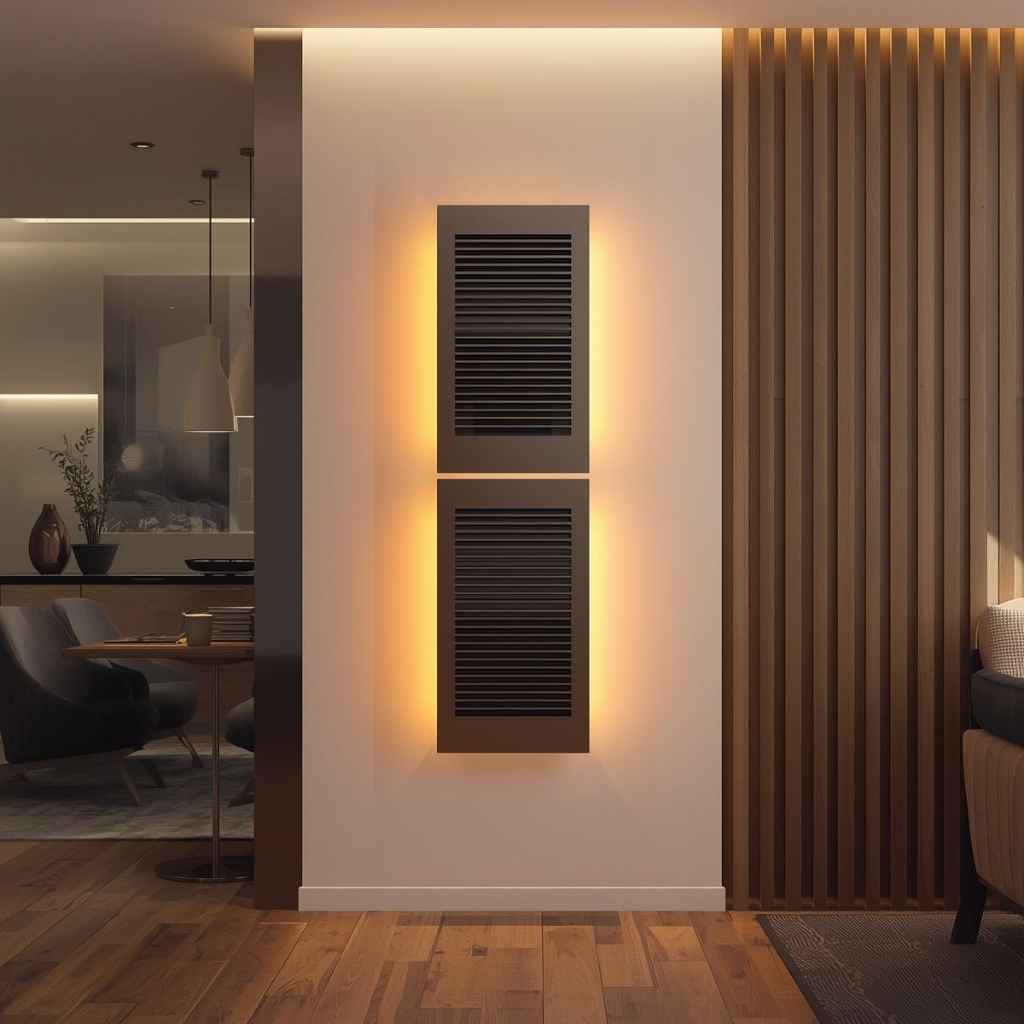
It’s a puzzle many homeowners face. You have a room that just feels colder on one side. Maybe it’s a large living space, or a room with a big window on one wall and a seating area on the other.
You’ve looked at standard wall heaters, but they only seem to point one way. This leads to a very common question: Can you get a heater that warms two sides of a room at once? It’s a great question because it speaks to a real need for even, comfortable heating in your home.
The idea of a heater that blasts warmth in two directions sounds like a dream solution. It could mean banishing cold spots forever. It could make your living spaces much more cozy.
Let’s dive into what’s out there and if this kind of two-sided heating is truly possible for your home.
A heater that warms two sides of a room is not common in a single unit designed to output heat in opposite directions. However, several effective strategies and alternative heater types can achieve the effect of two-sided heating, ensuring even warmth throughout larger or challenging spaces.
Understanding the Two-Sided Heating Challenge
When we talk about a “two-sided wall heater,” we’re usually imagining a single device mounted on a wall that somehow sends heat out both in front of it and behind it. Or perhaps it’s a unit that’s meant to be seen from both sides, like a divider.
The reality is, most wall heaters are designed for directional heating. They push warm air out from a front-facing vent. Their job is to heat the air in front of them.
Heat naturally rises and circulates, but a single unit directly heating two distinct spaces or sides of a room simultaneously is rare in a conventional sense.
Why is this the case? Well, think about how heaters work. They typically have a heating element and a fan.
The fan pulls in cooler air, passes it over the element, and then blows the heated air out. If a unit had vents on opposite sides, it would be blowing warm air in two directions. This is technically possible but not a standard product you’d find easily.
The real issue is often about room layout and heat distribution. A long, narrow room, or a room with a natural divide (like a step-down or a large furniture arrangement), can create these “two-sided” heating problems. One side might be close to the main heating source, while the other is far away.
Or, one side might have more drafts from a window.
So, while the direct “two-sided wall heater” might not be a product category, the goal of achieving even heating across a space is absolutely achievable. We just need to look at the best ways to get that warmth distributed where you need it.
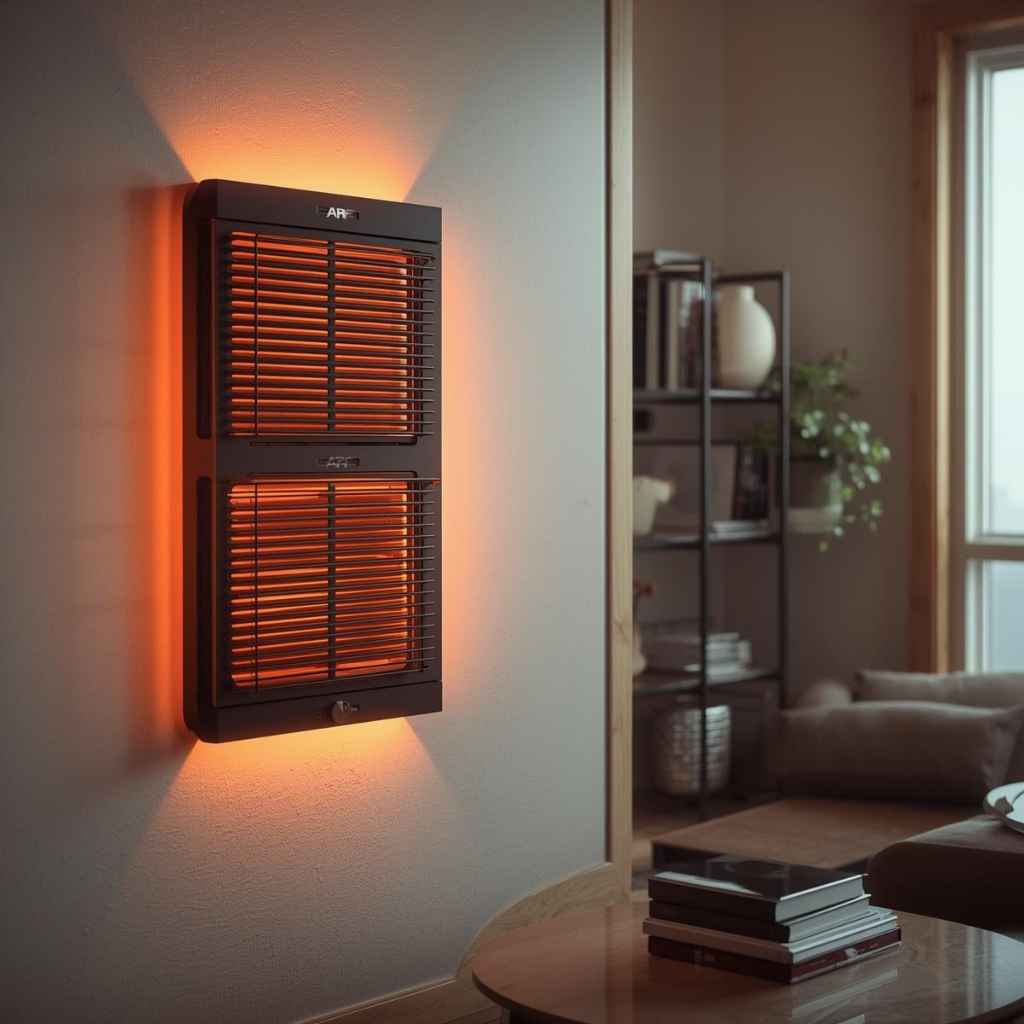
What “Two-Sided” Might Really Mean for Your Home
Let’s explore what people often mean when they ask about two-sided wall heaters. It’s usually about solving a specific heating problem. Here are some common scenarios:
Common Heating Needs
- Heating a Large Open Area: Like a living room that flows into a dining area.
- Divided Rooms: A room that feels like two separate zones.
- Rooms with Drafty Windows: One side of the room gets cold air.
- Heating a Space from Both Sides: Imagine a long room where you need warmth near the entry and also at the far end.
- Room Dividers: Wanting heat on either side of a bookshelf or a partial wall.
The core desire is always for a comfortable temperature everywhere. It’s about efficiency too. You don’t want to overheat one spot just to warm another.
You want smart, effective heating.
So, the search for a “two-sided” heater is really a search for better heat distribution. It’s about finding the right tool for a specific job in your home’s unique setup. We need to think about how heat moves and how to encourage it to go where you want it.
Exploring “Two-Sided” Heater Concepts
While a single unit blowing heat in two opposite directions from the wall isn’t standard, some products come close or can be used creatively to achieve a similar effect. Let’s look at some possibilities and related concepts.
Heater Types and Concepts
- Through-Wall Heaters: These are designed to be installed through an exterior wall, heating both an interior room and an exterior space (like a patio). They effectively heat two “sides” of the wall.
- Duo-Sided Electric Fireplaces: Some electric fireplaces have glass on both sides. While they primarily add ambiance and some radiant heat, they do offer a visual “two-sided” presence.
- Two Units Strategically Placed: The most common and effective solution. Using two separate wall heaters, placed on opposite walls or at either end of a room.
- Heat Transfer Systems: While not exactly a “heater,” systems that move heat from a warm area to a cool one can indirectly achieve two-sided warming.
The key takeaway here is that the effect of two-sided heating can be achieved through various means, even if a single product named “two-sided wall heater” isn’t common. It’s more about smart placement and understanding heat flow.
Personal Experience: The Drafty Dining Room Dilemma
I remember a time when we had a formal dining room that felt like two different climates. It was a decent size, maybe 15 by 20 feet. One long wall had a large bay window, letting in a lot of light but also a significant chill, especially in winter.
The opposite wall had the entrance to the kitchen and felt relatively warmer.
We had a baseboard heater on the window wall, but it was old and didn’t seem to do much for the far corner. The kitchen side felt okay, but the window side was always noticeably colder. Eating dinner there in December meant wearing a sweater, even with the main thermostat set to a comfortable 70 degrees.
I’d stare at that cold window wall and wish for a heater that could somehow push warmth from the other side of the room. Or maybe a heater that mounted in the window sill and heated outwards and inwards? That seemed unlikely!
I felt stuck, trying to find a solution without tearing up the floor for more baseboard or adding a giant, ugly portable heater.
I ended up researching wall-mounted electric heaters. I found models that were slim and could be discreetly placed. My solution wasn’t a single “two-sided” unit, but rather using two smaller, efficient heaters.
One went on the warmer kitchen wall, aimed towards the center of the room. The other went on the colder window wall, but placed strategically to push heat away from the glass and into the room, rather than just blasting the window.
It made a world of difference. That cold corner by the bay window became much more tolerable. It wasn’t magic, but it was smart placement.
It taught me that the best heating solution often involves understanding the room’s quirks and using multiple points of heat.
Through-Wall Heaters: Heating Inside and Out
One type of heater that genuinely heats “two sides” in a literal sense is the through-wall heater. These are typically electric or gas units designed for specific applications where you want to heat an indoor space and an outdoor or adjacent space simultaneously.
Think about a sunroom or a covered patio. You might want to extend the usability of these areas into cooler months. A through-wall heater is installed directly into an exterior wall.
It has a vent or opening on the inside for heating the room and a corresponding vent or opening on the outside to warm the adjacent outdoor area.
These units are designed to be safe for both indoor and outdoor use, depending on the model. They require professional installation because they involve cutting into a wall and often need dedicated electrical circuits or gas lines.
Through-Wall Heater Basics
- Purpose: Heats two distinct areas separated by a wall.
- Installation: Mounted directly through an exterior wall.
- Applications: Sunrooms, covered patios, garages, workshops.
- Power: Can be electric or gas-powered.
- Safety: Built with safety features for dual environments.
While effective for their specific purpose, these aren’t typically what someone means when they’re asking about heating a single, large interior room from two sides. They are more for connecting indoor and outdoor living zones.
Electric Fi
Electric fi
These units provide a cozy glow and radiant heat. While their primary function might be ambiance, they do produce heat that can warm a room. The “two-sided” aspect comes from their design, allowing you to see the flickering flames and feel some warmth from either side of the unit.
However, it’s important to understand their heating capacity. Most electric fireplaces are supplemental heat sources. They won’t typically replace a primary heating system for a large room.
The heat output is usually directed forward from each side, not in opposite directions from a single wall mount.
See-Through Electric Fireplace Notes
- Visual Appeal: Offers ambiance and a focal point from two sides.
- Heat Output: Primarily supplemental, adds warmth to the immediate area.
- Placement: Often used as room dividers or within a wall.
- Type: Electric, requiring a power source.
- Not for Primary Heat: Best for enhancing comfort, not for whole-room heating alone.
So, while they offer a visual “two-sided” element and some warmth, they aren’t the solution for robust, directional heating from opposite walls within a single room.
The Practical Approach: Two Heaters, One Room
For most people wanting to solve the “two-sided” heating problem in a single interior room, the most effective and realistic solution is to use two separate, strategically placed wall heaters. This approach gives you the most control and flexibility.
Imagine a long living room. You might place one heater on the wall near the main entrance to warm traffic areas. Then, you could place another heater on the opposite wall, perhaps near a seating area or a colder window, to ensure that side of the room also gets adequate warmth.
The type of wall heater you choose matters. Consider:
- Convection Heaters: These warm the air and circulate it, providing more even heating. They are good for larger areas.
- Radiant Heaters: These heat objects and people directly, offering quick warmth. They are good for targeted comfort but may not heat the whole room evenly on their own.
- Fan-Forced Heaters: These have a fan that blows air over a heating element, distributing heat quickly. They can be noisy but effective.
When placing two units, think about airflow. You want the heaters to work with the natural movement of air, not against it. Avoid placing them directly opposite each other with no space in between, as this can create turbulent air and less efficient heating.
Smart Placement Tips
- Identify Cold Spots: Feel the room or use a thermometer.
- Opposite Walls: Place heaters on walls that face each other or are at the ends of the room.
- Avoid Obstructions: Don’t place heaters behind large furniture.
- Consider Airflow: Let warm air circulate naturally.
- Use Thermostats: Many wall heaters have built-in thermostats for control.
This method allows you to customize the heat output for each side of the room. If one side needs more warmth, you can set that heater higher. It’s a flexible and powerful way to achieve balanced comfort.
Understanding Different Wall Heater Technologies
When you’re looking for wall heaters to achieve this two-sided effect, it helps to know the common technologies available. Each has its strengths and weaknesses.
Convection Wall Heaters
These are excellent for whole-room heating. They work by drawing in cool air from the floor, heating it, and then releasing the warm air out of a vent at the top. The warm air rises and slowly circulates throughout the room.
This gentle circulation helps to warm the entire space more evenly.
For a “two-sided” heating strategy, you might place one convection heater on each of the problem walls. They’ll work together to heat the air mass of the room from different points.
Convection Heater Advantages
- Even Heating: Distributes warmth throughout the space.
- Quiet Operation: Generally quieter than fan-forced heaters.
- Good for Large Rooms: Effective for consistent temperature.
- Wall-Mounted: Saves floor space.
They take a little time to warm up a room fully, but once they reach temperature, they maintain it well. This makes them a solid choice for consistent, comfortable heat distribution.
Radiant Wall Heaters
Radiant heaters work differently. Instead of heating the air, they emit infrared radiation. This radiation travels in a straight line and warms objects and people it directly hits.
Think of the warmth you feel from the sun or a campfire.
These are great for providing quick, targeted warmth. If one side of your room has a seating area that always feels chilly, a radiant wall heater positioned nearby can offer immediate comfort. However, they don’t heat the air in the room as effectively as convection heaters.
Radiant Heater Advantages
- Instant Heat: Feel warmth right away.
- Targeted Comfort: Great for specific zones.
- Efficient for Spot Heating: Good for areas needing quick warmth.
For a “two-sided” approach, you might use a radiant heater on the colder side of the room to give occupants direct warmth, while a convection heater on the other side handles overall room temperature.
Fan-Forced Wall Heaters
These are often called space heaters. They use a fan to blow air over a heating element, pushing warm air out rapidly. They heat up a space quickly and are good for getting a room to temperature fast.
Their downside can be noise from the fan and sometimes less even heating, as the air can feel a bit dry or concentrated. For a “two-sided” strategy, using two fan-forced heaters could rapidly boost the temperature on both sides of a room.
Fan-Forced Heater Advantages
- Fast Heating: Quickest way to warm up a space.
- Powerful Airflow: Distributes heat rapidly.
- Good for Quick Boosts: Ideal for when you need warmth now.
Many modern fan-forced wall heaters come with thermostats and timers for better control. They are a popular choice for their speed and effectiveness.
Real-World Context: Why Rooms Get Unevenly Heated
It’s not magic that makes one side of a room colder than the other. Several factors contribute to uneven heating, and understanding them helps in finding the best solutions.
Room Design and Layout
Long, narrow rooms are a classic example. The heating source might be at one end, and by the time the warm air travels to the other end, it has cooled significantly. Open-plan living spaces can also be challenging.
If a large living area flows into a dining space or kitchen without clear separation, it creates one big area for the heating system to manage, which can be difficult.
The placement of windows and doors is also critical. Large windows, especially older ones, can be significant sources of heat loss. A bay window, for instance, exposes a large surface area to the outside, making that side of the room colder.
Exterior doors also let in drafts.
Insulation and Drafts
Poor insulation in walls or attics is a major culprit. Heat rises, and if your attic isn’t well-insulated, that warm air will escape. Similarly, if exterior walls have gaps or cracks, cold air can seep in, creating drafty zones.
Drafts are sneaky. You might not see them, but you can feel them. They can come from poorly sealed window frames, gaps around electrical outlets, or even through small openings where pipes enter the house.
These drafts create cold spots that make a room feel unevenly heated.
Heating System Limitations
Sometimes, the issue lies with the main heating system. If your furnace or boiler isn’t powerful enough for the size of your home, or if the ductwork is poorly designed, it can lead to uneven heating. Rooms further away from the main unit often get less warm air.
Even with a good central system, the vents themselves can be a problem. If vents are blocked by furniture or if they are in less effective locations, the warm air won’t reach all parts of the room. This is where supplemental wall heaters can make a big difference.
Sun Exposure and Heat Gain/Loss
The sun plays a role too. A room that gets a lot of direct sunlight on one side can become warmer than the other, especially during the day. Conversely, a side of the house that faces north and doesn’t get much sun will naturally be colder.
Materials used in construction also matter. Some materials retain heat better than others. Older homes might have less efficient building materials compared to modern, energy-efficient homes.
Factors Causing Uneven Heating
- Room Shape: Long, narrow rooms.
- Windows & Doors: Large or poorly sealed openings.
- Insulation: Poor attic or wall insulation.
- Drafts: Air leaks around openings.
- Heating System: Undersized or poorly distributed heat.
- Sunlight: Uneven solar gain.
By identifying these factors, you can better choose how to address the cold spots and achieve that desired two-sided warmth.
What This Means For You: Achieving Even Warmth
So, what’s the bottom line for your comfort? It means you can absolutely achieve the feeling of a “two-sided” heated room, even without a single, magical unit.
When It’s Normal to Have Cold Spots
It’s very common for rooms, especially larger ones or those with significant windows, to have slightly cooler areas. This is normal if the temperature difference isn’t extreme. A few degrees cooler on one side is often just a function of physics and room design.
You might notice it’s colder near exterior walls, especially in the evening or overnight when outside temperatures drop. Rooms with lots of glass are also prone to being cooler on that side.
When to Worry About Cold Spots
You should start to worry if the temperature difference is drastic. If one side of the room is uncomfortably cold while the other is warm, or if you feel significant drafts that make it impossible to use a certain area, it’s time to investigate further. A difference of 10 degrees Fahrenheit or more could indicate a problem.
Also, if you notice an increase in your heating bills without a corresponding increase in the temperature of your home, it might mean your heating system is working overtime trying to compensate for heat loss or poor distribution.
Simple Checks You Can Do
Before buying new heaters, do a quick check.
- Feel for Drafts: On a cooler day, walk around the room and feel near windows, doors, electrical outlets, and baseboards for any cool air movement.
- Check Vents: Make sure the vents from your main heating system are open and not blocked by furniture.
- Inspect Windows: Look for gaps or cracks in window seals.
- Examine Wall Surface: Feel the walls themselves. Is one significantly colder than the others?
These simple checks can help you pinpoint the source of the problem and decide on the best course of action, whether it’s adding draft stoppers, sealing minor leaks, or investing in supplemental wall heaters.
Quick Fixes and Tips for Better Heat Distribution
Even without adding new heaters, there are some simple steps you can take to improve heat distribution and make your room feel warmer on both sides.
1. Seal Drafts
This is often the most impactful step. Use caulk around window frames and door trim. Install weatherstripping around doors and window sashes.
For electrical outlets on exterior walls, you can buy foam gaskets to seal the small gaps behind the outlet covers. These small fixes prevent cold air from entering.
2. Use Curtains or Blinds Strategically
Heavy curtains or blinds can act as an insulating layer against windows. During the day, if the sun is shining, open them on the sunny side to let in solar heat. At night, close them on all windows, especially the colder ones, to trap indoor heat and reduce heat loss to the outside.
3. Rearrange Furniture
Make sure large furniture pieces aren’t blocking heating vents or radiators. If you have a cold spot near a window, try not to place your sofa directly in front of it, which blocks airflow. Sometimes moving a chair or a bookshelf can make a surprising difference in how heat circulates.
4. Use Fans (Yes, Fans!)
Ceiling fans can be used in reverse during the winter. Set them to a low speed and run them clockwise. This gentle upward motion pushes the warm air that has risen to the ceiling back down into the living space.
This helps to equalize temperatures throughout the room.
Heat Distribution Tips
- Seal Gaps: Use caulk and weatherstripping.
- Insulated Curtains: Block drafts from windows at night.
- Open Curtains: Let in sun during the day.
- Furniture Placement: Don’t block vents or cold areas.
- Reverse Ceiling Fan: Push warm air down.
These tips are about working with your existing home and heating system to make things more comfortable. They are low-cost ways to get more warmth where you need it.
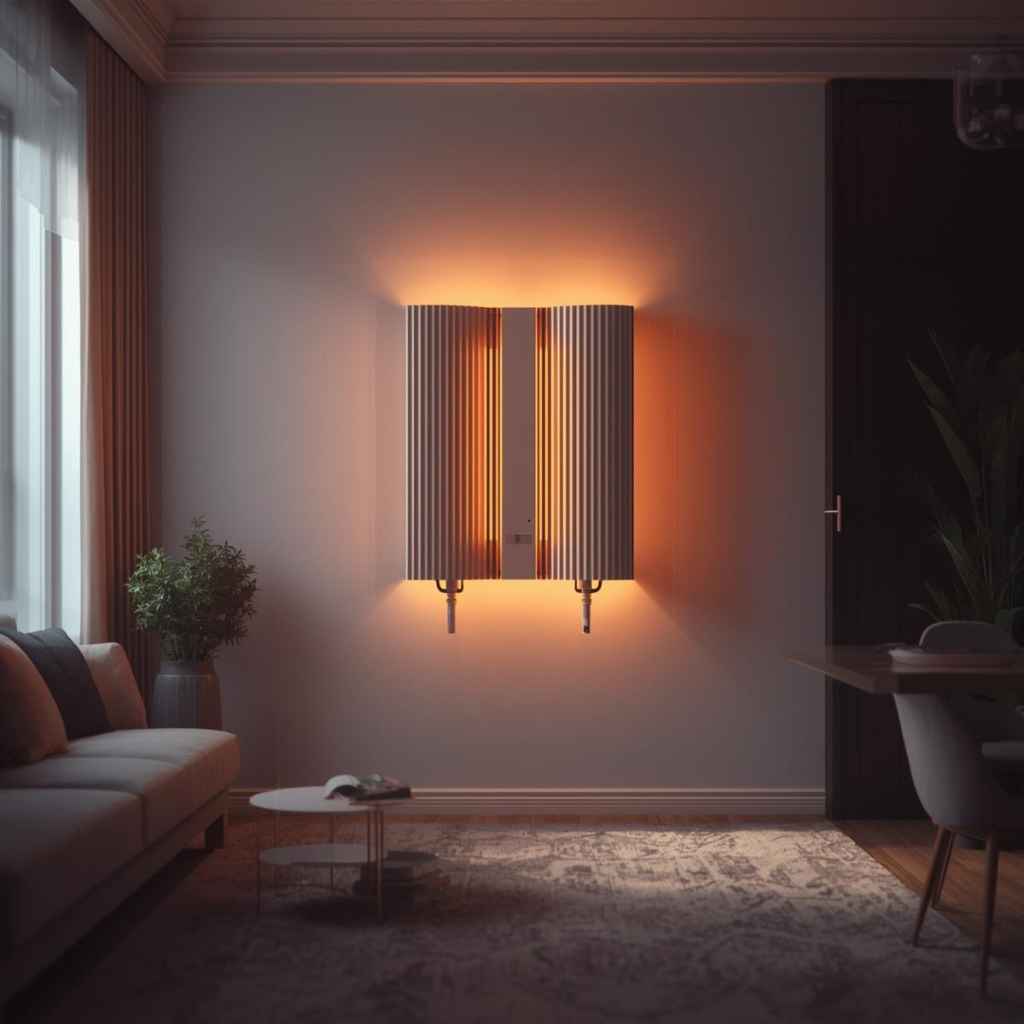
Frequently Asked Questions About Two-Sided Heaters
Can I buy a single wall heater that heats two sides of a room?
While you can’t easily find a single unit designed to output heat in opposite directions from a wall, you can achieve the effect of two-sided heating by using two separate wall heaters strategically placed in the room. Some through-wall heaters heat both inside and outside, but this is for different applications.
What is the best type of wall heater for a large room?
For large rooms, convection wall heaters are often the best choice. They provide even, consistent heat by warming and circulating air throughout the space. Using two convection heaters, placed on opposite sides, can be very effective for larger areas.
Are through-wall heaters safe for indoor use?
Through-wall heaters are designed with safety features for both indoor and outdoor environments. However, always follow the manufacturer’s installation and operating instructions carefully. Professional installation is usually required to ensure they are safely and correctly fitted.
How can I improve heat distribution in a room without adding new heaters?
You can improve heat distribution by sealing drafts around windows and doors, using heavy curtains, rearranging furniture to not block vents, and using a ceiling fan in reverse (clockwise) on a low setting to push warm air down from the ceiling.
Will two small wall heaters be as effective as one large heater?
Using two smaller heaters strategically placed can often be more effective for even heating than one large heater in certain room layouts. It allows you to target specific cold spots and balance the warmth across different areas of the room.
What’s the difference between convection and radiant wall heaters?
Convection heaters warm the air and circulate it throughout the room for even heating. Radiant heaters emit infrared rays that directly warm objects and people they hit, providing quick, targeted warmth but not heating the air as broadly.
Should I place two heaters directly opposite each other?
Placing two heaters directly opposite each other might not be the most efficient. It’s often better to place them on opposite walls or at ends of the room to encourage natural airflow and prevent the warm air streams from colliding directly, which can reduce circulation efficiency.
Conclusion: Your Warmest Room Awaits
While the specific product “two-sided wall heater” might not exist as you imagined, the goal of evenly heating both sides of your room is entirely achievable. Through smart placement of multiple units, understanding how heat moves, and addressing common drafts and heat loss issues, you can transform a chilly space into a cozy haven. Embrace the flexibility of using two well-chosen heaters to combat cold spots and enjoy balanced warmth throughout your home.
Further Reading: DOE wall heater guide | ENERGY STAR heating products
Your comfort is within reach!