Buddy Heater vs Big Buddy: Essential Guide
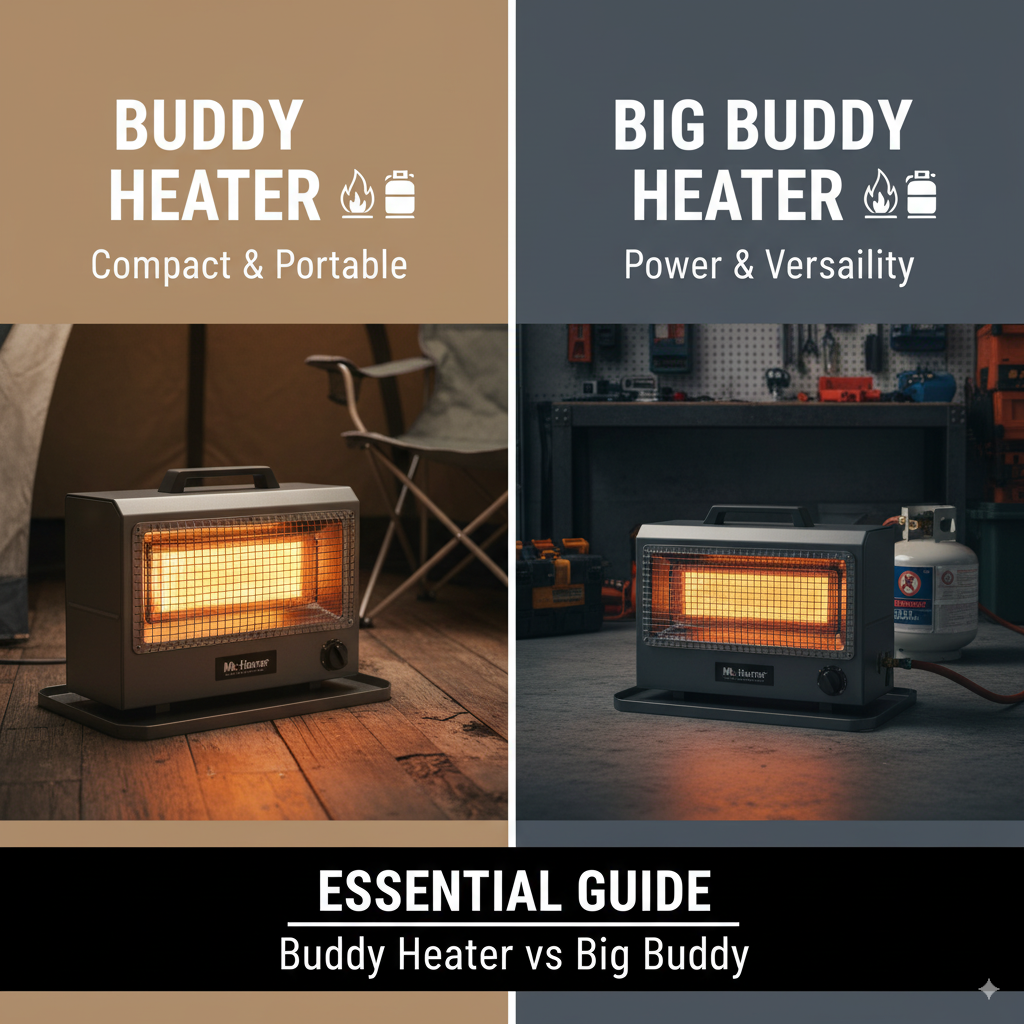
Choosing between a Buddy Heater and a Big Buddy depends on your heating needs. A Buddy Heater is perfect for personal spaces or small rooms. A Big Buddy is ideal for larger areas or emergency heating, offering more power. This guide will help you decide.
Keeping your home warm can feel like a puzzle, especially when outside temperatures drop. You’ve likely seen or heard about propane heaters, and two popular names that pop up are Buddy Heater and Big Buddy. They both promise warmth, but which one is right for your space? It’s easy to get a little confused. Don’t worry, I’m here to steer you through the options with simple, practical advice. We’ll break down what makes each heater unique, explore their best uses, and talk about how to use them safely, so you can enjoy cozy comfort without any guesswork. Let’s find the perfect heating solution for you!
Understanding the Basics: Propane Heaters
Propane heaters are a fantastic way to add warmth to a space, whether it’s a chilly garage, a camping tent, or even a room in your home during a power outage. They work by burning propane to create heat. This makes them portable and powerful, which is why they’re so popular. However, like any heating appliance, it’s important to understand how they work and how to use them safely.

Meet the Contenders: Buddy Heater vs. Big Buddy
At first glance, the Buddy Heater and the Big Buddy might look quite similar. They are both propane-powered, portable heaters designed for supplemental heat. However, they have key differences in their size, output, and intended use. Making the right choice means understanding these distinctions.
The Buddy Heater: Your Personal Warmth Companion
The Buddy Heater, often referred to as the Mr. Heater Buddy, is a compact and versatile propane heater. It’s designed for smaller spaces and personal comfort. Think of it as your go-to for keeping a single room, a tent, or a small workshop comfortably warm.
Key Features of the Buddy Heater:
Portability: Lightweight and usually comes with a handle, making it easy to move.
Safety Features: Often includes a tip-over safety shut-off, an automatic low-oxygen sensor, and a pressure-relief valve.
Heat Output: Typically ranges from 4,000 to 9,000 BTUs (British Thermal Units), adjustable in settings.
Fuel Source: Runs on a small, 1-pound propane cylinder, though often adapters are available for larger tanks.
Ideal Use Cases:
Heating a small tent or ice fishing shelter.
Warming a personal workspace or office.
Providing supplemental heat in a small room.
Keeping you warm in lean-to shelters or during quick outdoor tasks.
Pros of the Buddy Heater:
Extremely portable and easy to set up.
Very fuel-efficient for its size.
Excellent for targeted heating.
User-friendly with simple controls.
Cons of the Buddy Heater:
Limited heating capacity for larger areas.
Requires frequent propane cylinder changes (if using 1lb cylinders).
Can consume propane relatively quickly on higher settings.
The Big Buddy Heater: For Larger Spaces and Serious Comfort
The Big Buddy, also often a Mr. Heater product, is the larger, more powerful sibling of the standard Buddy Heater. As the name suggests, it’s built to tackle bigger jobs, offering more heat output and longer run times. This makes it a favorite for garages, workshops, larger patios, cabins, or as an emergency backup heater during power outages in bigger homes.
Key Features of the Big Buddy Heater:
Larger Size: Physically bigger than the standard Buddy Heater, reflecting its increased capacity.
Higher Heat Output: Typically offers a range from 10,000 to 18,000 BTUs, with multiple heat settings.
Dual Fuel Source Options: Can often run on a single 1-pound propane cylinder or easily connect to a larger, 20-pound propane tank (or larger) using an adapter hose, which allows for much longer run times.
Enhanced Safety: Also equipped with safety features like tip-over shut-off and low-oxygen sensor.
Ideal Use Cases: Heating spacious garages or workshops.
Warming larger cabins or seasonal rooms.
Providing backup heat during power outages for larger areas.
Keeping outdoor gathering spaces warm on cooler evenings.
Pros of the Big Buddy Heater:
Significantly more powerful heating capabilities.
Can heat larger areas effectively.
Longer run times are possible with a larger propane tank.
Versatile fuel connection options.
Cons of the Big Buddy Heater:
Less portable due to its larger size and weight.
Consumes propane at a higher rate, especially on higher settings.
Initial cost may be higher than the standard Buddy Heater.
Direct Comparison: Buddy Heater vs. Big Buddy Table
To make the differences crystal clear, let’s put them side-by-side in a table. This will help you see the key distinctions at a glance.
| Feature | Buddy Heater | Big Buddy Heater |
|---|---|---|
| BTU Output | 4,000 – 9,000 BTUs | 10,000 – 18,000 BTUs |
| Recommended Area Size | Small rooms, tents, personal spaces (up to ~250 sq ft) | Larger spaces, garages, cabins, workshops (up to ~450 sq ft) |
| Portability | High (lighter, more compact) | Medium (heavier, bulkier) |
| Fuel Source | Primarily 1lb propane cylinders; adapter for larger tanks available | 1lb propane cylinders or direct connection to 20lb+ propane tanks (adapter required for larger tanks) |
| Run Time (approximate on low with 1lb cylinder) | Up to 3.5 hours | Up to 4-5 hours (depending on model) |
| Run Time (approximate with 20lb tank) | Many hours (depending on setting) | Many hours (significantly longer burn time) |
| Primary Use | Personal comfort, small confined spaces, portability | Larger space heating, emergency backup, workshops |
Which One Should You Choose? Factors to Consider
The decision between a Buddy Heater and a Big Buddy isn’t about which one is “better”; it’s about which one is “better for you.” Here are the key factors to think about:
1. Space Size
This is the most critical factor.
Buddy Heater: If you need to warm a small tent, an ice fishing shelter, a small personal workspace, or even just a section of a room, the Buddy Heater is likely sufficient. Its heating capacity is designed for more targeted warming.
Big Buddy Heater: If you’re looking to heat a larger area like a two-car garage, a spacious workshop, a small cabin, or a larger room in your house during an emergency, the Big Buddy’s increased BTU output will be necessary.
2. Portability Needs
How often will you be moving the heater, and how far?
Buddy Heater: If you plan to take your heater camping frequently, move it between rooms, or carry it around your workshop often, the Buddy Heater’s lighter weight and smaller footprint make it the more convenient choice.
Big Buddy Heater: While still portable, its larger size and weight make it less ideal for frequent, long-distance carrying. It’s more of a “set it and forget it” for the space you need to heat.
3. Run Time and Fuel Convenience
How long do you expect to run the heater, and what fuel source is most practical?
Buddy Heater: For shorter periods or if you’re accustomed to using multiple small propane cylinders, the Buddy Heater is fine. Traveling with several 1-pound cylinders is manageable.
Big Buddy Heater: If you need sustained heat for many hours, especially if you’re heating a larger space or during a longer power outage, connecting the Big Buddy to a large 20-pound propane tank is a game-changer. It significantly reduces the frequency of fuel changes.
4. Budget
While both are affordable, there can be a slight difference in upfront cost. Generally, the Big Buddy may have a slightly higher price tag due to its larger components and higher output. However, consider the long-term value and the heating capacity you’re getting.
5. Safety Requirements
Both propane and Big Buddy heaters come with essential safety features. Always ensure any heater you purchase meets current safety standards, such as those from safety regulators like the CPSC. Always follow manufacturer guidelines for ventilation.
Understanding BTUs: What You Need to Know
BTU stands for British Thermal Unit. It’s a standard measure of heat energy. For heaters, BTUs tell you how much heat a unit can produce.
More BTUs = More Heat: A higher BTU rating means the heater can warm a larger area or heat a smaller area more quickly.
Matching BTUs to Your Space: A common rule of thumb for standard home heating is about 20 BTUs per square foot. For supplemental heaters like these, you might want a bit more if you’re in a poorly insulated space or need rapid heating.
A Buddy Heater (9,000 BTU) could comfortably heat about 450 sq ft of well-insulated space.
A Big Buddy Heater (18,000 BTU) could heat around 900 sq ft of well-insulated space.
Remember, these are guidelines. Factors like insulation, ceiling height, and outside temperature will affect how much power you actually need.
Safe Operation: Keeping Warm Without the Worry
Safety is paramount when using any propane heater. Both Buddy Heaters and Big Buddy Heaters are designed with safety features, but user responsibility is key.
Essential Safety Practices for All Propane Heaters:
1. Ventilation is Non-Negotiable: Propane heaters produce carbon monoxide (CO), a colorless, odorless, and deadly gas. Never use a portable propane heater in an unventilated space. This includes fully enclosed rooms, tents without proper ventilation openings, or vehicles. Ensure there is a constant supply of fresh air. For indoor use, follow the manufacturer’s specific guidelines for how much ventilation is required. The National Fire Protection Association (NFPA) strongly advises on home heating safety.
2. Use an Indoor-Safe Certified Heater: Double-check that your heater is rated for indoor use if that’s your intention. Look for certifications from reputable testing laboratories.
3. Tip-Over Safety Shut-Off: Most Buddy and Big Buddy heaters have a safety mechanism that automatically shuts off the gas if the heater is knocked over. Ensure this feature is functioning and never disable it.
4. Low-Oxygen Sensor (O.D.S.): This sensor detects when oxygen levels in the air drop too low (which can happen in a poorly ventilated space) and automatically shuts off the heater. Always ensure the O.D.S. is in good working order.
5. No Flammable Materials Nearby: Keep the heater at a safe distance from curtains, furniture, bedding, paper, clothing, and any other flammable materials. A minimum of 1 to 3 feet is usually recommended, but always check your owner’s manual for specific clearance requirements.
6. Supervision: Never leave a portable propane heater running unattended, especially around children or pets.
7. Fuel Handling: Store propane cylinders upright and in a well-ventilated area, away from heat sources and living spaces. Ensure cylinders are properly connected and tightened.
8. Carbon Monoxide Detectors: Install and maintain working carbon monoxide detectors on every level of your home, especially near sleeping areas. This is a crucial safety net. You can find information on home heating systems and safety from reputable HVAC resources.
9. Regular Inspection: Before each use, inspect the heater for any signs of damage, corrosion, or wear on hoses, regulators, and the unit itself.
Connecting Your Heater: Cylinders vs. Larger Tanks
The way you fuel your heater can significantly impact its usability and run time.
Using 1-Pound Propane Cylinders
These small, disposable green cylinders are what the Buddy Heater and Big Buddy are designed to connect to directly without any adapters.
Pros:
Extremely convenient for portability.
No extra equipment needed for basic operation.
Easy to find at most hardware stores, camping supply stores, and even supermarkets.
Cons:
Limited run time (typically 3-5 hours on low).
Cost adds up over time compared to larger tanks.
Disposal of empty cylinders can be an environmental concern for some. (Check local regulations for proper disposal or recycling.)
Connecting to Larger Propane Tanks (e.g., 20lb BBQ Grill Tanks)
This requires an adapter hose and regulator kit. These kits typically connect to the heater’s regulator and then to the larger propane tank. Always ensure you purchase a kit specifically designed for your heater model and intended use (e.g., indoor vs. outdoor conversion).
Pros:
Much longer run times (a 20lb tank can power a Big Buddy for dozens of hours).
More cost-effective in the long run.
Less frequent refilling or swapping.
Cons:
Reduces portability significantly.
Requires purchasing an adapter hose, which can be an extra expense.
Takes up more space.
Important Note: Always check your specific heater’s manual to confirm which types of connections are supported, and purchase reputable adapter kits.
Maintenance and Care for Longevity
To ensure your Buddy Heater or Big Buddy operates safely and efficiently for years to come, follow these simple maintenance tips:
Cleaning: Keep the heater clean. Dust and debris can affect its performance. Wipe down the exterior with a damp cloth (ensure the heater is cool and disconnected from fuel). Gently clean any mesh areas to ensure good airflow.
Storage: Store your heater in a cool, dry, well-ventilated area when not in use. Ensure the propane cylinder is disconnected and stored safely. Protect it from dust and moisture.
Pilot Light Maintenance: If your heater has a pilot light, ensure it stays clean and ignites properly. Refer to your manual for specific instructions.
* Annual Check-Up: Before the start of the heating season, give your heater a thorough inspection. Check for any loose parts, damage to hoses or regulators, and test the safety features (if possible or by visual inspection).

Frequently Asked Questions (FAQ)
Can I use a Buddy Heater indoors?
Yes, many Buddy Heaters and Big Buddy Heaters are certified for indoor use, but only with proper ventilation. Always refer to the heater’s manual for specific safety instructions regarding ventilation requirements, such as opening a window or ensuring continuous airflow. Never use in a completely enclosed, unventilated space.
How long does a 1-pound propane cylinder last?
A 1-pound propane cylinder typically lasts about 3 to 5 hours, depending on the heat setting the heater is on. Lower settings will conserve fuel and extend operating time, while higher settings will consume it faster.
What is the difference in heating power between the Buddy Heater and Big Buddy?
The Big Buddy Heater is significantly more powerful. A standard Buddy Heater typically outputs between 4,000 to 9,000 BTUs, while a Big Buddy can range from 10,000 to 18,000 BTUs. This means the Big Buddy can heat a larger area.
Do Buddy Heaters require electricity?
No, Buddy Heaters and Big Buddy Heaters are propane-powered and do not require electricity to operate their heating function. Some models may have a battery-powered igniter or fan, but the core heating mechanism runs on propane.
Is it safe to use propane heaters during a power outage?
Yes, propane heaters are excellent for use during power outages because they don’t rely on electricity. However, it is absolutely critical that you maintain proper ventilation to avoid carbon monoxide buildup. Always use a CO detector and follow safety guidelines.