Direct Fired vs Indirect Fired Heaters: Proven Benefits
Direct-fired heaters send warm air directly into your space, offering fast, efficient heating perfect for open areas. Indirect-fired heaters use a heat exchanger, keeping exhaust fumes separate for cleaner air, ideal for enclosed spaces where air quality is crucial. Choose based on your space needing direct or cleaner, separated heat.
Feeling the chill and wondering about the best way to warm up your home or workspace? Deciding on the right heater can feel overwhelming, with so many options out there. You want warmth, but you also need it to be efficient, safe, and easy to understand. This guide is here to help! We’ll break down two popular types of heaters—direct-fired and indirect-fired—making it simple to understand which one is best for your needs. Get ready to feel confident about choosing and using your new heating solution!
Direct Fired vs Indirect Fired Heaters: Proven Benefits for Your Space
When it comes to keeping spaces warm, especially larger ones like workshops, garages, or construction sites, choosing the right heating system makes a big difference. Two common types you’ll come across are direct-fired and indirect-fired heaters. They both get the job done, but they do it in different ways, offering unique benefits depending on your situation. Let’s explore what makes each one special and how they can best serve you.
What is a Direct-Fired Heater?
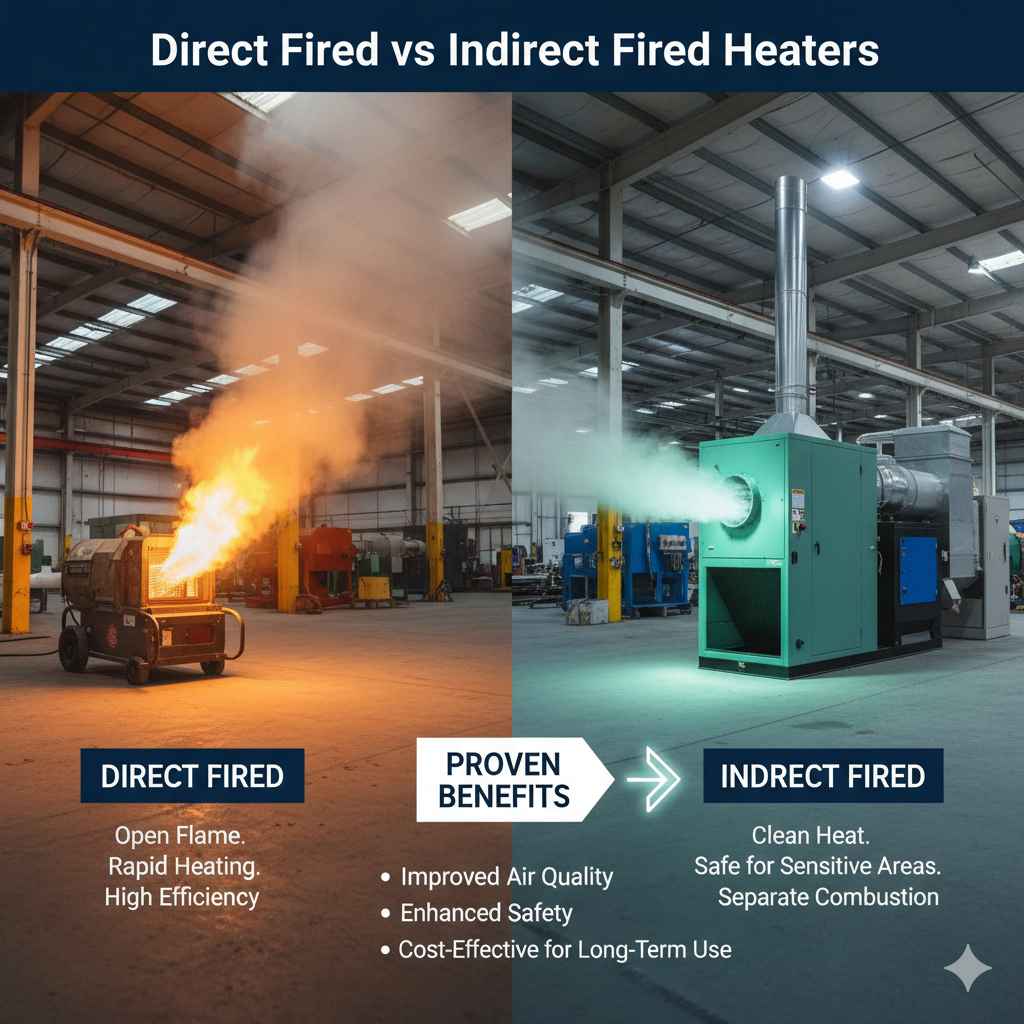
Imagine a heater that blows warm air straight into the room, like a big, powerful fan with a heat source. That’s essentially what a direct-fired heater does! These heaters mix the combustion process directly with the air they are heating and then distribute that warm air into your space. This means no barriers between the flame and the air you breathe, making them very efficient at quickly raising the temperature of the area they are in.
How Direct-Fired Heaters Work
The process is straightforward. Fuel (like propane or natural gas) is burned, and the hot combustion gases are mixed directly with the surrounding air. This heated air is then pushed out into the space by a fan. Because there’s no separation, the heater itself becomes part of the environment it’s warming. This direct method is why they are so quick to heat things up.
Proven Benefits of Direct-Fired Heaters
- Rapid Heating: They are incredibly fast at warming up spaces. If you need immediate warmth, a direct-fired heater is a great choice.
- High Efficiency: Since all the heat generated by the fuel is sent directly into the space, there’s very little wasted heat. This can make them very energy-efficient for their size.
- Simplicity: Their design is generally simpler, with fewer parts. This can mean easier maintenance and potentially lower initial costs.
- Portability: Many direct-fired heaters are designed to be portable, making them easy to move from one area to another as needed.
- Cost-Effective: For unconfined spaces where air quality isn’t a primary concern, they offer excellent heating power for the money.
When to Use Direct-Fired Heaters
Direct-fired heaters are fantastic for well-ventilated or open areas where the combustion byproducts don’t pose a risk. Think about:
- Garages
- Workshops
- Outdoor events (with proper safety measures)
- Construction sites
- Drying applications (like paint or concrete)
It’s important to remember that these heaters do consume oxygen from the air and release combustion gases. Therefore, good ventilation is absolutely key. For more information on ventilation, you can check out resources from the U.S. Environmental Protection Agency (EPA) on Indoor Air Quality, which stresses the importance of fresh air exchange.

What is an Indirect-Fired Heater?
An indirect-fired heater works a bit like a car’s heating system. It burns fuel to create heat, but instead of sending that heat and combustion gases directly into your space, it passes them through a heat exchanger. This heat exchanger warms up the air that is then circulated into your room. The exhaust from the combustion is vented safely outside.
How Indirect-Fired Heaters Work
The magic is in the heat exchanger. Fuel is burned in a combustion chamber. The hot gases produced travel through a metal channel (the heat exchanger), transferring their heat to the air on the other side of the metal. A fan then pushes this heated, but exhaust-free, air into your space. The byproducts of combustion are safely whisked away through an exhaust pipe.
Proven Benefits of Indirect-Fired Heaters
- Cleaner Air: This is the biggest advantage. Because the exhaust fumes are kept separate from the heated air, the air you breathe is much cleaner. This makes them ideal for enclosed spaces.
- Safety: With no direct combustion byproducts entering the heated area, they are considered a safer option for occupied spaces where indoor air quality is a concern.
- Versatility: They can be used in a wider variety of applications, including spaces where people work, live, or where sensitive materials are present.
- Temperature Control: Often, indirect-fired heaters offer more precise temperature control, maintaining a consistent warmth.
- Reduced Odor: Since combustion gases are vented, you won’t experience the smell of fuel or exhaust fumes in your heated space.
When to Use Indirect-Fired Heaters
Indirect-fired heaters are the preferred choice for situations where clean, safe air is a priority. Consider them for:
- Tents and event spaces
- Warehouses and storage facilities
- Offices and temporary job sites
- Spaces where food is prepared or stored
- Anywhere people will be spending significant time with limited ventilation.
- Areas with sensitive equipment that could be damaged by exhaust.
Direct Fired vs Indirect Fired Heaters: Key Differences at a Glance
To make the choice even clearer, let’s look at how these heaters stack up side-by-side. Understanding these differences will help you make the best decision for your specific heating needs.
| Feature | Direct-Fired Heater | Indirect-Fired Heater |
|---|---|---|
| Combustion Air | Mixed directly with heated air | Kept separate via a heat exchanger |
| Exhaust Fumes | Released into the heated space | Vented safely outside |
| Air Quality | Lower (requires good ventilation) | Higher (cleaner air) |
| Heating Speed | Very Fast | Fast, but slightly slower than direct-fired |
| Efficiency | Very High (all heat used in space) | Good (some heat lost in exhaust) |
| Typical Use Cases | Garages, workshops, construction sites, drying | Tents, event spaces, warehouses, offices, clean environments |
| Complexity/Cost | Generally Simpler & Lower initial cost | More Complex & Higher initial cost |
| Portability | Often very portable | Can be portable, but often larger/heavier due to heat exchanger and exhaust |
Choosing the Right Heater for Your Needs
So, how do you decide? It really comes down to the environment you need to heat and your priorities. Ask yourself these questions:
- What kind of space am I heating? Is it open and well-ventilated, or enclosed and requires clean air?
- How quickly do I need the space to warm up? Is immediate heat a priority, or is a slightly slower warm-up acceptable?
- How important is air quality and safety? Will people be spending a lot of time in the heated space? Are they sensitive to air quality?
- What is my budget? Consider both the initial purchase price and the ongoing running costs.
- Do I need to move the heater frequently? Portability might be a key factor.
For instance, if you’re just looking to quickly thaw out your garage on a cold Saturday morning to work on your car, a direct-fired heater is likely your best bet. It’s powerful, fast, and your brief exposure means the minimal exhaust release isn’t a major concern, assuming you crack the door open for a bit. On the other hand, if you’re setting up a temporary heated office on a construction site or warming a large event tent for a party, an indirect-fired heater is the safer and more comfortable choice. This ensures everyone inside can breathe easy.
When considering fuel efficiency, while direct-fired heaters use all their heat directly in the space, indirect-fired heaters can still be very efficient. The key is matching the heater to the application. For more in-depth guidance on energy-efficient heating, you can explore the U.S. Department of Energy’s Energy Saver website, which offers tips on various heating systems.
Installation and Safety Considerations
No matter which type of heater you choose, safety and proper installation are paramount. Always follow the manufacturer’s instructions to the letter.
Direct-Fired Heater Safety
- Ventilation is Non-Negotiable: Ensure the area is well-ventilated. This means having windows or doors open to allow fresh air in and exhaust fumes out. A good rule of thumb is that for every 100,000 BTUs of heat output, you need approximately 1,000 square inches of continuous ventilation opening. For detailed guidance, check local building codes or consult with a professional.
- Clearance: Keep heaters away from combustible materials like wood, fabric, or paper. Check the manual for specific clearance requirements.
- Fuel Source: Ensure your fuel source (like propane tanks) is used and stored safely according to regulations.
- Carbon Monoxide Detectors: Always have working carbon monoxide (CO) detectors installed in any space where fuel-burning appliances are used. This is a critical safety measure.
Indirect-Fired Heater Safety
- Proper Venting: The exhaust vent must be correctly installed to direct all combustion gases outside. Ensure it’s not blocked and is securely attached. Improper venting is a significant safety hazard.
- Maintain Heat Exchanger: Periodically inspect the heat exchanger for any signs of damage or corrosion. A compromised heat exchanger can allow exhaust gases to enter the heated airflow.
- Combustion Air: While exhaust is vented, the heater still needs fresh air for combustion. Ensure the intake is not obstructed.
- Clearance: Like direct-fired heaters, maintain adequate clearance from combustible materials.
- Carbon Monoxide Detectors: Even with vented exhaust, CO detectors are a wise precaution.
For professional advice on installation and safety, consider consulting with a qualified HVAC technician. They can ensure your chosen heater is installed correctly and meets all safety standards.
Understanding BTU Output and Heater Sizing
One of the most important aspects of choosing a heater is ensuring it’s the right size for the space. This is measured in BTUs (British Thermal Units). Too small, and it won’t effectively heat the area. Too large, and it can be inefficient and lead to uneven heating.
A general rule of thumb for calculating BTU needs for well-insulated spaces is:
- Multiply the square footage of the space by 10.
- Adjust for insulation levels: Add 10-20% for poorly insulated spaces, or subtract 10-20% for very well-insulated spaces.
- Consider climate: Colder climates may require a higher BTU output.
For example, a 1,000 sq ft poorly insulated garage in a cold climate might need around 10,000-12,000 BTUs. However, it’s always best to consult the heater manufacturer’s recommendations or a professional for accurate sizing.
Direct-fired heaters often have higher BTU outputs for their size, making them great for quickly warming large volumes of air. Indirect-fired heaters effectively heat their designated space, and their sizing is calculated based on the area they need to maintain at a comfortable temperature.

FAQs About Direct-Fired vs. Indirect-Fired Heaters
Q1: Can I use a direct-fired heater indoors?
Yes, but only in well-ventilated areas. Direct-fired heaters release combustion byproducts, including carbon monoxide, into the air. For any enclosed space where people will be present, good ventilation is absolutely essential to prevent dangerous gas buildup. Always have a working carbon monoxide detector.
Q2: What’s the main difference in air quality between the two?
The main difference is that direct-fired heaters mix combustion fumes with the room air, while indirect-fired heaters vent those fumes outside. This means indirect-fired heaters provide much cleaner air and are safer for long-term occupancy in enclosed spaces.
Q3: Which type of heater is more efficient?
Direct-fired heaters are generally considered more efficient because all the heat generated by the fuel is delivered directly into the space being heated. Indirect-fired heaters lose some heat through the exhaust system, but they are still very effective for their intended applications.
Q4: Are indirect-fired heaters more expensive?
Typically, yes. Indirect-fired heaters have a more complex design due to the heat exchanger and exhaust system, which usually leads to a higher initial purchase price compared to direct-fired models.
Q5: When would I choose a direct-fired heater over an indirect-fired one?
Choose a direct-fired heater when you need rapid heating in a large, open, or well-ventilated space, such as a garage, workshop, or construction site, and air quality from combustion is not a primary concern, provided ventilation is adequate.
Q6: Are direct-fired heaters safe to use near flammable materials?
Like all heaters, both direct and indirect-fired models need to be kept a safe distance from flammable materials. Always check the manufacturer’s manual for specific clearance requirements to prevent fire hazards.
Q7: Can both types use propane?
Yes, both direct-fired and indirect-fired heaters are commonly available in propane models, as well as natural gas and sometimes kerosene or diesel for industrial applications. The fuel type is often a separate consideration from the direct vs. indirect firing method.
Conclusion
Choosing between direct-fired and indirect-fired heaters doesn’t have to be a puzzle. By understanding how each type works and their proven benefits, you can confidently select the best solution for your specific needs. Direct-fired heaters offer quick, efficient warmth for open and well-ventilated areas, making them ideal for garages and workshops. On the other hand, indirect-fired heaters provide cleaner, safer air for enclosed spaces where comfort and air quality are paramount, such as event tents or temporary job sites. Remember to always prioritize safety by ensuring proper ventilation and installing carbon monoxide detectors. With the right heater, you can create a warm, comfortable, and safe environment, no matter the season or the space.