How Much Does A Garage Heater Weigh? (By Type & Brand)
It’s a common question, especially when you’re thinking about getting a garage heater. You’re looking at your space, maybe a bit chilly, and wondering, “Just how much does a garage heater weigh?” It’s more than just a number; it affects how you’ll move it, install it, and even where you can place it. Let’s break down the weight of these heaters.
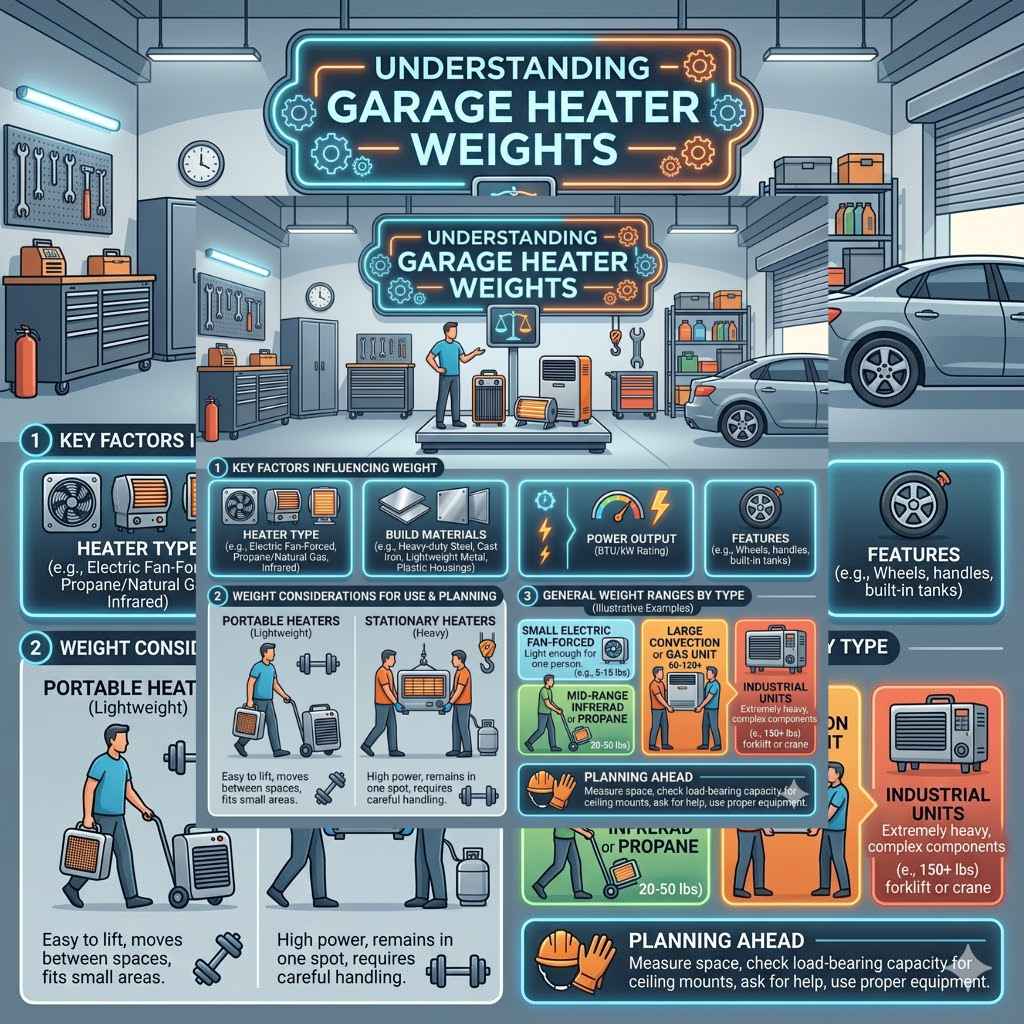
Understanding Garage Heater Weights
When you shop for a garage heater, you’ll see a range of weights. This weight depends a lot on the type of heater it is. It also depends on the brand and the materials used to build it.
Think about how you plan to use your garage. Will you move the heater often? Or will it stay in one spot?
Knowing the weight helps with all these plans.
Some heaters are light enough to carry easily. Others are quite heavy. They might need two people or even special equipment to move them safely.
This is especially true for larger, more powerful units. We will look at the common types and what you can expect for their weight.
Electric Garage Heaters: Portable and Powerful
Electric garage heaters are very popular. Many people like them because they are easy to use. You just plug them in.
They come in many sizes. Some are small and can fit on a workbench. Others are larger and stand on the floor.
The weight varies a lot based on their size and power.
Small portable electric heaters are often quite light. They might weigh anywhere from 5 to 15 pounds. These are great if you only need to heat a small area for a short time.
You can pick them up with one hand and move them around easily. They are good for quick warmth when you are working on a specific project.
Larger, stationary electric heaters can be much heavier. These might weigh between 20 to 50 pounds. They often have a stronger fan and heating element.
They are designed to heat larger garage spaces more effectively. Because they are heavier, they are often meant to be mounted or placed in a spot and left there.
The materials used make a difference. Metal casings are common. They add durability but also weight.
The internal components, like the fan motor and heating coils, also contribute. A higher wattage heater will likely have a beefier motor and stronger coils, adding a bit more to the overall weight.
In real homes, I’ve seen people use these small electric heaters to thaw out a small workspace. They are light enough to move from the car to the workbench. But a larger wall-mounted electric heater feels very solid.
It’s meant to be a permanent fixture, and its weight shows that.
Electric Heater Weight Factors
Size: Bigger heaters mean more components, hence more weight.
Wattage: Higher power often means a bigger motor and heavier parts.
Casing: Sturdy metal cases add durability and weight.
Portability: Units designed for movement are often lighter.
Mounting: Heaters intended for wall or ceiling mounting are usually heavier.
Lasko Electric Garage Heaters
Lasko makes many popular electric heaters. Their portable ceramic heaters are well-known. A typical Lasko portable ceramic heater might weigh around 4 to 8 pounds.
These are super light and easy to move. They are great for personal warmth.
Their larger floor model heaters, which might offer more power for a garage, could weigh closer to 10 to 20 pounds. This is still manageable for most people. It’s a good balance between portability and heating power.
Lasko focuses on user-friendly designs, so their weights are usually quite accessible.
DeWalt Electric Garage Heaters
DeWalt is known for tough tools. Their garage heaters often reflect this. DeWalt electric heaters, especially their more robust models, can be a bit heavier.
Expect something in the range of 15 to 30 pounds for their powerful workshop heaters. These are built for durability in a demanding environment.
The weight suggests they are made with strong materials. They are meant to withstand bumps and constant use in a workshop or garage setting. While not as light as a small personal heater, the weight indicates a solid build.
This ensures they can handle the rigors of garage work.
Propane Garage Heaters: Powerful Heat, More Weight
Propane heaters bring a different level of heat. They are often used in larger or uninsulated spaces. Because they use a fuel tank, they tend to be heavier.
The propane tank itself adds significant weight. Even without a full tank, the heater unit is usually more substantial than electric models.
Small portable propane heaters, the kind you might attach directly to a small propane cylinder (like a 1-pound one), can be relatively light. The heater unit itself might be 5 to 10 pounds. However, you have to account for the propane cylinder.
A full 1-pound cylinder weighs about 2 pounds.
Larger propane heaters that connect to a 20-pound propane tank are much heavier. The heater unit alone might weigh 20 to 40 pounds. Then you add the propane tank.
A full 20-pound tank weighs about 37 pounds. This means the total weight can easily be 60 to 80 pounds or more.
These larger units are rarely moved often. They are designed for powerful, consistent heat. Their weight makes them stable.
You don’t want a heavy heater tipping over. The robust construction also adds to their weight. They need to handle the heat and pressure involved with propane combustion.
I remember helping a friend set up a large propane shop heater. The heater itself was heavy, maybe 30 pounds. But wrestling that full 20-pound propane tank into place was the real workout.
It felt like moving a small boulder! That combined weight made it a two-person job, no question.
Propane Heater Weight Considerations
Heater Unit: The physical construction of the heater adds weight.
Propane Tank: The fuel source is a major weight contributor.
Tank Size: Larger tanks (e.g., 20lb vs 1lb) mean much more weight.
Fuel Level: A full tank is significantly heavier than an empty one.
Portability: Most propane heaters are semi-permanent or need strong carriers.
Mr. Heater Propane Garage Heaters
Mr. Heater is a very popular brand for propane heaters. They offer a wide range of models.
Their smaller portable heaters, like the Buddy series, are designed for easy use. The heater unit itself might weigh around 7 to 10 pounds.
When you add a 1-pound propane cylinder, the total is around 9 to 12 pounds. These are very portable. However, they are often used for camping or small spaces, not always a full garage.
Their larger forced-air propane heaters, designed for garages and workshops, are much more substantial.
These larger Mr. Heater units can weigh 25 to 40 pounds. When you connect them to a 20-pound propane tank, you’re looking at a total moving weight of 60 to 80 pounds.
These are built for serious heating and require a stable setup.
Natural Gas Garage Heaters: Often Wall-Mounted
Natural gas heaters are another option. They are often more permanent installations. This means they are typically heavier and designed to be mounted on a wall or ceiling.
They don’t have a portable fuel tank, but the unit itself contains the combustion chamber, fan, and heat exchanger.
Vented natural gas heaters usually weigh between 30 to 70 pounds. They require a gas line and venting to the outside. Because they are a more involved installation, their weight is less of a concern for frequent moving.
It’s more about secure mounting.
Unvented natural gas heaters might be slightly lighter, perhaps in the 25 to 50 pound range. However, these are less common for garage use due to ventilation concerns. The weight comes from the metal casing, fan, motor, and the internal components that generate heat.
The installation of natural gas heaters often involves professional help. This means the installer will handle the weight. You’re usually not picking these up yourself.
The weight is a sign of a robust appliance designed for long-term use. They are built to last and provide consistent heating.
Natural Gas Heater Weight Factors
Components: Heat exchanger, fan, and motor add to the weight.
Casing: Durable metal enclosures are standard.
Installation Type: Wall or ceiling mounting means they are designed to be heavy.
Venting: Some models require venting, which can add to the unit’s structure.
Fuel Supply: While not a portable tank, the gas valve system is integrated.
Infrared Garage Heaters: Targeted Heat, Variable Weight
Infrared heaters work differently. They heat objects directly, not the air. This can be very efficient for garages.
They come in various forms. Some are portable, and others are designed for permanent mounting.
Portable infrared heaters can be quite light. Small personal infrared heaters might weigh as little as 5 to 15 pounds. These are easy to move around your workspace.
They provide warmth exactly where you need it.
Larger, mounted infrared heaters, especially the radiant tube heaters often seen in commercial garages or workshops, can be much heavier. These units might weigh 30 to 60 pounds or more. They are designed to cover a large area with heat.
The weight in these larger units comes from the robust construction needed to contain the high temperatures. The infrared emitters and the sturdy housing contribute significantly. They are built to be safely mounted overhead and provide long-lasting heat.
I’ve worked in garages that used those long, tube-style infrared heaters. They hang up high. They felt very solid, and honestly, I never really thought about their weight.
It was just assumed they were heavy because they were installed permanently and looked built to last forever. You can’t just pick those up and move them!
Infrared Heater Styles & Weight
Personal Spot Heaters: Typically 5-15 lbs, very portable.
Panel Heaters: Can range from 10-30 lbs, often wall-mounted.
Radiant Tube Heaters: Often 30-60+ lbs, designed for overhead installation.
Construction: Heavier units use robust materials for heat resistance.
Weight vs. Heating Capacity
There’s often a link between how much a garage heater weighs and how much heat it can produce. Generally, a heavier heater means more powerful components. This includes a larger heating element, a more robust fan motor, or a bigger combustion chamber for gas heaters.
For example, a 1500-watt electric heater will likely weigh more than a 750-watt one. This is because it needs more material to generate and manage that extra heat. Similarly, a propane heater designed to heat a 5-car garage will be much heavier than one meant for a small single-car space.
Why does this matter? If you have a very large, poorly insulated garage, you’ll likely need a more powerful heater. This means you should expect it to be heavier. If you only need to take the chill off a small workshop area, a lighter, less powerful unit might be sufficient.
It’s good to check the specifications for both the weight and the heating capacity (often measured in BTUs for gas or watts/square feet for electric). This helps you choose the right heater for your needs without getting a unit that’s too heavy to handle or not powerful enough to do the job.
Heater Weight and Installation Considerations
Portability: If you plan to move your heater often, look for lighter models. This might mean choosing an electric heater over a propane one.
Mounting: Heaters that mount to walls or ceilings will have weight limits for the mounting surface. Check the heater’s weight against your wall studs or ceiling joists.
Storage: If you need to store your heater during warmer months, consider how heavy it is and where you’ll put it. A very heavy unit might be difficult to move to an attic or high shelf.
Safety: Heavier units are often more stable. Lighter units might need to be secured to prevent tipping, especially if you have pets or children around.
Comparing Weights: A Quick Look
Let’s put some common types side-by-side to give you a clearer picture. These are general ranges, and specific models can vary.
Quick Weight Comparison Chart
| Heater Type | Typical Weight Range (Heater Unit Only) | Notes on Total Weight (if applicable) |
|---|---|---|
| Small Portable Electric | 5 – 15 lbs | Very manageable |
| Medium/Large Electric (Floor/Wall) | 20 – 50 lbs | May require two people for mounting |
| Small Propane (e.g., Buddy) | 7 – 10 lbs | Add 2 lbs for 1lb propane cylinder |
| Large Propane (20lb tank required) | 25 – 40 lbs | Add 37 lbs for a full 20lb tank = 62-77 lbs total |
| Natural Gas (Wall/Ceiling) | 30 – 70 lbs | Designed for secure mounting, not portability |
| Infrared (Portable) | 5 – 15 lbs | Easy to move |
| Infrared (Radiant Tube) | 30 – 60+ lbs | Heavy duty, permanent installation |
As you can see, the type of heater you choose has a big impact on its weight. The decision about what kind of heater to get should definitely include thinking about how you’ll handle its weight.
What Does This Mean for You?
So, how much does a garage heater weigh? It varies greatly. But understanding these weights helps you make a smart choice.
For simple needs, a light electric heater is easy. For bigger jobs, you might need something heavier, and that’s okay. Just be prepared for the handling involved.
Consider your garage space. Is it large? Do you have good ventilation?
Do you want to move the heater? Your answers will point you toward the right type. And knowing the weight helps you plan the logistics of getting it into your garage and set up.
Don’t forget to check the product’s specifications for the exact weight before you buy.
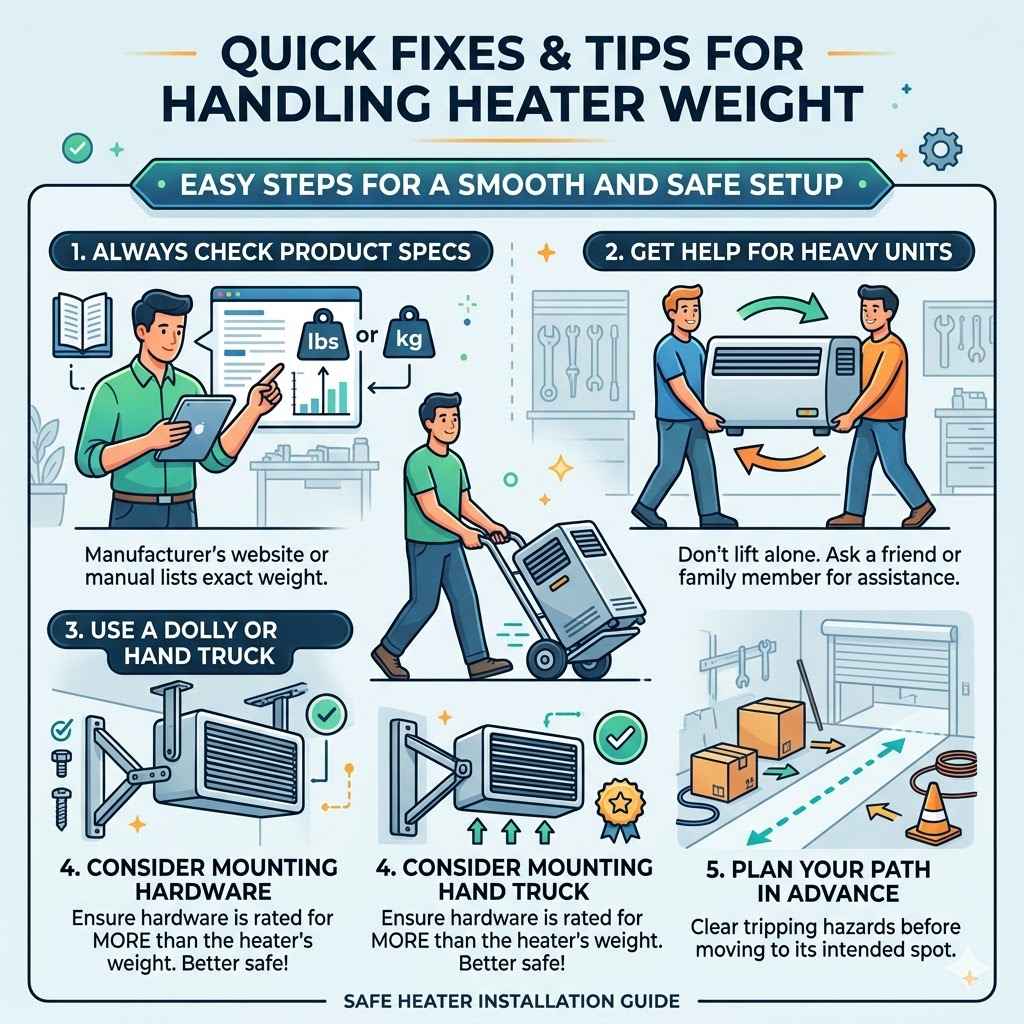
Quick Fixes & Tips for Handling Heater Weight
If you’ve decided on a heater and are worried about its weight, here are a few tips:
- Always check the product specs. The manufacturer’s website or the product manual will list the exact weight.
- Get help. For heavier units, don’t try to lift them alone. Ask a friend or family member for assistance.
- Use a dolly or hand truck. If you need to move a heavy heater across your garage floor, a dolly can save your back.
- Consider mounting hardware. For wall or ceiling mounted heaters, ensure the mounting hardware is rated for more than the heater’s weight. Better safe than sorry!
- Plan your path. Before moving a heavy heater, clear the path to its intended spot. Remove any tripping hazards.
These simple steps can make the process of setting up your new heater much smoother and safer, no matter how much it weighs.
Frequently Asked Questions About Garage Heater Weight
What is the average weight of a portable electric garage heater?
Portable electric garage heaters typically weigh between 5 to 15 pounds. Smaller, personal models are at the lower end, while more powerful floor models can be up to 20 pounds.
How much does a propane heater with a 20lb tank weigh when full?
A typical 20-pound propane tank weighs about 37 pounds when full. If the propane heater unit itself weighs between 25 to 40 pounds, the total combined weight can be between 62 to 77 pounds.
Are wall-mounted garage heaters very heavy?
Yes, wall-mounted garage heaters, like natural gas or some electric models, are generally heavier. They often weigh between 30 to 70 pounds. This weight is due to their robust construction and components designed for permanent installation.
Does the weight of a heater indicate its heating power?
Generally, yes. Heavier heaters often have more powerful heating elements, larger fans, or more robust construction needed for higher heat output. This is true for both electric and gas models.
How can I safely move a heavy garage heater?
To safely move a heavy garage heater, always check its exact weight. Get help from another person, use a hand truck or dolly, clear your path, and lift with your legs, not your back.
Are infrared tube heaters heavier than other types?
Infrared radiant tube heaters are often among the heaviest, especially those designed for commercial or large workshop use. They can weigh 30 to 60 pounds or more due to their robust design for high-temperature operation and permanent mounting.
Final Thoughts on Garage Heater Weight
The weight of a garage heater is an important detail to consider. It impacts everything from how you buy it to how you install it. By understanding the typical weights for different types, you can better choose the right heater for your garage and your needs.
Be prepared for the weight, and you’ll enjoy a warmer space safely and easily.