Does Heat Affect Type 1 Diabetes? Essential Facts
Yes, heat absolutely affects Type 1 Diabetes management. High temperatures can cause dehydration, increase insulin absorption rates, and lead to unpredictable blood sugar swings, making careful monitoring essential for safety and stability.
For space-specific heating decisions, Swimming Pool Heaters: Gas vs Heat Pump – gives readers another practical setup to compare.
For a closely related heater topic, What Heating Type Is a Heat Pump? Answers Explained gives readers a useful next step.
For a closely related heater topic, What Does Heating Type “Heat Pump” Mean? Explained Simply gives readers a useful next step.
If you live with Type 1 Diabetes (T1D), the summer sun or even just a warm room can feel like another complication to manage. It is frustrating when your careful routine suddenly stops working just because the weather changes. You need clear, simple facts, not complicated medical talk, to keep your blood sugar steady and stay safe when it’s warm.
We understand that managing T1D takes constant attention. This guide, written by Tanim, your friendly home comfort expert, cuts through the confusion. We will walk you through exactly how heat impacts your body, your insulin, and your supplies. By the end, you will feel confident knowing how to adjust your plans for a comfortable and secure experience, no matter how high the mercury climbs.
When the temperature rises, many things in our lives change—how we dress, what we eat, and how we manage our homes. For someone living with Type 1 Diabetes, these changes have a direct impact on blood glucose levels. Heat is not just uncomfortable; it is a real factor that can change how your body uses insulin and how hydrated you stay.
It is vital to understand that heat does not cause Type 1 Diabetes, but it certainly makes managing it trickier. We are going to break down the science into simple, actionable steps so you can enjoy the warmth safely.
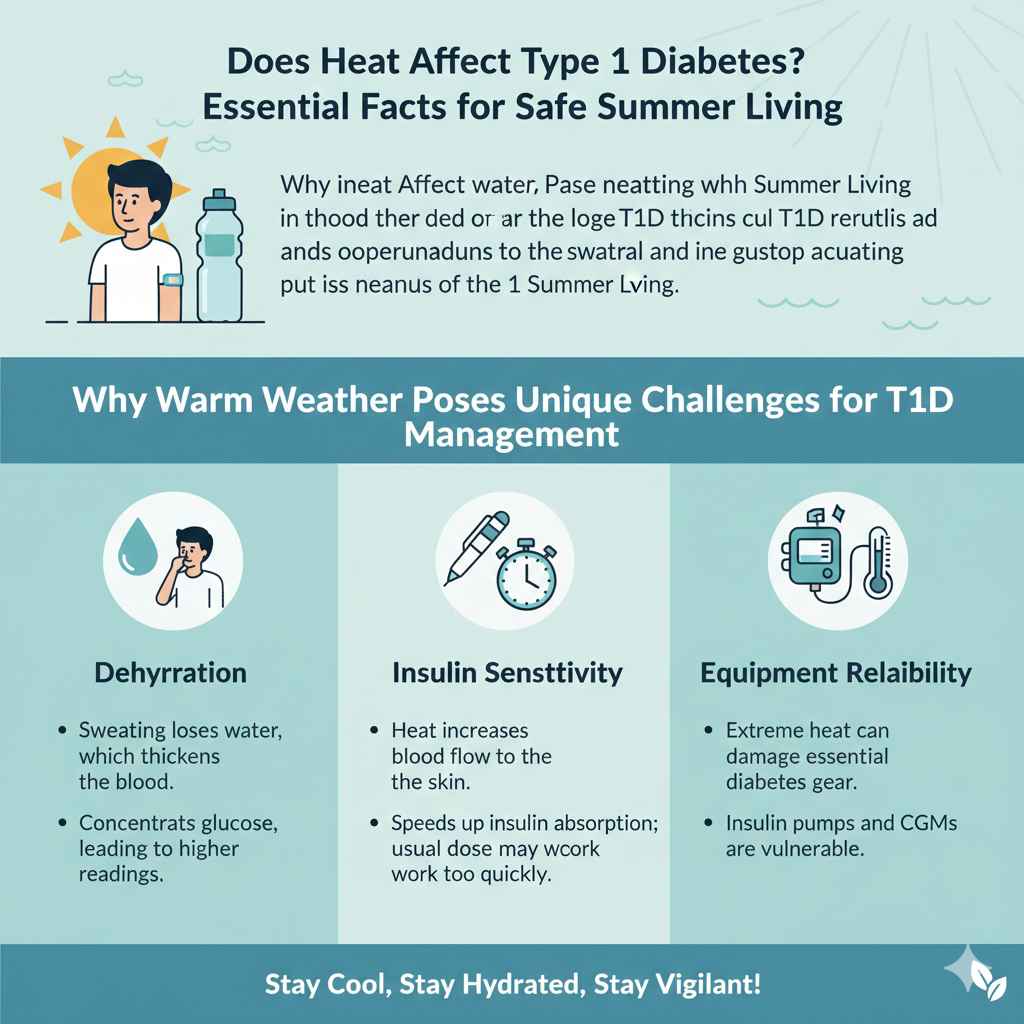
Why Warm Weather Poses Unique Challenges for T1D Management
Think of your body as a very precise furnace. When it gets hot outside, your body works overtime to cool itself down. This process uses energy and affects how fluids and medicines move around inside you. This internal shift is why blood sugar levels can become erratic when you are sweating under the sun.
Here are the top three reasons why heat is a significant consideration for those with T1D:
- Dehydration: Sweating loses water, which thickens the blood and can concentrate glucose, potentially leading to higher readings.
- Insulin Sensitivity: Heat can increase blood flow to the skin and speed up the absorption of injected or pumped insulin, meaning your usual dose might work too quickly.
- Equipment Reliability: Extreme heat can damage essential diabetes gear like insulin pumps and continuous glucose monitors (CGMs).
The Science Simplified: How Heat Interacts with Your Body and Insulin
To manage heat effectively, we need to understand the mechanics involved. This isn’t complicated chemistry; it’s practical knowledge about how your body responds to environmental stress. Think of this information as preventative maintenance for your health.
Dehydration: The Silent Blood Sugar Driver
When you are dehydrated, your total blood volume decreases. If you have high blood sugar already, the glucose becomes more concentrated in the smaller amount of fluid remaining, leading to higher readings, even if you haven’t eaten anything extra.
Furthermore, the kidneys work harder to remove excess sugar, but if water is scarce, they might struggle, prompting your body to release stress hormones that can raise blood sugar further.
Recognizing the Signs of Heat-Related Illness
It can be hard to tell if you feel thirsty because of the heat or if you are heading toward a high blood sugar episode. Look out for:
- Excessive thirst that isn’t quenched easily.
- Dry mouth or skin.
- Dark yellow urine or infrequent urination.
- Feeling unusually tired or dizzy, which can overlap with hypoglycemia symptoms.
Insulin Absorption Rates: Faster, Stronger, Sooner
Insulin works best when it’s stored and injected at room temperature. When your skin is hot—whether from a hot car, direct sun exposure, or just ambient temperature—blood vessels near the surface widen (dilate). This brings more blood flow close to the injection site or insulin pump site.
More blood flow means the insulin gets absorbed into your system much faster than usual. If you inject your usual dose, it might start working aggressively, sometimes leading to unexpected lows (hypoglycemia).
Tanim’s Quick Tip: Never inject insulin into skin that is flushed or hot, like right after coming in from the beach or after a hot yoga session. Give your body 20–30 minutes to cool down first.
The Impact on Diabetes Technology
Modern T1D management relies heavily on technology: pumps, CGMs, and smart pens. Heat is the enemy of electronics. Exposure to high heat can permanently damage these devices, leading to inaccurate readings or total failure when you need them most.
For reliable information on protecting medical devices, always consult official guidelines, such as those provided by reputable health organizations like the U.S. Food & Drug Administration (FDA) regarding medical device safety.
| Device Type | Heat Risk | Safe Storage Temperature Range (General Guide) |
|---|---|---|
| Insulin Vials/Pens | Spoilage, reduced effectiveness | 59°F to 86°F (15°C to 30°C) |
| Insulin Pumps | Electronic failure, inaccurate dosing | Avoid direct sunlight/hot car storage |
| CGMs/Sensors | Adhesive failure, sensor drift | Generally stable, but extreme heat is risky |
Practical Adjustments: How to Adjust Your T1D Plan for Warm Weather
Managing Type 1 Diabetes in the heat isn’t about stopping your activities; it’s about making smart, small adjustments before problems arise. Confidence comes from preparation!
Hydration Strategy: More Than Just Sipping
For T1D management in the heat, water is medicine. You need to drink consistently, not just when you feel thirsty. Thirst is often a sign that you are already slightly dehydrated.
Your Go-To Hydration Checklist
- Pre-Hydrate: Drink a large glass of water before heading out into the heat.
- Consistent Intake: Aim for small, frequent sips throughout the day, not large gulps all at once.
- Electrolytes Matter: If you are sweating a lot, plain water might not be enough. Consider sugar-free electrolyte drinks to replace lost salts, but be aware that some electrolyte drinks contain hidden sugars that can impact BG. Check labels carefully!
Insulin Dosing Adjustments: Less Might Be More
Because heat speeds up absorption, you will almost certainly need less fast-acting insulin (bolus) for meals when you are out in the sun or very warm conditions. This is an area that requires careful, slow testing.
Actionable Steps for Insulin Dosing in Heat:
- Reduce Basal Rate (If using a Pump): Many pump users find they need to temporarily lower their background insulin rate (basal) by 10% to 25% when the temperature is high, especially if they are physically less active indoors or sweating heavily outdoors.
- Bolus Reduction: Lower your insulin-to-carb ratio slightly or reduce your correction factor before a meal if you know you will be exposed to heat shortly after eating.
- Test Frequently: Check your blood sugar often—every 1-2 hours when active in the heat—to catch lows before they become serious.
Remember: Never guess. If you are unsure about changing your settings, reduce your mealtime insulin slightly and test your blood sugar 90 minutes later to see the effect. Always have fast-acting glucose (like glucose tabs or juice) ready to treat unexpected drops.
Meal Planning for Hot Days
In hot weather, your appetite might decrease, or you might crave lighter, colder foods. These changes can mess up your usual carb counting.
When eating lighter meals:
- Be mindful of high-fat foods (like ice cream or heavy salads with dressing). Fat digests slowly and can cause a delayed rise in blood sugar, even if the initial meal bolus seems correct.
- Don’t skip meals just because it’s hot. Consistent eating keeps your baseline stable.
- If you are exercising outdoors (like gardening or swimming), remember that activity also lowers blood sugar, combining with the heat effect. Be aggressive about reducing insulin before activity in the heat.
Protecting Your Supplies from the Heat
Your insulin and devices are expensive and critical. Heat can spoil insulin faster than you think. Spoiled insulin will not work correctly, leading to high blood sugar that you can’t seem to correct.
Insulin Storage: Keeping It Cool, Not Cold
The general rule for insulin is:
- In Use: Insulin currently being used should be kept below 86°F (30°C).
- Unopened Vials: Store unopened insulin in the refrigerator (36°F to 46°F).
Never leave insulin in a parked car—even for a few minutes! Car interiors heat up incredibly fast, easily reaching temperatures that ruin insulin in under ten minutes.
Smart Ways to Carry Insulin on the Go
For day trips or walks, you need reliable, portable cooling solutions:
- Frio Bags: These pouches use evaporation. You soak them in cool water, and as the water evaporates, they keep the contents cool for up to 48 hours, provided the ambient humidity isn’t excessively high. They require no ice or electricity.
- Insulated Carriers: Small, insulated lunch bags paired with a frozen ice pack work well, but place a barrier (like a cloth napkin) between the ice pack and the insulin vial to prevent freezing, which is just as damaging as overheating.
Pump and CGM Site Care in Water and Heat
If you plan on swimming or enjoying water activities, your pump and CGM sites need attention. While most modern devices are water-resistant, they are not always waterproof for long periods or at deep depths.
Always check your specific device manual for waterproof ratings. For example, many pumps allow showering but might require disconnection for swimming or extended water play. Proper site care also involves ensuring the adhesive holds up against sweat and water, which can cause unexpected site failures.
If you see signs of skin irritation under your site due to excessive sweat, gently clean the area (when safe to change the site) and consider using a protective barrier film underneath the sensor adhesive.
Recognizing and Responding to High BG and Heat Exhaustion
When it’s hot, you need to be vigilant for overlapping symptoms. High blood sugar (hyperglycemia) and dehydration can quickly escalate into heat exhaustion.
The Danger of Compounding Issues
Heat stress causes your body to work harder, which can naturally raise blood sugar. High blood sugar prevents your body from efficiently sweating and cooling itself down, creating a vicious cycle:
Hot Weather → Dehydration → High BG → Reduced Cooling Ability → Worsening Heat Stress.
This is why staying ahead of dehydration is the most crucial preventative measure against heat-related diabetes complications.
Emergency Response: When to Seek Help
If you suspect you have DKA (Diabetic Ketoacidosis) because your BG is very high and you feel unwell, or if you show signs of severe heat exhaustion, immediate action is necessary.
When to contact your healthcare provider or seek emergency care immediately:
- Persistent vomiting or inability to keep fluids down.
- Ketones in your urine or blood that are moderate or high, especially when BG is over 250 mg/dL.
- Confusion, inability to think clearly, or fainting.
- Signs of heat stroke (fever over 103°F, cessation of sweating, rapid pulse).
For general guidance on managing acute diabetes situations, the Centers for Disease Control and Prevention (CDC) provides excellent resources on recognizing emergencies.
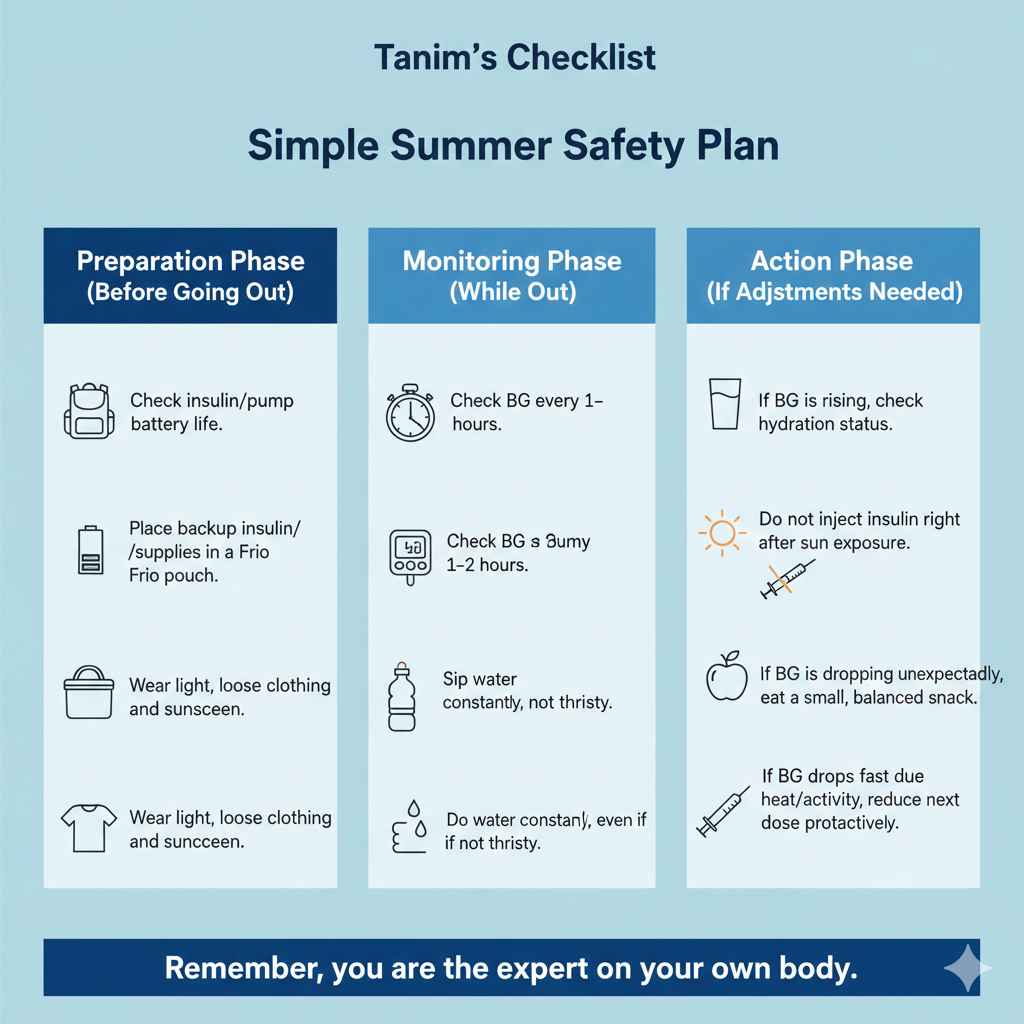
Tanim’s Checklist: Your Simple Summer Safety Plan
Don’t let the heat stress you out! Having a short, easy-to-follow plan keeps you feeling in control. Here is your essential, confidence-boosting checklist for warm days:
| Preparation Phase (Before Going Out) | Monitoring Phase (While Out) | Action Phase (If Adjustments Needed) |
|---|---|---|
| Check insulin/pump battery life. | Check BG every 1–2 hours. | If BG is rising, check hydration status. |
| Place backup insulin/supplies in a Frio pouch. | Sip water constantly, even if not thirsty. | If BG is dropping unexpectedly, eat a small, balanced snack. |
| Wear light, loose clothing and sunscreen. | Do not inject insulin right after sun exposure. | If BG drops fast due to heat/activity, reduce next dose proactively. |
Remember, you are the expert on your own body. Heat is just one more variable you are learning to master. Be proactive, check your numbers often, and don’t hesitate to lower your insulin needs slightly when the temperature climbs.
Frequently Asked Questions (FAQ) for Beginners
Q1: Can hot weather permanently damage my stored insulin?
A: Yes, it can. Insulin exposed to temperatures above 86°F (30°C) for extended periods loses its effectiveness quickly. While it might not look different immediately, it will not lower your blood sugar properly, leading to unexpected highs.
Q2: Should I stop exercising outdoors if it’s very hot?
A: It is safest to move intense exercise indoors to air conditioning when it is extremely hot. If you must be outside, significantly reduce your insulin dose beforehand and monitor for lows very closely, as the heat increases insulin absorption while exercise increases sensitivity.
Q3: What is the first thing I should do if my blood sugar starts climbing rapidly on a hot day?
A: First, drink a large glass of water immediately to combat any underlying dehydration. Then, check your pump site or injection site—is it hot or red? If everything looks fine, administer a small correction dose, but be aware that the heat might make this dose work faster than normal.
Q4: Is it safe to use a regular cooler with ice packs to carry my insulin?
A: Yes, but be very careful not to let the ice pack touch the insulin vial directly. Freezing ruins insulin. Always wrap the ice pack in a towel or place a piece of cardboard between the ice pack and your supplies for insulation.
Q5: Does sweating itself cause blood sugar to drop?
A: Sweating itself doesn’t directly cause lows, but heavy sweating is a sign of significant physical effort and fluid loss, both of which increase insulin sensitivity. This combination often leads to blood sugar drops, so monitor closely after heavy sweating sessions.
If I feel dizzy, is it low blood sugar or heat exhaustion?
A: That is tricky, as symptoms overlap! If you have recently eaten or given insulin, test for low blood sugar first and treat if necessary. If your BG is normal (or high) and you cannot quench your thirst, treat it as heat exhaustion—move to shade, cool down, and aggressively hydrate with electrolytes.
Conclusion: Staying Cool and Confident with T1D
Managing Type 1 Diabetes is always a balancing act, and heat simply adds another element to that careful calibration. As Tanim, I want you to feel reassured that you have the tools and knowledge to handle warm weather safely. By focusing on hydration, adjusting your insulin needs preemptively, and safeguarding your vital supplies, you take control away from the unpredictable elements.
Remember the core takeaways: Heat speeds up insulin action, dehydration concentrates your sugar, and technology needs protection. Treat water as a critical part of your medication routine, check your blood sugar more frequently when the sun is out, and always carry your emergency supplies safely cooled. With these simple, practiced adjustments, you can enjoy the warmth and activity of the summer months with confidence and comfort. Stay prepared, stay cool, and keep thriving!