How Many Types of Water Heater: Essential Guide
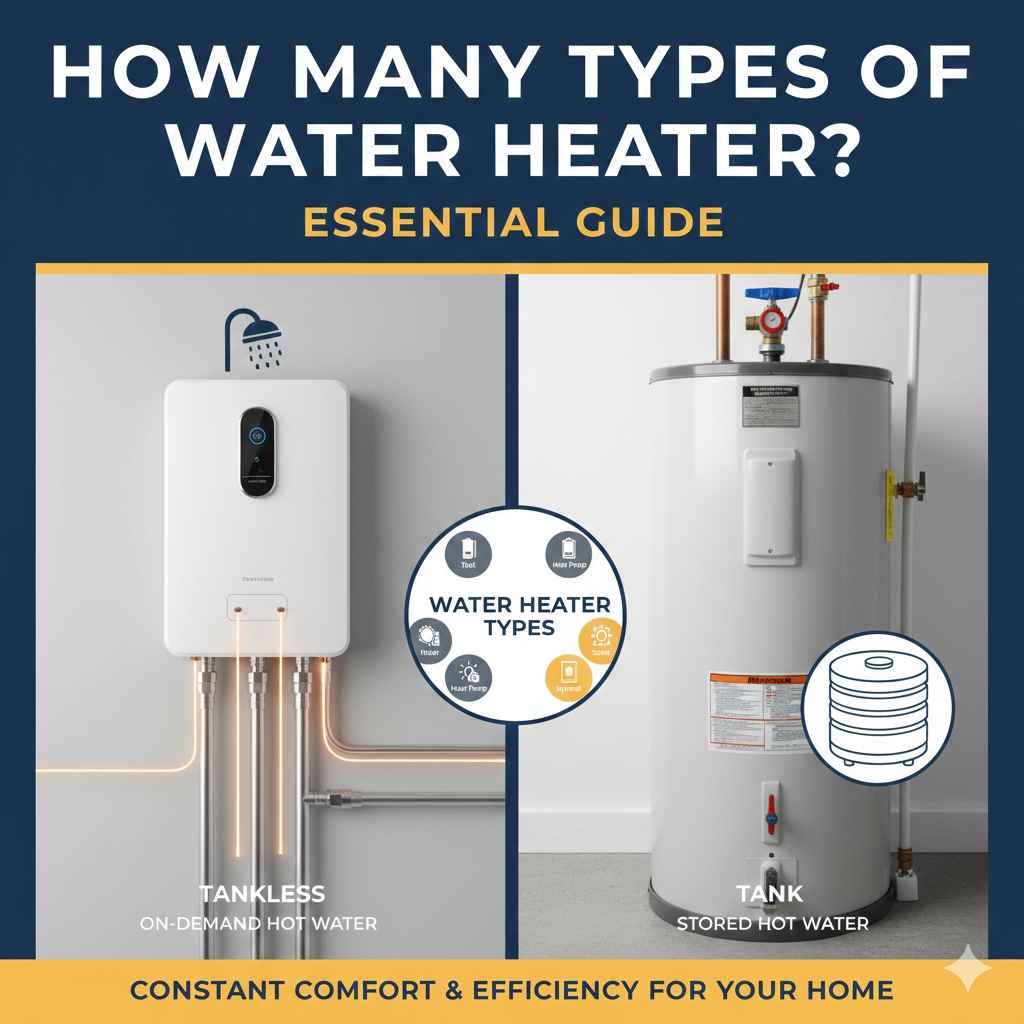
The simple answer to “how many types of water heater” is that there are four main categories: Tank, Tankless (On-Demand), Heat Pump, and Solar. Choosing the right one depends on your home size, hot water usage, and budget for the best long-term comfort.
For another water-heater question, Are All Heating Elements for Water Heaters the Same? Discover Now! covers a closely related problem readers often compare next.
For another water-heater question, 10 Gpm Electric Tankless Water Heater for Instant Hot Water Solutions covers a closely related problem readers often compare next.
For another water-heater question, Water Heater Types: A to the Pros and Cons covers a closely related problem readers often compare next.
Feeling lost when facing the world of water heaters? You are not alone! Picking the right system for endless hot showers and laundry can seem complex. It feels like a big decision because it affects your daily comfort and your monthly energy bill. Don’t worry; we are here to sort through the noise.
Understanding the main heater types is the first step to making a smart, cozy choice for your home. We will break down the most common options in simple terms. Get ready to understand the basics, see the good and the bad of each, and feel confident in your next upgrade.
Why Knowing Your Water Heater Types Matters
Your water heater is the unsung hero of your home. When it works well, you don’t notice it. When it fails, everything stops—cold showers, piles of dishes, and frustration! Knowing the main types helps you choose a system that fits your lifestyle perfectly. This prevents overspending on a unit that’s too small or buying a fancy system you don’t need.
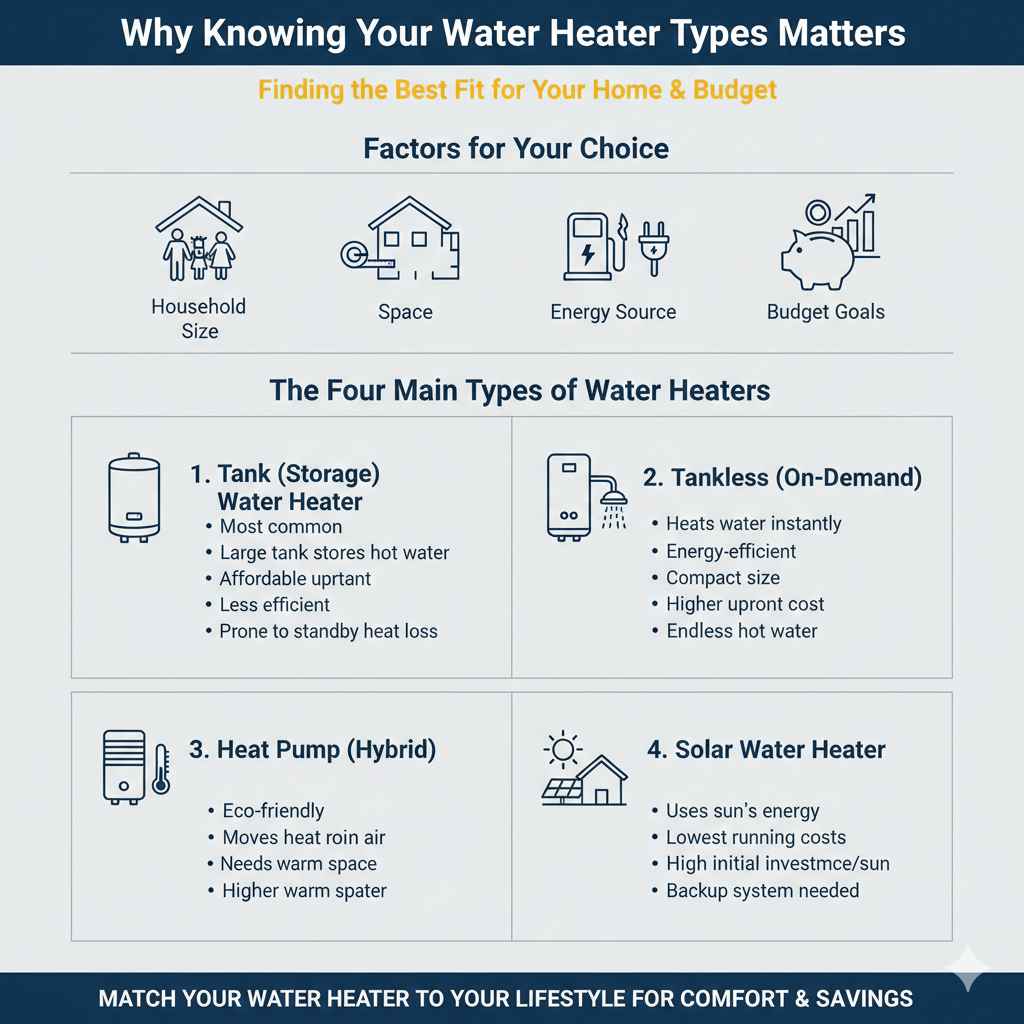
There isn’t one “best” heater for everyone. The best choice depends on factors like:
- How many people live in your home.
- How much space you have (indoors and outdoors).
- Your current energy source (natural gas, electricity, propane).
- Your long-term budget goals.
Let’s dive into the four main families of water heaters. We will keep the technical talk low so you can focus on comfort and cost.
The Big Four: Categorizing Water Heater Types
When people ask “how many types of water heater,” they are usually referring to the primary way the unit heats and stores (or doesn’t store) water. We can group nearly all modern residential units into four primary categories:
- Storage Tank Water Heaters (The Traditional Choice)
- Tankless Water Heaters (On-Demand Heating)
- Heat Pump Water Heaters (Hybrid Efficiency)
- Solar Water Heaters (Harnessing the Sun)
Each type has a unique way of delivering hot water. Understanding these differences will guide you toward the perfect system for your needs.
Type 1: Storage Tank Water Heaters (Conventional)
This is the classic water heater you see in most basements or utility closets. It works much like a giant, well-insulated thermos.
How the Tank System Works
A storage tank heater keeps a set amount of water (like 40, 50, or 80 gallons) hot 24 hours a day. When you use some hot water, cold water enters the tank, and the heater (powered by gas or electricity) fires up to reheat the new volume. They are simple to install and widely understood by plumbers.
Pros and Cons of Tank Heaters
These systems are the workhorses of the water heating world, known for their simplicity.
The Good Stuff (Pros):
- Low Upfront Cost: They are usually the cheapest type to buy and install initially.
- Simple Repairs: Most plumbers are very familiar with these units, making maintenance easy.
- High Flow Rate: They can supply a large volume of hot water quickly (the size of the tank dictates this).
The Trade-Offs (Cons):
- Energy Waste (Standby Loss): They constantly use energy to keep the stored water hot, even when you are asleep.
- Limited Supply: If everyone takes a shower back-to-back, you can eventually run out of hot water, and you have to wait for it to reheat.
- Lifespan: The stored water can lead to corrosion over time, typically lasting 10–15 years.
Who is this best for? Homes with modest, predictable hot water needs where upfront cost is the main concern.
Type 2: Tankless Water Heaters (On-Demand)
Tankless heaters solve the biggest problem of the traditional tank: never running out of hot water. They are fantastic for busy households.
How Tankless Heaters Work
These units do not store water. When you turn on a hot water tap, cold water flows through a powerful gas burner or electric element inside the unit. It heats the water instantly as it passes through. Once you turn the tap off, the heating stops completely.
For reliable performance, especially in colder climates, you need to ensure the unit has the right BTU input (for gas) or wattage (for electric) to handle your maximum demand. This is critical for proper sizing!
Pros and Cons of Tankless Heaters
Tankless heaters shine when it comes to efficiency and endless supply, but they require careful setup.
The Good Stuff (Pros):
- Endless Hot Water: As long as the unit is sized correctly, you won’t run out.
- Energy Efficiency: They save energy because there is zero standby heat loss. You only pay for the hot water you use. They can save significant energy over time, sometimes up to 25%.
- Space Saving: They are small, often the size of a suitcase, and can be mounted on a wall.
The Trade-Offs (Cons):
- Higher Upfront Cost: The unit itself and the installation (often requiring new gas lines or heavy electrical wiring) cost more initially.
- Flow Rate Limitations: If you run two high-demand appliances (like a dishwasher and two showers) simultaneously, the temperature might drop slightly as the unit struggles to keep up with the total volume demanded.
- Delayed Startup: There can be a slight delay (a few seconds) while the water travels from the unit to your faucet.
Who is this best for? Medium to large families who want maximum efficiency and hate waiting for water to reheat.
Type 3: Heat Pump Water Heaters (Hybrid)
Heat Pump Water Heaters (HPWHs), often called Hybrid models, are the rising stars of energy efficiency. They work like a refrigerator in reverse.
How Heat Pump Water Heaters Work
Instead of creating heat from scratch (like a traditional electric element), a heat pump pulls ambient heat from the surrounding air (like a dehumidifier). It transfers that heat into the water storage tank. They use a small amount of electricity to run the compressor, making them highly efficient.
Most hybrid models also have backup electric resistance heating elements, which kick in automatically during periods of extremely high demand, ensuring you never run cold.
Pros and Cons of Heat Pump Water Heaters
If your main goal is cutting electricity usage, the heat pump is your champion, provided you have the right space for it.
The Good Stuff (Pros):
- Amazing Efficiency: They use 60% less energy than standard electric resistance heaters, leading to big long-term savings.
- Dehumidification: Since they pull heat from the air, they also act as dehumidifiers for the space they are in (like a basement).
- Longer Lifespan: Because the primary heating element isn’t always running, they often last longer than standard tanks.
The Trade-Offs (Cons):
- Climate and Space Dependent: They need significant surrounding air volume to work efficiently (usually installed in a large basement or garage). They perform poorly in very cold spaces.
- Slower Recovery: They heat water slower than traditional electric or gas heaters.
- Higher Upfront Cost: Initial purchase and installation are more expensive than standard tank models.
Who is this best for? Energy-conscious homeowners with adequate space (unconditioned space like a basement works best) who want the lowest operating costs possible.
Type 4: Solar Water Heaters
Solar water heating uses the sun’s abundant, free energy to warm your water. This is the greenest option available for most homes.
How Solar Water Heaters Work
Solar systems use rooftop panels (collectors) that absorb solar radiation. Fluid circulates through these panels, gets heated by the sun, and then transfers that heat to your home’s water supply, usually via a separate storage tank. These systems almost always require a backup heater (electric or gas) for cloudy days or nights.
Pros and Cons of Solar Water Heaters
While harnessing the sun sounds ideal, there are significant practical hurdles for the average homeowner.
The Good Stuff (Pros):
- Lowest Operating Costs: Once installed, your energy cost for heating water drops dramatically, often nearly to zero during sunny months.
- Environmental Friendliness: This is the lowest carbon footprint option.
- Long Life: The components are built to last decades.
The Trade-Offs (Cons):
- Highest Upfront Cost: These are the most expensive systems to purchase and install.
- Roof Space Required: You need adequate, unshaded roof space facing the right direction (usually south).
- Weather Dependent: You must have a reliable backup system because Florida sunshine isn’t guaranteed in Seattle during winter.
Who is this best for? Homeowners committed to sustainability who live in sunny climates and plan to stay in their homes long enough to recoup the high initial investment.
Quick Comparison Table of Water Heater Types
To help you compare these four types side-by-side, here is a simple breakdown based on key factors homeowners care about:
| Feature | Storage Tank | Tankless (On-Demand) | Heat Pump (Hybrid) | Solar |
|---|---|---|---|---|
| Upfront Cost | Low | Medium to High | Medium to High | Very High |
| Energy Efficiency | Low (Standby Loss) | High | Very High | Highest (when sunny) |
| Hot Water Supply | Limited by Tank Size | Endless | Endless (but slower recovery) | Dependent on Sun/Backup |
| Space Required | Medium Floor Space | Very Small Wall Space | Medium Floor Space + Air Clearance | Roof Space + Tank Location |
Deciding Between Gas and Electric Power Sources
Once you narrow down the physical type (tank vs. tankless, for example), you must consider the power source. This decision is often made for you based on what your home is already set up for, but it’s worth knowing the difference.
Gas Water Heaters (Natural Gas or Propane)
Gas units typically heat water much faster than electric ones. If you have a large family or need quick recovery times, gas is usually the go-to choice.
- Speed: Faster recovery rates for both tank and tankless models.
- Cost: Natural gas is often cheaper per unit of energy than electricity, leading to lower monthly operating costs compared to standard electric tanks.
- Venting: Gas heaters must be vented outdoors to safely remove combustion gases.
Electric Water Heaters
Electric heaters are simpler to install because they don’t require vent piping. However, they traditionally heat slower.
- Installation: Easier setup, as they only need a proper electrical circuit.
- Efficiency Exceptions: The major exception is the Heat Pump Water Heater, which, though electric, is hyper-efficient.
- Standby Loss: Standard electric resistance tanks suffer significantly from standby heat loss if the insulation is old.
Sizing Your System: A Practical Step You Cannot Skip
Choosing the right size is vital, regardless of the type you select. An undersized unit will lead to frustrating cold water, while an oversized unit wastes money.
Sizing a Storage Tank Heater
For tank heaters, you focus on the Gallon Capacity (e.g., 50 gallons) and the First Hour Rating (FHR). The FHR tells you how much hot water the heater can provide in one hour, starting with a full tank. Look at peak usage times (like early mornings).
A good rule of thumb for a family of four is often a 50-gallon tank, but this heavily depends on usage habits.
Sizing a Tankless Heater
Tankless sizing is based on Flow Rate (Gallons Per Minute, GPM) and Temperature Rise.
Step 1: Calculate Peak GPM Demand. Add up the flow of everything that might run at once:
- Shower: 2.0 GPM
- Dishwasher: 1.5 GPM
- Washing Machine (Hot cycle): 2.0 GPM
- Total Peak Demand Example: 5.5 GPM
Step 2: Calculate Temperature Rise. This is how much the unit must heat the water.
- Desired Hot Water Temperature: 120°F
- Incoming Cold Water Temperature (Winter): 40°F
- Required Temperature Rise: 80°F (120 – 40)
If you need 5.5 GPM with an 80°F rise in winter, you will need a much larger, more powerful tankless unit than someone living in a warm climate where the rise might only be 40°F. Always consult a professional installer when sizing a tankless unit based on climate.
Installation Considerations: Making the Switch
Switching between heater types isn’t always a direct swap. Here are common challenges when changing categories:
Switching to Tankless
This is often the most complex switch, especially for gas units:
- Gas Line Size: Tankless units use much more gas at one time (high BTU) than tank heaters. You might need your gas line upgraded, which can add significant cost.
- Venting: Newer, high-efficiency tankless units often use PVC venting, which is easier than the old metal flues, but still requires a dedicated path outside.
Switching to Heat Pump
This swap requires environmental considerations:
- Air Clearance: The unit needs several hundred cubic feet of air space around it to draw heat efficiently and needs drainage for the condensate (water removed from the air).
- Location: Basements or utility rooms with concrete floors are ideal. Putting one in a small closet will severely limit its performance.
For the most detailed, location-specific guidance on efficiency upgrades, checking resources from federal energy programs, such as those supported by the U.S. Department of Energy, can provide excellent context on local rebates and required clearances.
Maintenance Tips to Keep Any Heater Happy
No matter which of the “how many types of water heater” you choose, regular care extends its life and keeps operating costs low. Think of this as preventative TLC!
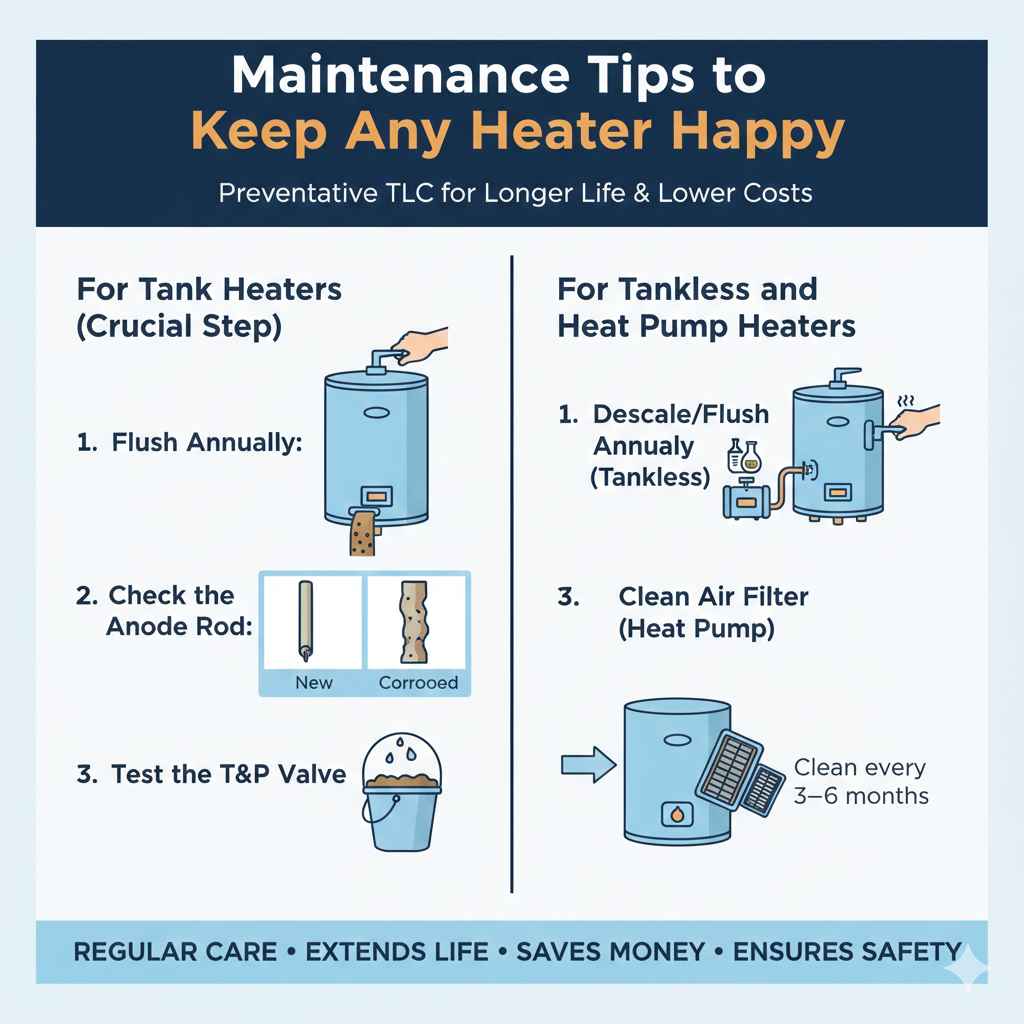
For Tank Heaters (Crucial Step)
- Flush Annually: Drain about 3–5 gallons of water from the drain valve at the bottom. This removes sediment (like sand and minerals) that builds up. Sediment lowers efficiency and shortens the tank life.
- Check the Anode Rod: This sacrificial rod attracts corrosion, saving the tank lining. Have a professional check it every 3–5 years and replace it when it’s heavily corroded.
- Test the T&P Valve: Briefly lift the lever on the Temperature and Pressure (T&P) relief valve to ensure it opens and closes properly. This is a crucial safety feature.
For Tankless and Heat Pump Heaters
- Descale/Flush Annually (Tankless): Mineral buildup can choke the heating element. Tankless units require a special pump and vinegar/descaling solution to flush the internal heat exchanger. This is critical for winter performance.
- Clean Air Filter (Heat Pump): The air filter needs to be cleaned regularly—often every 3–6 months—just like an HVAC filter, to ensure the unit can draw in air efficiently.
Frequently Asked Questions About Water Heater Types
What is the most energy-efficient water heater available today?
Generally, Solar Water Heaters offer the highest potential energy savings (nearly 100% free energy on sunny days). However, Heat Pump (Hybrid) water heaters offer the best efficiency gains compared to standard electric tanks without needing special roof installations.
Do tankless water heaters really save money on my utility bill?
Yes, they typically save 15% to 25% compared to a standard tank heater because they eliminate standby heat loss—you are not paying to keep 50 gallons hot all night long.
Can I convert my old tank heater into a tankless unit?
Usually, yes, but it is often expensive. If you have an electric tank, you’ll need a massive new electrical service or a gas line. If you have a gas tank, you will almost certainly need a much larger gas line installed. It’s often easier and cheaper to replace the whole system with a new unit designed for that type.
Which heater type lasts the longest?
Tankless and Solar systems tend to have the longest lifespans. A well-maintained tankless unit can last 20 years or more. A standard storage tank usually lasts 10–15 years before corrosion forces replacement.
Is it hard to find a plumber who can service these different types?
Most general plumbers can service traditional tank heaters easily. Tankless units require specific training for annual maintenance (descaling). Heat pump models require knowledge of refrigeration cycles. Always ask potential installers about their specific experience with the brand and type you are considering.
If I have cheap electricity, should I still avoid a standard electric tank?
Even with cheap electricity, standard electric tanks are the least efficient way to heat water due to standby losses. If efficiency is a goal, upgrading to an electric Heat Pump model will still provide significant operational savings over the long run.
Conclusion: Finding Your Perfect Hot Water Match
We have walked through the four main families of water heaters: the reliable workhorse (Tank), the endless provider (Tankless), the hyper-efficient newcomer (Heat Pump), and the eco-friendly star (Solar). Now you know the core differences and the practical realities of installing and maintaining each one.
Your next steps are simple: match your home’s current needs and your budget to the pros and cons we discussed. If you prioritize low upfront cost and have average usage, stick with a modern, high-efficiency standard tank. If you value endless hot water and long-term savings, the tankless or hybrid heat pump systems are fantastic investments.
Don’t let the decision overwhelm you. Whether you need robust capacity, ultimate efficiency, or just a simple replacement, there is a perfect solution waiting. By understanding these essential types, you’ve already taken the hardest step toward guaranteed home comfort for years to come. Call on a licensed professional when you are ready to move forward, confident in the knowledge you’ve gained today.