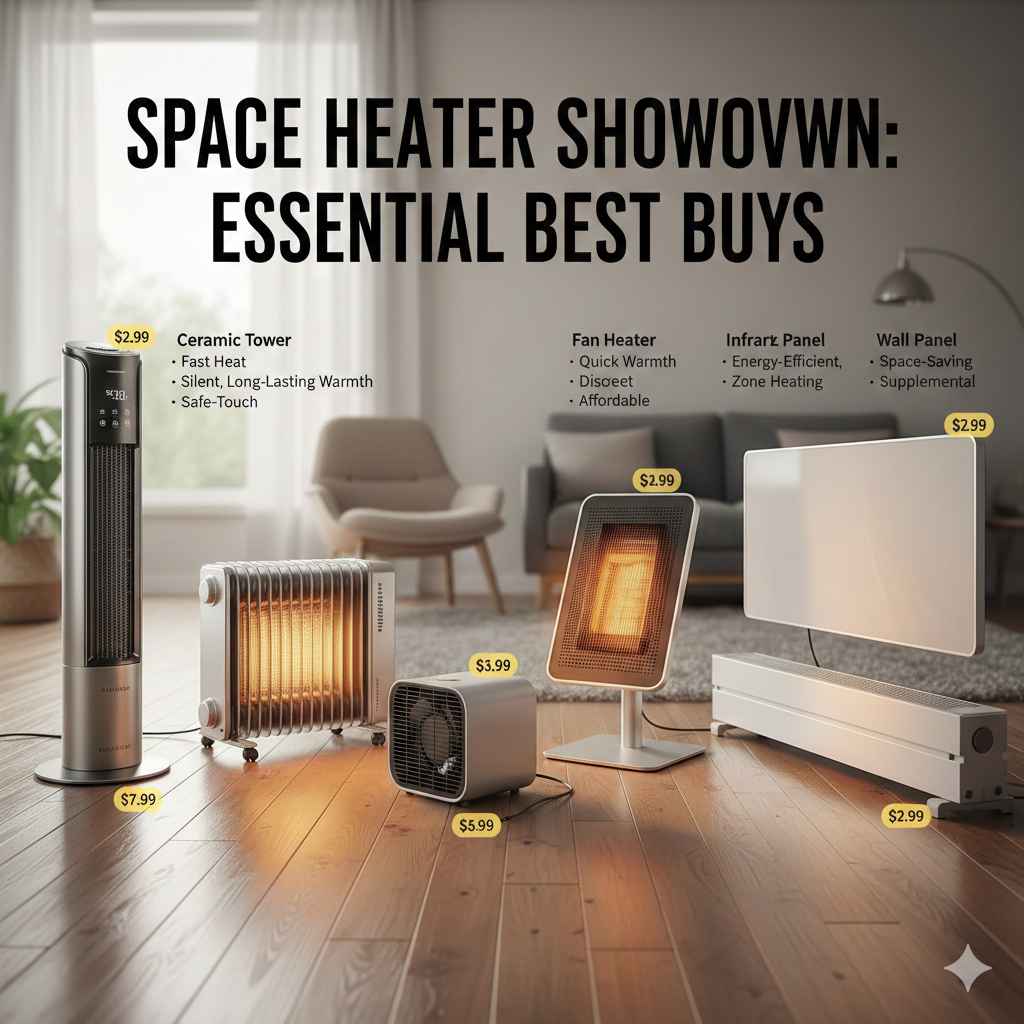
Compare Space Heater Types: Essential Best Buys
The best space heater for you depends on your space size, budget, and safety needs; radiant heaters are fast for spot heating, while ceramic models offer great all-around warmth and safety for most rooms.
Feeling a chill in your favorite reading nook? Trying to warm up just one room without cranking up the whole house furnace can be frustrating! Choosing the right space heater feels confusing because there are so many types, and you worry about safety or energy bills. Don’t worry; I’m Tanim, and I’m here to make this super simple. We will walk through every major space heater type, showing you exactly what’s best for your specific needs. By the end, you’ll choose your perfect heater with total confidence!
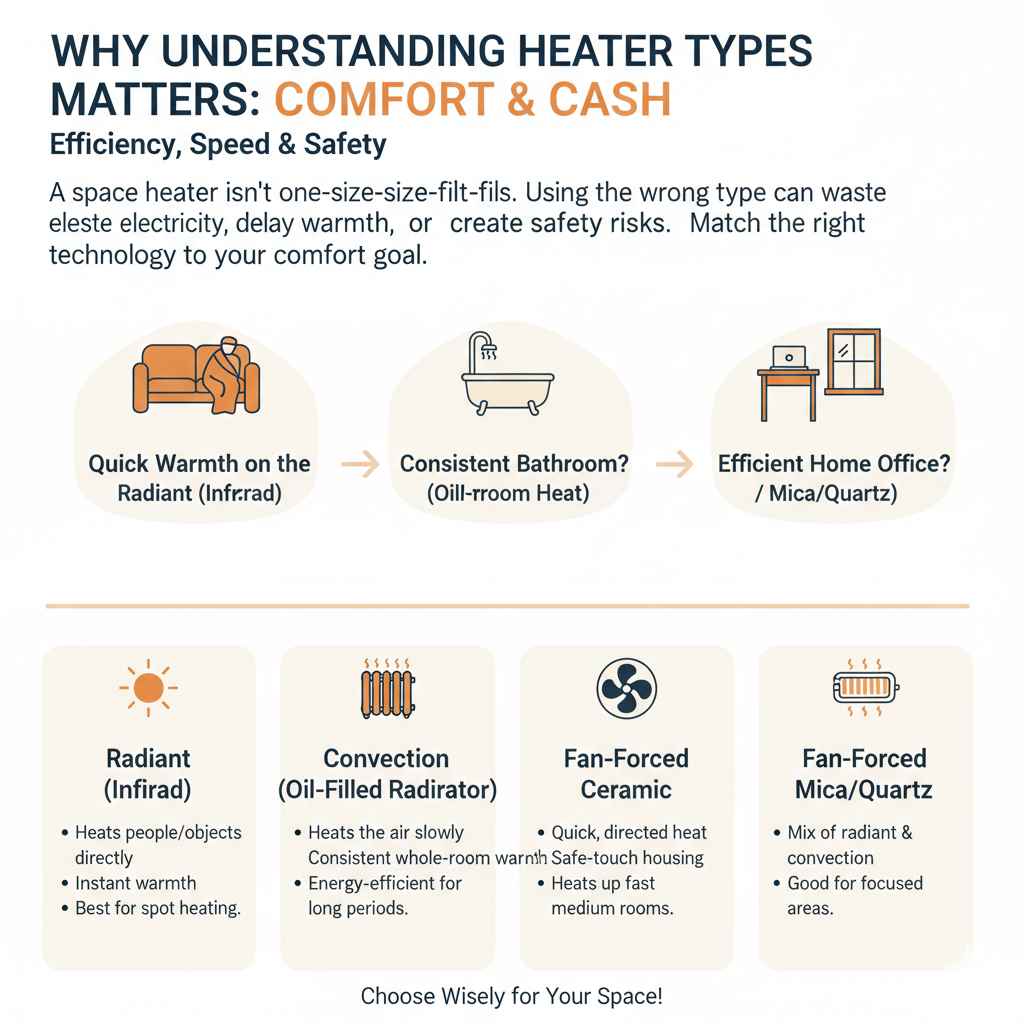
Why Understanding Heater Types Matters for Comfort and Cash
A space heater isn’t one-size-fits-all. Using the wrong type means you might waste electricity, wait forever for warmth, or even create a safety risk. For example, using a tiny heater in a big living room won’t work, and using a powerful, uncovered heater in a child’s room might be dangerous.
Our goal is to match the right technology to your comfort goal. Are you trying to:
- Warm yourself quickly while sitting on the couch?
- Keep a small bathroom consistently toasty?
- Heat an entire drafty home office efficiently?
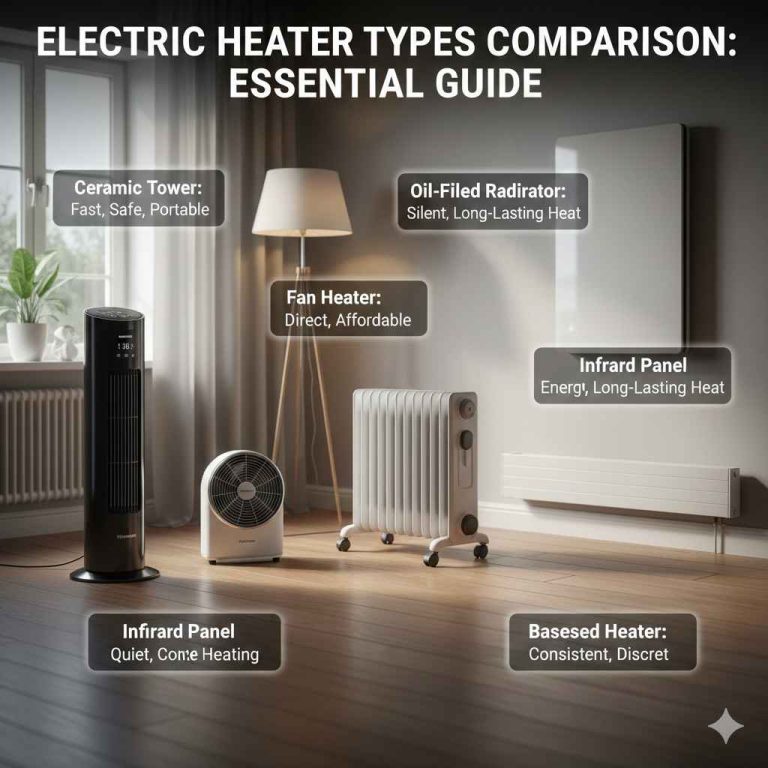
We’ll look at the four main categories: Radiant (Infrared), Convection (Oil-Filled Radiator), Fan-Forced Ceramic, and Fan-Forced Mica/Quartz heaters. Let’s dive in!
The Main Contenders: How Space Heaters Work
Before we compare, let’s quickly understand the two main ways heaters produce warmth:
- Radiant Heat (Like the Sun): These heaters use infrared waves to heat objects and people directly in their path. They don’t waste energy heating the air first.
- Convection Heat (Like a Furnace): These heaters warm the air around them. The warm air rises, creating natural air currents that circulate warmth throughout the room over time.
Most modern space heaters use one of these methods, often combined with a fan.
Space Heater Showdown: Comparing the Top 4 Types
Choosing the best buy means knowing the pros and cons of each technology. Here is a detailed breakdown so you can easily compare space heater types.
1. Ceramic Heaters (Fan-Forced Convection)
Ceramic heaters are the most popular choice for a reason: they are safe, portable, and heat small to medium rooms quickly. They use ceramic heating elements (PTC components) that heat up fast, and a built-in fan blows that warm air into the room.
Pros and Cons of Ceramic Heaters
- Pros: Very safe (the ceramic element gets hot but won’t glow red), compact, portable, often have tip-over protection and oscillation features. Great for fast, localized heat.
- Cons: Can dry out the air slightly, less effective in very large, open spaces.
Best Use Case
Perfect for an office cubicle, a small bedroom, or under a desk. If you need instant, localized warmth and prioritize safety features, this is your go-to.
2. Oil-Filled Radiator Heaters (Pure Convection)
These look like old-fashioned radiators but are sealed and portable. They heat oil sealed inside the fins, which then radiates gentle, consistent heat into the room. They do not use a fan, making them incredibly quiet.
Pros and Cons of Oil-Filled Radiators
- Pros: Silent operation, provide very steady and even heat distribution (great for maintaining temperature), safer surface temperature than quartz. Excellent for overnight use in bedrooms.
- Cons: Very slow to heat up initially, heavy and less portable, only effective in enclosed spaces where air can circulate naturally.
Best Use Case
Ideal for bedrooms or long work sessions where you need sustained, quiet background warmth. They are excellent for maintaining a steady temperature after the initial heating period.
3. Infrared/Radiant Heaters (Quartz or Mica)
Infrared heaters warm objects directly, similar to how the sun warms your skin. They usually use quartz tubes or mica sheets encased in a metal housing to produce heat. You feel the heat almost instantly, even if the air around you is cool.
Pros and Cons of Infrared Heaters
- Pros: Extremely fast spot heating, very energy efficient for heating people (not necessarily the whole room’s air volume), often very slim and wall-mountable.
- Cons: Heat stops immediately when you move out of the direct line of sight, less effective at warming the entire air volume of a room.
Best Use Case
Great for patios, garages, or large living rooms where you only need to heat one person sitting in a chair. They are perfect for instant relief.
4. Fan-Forced Mica/Quartz Heaters
These combine a radiant heating element (like quartz or mica) with a fan. The fan helps spread the radiant heat across a slightly wider area than a pure radiant heater, offering a quicker overall room warm-up than a purely convection heater.
Pros and Cons of Mica/Quartz Heaters
- Pros: Fast heat delivery, generally lightweight, often a good balance between instant heat and area coverage.
- Cons: The air blowing out can sometimes feel “dry,” and the elements can glow red, requiring slightly more vigilance regarding placement than ceramic models.
Best Use Case
A good all-rounder when you need heat somewhat quickly in a medium-sized room and don’t want the weight of an oil-filled unit.
Feature Comparison Table: Choosing Your Champion
To help you compare space heater types at a glance, look at this table focusing on performance and practicality for the everyday user:
| Heater Type | Primary Heating Method | Speed of Warmth | Best For | Noise Level |
|---|---|---|---|---|
| Ceramic (Fan) | Forced Convection | Fast (Air Circulation) | Small/Medium Rooms, Offices | Low to Moderate (Fan Noise) |
| Oil-Filled Radiator | Silent Convection | Slow (Steady Build-up) | Bedrooms, Consistent Warmth | Silent |
| Infrared (Radiant) | Direct Infrared Waves | Instant (Line-of-Sight) | Spot Heating, Garages, High Ceilings | Silent (unless fan-assisted) |
| Quartz/Mica (Fan) | Forced Radiant/Convection Mix | Medium-Fast | Medium Rooms, Quick Comfort Boost | Moderate (Fan Noise) |
Safety First: Essential Features for Homeowners
No matter which type you choose, safety features are non-negotiable. As Tanim, I always advise new buyers to look for these essential built-in protections. These features help prevent accidents, especially around pets or kids.
Must-Have Safety Features
- Tip-Over Switch: This automatically shuts the unit off if it gets knocked over. This is critical for preventing fires if the element is exposed.
- Overheat Protection: The heater senses if its internal temperature gets too high and shuts down before damage occurs.
- Cool-Touch Exterior (Especially Ceramic): This means the outer casing doesn’t get dangerously hot, making it safer around curious little hands or fabrics.
- Adjustable Thermostat: This feature allows you to set a target temperature. Once reached, the heater cycles on and off, saving energy and preventing overheating.
For information on general home safety when using supplemental heating devices, the Consumer Product Safety Commission (CPSC) offers excellent, easy-to-understand guidelines. Always check their recommendations before plugging in a new device.
Energy Efficiency: Saving Money While Staying Warm
People often assume space heaters are energy hogs. While they do use a lot of electricity if run constantly on high, they are incredibly efficient at delivering heat right where you need it—often saving you money compared to heating your entire home with a central system. All portable electric heaters generally use about 1,500 watts on high setting.
The real energy saver comes from choosing the right heat delivery method for your task:
- For Short-Term Spot Heating: Use an Infrared heater. You feel warm almost instantly, so you can turn it off sooner.
- For Long-Term Steady Heat: Use an Oil-Filled Radiator. They use less wattage to maintain the temperature once the room is warm, making them steady savers.
- For Quick Room Warming: Use a Ceramic Heater. They heat the air fast and usually cycle off quickly once the thermostat is hit.
Understanding Wattage and Cost
Most standard portable electric heaters run at 1,500 watts. To estimate cost, you need to know your local electricity rate (usually found on your utility bill, often listed in cents per kilowatt-hour (kWh)).
Simple Cost Formula:
(Wattage / 1000) x Hours Used x Cost per kWh = Total Cost
Example: Running a 1,500-watt heater for 5 hours at $0.15 per kWh:
(1.5 kW) x (5 hours) x ($0.15/kWh) = $1.125 for five hours of use.
This shows that while they draw a lot of power momentarily, using them wisely keeps the costs manageable.
How to Select the Right Size Heater for Your Space
The most crucial step when you compare space heater types is ensuring the BTU (British Thermal Units) output matches your room size. Most portable heaters are rated at 5,100 BTUs, which is perfect for about 150 square feet.
Sizing Guidelines (The 10-Watt Rule)
A simple, beginner-friendly rule of thumb is the 10-watt rule: You need about 10 watts of power for every square foot of space you want to heat comfortably.
| Room Size (Square Feet) | Required Wattage (Approx.) | Recommended Heater Type |
|---|---|---|
| Up to 100 sq ft (Small Bathroom/Office) | 1,000 Watts | Small Ceramic or Radiant |
| 100–150 sq ft (Average Bedroom) | 1,500 Watts | Ceramic or Fan-Forced Quartz |
| 150–300 sq ft (Large Living Room) | 2,000+ Watts (Often requires two 1,500W units) | Oil-Filled Radiator or Large Quartz |
Remember: These are estimates. If your room has high ceilings, lots of windows, or is very drafty, you might need a slightly more powerful model or a sustained heater like the oil-filled radiator.
Step-by-Step: Setting Up Your New Space Heater Safely
Once you’ve decided which type best fits your needs—perhaps a quiet Oil-Filled Radiator for the bedroom or a safe Ceramic model for the living room—proper setup is key. Follow these steps for safe operation, every single time.
Phase 1: Pre-Plug Checklist
- Inspect the Cord: Look closely at the power cord. If it is frayed, cracked, or looks damaged, DO NOT plug it in. Return the unit or seek repair.
- Check the Location: Place the heater on a hard, level surface. Never place a space heater on carpet, rugs, or bedding, as these materials can block airflow or easily ignite.
- Clear the Clearance Zone: This is crucial! Follow the manufacturer’s minimum distance rule (usually 3 feet) in all directions (front, back, and sides). Keep curtains, paper, furniture, and bedding well away.
Phase 2: Plugging In and Running
- Use a Dedicated Outlet: Always plug your space heater directly into a wall outlet. Never use an extension cord, power strip, or surge protector. Extension cords are not designed to handle the high, continuous draw of a 1,500-watt heater and can cause overheating and fire.
- Set the Controls: Start by turning the heat setting low or medium, and set the thermostat slightly above the current room temperature.
- Monitor Initial Heat: For the first 15 minutes, stay nearby to ensure it heats evenly and that the cord remains cool to the touch where it enters the wall.
Phase 3: When You Leave the Room
If you are leaving the room for more than a few minutes—even if it’s just to run to the kitchen—always turn the heater off. If you are sleeping, only use models specifically designed and rated for continuous or overnight use (like high-quality oil-filled radiators) and ensure all safety features are active.
Advanced Placement Tips: Getting the Most Heat
Where you place the heater dramatically affects how effective it is. Here are Tanim’s tricks for maximizing warmth distribution based on the heater type you selected:
For Convection Heaters (Oil-Filled Radiator)
These rely on natural air movement. Place them near a cold spot (like under a drafty window) so they can heat the incoming cold air first, helping to push that cold air out of the way and circulate the warm air naturally throughout the room.
For Radiant Heaters (Infrared)
Point them directly at where people are sitting or working. Since they heat objects, aim them at the floor or furniture closest to you. They are highly inefficient if pointed toward a wall or ceiling.
For Fan-Forced Heaters (Ceramic)
If the heater oscillates, aim it toward the center of the room. If it doesn’t oscillate, point it across the longest path it can reach, allowing the fan to push the warm air further before it cools down.
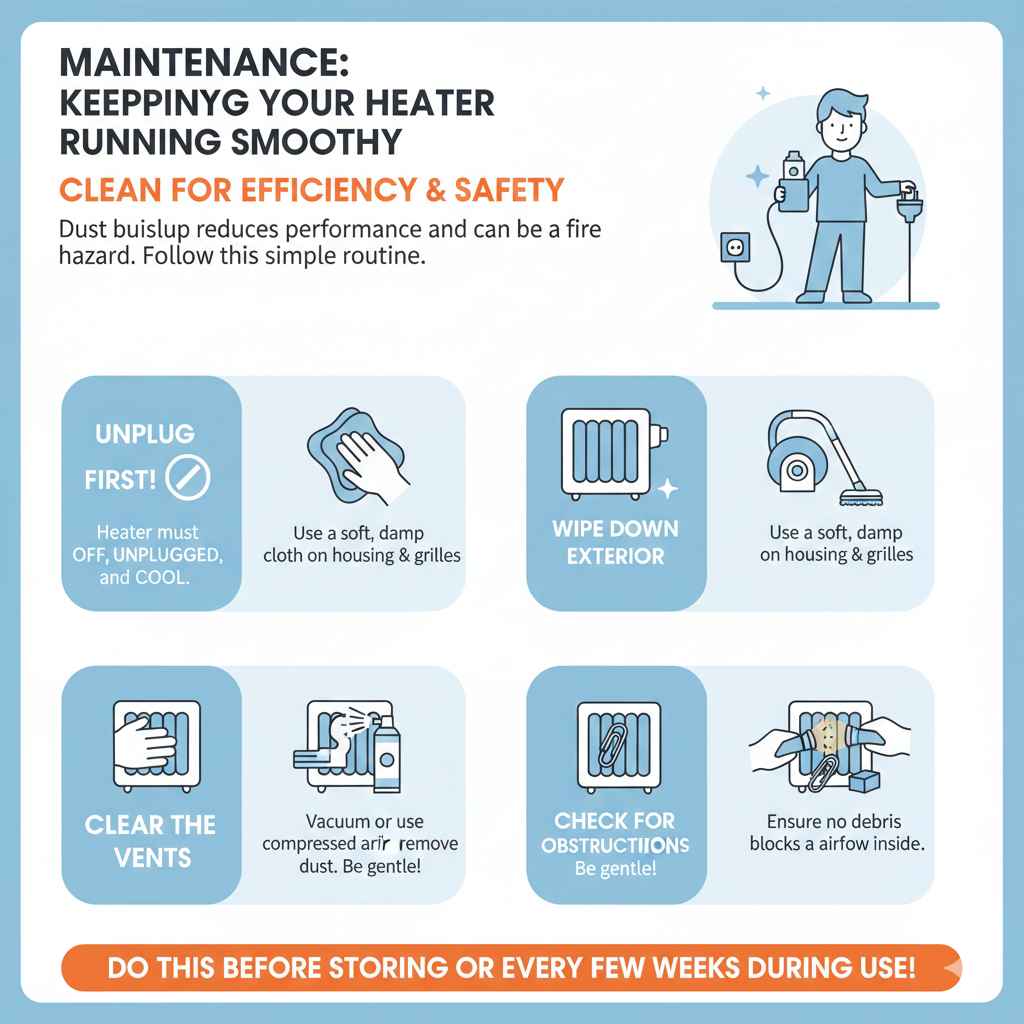
Maintenance: Keeping Your Heater Running Smoothly
A little cleaning goes a long way toward efficiency and safety. Dust buildup inside a heater can reduce its performance and, in rare cases, become a fire hazard.
Simple Cleaning Routine (Do this before storing or every few weeks during heavy use)
- Unplug First! Always ensure the heater is completely unplugged and cool before attempting any cleaning.
- Wipe Down the Exterior: Use a slightly damp cloth to wipe down the plastic housing and grilles.
- Clear the Vents/Grilles: Use a soft brush attachment on a vacuum cleaner or a can of compressed air to gently clear dust from the intake and exhaust vents. Be careful not to damage any internal components.
- Check for Obstructions: Ensure no debris (like paper clips or small toys) has fallen into the casing.
Frequently Asked Questions (FAQ) About Space Heaters
Q1: Are space heaters really safe to use indoors?
A: Yes, modern space heaters equipped with tip-over protection and overheat sensors are generally safe when used correctly. The most important steps are plugging directly into the wall and maintaining a 3-foot clear zone around the unit.
Q2: Which heater type is the quietest for sleeping?
A: Oil-filled radiator heaters are the quietest because they use no internal fan; they heat using silent radiant convection.
Q3: Can I use a space heater in my bathroom?
A: Only if the model is specifically rated for damp or wet locations (look for a UL rating indicating bathroom suitability). Standard heaters are a fire risk near water.
Q4: Which heater heats up the fastest?
A: Infrared (radiant) heaters provide the quickest sensation of warmth because they heat your skin directly, not the air first.
Q5: Should I use a space heater with an extension cord?
A: Absolutely not. Extension cords cannot safely carry the 12 to 15 amps required by a 1,500-watt heater and pose a significant fire risk.
Q6: Which heater type is best for a very large, drafty room?
A: For very large or drafty areas, an Oil-Filled Radiator or a high-BTU Quartz heater is better because they focus on consistent area heating rather than just spot warming.
Conclusion: You Are Now Prepared to Choose Warmth
I hope comparing these space heater types has demystified your purchasing decision. Choosing the right heater is less about finding the “most powerful” one and more about matching the technology to your living situation. Remember these key takeaways:
- For instant, targeted warmth, look at Infrared/Radiant.
- For quiet, reliable background heat, choose the Oil-Filled Radiator.
- For a great balance of safety, speed, and portability in small to medium rooms, the Ceramic Heater is the reigning champion.
Always prioritize safety by checking for tip-over switches, avoiding extension cords, and maintaining that crucial three-foot clearance zone. With this knowledge, you can confidently select the perfect, affordable, and safe heating solution to make your home cozy this season. Stay warm!