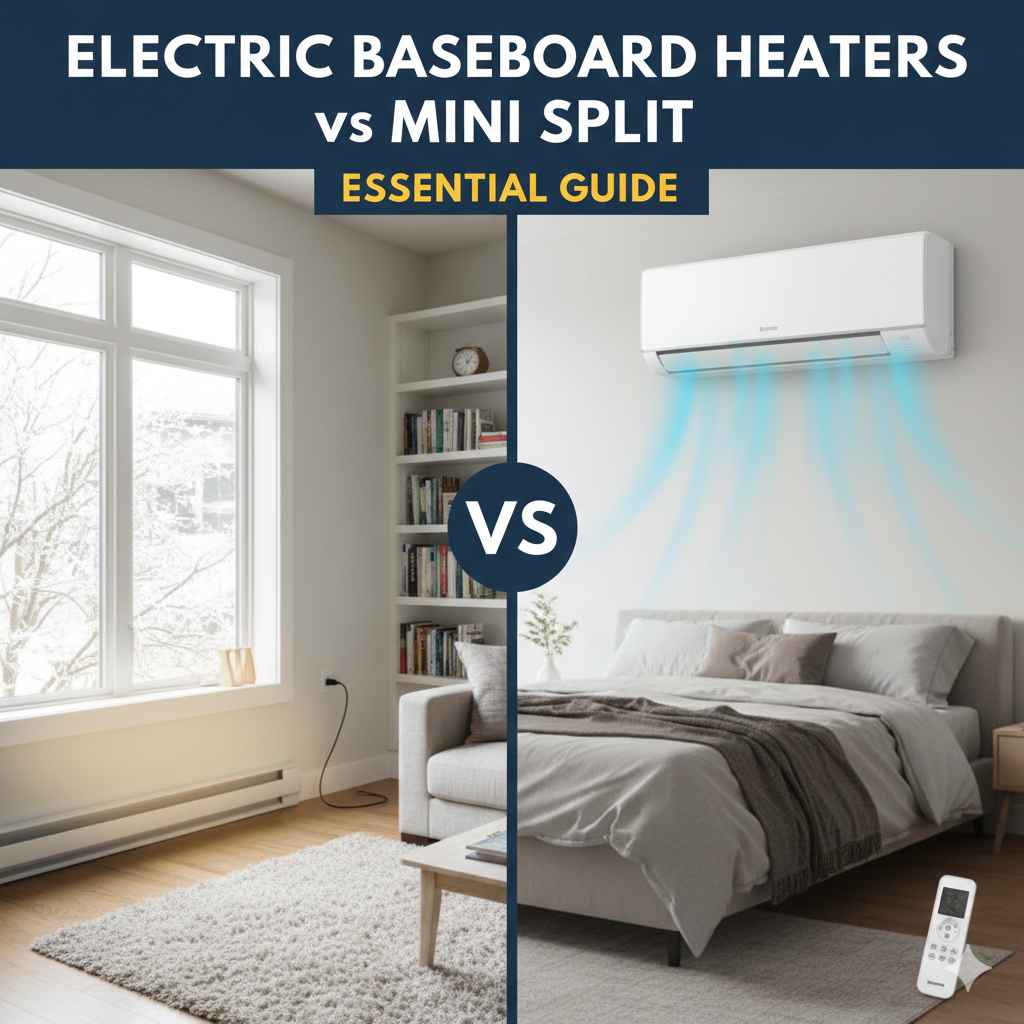
Electric Baseboard Heaters vs Mini Split: Essential Guide
Electric baseboard heaters vs mini splits: Both offer electric heat, but mini-splits are far more energy-efficient and offer cooling, while baseboard heaters are simpler, cheaper initially, and easy to install but less efficient. This guide helps you choose the best fit for your home with clear pros, cons, and cost breakdowns.
For portable or electric heater comparisons, Electric Baseboard Heaters Vs Mini Split: Efficiency gives readers another helpful angle before buying or using one.
For portable or electric heater comparisons, Electric Baseboard Heaters vs Mini Split gives readers another helpful angle before buying or using one.
For a related heater topic, Electric Baseboard Heater Vs Oil Filled: Essential Guide gives readers a useful next step.
Choosing the right heating system for your home can feel overwhelming, especially with so many options available. You want warmth, comfort, and efficiency without breaking the bank. Two popular electric heating solutions are electric baseboard heaters and mini-split systems. They might both run on electricity, but they work very differently and offer distinct advantages. This guide is here to make that choice simple. We’ll break down exactly how each system works, what they cost, how they perform, and which one is likely the best fit for your cozy home. Let’s find the perfect solution for you!
Electric Baseboard Heaters vs. Mini Splits: A Simple Breakdown
Think of electric baseboard heaters as the tried-and-true workhorses of electric heating. They’re straightforward, reliable, and have been around for ages. On the other hand, mini-split systems, also known as ductless heat pumps, are the newer, more advanced cousins. They’re incredibly versatile, offering both heating and cooling, and they do it with impressive energy efficiency. Choosing between them really depends on your specific needs, budget, and what you’re looking for in a heating and cooling system.
How Electric Baseboard Heaters Work
Electric baseboard heaters are like individual heaters placed along the base of your walls. When you turn them on, electricity flows through a heating element inside the unit. This element gets hot and warms the air around it. A fan (in some models) or natural convection then circulates this warm air into your room. Each heater typically has its own thermostat, allowing you to control the temperature in that specific room. They’re a simple, direct way to get heat where you need it.
Pros of Electric Baseboard Heaters:
- Low Upfront Cost: They are generally much cheaper to purchase and install compared to mini-splits.
- Easy Installation: Most can be installed by a DIYer with basic electrical knowledge, or by an electrician quickly and affordably.
- Individual Room Control: Each heater has its own thermostat, offering excellent zone heating capabilities. You can heat only the rooms you’re using.
- Quiet Operation: They operate silently, as there are no fans constantly running (unless you have a fan-forced model).
- No Ductwork Needed: This is a huge advantage in older homes or for room additions where running ducts would be difficult or costly.
Cons of Electric Baseboard Heaters:
- High Running Costs: They are one of the least energy-efficient ways to heat a home, leading to higher electricity bills. The U.S. Department of Energy notes that electric resistance heating, like that used in baseboard heaters, can be significantly more expensive to operate than other heating methods.
- Slow Heating: It can take a while for a room to warm up, especially in very cold weather.
- Dry Air: They can sometimes dry out the air in a room, leading to discomfort.
- Limited Airflow: Most rely on natural convection, which can lead to uneven heating with cooler spots.
- No Cooling Capability: They only provide heat, so you’ll need a separate system for air conditioning.
- Aesthetics: Some homeowners find the look of baseboard heaters to be less appealing.
How Mini-Split Systems Work
Mini-split systems, often called ductless mini-splits or heat pumps, are a more sophisticated type of electric heating and cooling. They consist of two main parts: an outdoor unit (condenser/compressor) and one or more indoor units (air handlers) that are mounted on walls or ceilings. The magic happens through a refrigerant line that connects the indoor and outdoor units. In heating mode, the outdoor unit efficiently extracts heat from the outside air (even when it’s cold!) and transfers it inside. In cooling mode (which they also provide!), it reverses the process, moving heat from inside your home to the outdoors.
A key technology behind mini-splits is their use of a refrigerant cycle, similar to how a refrigerator or air conditioner works, but reversible for heating. This process is what makes them incredibly energy-efficient. Instead of creating heat by burning fuel or using electric resistance, they move heat from one place to another. Technologies like variable-speed compressors allow them to adjust their output precisely to match demand, further saving energy.
Pros of Mini-Split Systems:
- High Energy Efficiency: They are among the most energy-efficient heating and cooling systems available, significantly reducing electricity bills compared to electric resistance heat.
- Heating and Cooling: One system provides both comfort in the winter and a cool oasis in the summer.
- Zoning Capabilities: Each indoor unit can be controlled independently, allowing you to heat or cool specific rooms or zones.
- Excellent Air Quality: Many models include advanced filtration systems that can remove dust, pollen, and other allergens, improving indoor air quality.
- Quiet Operation: Both indoor and outdoor units are designed to be very quiet.
- Flexible Installation: No ductwork is needed, and the indoor units can be mounted in various locations, making them ideal for renovations or homes without existing duct systems.
- Faster Heating/Cooling: They tend to heat and cool spaces more quickly than baseboard heaters.
Cons of Mini-Split Systems:
- Higher Upfront Cost: Mini-split systems have a significantly higher initial purchase and installation cost than electric baseboard heaters.
- Professional Installation Required: Installation involves refrigerant lines and electrical connections, typically requiring a qualified HVAC technician.
- Maintenance: Regular maintenance, including cleaning filters and professional check-ups, is recommended to ensure optimal performance.
- Aesthetics (Indoor Unit): While often sleek, the visible indoor wall units might not appeal to everyone’s décor.
- Performance in Extreme Cold: While modern cold-climate mini-splits perform very well in low temperatures, older or less advanced models might see reduced efficiency or output in extremely cold or frigid conditions. The ENERGY STAR program provides guidelines on heat pump performance in various climates.
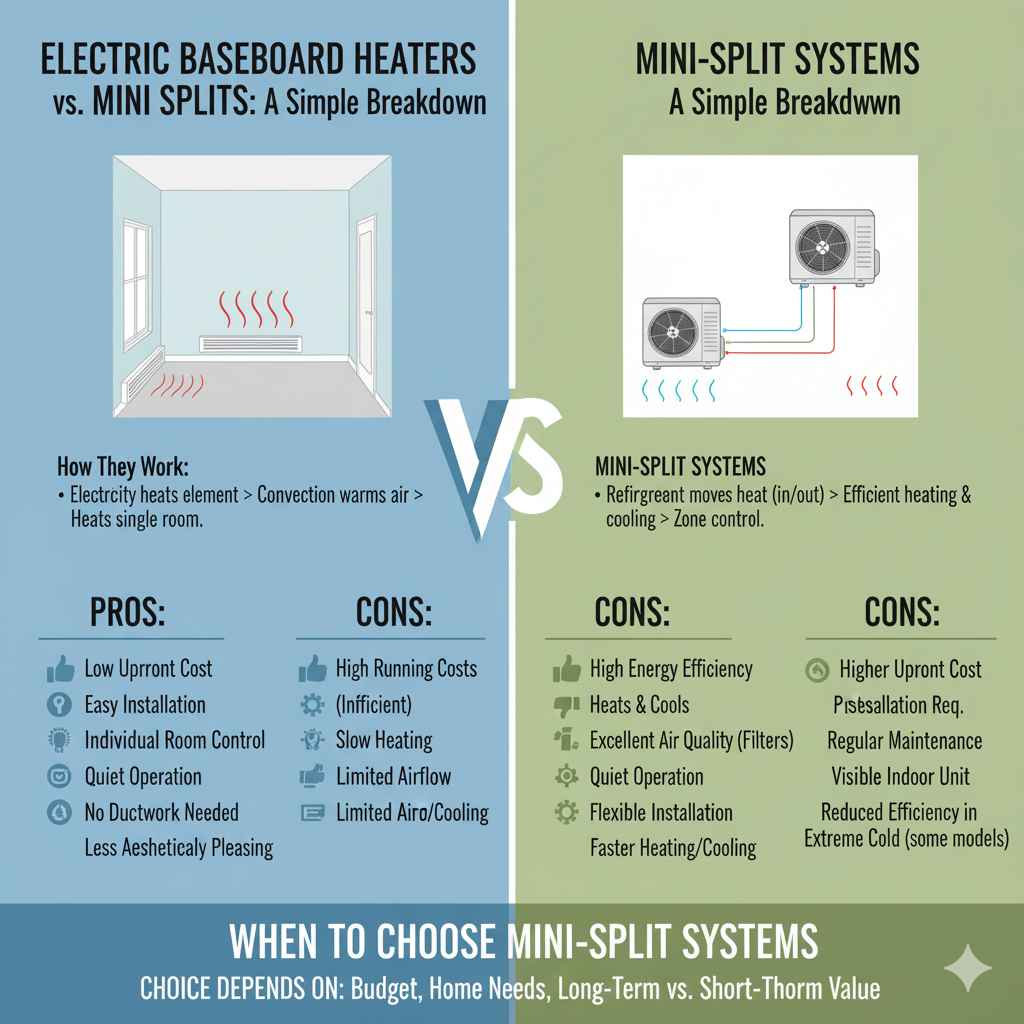
Key Differences at a Glance
To help make the choice clearer, here’s a table summarizing the main differences:
| Feature | Electric Baseboard Heaters | Mini-Split Systems |
|---|---|---|
| Primary Function | Heating Only | Heating and Cooling |
| Energy Efficiency | Low (Electric Resistance) | High (Heat Pump Technology) |
| Upfront Cost | Low | High |
| Running Cost | High | Low |
| Installation Complexity | Simple, often DIY or basic electrician | Complex, requires professional HVAC technician |
| Ductwork Required? | No | No |
| Zoning Capability | Excellent (Individual room control) | Excellent (Individual zone control) |
| Air Quality Features | None | Often includes advanced filters |
| Heating/Cooling Speed | Slower | Faster |
Understanding Costs: Installation vs. Running
When comparing heating systems, it’s crucial to look at both the initial cost of buying and installing them, and the ongoing cost of running them. This is often where the biggest differences between electric baseboard heaters and mini-splits become apparent.
Initial Costs
Electric Baseboard Heaters: These are the budget-friendly option upfront. A single baseboard heater unit can range from approximately $100 to $300, depending on its size and features. Installation is usually straightforward. If you’re comfortable with basic wiring, you might even do it yourself. Otherwise, an electrician can typically install one in a few hours for a few hundred dollars. For a whole house, you might be looking at $500 to $5,000 in total for units and installation, depending on the number of rooms and complexity.
Mini-Split Systems: These are a significant investment upfront. A single-zone mini-split system (one indoor unit, one outdoor unit) can cost anywhere from $1,500 to $4,000 or more, fully installed. Multi-zone systems, which have one outdoor unit connected to several indoor units, can range from $3,000 to $10,000 or even higher for large homes. The cost includes the equipment itself and professional labor, which is essential for proper setup and ensuring peak efficiency.
Running Costs (Energy Efficiency Comparison)
This is where mini-splits truly shine. Electric baseboard heaters convert electricity directly into heat through resistance. This process is 100% efficient at the point of use, meaning every watt of electricity becomes a watt of heat. However, electricity itself is an expensive energy source for heating. This is why they are considered one of the least efficient overall heating methods in terms of cost. According to the U.S. Department of Energy, electric resistance heating can be up to three times more expensive to operate than heat pumps.
Mini-splits, on the other hand, are heat pumps. They don’t create most of their heat; they transfer it. They use electricity to power a compressor and fans that move heat from one place to another. In moderate climates, a mini-split can deliver 3 to 4 units of heat for every 1 unit of electricity consumed (a Coefficient of Performance, or COP, of 3-4). This makes them astonishingly efficient. While the electricity still costs money, you get much more warmth for your dollar, leading to significantly lower monthly energy bills. For example, if you’re heating 2,000 square feet, a mini-split system could potentially save you hundreds or even thousands of dollars per year on energy costs compared to electric baseboard heaters.
Calculating Your Savings
To estimate potential savings, consider:
- Your current heating costs: How much do you spend on heating now?
- The size of your home: Larger homes require more energy.
- Your climate: Colder climates mean more heating hours.
- Your electricity rates: Check your local utility provider’s rates.
A common rule of thumb is that a mini-split system can reduce heating energy costs by 30-60% or more compared to electric resistance heating. While the upfront cost is higher, the long-term savings on your utility bills, combined with the benefit of air conditioning, often lead to a strong return on investment over time.
Installation and Maintenance: What to Expect
The ease of installation and ongoing maintenance can be deciding factors for many homeowners.
Electric Baseboard Heater Installation
DIY Friendly: Many electric baseboard heaters are designed for simple installation. They typically connect directly to your home’s electrical wiring. This often involves mounting the unit, connecting it to a dedicated circuit, and installing a thermostat (which can be built-in or a separate wall unit). If you’re comfortable with basic electrical work and understand local building codes, you might be able to do this yourself. Always consult your local building department and consider safety first. For those less comfortable, a certified electrician can usually install one unit in under an hour or two.
Maintenance: Maintenance is minimal. Dust and debris should be periodically cleaned from the fins to ensure efficient airflow. It’s a good idea to check the thermostat connections and the unit itself annually for any signs of wear or malfunction. They are generally very reliable with little need for professional servicing.
Mini-Split System Installation
Professional Expertise Needed: Installing a mini-split system is not a DIY job for most homeowners. It involves working with refrigerant lines (which require licensing and specialized tools), vacuuming lines, and precise electrical connections between the indoor and outdoor units. A licensed and experienced HVAC technician is essential for proper installation. They will ensure the system is correctly sized for your space, leak-free, and charged with the right amount of refrigerant. This expertise ensures the system operates at peak efficiency and longevity, and it’s often required for the manufacturer’s warranty. Installation can take several hours to a full day, depending on the number of indoor units.
Maintenance: Mini-splits require more regular maintenance to keep them running efficiently. This includes:
- Filter Cleaning: The air filters in the indoor units should be cleaned monthly or as recommended by the manufacturer during periods of heavy use. This is crucial for maintaining airflow and air quality.
- Annual Check-ups: It’s recommended to have a professional HVAC technician inspect the system annually. They will check refrigerant levels, inspect electrical connections, clean the outdoor unit’s coils, and ensure the condensate drain is clear. This proactive maintenance can prevent costly breakdowns and maintain efficiency, typically costing $75-$150 per year for a service visit.
When to Choose Electric Baseboard Heaters
Electric baseboard heaters are a good choice in specific scenarios:
- Budget is the Primary Concern: If your immediate budget for purchase and installation is very limited, baseboard heaters are the most affordable option to get heating in a room quickly.
- Supplemental or Occasional Heat: They are excellent for heating small spaces that are only used occasionally, like a guest room, workshop, or a single room in an older home that doesn’t have central heating.
- Ease of Retrofitting: In historic homes or buildings where installing ductwork or other complex systems is impossible or undesirable, baseboard heaters offer a simple heating solution.
- When Only Heat is Needed: If you have a separate, reliable air conditioning system already in place and only need to address heating in specific areas.
- For Maximum Zone Control: If you want the absolute simplest way to heat each room independently without complex controls, baseboard heaters with individual thermostats are hard to beat.
When to Choose Mini-Split Systems
Mini-split systems are the superior choice for many homeowners, especially when long-term value and comprehensive comfort are priorities:
- Energy Efficiency is Key: If you want to significantly reduce your monthly energy bills and minimize your home’s carbon footprint, mini-splits are the way to go.
- Heating and Cooling in One: If you need both efficient heating in the winter and effective air conditioning in the summer, a mini-split provides both functions from a single, efficient system.
- Homes Without Ductwork: They are a perfect solution for homes that cannot accommodate central duct systems, or for additions and renovations where duct installation is impractical.
- Whole-Home or Primary Heating: For homeowners looking for a primary, efficient heating and cooling solution for their entire house or a significant portion of it.
- Improved Air Quality: If you or your family suffer from allergies or asthma, the advanced filtration systems in many mini-splits can greatly improve indoor air quality.
- Long-Term Investment: While the upfront cost is higher, the energy savings, extended lifespan, and dual functionality often make mini-splits a better
long-term investment.

FAQ: Your Questions Answered
Q1: Are electric baseboard heaters expensive to run?
Yes, electric baseboard heaters are generally considered expensive to run. They use electric resistance to create heat, which is an inefficient method for significant heating, leading to higher electricity bills compared to other systems like heat pumps or natural gas furnaces.
Q2: How much more efficient are mini-splits than electric baseboard heaters?
Mini-splits are significantly more efficient. While electric baseboard heaters convert nearly 100% of electricity into heat, they convert it directly via resistance. Mini-splits (heat pumps) transfer heat, often delivering 3 to 4 times more heat energy than the electrical energy they consume, meaning they can be 300-400% efficient or more in moderate temperatures.
Q3: Can a mini-split heat an entire house?
A single-zone mini-split is designed for one area, but multi-zone systems can heat an entire house. A single outdoor unit can connect to multiple indoor units, with each indoor unit serving a different room or zone. The number of indoor units depends on the size of your home and its layout.
Q4: How long do electric baseboard heaters last?
Electric baseboard heaters are typically quite durable and can last for 20 to 30 years or even longer with minimal maintenance.