Electric Baseboard Heaters Vs Mini Split: Proven Efficiency
Electric baseboard heaters are simple and affordable upfront, while mini-split systems offer superior energy efficiency and zoned heating for long-term cost savings. Choosing between them depends on your budget, heating needs, and desired comfort.
Heating your home is important for comfort, especially when the chilly weather arrives. Figuring out the best way to do it can feel a little overwhelming with all the options out there. You just want a warm, cozy home without a complicated setup or sky-high energy bills. Many homeowners wonder about two popular choices: electric baseboard heaters and mini-split systems. They seem so different! This guide will help you understand each one, compare their efficiency, and choose the perfect fit for your home. We’ll break it down simply, so you can make a confident decision.
Electric Baseboard Heaters vs. Mini Splits: A Clear Comparison
When it’s time to heat your home, you want solutions that are effective, safe, and don’t break the bank. Electric baseboard heaters and mini-split systems are two very common ways homeowners tackle this. While they both aim to make your rooms warmer, they work in quite different ways, and their energy efficiency tells a big story about long-term costs and comfort. Let’s dive into what makes each one tick.
What Are Electric Baseboard Heaters?
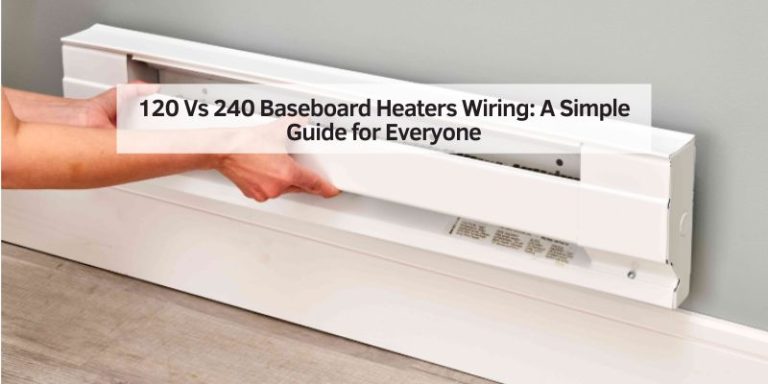
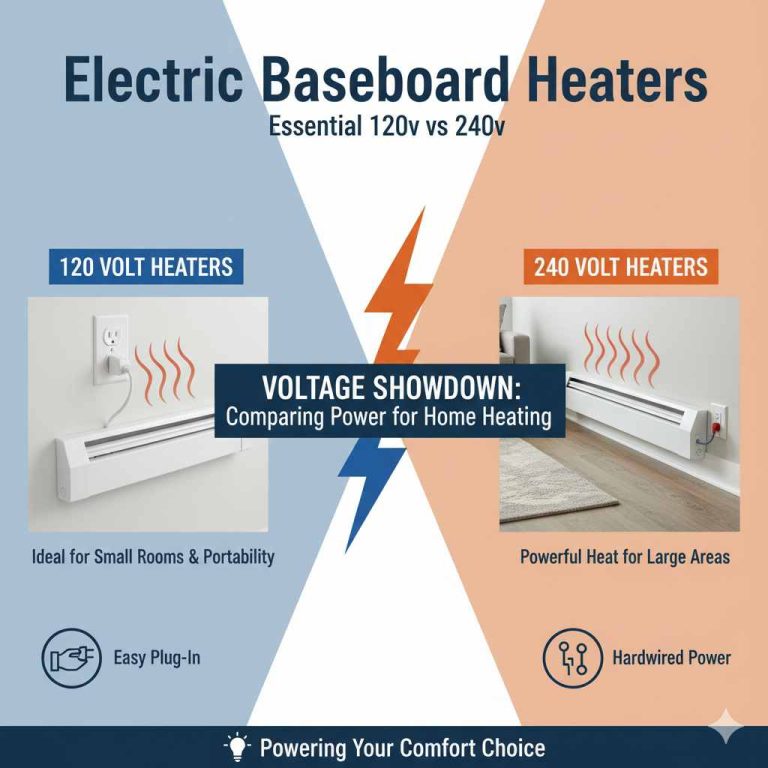
Electric baseboard heaters are a familiar sight in many homes. They are long, narrow units that install along the base of your walls, usually under windows. Think of them as simple, standalone heaters that plug into your home’s electrical system.
How they work:
- Electricity flows through a heating element inside the unit.
- This element gets hot and warms the air around it.
- The warm air then rises naturally, circulating heat into the room.
- Most have a built-in thermostat to control the temperature, but you can also use a whole-house thermostat system.
They are popular because they are relatively inexpensive to buy and install. Each unit can be controlled independently, allowing for some basic room-by-room temperature adjustments. However, because they heat air directly, they can sometimes lead to uneven heating and higher electricity bills if used extensively.
For more information on residential heating systems, the U.S. Department of Energy provides excellent resources, including details on different heating technologies and how to improve home energy efficiency: U.S. Department of Energy – Residential Building Systems.
What Are Mini-Split Systems?
Mini-split systems, also known as ductless mini-split heat pumps, are a more modern and advanced heating and cooling solution. They are highly efficient and offer great flexibility.
How they work:
- A mini-split system has two main parts: an outdoor unit (condensing unit) and one or more indoor units (air handlers).
- These units are connected by refrigerant lines and electrical wiring that run through a small hole in the wall.
- The outdoor unit transfers heat from the outside air into the refrigerant.
- This heated refrigerant then travels to the indoor unit, which blows that heat into your room.
- In the summer, the process can be reversed to cool your home by moving heat from inside to outside.
Mini-splits are praised for their energy efficiency, quiet operation, and ability to provide both heating and cooling. They allow you to control the temperature in individual zones or rooms, which can save a lot of energy compared to heating or cooling your entire house all the time. While the upfront cost is higher, their efficiency often leads to significant savings on energy bills over time.

Proven Efficiency: Electric Baseboard Heaters vs. Mini Splits
When we talk about “efficiency” in heating, we’re usually asking how much heat you get for the amount of energy you use. This is crucial for keeping your home comfortable and your energy bills manageable. Let’s look at how electric baseboard heaters and mini-split systems stack up in terms of their proven efficiency.
Efficiency of Electric Baseboard Heaters
Electric baseboard heaters are technically 100% efficient at converting electricity into heat. This means that for every unit of electricity they consume, they produce an equal amount of heat. This sounds great on the surface!
However, there are a few things to consider about their real-world efficiency:
- Electricity Costs: While they convert all the electricity to heat, electricity is often one of the more expensive forms of energy to buy. So, while 100% efficient, that heat might be costly.
- Heat Distribution: The heat produced is primarily radiant and convective. This can lead to warm spots near the heater and cooler areas further away if rooms are large or poorly insulated. You might end up turning up the thermostat to compensate, using more energy than necessary.
- No Cooling: They only provide heat. If you need cooling in warmer months, you’ll need a separate system, adding to your overall energy load and appliance count.
Because of these factors, while technically efficient in their energy conversion, they are often less cost-effective for primary heating compared to other systems.
Efficiency of Mini-Split Systems
Mini-split systems are heat pumps, and their efficiency is measured differently. They don’t create heat from electricity; instead, they move heat from one place to another. This process is much more energy-efficient.
Key efficiency metrics:
- COP (Coefficient of Performance): This measures how much heat energy is delivered for each unit of electrical energy consumed. A COP of 3 means the system delivers 3 units of heat for every 1 unit of electricity used. Many mini-splits have COPs ranging from 2 to 4 or even higher in moderate temperatures.
- SEER (Seasonal Energy Efficiency Ratio) and HSPF (Heating Seasonal Performance Factor): These are industry standards that rate the efficiency of cooling and heating performance over an entire season, respectively. Higher SEER and HSPF ratings indicate greater efficiency.
What this means for you:
- Up to 300-400% More Efficient: Because they are moving heat, mini-splits can deliver 3 to 4 times more heat energy than they consume in electrical energy. This makes them significantly more cost-effective to run than electric resistance heaters like baseboards.
- Excellent for Zoning: The ability to control individual indoor units means you only heat the rooms you are actively using, further reducing energy waste. The American Council for an Energy-Efficient Economy (ACEEE) highlights the significant energy savings potential of ductless mini-split heat pumps, especially in homes without existing ductwork.
- Provides Both Heating and Cooling: This dual functionality adds value and can replace separate heating and cooling systems, potentially lowering overall energy consumption.
The high efficiency of mini-splits is their biggest advantage, leading to substantial savings on energy bills over the lifespan of the system.
Cost Comparison: Installation vs. Long-Term Running
When you’re looking at new heating systems, it’s essential to consider both the initial cost of buying and installing them, as well as how much they’ll cost to run over time. This is where electric baseboard heaters and mini-splits show some very distinct differences.
Initial Costs: Electric Baseboard Heaters
One of the biggest draws of electric baseboard heaters is their low upfront cost.
- Unit Cost: Individual baseboard units are relatively inexpensive, often ranging from $100 to $300 per unit, depending on length and features.
- Installation Cost: Installation is generally straightforward. If you have existing electrical wiring and circuits, a handyman or even a DIYer with electrical knowledge can install them. If new circuits are needed, an electrician will charge more, but it’s typically less than installing a full HVAC system. This can range from $200 to $600+ per unit if professional installation is required for new circuits.
- Overall: For a few rooms, the total initial cost for baseboard heaters can be quite low, making them an attractive option for budget-conscious homeowners or for adding supplemental heat to specific areas.
Initial Costs: Mini-Split Systems
Mini-split systems have a higher initial investment.
- Unit Cost: A single-zone mini-split system (one outdoor unit, one indoor unit) can cost anywhere from $1,000 to $3,000 for the equipment alone. Multi-zone systems with multiple indoor units will cost significantly more.
- Installation Cost: Professional installation is almost always required for mini-splits. This involves mounting the indoor and outdoor units, running refrigerant lines and electrical connections, and setting up the system. Professional installation costs for a single-zone system can add another $1,000 to $2,500.
- Overall: The initial purchase and installation of a mini-split system can range from $2,000 for a basic single-zone to $5,000-$10,000+ for multi-zone systems covering an entire home.
Long-Term Running Costs
This is where the efficiency difference really pays off.
- Electric Baseboard Heaters: As discussed, they are 100% efficient but use electricity, which can be expensive. If a room needs a lot of heat, or if you use them as a primary heat source in a cold climate, your electricity bills will likely be very high. You might find yourself turning them down to save money, sacrificing comfort.
- Mini-Split Systems: Their high efficiency (delivering more heat than they consume in power) means they consume significantly less electricity to achieve the same level of warmth as baseboard heaters. This translates directly into lower monthly energy bills. For example, a mini-split can often heat a space for 30-50% less cost than electric baseboard heaters. The ability to zone also means you’re not wasting energy on unused rooms.
Conclusion on Costs: While electric baseboard heaters are cheaper to buy and install, mini-split systems offer substantial savings on energy bills year after year, often recouping their higher initial cost within several years of operation. For primary heating and long-term savings, mini-splits are the clear winner.
Installation: What to Expect
The ease or complexity of installation is another key difference between these two heating systems. Understanding this can help you plan and budget accordingly.
Installing Electric Baseboard Heaters
Installation is generally straightforward, especially if you have existing electrical capacity.
Steps involved:
- Placement: Decide where each heater will go. They are typically installed along exterior walls, under windows, to help counteract drafts.
- Electrical Connection: This is the most critical step.
- If you have spare circuits and capacity, the heater can be wired directly.
- If not, an electrician will need to install a new dedicated circuit from your breaker panel to the heater location. This involves running wires through walls and ceilings.
- Mounting: The heater is then securely mounted to the wall using screws.
- Thermostat: Most units have an integrated thermostat. Some systems might use central thermostats.
DIY Potential: For homeowners comfortable with basic electrical work and who have ample electrical panel capacity, some aspects of installing baseboard heaters might be manageable. However, it’s always recommended to have an electrician assess your home’s electrical system and perform the final connections to ensure safety and compliance with local codes. Improper electrical work can be a fire hazard.
Installing Mini-Split Systems
Mini-split installation is more involved and requires professional expertise.
Key components and steps:
- The system consists of an outdoor unit and one or more indoor units. A single line set (containing refrigerant lines, power cable, and condensate drain) connects them.
- Outdoor Unit Placement: The outdoor unit (compressor/condenser) needs a stable, level spot, usually on a concrete pad or wall bracket, with adequate airflow and clearance.
- Indoor Unit Placement: Indoor units are typically mounted high on an interior wall in each room or zone to be heated/cooled.
- Wall Penetration: A small hole (about 3 inches in diameter) is drilled through the exterior wall to pass the line set between the indoor and outdoor units.
- Line Set Connection: The refrigerant lines, electrical wiring, and condensate drain line are run, connected, and properly sealed.
- Electrical Connection: The system is wired to a dedicated electrical circuit.
- System Charging and Testing: The refrigerant lines are usually pressurized and then evacuated (vacuumed) to remove air and moisture. Finally, the system is charged with refrigerant and tested to ensure it’s operating correctly.
Professional Requirement: Due to the handling of refrigerants, precise connections, and specialized electrical needs, mini-split installation is almost always performed by certified HVAC technicians. This ensures the system operates efficiently and safely, and it’s often required to maintain the manufacturer’s warranty. Reputable HVAC professionals can be found through local searches and industry associations.
Comfort and Control: Feeling the Difference
Beyond efficiency and cost, how these systems make your home feel is incredibly important. Comfort is about consistent warmth, the right humidity, and having control over your environment.
Comfort from Electric Baseboard Heaters
Electric baseboard heaters provide heat through convection and radiation.
Pros for comfort:
- Quiet Operation: They are virtually silent, which is a big plus for peace and quiet.
- Individual Room Control: Each unit has its own thermostat (or can be controlled by a central thermostat), allowing you to set different temperatures for different rooms. This can be useful if you have rooms that get more sun or are used at different times.
Cons for comfort:
- Uneven Heating: The heat rises directly from the baseboard. This can lead to a feeling of intense heat near the unit and cooler air at higher levels or in the center of the room. Cold spots can be common.
- Dry Air: Electric resistance heating can sometimes dry out the air in your home, leading to uncomfortable symptoms like dry skin, itchy eyes, and static electricity.
- Slow to Respond: They can take a while to heat up a room once the thermostat calls for heat, and they might continue to radiate heat after the thermostat has signaled warmth.
Comfort from Mini-Split Systems
Mini-splits offer a more sophisticated approach to comfort.
Pros for comfort:
- Consistent Temperature: They deliver a steady stream of conditioned air, leading to more uniform temperatures throughout the room. Many models have advanced features like “i-see Sensor” technology that detects hot and cold spots and adjusts airflow accordingly.
- Even Air Distribution: The indoor unit uses a fan to circulate the air, spreading warmth (or cool air) more evenly than baseboard heaters.
- Quiet Operation: Modern mini-splits are incredibly quiet, often quieter than a refrigerator.
- Humidity Control: Many mini-split systems offer dehumidification modes for summer cooling, which can improve indoor air quality and overall comfort by managing moisture levels.
- Zoned Control: The ability to set different temperatures for different zones is a major comfort advantage. You can keep bedrooms cooler for sleeping while maintaining a warmer temperature in the living areas.
- Heating and Cooling: The primary advantage is having both heating and cooling from one system, providing year-round comfort.
Cons for comfort:
- Initial Airflow: Some people notice a gentle nhưng constant flow of air from the indoor unit, which can be a slight adjustment compared to the passive heat of baseboards. However, most systems offer fan-only modes or adjustable fan speeds to minimize this.
In summary: For overall comfort, consistent temperatures, and the ability to manage both heat and cool, mini-split systems generally provide a superior experience.
Maintenance and Lifespan
Considering how much maintenance a system requires and how long it’s expected to last is a practical part of choosing a heating solution.
Maintenance for Electric Baseboard Heaters
Electric baseboard heaters require very little maintenance.
- Regular Cleaning: The primary maintenance task is keeping the vents clean. Dust and debris can accumulate inside the unit and on the louvers, reducing efficiency and potentially posing a fire hazard if left unchecked. This involves gently vacuuming or wiping them down periodically.
- Thermostat Check: Periodically check that the thermostat is regulating the temperature accurately.
Lifespan: Electric baseboard heaters are generally quite durable. Many can last 15 to 20 years or even longer with minimal upkeep.
Maintenance for Mini-Split Systems
Mini-split systems require more regular maintenance to ensure optimal performance and longevity.
Essential maintenance tasks:
- Filter Cleaning: The indoor unit has air filters that need to be cleaned or replaced every 1-3 months, depending on usage and air quality. Dirty filters restrict airflow and reduce efficiency.
- Coil Cleaning: The indoor and outdoor coils may need periodic cleaning to remove dirt and debris.
- Drain Line Check: The condensate drain line for the indoor unit needs to be checked to ensure it’s not clogged, which can cause water to back up and leak.
- Professional Tune-ups: It’s recommended to have a qualified HVAC technician inspect the system annually or bi-annually. They will check refrigerant levels, electrical connections, motor operation, and overall system performance.
Lifespan: With proper maintenance, a mini-split system typically has a lifespan of 12 to 15 years, though some can last longer.
Note: The ENERGY STAR program often provides guidelines and recommendations for maintaining HVAC equipment to ensure efficiency and longevity.
When to Choose Which System
Deciding between electric baseboard heaters and mini-splits often comes down to your specific needs, priorities, and circumstances.
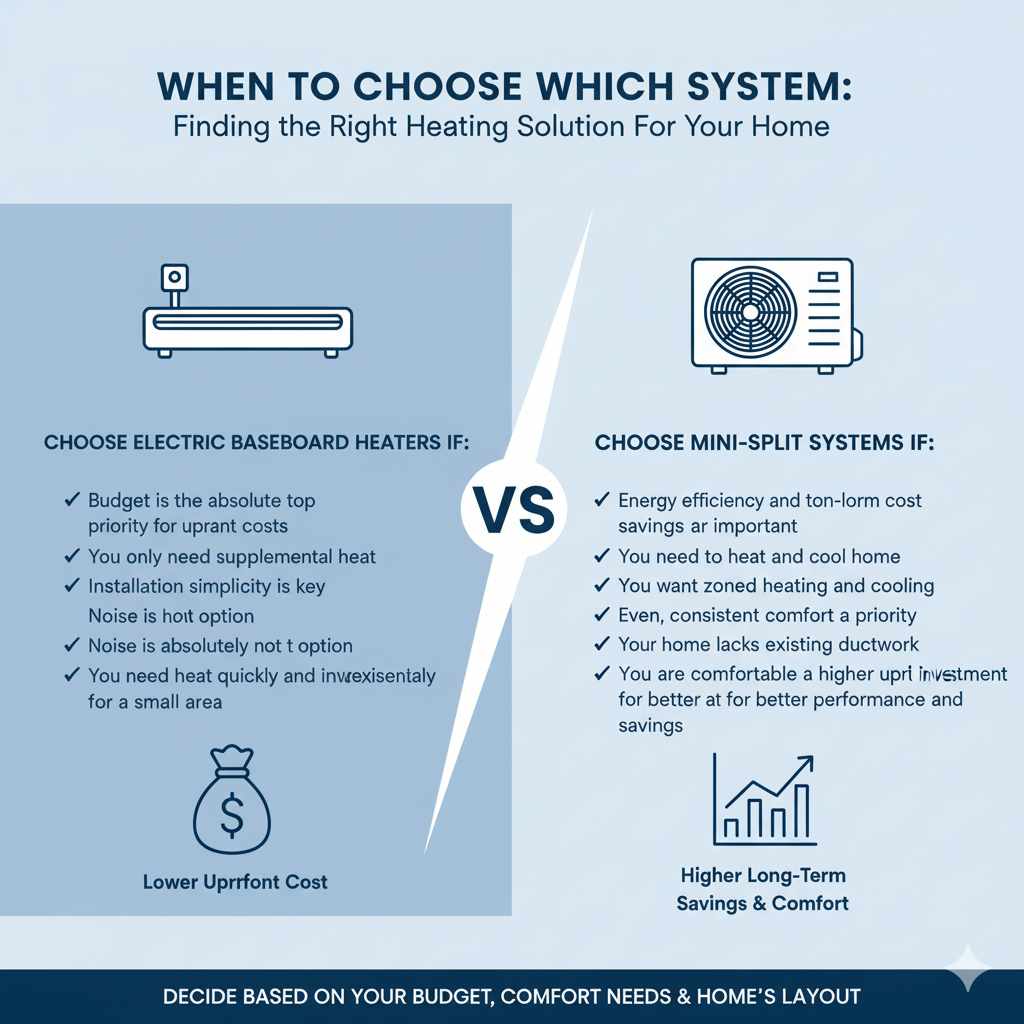
Choose Electric Baseboard Heaters if:
- Budget is the absolute top priority for upfront costs: You need the cheapest possible way to add heat to a specific room or in an emergency.
- You only need supplemental heat: You have a primary heating system and just need to warm a small, infrequently used room (like a sunroom or garage).
- Installation simplicity is key: You want a system that is easy on your electrical panel and straightforward to install, perhaps even a DIY project for parts of it.
- Noise is absolutely not an option: You want a completely silent heating solution.
- You need heat quickly and inexpensively for a small area: For temporary solutions or very specific needs where running costs are less of a concern than initial outlay.
Choose Mini-Split Systems if:
- Energy efficiency and long-term cost savings are important: You want to significantly lower your heating and cooling bills.
- You need to heat and cool your home: You are looking for a versatile system that provides year-round comfort control.
- You want zoned heating and cooling: You desire the ability to control temperatures in different areas of your home independently.
- Even, consistent comfort is a priority: You want to eliminate cold spots and enjoy a more stable indoor climate.
- Your home lacks existing ductwork: Mini-splits are an excellent solution for homes where installing traditional ducted systems would be difficult or prohibitively expensive.
- You are comfortable with a higher upfront investment for better performance and savings: You see the long-term value in a more advanced, efficient system.
Frequently Asked Questions (FAQ)
Q1: Are electric baseboard heaters more expensive to run than mini-splits?
Yes, generally. While electric baseboard heaters convert electricity to heat at 100% efficiency, electricity itself can be expensive, and they often require more power to heat a space compared to the heat-moving ability of a mini-split. Mini-splits use less electricity to deliver the same amount of heat, offering significant long-term savings.
Q2: Can a mini-split system heat my entire house?
Yes, if you have a multi-zone system. A single-zone mini-split is designed for one room. For a whole house, you would need multiple indoor units connected to one or more outdoor units, creating several heating/cooling zones. The number of zones, the size of your home, and your climate will determine the system’s capacity and cost.
Q3: Is a mini-split installation very disruptive?
No, mini-split installation is generally less disruptive than installing traditional ducted HVAC systems. The main work involves drilling a small hole through an exterior wall for the line set. There’s no need to tear down walls or ceilings to install ductwork.
Q4: How much do electric baseboard heaters cost to run in very cold weather?
They can become very expensive to run in cold weather. Since they rely solely on electricity to generate heat and lack the efficiency advantage of heat pumps, they will consume a significant amount of electricity when demand is high, leading to higher utility bills. Using them as a primary heat source in cold climates is often not cost-effective.
Q5: Can I use one mini-split to heat multiple rooms?
You can install multiple indoor units connected to a single outdoor unit to create a multi-zone system. This allows for individual temperature control in each room or zone, maximizing efficiency and comfort. A single indoor unit is typically meant for a single room or a small open area.
Q6: Are electric baseboard heaters safe?
Yes, electric baseboard heaters are generally safe when installed and used correctly. They have safety features like overheat protection. However, it’s important to keep flammable materials away from them and ensure they are properly wired by a qualified electrician to prevent any electrical hazards.
Q7: Do mini-splits work in very cold temperatures?
Modern “cold climate” mini-splits are designed to operate effectively even in sub-zero temperatures. Older models might lose efficiency as temperatures drop significantly, but advanced inverter technology in newer models allows them to continue providing heat efficiently down to -13°F (-25°C) or even lower for some units.
Conclusion: Making the Smart Choice for Your Home
Choosing between electric baseboard heaters and mini-split systems is a decision that balances upfront cost with long-term efficiency, comfort, and practicality. Electric baseboard heaters offer a simple, low-cost entry point for heating specific areas, particularly as a supplemental heat source where the cost of running them isn’t a primary concern. They are quiet, robust, and require minimal maintenance.
However, for homeowners seeking a comprehensive, energy-efficient, and comfortable heating (and cooling) solution for their primary living spaces, mini-split systems stand out. Their ability to move heat rather than generate it makes them incredibly efficient, leading to significant savings on energy bills over time. The precision of zoned control, consistent comfort, and dual functionality for heating and cooling make them a modern, smart investment for many homes.
Ultimately, the “proven efficiency” lies with the mini-split’s ability to deliver more comfort for less energy. While the initial investment is higher, the long-term financial and environmental benefits, coupled with superior comfort, make mini-split heat pumps a wise choice for sustainable and cost-effective home climate control. Consider your budget, your heating needs, and your long-term goals to make the best decision for your warm and cozy home.