How to Calculate BTUs: Essential Guide
Feeling a chill and wondering if your heater is up to the task? It’s a common puzzle when it comes to home comfort! But don’t worry, understanding BTUs (British Thermal Units) is simpler than it sounds. It’s the key to choosing the perfect heater that keeps you warm without wasting energy. We’ll walk through how to figure out what BTUs you need, step-by-step, so you can enjoy a cozy home all year round. Let’s get this done!
If cost, wattage, or efficiency matters, Are Diesel Heaters Efficient: Fuel Savings adds a useful comparison before choosing a heater.
If cost, wattage, or efficiency matters, Are Gas Pool Heaters Expensive to Run? adds a useful comparison before choosing a heater.
If cost, wattage, or efficiency matters, Are Ceramic Wall Heaters Energy Efficient: Brilliant Savings adds a useful comparison before choosing a heater.
Why BTUs Matter for Your Home Comfort
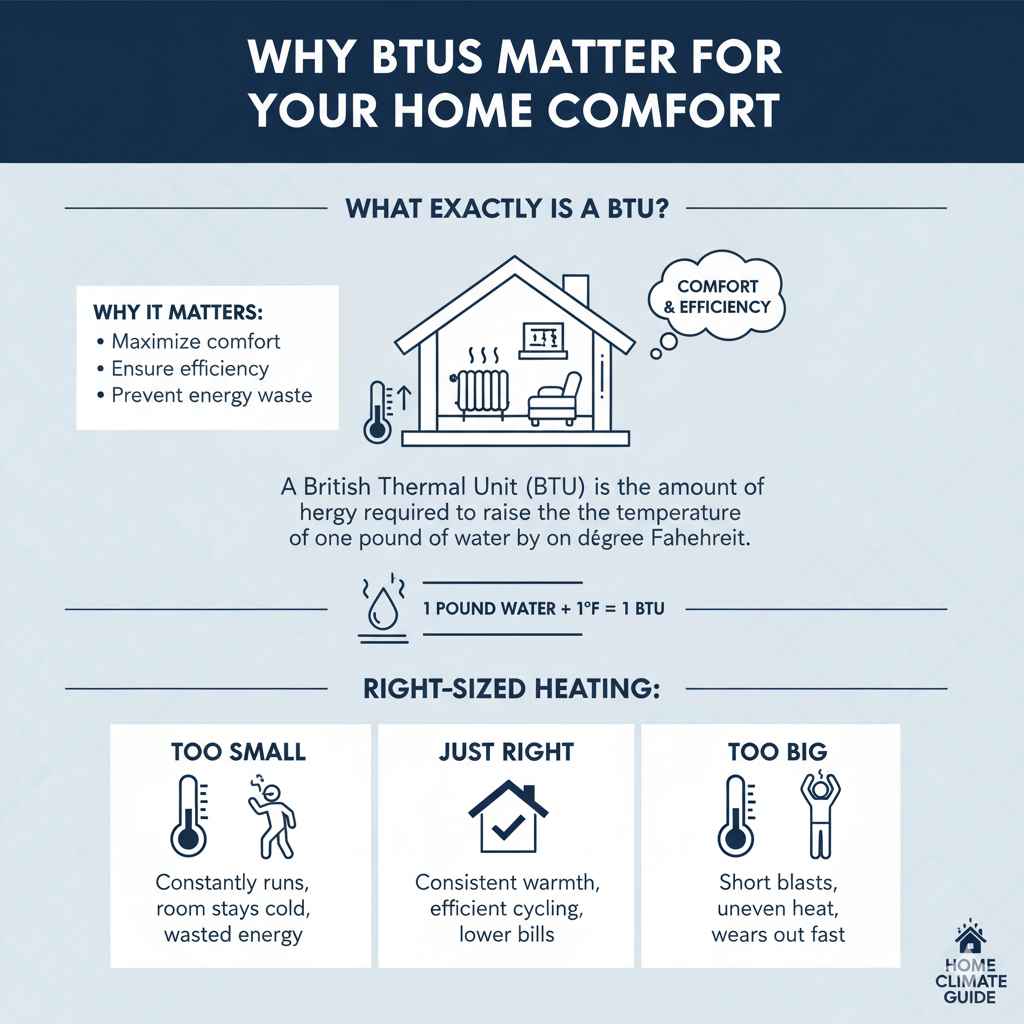
Imagine a heater that’s too small – your room stays chilly no matter how high you turn it up. Now, picture a heater that’s way too powerful – it blasts heat, then shuts off too soon, leaving you with uneven temperatures and a shocking energy bill. This is where understanding BTUs comes in. BTUs are simply a measure of heat energy. The more BTUs a heater has, the more heat it can produce. Choosing the right BTU output ensures maximum comfort, efficiency, and safety for your specific needs.
What Exactly is a BTU?
A British Thermal Unit (BTU) is the standard measurement for heat. To put it into perspective, it’s defined as the amount of heat required to raise the temperature of one pound of water by one degree Fahrenheit. So, when we talk about a 1,500-watt electric heater producing 5,120 BTUs per hour, we mean it can generate enough heat energy to warm up about 5.1 liters of water by 1°F every hour. This might sound technical, but for your home, it simply tells you how much heating power a device has.
Essential Factors for Calculating BTUs
Before we dive into the numbers, let’s chat about what makes one space need more heat than another. Think of your home like a puzzle, and each piece affects how much warmth you need.
- Room Size: The most obvious factor! A bigger room needs more heat than a small one.
- Ceiling Height: Taller ceilings mean a larger volume of air to heat.
- Insulation: How well your walls, attic, and floors keep heat in or out makes a huge difference. Poorly insulated homes lose heat faster.
- Windows and Doors: Lots of windows or drafty doors can let precious heat escape.
- Climate: If you live in a very cold region, you’ll need more BTUs than someone in a milder climate.
- Room Usage: A living room that’s used a lot might need more consistent heat than a seldom-used guest room.
- Sun Exposure: Rooms that get a lot of direct sunlight might need less supplemental heat during the day.
How to Calculate BTUs Needed to Heat a Space: A Step-by-Step Guide
Ready to find that perfect BTU number? It’s easier than you think! We’ll break it down into simple steps. Remember, these are estimates, and sometimes a professional can give you the most precise answer, especially for complex heating systems.
Step 1: Measure Your Space
Grab a tape measure and a notepad! We need the length, width, and height of the room you want to heat in feet.
Example: A living room that is 20 feet long and 15 feet wide, with an 8-foot ceiling.
Step 2: Calculate the Square Footage
Multiply the length by the width to get the square footage of the room. This is the simplest way to gauge the area you need to warm.
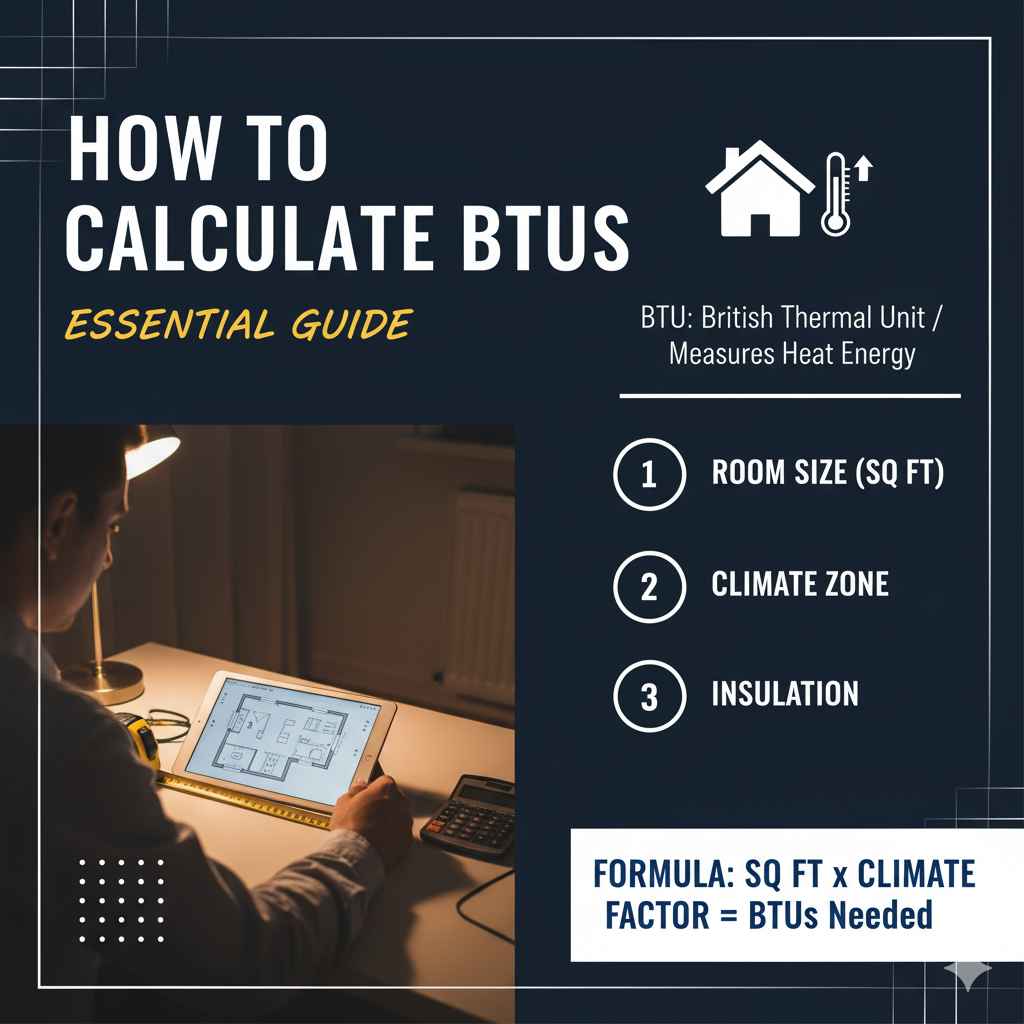
Formula: Square Footage = Length × Width
Example: 20 feet × 15 feet = 300 square feet
Step 3: Use a Base BTU Chart (Adjustable!)
Different sources use slightly different base BTU calculations. A common starting point is to assign a base BTU requirement per square foot. This is a general guideline that doesn’t account for all the factors yet.
Here’s a common chart used for estimations, but know that these can vary:
| Climate Zone | BTU per Square Foot (Approximate) |
|---|---|
| Very Cold (<0°F avg. winter temp) | 50 BTU/sq ft |
| Cold (0-20°F avg. winter temp) | 40 BTU/sq ft |
| Moderate (20-40°F avg. winter temp) | 30 BTU/sq ft |
| Mild (40-60°F avg. winter temp) | 20 BTU/sq ft |
| Warm (Above 60°F avg. winter temp) | 10 BTU/sq ft |
For areas without extreme temperatures, a general rule of thumb is around 20-30 BTUs per square foot. We’ll use 30 BTU/sq ft as our starting point for a moderately cold climate.
Formula: Base BTUs = Square Footage × BTU per Square Foot
Example: 300 sq ft × 30 BTU/sq ft = 9,000 BTUs
Step 4: Adjust for Other Factors
Now, let’s fine-tune that number based on the specific conditions of your room. We’ll add or subtract percentages to our base BTU calculation.
Here are common adjustments:
- Ceiling Height: If your ceilings are higher than 8 feet, you’ll need to increase your BTU estimate. For every foot above 8 feet, add about 10% to your BTU calculation.
- Insulation:
- Good insulation (modern home): No adjustment needed.
- Average insulation: Add 10%.
- Poor insulation (older, drafty home): Add 20%.
- Windows and Doors:
- Few or no windows/doors: No adjustment.
- One or two standard windows/doors: Add 10%.
- Multiple large windows or drafty doors: Add 20%.
- Location/Exposure:
- Rooms with good sun exposure: Subtract 10%.
- Rooms that are partially below ground or very exposed: Add 10%.
- Room Location:
- Heated space on multiple sides (e.g., a bedroom with rooms above/below and on sides): No adjustment.
- Room on an exterior wall with unheated space on one or more sides (e.g., basement room, garage adjacent): Add 10%.
Let’s apply these adjustments to our example living room (300 sq ft, 8 ft ceiling, 9,000 base BTUs):
- Ceiling Height: 8 feet (no adjustment needed).
- Insulation: Let’s assume average insulation (add 10%). 10% of 9,000 BTUs = 900 BTUs New total: 9,000 + 900 = 9,900 BTUs
- Windows and Doors: One or two standard windows/doors (add 10%). 10% of 9,900 BTUs = 990 BTUs New total: 9,900 + 990 = 10,890 BTUs
- Location/Exposure: Good sun exposure (subtract 10%). 10% of 10,890 BTUs = 1,089 BTUs New total: 10,890 – 1,089 = 9,801 BTUs
- Room Location: Room on an exterior wall (add 10%). 10% of 9,801 BTUs = 980 BTUs Final Total: 9,801 + 980 = 10,781 BTUs
So, for our example living room, we’d look for a heating solution that provides around 10,781 BTUs. It’s always a good idea to round up slightly to ensure you have enough heat, so aiming for a device in the 11,000-12,000 BTU range would be wise.
Using Online BTU Calculators
If all this math seems a bit much, don’t fret! Many reputable HVAC and appliance manufacturers offer free online BTU calculators. These tools often ask for the same information (room dimensions, climate, insulation level) and do the calculations for you. They can be a great starting point!
A good calculator will guide you through factors like:
- Room dimensions (width, length, height)
- Window types and sizes
- Insulation quality
- Local climate conditions
- Whether the room is on a corner or has multiple exterior walls
For example, the Department of Energy provides resources and general guidelines for home heating energy efficiency, which indirectly relates to BTU needs and proper sizing through Energy Star’s home heating guidance.
BTU Needs for Different Heater Types
The BTU calculation remains the same, but knowing the BTU output of different heater types helps you choose the right appliance.
Portable Electric Heaters
These are great for small to medium-sized rooms. Their BTU output is often stated in watts, which can be converted:
- 1,500 watts ≈ 5,120 BTUs/hour (most common high-power portable heater)
- 1,000 watts ≈ 3,412 BTUs/hour
If your calculation shows you need 5,000 BTUs for a small office, a 1,500-watt portable electric heater is a good match.
Propane/Kerosene Heaters (Temporary/Outdoor Use)
These are often used for garages, workshops, or temporary outdoor heating. They have higher BTU outputs but require significant ventilation. Always follow manufacturer safety guidelines.
Outputs can range from 10,000 BTUs for small units to over 80,000 BTUs for industrial models.
Electric Baseboard Heaters
These are permanently installed and provide consistent heat. They are rated in watts, and the BTU conversion is the same as portable electric heaters. A 10-foot baseboard heater might be rated at 1,500 watts, providing about 5,100 BTUs.
Ductless Mini-Split Systems
These highly efficient systems are perfect for heating or cooling individual rooms or entire homes. Their BTU outputs are usually listed directly and can range widely, from 9,000 BTUs for a small single zone to over 36,000 BTUs for multi-zone systems.
Central Heating Systems (Furnaces/Boilers)
These systems are sized for a whole house and require a professional load calculation (using tools like Manual J) for accurate sizing. Home size, insulation, window efficiency, and local climate are all critically assessed. Do-it-yourself BTU calculations are not sufficient for whole-house systems. Manufacturers often start furnace sizing with a rough estimate of 30-50 BTUs per square foot of conditioned space.
Tips for Optimal Heating and Energy Efficiency
Once you’ve got the right BTU output, here’s how to make sure your heating works its best and saves you money:
- Seal Drafts: Weatherstrip doors and windows, and seal any gaps around pipes or vents. This is one of the most cost-effective ways to keep heat in.
- Use a Programmable Thermostat: Set it to lower the temperature when you’re sleeping or away.
- Maintain Your Heater: Regularly change filters in furnaces and have central systems inspected annually. For portable heaters, ensure vents are clear and they are clean.
- Close Doors: Keep doors to unused rooms closed to concentrate heat where you need it most.
- Use Curtains and Blinds: Close them at night to add an extra layer of insulation and open them during the day on sunny sides of the house to let solar heat in.
- Zone Heating: If possible, use smaller, appropriately sized heaters for specific rooms rather than running a large central system for just one or two people.
Common Mistakes to Avoid
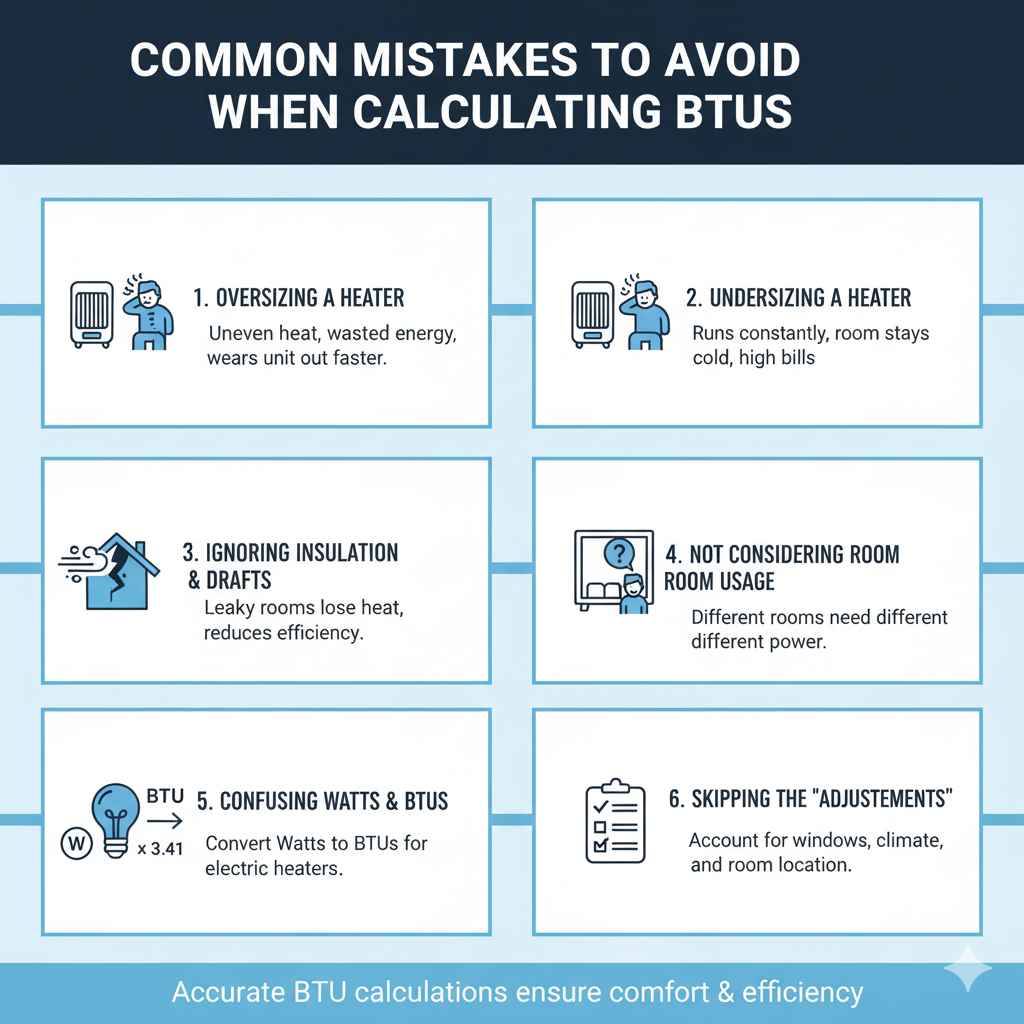
Calculating BTUs might seem straightforward, but it’s easy to stumble. Here are a few common pitfalls to watch out for:
- Oversizing a Heater: Folks often think more BTUs is always better, but an oversized heater will cycle on and off too frequently. This leads to uneven temperatures, increased wear and tear on the unit, and wasted energy.
- Undersizing a Heater: The opposite problem – a heater that’s too small will run constantly, struggle to reach the set temperature, and still leave you cold, costing you more in electricity or fuel.
- Ignoring Insulation and Drafts: A perfectly sized heater can’t overcome a leaky, uninsulated space. Always address drafts and insulation issues first.
- Not Considering Room Usage: A basement that’s only used occasionally doesn’t need the same BTU power as a main living area.
- Confusing Watts and BTUs: While related, they are different units. Always convert watts to BTUs when comparing electric heaters, or be aware of the conversion factor (1 watt ≈ 3.41 BTUs).
- Skipping the “Adjustments”: The square footage is just a starting point. Those adjustments for insulation, windows, and room location are crucial for an accurate estimate.
Frequently Asked Questions About Calculating BTUs
Q1: What is the easiest way to estimate BTUs needed?
The easiest way is to calculate your room’s square footage and multiply it by a base BTU factor (around 20-30 BTUs per square foot for moderate climates). Then, make simple adjustments for factors like insulation, windows, and ceiling height. Many online calculators simplify this further.
Q2: How do I convert watts to BTUs for electric heaters?
You can use a simple conversion: 1 watt is approximately equal to 3.412 BTUs. So, to convert watts to BTUs, multiply the wattage by 3.412. For example, a 1,500-watt heater is about 1,500 * 3.412 = 5,118 BTUs.
Q3: Do I need more BTUs in an older home?
Yes, older homes typically have less effective insulation and can be draftier. You should increase your BTU estimate by 10-20% for older homes with average to poor insulation compared to a modern, well-insulated home.
Q4: How do I calculate BTUs for a whole house?
Calculating BTUs for an entire house is best left to HVAC professionals who use detailed load calculation methods like Manual J. They consider every room, ductwork, and the overall structure. A very rough estimate can be made by summing the BTUs for each room, or using a general rule of 30-50 BTUs per square foot for the whole area, adjusted for your climate.
Q5: Can I use a portable heater if it has fewer BTUs than my calculation?
You can, but it won’t heat the space effectively. If your calculation requires 10,000 BTUs and you use a heater that only provides 5,000 BTUs, the room will likely remain cool, and the heater will run constantly trying to compensate, potentially shortening its lifespan.