
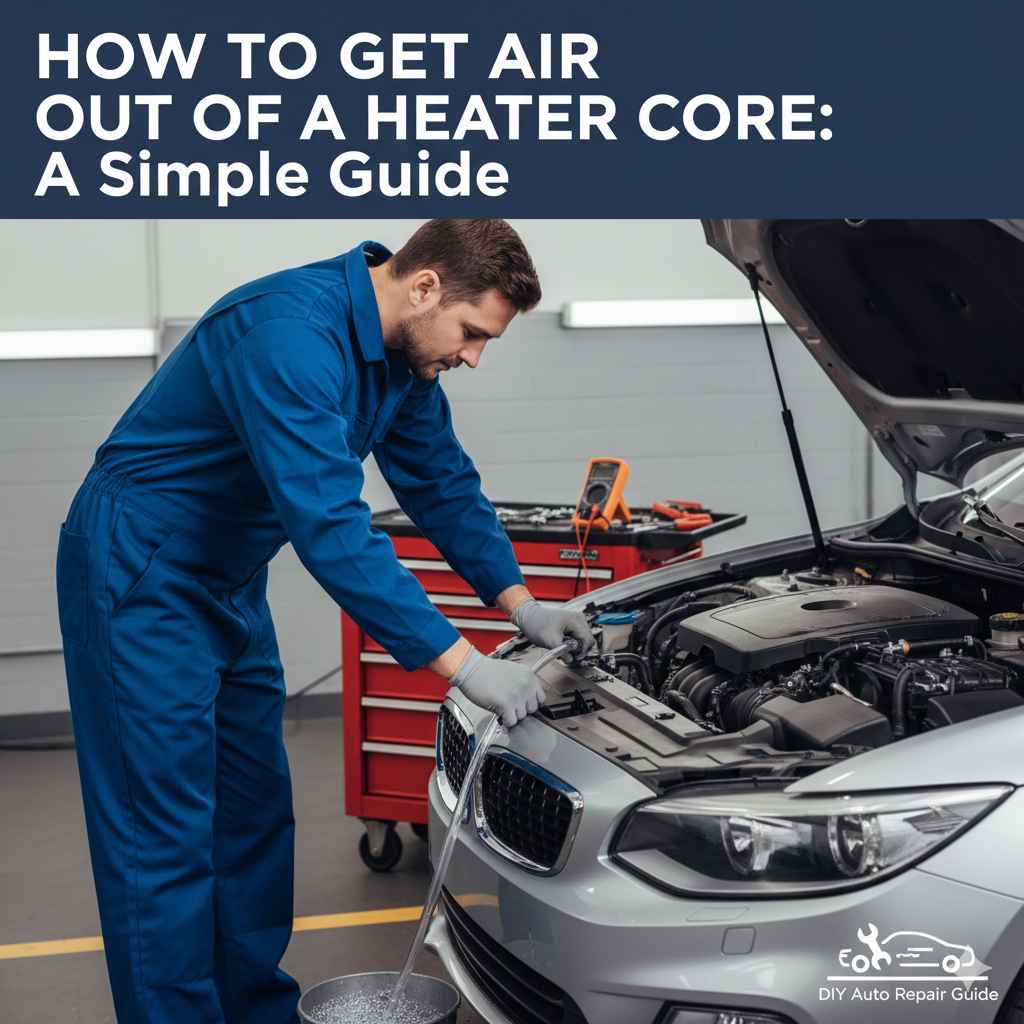
Sometimes, your car’s heater doesn’t blow hot air, and that’s usually because of air trapped in the system. Figuring out How to Get Air Out of a Heater Core can seem tricky, especially if you’re new to car maintenance. But don’t worry! This is a common issue, and it’s something you can often fix yourself. We’ll explore exactly what causes this, and then guide you step-by-step through a straightforward process to get your heater working again, so you’re warm and cozy on those chilly drives.
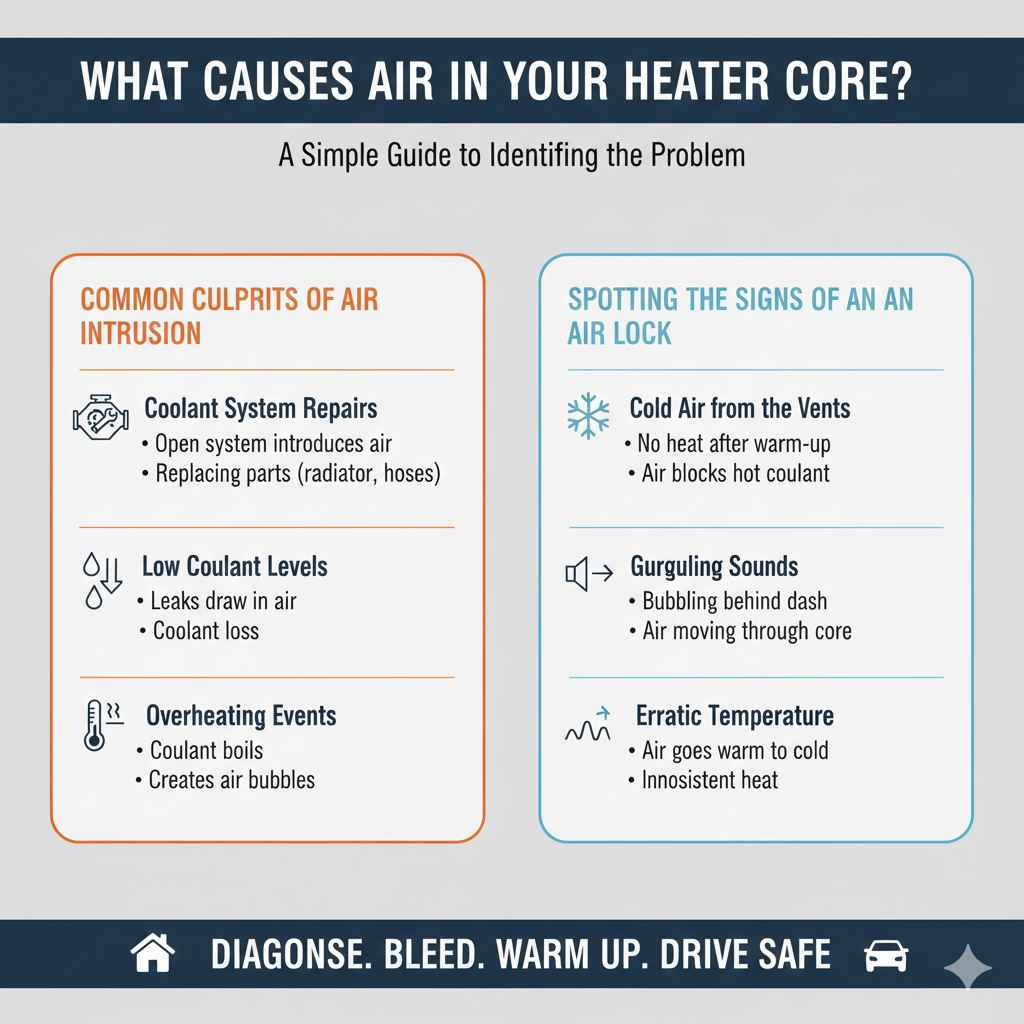
What Causes Air in Your Heater Core?
Air bubbles in your heater core prevent hot coolant from reaching the core, which then prevents your heater from producing heat. This usually happens after you’ve worked on your car’s cooling system, like replacing a radiator or a hose. Air can get sucked in when you drain the coolant and refill it. It can also happen gradually if there’s a leak in the system, letting air enter.
The heater core itself is a small radiator, located inside the dashboard. It uses the heat from the engine’s coolant to warm the air that blows into your car. The presence of air in the core blocks the flow of hot coolant, and your heater will blow cold or lukewarm air. Learning to remove this trapped air is the key to a warm cabin.
Common Culprits of Air Intrusion
Several situations can introduce air into your cooling system. These are common reasons why you might need to address How to Get Air Out of a Heater Core. Recognizing these causes can help you prevent the problem in the first place.
Coolant System Repairs: Any time you open the cooling system, like when replacing a radiator, water pump, or hoses, there’s a chance air will get in. Even a small leak during these repairs can cause this.
During these repairs, air can easily become trapped in the system. The repair itself is usually the reason to open the cooling system, creating a prime opportunity for air to enter. Always properly bleed the system after maintenance to prevent this problem.
Low Coolant Levels: Coolant leaks, even small ones, can cause the coolant level to drop. As the level falls, air is drawn into the system, taking the place of the lost coolant.
Regularly checking your coolant level is important for spotting potential problems. A sudden drop in coolant is usually a sign of a leak, which can lead to air in the system and a non-functional heater.
Overheating Events: When an engine overheats, it can cause coolant to boil, creating steam and air bubbles. These bubbles then become trapped in the system, including the heater core.
Overheating often leads to engine damage, but it also causes air pockets. If your engine overheats, it’s crucial to address the root cause, bleed the system, and fix any potential damage to your car’s components.
Spotting the Signs of an Air Lock
Knowing the signs of air in the heater core helps you diagnose the problem quickly. Being able to recognize these signs can help you prevent further damage to your car. The following are typical indicators.
Cold Air from the Vents: This is the most obvious sign. If your heater is blowing cold air even after the engine has warmed up, there’s likely air in the heater core.
This is often the first thing people notice. It can be a very uncomfortable issue, especially in colder months, so it is a common reason to search for how to get air out of a heater core.
Gurgling Sounds: You might hear gurgling or bubbling sounds coming from behind the dashboard. These noises are the sound of coolant and air moving through the heater core.
The sounds are caused by air moving through the system. You may notice this when accelerating or braking, because the air bubble shifts within the heater core.
Erratic Temperature: The temperature of the air from the vents might fluctuate, going from warm to cold and back again. This erratic behavior is a result of the air bubbles affecting coolant flow.
As the air moves, the flow of the hot coolant can be blocked, leading to changes in the temperature. This is more evidence that air needs to be removed from the system.
Simple Steps to Bleed Your Heater Core
Getting rid of the air trapped in your heater core can seem difficult, but the process is usually simple and can be done at home. Always make sure your engine is cold before starting. Then, you can use these steps to effectively remove the air.
This method works by finding the highest point in your cooling system and letting air escape. Remember, these are general steps, and your specific car might have slight differences, so always check your vehicle’s repair manual first.
Gather Your Tools
Gathering the right tools beforehand makes the job easier. Having everything ready saves time and frustration.
Coolant: Make sure you have the correct type of coolant for your car. Check your car’s manual.
Using the correct coolant is essential for your car’s engine. If you use the wrong type of coolant, it can damage your engine over time.
Gloves: Protect your hands from coolant.
Coolant is harmful if swallowed and can irritate skin, so wearing gloves is an important safety measure.
Funnel: A funnel with a wide opening makes pouring coolant easier and reduces spills.
A funnel also makes it easier to add coolant without spilling it, which can make a mess and waste coolant.
Wrench or Pliers: You may need these to open the bleed valve (if your car has one) or to loosen hoses.
You may need different sizes and types, depending on your vehicle. It’s best to have a basic toolset at your disposal.
Jack and Jack Stands (Optional): If the bleed valve or the radiator cap is hard to reach, raising the car can make it easier. Always use jack stands for safety!
Make sure you secure the car safely. Never work under a car supported only by a jack.
Locating the Bleed Valve or Cap
The bleed valve or cap is the point where you’ll release the trapped air. Its location varies depending on your car’s make and model. If you cannot find a bleed valve, you can use the radiator cap to remove air. It’s often at the highest point in the cooling system.
Bleed Valve: Some cars have a dedicated bleed valve on a radiator hose, the thermostat housing, or the heater core itself. Check your car’s manual to find its specific location.
The bleed valve is designed for this very purpose. Locate the valve, and prepare to release air.
Radiator Cap: If your car doesn’t have a bleed valve, you can use the radiator cap. This is usually the highest point.
The radiator cap is the most common point to remove air if your car doesn’t have a bleed valve.
Heater Hoses: You can also sometimes bleed the system by loosening the heater hoses. This can be less ideal, as it’s harder to control, and can make a mess.
This may work, but it’s not the easiest method, so it is best to avoid it when possible.
The Bleeding Process
Now that you have your tools and know the location of the bleed valve or cap, you can bleed the cooling system. This is the heart of How to Get Air Out of a Heater Core. These are the general steps to follow.
Prepare the Car: Park your car on a level surface and allow the engine to cool completely.
Never work on a hot engine. The coolant is under pressure, and you can get badly burned.
Open the Radiator Cap or Bleed Valve: If using a bleed valve, loosen it slightly. If using the radiator cap, slowly remove it.
Be careful when opening the radiator cap. Release the pressure slowly by turning the cap slowly to prevent burns from escaping steam.
Add Coolant: Fill the radiator with the correct type of coolant until it’s full. If you’re using a bleed valve, pour coolant into the radiator until the valve is covered.
Adding the coolant makes sure your cooling system is full, which helps push out the air bubbles.
Start the Engine and Run the Heater: Start the engine and turn the heater to its highest setting. Make sure the fan is on low.
Turning on the heater helps circulate coolant through the heater core and the rest of the system, which pushes the air bubbles toward the bleed valve or cap.
Bleed the System: Watch the bleed valve or radiator cap. You should see air bubbles escaping. If using a bleed valve, tighten it when coolant starts to come out without bubbles. If using the radiator cap, close it when bubbles stop.
This is where the magic happens. Watch the air bubbles, and tighten the bleed valve when coolant flows without bubbles.
Check Coolant Level: Turn off the engine and allow it to cool. Check the coolant level in the radiator and the overflow tank, and top them off as needed.
The coolant level may drop as air leaves the system. Ensure the coolant levels are correct.
Test the Heater: Start the engine and check your heater to ensure it’s blowing hot air. If it’s not working, repeat the steps above.
Test the results after bleeding the system. Repeat the steps if necessary.
Advanced Techniques
Sometimes, removing air from the heater core requires additional steps. These methods help when the simple bleeding process is not effective. This includes ensuring proper pressure in the cooling system.
Using a Coolant System Refiller
A coolant system refiller, also known as a vacuum filler, is a tool that removes air from the cooling system more efficiently than the traditional methods. This tool can save time and effort in many situations.
How it Works: The refiller creates a vacuum in the cooling system. This vacuum sucks out air and allows you to fill the system with coolant without trapping air.
This tool ensures there are no air bubbles left behind, providing more assurance when bleeding a system.
Using the Refiller: Attach the refiller to the radiator opening. Create a vacuum, and then use it to draw coolant into the system.
Be sure to follow the directions for your specific tool, but generally this tool is straightforward to use.
Benefits: A coolant system refiller makes the process quicker, and it reduces the chance of air getting trapped.
This tool is worth the investment if you frequently work on cars. You will eliminate some of the common issues associated with the cooling system.
Reverse Flushing the Heater Core
Sometimes, air can be stubborn and difficult to remove. Reverse flushing is a technique to clean out any blockage that could be preventing the air from escaping. This can also help dislodge air pockets in the heater core. This method involves pushing water or a cleaning solution through the heater core from the opposite direction of the normal flow.
Disconnecting Hoses: Locate the heater hoses and disconnect them.
These hoses connect the heater core to the engine’s cooling system. They are usually found near the firewall of your car.
Flushing the Core: Connect a garden hose to one of the heater hoses and gently flush water through the heater core. Make sure to direct the water flow the wrong way through the core.
This reverses the coolant flow. Do this with low water pressure to avoid damaging the heater core.
Reconnecting and Bleeding: Reconnect the hoses, fill the cooling system with coolant, and bleed the system to remove any remaining air.
After flushing, it is very important to make sure there is no air left in your system.
Common Problems and Troubleshooting
Even after following the steps, problems can occur. If the heater is still not working, there are other potential issues that need to be addressed. These troubleshooting tips can help you find solutions to these issues.
Addressing Persistent Air Pockets
Sometimes, air pockets are tough to get rid of, even after bleeding the system. You may need to revisit these steps to eliminate any remaining issues.
Recheck the Bleeding Process: Make sure you followed the steps correctly. Go back and review what you did to eliminate any missed steps.
Sometimes, a small detail can make a big difference. Check the bleeding process again.
Raise the Front of the Car: Raising the front of the car can help move the air toward the radiator cap or bleed valve. This will help it escape.
This simple adjustment can help. If you have any difficulty reaching the valves, consider lifting the car.
Drive the Car: Drive the car after bleeding the system to let the air work its way out. Drive at various speeds to encourage the air to shift.
Driving the car at different speeds can help push the remaining air bubbles into the system.
Other Possible Issues
If the heater is still not working, it might be due to a problem other than trapped air. There are several other possibilities.
Thermostat Problems: A stuck-closed thermostat will prevent coolant from flowing to the heater core.
The thermostat regulates the flow of coolant. A faulty thermostat prevents coolant flow, so it cannot heat the car.
Water Pump Failure: A bad water pump cannot circulate coolant properly.
The water pump is responsible for circulating the coolant throughout the system. Without circulation, there is no heat.
Clogged Heater Core: Debris or sediment can clog the heater core, reducing its effectiveness.
If the heater core is clogged, coolant cannot flow through it to heat the air. You may want to consider back-flushing the system.
Heater Core Replacement
In rare situations, the heater core itself is faulty. This might happen because of a leak, or severe clogging that can’t be fixed by flushing.
Signs of a Bad Heater Core: Look for leaks inside the car (wet floorboards) or a strong smell of coolant.
If the heater core leaks, it can cause the car to smell like coolant. Also, coolant may leak inside the car.
Replacement: Replacing a heater core is a labor-intensive job because the dashboard must be partially removed. Consider if you want to perform this job.
Heater core
Professional Help: If you are not comfortable replacing the heater core, it is best to take your car to a mechanic.
It’s always better to be safe. Sometimes the job requires a professional, and that’s okay.
| Symptom | Possible Cause | Solution |
|---|---|---|
| Cold Air From Vents | Air in the Heater Core | Bleed the Cooling System |
| Cold Air, Coolant Level Low | Coolant Leak | Find and Repair Leak, Bleed System |
| Overheating Engine | Thermostat or Water Pump Problems | Replace or Repair Faulty Components |
Frequently Asked Questions
Question: Why is it important to get the air out of the heater core?
Answer: Air bubbles block the flow of hot coolant, preventing the heater core from warming the air that blows into your car. Getting rid of the air ensures the heater core can do its job.
Question: How often should I check my coolant level?
Answer: It’s good practice to check your coolant level every month or before any long trips. This helps you catch leaks or other problems early on.
Question: What’s the difference between the radiator and the heater core?
Answer: The radiator cools the engine’s coolant. The heater core uses this hot coolant to warm the air for the car’s interior. They work together but have different jobs.
Question: Can I use tap water instead of coolant?
Answer: No, never use tap water instead of coolant. Tap water can corrode engine parts. Always use the correct type of coolant for your car.
Question: What if the heater still doesn’t work after bleeding the system?
Answer: If the heater still doesn’t work, there might be another issue, such as a faulty thermostat, a bad water pump, or a clogged heater core. These may require more in-depth repairs.
Final Thoughts
Knowing How to Get Air Out of a Heater Core is a valuable skill for any car owner. The process, while sounding technical, is usually straightforward. You now understand the causes of air in the system, and how to remove it. Remember the steps: finding the right tools, identifying the bleed valve or radiator cap, and carefully releasing the air. Keep in mind that patience is important. Be sure to check your coolant level and test your heater, and you should be enjoying warm air again in no time. If you encounter any problems, remember to investigate further, and you will have your car’s heater functioning again.
Last Updated on January 6, 2026 by Tanim