

Ceramic infrared heaters offer even, widespread warmth and durability, ideal for larger spaces and general heating. Carbon infrared heaters provide faster, more focused heat and are often more energy-efficient, perfect for targeted spot heating or quick comfort. Your choice depends on space size and heating needs.
Feeling a chill in your home? Choosing the right heater can seem tricky, especially with so many options out there. You might have heard about infrared heaters and are wondering about the difference between ceramic and carbon types. It’s a common question, and it’s totally understandable to want to make the best choice for your comfort and your wallet. Don’t worry, we’ll break it all down simply.
This guide will help you understand the key differences between ceramic and carbon infrared heaters. We’ll explore what makes each one special and where they shine brightest. Get ready to feel more confident about picking the perfect infrared heater for your cozy home!
Infrared Heaters: Ceramic vs Carbon – Making Your Perfect Choice
When you think about keeping your home warm and toasty, especially during those colder months, you want a heating solution that’s effective, safe, and easy to use. Infrared heaters have become a popular choice for good reason. They work differently than traditional heaters, warming objects and people directly, much like the sun’s rays. This can feel incredibly natural and comfortable.
But if you’ve started shopping around, you’ve probably noticed there are two main types: ceramic and carbon. What’s the scoop on each? Which one is the best fit for your living room, your workshop, or that chilly corner of your bedroom? Let’s dive in and explore the essential differences between ceramic and carbon infrared heaters so you can make a smart, cozy decision.
What Exactly is Infrared Heating?
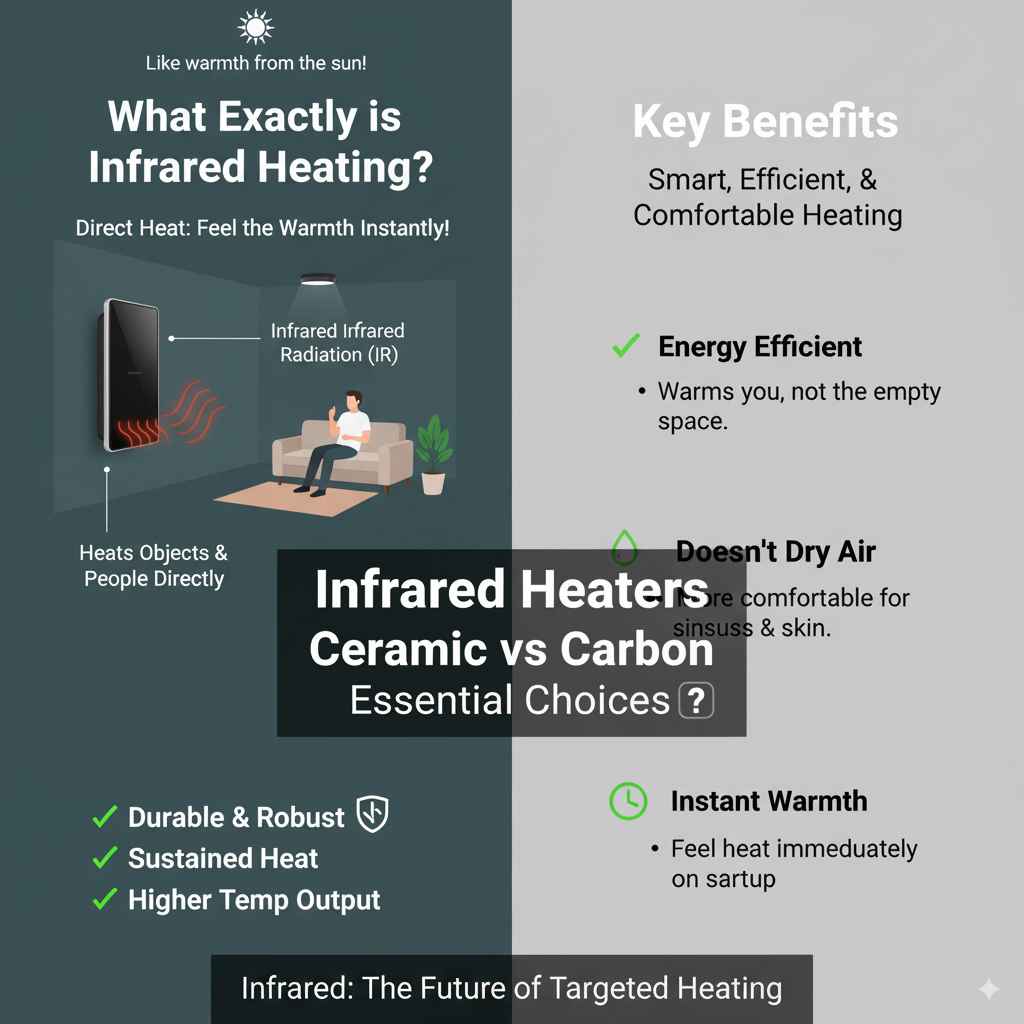
Before we compare ceramic and carbon, it’s helpful to understand how infrared heaters work. Think about standing in the sun on a cool day. You feel warmth on your skin, even if the air around you isn’t very warm. Infrared heaters do something similar. They emit infrared radiation, which is a type of light that we feel as heat. Unlike convection heaters that heat the air, infrared heaters warm the surfaces and the people in the room directly. This means you feel warm almost instantly, without having to wait for the air temperature to rise.
This direct heating method has some great benefits. It’s often more energy-efficient because it’s not trying to heat the entire volume of air in a large space if you’re just trying to warm yourself. Plus, it doesn’t dry out the air as much as some other heating methods, which can be a relief if you suffer from dry sinuses or skin.
Ceramic Infrared Heaters: Even Warmth, Lasting Comfort
Ceramic infrared heaters are one of the most common types you’ll find. They use a heating element, often nichrome wire, that is wrapped around or embedded within ceramic plates or fins. When the electricity flows, the element heats up, and the ceramic then radiates this heat outwards as infrared waves.
The ceramic material plays a key role. It’s a good insulator, meaning it helps the heating element reach high temperatures efficiently. It also holds onto heat well, allowing it to radiate warmth evenly and consistently over a longer period, even after the heater is turned off. This makes ceramic heaters great for providing a steady, comfortable warmth throughout a room.
How Ceramic Heaters Work: A Closer Look
Inside a ceramic infrared heater, you’ll find a resistive heating element. This element gets hot when electricity passes through it. This heat is transferred to ceramic components. These ceramic parts absorb the heat and then emit it as infrared radiation. The design of the ceramic plates often increases the surface area, helping to distribute the heat more broadly.
Think of it like a hot stone massage – the stones are heated, and they radiate a deep, soothing warmth. Ceramic heaters provide a similar effect, warming everything in their path gently and evenly. They are designed to be durable and safe for continuous use.
Pros of Ceramic Infrared Heaters:
- Even Heat Distribution: They are excellent at providing a consistent and widespread warmth across a room.
- Durability: Ceramic components are robust and can withstand high temperatures, leading to a longer lifespan for the heater.
- Safety Features: Many ceramic heaters come with excellent safety features like cool-touch exteriors and overheat protection, making them a good choice for homes with children or pets.
- Gentle Warmth: The heat they produce feels natural and less intense than some other types, making it comfortable for prolonged exposure.
- Good for Larger Spaces: Their ability to distribute heat widely makes them suitable for heating moderately sized rooms.
Cons of Ceramic Infrared Heaters:
- Slower to Heat Up: While they provide even heat, it might take a little longer for the ceramic elements to reach their optimal temperature compared to carbon.
- Potentially Less Energy-Efficient for Spot Heating: If you only need to warm a very small area or yourself directly, the broader heat distribution might be less energy-efficient than a focused carbon heater.
Carbon Infrared Heaters: Fast & Focused Warmth
Carbon infrared heaters use carbon fiber or carbon-coated elements as their heat source. These elements are known for their ability to heat up very quickly and emit a strong, direct infrared heat. They are often seen as more energy-efficient for spot heating because they get hot fast and deliver heat precisely where it’s needed.
The magic of carbon fiber lies in its efficiency and speed. It can reach high temperatures rapidly, meaning you feel the warmth almost instantly. This makes them ideal for situations where you need quick comfort or want to target a specific area, like warming your hands under a desk or heating a small patio area outdoors.
How Carbon Heaters Work: The Science of Speed
Carbon infrared elements are typically made from carbon fiber, which is a strong, lightweight material that conducts electricity very well. When current passes through the carbon fiber, it quickly heats up and emits infrared radiation. These elements are often designed to be more transparent to infrared waves, allowing them to travel further and more directly.
The construction of carbon heaters usually involves these elements being housed within a reflector or protective casing. Because the carbon heats up so quickly, the infrared rays begin radiating almost immediately after the heater is switched on. This is why you feel that instant warmth.
Pros of Carbon Infrared Heaters:
- Instant Warmth: They heat up incredibly fast, providing warmth within seconds of being turned on.
- Energy Efficiency for Spot Heating Carbon elements can be highly efficient, especially when used for targeted heating of a person or a small area.
- Deeper Penetration: The infrared waves emitted are sometimes described as having a deeper, more penetrating warmth.
- Lightweight and Sleek Designs: Carbon heaters often lend themselves to more modern, slim, and lightweight designs.
- Excellent for Outdoor Use: Their focused and quick heat makes them popular for patios and other outdoor spaces where you need to combat a chill rapidly.
Cons of Carbon Infrared Heaters:
- Less Even Heat Distribution: The heat can be more focused, making them less ideal for trying to warm an entire large room evenly.
- Potential for Intense Heat: The immediate and strong heat might feel too intense for some people, especially at closer distances.
- Element Fragility: While carbon fiber is strong, the heating elements themselves can sometimes be more fragile and susceptible to damage if mishandled compared to robust ceramic.
Key Differences: Ceramic vs. Carbon Infrared Heaters at a Glance
To help you make a clear choice, here’s a table summarizing the key differences between ceramic and carbon infrared heaters. Understanding these distinctions will guide you to the best option for your specific needs.
| Feature | Ceramic Infrared Heaters | Carbon Infrared Heaters |
|---|---|---|
| Heating Element | Nichrome wire embedded in ceramic plates/fins | Carbon fiber or carbon-coated elements |
| Warm-up Time | Moderate (takes a few minutes to reach full heat) | Very Fast (warmth felt within seconds) |
| Heat Distribution | Wide and even, good for general room heating | Focused and direct, ideal for spot heating |
| Intensity of Heat | Gentle, consistent, and comfortable | Can be intense and direct |
| Durability | Generally very durable and robust | Elements can be more fragile; overall unit varies |
| Energy Efficiency | Good for consistent room heating | Excellent for rapid spot heating; efficient due to quick heat-up |
| Best For | Living rooms, bedrooms, offices, general space heating, maintaining steady warmth | Workshops, garages, immediate personal comfort, outdoor patios, targeting specific cold spots |
Choosing the Right Infrared Heater for Your Needs
Now that you know the differences, let’s think about how to pick the perfect one for your home. It really comes down to what you want the heater to do.
Considerations for Ceramic Heaters:
- Room Size: If you want to warm a medium-sized room (like a living room or bedroom) evenly, a ceramic heater is a fantastic choice.
- Comfort Level: If you prefer a steady, gentle warmth that feels like natural sunlight and don’t need instant heat, ceramic is your go-to.
- Safety for Families: If you have kids or pets running around, the typically safer, cool-touch exteriors and durable build of many ceramic heaters offer peace of mind.
- Long-Term Use: For heating a space consistently throughout the day or evening, the even heat output of ceramic is ideal.
For example, if you’re looking for a reliable way to take the edge off a chilly living room so the whole family can enjoy movie night comfortably, a ceramic infrared heater is likely your best bet. It will provide a cozy atmosphere without any harsh or overly intense heat.
Considerations for Carbon Heaters:
- Quick Comfort: Need warmth now? If you’re sitting at a desk and your feet are cold, or you’ve just stepped out onto a chilly covered patio, a carbon heater delivers almost instantly.
- Targeted Heating: If you only need to heat a very specific area or yourself, a carbon heater is more efficient as it focuses its energy. Think of warming up just your immediate workspace.
- Outdoor Spaces: For areas like screened-in porches or covered patios where you want to extend outdoor enjoyment, the quick, direct heat of a carbon heater is perfect for combating the evening chill.
- Energy Focus: If your priority is using minimal energy for maximum immediate personal warmth, carbon’s efficiency in spot heating shines.
Imagine you have a small workshop where you tinker on weekends. It’s drafty, and you just need to stay warm while you’re focused on your project. A carbon infrared heater that you can aim directly at your workspace would be highly effective and efficient for this purpose.
Installation & Usage Tips for Infrared Heaters
One of the best things about most infrared heaters is how simple they are to use. Many are portable and require no complex installation at all. You simply plug them in and turn them on!
Simple Setup:
For most portable ceramic and carbon infrared heaters, the process is as easy as:
- Unpack: Carefully remove the heater from its packaging, checking for any damage.
- Placement: Position the heater on a stable, flat surface, ensuring there’s adequate clearance around it (check the manufacturer’s minimum distance recommendations – usually at least a few feet from walls, furniture, and curtains).
- Plug In: Connect the power cord to a suitable electrical outlet.
- Turn On: Use the power button or dial to switch it on and adjust the temperature or settings if available.
Some larger or wall-mounted infrared heaters might require professional installation, but for most beginner-friendly models, it’s plug-and-play.
Safe Usage Practices:
Safety is always our top priority when it comes to heating your home. Here are some essential tips:
- Read the Manual: Always refer to the manufacturer’s instructions for specific operating and safety guidelines. The U.S. Fire Administration emphasizes the importance of keeping anything flammable at least three feet away from portable heating equipment. You can find valuable general safety tips on their site.
- Clearance is Key: Never place heaters near curtains, bedding, furniture, or anything that could easily catch fire. Ensure good airflow around the unit.
- Supervise Use: Never leave a portable heater unattended, especially if children or pets are present, or when you are going to sleep.
- Check Cords: Regularly inspect the power cord for any signs of damage. Never use a heater with a frayed or damaged cord.
- Avoid Wet Areas: Most portable heaters are not designed for use in bathrooms or other damp environments.
- Use on a Hard Surface: Place heaters on a hard, level floor. Avoid placing them on carpets, which can be a fire hazard.
Following these simple guidelines will ensure you can enjoy the warmth of your infrared heater safely and effectively.
Understanding Energy Efficiency
When we talk about energy efficiency, it’s important to understand how different heaters use electricity. Infrared heaters, both ceramic and carbon, are often seen as energy-efficient, but their efficiency can be measured in different ways depending on your goal.
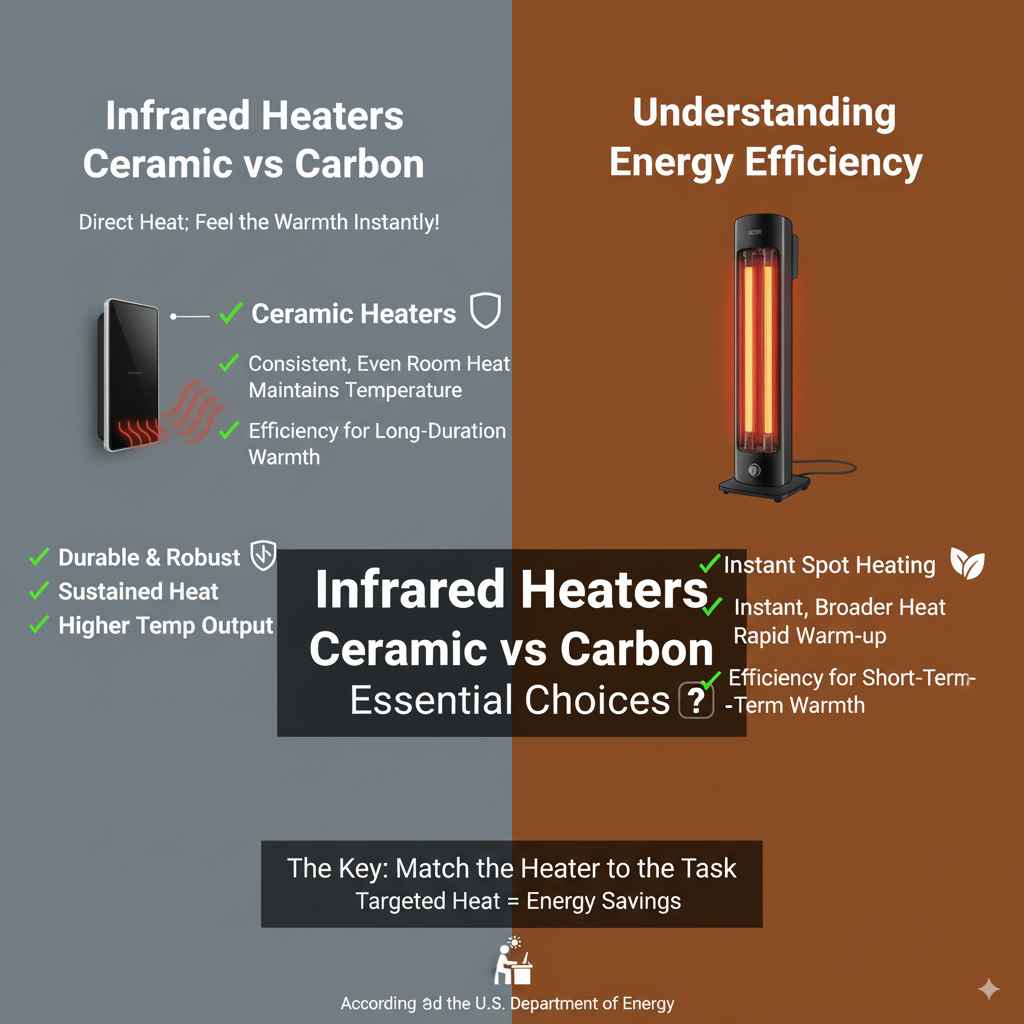
Ceramic heaters excel at providing consistent, even heat for a room. They use electricity to heat their elements and then radiate that heat. Their efficiency comes from the even distribution and the ability to maintain a comfortable temperature without a lot of energy fluctuations.
Carbon heaters are highly efficient for instantaneous spot heating. Because they heat up so quickly, they deliver warmth directly and immediately, minimizing energy wasted on heating a large volume of air. If you only need to warm yourself for a short period, a carbon heater can be very economical because it gets to work and provides the desired warmth without a long ramp-up time.
According to the U.S. Department of Energy, when considering supplemental heating, portability, and directed heat can play a significant role in energy consumption. For instance, using a targeted infrared heater to warm just your immediate workspace might use less energy than setting your central heating to a higher temperature to achieve the same localized comfort. The key is matching the heater type to the specific heating task.
Frequently Asked Questions (FAQ)
Q1: Can infrared heaters really heat an entire room?
A: Yes, especially larger ceramic infrared heaters are designed to provide sufficient warmth for medium-sized rooms by radiating heat evenly. Carbon heaters are better for spot heating but can contribute to overall warmth if used strategically.
Q2: Are infrared heaters safe to use around children and pets?
A: Most infrared heaters are designed with safety features like overheat protection and cool-touch exteriors, making them safer than many older heating types. However, always supervise children and pets around any heating appliance and maintain safe clearances as advised by the manufacturer.
Q3: How much electricity do infrared heaters use?
A: Infrared heaters typically range from 400 to 1500 watts, similar to many portable electric heaters. Their energy efficiency often lies in how quickly they provide heat and their directed nature, meaning they might use less total energy for specific heating tasks compared to other types.
Q4: Do infrared heaters dry out the air?
A: No, one of the benefits of infrared heating is that it warms objects and people directly, rather than heating the air. This means it doesn’t typically dry out the air as much as convection heaters, leading to more comfortable humidity levels.
Q5: Can I use an infrared heater in my bathroom?
A: It’s generally not recommended to use portable infrared heaters in bathrooms or other damp environments due to the risk of electric shock. Always check the product’s specifications and user manual to ensure it’s safe for the intended location.
Q6: Which type of infrared heater is better for a garage or workshop?
A: For garages or workshops where you need quick, targeted warmth while working, a carbon infrared heater is often preferred due to its rapid heat-up time and focused heat output. If you need more consistent, widespread warmth in a larger, insulated workshop, a ceramic heater might also be suitable.
Conclusion
Choosing between a ceramic and a carbon infrared heater doesn’t have to be complicated. You’ve learned that ceramic heaters are your best friend for creating a widespread, even, and comforting warmth in your living spaces, offering durability and a gentle heat. On the other hand, carbon heaters are the champions of speed and focus, delivering instant warmth precisely where you need it and proving efficient for spot heating or quick comfort boosts.
Think about your space and your needs. Is it about creating a cozy atmosphere throughout a room, or is it about getting fast relief from a cold spot?