
If you’re asking Why Is My Garage Heater Blowing Cold Air?, you’re not alone! It’s a pretty common issue, especially if you’re new to heating systems. It can be frustrating when your garage isn’t warming up, but don’t worry. This guide will help you understand the problem and fix it step-by-step, in plain language. We’ll explore the main causes and provide practical solutions so you can get your garage cozy again. Let’s get started!
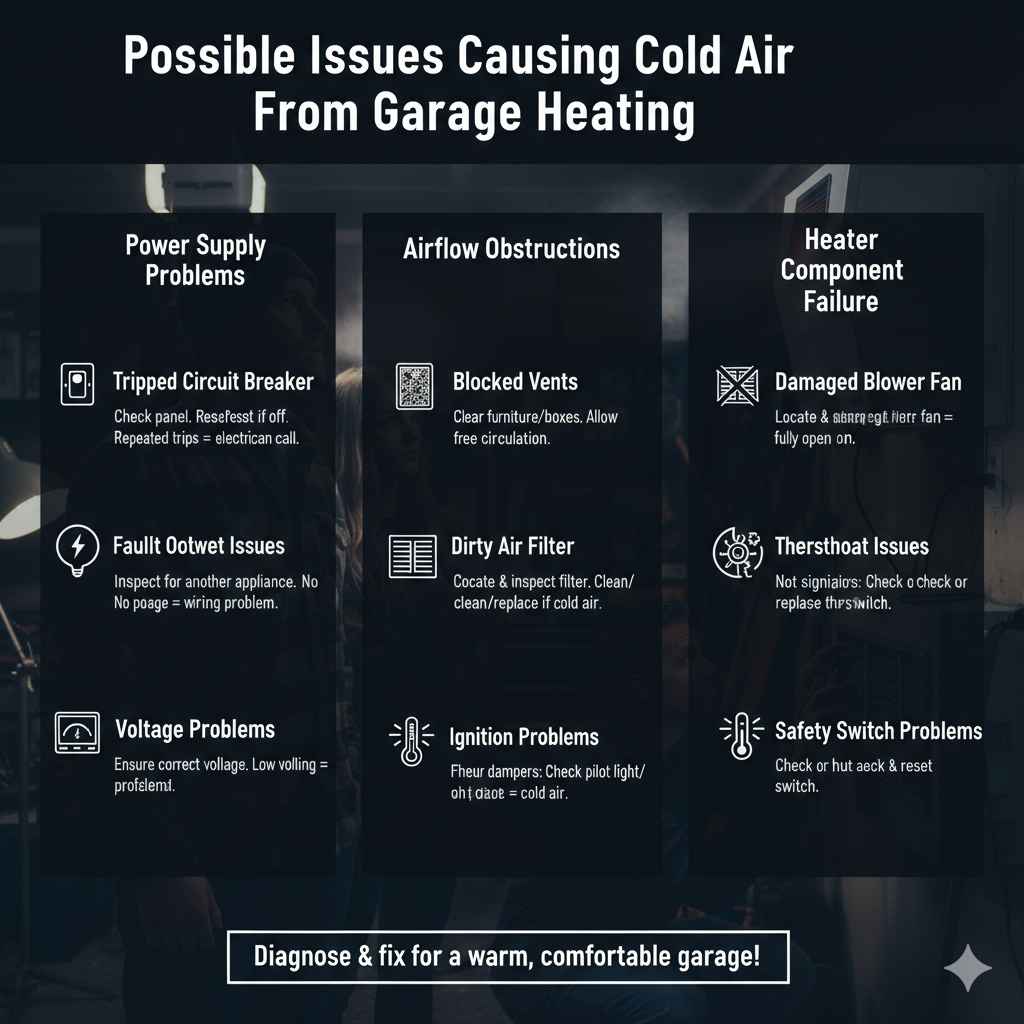
Possible Issues Causing Cold Air From Garage Heating
The first step is figuring out what’s causing your garage heater to blow cold air. There are several potential culprits, and it’s important to rule them out one by one. This approach will save you time and money. We’ll explore several aspects, like power, airflow, and specific heater components that can go wrong. Each has its own set of potential problems to consider when tackling “Why Is My Garage Heater Blowing Cold Air?”.
Power Supply Problems
No power means no heat. It sounds obvious, but a lack of electricity is a primary reason why a heater might blow cold air. This could be anything from a tripped circuit breaker to a damaged power cord. Checking the power supply is always the first, and often simplest, thing to do when troubleshooting “Why Is My Garage Heater Blowing Cold Air?”.
Tripped Circuit Breaker: A tripped breaker cuts off the power to the heater. Look at your electrical panel and locate the breaker that controls your garage. If the switch is in the middle position or flipped to the “off” position, it’s tripped. Switch it back to “on”. If it trips again immediately, there’s likely a short circuit or overload.
If the breaker trips again, avoid repeatedly resetting it. This poses a fire hazard and should prompt a call to an electrician.
Faulty Power Cord: Examine the power cord for any damage, like cuts or fraying. If you see any, unplug the heater immediately and replace the cord or, if needed, the whole unit.
Always disconnect the heater from the power source before inspecting or replacing the power cord. Never try to repair a damaged power cord.
Power Outlet Issues: Test the outlet where you plug in the heater. Use another appliance (like a lamp) to verify if the outlet is working. If the outlet doesn’t work, it could be a wiring problem.
Faulty wiring is dangerous and should be addressed by a certified electrician immediately.
Voltage Problems: Ensure your heater is receiving the correct voltage. A low-voltage supply can hinder the heater’s ability to warm the air. If there’s an ongoing voltage problem, consult a professional to examine the building’s electrical setup.
Fluctuating voltage or an undervoltage situation may damage the heating elements.
Airflow Obstructions
Even if the heater is getting power, airflow issues can prevent it from working correctly. Blocked vents or a dirty filter can restrict airflow, leading the heater to blow cold air. Examining the airflow is vital for solving “Why Is My Garage Heater Blowing Cold Air?”. You need proper airflow for effective heating.
Blocked Vents: Make sure nothing is blocking the heater’s vents. This includes furniture, boxes, or other items placed too close to the unit. Clear any obstructions to allow the air to circulate freely.
Proper air circulation ensures heat is distributed throughout the garage effectively.
- Dirty Air Filter: A clogged air filter restricts airflow. Locate the filter (usually near the bottom or back of the heater) and check its condition.Dirty filters can also cause the heater to work harder, reducing efficiency.
- Damaged Blower Fan: The blower fan pushes heated air into the garage. Inspect the fan for damage or obstructions. If the fan isn’t working, the heater will blow cold air.
- If the blower fan is damaged, it should be replaced immediately. This job is best left to an experienced technician.
- Closed Dampers: Some garage heating systems have dampers to control airflow. Ensure any dampers are open to allow the heated air to flow into the garage.
- Dampers should be fully open for optimum heat distribution.
Heater Component Failure
Sometimes, the problem lies within the heater itself. Certain components can fail and cause the heater to blow cold air. Diagnosing these issues might require a bit more effort, but we’ll break it down. Understanding the components affected is a key part of answering “Why Is My Garage Heater Blowing Cold Air?”.
Faulty Heating Element: The heating element is what produces the heat. If it’s broken or burned out, the heater will blow cold air. This problem can be identified using a multimeter to check for continuity. If there’s no continuity, the element needs replacing.
Always disconnect the power supply before examining the heating element or any other electrical components.
Ignition Problems (for fuel-based heaters): If your heater uses fuel, the ignition system could be faulty. This could be a problem with the pilot light (if applicable), the igniter, or the gas supply. Ensure the fuel supply valve is open and the pilot light is lit. If the ignition system is still struggling, professional servicing may be necessary.
Fuel-based heaters demand extreme caution and regular maintenance.
Thermostat Issues: A malfunctioning thermostat might not signal the heater to turn on. If the thermostat is set correctly, but the heater still doesn’t produce heat, test the thermostat with a multimeter or replace it.
The thermostat regulates the temperature and turns the heater on or off. A faulty thermostat can lead to the heater misbehaving.
Safety Switch Problems: Some heaters include safety switches that shut the system down in emergencies, for instance, overheating. If a safety switch is triggered, the heater might stop producing heat. Examine the switches to check for tripping and reset if needed. If it happens repeatedly, there might be another problem.
Safety switches are essential for preventing fires and other dangers.
Troubleshooting Common Heater Types
The type of garage heater you have can affect how you troubleshoot it. Let’s look at the troubleshooting process for some of the most popular garage heater types, considering the context of “Why Is My Garage Heater Blowing Cold Air?”.
Electric Garage Heaters
Electric heaters are generally easy to troubleshoot since they have fewer components than other types. Often, the problems relate to power supply or heating element malfunctions. If the heater is blowing cold air, start by checking the power and looking at the heating element.
Check Power Source: Ensure the heater is plugged into a working outlet. Test the outlet with another appliance. Reset the circuit breaker if needed.
Verify that your outlet is the correct voltage for the heater.
Inspect the Heating Element: If the power is fine, check the heating element. You’ll likely need to consult the heater’s manual for guidance on safely opening it. Use a multimeter to test for continuity. Replace the element if it’s faulty.
Only do this if you know how to safely inspect the electrical components.
Examine the Thermostat: Make sure the thermostat is set above the current room temperature. If the heater still doesn’t start, the thermostat might be faulty. Replace the thermostat as required.
Make sure the thermostat is calibrated appropriately to ensure accurate temperature readings.
Clear Airflow: Verify that the air vents are unobstructed and the air filter is clean.
The heater’s performance hinges on correct airflow and a clean filter.
Propane/Gas Garage Heaters
Propane or gas heaters need more troubleshooting because they involve fuel, ignition systems, and combustion. If your propane or gas heater is blowing cold air, safety is a key factor. Always follow safety instructions. Start by checking the gas supply and pilot light. Fuel-based heating systems pose a distinct challenge when exploring “Why Is My Garage Heater Blowing Cold Air?”.
Check the Gas Supply: Make sure the propane tank has fuel and that the valve is open. For natural gas heaters, ensure the gas supply is connected and on.
Gas leaks are dangerous and can cause an explosion.
Verify Pilot Light: For heaters with a pilot light, make sure it’s lit. If it’s not, try relighting it, following the manufacturer’s instructions. If the pilot light won’t stay lit, there might be a problem with the thermocouple (a safety device).
The pilot light needs to be burning correctly to ignite the gas.
Inspect the Igniter: If your heater has an electronic igniter, check if it’s working. You may hear a clicking sound when it’s trying to start the heater. If you don’t hear a click or see a spark, the igniter might be faulty.
Igniters may fail over time, so you should have it checked regularly.
Examine the Burner: Check the burner for any obstructions or blockages that could affect the combustion process. A dirty burner can restrict airflow and prevent the heater from producing heat. Clean the burner according to the manufacturer’s instructions.
Clean burners enhance the effectiveness of your heater.
Kerosene Garage Heaters
Kerosene heaters require meticulous care and maintenance. Ensure you understand the safety guidelines before attempting to troubleshoot. If your kerosene heater is blowing cold air, begin by checking the fuel supply and ignition system. Kerosene heaters demand close attention when answering “Why Is My Garage Heater Blowing Cold Air?”.
Check the Fuel Level and Supply: Ensure the kerosene tank has adequate fuel and that the fuel valve is open.
It sounds simple, but you must ensure fuel is reaching the heater.
Inspect the Wick (for wick heaters): The wick draws the fuel to the burner. If it’s dirty, damaged, or not adjusted correctly, the heater won’t produce heat. Clean or replace the wick as needed.
A poorly maintained wick can lead to the heater failing.
Verify the Igniter: Kerosene heaters use different types of ignition systems. Some have a manual system, while others use a battery-powered or electronic igniter. Confirm that the igniter is working correctly.
The igniter generates the spark required to start the heater.
Clean the Burner and Combustion Chamber: Kerosene heaters create soot. Regular cleaning of the burner and combustion chamber is essential to ensure they operate properly.
Cleaning the burner removes soot and supports the burning process.
Preventative Maintenance Tips
To avoid problems in the future, routine maintenance is key. Regular care can extend the life of your garage heater and prevent it from blowing cold air. These easy steps will help keep your garage warm and the heater in good condition. Preventative measures provide an essential perspective to the issue of “Why Is My Garage Heater Blowing Cold Air?”. Regular maintenance can help you avoid many problems.
Regular Filter Changes
Replace the air filter frequently, typically every 1-3 months, depending on usage and environmental conditions. This maintains optimal airflow and protects the heater’s internal components. A clean filter is vital for efficient operation.
You can buy replacement filters at most hardware stores or online. Always purchase the correct size.
Periodic Cleaning
Clean the exterior of the heater and its internal components as recommended in the manual. Remove any dust, debris, or obstructions that might affect performance. For propane or gas heaters, clean the burner regularly to remove soot and ensure efficient combustion. Cleaning the heater helps maintain its functionality.
Always disconnect the power supply and allow the heater to cool down before cleaning.
Professional Inspections
Schedule a professional inspection once a year or every two years. A technician can identify any potential issues before they cause problems. They can also ensure that all safety components are working correctly and make any necessary adjustments. Professional inspections provide assurance, and can reduce future problems.
Professional inspection will catch possible problems that you may not notice.
Fuel System Maintenance (For Fuel-Based Heaters)
For propane, gas, or kerosene heaters, regularly check the fuel lines, connections, and burner for any leaks or damage. Tighten any loose connections and replace any damaged parts immediately. Make certain that the fuel supply is in good condition.
Always handle fuel with care. Use caution when working with combustible fuels.
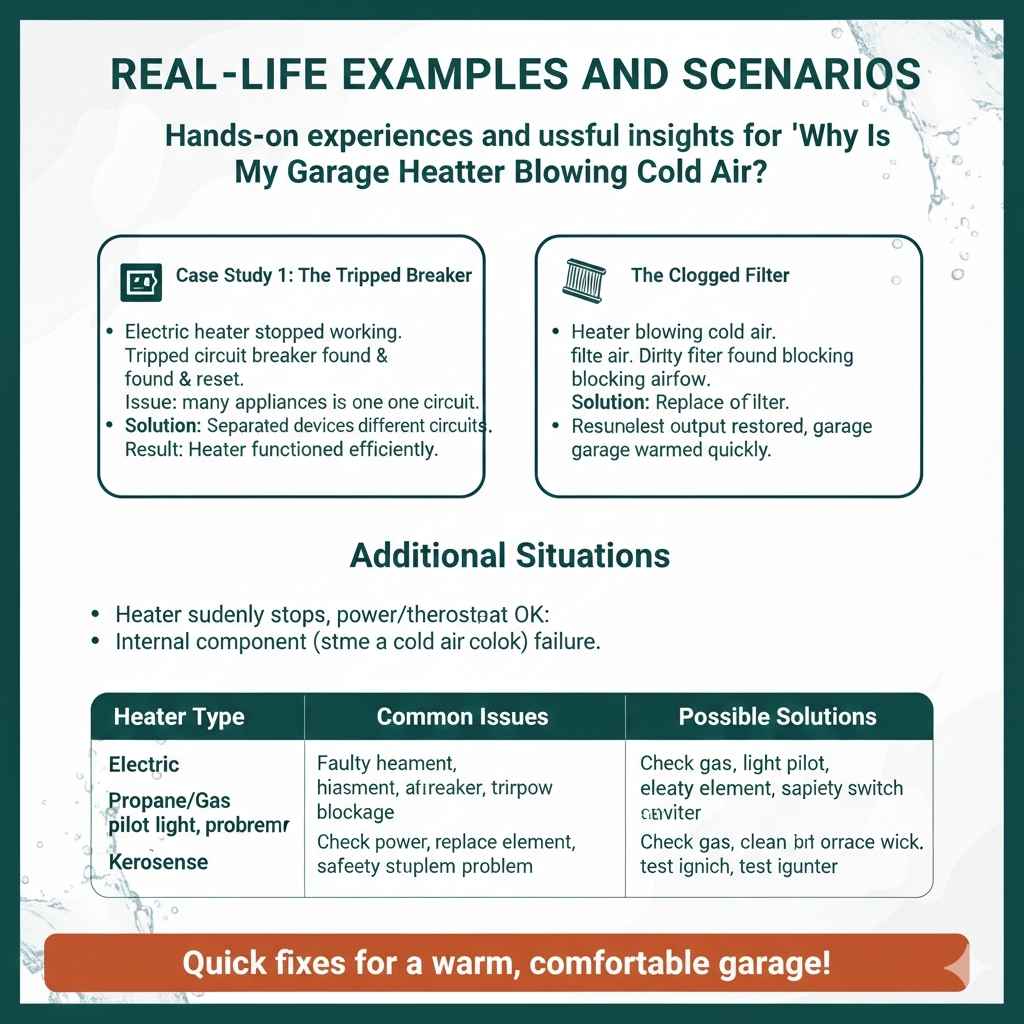
Real-Life Examples and Scenarios
Let’s look at real-life scenarios and some practical solutions to better grasp the issue of “Why Is My Garage Heater Blowing Cold Air?”. These cases offer hands-on experiences and give useful insight.
Case Study 1: The Tripped Breaker. A homeowner noticed their electric garage heater wasn’t working. After checking the power outlet, they reset the circuit breaker, which had tripped. They then discovered that the heater was drawing too much power simultaneously with other appliances. They separated the devices to different circuits and avoided the breaker from tripping again.
Result: The heater functioned efficiently after the power issue was resolved.
Case Study 2: The Clogged Filter. A garage user noticed that their heater was blowing cold air. They inspected it and found a dirty air filter blocking airflow. Replacing the filter immediately resolved the problem.
Result: The heater’s output was restored, and the garage warmed up quickly.
Consider these additional situations as you assess your heater’s issues:
The heater suddenly stops working, even when the power is on, and the thermostat is set correctly. This suggests a potential problem with an internal component such as the heating element or safety switch.
The heater runs for a short period, then starts blowing cold air. This might be due to a thermostat issue, an airflow blockage, or a fuel supply problem (for fuel-based heaters).
| Heater Type | Common Issues | Possible Solutions |
|---|---|---|
| Electric | Faulty heating element, tripped breaker, airflow blockage | Check power, replace heating element, replace filter |
| Propane/Gas | Gas supply, pilot light, burner problems | Check gas, light pilot, clean burner |
| Kerosene | Fuel supply, wick, igniter | Check fuel, clean or replace wick, test igniter |
Frequently Asked Questions
Question: Why is my electric garage heater blowing cold air?
Answer: The most common causes are a tripped circuit breaker, a faulty heating element, or a blocked air filter. Check these areas first.
Question: My gas garage heater won’t start. What should I check?
Answer: Check the gas supply and ensure the pilot light is lit. If those are OK, then investigate the igniter and burner for problems.
Question: How often should I replace my garage heater’s air filter?
Answer: Generally, every 1-3 months, but the replacement timeline depends on usage and the environmental conditions.
Question: My kerosene heater is producing a lot of smoke. What should I do?
Answer: Immediately turn off the heater, allow it to cool, and then inspect the wick, burner, and combustion chamber. Cleaning is often necessary.
Question: When should I call a professional to service my garage heater?
Answer: If you’re uncomfortable working on the heater, or if you suspect electrical, gas, or fuel-related problems. It’s also a good idea to have professional maintenance yearly.
Final Thoughts
Dealing with a garage heater blowing cold air can be irritating, but understanding the core causes and following these troubleshooting steps can help you fix the issue. We’ve explored the importance of checking the power supply, examining airflow, and evaluating potential component failures specific to your heater type.
Remembering safety is essential when working with any heating system. Regular maintenance is key to keeping your garage heater operating efficiently and avoiding future problems. If you’re still uncertain, or dealing with gas or electrical issues, don’t hesitate to seek professional assistance. With this knowledge, you can confidently take action to ensure a warm garage.
Last Updated on January 14, 2026 by Tanim