How to Protect a Water Heater From Scale and Corrosion
Match the protection stack to the failure mode: scale only, add softening or descaling; corrosion only, replace the anode and check water chemistry; both, do both, then flush the tank every 6 to 12 months. Ignore scale or corrosion, and the heater can use more energy, recover more slowly, leak, and fail sooner. This guide explains how to tell scale from corrosion and choose the right protection for each tank water heater.
What you’ll need
- Safety glasses and work gloves
- Bucket, hose, and a drain path to a floor drain or exterior discharge point
- Flashlight, adjustable wrench, and a thermometer
- Water test results or a utility hardness report
- Access to the tank shutoff, power switch, or gas control
- Replacement anode rod or powered anode kit, if inspection shows depletion
Is it scale, corrosion, or both?
Start with the symptom pattern. Loud popping or rumbling points first to sediment and scale, while rust-colored water, a spent anode, or tank seepage points first to corrosion. If the tank is leaking from the shell, stop treating it as a maintenance problem and move to replacement planning.
- Check your hardness report or test strip. Calcium and magnesium are the main drivers of scale buildup, and higher concentration raises risk.
- Listen for popping, knocking, or longer heat-up times. Water heater sediment builds up at the tank bottom and can cause overheating and noise.
- Draw hot water into a white container. If the first water looks rust-colored or cloudy, the source may be the tank, nearby plumbing, or the municipal supply.
- Inspect the service history. An anode that has not been checked for years is a common corrosion weak point.
- Decide if the tank is still serviceable. A tank with leaks, heavy blockage, or liner failure needs a pro, not more protection parts.
Protection decision table
The right stack depends on what you see first. Use the table below to match the symptom to the next move, instead of buying one fix that misses the real failure mode.
| Symptom or condition | Flush | Anode replacement | Powered anode | Water softener | Professional inspection |
|---|---|---|---|---|---|
| Hard water | Yes, routine | No | No | Priority if hardness is high | Only if symptoms persist |
| Noisy tank | Yes, first | Maybe | No | Maybe, if hardness is the source | Priority if noise does not drop after flushing |
| Rusty water | Maybe, to clear sediment | Yes, inspect and replace if depleted | Priority if corrosion continues after a new anode | No, unless hardness is also high | Priority if rust keeps returning |
| Sulfur smell | Maybe | Maybe | Priority to reduce corrosion-related reaction issues | Maybe | Priority if odor is persistent |
| Old anode | No | Yes, priority | Yes, if you want a corrosion-control upgrade | No | Maybe, if the tank is aging fast |
| Existing leaks | No | No | No | No | Yes, immediate |
How do you protect a water heater from scale and corrosion?
Use a two-part stack when both symptoms are present: reduce hardness at the inlet and keep corrosion control current inside the tank. Hard water minerals drive scale, while the sacrificial anode rod is designed to rust before the tank itself does. If both problems exist, flush the tank, service the anode, and address incoming water quality.
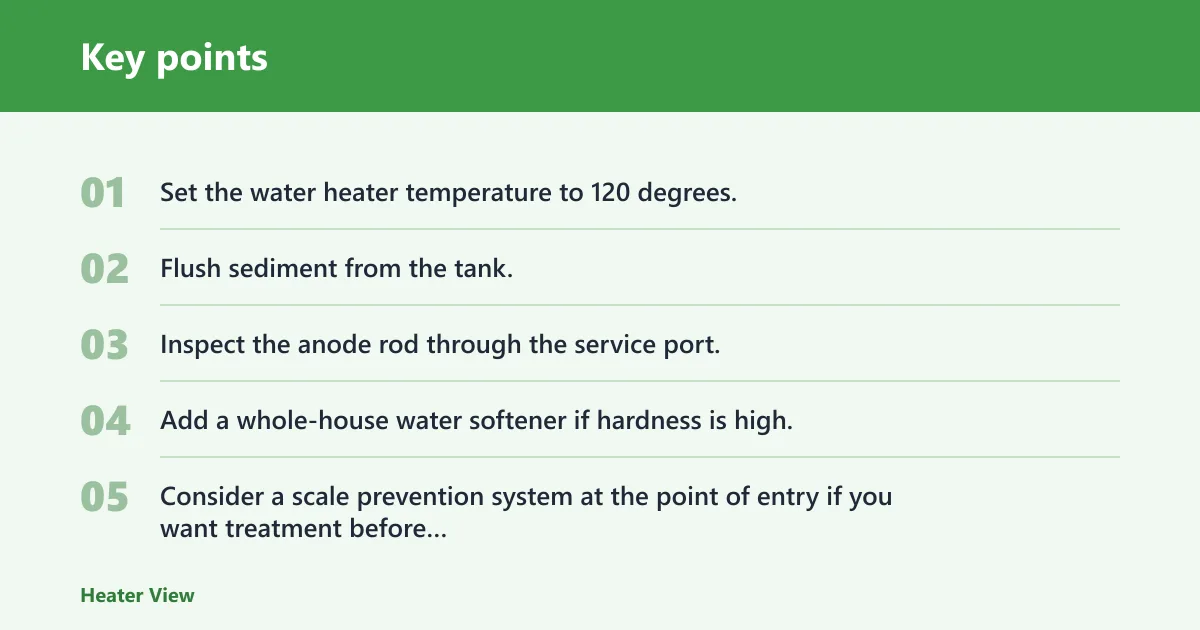
- Set the water heater temperature to 120 degrees. Lower settings can reduce scald risk and also help minimize sediment formation.
- Flush sediment from the tank. A common maintenance target is every 6 to 12 months in hard-water homes; some guidance for conventional gas tanks calls for biannual flushing.
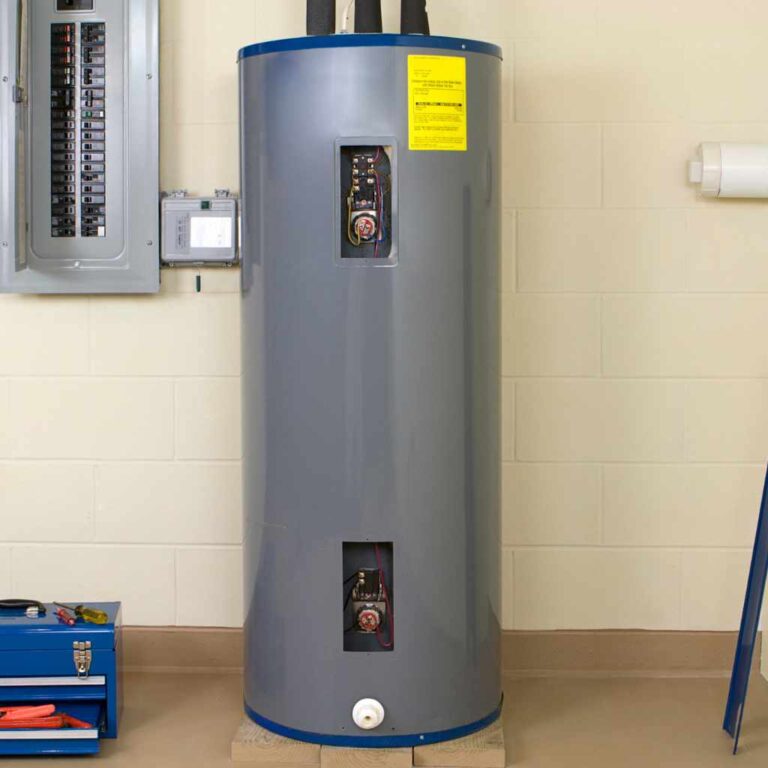
- Inspect the anode rod through the service port. Used in many conventional tank water heaters, it eventually wears out and must be replaced.
- It removes calcium and magnesium ions and protects plumbing from corrosion.
- Consider a scale prevention system at the point of entry if you want treatment before the heater. These systems may be salt-free or electronic/polarization-based.
Say your 40-gallon tank starts popping after the thermostat is moved to 140 degrees and the incoming water tests hard. Lowering to 120 degrees, flushing sediment, and adding a softener address the two main stressors instead of treating only one.
What causes scale buildup and rust inside a water heater?
Scale comes from calcium and magnesium ions in hard water. Rust starts when tank metal, water, and oxygen react chemically inside the vessel. Sediment sitting at the bottom adds heat stress, and that extra heat can speed damage at the tank floor and around fittings.
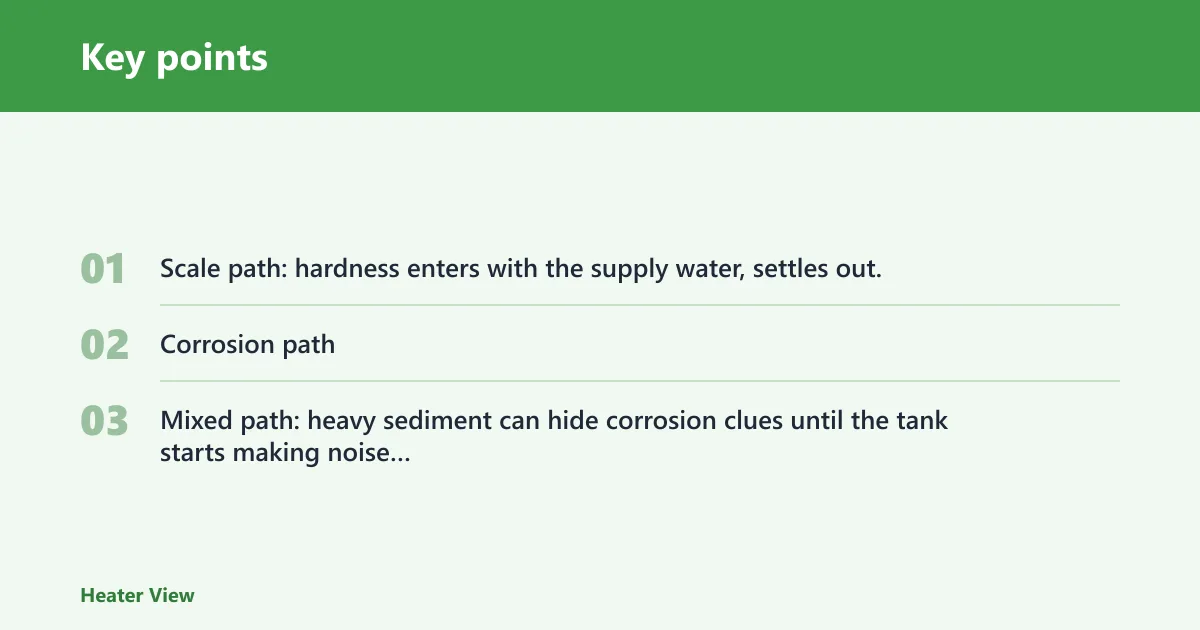
- Scale path: hardness enters with the supply water, settles out, and forms mineral buildup on hot surfaces.
- Corrosion path: the anode is consumed over time, and once it is depleted, the tank wall takes more of the reaction load.
- Mixed path: heavy sediment can hide corrosion clues until the tank starts making noise or leaking.
Hard water does not guarantee early failure, but it raises the odds of both scale and maintenance problems. The harder the water, the more often the tank needs attention.
How do you stop scale buildup?
Scale control starts with temperature, flushing, and inlet treatment. Keep the tank at 120 degrees, drain sediment on a schedule, and add whole-house treatment when hardness is high enough that flushing alone is not enough.
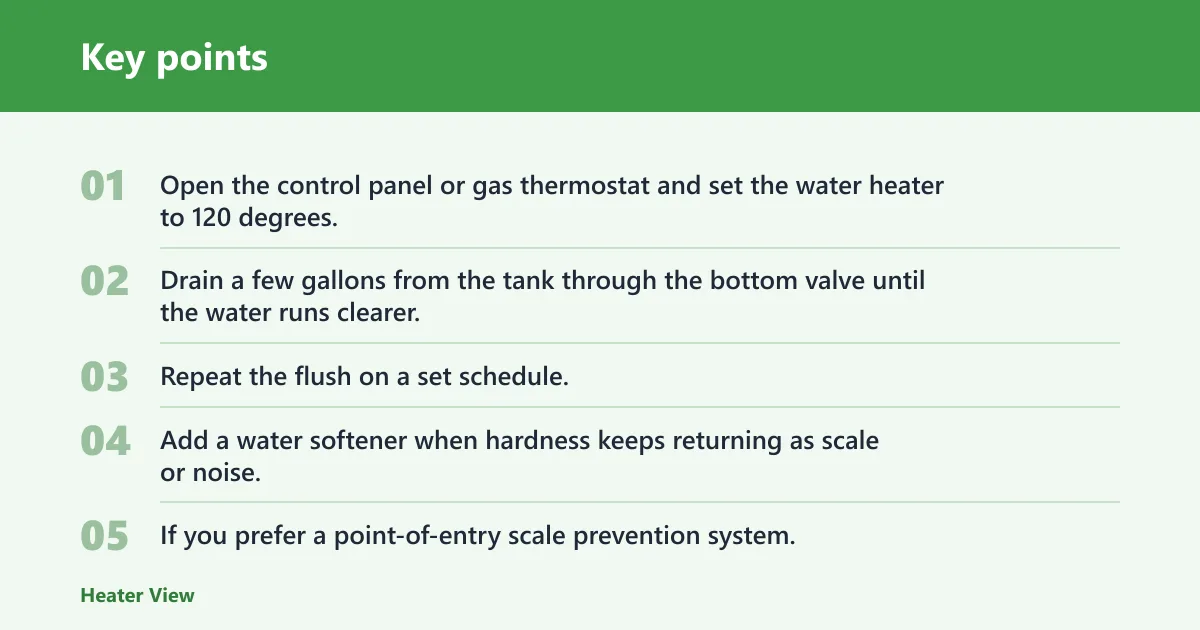
- Open the control panel or gas thermostat and set the water heater to 120 degrees.
- Drain a few gallons from the tank through the bottom valve until the water runs clearer. If the first water looks rust-colored or cloudy, keep draining until it improves.
- Repeat the flush on a set schedule. In hard-water homes, a 6-month interval is a practical starting point; some heaters may go longer if sediment stays light.
- Add a water softener when hardness keeps returning as scale or noise. It reduces whole-house hardness, not just heater buildup.
- If you prefer a point-of-entry scale prevention system, confirm the product is rated for drinking-water contact and carries NSF/ANSI/CAN 61 and 372 certification when the maker makes compliance claims.
Suppose the tank is only two years old, but every flush releases grit and the burner area gets noisy. That pattern usually means the hardness load is high enough that maintenance alone is not enough.
How do you stop tank corrosion?
Corrosion control begins with the anode rod. A sacrificial anode rod is designed to rust so the tank itself does not rust. If the rod is depleted, replace it. If corrosion keeps progressing, a powered anode rod can be a practical upgrade for residential tanks.
- Shut off power or gas, then close the cold-water supply.
- Open a hot tap to relieve pressure before removing the anode port cap.
- Inspect the rod. If the core wire is exposed, the coating is largely gone, or the rod is heavily pitted, replace it.
- Install a powered anode rod if you want a corrosion-control upgrade that uses a small electrical current.
- Check the temperature and pressure relief valve during the same service visit. It should be part of standard safety inspection, and failure can indicate a service issue.
A common first-timer mistake is to replace the anode but ignore the water chemistry. If the water is especially aggressive, the new rod can disappear faster than expected, so corrosion checks need to stay on a schedule.
When is replacement the right fix?
Replacement is the right call when the tank shell is already failing. If you have active leaks, liner damage, or heavy blockage that does not clear with flushing, protection parts will not restore the tank. The goal shifts from prevention to damage control and replacement planning.
- Stop after a leak is confirmed at the shell or seam.
- Document whether rust is coming from the tank, nearby piping, or the utility supply before deciding on replacement.
- Call a professional when rust, scale, and safety-part problems show up together, because that mix often means the tank is near the end of service life.
- Replace rather than repair if repeated flushing and anode service no longer improve recovery time, water clarity, or tank noise.
Prevention still matters on a new tank. Set the temperature to 120 degrees, plan anode inspection, and choose either softening or a point-of-entry scale system if hardness is part of the problem.
What maintenance prevents rust in a hot water tank?
Rust prevention is mostly about keeping the anode working and the safety parts intact. Annual anode inspection is a practical target, especially in homes with hard water or aggressive water chemistry. Flushing sediment helps too, because trapped debris keeps the bottom of the tank hotter and harsher than it should be.
- Inspect the sacrificial anode rod once a year.
- Drain sediment every 6 to 12 months, depending on hardness and noise.
- Keep the water heater at 120 degrees unless the manufacturer specifies another setting.
- Check the temperature and pressure relief valve during service.
- Use a water softener if hardness is high enough to keep building scale after routine flushing.
The first drain water may look rust-colored or cloudy. That does not always mean the tank is failing, but repeated rusty discharge after flushing is a sign to move from maintenance to inspection.
Frequently asked questions
How do I protect my water heater from scale and corrosion?
Start with the symptom you have: flush and soften for scale, replace the anode for corrosion, and do both if the tank shows both problems. Set the water heater to 120 degrees and keep a 6- to 12-month flush schedule in hard-water areas.
Should I use a water softener or an anode rod for water heater protection?
Use a softener for hardness problems and an anode for corrosion problems. A softener removes calcium and magnesium ions across the house. An anode is the direct corrosion-control part inside the tank. Many homes need both.
How often should I flush a water heater in hard water areas?
A practical starting point is every 6 to 12 months. If the tank is a conventional gas unit and sediment is heavy, biannual flushing is reasonable. If drain water stays cloudy or noisy after repeated flushing, have the tank inspected.
Can a powered anode rod stop water heater corrosion?
It can reduce corrosion pressure by using a small electrical current instead of a conventional sacrificial rod. It is a corrosion-control upgrade for residential tanks, but it will not fix a tank that already has liner failure or a leaking shell.
Can existing scale be removed without replacing the heater?
Yes, if the tank is still structurally sound. Drain and flush sediment first, then inspect recovery time and noise. If blockage is heavy, or the tank leaks after flushing, replacement is the safer choice.