What Heater Safety Features Should Buyers Look for?
Look for four safety features in this order: tip-over shutoff, overheat protection, cool-touch housing, and a thermostat or timer. For bedrooms and kids’ rooms, choose models with a tested tip-over switch and overheat cutoff. Missed protections raise fire, burn, and outage risk. This guide ranks heater safety features by the hazard each one reduces, so you can match the right protections to the room.
Which heater safety features matter most?
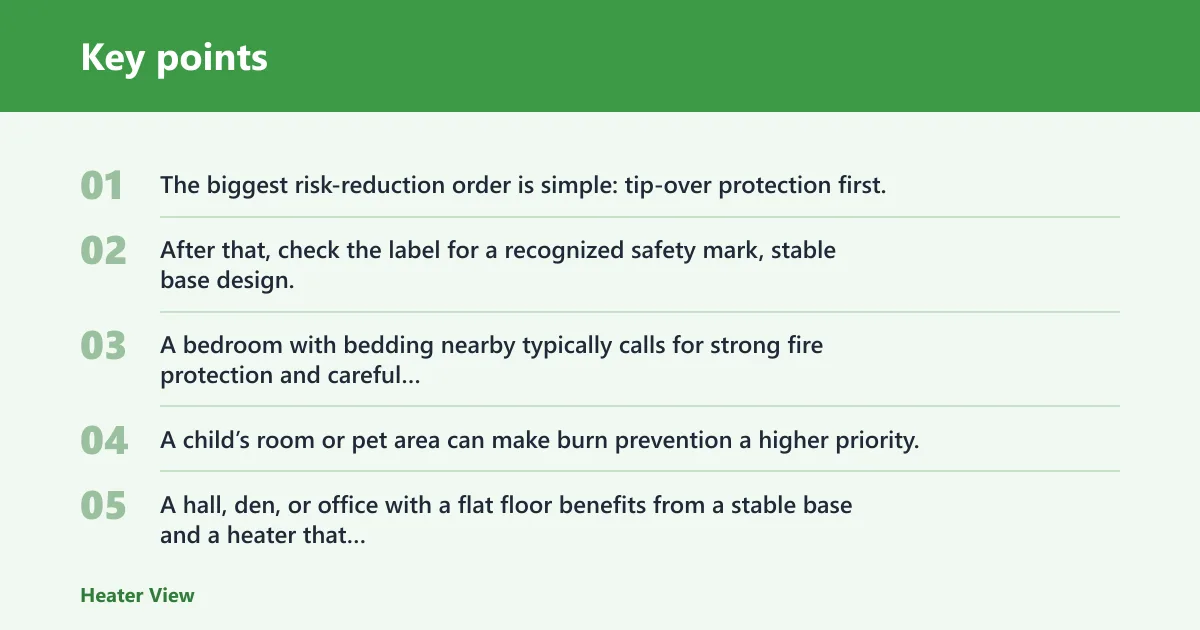
The biggest risk-reduction order is simple: tip-over protection first, then overheat shutoff, then burn protection from a cool exterior, then power-control features such as a thermostat or adjustable settings. After that, check the label for a recognized safety mark, stable base design, and the room-specific rules that fit the space.
That order changes a little by room. A bedroom with bedding nearby typically calls for strong fire protection and careful clearance. A child’s room or pet area can make burn prevention a higher priority. A hall, den, or office with a flat floor benefits from a stable base and a heater that can shut itself down if it is bumped.
Heater safety checklist
| Safety feature | What it prevents | What to verify on the box or spec sheet | Best-fit room or household use case | Pass/fail |
|---|---|---|---|---|
| Tip-over switch | Fire and burn risk after the heater is knocked over | Words such as “tip-over switch,” “tip-over protection,” or “automatic shutoff if tipped” | Homes with children, pets, narrow walkways, or crowded rooms | Pass only if it is listed clearly |
| Overheat sensor | Fire risk from blocked airflow, dust buildup, or misuse | “Overheat protection,” “thermal cutoff,” or “automatic overheat shutoff” | Any room where curtains, bedding, or furniture could get too close | Pass only if it is listed clearly |
| Cool-touch housing | Burns from contact with the cabinet or guard | “Cool touch,” “cool-to-touch housing,” or a guarded exterior | Bedrooms, play areas, and pet areas | Pass if the claim is explicit |
| Thermostat or adjustable heat settings | Unnecessary heat buildup and overheating from full-power operation | Adjustable thermostat, multiple heat settings, or an auto temperature control | Rooms that change temperature through the day | Pass if there is user control, not one fixed output |
| Safety certification mark | Unknown construction or noncompliant design | UL or CSA mark for North America, matched to the product type and region | Any home buyer, especially first-time purchases | Pass only with a visible recognized mark |
| Stable base | Tip-over on flat floors | Wide base, weighted base, or base stability language | Level floors, bedrooms, living rooms, and offices | Pass if the base looks broad and stable |
| Direct wall-outlet use | Overheating and overloaded circuits | Instructions that say to plug directly into a wall outlet | Any room with a heater load on a single outlet | Pass only if no extension cord is needed |
Use the table as a checkout filter, not a wish list. A heater can have one good feature and still fail the room test if the label is vague, the base is narrow, or the manufacturer allows cord use that the model should not have.
Do you need tip-over protection?
Yes, for most portable heaters. A tip-over switch is one of the most useful shutdown features because it turns the unit off if it is knocked over, which helps reduce fire and burn risk when a heater is bumped, pulled, or pushed off balance. (Consumerreports)
How automatic shutoff works
The point is simple: if the heater changes from upright to fallen, the switch cuts power. Recommended space heaters should have a tip-over switch, and Electrical Safety First also recommends one for halogen heaters. That matters most on flat floors where a child, pet, or passing foot can move the unit.
Tip-over protection is not a substitute for placement. A heater still needs a stable surface and clear space around it. But if the unit falls, a shutoff gives you a second layer of defense before the cabinet, cord, or nearby fabric can heat up further.
Who benefits most from it
Homes with children or pets get the most value from this feature because bumps are more likely. Tight rooms also benefit because a portable heater can sit close to a bed frame, crib, chair leg, or doorway where it is easier to knock over.
Picture a roughly 150-square-foot bedroom with a space heater near the door. A pet runs through the room and clips the base. If the heater has a tip-over switch, it should shut off instead of continuing to run on its side.
What to check on the label
- Look for the exact words “tip-over switch” or “automatic shutoff if knocked over.”
- Check whether the heater is meant to stay upright on a level surface.
- Confirm that the base is wide or weighted enough to resist small bumps.
- Do not buy on price alone if the packaging is vague about shutoff protection.
Why overheat shutoff matters
An overheat sensor matters because a heater can run too hot when airflow is blocked, dust collects inside, or the unit is placed too close to fabric or furniture. This feature shuts the heater down when internal temperature gets too high, which helps reduce fire risk.
Blocked vents and dust buildup
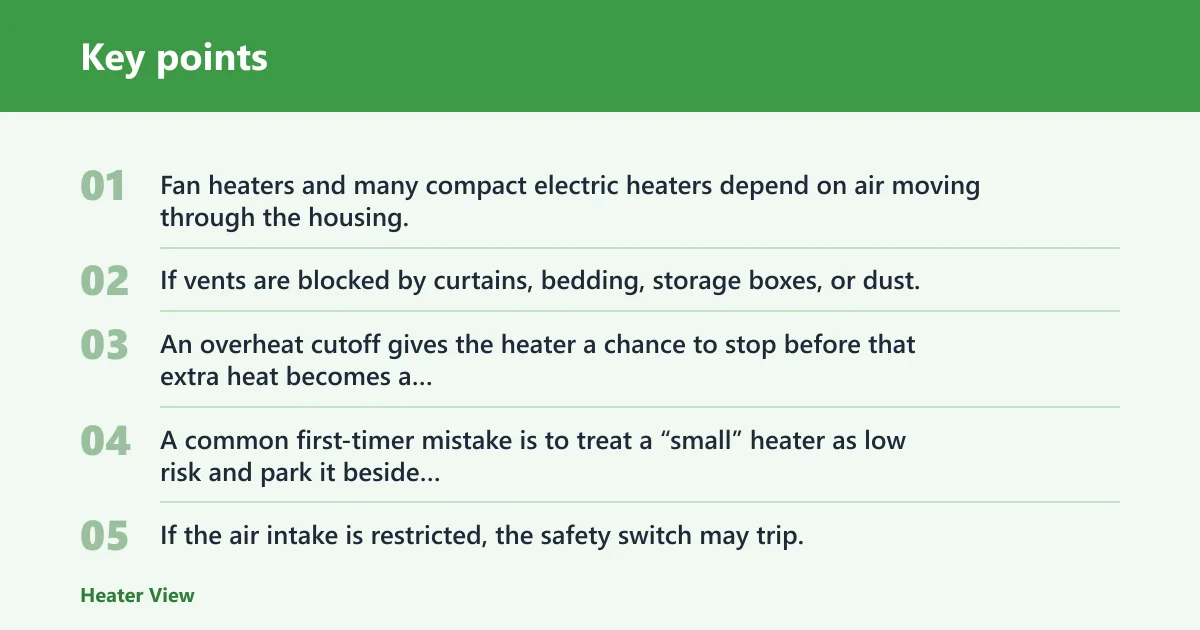
Fan heaters and many compact electric heaters depend on air moving through the housing. If vents are blocked by curtains, bedding, storage boxes, or dust, heat can build up inside the unit. An overheat cutoff gives the heater a chance to stop before that extra heat becomes a failure point.
A common first-timer mistake is to treat a “small” heater as low risk and park it beside drapes or under a desk. If the air intake is restricted, the safety switch may trip, but you should not rely on that as normal operation.
Fire prevention by room choice
Bedrooms, laundry areas, and cluttered offices need this protection most because soft goods and dust are common there. If a heater is used in a room with bedding or curtains, the overheat shutoff is a core safety feature, not a bonus.
Clearance still matters. One source gives at least three feet from combustibles, while another says keep combustibles one metre away. Use the stricter rule for the room, and keep curtains, bedding, and furniture out of the heat path.
Should a heater stay cool to the touch?
For bedrooms, play areas, and pet spaces, yes. A cool-touch housing or guarded exterior helps reduce burn risk if someone brushes the heater, leans on it, or reaches for it. It does not remove every risk, but it lowers the chance of a contact burn.
Burn risk and guarded exteriors
Electrical Safety First says a heater should be cool to touch in some cases, and that idea fits rooms where people or pets may be close to the unit. The safer choice is a design that keeps the exterior cooler or shields hot surfaces behind a guard.
That matters more for radiant and halogen styles, which can feel hotter at the surface than oil-filled or some convection units. A guarded face and a cool cabinet are useful when the heater may sit near a crib, bed, sofa, or pet bed.
Best use cases for child and pet areas
Choose cool-touch housing when a heater may be touched accidentally, not just moved. That includes a nursery, a child’s playroom, a hallway where a pet passes often, or a den with limited floor space.
Say your toddler’s room is 120 square feet and the heater sits near the changing table. A guarded, cool-to-touch model lowers the chance of a quick hand contact causing a burn, while the thermostat helps avoid running the unit hotter than needed.
What certifications and build details should you verify?
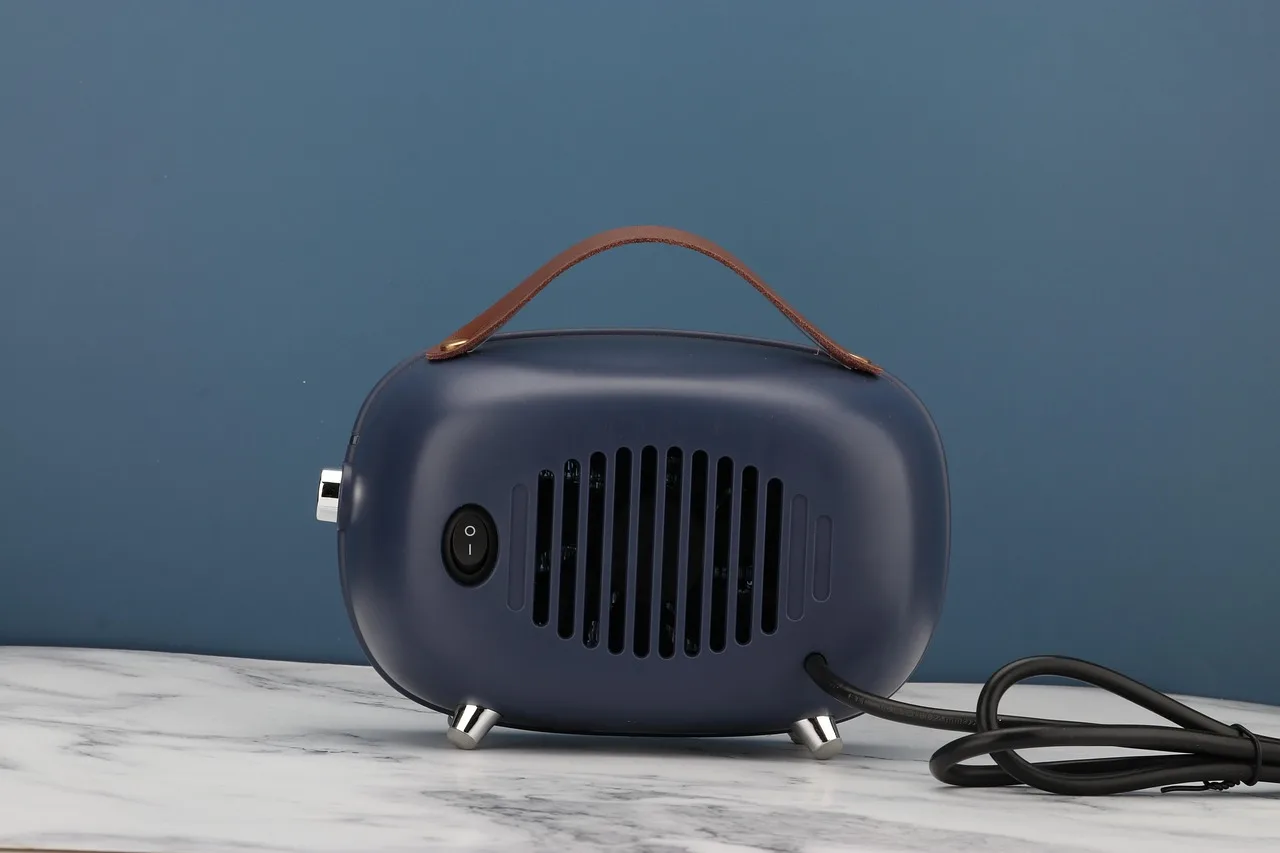
Check the safety mark, the base, the outlet instructions, and the alarm setup together. UL or CSA matters in North America because those marks show testing by a recognized lab, and the mark should match the product type and region. The rest of the build details tell you whether the heater is suited to the room.
UL and CSA marks by region
Str Quality lists CSA and UL as safety certifications, and Family Handyman says to look for a recognized lab label. That means the packaging should show a clear certification mark, not a vague safety claim. If the heater is sold for North America, the mark should be appropriate for that market.
Do not treat the certification as a guarantee of perfect use. It is a sign the model has been tested to a recognized standard. You still need the right placement, the right outlet, and the right room.
Stable base and housing checks
A wide or weighted base helps reduce tip-over risk on flat, level floors. The same source says heaters should be on a level surface, and that advice matters because an uneven rug, wobbly table, or crowded hearth can make a stable heater less stable.
Also check how the housing is shaped. A compact unit with a narrow footprint can be easier to knock over than one with a broad base, even if both have the same heat output.
Clearance, alarms, and outlet use
Keep the heater away from combustibles by at least three feet or one metre, depending on the guidance on the source you are following. That means curtains, bedding, furniture, paper, and stored items should stay clear. Family Handyman recommends at least three feet of clearance, while Electrical Safety First says keep combustibles one metre away.
Use the correct alarm type nearby. The same source notes smoke or heat alarms should cover fire risk areas, and that is not the same as a carbon monoxide alarm. Smoke alarms matter for general fire warning. Heat alarms are used where smoke alarms can give nuisance alarms. Carbon monoxide alarms matter when fuel-burning heaters are used.
Plug the heater directly into a wall outlet. Family Handyman advises plugging directly into an outlet, and Electrical Safety First says to avoid extension leads. Do not use an extension cord or power strip as a normal setup for a heater, because that can overheat the cord and overload the circuit.
Fan-assisted, convection, radiant, halogen, and oil-filled units
Fan-assisted heaters can spread warm air faster, which may help a room reach a comfortable temperature sooner. They still need clear vents and dust control, because the fan cannot protect a blocked intake. A fan does not make a heater safer by default.
Convection and oil-filled units often warm a room more steadily, while radiant and halogen units send heat more directly toward people or objects. That makes clearance and guarding especially important. For halogen heaters, the tip-over switch is called out by Electrical Safety First.
For fuel-burning heaters, the checklist changes again. Str Quality highlights a flame failure device for gas heaters, and a working carbon monoxide alarm becomes essential nearby. That is a different risk profile from a plug-in electric heater.
Room-by-room buyer checklist
Match the heater to the room before you compare wattage or style. The same model can be fine in one space and poor in another if the room has bedding, children, pets, dust, or limited outlet access.
- Bedroom: tip-over shutoff, overheat shutoff, cool-touch housing, and strict clearance.
- Kids’ room: cool-touch exterior, tip-over shutoff, stable base, and a thermostat or adjustable settings.
- Pet area: guarded exterior, tip-over shutoff, and a base that resists bumps.
- Office or den: overheat shutoff, recognized certification mark, and direct wall-outlet use.
- Bathroom: only a heater that is specifically rated for that location; many portable electric heaters are not suitable there unless the manufacturer says so.
- Fuel-burning area: combustion-specific safety features and a working carbon monoxide alarm nearby.
Do not assume bathroom use is safe just because a heater has a shutoff or a guarded front. Many portable electric heaters are not approved for bathrooms unless the product is specifically rated for that location.
Frequently asked questions
What safety features should I look for in a space heater?
Start with tip-over protection, overheat shutoff, cool-touch housing, and a thermostat or adjustable settings. Then check for a recognized UL or CSA mark, a stable base, and direct wall-outlet instructions. For bedrooms and kids’ rooms, put shutoff features ahead of style or extra output.
Is a tip-over switch really necessary on a heater?
Yes. Recommended space heaters should have a tip-over switch, and it is especially useful in homes with children or pets. It cuts power if the heater is knocked over, which helps reduce fire and burn risk in rooms where bumps are more likely.
Do I need an overheat shutoff on a space heater?
Yes. An overheat sensor helps shut the heater down if internal temperature gets too high, which can happen when vents are blocked or dust builds up. That makes it one of the most important fire-prevention features for any portable heater used near curtains, bedding, or furniture.
Should a safe heater feel cool to the touch?
In child and pet areas, a cooler exterior is a smart safety target. It lowers burn risk if someone touches the cabinet or guard. A cool-touch housing does not replace clearance or shutoff features, but it is a strong plus for bedrooms, play areas, and family rooms.
Are certifications like UL or CSA important when buying a heater?
Yes. A recognized lab label helps show the heater has been tested for the market where it is sold. In North America, UL or CSA are the marks buyers should look for. The certification should match the product type and region, not just appear somewhere on the box.
Can I use a heater with an extension cord or power strip?
No. Plug the heater directly into a wall outlet. Family Handyman advises direct outlet use, and Electrical Safety First says to avoid extension leads. A heater draws enough power that cords and power strips can overheat or overload, which raises fire risk.
What heater features matter most for kids’ rooms or pet areas?
Prioritize tip-over shutoff, cool-touch housing, a stable base, and clear temperature control. These rooms are more likely to see contact, bumps, or accidental knocks. Keep the heater on a level surface, with space around it, and choose a model whose exterior stays cooler during operation.
Should I choose a heater with a fan or without one for safety?
For safety, neither type wins automatically. Fan-assisted heaters can spread heat faster, but they still need clear vents and dust control. Convection and oil-filled models may feel calmer in use, while radiant and halogen models need extra care around surfaces and people. Match the design to the room, not the label.