How to Choose Between Safe Heater Types for Your Home
Choose the safest heater by room and failure mode: for bedrooms and nurseries, a tip-over- and overheat-protected oil-filled or panel heater is often a sensible choice; for pet-heavy rooms, choose a cool-touch model with a stable base; avoid exposed-glow radiant units where contact is likely. Bad choices cause burns, fires, tripped breakers, and nighttime shutdowns when heat is needed most. This guide compares heater types by touch safety, tip-over behavior, thermostat failures, and which rooms they fit best.
Which heater type is safest for your room?
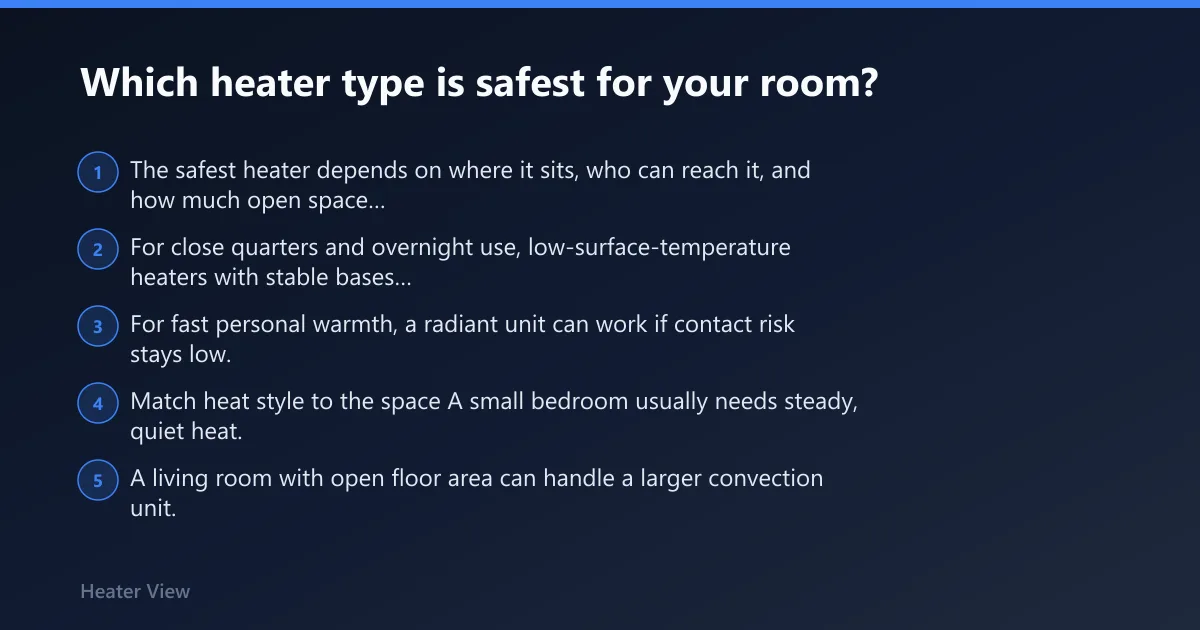
The safest heater depends on where it sits, who can reach it, and how much open space surrounds it. For close quarters and overnight use, low-surface-temperature heaters with stable bases and working cutoff switches are the safest path. For fast personal warmth, a radiant unit can work if contact risk stays low.
Match heat style to the space
A small bedroom usually needs steady, quiet heat. A living room with open floor area can handle a larger convection unit. A nursery or pet-heavy room points to cool-touch surfaces, fewer exposed elements, and simple controls that are hard to bump or block.
Where safety changes by room type
Rooms with beds, toys, and drapes punish hot surfaces and poor placement. Rooms with desks or couches often need spot heat, not whole-room heat. Garages and basements usually demand more clearance and a stronger power setup than a bedroom does.
Why one heater can be safer in a bedroom and worse in a den
A quiet mica panel may fit beside a bed because it warms steadily and usually stays cooler to the touch. The same heater can feel weak in a drafty den, where someone may move it closer to furniture. Safety often drops when users crowd the unit.
How heater types fail in real homes
Heaters fail in predictable ways: surfaces get too hot, airflow gets blocked, the unit tips, dust builds up, or the thermostat cycles badly and leaves the heater running harder than expected. The safest heater is the one that keeps those failures boring and visible instead of sudden and severe.
Hot surfaces and touch risk
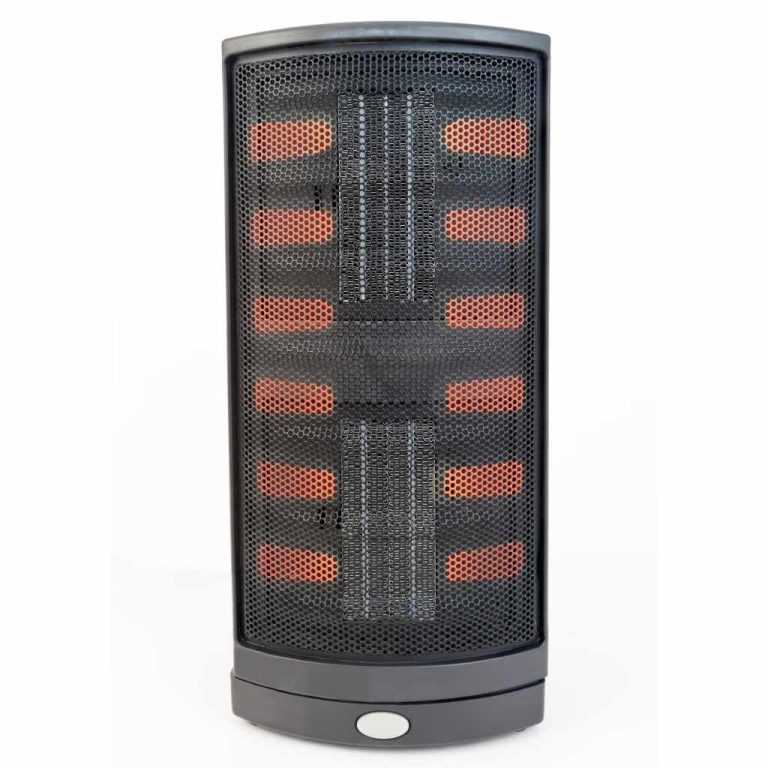
Quartz, radiant, and some convection models can have very hot external parts. That matters in rooms where hands, paws, or bedding can drift into range. A cool-touch housing matters more than a long feature list when the heater sits beside a bed or play area.
Tip-over and blocked-airflow failures
Tip-over protection is especially useful when the heater is in a spot where kids or pets commonly pass through. Blocked airflow can be a bigger issue for fan-assisted and convection models, since a rug, curtain, or toy can block intake or outlet paths and raise internal temperatures quickly.
Dust, cords, and thermostat cycling
Dust on intake screens and inside fan passages makes overheating more likely, especially in ceramic and convection heaters. Thermostats that cycle too often can shorten the heater’s useful life and create hot-and-cold swings that invite closer placement, which is exactly where risk climbs.
Ceramic heaters, radiant heaters, and convection heaters compared
Ceramic, radiant, and convection heaters solve different problems. Ceramic heaters move heat with a fan and warm a small room quickly. Radiant heaters warm objects and people that are in direct line of sight. Convection heaters tend to warm air more evenly and often fit better when steady whole-room comfort matters.
| Heater type | Surface heat | Tip-over risk | Room coverage | Noise | Placement sensitivity | Best-fit household scenario | Recommendation |
|---|---|---|---|---|---|---|---|
| Ceramic space heater | Medium | Medium | Small room, directional | Medium to high | Moderate | Small bedrooms, offices, quick warm-up | Good if airflow stays clear and noise is acceptable |
| Radiant heater | High | Medium | Spot heat only | Low | High | Personal heat at a desk or seated area | Use only with generous clearance and low contact risk |
| Convection heater | Low to medium | Low to medium | Whole-room, slower start | Low | Moderate | Bedrooms and living rooms that need steady heat | Strong choice when quiet, even heat matters |
Ceramic space heater
Ceramic space heaters use a ceramic element and usually move heat with a fan-assisted path. Many include a tip-over switch and overheat protection, which helps in small rooms where the heater may be moved often. The tradeoff is fan noise and dust sensitivity, especially if the intake sits near carpet or pet hair.
Radiant heater
Radiant heaters give fast spot warming through direct line-of-sight heating. They are useful at a desk or beside a seated chair, but the surface can run very hot and clearance becomes non-negotiable. They fit best when people stay put and nothing flammable sits near the front.
Convection heater
Convection heaters move warmed air through the room more gradually, so they are slower to feel hot at first but steadier over time. They usually need clearance around walls and furniture to work well. That slower, even behavior often suits bedrooms and living rooms better than quick-hit heat.
Are ceramic heaters safer than fan heaters?
Ceramic heaters are often a safer-feeling option than older exposed-coil fan heaters because the ceramic element may regulate temperature better and the housing is often less hot to the touch. They are still fan-assisted heaters, though, so dust, intake blockage, and noise remain real issues in lived-in rooms.
What fan-assisted heat changes
The fan spreads heat faster and makes the heater feel useful sooner, which can keep users from pushing it closer to the bed or sofa. That also means the unit depends on unobstructed airflow. A blocked fan heater can overheat where a passive heater would simply warm more slowly.
Noise, airflow, and dust tradeoffs
Fan noise is the price of quick warm-up. In a bedroom, that hum can matter more than raw heat output. Fan-assisted heaters also pull in dust, hair, and lint, so a neglected intake screen turns into a safety problem, not only a cleaning issue.
Best use cases for small rooms
Ceramic heaters work well in small rooms that need fast heat during waking hours. They are less ideal right next to bedding, paper piles, or toy storage. If the room is quiet at night, a lower-noise panel or oil-filled heater often fits better.
Are radiant heaters safer than convection heaters?
Radiant heaters are not automatically safer than convection heaters. They are safer only when the goal is brief, directed heat and the heater can stay far from contact points. Convection heaters usually run with cooler outer surfaces and less intense front-side heat, which is easier to manage in shared rooms.
Line-of-sight heating and clearance needs
Radiant heat stops when a person or object is out of the beam, so the heater often gets placed closer to the user. That proximity raises risk. Convection units care more about room airflow than direct aim, but they still need space away from curtains, furniture, and walls.
Room-warming speed versus surface heat
Radiant heaters feel fast because they warm skin and objects directly. The heater itself often stays hotter than convection housings. Convection warms the room more evenly and usually lowers the urge to crowd the unit, which matters when children, pets, or bedding are nearby.
When steady air heating is the better fit
Bedrooms, living rooms, and shared spaces usually benefit from steady air heating more than hot spot heating. Convection wins when the room must stay comfortable for hours and the heater needs to sit at a safer distance from people and fabrics.
What heater type is safest around kids and pets?
For kids and pets, the safest heater is usually the one with the coolest exterior, the most stable base, and the least tempting surface to touch. Panel-style or oil-filled units often fit that job better than exposed-glow radiant heaters, because they lower burn risk and handle accidental contact more calmly.
Tip-over protection matters more here
Tip-over shutoff should turn the heater off as soon as it is no longer upright. That matters on floors where a child, pet, or toy can nudge it. Protection is only useful if it actually triggers during a real push, so the switch should be tested before regular use.
Surface temperature matters more here
A heater can be safe on paper and still burn a hand or paw if the outer housing runs hot. High-surface-heat models need more clearance than most rooms naturally provide. In a home with kids or pets, the better choice is a design that stays cool enough to discourage touching.
Stable placement beats clever features
Features help, but placement decides most accidents. A heater on a flat floor with a wide base and no power cord underfoot is safer than a lighter unit perched on a rug edge. Keep it out of traffic paths and away from toys that can shift under it.
Which heater uses the least risky heating method indoors?
For most indoor rooms, the least risky heating method is a low-surface-temperature convection or panel-style heater with working safety cutoffs. It spreads heat without glowing elements or intense front-side burn risk. That makes it easier to place near beds, sofas, and pet traffic without crowding the unit.
Why exposed elements raise risk
Quartz and other radiant-element heaters deliver heat quickly, but the element itself can run very hot. That increases burn risk and makes placement more demanding. A cooler housing does not remove every hazard, but it reduces the chance that a quick touch becomes an injury.
Why slow heat can be safer
Slower heat gives the thermostat more room to control output and reduces the urge to sit too close. In real rooms, that often matters more than speed. A heater that feels less dramatic can still be the safer daily choice.
Are quartz or mica heaters safe to use indoors?
Both can be safe indoors when used with enough clearance and the right expectations. Quartz heaters run hotter at the surface and glow visibly, so they fit best for short, direct spot heating. Mica heaters usually run quieter and cooler, which makes them easier to use near bedrooms and seating areas.
Quartz heater surface heat and glow
Quartz heaters use a radiant element that warms quickly and may glow visibly. That glow is a sign of high surface temperature, not a decorative feature. The heater must stay away from bedding, curtains, and reachable surfaces, especially in rooms where someone may forget how hot it gets.
Mica heater panel design and quiet operation
Mica heaters use thin-panel construction that blends radiant and convection heat. They are often quiet and can suit bedrooms well because they avoid the fan noise common in many ceramic units. Their surface can still get warm enough to matter, so touch safety should not be assumed.
Bedroom and personal-use limits
In a bedroom, mica is usually the safer of the two because it is quieter and less visually aggressive than quartz. Quartz belongs more in a supervised personal-use setup where the heater can sit well away from contact points and no one will drift items onto it.
Heater safety features that matter most before you buy
The best safety features are the ones that stop the heater when the room gets messy. Tip-over shutoff, overheat protection, a thermostat that cycles predictably, and a timer that limits unattended runtime matter more than decorative controls or extra fan speeds.
Tip-over protection
Tip-over protection should cut power automatically when the heater leans or falls. This is especially important on hard floors, in kid rooms, and in homes with active pets. A heater that keeps running after a shove is not acceptable for floor placement.
Overheat protection
Overheat protection should shut the heater down if internal temperature rises too far, often because intake or output air is blocked. Dust buildup and clogged filters make this more likely. If a heater keeps tripping, that is a maintenance warning, not something to ignore.
Thermostat and timer
A thermostat with decent setpoint accuracy reduces runaway cycling and keeps the room from swinging between too cold and too hot. A timer limits overnight or unattended use. Poor thermostat control can push a heater to cycle harder than expected, which is wasteful and can add wear.
Certification and safety cutoffs
Look for certification and clear safety cutoffs, then confirm they still work in the actual room. Read the manual for clearance distances and place the heater where those distances can be respected. The manual matters because safety claims mean little when furniture crowds the intake.
Frequently asked questions
Which heater type is safest for a bedroom?
A bedroom often does well with a low-surface-temperature convection, panel, or oil-filled heater that includes tip-over protection, overheat shutoff, and a thermostat. Quiet operation matters too, because noisy fan heaters can tempt people to place the unit too close or run it less predictably.
How do I choose a heater that is less likely to overheat?
Choose a heater with overheat protection, clear intake and exhaust paths, a thermostat that cycles normally, and a design that is easy to clean. Avoid units that must be pushed against walls or carpets. Dust buildup and blocked airflow are the common real-world causes of overheating.