Are Heaters Safe in Tiny Homes?
Yes, heaters can be safe in tiny homes if you match the heater to the electrical load, keep clearances to combustibles, and provide the ventilation the fuel source requires. Bad placement or undersized power can cause fire, carbon monoxide buildup, or a tripped breaker at night. This guide covers electric, propane, wood, and off-grid heaters, plus loft safety, venting, and the checks that matter in tight layouts.
Tiny home heater risks
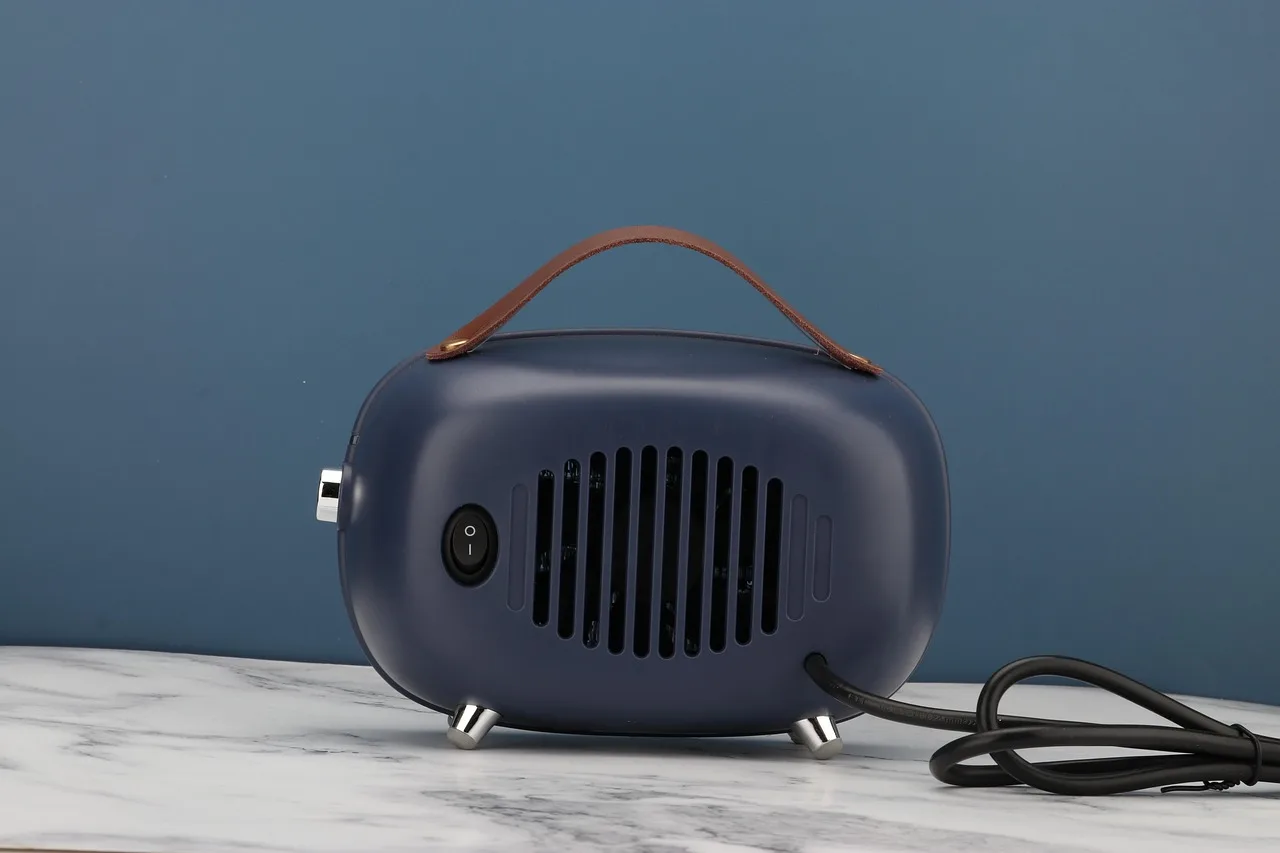
Tiny homes change the risk picture because air volume is smaller, furniture sits closer together, and a heater can warm the space fast. That helps comfort, but it also means a poor setup reaches unsafe temperatures sooner, especially near bedding, curtains, cords, or a loft edge.
Lofts are a special concern. Heat rises, so a loft can run hotter than the main floor while smoke and carbon monoxide can also collect there if the home lacks the right alarm placement or air exchange.
Why tight clearances matter
Most heater manuals give exact spacing from walls, bedding, and furniture. In a tiny home, those distances can be hard to meet because aisle width is limited and the heater may sit close to a bed, cabinet, or curtain by default. If the manual calls for about 3 feet of clearance and the layout cannot support that, the heater does not belong there.
How lofts and multi-use rooms change exposure
A sleeping loft turns a small room into two risk zones. The heater may be on the main level, but hot air, smoke, and combustion gases can move upward. If a loft is also the main sleeping space, alarm placement and heater choice matter more than in a single-level room.
When a small space becomes a fast-heat problem
Tiny homes heat up quickly, and that can be useful or dangerous. A 1500W electric heater can make a small, insulated room feel warm fast, but it can also overwork a weak circuit or overheat a closed corner. Faster heat buildup leaves less margin for error.
Are heaters safe in tiny homes?
Heaters can be safe in tiny homes, but only when the heater type fits the space, the power supply, and the ventilation available. Electric heaters with proper safety shutoffs are the simplest choice. Combustion heaters need more caution, and unvented fuel-burning units are a poor fit for enclosed sleeping spaces.
The short answer by heater type
Electric heaters are commonly a safer indoor option when they are UL or ETL listed, have tip-over protection, overheat protection, and a thermostat, and are used on a circuit that can handle the load. Propane, kerosene, and wood heaters are conditional at best, and unvented models are the highest-risk choice.
What makes a setup unsafe even if the heater is indoor-rated
An indoor rating does not fix a bad layout. A heater becomes unsafe if it sits too close to bedding, if the cord runs under a rug, if a power strip is used, if the loft lacks alarm coverage, or if the fuel source needs more air than the tiny home can supply.
When to stop and choose another heat source
Stop if you cannot meet the clearance distances in the manual, cannot power the heater from a dedicated outlet, or cannot provide the ventilation required by the fuel type. Stop also if the home has no working smoke alarm, no carbon monoxide alarm where needed, or no safe way to keep the heater away from sleeping areas.
Electric heaters that are safest indoors
For tiny homes, a listed electric heater is usually the clearest choice. Look for UL or ETL listing, tip-over shutoff, overheat protection, and thermostat control. A 750W unit may be enough for a very small, well insulated space; 1500W is common, but it draws about 12.5 amps at 120 volts, so circuit capacity matters.
UL/ETL listing and safety shutoffs
A UL or ETL mark tells you the heater met a recognized safety standard. It does not mean the heater can sit anywhere. You still need tip-over protection, overheat shutoff, and the clearances in the manual. Those features reduce risk if the heater is bumped, blocked, or overheats in a compact room.
750W versus 1500W in small spaces
Lower wattage is often easier on tiny-home wiring. A 750W heater draws about 6.25 amps at 120 volts. A 1500W heater draws about 12.5 amps. If the same circuit also feeds a refrigerator, lights, or a battery charger, a 1500W heater may push the circuit too hard.
When a wall outlet is enough
A heater should plug directly into a wall outlet unless the manual says otherwise. That outlet should be in good condition and on a circuit with enough spare capacity. If the heater needs an extension cord or power strip, the setup is usually wrong, especially for high-draw models.
Combustion heaters and indoor use
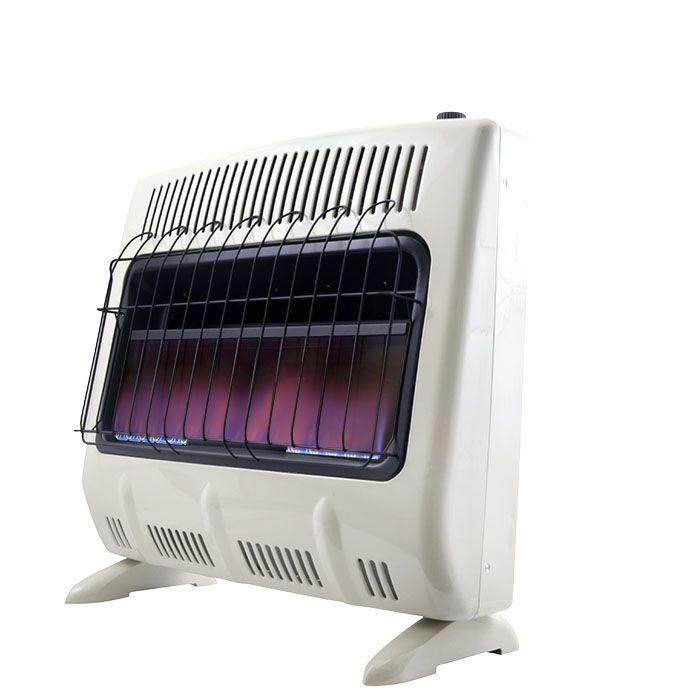
Propane, kerosene, and wood heaters bring fire and air-quality risks that electric units do not. Some models are vented and designed for indoor use, while others are unvented and depend on room air. In a tiny home, that difference is not minor. It decides whether the heater is a fit or a hazard.
Propane, kerosene, and wood heat risks
Unvented combustion heaters consume oxygen and release combustion byproducts into the room. In a sealed tiny home, that can raise carbon monoxide risk and reduce indoor air quality quickly. Wood heat adds ash, ember, and chimney maintenance issues, which can be harder to manage in a small structure.
Vented versus unvented designs
Vented heaters send exhaust outside through a proper flue or vent path. Unvented heaters do not. For a tiny home, vented is generally the safer path if you need combustion heat. Unvented units may still be restricted by the manufacturer to short-term, emergency, or specific-use cases only.
Why manufacturer indoor-use rules matter
Read the manual before buying or firing a fuel-burning heater. If the label says outdoor use only, do not bring it inside, even in a large tiny home. If the manual requires extra ventilation or a minimum room size, those requirements are part of the safety decision, not optional advice.
Say your 240-square-foot tiny home has a sleeping loft and one propane heater labeled for indoor use. If the manual requires continuous fresh air and the windows stay shut to hold heat, the setup is unsafe even before you consider the loft. The problem is the fuel source, not the square footage alone.
Tiny home heater safety decision table
| Heater type | Power or fuel source | Ventilation need | Clearance need | Go/no-go for tiny homes |
|---|---|---|---|---|
| Electric space heater | 120V outlet, usually 750W to 1500W | Normal room air only | Follow manual; keep away from curtains, bedding, furniture, and cords | Go if UL/ETL listed, on a suitable outlet, with shutoffs and enough circuit capacity |
| Propane heater, vented | Propane fuel | Exhaust vent to outside plus required air supply | Follow manual; keep fuel bottles and combustibles away | Conditional only if designed for indoor use, vented properly, and alarms are in place |
| Propane heater, unvented | Propane fuel | Needs added fresh air exchange | Follow manual; strict clearance from bedding and furnishings | No-go for enclosed sleeping spaces and poor air exchange |
| Kerosene heater | Kerosene fuel | Needs combustion air and exhaust control | Follow manual; keep fuel and flame zones clear | Usually no-go unless the unit is approved for indoor use and the home can support ventilation and alarms |
| Wood stove | Wood fuel | Requires chimney or flue | Requires manufacturer spacing and heat shielding | Go only with correct venting, code-compliant install, and enough floor and wall clearance |
| Sleeping loft heater setup | Usually electric only | Depends on heater type; loft needs alarm coverage | Strict clearance from bedding and ceiling surfaces | Go only if the heater is not in the loft or is rated for that exact space and clearances are met |
| Off-grid cabin setup | Battery, inverter, generator, or fuel | Same as heater type; power limits may tighten the choice | Same as heater type | Go if inverter and circuit capacity support the load without extension cords or overloads |
How do you prevent overheating?
Keep the heater on a flat, hard surface, away from bedding, curtains, furniture, and foot traffic. Use the thermostat instead of running it wide open, and shut it off before moving the unit or sleeping unless the manufacturer allows unattended operation. Never cover the heater or its cord.
Placement away from bedding, curtains, and furniture
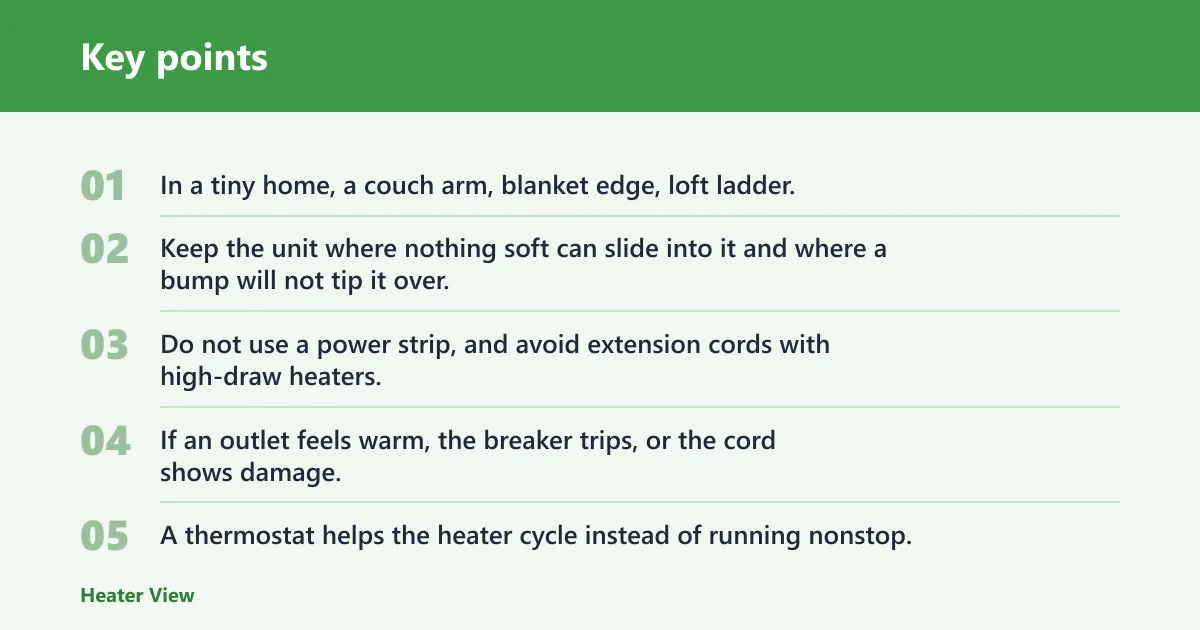
Clearance is about more than walls. In a tiny home, a couch arm, blanket edge, loft ladder, or storage bin can sit within reach of the hot surface or airflow path. Keep the unit where nothing soft can slide into it and where a bump will not tip it over.
Power limits, outlets, and cord checks
Plug heaters directly into a wall outlet. Do not use a power strip, and avoid extension cords with high-draw heaters. If an outlet feels warm, the breaker trips, or the cord shows damage, stop using the heater. Those are warning signs, not quirks.
Thermostat use and shutdown habits
A thermostat helps the heater cycle instead of running nonstop. That lowers heat stress on the unit and can reduce the chance of overheating a small room. Before bed, confirm the unit is in a stable position, the outlet is not overloaded, and the area around it is clear.
Suppose a 12-by-20-foot tiny home uses a 1500W heater on the same branch circuit as a microwave and charger. The heater may run for a while, then the breaker trips when the other loads start. That is not a heater problem alone; it is a circuit-capacity problem that needs a different setup.
What alarms and ventilation do you need?
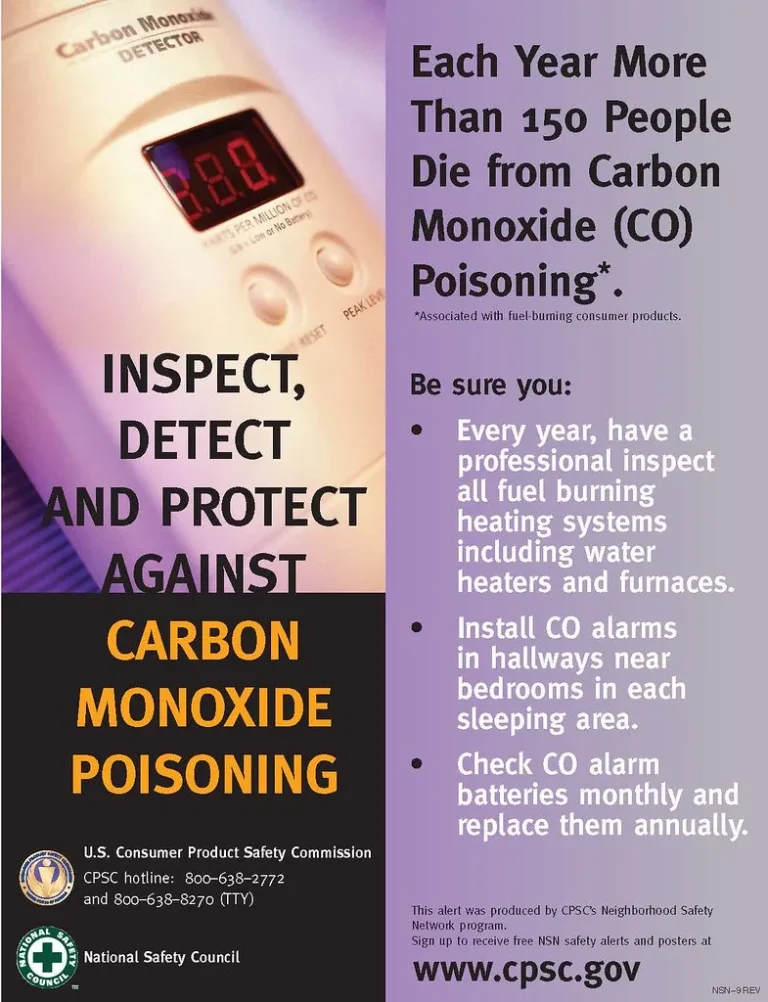
Tiny homes need working smoke alarms and, when combustion is present, carbon monoxide alarms with battery backup. Place alarms near sleeping areas and on each level if the layout has a loft. Ventilation decisions should match the fuel source, because sealing a small home too tightly can trap combustion gases.
Carbon monoxide alarm placement and testing
Put a carbon monoxide alarm near the sleeping area, and place one where the loft can hear it if people sleep there. Test the button monthly and replace batteries as the manufacturer directs. A battery-backed alarm matters because tiny homes may lose power at the same time heat is needed most.
Smoke alarm placement and battery checks
Smoke alarms should be installed where the manufacturer and local code call for them, with coverage near sleeping spaces. Test the button monthly and replace batteries on schedule. In a compact home, early smoke detection matters because fire can fill the space faster than in a larger house.
When to open a window or vent
Open a window or use the required vent opening when the heater’s manual calls for fresh air, especially with combustion appliances. The tradeoff is clear: more outside air lowers heat retention and can add condensation control problems, but it may be required to keep combustion safe in a sealed tiny home.
Frequently asked questions
What heaters are safe to use indoors?
UL or ETL listed electric space heaters with tip-over protection, overheat shutoff, and thermostat control are usually the safest indoor choice. Vented combustion heaters can be acceptable if installed and used exactly as directed. Outdoor-only heaters and unvented fuel units are poor choices for enclosed spaces.
Are Mr. Heaters safe indoors?
Some Mr. Heater products are designed for indoor use, but not all of them are appropriate for tiny homes. Check the exact model label, the ventilation requirement, and the manufacturer’s indoor-use instructions. If the unit is unvented and the home has a sleeping loft or limited fresh air, treat it as unsafe.
What heater is safest for a tiny house?
A listed electric space heater is usually the safest choice for a tiny house because it avoids combustion gases and does not need an exhaust path. Choose one with tip-over and overheat protection, then confirm your outlet and circuit can handle the load without an extension cord or power strip.
Can you use a propane heater in a tiny home?
Only if the specific model is approved for indoor use, the manual’s ventilation rules can be met, and the home has a working carbon monoxide alarm near sleeping areas. Even then, unvented propane heaters are a bad fit for enclosed sleeping spaces and tight, sealed layouts.
Do tiny homes need special ventilation for heaters?
Often yes, especially for combustion heaters. A tiny home has less air volume, so fresh-air exchange matters more and carbon monoxide can build faster if ventilation is poor. Electric heaters do not need combustion air, but they still need enough space around them to avoid overheating nearby materials.