Water Heater Maintenance After a Power Outage
Quick answer: After a power outage, check for leaks, verify water service, and then follow the correct recovery path for your heater type. Electric units usually need a breaker reset. Gas units may need a pilot relight if the manual says so. Tankless and heat pump units often need one reset and then a service call if the fault returns. (Manufacturer installation manuals; U.S. Consumer Product Safety Commission guidance on gas appliance safety; Energy.gov)
After power returns, reset the breaker or GFCI once, check for leaks, and on gas units relight only if the manual pilot is out; if a tankless unit shows an error after one reset, stop and call a pro. Skipping the right check can leave you with no hot water, repeat outages, or a gas, electric, or control fault that gets worse. This guide gives a type-by-type recovery checklist for electric, gas, tankless, and hybrid water heaters, plus the stop signs that mean you need service. (Manufacturer manuals; CPSC; Energy.gov)
What changed after the outage?
Start by separating no hot water from no water at all. No hot water usually points to power, ignition, control, or reset issues at the heater. No water at all points to a supply problem, a closed valve, or a broader plumbing issue upstream of the heater. (Manufacturer manuals; plumbing code-adjacent guidance on shutoffs and relief valves)
If you have water at the taps but it is cold, the heater is the likely problem. If no fixtures run, focus on the main shutoff, any pressure loss, or frozen or damaged piping before touching the heater controls. (Utility emergency guidance; manufacturer manuals)
First check before touching the heater
- Inspect the tank, piping connections, and the relief valve discharge line for wet spots, drips, or active discharge.
- Check whether other fixtures have water pressure.
- Confirm power is back at the panel and the heater switch or disconnect is on.
- On gas units, look for a lit pilot, gas odor, and obvious vent issues.
A common first-timer mistake is to reset a breaker twice in a row without checking for a leak or a gas issue first. A single reset is often enough as a first step after a breaker trip. If it trips again, stop and treat that as a fault, not a nuisance. (Manufacturer manuals; CPSC)
Signs the issue is electrical, gas, or control-related
Electrical trouble usually shows up as a dead display, a tripped breaker, or no heating element response after the system re-energizes. Gas trouble usually shows up as no pilot, no flame, poor venting, or a burner that will not stay lit. Control trouble often shows up as an error code or lockout after the outage ends. (Manufacturer manuals; Energy.gov; CPSC)
Electric water heaters after a power outage
Electric water heaters do not operate without electricity. After service returns, the first safe check is the breaker or reset path, followed by the thermostat and any visible control issue. If the breaker has tripped, a single reset may restore operation; if it trips again, there is likely a deeper fault. (Manufacturer installation manual; Energy.gov)
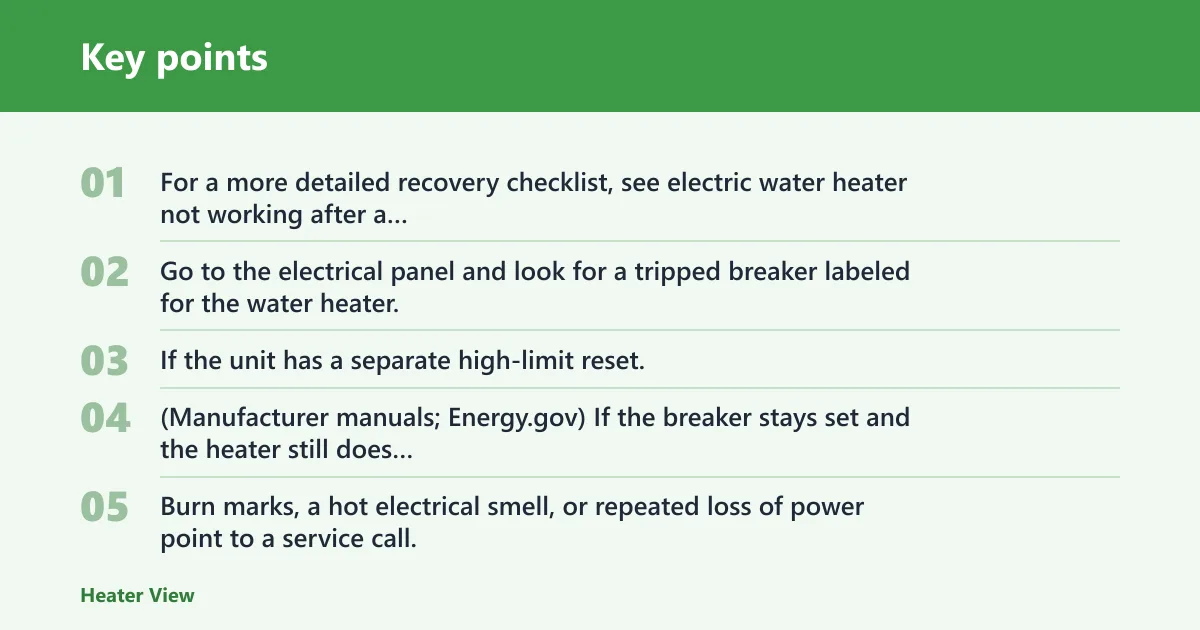
For a more detailed recovery checklist, see electric water heater not working after a power outage.
Check the breaker and reset path
Go to the electrical panel and look for a tripped breaker labeled for the water heater. Reset it once. If the unit has a separate high-limit reset, follow the manual and press it only once after confirming the area is dry and there is no sign of overheating. (Manufacturer manuals; Energy.gov)
If the breaker stays set and the heater still does not recover, check the thermostat access covers and any indicator lights. Burn marks, a hot electrical smell, or repeated loss of power point to a service call, not a second reset. (Manufacturer manuals; CPSC)
What a normal restart looks like
A normal restart on an electric unit is simple: power returns, the breaker stays on, and the tank begins reheating without a fault light. Recovery is often not instant. A full tank can take time to come back to temperature, especially after a long outage. (Energy.gov; manufacturer manuals)
Suppose a 40-gallon electric tank lost power overnight and the breaker was tripped during restoration. If one reset restores the unit and no leak appears, the heater may only need time to reheat the stored water. If the breaker trips again, stop there. (Manufacturer manuals)
When a tripped breaker signals a deeper fault
A breaker that trips again after one reset can mean a failing heating element, a shorted thermostat, moisture in the controls, or a damaged wire. That is the point to call a plumber or electrician. Repeated resets increase the chance of more damage. (Manufacturer manuals; CPSC)
Does a gas water heater work during a power outage?
Some gas water heaters keep working during an outage if they use a standing pilot light. Others still need electricity for ignition or controls. After power returns, check the pilot, gas supply, venting, and signs of leaks before assuming the unit is fine. (Manufacturer manuals; Energy.gov; CPSC)
Standing pilot models and what keeps them running
Standard gas tanks usually continue to work if they have a standing pilot light. Older units are more likely to rely on that setup. If the pilot stayed lit and the gas supply remained open, hot water may continue or return quickly. (Manufacturer manuals; Energy.gov)
That does not mean every gas model is outage-proof. Some gas tanks use electronic ignition, powered gas valves, or safety controls that need electricity. If those parts lost power or faulted during the outage, the burner may not relight on its own. (Manufacturer manuals; Energy.gov)
Units that still need electricity for controls
Check whether your gas heater has a powered display, electronic ignition, or power vent. If it does, loss of electricity can shut it down even though it burns gas. Once power returns, those systems may need a reset or a manual restart from the control panel. (Manufacturer manuals; Energy.gov)
Pilot, gas supply, and vent checks after power returns
Look for a lit pilot, make sure the gas shutoff valve is open, and verify the vent path is open and unobstructed. If you smell gas, stop immediately, leave the area, and call the gas utility or emergency service. Do not relight a unit with a gas odor present. (CPSC; utility guidance; manufacturer manuals)
If the pilot will not stay lit after a careful relight attempt, the thermocouple, gas valve, or venting may be at fault. That is a service call. A unit that lights and then drops out again is not a normal recovery. (Manufacturer manuals; CPSC)
Tankless water heaters after the power comes back
Tankless water heaters depend on electrical controls and ignition. After an outage, they can sit in lockout, show an error, or ignore a hot-water call until the control board clears. If a tankless unit still shows an error after one reset, it is generally best to stop troubleshooting and call a pro. (Manufacturer manuals; Energy.gov)
Control board and ignition lockouts
A tankless unit may lose its burner sequence during a power cut or grid restoration. The display may go dark, flash a fault code, or refuse to ignite. That often points to the control board, the igniter, or a sensor issue rather than a water supply problem. (Manufacturer manuals; Energy.gov)
Small backup power sources and their limits
Tankless gas units need only modest power for their electronics and ignition systems, but the exact draw varies by model, venting, and startup sequence. A small UPS may help a compatible unit ride through a brief outage, but it is not a cure for a damaged control board or failed sensor. Use the manufacturer’s power requirements and backup guidance before choosing any battery setup. (Manufacturer manuals; Energy.gov)
Surge protection matters here, especially after grid restoration. A power spike can upset electronics even when the outage itself was brief. If the display comes back but the unit keeps faulting, the electronics may need service. (Utility surge guidance; manufacturer manuals)
When repeated restart failures point to electronics damage
If the unit clears once, then faults again on the next demand for hot water, suspect control damage, ignition failure, or sensor trouble. A repeated error after one reset is the point to stop troubleshooting. Do not cycle power over and over. (Manufacturer manuals)
Heat pump water heaters after a power outage
Heat pump water heaters are generally more outage-sensitive than standard gas tank units because they rely on electrical power for the compressor and controls. If power was interrupted, they may not recover cleanly without a reset, and some systems may need dedicated backup power to stay operational. (Energy.gov; manufacturer manuals)
Why these units are outage-sensitive
A heat pump water heater depends on powered components to move heat into the tank. If those components lose power, the unit may stop heating entirely or revert to a fault state. Recovery can be slower than with a standard tank because the controls may need to restart in sequence. (Energy.gov; manufacturer manuals)
What to check on the display and controls
Check the display for an error code, confirm the breaker is on, and inspect the air path around the unit. If the display stays off or the compressor will not start after power returns, the problem may be in the control system rather than the tank itself. (Manufacturer manuals; Energy.gov)
Heat pump units are also a good place to watch for surge damage after restoration. A control board that fails to wake up, or one that displays a fault right after power returns, should be treated as a service issue. (Utility surge guidance; manufacturer manuals)
Post-outage diagnostic table
Use this table to match the symptom to the first safe check. The goal is to separate a simple reset from a fault that needs service.
| Heater type | Likely symptom | First safe check | Expected normal result | Red-flag result | When to call a pro |
|---|---|---|---|---|---|
| Electric tank | No hot water after power returns | Breaker and thermostat reset path | Breaker stays set and heating resumes | Breaker trips again or the reset will not hold | After one reset fails or a burning smell appears |
| Gas tank | No hot water, pilot out, or burner silent | Pilot, gas supply, venting, and leaks | Pilot lights and burner runs normally | Gas odor, repeated pilot outage, or blocked vent | If relight fails, smell gas, or the burner will not stay lit |
| Tankless | Error code, no ignition, or lockout | One power reset and display check | Unit clears and responds to hot-water demand | Error returns, no ignition, or dead display | After one reset or any control board fault |
| Heat pump | Compressor silent or control screen dead | Breaker, display, and room air path | Display returns and compressor cycles normally | No display, sensor fault, or compressor will not start | If the unit stays down after power returns or faults again |
This table also helps with PSPS events, where standard gas tanks are often the most reliable option if they have a standing pilot light. Electric and electronically controlled systems are more likely to need a reset or a service check after restoration. (Utility outage guidance; manufacturer manuals)
Follow-up maintenance after power is restored
Some maintenance belongs in the recovery window, but not all of it is urgent. If the outage stirred up sediment or the water quality changed, flush the tank after service is stable. If the tank is due, inspect the anode rod later rather than forcing the issue during the restart. (Manufacturer manuals; plumbing maintenance guidance)
Sediment flush if water quality shifted
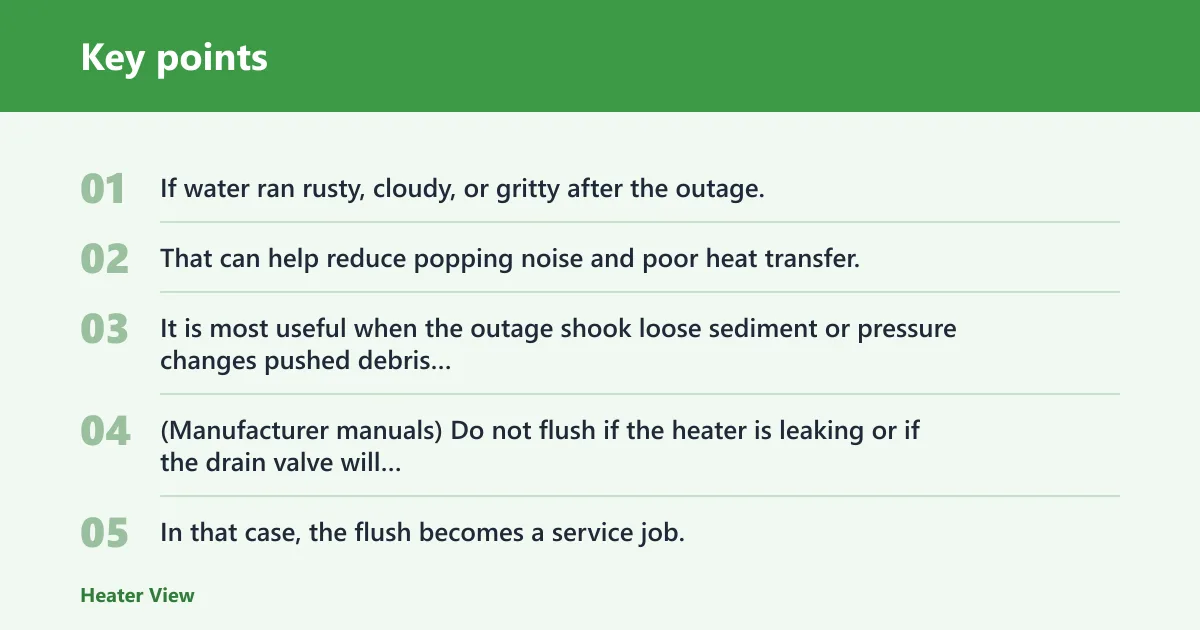
If water ran rusty, cloudy, or gritty after the outage, drain the tank until the water runs clear. That can help reduce popping noise and poor heat transfer. It is most useful when the outage shook loose sediment or pressure changes pushed debris into the tank bottom. (Manufacturer manuals)
Do not flush if the heater is leaking or if the drain valve will not operate safely. In that case, the flush becomes a service job. For many tanks, especially conventional gas units, sediment control is part of routine upkeep, not a one-day fix. (Manufacturer manuals)
Anode rod inspection for overdue tanks
The anode rod is the sacrificial corrosion part inside many storage tanks. It is often inspected on a regular maintenance schedule, and replacement is considered when it is heavily pitted or worn. Follow the tank maker’s guidance rather than a fixed thickness rule, because inspection and replacement criteria vary by model. (Manufacturer manuals; plumbing maintenance guidance)
If the tank is already near the end of its service life, maintenance may not restore performance for long. Service-life estimates vary widely by tank type, water quality, and maintenance history, so use the manufacturer’s age guidance and condition of the tank rather than a single universal number. (Manufacturer manuals)
Temperature and pressure relief valve check
Check the temperature and pressure relief valve during maintenance. It should open and reseal properly. Pressure swings during an outage or restoration can expose a sticking valve, and a leaking relief valve should never be ignored. (Plumbing code-adjacent guidance; manufacturer manuals; CPSC)
Set the water temperature according to the heater manual and local code guidance. Many manufacturers and energy guidance sources point to 120°F as a common residential setting for balancing comfort and scald risk. Use any temporary higher setting only if the manual or a code-adjacent source specifically allows it for a short, controlled purpose. (Energy.gov; manufacturer manuals; plumbing code-adjacent guidance)
Surge protection for controls and electronics
Surge protection is worth considering after grid restoration, especially for tankless and heat pump units. These systems rely on controls and electronics that can fault after a spike. A surge device will not fix damaged parts, but it can help protect future starts. (Utility surge guidance; manufacturer manuals)
Battery backup is not universal. Follow the appliance manual for any backup-power recommendation, because power draw and startup needs vary by model. Some units may support backup power for short outages, but that is a model-specific option, not a general rule. (Manufacturer manuals; Energy.gov)
Can I use hot water after a power outage?
Yes, but only if water service is normal, there is no leak or gas odor, no error or fault condition remains, and the heater has actually reheated the tank or completed its restart cycle. If any of those checks fail, wait and troubleshoot the heater first. (Manufacturer manuals; CPSC; Energy.gov)
Frequently asked questions
Does power outage affect water heater?
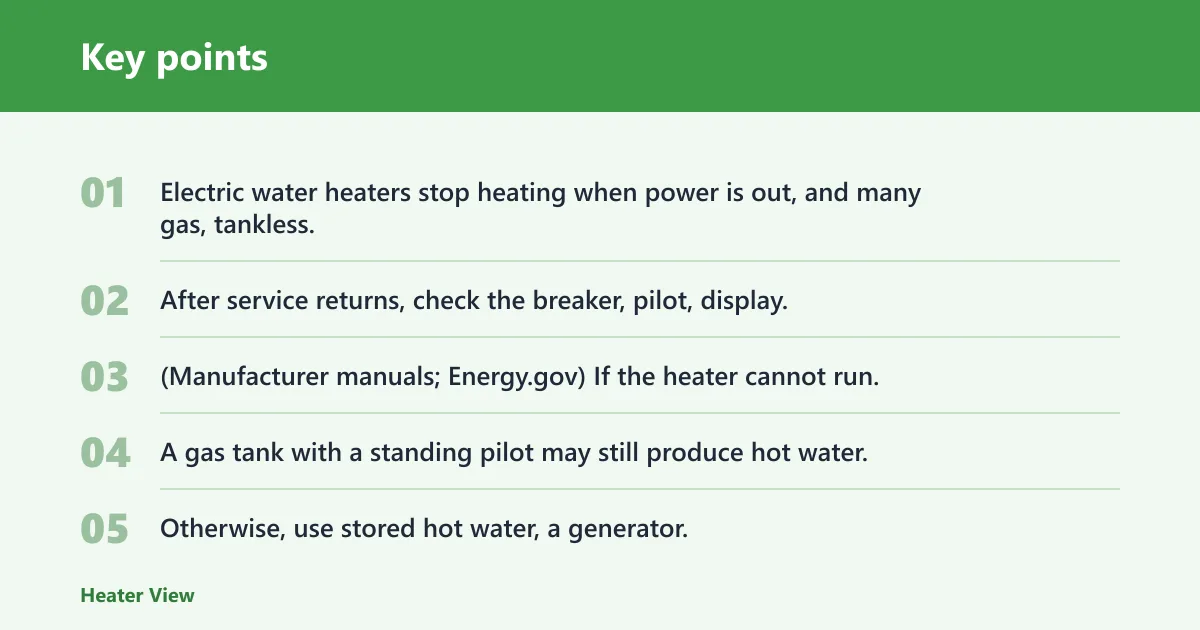
Yes. Electric water heaters stop heating when power is out, and many gas, tankless, and heat pump units also depend on electricity for controls or ignition. After service returns, check the breaker, pilot, display, and any error code before assuming the heater failed permanently. (Manufacturer manuals; Energy.gov)
How to heat water during power outage
If the heater cannot run, the practical options are limited. A gas tank with a standing pilot may still produce hot water. Otherwise, use stored hot water, a generator, or a battery-backed setup only if the appliance is designed for it. Never run an unsafe improvised heating setup indoors. (CPSC; manufacturer manuals; Energy.gov)
How do I reset a hot water heater after a power outage?
For an electric unit, reset the breaker once and follow the thermostat or high-limit reset only if the manual allows it. For a tankless or heat pump unit, check the display and reset once. If the fault returns, stop and call service rather than cycling power repeatedly. (Manufacturer manuals; Energy.gov)
Why is my water heater not working after a power outage?
The usual causes are a tripped breaker, a failed reset, pilot outage, gas supply issue, control board lockout, or surge damage. The type of heater matters. Electric units need power. Gas units may need a pilot or electronics. Tankless and heat pump units often fault at the controls first. (Manufacturer manuals; utility surge guidance; Energy.gov)
Does a gas water heater work during a power outage: some do, especially standard gas?
Some do, especially standard gas tanks with a standing pilot light. Others do not, because they need electricity for ignition, fans, or controls. After the outage, check the pilot, gas supply, venting, and leaks before you assume the unit should work normally. (Manufacturer manuals; CPSC; Energy.gov)
When should I call a plumber after a power outage?
Call right away for gas smell, visible leaks, repeated breaker trips, a failed relight, blocked venting, or a tankless error that returns after one reset. Also call if the heater stays dead after basic checks. Those signs point to a fault that should not be pushed through. (CPSC; manufacturer manuals)
Sources
- Manufacturer installation and operating manuals for electric, gas, tankless, and heat pump water heaters
- U.S. Department of Energy, water heating and energy-saving guidance
- U.S. Consumer Product Safety Commission guidance on gas appliance safety and scald risk
- Local utility outage, surge, and restoration guidance
- Plumbing code-adjacent guidance on temperature and pressure relief valves, shutoffs, and temperature settings