Are Infrared Heaters Noisy? What to Expect From Them
Most infrared heaters are quiet. Many are reported to make only a faint click, hum, or crackle, and a loud buzz, rattle, or grinding noise usually points to a problem. Ignore the wrong sound, and you can end up with wasted power, short cycling, or a unit that distracts in a bedroom or office. This guide explains normal sounds, warning signs, and how to judge whether an infrared heater is quiet enough for sleep and work.
What sounds are normal and what are not



Usually not. Infrared heaters are often quieter than fan heaters because they do not rely on a blower, but quiet does not mean silent. A normal unit may make brief relay clicks, light ticking from metal expansion, or a soft hum from electronics. Loud buzzing, repeated popping, or grinding is not typical.
What a normal sound profile looks like
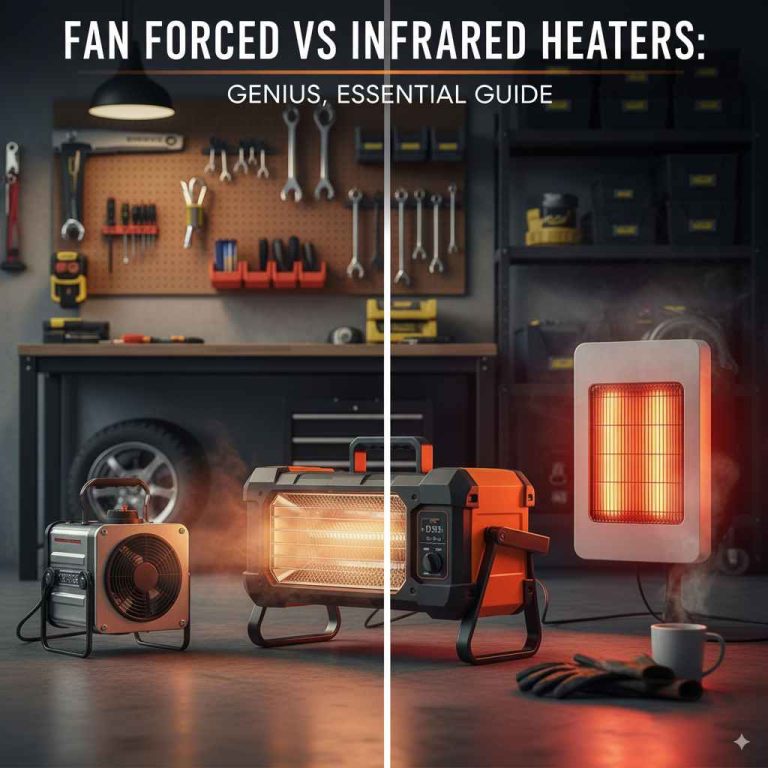
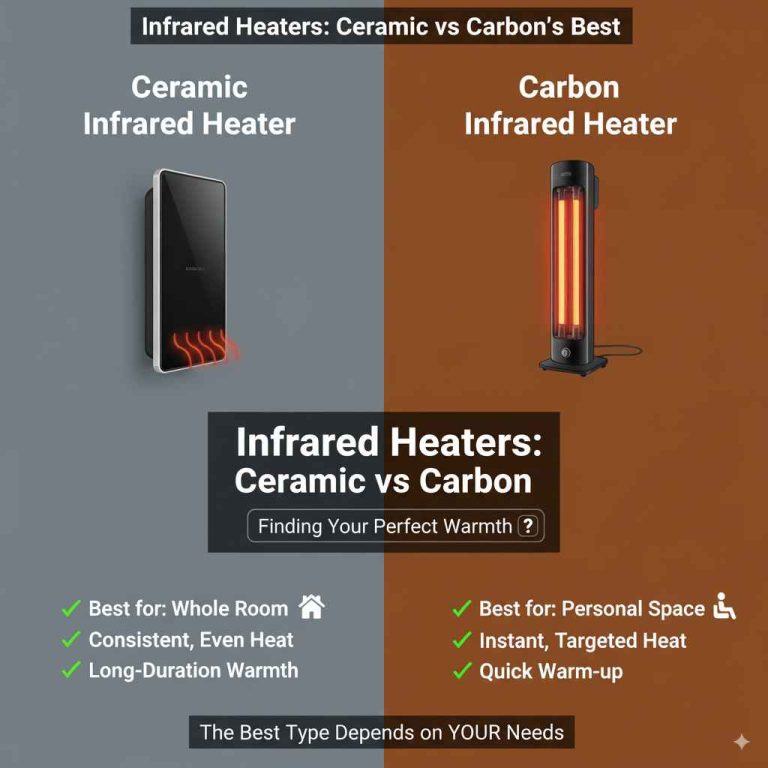
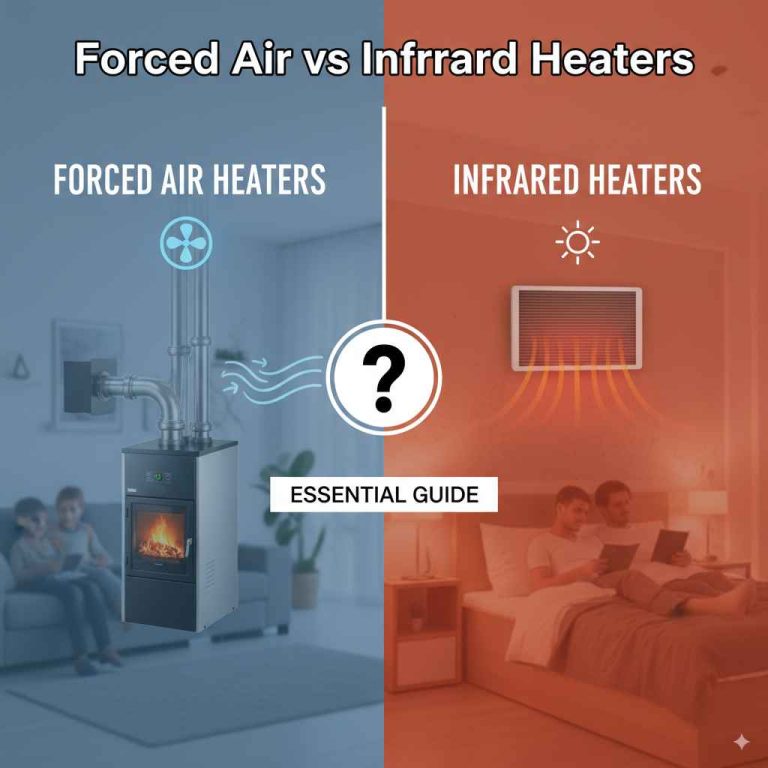
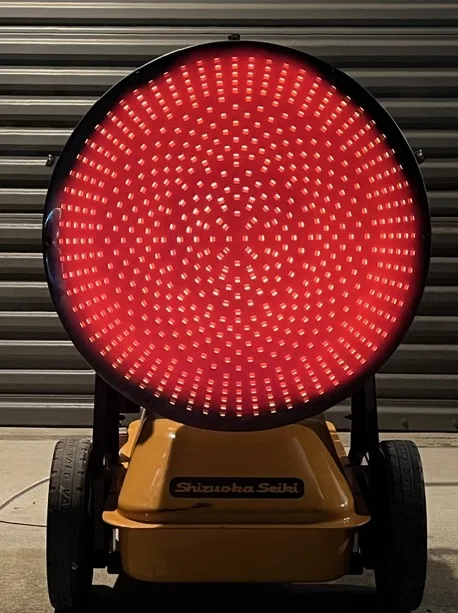
Infrared heat comes from a radiant heat source, so the heater can warm people and objects without moving much air. That is why fanless panel heaters are often the quietest type. Quartz and carbon models can still make brief startup or shutdown sounds as parts heat and cool, and fan-assisted units add airflow noise on top of that.
Infrared radiation is invisible to human eyes but can be felt as heat. It is one type of electromagnetic radiation, produced when atoms absorb and then release energy. It sits between visible light and microwaves in the electromagnetic spectrum, and all objects in the universe emit some level of infrared radiation.
When noise is normal versus worth checking
A single click at thermostat cycling, a short tick as the housing warms, or a faint odor with first use can be normal. Repeated loud popping, buzzing that continues after warm-up, rattling, or grinding is different. Those sounds can point to a loose panel, dust or debris, a damaged element, or an electrical fault.
Infrared heater sounds explained
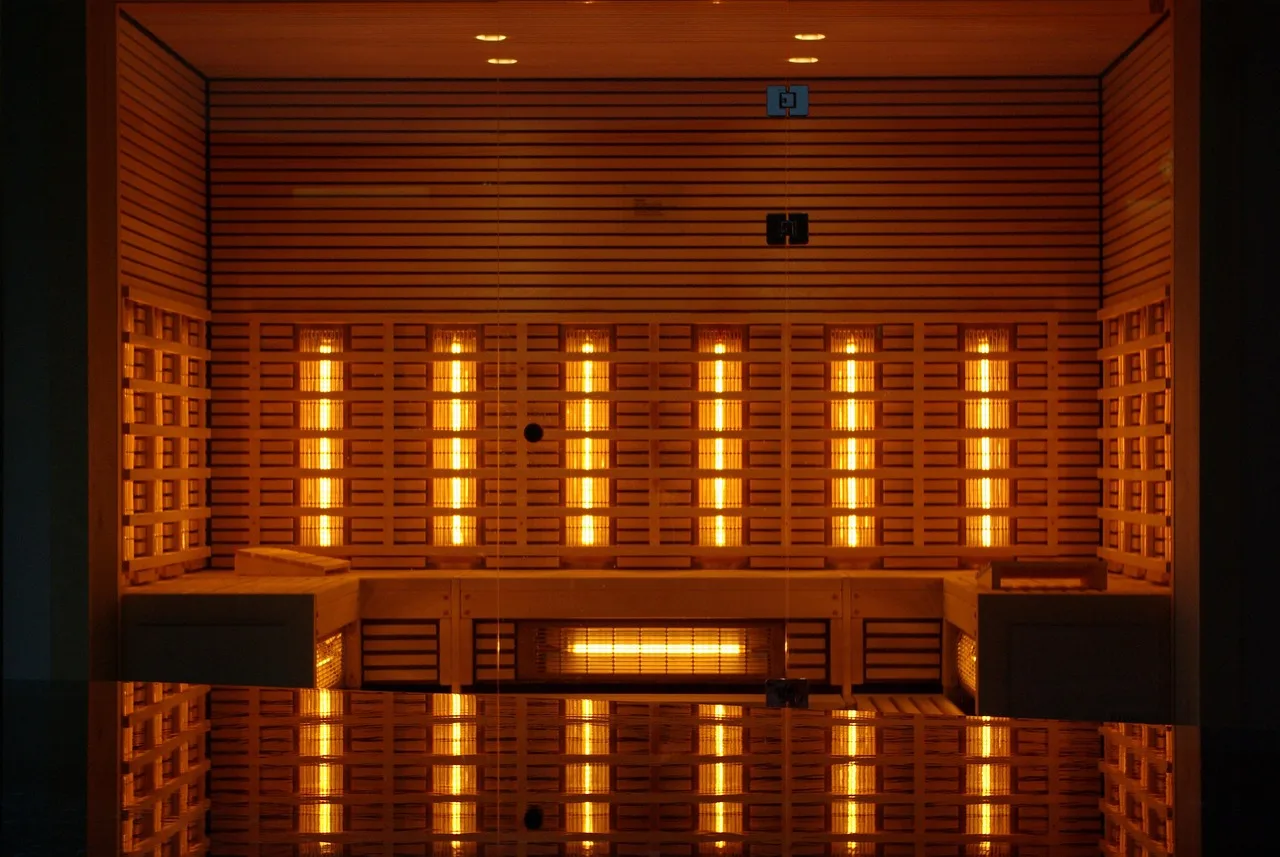
Most infrared heater noise comes from heat, switching, or airflow. The sound source matters more than the volume alone. A brief mechanical click can be expected from the control system, while electrical buzzing or metal-on-metal rattle needs closer attention. Different heater designs also produce different sound patterns.
Relay clicks and thermostat cycling
Thermostat and relay clicks are common on many infrared heaters. The click often happens when the heater reaches its setpoint or turns back on after the room cools. That audible switching is normal, and the cycle frequency depends on room temperature, control accuracy, and how often the heater turns on and off.
Say your panel heater clicks once when it starts and once when it shuts off in a quiet office. That is usually normal. If the same unit clicks every few seconds, or the sound is paired with flickering, odor, or erratic heat, the control may be cycling too often and should be checked in the manual.
Ticking and popping from thermal expansion
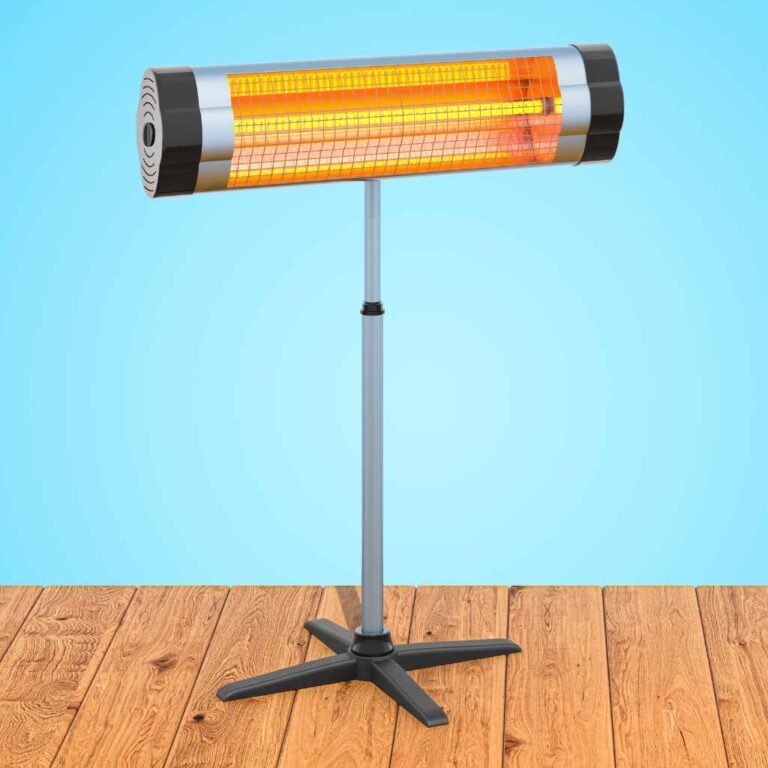
Ticking or light popping usually comes from metal parts expanding and contracting as they heat and cool. That can happen at startup, during steady operation, and again at shutdown. Quartz tube heaters and carbon filament models can sound sharper because their heating elements respond quickly to temperature changes.
Dust burn-off can also cause a brief smell or faint sound the first time a heater runs after storage. If that sound fades after a short period, it is usually not a fault. If the popping gets louder, repeats constantly, or sounds like arcing, stop using the unit and inspect it only as directed by the manual.
Quartz, carbon, and panel differences
Quartz heaters often produce a more noticeable startup sound because the tube and surrounding parts heat quickly. Carbon infrared heaters can be a little softer sounding, though this varies by design. Fanless panel heaters are usually the quietest category because they have fewer moving parts and no fan motor.
Fan-assisted infrared heaters are the noisiest of the group. The fan motor adds a constant airflow sound, and dust accumulation can make that noise harsher over time. If quiet matters more than rapid air movement, a fanless panel or wall-mounted radiant unit is usually the better place to start.
Fan-assisted models and airflow noise
Do infrared heaters have a fan? Some do, and some do not. A fan-free model is typically quieter, while a fan-assisted model will make a steady whoosh that can be audible in a bedroom or office. Check the manufacturer’s listing for your model if the product page does not clearly say whether a fan is included.
Are infrared heaters louder than ceramic heaters? Usually no, if you compare fanless infrared units with most ceramic fan heaters. Ceramic heaters commonly move air with a blower, so they create more constant airflow noise. A fan-assisted infrared heater can sound closer to a ceramic heater, while a fanless panel is often quieter than both.
Infrared heater noise checklist
Use this checklist. It separates normal operation from a warning sign. If the sound is new, getting louder, or paired with odor, flickering, or heat loss, treat it as a problem to check through the manual or with support.
| Sound type | Likely cause | Normal or not | What to do next |
|---|---|---|---|
| Single click at turn-on or shutoff | Thermostat or relay switching | Normal | Monitor for repeated rapid cycling |
| Light ticking as the unit warms or cools | Thermal expansion in metal parts | Usually normal | Check that the heater is level and has the clearances in the manual |
| Soft hum from the body or controls | Electronics or power components | Often normal if faint | Compare with the model’s published spec, if available |
| Fan whirring | Fan motor moving air | Normal on fan-assisted models | Clean user-serviceable areas and confirm the fan is intended for the model |
| Brief odor or faint crackle at first use | Dust burn-off on the element or housing | Usually normal at startup | Let it clear briefly in a ventilated space; stop if smell persists |
| Buzzing that continues after warm-up | Electrical fault, loose part, or failing control | Not normal | Unplug the heater and contact support |
| Repeated loud popping, rattling, or grinding | Loose panel, damaged element, debris, or worn fan | Not normal | Stop use and have the unit checked by the manufacturer or a qualified service provider |
How quiet is quiet enough?

Quiet enough depends on both the heater and the room. Many quiet-room spaces are often described as being in the low-40 dB range or below, though actual acceptability depends on distance, background noise, and the manufacturer’s published specs. A heater that seems fine in a living room may be distracting in a bedroom or office.
Decibels and background noise
Decibel level is a sound measurement in dB, and distance changes what you hear. A heater placed across the room will seem quieter than one beside your chair or bed. If the spec sheet lists sound output, compare it at the same distance used in the listing, because measurement distance can change the number a lot.
Picture a wall-mounted panel in a study where the room noise is already low. A faint relay click may stand out. Now place the same heater in a kitchen with a refrigerator running and normal conversation nearby. The same click may disappear into the background.
Bedroom and office noise tolerance
Bedrooms and offices need a lower sound profile than a garage or basement. If you are sensitive to noise, choose a fanless model and check for relay cycling, because repeated switching can be more noticeable than steady heat. For bedrooms, the heater should also suit the room size and layout, but do not assume quiet equals safe for unattended overnight use.
How distance changes what you hear
The farther the heater is from you, the less any click or hum will matter. That is one reason wall-mounted panel heaters often seem quieter than portable units placed next to a desk. If your model allows placement changes, moving it away from your seated position can reduce perceived noise without changing the heater itself.
Are infrared heaters quiet enough for a bedroom?
Sometimes, but only if the model is meant for that use and the manual allows it. Quiet operation helps, yet a heater can still be unsuitable for sleeping if it cycles often, runs hot against nearby fabrics, or makes repeated clicking sounds. Follow the manufacturer’s instructions before using any heater overnight.
Sleep suitability and manufacturer limits
Are infrared heaters quiet enough for a bedroom? Often yes for short evening use, and sometimes for sleep if the manufacturer explicitly allows it. The key points are noise, clearance, and supervision. If the manual does not approve unattended overnight operation, do not leave it running while you sleep.
Use the manufacturer’s specified clearances from bedding, curtains, furniture, and walls. Do not guess at spacing. If the listing does not give a clear number, check the owner’s manual for your model before placing it near a bed or drape.
Why unattended overnight use needs the manual
Are infrared heaters dangerous if they get hot? Heat at the surface is part of how the appliance works, because infrared energy warms nearby objects and people. Hot surfaces are normal, but they still need proper clearance and careful placement. That is why overnight use should follow the manual instead of a general rule.
A common first-timer mistake is placing a quiet panel heater close to bedding because it sounds harmless. The unit may still run hot enough to need more space than expected, especially near curtains or a comforter. Quiet operation does not change the clearance rules.
Start with placement and user-serviceable maintenance, then move to support if the noise is still there. Many sound issues come from vibration, dust, or the heater sitting too close to a hard surface. If the noise is electrical, persistent, or getting worse, stop there and do not keep experimenting.
- Unplug the heater before checking anything.
- Confirm the heater sits level and follows the manufacturer’s clearance instructions.
- Move it away from walls, curtains, and furniture if the manual allows relocation.
- Clean only the user-serviceable areas listed in the manual.
- Check whether the noise happens at startup, shutoff, or every cycle.
- Contact support for buzzing, grinding, repeated loud popping, or any smell that does not fade.
Do not open the heater or tighten internal parts unless the manual explicitly says that the user may do so. Many noises that seem like loose hardware are better handled by service support. If a unit makes electrical buzzing, that is not something to ignore as “normal hum.”
Frequently asked questions
Are infrared heaters noisy?
Usually they are quiet, especially fanless panel models. Many make only a click, faint hum, or brief ticking from heat expansion. Noise becomes more of a concern with fan-assisted units, repeated relay cycling, or a buzzing sound that points to a fault rather than normal operation.
Why does my infrared heater make a clicking or popping sound?
Clicking often comes from a thermostat or relay switching on and off. Light popping or ticking can come from metal parts expanding and contracting as the heater warms and cools. Those sounds are often normal. Loud, repeated, or irregular popping needs a closer look.
Do infrared heaters have a fan?
Some do, and some do not. Fanless infrared heaters are usually quieter because they do not move air with a blower. Fan-assisted versions add airflow noise and may need more cleaning around the fan path. Check the manufacturer’s listing for your model if this is not obvious.
Are infrared heaters louder than ceramic heaters?
Not usually, if you compare fanless infrared units with standard ceramic fan heaters. Ceramic heaters depend on airflow, so they tend to sound more constant. A fan-assisted infrared heater can be closer in sound to a ceramic unit, while a panel heater is often quieter.
How can I make an infrared heater quieter?
Place it according to the manual, keep it level, and clean only the user-serviceable parts. Make sure nothing nearby can vibrate against it. If the noise is a buzz, rattle, or grinding sound, do not try to fix internal parts yourself. Unplug it and contact support.
Are infrared heaters dangerous if they get hot?
They are designed to get hot enough to radiate heat, so a warm or hot surface is normal. The risk comes from poor placement, blocked airflow if the design uses a fan, or too little clearance from fabrics and walls. Follow the manual’s spacing rules every time.