
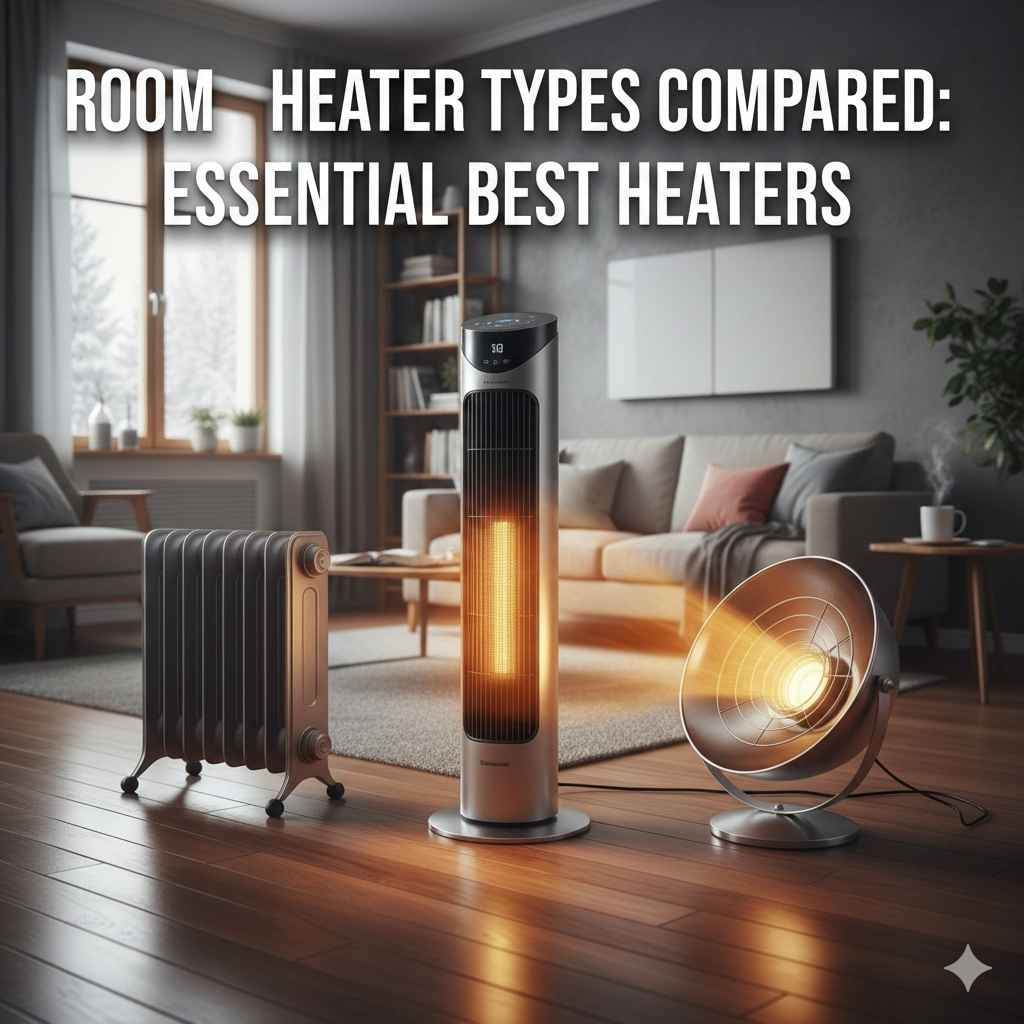
Choosing the right room heater can feel overwhelming with so many options available. To quickly decide, compare room heater types based on safety, speed of heating, and energy use. Oil-filled radiators are slow but offer lasting, gentle heat, while ceramic heaters warm up fast for focused areas. This guide breaks down the best options for your specific needs.
Feeling that chill creep into your favorite room? Many homeowners struggle when it’s time to choose a heater. Should you pick the one that warms up fast, or the one that keeps the room cozy all night? It’s confusing to compare room heater types when they all promise warmth. Don’t worry! I’m Tanim, and I’m here to make this simple.
We will walk through the most common and best heaters available today. We will look at how they work, what they cost to run, and where they shine brightest. By the end of this guide, you will feel confident picking the perfect, safe, and efficient heater for your home. Let’s get your space warm and inviting!
Understanding How Heaters Create Warmth
Before we compare the specific models, it helps to know the two main ways heaters warm a space. Understanding this difference makes choosing much easier.
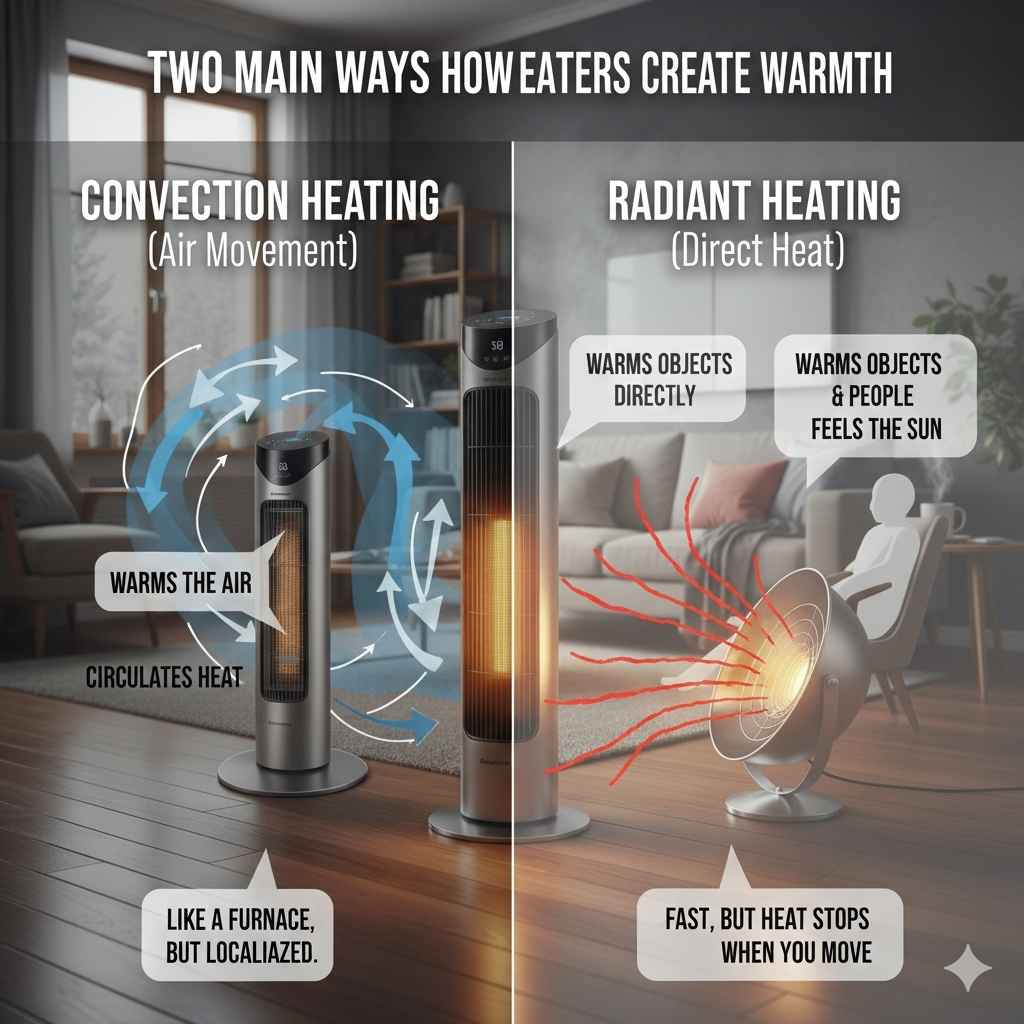
Heaters generally work in one of two ways:
- Convection Heating (Air Movement): These heaters warm the air around them. The warm air then circulates, moving around the room until the whole space reaches a comfortable temperature. Think of it like a furnace, but localized.
- Radiant Heating (Direct Heat): These heaters use infrared rays to warm objects and people directly in front of them, rather than heating the air first. This feels like the sun warming your skin. It’s fast, but the heat stops when you move out of its direct path.
Knowing this helps us understand why some heaters feel instant (radiant) and others take longer to take the chill off (convection).
The Main Types of Portable Room Heaters
For most beginners and renters, portable heaters are the go-to solution. They are plug-and-play, meaning no complicated installation. Here is a comparison of the four most popular types you will encounter when you compare room heater types.
1. Ceramic Heaters (The Quick Warmer)
Ceramic heaters are perhaps the most popular choice for quick, targeted warmth. They use an electric current passing through a ceramic heating element. A fan then blows air over this hot element to distribute heat.
Pros and Cons of Ceramic Heaters
- Pros: Very fast heat output, lightweight and portable, generally safe because the outer casing doesn’t get dangerously hot, and usually very affordable to buy.
- Cons: Best for small to medium spaces, can dry out the air slightly, and the fan noise might bother some people.
Best For: Spot heating an office, warming up a bathroom quickly before a shower, or use in small bedrooms.
2. Oil-Filled Radiator Heaters (The Gentle Giant)
These heaters look like old-fashioned radiators, but they are completely sealed and oil-filled. Electricity heats the oil inside, and the oil stays hot, radiating steady warmth long after the unit turns off. They use convection to warm the room slowly and evenly.
Pros and Cons of Oil-Filled Radiators
- Pros: Provide incredibly silent, even, and long-lasting heat. Since they heat slowly, they are energy efficient for maintaining temperature. Very safe—the surface gets warm but rarely burns.
- Cons: Very slow to heat up a cold room initially. They are heavy and not easily moved around often.
Best For: Maintaining a consistent, gentle warmth in larger living areas or bedrooms where quiet operation is essential.
3. Infrared/Quartz Heaters (The Direct Warmer)
Infrared or quartz heaters use electric elements encased in quartz tubes to generate intense radiant heat. They warm objects directly in their path, much like a campfire warms you immediately.
Pros and Cons of Infrared/Quartz Heaters
- Pros: Instant heat delivery, highly efficient for heating specific zones or people, and often very safe with tip-over protection.
- Cons: Heat doesn’t spread far past the direct beam. If you move, the heat moves with you. Can be slightly dazzling or uncomfortable if you stare directly at the glowing element.
Best For: Garages, workshops, covered patios, or heating the immediate area where you are sitting (e.g., under a desk).
4. Fan Heaters (The Budget Option)
These are the simplest heaters. They use exposed metal heating coils, and a powerful fan blows air directly over those coils. They are often the cheapest to purchase upfront.
Pros and Cons of Fan Heaters
- Pros: Very inexpensive, immediate blast of hot air, and lightweight.
- Cons: Can be noisy, the internal elements can pose a slight fire risk if covered by clothing or dust accumulates, and they can dry the air out quickly. Not recommended for unattended use.
Best For: Temporary, short-term use when you need immediate, localized warmth and budget is the main concern.
Essential Comparison Table: Choosing Your Best Heater
To make comparing room heater types crystal clear, here is a quick-reference table summarizing their key features:
| Heater Type | Heating Method | Speed of Heating | Best For | Safety Note |
|---|---|---|---|---|
| Ceramic | Fan/Convection | Fast | Small rooms, quick bursts | Generally very safe surfaces |
| Oil-Filled Radiator | Convection (Radiant when hot) | Slow to start, steady hold | Maintaining ambient warmth | Very safe, low surface temp |
| Infrared/Quartz | Radiant | Instant | Spot heating, garages | Do not look directly at element |
| Fan Heater | Forced Convection | Very Fast | Temporary, tight budget | Risk if covered or dusty |
Safety First: Non-Negotiable Features for Every Heater
No matter which type you choose, safety should always be your top priority. A warm home should never come at the risk of fire or burns. When you compare room heater types, always look for these three features.
1. Automatic Tip-Over Switch
This is crucial. If the heater is accidentally knocked over (by a pet, child, or just a clumsy moment), the power immediately shuts off. This prevents the heating element from resting directly on carpet, wood floors, or curtains.
2. Overheat Protection
All modern, quality heaters should have internal sensors. If the internal temperature gets too high—perhaps due to dust buildup or poor airflow—the heater automatically powers down before a dangerous situation arises. Always ensure your chosen model has this feature.
3. Cool-Touch Exterior (For Certain Types)
While oil-filled radiators are naturally cooler, ceramic heaters can still get quite hot on the exterior grill. Look for models specifically advertised with “cool-touch” housing, especially if children or pets are around. Radiant heaters will always be hot facing forward, so maintain distance.
For more detailed information on electrical safety standards for home appliances, you can always refer to resources provided by the U.S. Department of Energy.
Energy Efficiency and Running Costs
Many people worry that using a space heater will cause their electric bill to skyrocket. The truth is that most portable electric heaters use roughly the same amount of electricity, as they are typically rated around 1,500 watts.
The difference in cost comes down to how you use the heater, not just the wattage.
How Wattage Relates to Cost
A standard 1,500-watt heater running for one hour consumes 1.5 kilowatt-hours (kWh) of energy. If your local electricity rate is $0.15 per kWh, running that heater for one hour costs:
1.5 kWh x $0.15 = $0.225 per hour.
This means that, fundamentally, most plug-in heaters cost about the same per hour to run.
When Efficiency Differences Matter
So, if the wattage is the same, how do you save money?
- Heating Strategy: Using an oil-filled radiator to maintain a steady 68°F temperature uses less energy than repeatedly turning a ceramic heater on and off to battle cold spots.
- Targeting: Radiant heaters are most efficient if you are only warming one person sitting still (like at a desk). Heating the entire room with radiant heat is wasteful because the air stays cold.
- Thermostat Control: Always choose a heater with an adjustable thermostat. If you can set it to shut off once the desired temperature is reached, you avoid wasting electricity by overheating the space.
Remember, space heaters are meant for supplemental heating, not replacing your central system. They work best when heating just one room you occupy frequently.
Installation: Plug-and-Play Simplicity
One of the best parts about choosing portable heaters is the lack of “installation.” When you compare room heater types, installation complexity is nearly zero, which is fantastic for renters or beginners.
Step-by-Step Setup Guide (Applies to Most Models)
Follow these simple steps to ensure you set up your new heater safely and correctly:
- Unbox and Inspect: Carefully remove all packaging. Check the cord and the unit housing for any damage that might have occurred during shipping.
- Find the Right Spot: Place the heater on a hard, level, non-flammable surface (tile, wood floor). Never place it on thick carpet, which can block the intake vent underneath.
- Follow the 3-Foot Rule: Clear a minimum three-foot radius around the heater in all directions. This means keeping away curtains, bedding, furniture, paper, and pets. This is the single most important safety step!
- Plug Directly into the Wall: This is vital. Never plug a space heater into an extension cord or a power strip. These devices are not designed to handle the high, continuous current draw of a 1,500W heater and can overheat or cause a fire. Plug it directly into a grounded wall outlet.
- Set Controls: Turn the thermostat dial to a mid-setting first. Run the unit for 15 minutes and feel how quickly the room heats. Adjust the settings from there to find your perfect comfort level.
If you have an older home or outdated wiring, you might want to consult a licensed electrician to ensure your outlets can safely handle the load. For general guidance on home electrical use, local building codes and resources like the National Fire Protection Association (NFPA) offer excellent safety literature.
Choosing the Best Heater for Specific Needs
Your perfect heater depends entirely on where you plan to use it. Let’s match the heater type to the common household scenario.
Scenario 1: The Cold Basement or Workshop (Need Powerful, Focused Heat)
Basements and workshops often require more intense, direct heat because they might be poorly insulated or very large. Radiant heaters (Infrared/Quartz) work well here because they heat the person working, not the huge volume of air.
Recommendation: Heavy-duty Infrared Heater with strong tip-over protection.
Scenario 2: The Quiet Bedroom (Need Silent, Consistent Warmth)
Nothing ruins sleep faster than a noisy fan cycling on and off. For overnight use, you need a heater that maintains temperature without distracting noise.
Recommendation: Oil-Filled Radiator Heater. They provide quiet, enveloping warmth that lasts.
Scenario 3: The Home Office or Small Apartment (Need Portability and Speed)
If you need to move the heat source from the living room in the morning to the home office in the afternoon, portability and quick startup are key.
Recommendation: A good quality Ceramic Heater. They heat up instantly and are light enough to carry between rooms easily.
Scenario 4: Safety Around Young Children or Pets
When safety around curious hands and paws is the absolute top concern, you need technology that minimizes surface heat.
Recommendation: High-quality Oil-Filled Radiator or Ceramic heaters with excellent cool-touch casing and multiple safety certifications.
A Deeper Dive: Infrared vs. Convection Efficiency
When you compare room heater types, the efficiency discussion often centers on whether radiant or convection heat is better. It’s not about which one uses less energy overall, but which one delivers the feeling of warmth most effectively for the task.
The Radiant Advantage (Infrared)
Imagine standing outside on a sunny winter day. You feel warm even if the air is cold. That is radiant heat. It warms surfaces first. If you are sitting still, a radiant heater is incredibly efficient because 100% of the heat produced goes toward you or the objects around you.
Best use case: When you are the target. It’s the best choice for warming up quickly in a large, drafty space where fully heating the air would take too long and cost too much.
The Convection Advantage (Oil/Ceramic)
Convection heaters must work to change the temperature of the entire air mass in the room. While this takes longer, once the room reaches the desired temperature, the heater cycles on and off much less frequently (especially the oil-filled type), leading to more stable energy use.
Best use case: When you need the whole room—walls, furniture, and all—to feel consistently cozy for an extended period.
Maintenance Tips for Longevity and Safety
To ensure your chosen heater remains one of the “essential best heaters” for years to come, simple maintenance is required. This boosts efficiency and significantly reduces fire hazards.
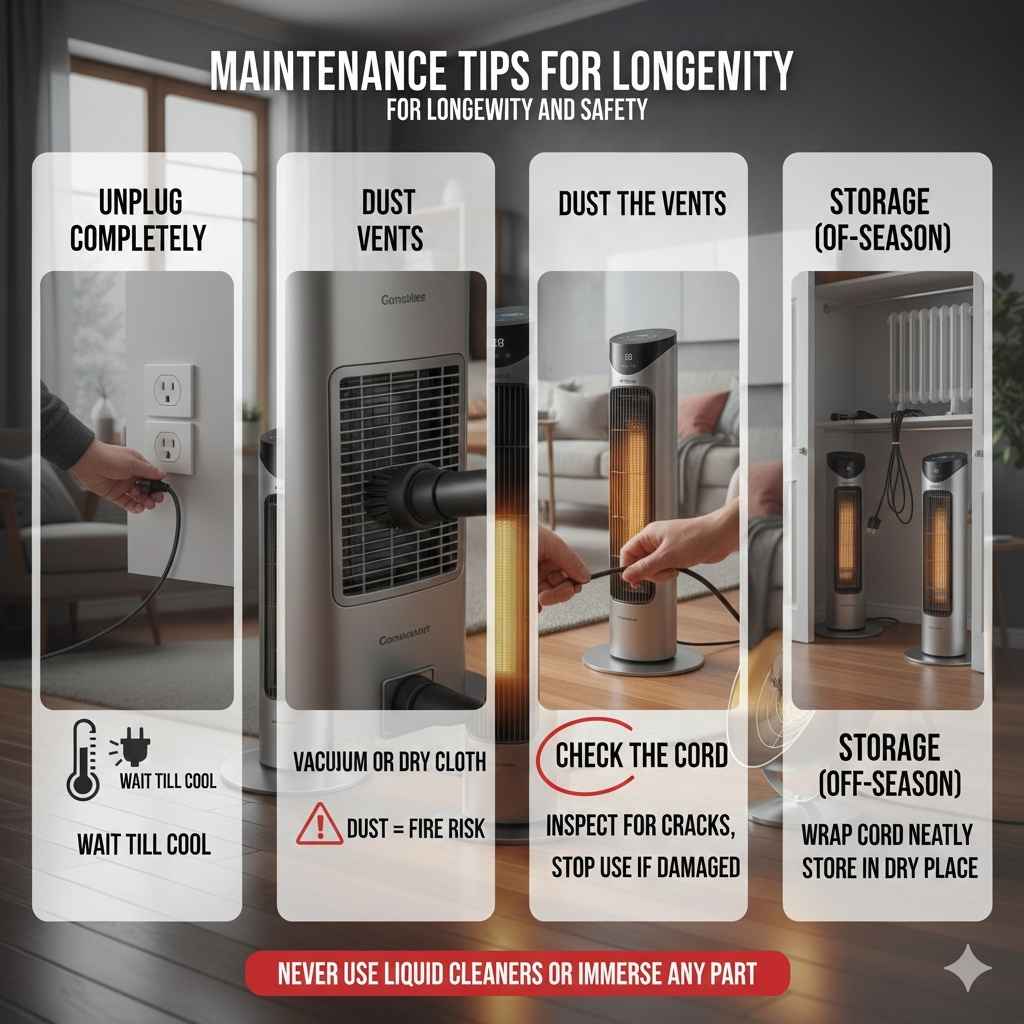
Here are the simple cleaning steps Tanim recommends:
- Unplug Completely: Always unplug the unit from the wall before cleaning. Wait until it is completely cool.
- Dust the Vents: Dust is an insulator and a fire risk. Use a vacuum cleaner with a soft brush attachment or a dry cloth to gently clear dust from the intake grills and exhaust vents. This is especially important for fan and ceramic heaters.
- Check the Cord: Inspect the power cord regularly for cracks, fraying, or kinks. If the cord is damaged, stop using the heater immediately and have it repaired or replaced.
- Storage (Off-Season): If storing the heater for summer, clean it thoroughly, wrap the cord neatly (do not wrap it too tightly), and store it in a dry place where it won’t get knocked around.
Never use liquid cleaners or immerse any part of the heater in water. A light dusting once a month during the heating season is usually enough.
Frequently Asked Questions (FAQ) About Room Heaters
Q1: Are electric space heaters expensive to run?
A: Not necessarily. Most portable electric heaters use about 1,500 watts. If your electricity costs $0.15 per kWh, running one costs about 22 cents per hour. They are only expensive if you run them constantly in a large area or use an inefficient, non-thermostatically controlled model.
Q2: Which heater type heats a room the fastest?
A: Infrared or Quartz radiant heaters heat the fastest because they warm objects directly. Ceramic heaters are second, as their fan blows warm air out immediately. Oil-filled radiators are the slowest to start heating the space.
Q3: Can I use a space heater in my bathroom?
A: Only if the heater is specifically rated for damp or wet locations (often marked with an IP rating like IPX4 or higher). Standard electric heaters should never be used where they might splash water, as this creates a serious electrical hazard.
Q4: Is it safe to leave a heater on all night?
A: It is generally safe to use oil-filled radiators or modern ceramic heaters with proven safety features (tip-over and overheat protection) overnight. Always ensure the heater is far away from bedding and placed on a non-flammable surface. Never leave older fan heaters or any damaged unit running unattended.
Q5: What is the difference between radiant and convection heat?
A: Convection heats the air, which then circulates to warm the room (slow, even heat). Radiant heat warms you directly by shining infrared rays onto surfaces and people, similar to the sun (fast, targeted heat).
Q6: Should I buy a heater with a timer?
A: A timer is a fantastic feature, especially for an oil radiator or a bedroom heater. It lets you program it to turn on 30 minutes before you wake up or turn off an hour after you go to sleep, saving energy without sacrificing comfort.
Conclusion: Your Path to a Warmer Home
We’ve covered a lot of ground comparing room heater types, from the speedy ceramic unit to the silent, long-lasting oil radiator. I hope you feel much more equipped now to make a confident choice. Remember, there isn’t one single “best” heater—there is only the best heater for your specific room and your specific need.
If you prioritize immediate, direct warmth, look at infrared. If you need quiet, gentle background heat that lingers, the oil-filled radiator is your friend. If you need a quick, portable boost, lean toward ceramic.
Whatever you select, always commit to safe setup—especially the three-foot clearance rule and plugging directly into the wall. By focusing on your needs for speed, silence, and safety, you are guaranteed to find an essential heater that keeps your home cozy and comfortable all season long. Enjoy the warmth!