Convector vs Baseboard Heaters: Essential Guide
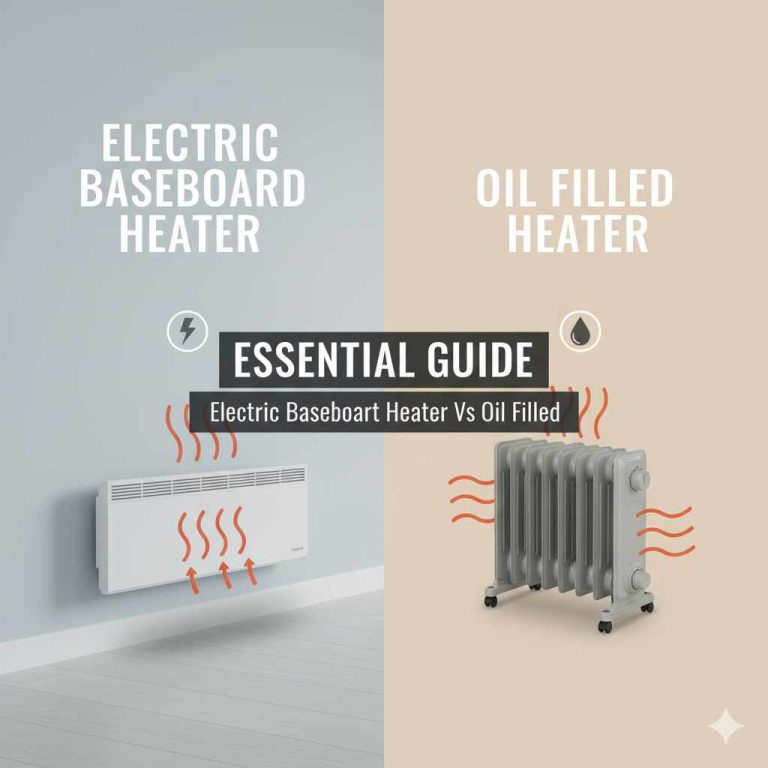
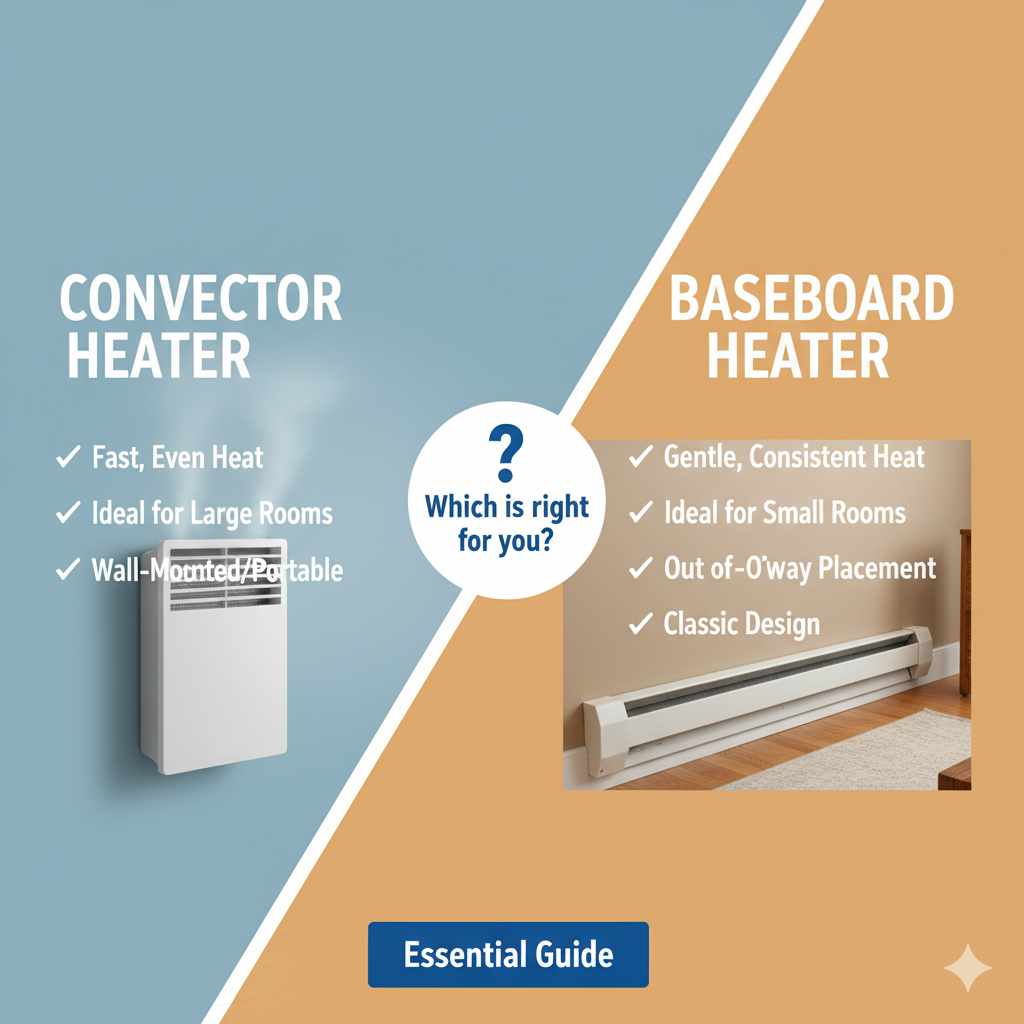
Convector and baseboard heaters are common choices for home heating. Baseboard heaters offer consistent warmth along walls, while convectors use fans for quicker room heating. This guide helps you pick the best for your comfort and budget.
Choosing the right home heater can feel tricky. You want warmth, but also efficiency and safety without complicated instructions. It’s a common puzzle many homeowners face! Don’t worry, I’m Tanim, and I’m here to make understanding your heating options simple and stress-free. We’ll break down convector and baseboard heaters in a way that’s easy to grasp, helping you create a cozy home with confidence.
Ready to learn what makes each tick and which one fits your space best? Let’s dive in!
Convector vs Baseboard Heaters: Making the Right Choice for Your Home
When it comes to keeping your home warm and welcoming, especially during colder months, two popular options often come up: convector heaters and baseboard heaters. Both are designed to heat rooms, but they do it in different ways, offering distinct benefits and drawbacks. Understanding these differences is key to choosing the system that best suits your comfort, your home’s layout, and your energy bills.
As your friendly guide to home heating, I’ll walk you through everything you need to know about convector vs baseboard heaters. We’ll explore how they work, their advantages, their disadvantages, and where each one shines. By the end of this guide, you’ll feel confident in making an informed decision that leads to a warmer, cozier, and more efficient home.
How Do Convector Heaters Work?
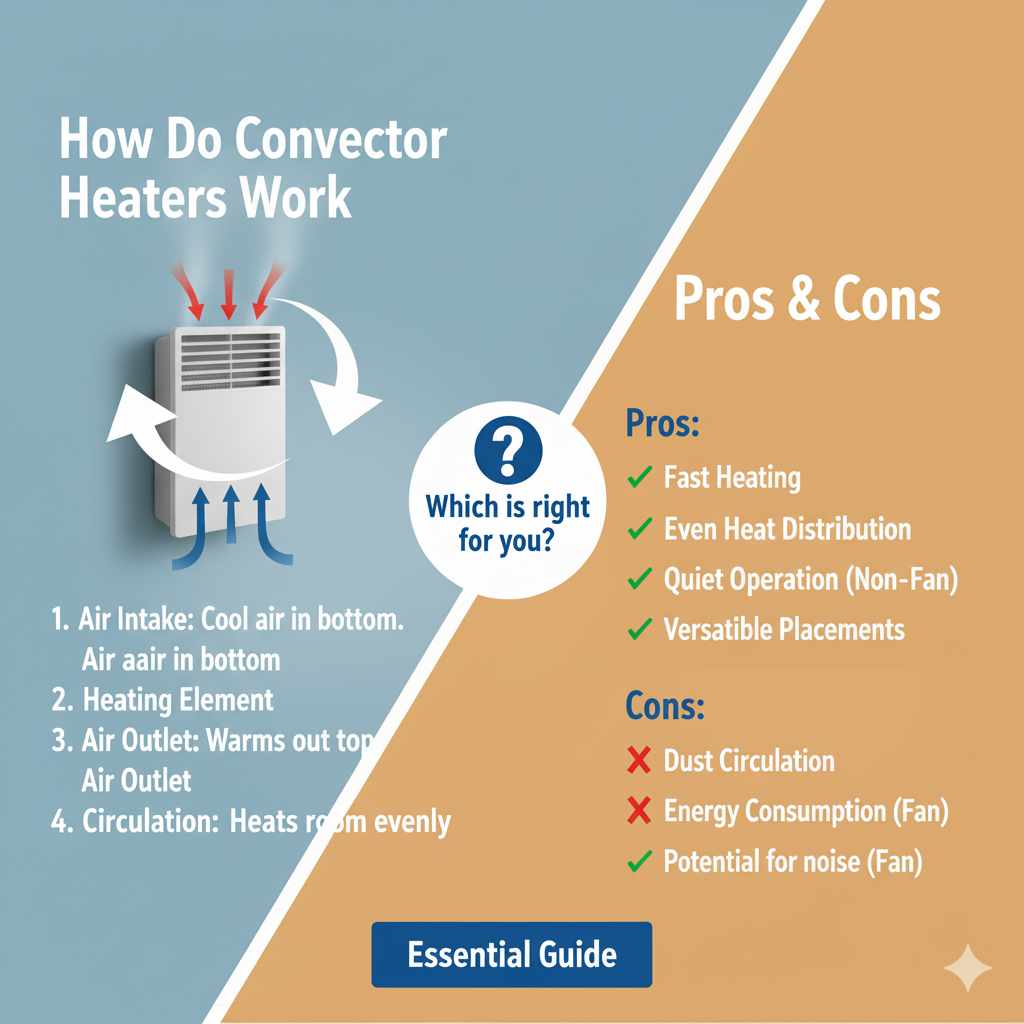
Convector heaters are all about air movement. They work by drawing cooler room air into the unit, heating it up, and then releasing the warm air back into the room. This creates a natural circulation of warm air throughout the space.
Here’s a simple breakdown of the process:
Air Intake: Cooler air from the room is pulled into the bottom of the convector unit.
Heating Element: Inside, a heating element (like a coil or finned tube) warms the air that passes over it.
Air Outlet: The warmed air, now lighter, rises and is expelled from the top of the convector.
Circulation: As the warm air rises and moves, it pushes cooler air downwards, drawing it back into the convector to be heated. This continuous cycle helps to evenly distribute warmth.
Many electric convector heaters use a fan to speed up this process, actively pushing the heated air out into the room. This means they can heat a space relatively quickly. Hydronic (hot water) convector units, often found in older central heating systems, rely more on natural convection, which is a bit slower.
Pros of Convector Heaters:
Fast Heating: Especially models with fans, convectors can warm up a room rapidly.
Even Heat Distribution: The circulating air can help maintain a more consistent temperature throughout the room.
Quiet Operation (typically): Non-fan models are very quiet. Fan-assisted models might have a gentle hum, but are generally not disruptive.
Versatile Placement: They can be placed on walls or floors, and their compact design makes them suitable for various room sizes.
Adjustable Thermostats: Most units come with built-in thermostats for easy temperature control.
Cons of Convector Heaters:
Can Dry Out Air: The rapid heating and air circulation can sometimes lead to drier indoor air.
Dust Circulation: Any dust or allergens in the room can be circulated by the air movement, which might be a concern for those with allergies.
Energy Consumption (fan models): If the fan runs frequently, it can consume extra electricity.
Potential for Noise: Fan-assisted models can produce some operational noise.
How Do Baseboard Heaters Work?
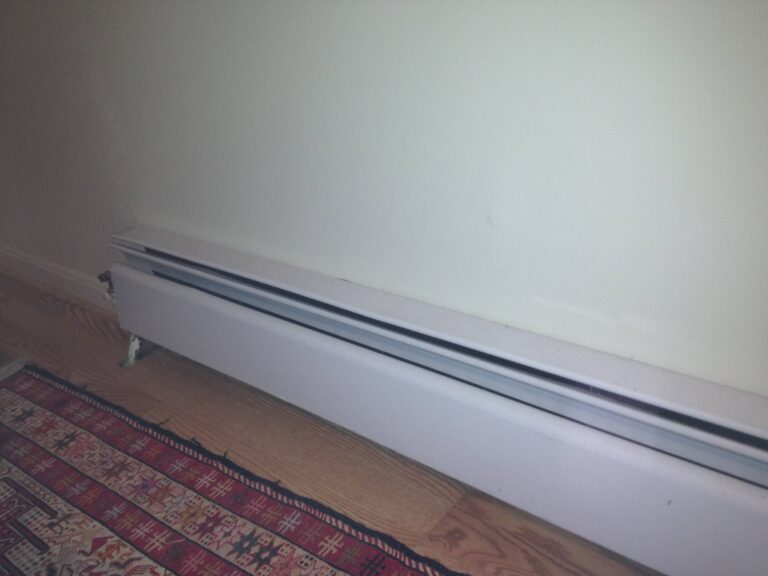
Baseboard heaters are designed to fit neatly along the bottom of your walls, typically underneath windows. They operate on a principle called natural convection, similar to some convector units, but without the fan.
Here’s how they typically function:
Air Intake: Cooler room air naturally descends and is drawn into the bottom of the baseboard unit.
Heating Element: Inside the long housing, there’s a heating element (often a finned metal rod that gets hot, or a resistance wire). As air passes over this element, it heats up.
Air Outlet: The warmed air, being lighter, naturally rises up and out of the top of the baseboard unit.
Natural Convection Cycle: This rising warm air then circulates throughout the room. As it cools, it descends, creating a continuous, gentle flow of heat. The placement under windows is strategic because it helps counteract the cold air that drifts down from the glass.
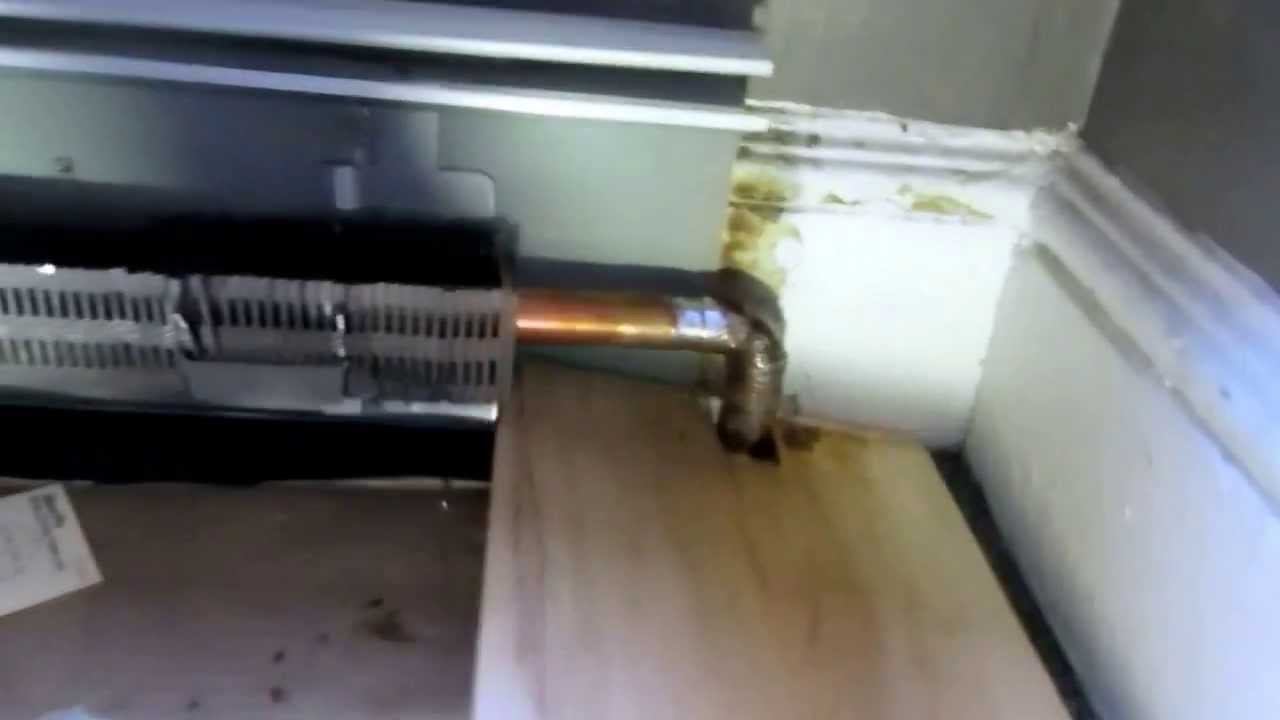
Baseboard heaters are usually connected to a central heating system (like hydronic systems using hot water or steam) or can be electric units installed room by room.
Pros of Baseboard Heaters:
Consistent, Gentle Heat: They provide a steady and even heat that feels comfortable and less intense.
Quiet Operation: Since they rely on natural convection, they are virtually silent. This is a big plus for bedrooms and quiet living areas.
Space-Saving Design: Their slim, low profile allows them to be installed along walls without taking up valuable floor space.
No Dust Circulation: The lack of fans means they don’t actively blow air around, so they tend to circulate less dust.
Thermostat Control: Each unit or zone can have its own thermostat for individual room temperature management.
Cons of Baseboard Heaters:
Slower Heating: They heat rooms more gradually compared to fan-assisted convectors.
Placement Limitations: They are best placed along exterior walls and under windows, which can limit furniture placement options.
Can Be a Fire Hazard if Blocked: It’s crucial to keep the area around baseboard heaters clear of furniture, curtains, and other combustible materials to prevent fires.
Installation Can Be Complex: Especially for hydronic systems, installation involves plumbing and venting. Electric baseboard heaters are easier but still require electrical work.
Surface Can Get Hot: The surface of electric baseboard heaters can become quite hot to the touch, posing a potential burn risk, especially to children and pets.
Convector vs Baseboard Heaters: Key Differences at a Glance
To help you quickly see the distinctions between convector and baseboard heaters, here’s a comparison table focusing on their core features.
| Feature | Convector Heaters | Baseboard Heaters |
|---|---|---|
| Heating Method | Forced convection (often with fan) or natural convection | Natural convection |
| Heating Speed | Fast (especially with fan) | Slower, more gradual |
| Air Circulation | Active, can circulate dust | Passive, minimal dust circulation |
| Noise Level | Quiet to gentle hum (fan models) | Virtually silent |
| Installation Location | Versatile; walls, floors, various room areas | Along walls, typically under windows |
| Energy Efficiency | Can be efficient; fan uses some energy | Can be efficient; no fan energy usage |
| Heat Distribution | Can heat a room more quickly and evenly via circulation | Gentle, steady heat along the wall |
| Safety Considerations | Generally safe, avoid blocking vents | Surface can get hot; keep clear of obstructions |
| Best For | Quickly warming up rooms, supplementing existing heat, areas needing fast warmth | Consistent, quiet base heat, maintaining temperature, bedrooms, living rooms |
Choosing the Right Heater for Your Needs
When considering convector vs baseboard heaters, think about what matters most for each room or your entire home.
When to Choose Convector Heaters:
You need to warm a room up quickly. For spaces you use intermittently, like a home office or a guest room, a convector’s ability to bring up the temperature fast is a big plus.
You want to improve air circulation. If your home feels a bit stuffy, the fan in a convector can help move the air around.
You have flexible space. Convectors can be placed in various locations, offering more freedom in how you arrange your furniture.
You appreciate easy, portable solutions. Many small, electric convector heaters are portable and can be moved from room to room as needed.
When to Choose Baseboard Heaters:
You prioritize silence and gentle warmth. For bedrooms or living areas where peace and quiet are important, the silent operation of baseboard heaters is ideal.
You want consistent background heat. They are excellent for maintaining a steady, comfortable temperature throughout the day.
You have limited wall space for furniture. Their low profile means furniture can often still be placed in front of them (though not directly blocking them), maximizing your room’s usability.
You’re looking to supplement an existing system. In rooms that are always a bit cooler, baseboard heaters can provide that extra boost of comfort without disrupting the main heating system.
You want to control individual room temperatures precisely. Properly installed with individual thermostats, baseboard heaters offer excellent zone heating, allowing you to adjust each room’s temp independently. This can save energy by not overheating unused rooms.
Installation Considerations
The way these heaters are installed can also be a deciding factor:
Convector Heaters:
Electric Convectors: Many are plug-and-play, requiring only a suitable electrical outlet. Installation is as simple as positioning the unit and plugging it in. For wall-mounted units, some basic DIY skills or a handyman might be needed for secure mounting and hardwiring.
Hydronic Convectors: These are part of a larger boiler system and require professional installation, including plumbing connections and integration with the main heating circuit by a qualified HVAC professional.
Baseboard Heaters:
Electric Baseboard Heaters: These are typically hardwired into your home’s electrical system by an electrician. Installation involves running wires from your electrical panel to the location of the heater and connecting them within the unit. They are usually controlled by a wall-mounted thermostat.
Hydronic Baseboard Heaters: These are integrated into a home’s central hot water heating system. Installation is a complex plumbing job, usually performed by an HVAC technician or plumber, involving connecting them to the boiler’s water pipes and a venting system.
For any electrical installation, it’s always recommended to consult with a qualified electrician to ensure safety and compliance with local building codes. For hydronic systems, a certified HVAC professional is essential. For more information on electrical safety in the home, the National Fire Protection Association (NFPA) offers valuable resources.
Energy Efficiency: A Closer Look
When it comes to energy efficiency, both convector and baseboard heaters can be efficient, but their performance depends heavily on how they are used and the type of system they are part of.
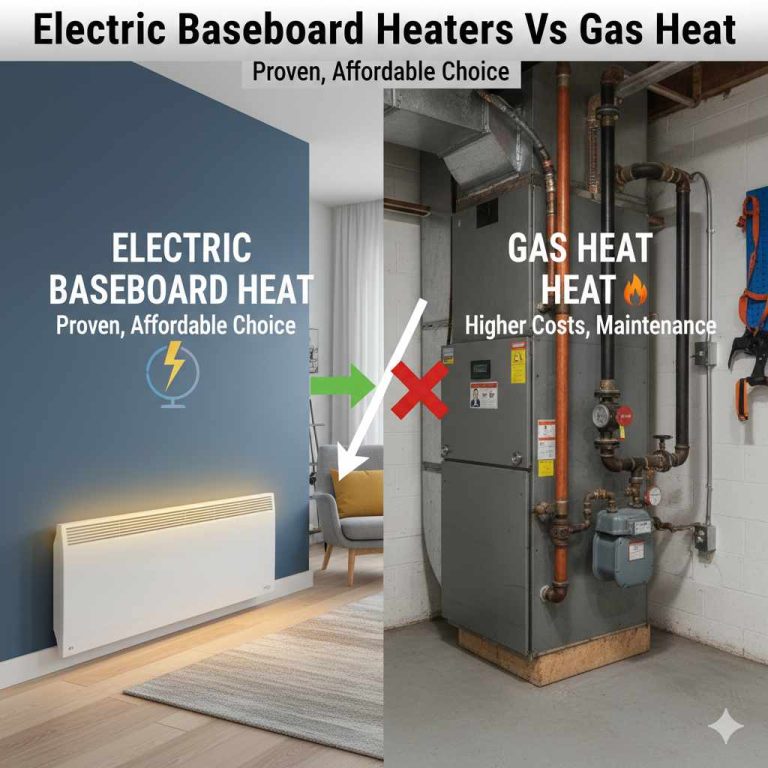
Electric Baseboard Heaters: These are generally considered very efficient in terms of energy conversion (nearly 100% of electricity used becomes heat), but electricity itself can be an expensive energy source per BTU (British Thermal Unit) compared to natural gas. Their efficiency in practice comes from precise zone control; if you can keep unused rooms cooler and only heat occupied spaces, you save energy. The lack of a fan means no energy is used for air movement.
Electric Convector Heaters: Similar to electric baseboard heaters, they convert electricity to heat almost perfectly. However, if they use a fan, that fan consumes additional electricity. The benefit of faster heating can sometimes lead to less overall run time, potentially offsetting the fan’s energy use. If the goal is to heat a room quickly and then turn off, a powerful convector might be more efficient than a slow-heating baseboard that needs to run longer.
Hydronic (Water-Heated) Convectors and Baseboard Heaters: The efficiency of these systems depends on the boiler. Modern boilers are very efficient, but older ones can lose a significant amount of heat. The advantage here is that fuel sources like natural gas are often cheaper per BTU than electricity. The heat is distributed through the water, which is retained well, providing a steady heat.
Tip for Energy Savings: No matter which type you choose, proper insulation and sealing air leaks in your home are the most significant steps you can take to improve overall heating efficiency. Websites like Energy Star provide excellent resources on home energy efficiency improvements.
Maintaining Your Heaters for Peak Performance
Both convector and baseboard heaters require some basic maintenance to ensure they run safely and efficiently for years to come.
Maintaining Convector Heaters:
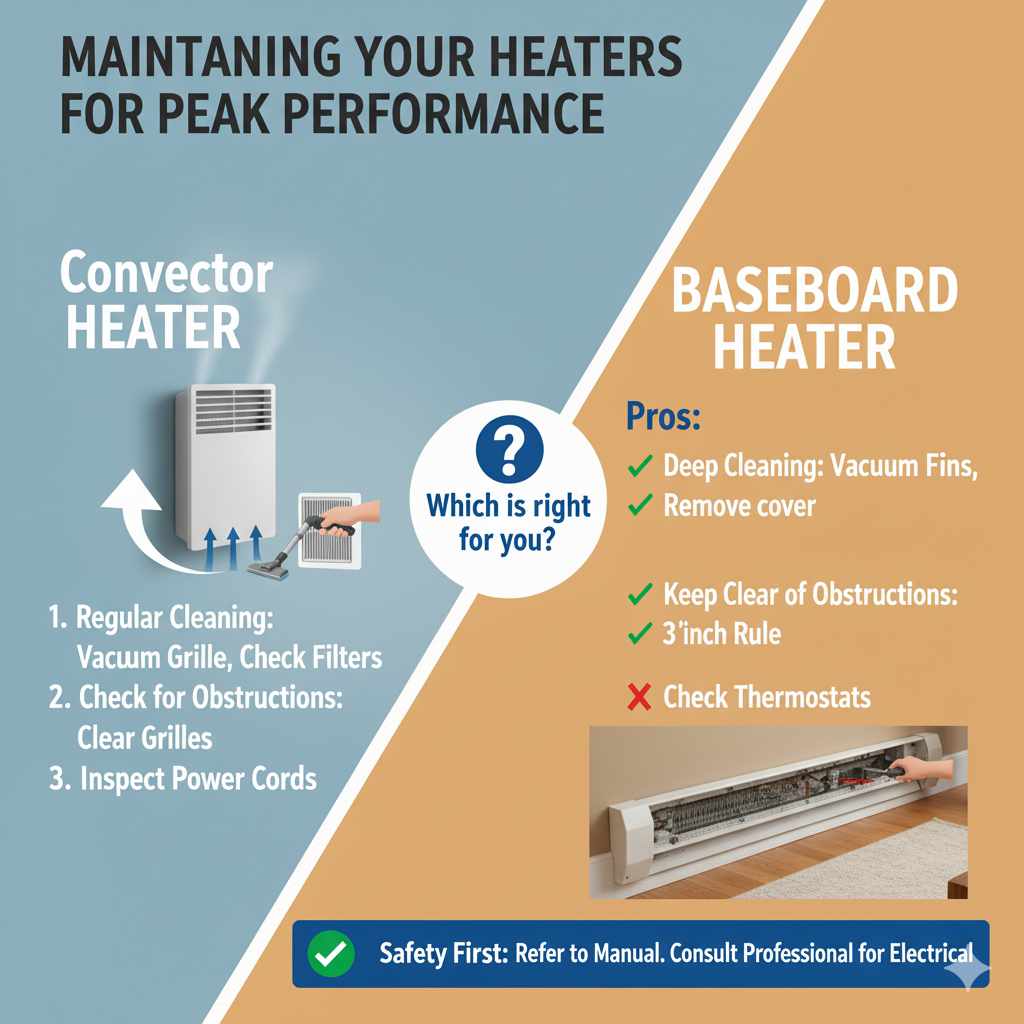
1. Regular Cleaning: Dust buildup can impede airflow and reduce efficiency.
Frequency: Every few months, and at least once per heating season.
How-to: With the unit unplugged or turned off at the breaker, use a vacuum cleaner with a brush attachment to gently clean the grille and any visible interior parts. Some units may have removable filters that can be cleaned or replaced.
2. Check for Obstructions: Ensure the air intake and outlet grilles are clear.
3. Inspect Power Cords (Electric Units): Look for any fraying or damage.
Maintaining Baseboard Heaters:
1. Deep Cleaning: Dust and lint can accumulate inside the fins and heating elements.
Frequency: At least once a year, ideally before the heating season begins.
How-to: For most electric units, you’ll need to turn off the power at the breaker. Many models have a removable cover that allows access to the heating elements. Use a vacuum cleaner with a crevice tool, compressed air, or a stiff brush to clean out debris. Be gentle to avoid damaging the fins or elements. Always ensure the power is completely off before attempting this.
2. Keep Clear of Obstructions: This is critical for safety. Ensure nothing is placed within 3 inches of the front of the heater and nothing is placed on top of it. Furniture, curtains, rugs, and toys should be kept at a safe distance.
3. Check Thermostats: Ensure room thermostats are functioning correctly and accurately reflecting the room temperature.
Safety First: Always refer to your heater’s owner’s manual for specific maintenance instructions. If you are unsure about any part of the maintenance process, especially involving electrical components, consult a qualified professional.
Frequently Asked Questions (FAQs)
Here are some common questions homeowners have about convector heaters and baseboard heaters:
Q1: Which type of heater is safer?
Both types can be safe when used properly. Electric baseboard heaters can get very hot to the touch, so caution is needed around children and pets. Convector heaters, especially fan-powered ones, may have circulating air that could dry out skin if too close for too long. The most significant safety concern for baseboards is blocking them, which can cause a fire. Always follow manufacturer guidelines for safe operation and placement.
Q2: Can I paint baseboard heaters?
Yes, you can paint electric baseboard heaters, but it’s important to use the right type of paint. Use a high-heat, appliance-type spray paint designed for metal. Lighter colors are best, as dark colors can absorb more heat and potentially become too hot. Ensure the heater is turned off and completely cool before painting, and follow paint instructions for application and curing time. Avoid painting the fins too thickly, as it can reduce heat output.
Q3: Are convector heaters good for large rooms?
Convector heaters, especially powerful ones or those with fans, can be effective for medium-sized rooms. For very large rooms or open-plan areas, you might need multiple convector units or a more robust heating system like a central furnace or high-efficiency ductless mini-split system.
Q4: Will baseboard heaters heat up my room quickly?
No, baseboard heaters are designed for gradual, consistent heating. They rely on natural air movement, which takes time. If you need quick warmth in a room, a convector heater with a fan would likely be a better choice.
Q5: Do convector heaters use a lot of electricity?
Electric convector heaters use electricity to generate heat. Their energy consumption depends on their wattage, how often they run, and the size of the space they are heating. Models with fans will use a small amount of additional electricity for the fan. To manage electricity use, consider using a thermostat to regulate their operation and heat only when necessary.
Q6: Can I place furniture in front of baseboard heaters?
You should avoid placing furniture or any other items directly in front of or on top of baseboard heaters. A clearance of at least 3 inches is generally recommended for the front and top to allow for proper airflow and prevent overheating or fire hazards. Curtains should also be kept well clear of the unit.
Q7: Are there any newer technologies in convector or baseboard heating?
While the core technologies remain similar, advancements include more efficient heating elements, better thermostat controls (including smart thermostats that can be programmed via apps), and quieter fan motors in convector units.