
Dimplex vs Cadet Baseboard Heaters: Our guide helps you choose the best option for reliable, comfortable, and efficient home heating, ensuring you pick the right model for your needs and budget.
Feeling a chill in your home and wondering about the best way to stay warm? If you’re looking at electric baseboard heaters, you’ve probably seen names like Dimplex and Cadet. They both offer effective ways to heat your space, but choosing between them can feel a bit overwhelming. Don’t worry! As your friendly home heating guide, I’m here to make it simple. We’ll break down what makes each brand unique, helping you find the perfect heater to keep your home cozy and comfortable all year long.
This guide will walk you through everything you need to know, from understanding their features to making an informed decision. Get ready to say goodbye to cold drafts and hello to consistent warmth!
Dimplex vs Cadet Baseboard Heaters: An Essential Guide for Homeowners
When it comes to electric baseboard heating, Dimplex and Cadet are two of the most recognized names in the industry. Both brands aim to provide efficient, reliable, and safe heating solutions for homes and various spaces. But what sets them apart? Understanding their core differences will help you make the best choice for your specific heating needs, budget, and comfort preferences.
This guide is designed to be your go-to resource. We’ll explore each brand’s strengths, common features, and important considerations, making the decision process clear and straightforward. Let’s dive in and uncover which heater is the right fit for your home.
Understanding Electric Baseboard Heaters
Electric baseboard heaters are a popular choice for supplementary or primary heating in many homes, especially in areas where natural gas isn’t readily available or for rooms that need independent temperature control. They work by drawing in cool air, heating it with an electric element, and then releasing the warm air into the room, creating a convection current that heats the space.
They are known for their:
- Zoned Heating: Each heater can be controlled independently, allowing you to heat only the rooms you’re using.
- Ease of Installation: Generally, they are easier and less intrusive to install compared to central heating systems.
- Consistent Heat: They provide steady, even heat distribution.
- Safety: Modern units come with safety features like overheat protection.

Dimplex Baseboard Heaters: A Closer Look
Dimplex is a well-established brand known for its wide range of heating products, including a robust line of electric baseboard heaters. They often emphasize energy efficiency, user-friendly design, and advanced features. Many Dimplex models are designed for easy installation and offer a variety of styles and wattages to suit different room sizes and heating demands.
Key features often found in Dimplex heaters include:
- Durable Construction: Built to last with sturdy materials.
- Quiet Operation: Designed to heat your space without much noise.
- Multiple Styles: Available in various lengths and designs, including some with rounded fronts for added safety.
- Energy Efficiency Options: Some models integrate with smart thermostats or have built-in energy-saving features.
- Safety Standards: Comply with safety certifications, often featuring dual-pole thermal protectors.
Pros of Dimplex Baseboard Heaters
- Reputation for Quality: Dimplex has a long-standing reputation for producing reliable heating products.
- Variety of Models: A broad selection ensures you can find a heater that precisely fits your space and aesthetic.
- Advanced Features: Often include options like built-in thermostats or compatibility with external smart controls for better energy management.
- Focus on Safety: Generally adhere to high safety standards, offering peace of mind.
Cons of Dimplex Baseboard Heaters
- Price Point: Some premium Dimplex models can be more expensive upfront compared to basic Cadet models.
- Availability: While widely available, specific high-end models might be harder to find in all local hardware stores.
Cadet Baseboard Heaters: A Closer Look
Cadet is another leading manufacturer of electric heating solutions, recognized for its straightforward design, durability, and value. Cadet heaters are often lauded for their robust construction and simple, effective performance. They are a popular choice for homeowners and contractors alike who seek reliable heating without unnecessary complexities.
Common characteristics of Cadet baseboard heaters include:
- Heavy-Duty Construction: Built with durable materials for longevity.
- Simple Installation: Designed for straightforward wiring and mounting.
- Cost-Effectiveness: Often provide a more budget-friendly option, especially for larger installations.
- Reliable Performance: Known for consistent heating and straightforward operation.
- Safety Features: Incorporate safety mechanisms like thermal cut-offs.
Pros of Cadet Baseboard Heaters
- Durability: Built to withstand regular use and often feature robust casings.
- Affordability: Generally offer a competitive price point, making them accessible for many budgets.
- Simplicity: Easy to understand, install, and operate, making them ideal for DIYers or those who prefer less complexity.
- Wide Availability: Commonly found in major home improvement stores and online retailers.
Cons of Cadet Baseboard Heaters
- Fewer High-End Features: While effective, they might lack some of the advanced smart controls or premium design elements found in higher-end Dimplex models.
- Noise: Some users report slightly more audible expansion/contraction noises compared to certain Dimplex models.
Key Features to Compare: Dimplex vs. Cadet
When you’re comparing Dimplex and Cadet baseboard heaters, several factors will significantly influence your decision. It’s not just about the brand name; it’s about how each heater performs and fits into your home’s ecosystem. Let’s break down the most important aspects:
1. Construction and Durability
Both brands are known for building heaters that last. Cadet often emphasizes a heavy-duty, almost industrial-grade construction for its durability. Dimplex also offers robust models, sometimes with a slightly more refined finish or material choice, especially in their premium lines. Ultimately, both are reliable choices, but if extreme toughness is your top priority, Cadet might have a slight edge in its core offerings.
2. Heating Performance and Efficiency
When it comes to delivering heat, both brands perform well. The efficiency of an electric baseboard heater is largely determined by its wattage and how well it’s sized for the room, as electricity conversion to heat is nearly 100% efficient. However, differences can emerge in heat distribution and consistency. Some Dimplex models are designed for exceptionally even heat flow. For energy management, look for models compatible with external thermostats, including smart thermostats. A reputable smart thermostat can significantly improve energy savings, regardless of the heater brand. According to the U.S. Department of Energy, using programmable thermostats can save a significant amount on heating bills.
3. Thermostat Options
This is a crucial differentiator. Many standard Cadet models might require an external thermostat, which is often sold separately. This allows for flexibility in choosing your thermostat type, from basic manual dials to advanced smart controls. Dimplex, on the other hand, offers many models with integrated thermostats, and these can range from simple built-in dials to more sophisticated electronic or even Wi-Fi enabled controls in their premium lines. If you prefer an all-in-one solution or want advanced smart home integration right out of the box, Dimplex might be more appealing.
External Thermostats: If your chosen heater (either brand) doesn’t have a built-in thermostat, you’ll need one. For basic control, a manual wall thermostat is sufficient. For better comfort and energy savings, consider a programmable thermostat or a smart thermostat. According to the ENERGY STAR program, smart thermostats can help reduce heating costs by learning your habits and adjusting automatically.
4. Safety Features
Safety is paramount with any heating appliance. Both Dimplex and Cadet heaters are designed with safety in mind and must meet rigorous standards. Common safety features include:
- Overheat Protection: A thermal cutout that automatically shuts off the heater if it gets too hot.
- High-Limit Thermostats: A secondary safety feature that ensures the unit never exceeds a safe operating temperature.
- Durable Casings: Designed to prevent direct contact with hot elements.
Dimplex often highlights its advanced safety features, such as rounded fronts on some models to reduce the risk of injury if bumped. Cadet heaters also incorporate essential safety mechanisms to ensure safe operation.
5. Installation and Maintenance
Both brands are generally designed for relatively straightforward installation, making them suitable for DIY projects. They typically connect to your home’s electrical system via dedicated circuits. Basic installation involves mounting the unit to the wall and connecting the wires according to the manufacturer’s instructions and local electrical codes. Periodic maintenance usually involves dusting the unit to ensure unobstructed airflow. For detailed instructions and safety guidelines, always refer to the National Association of Home Inspectors for general understanding, though professional installation is always recommended for safety and compliance.
6. Aesthetics and Design
While function is key, how a heater looks in your room can also matter. Cadet heaters typically have a practical, no-frills design that blends well with most home décor. Dimplex offers a similar practical aesthetic but also has some models with more contemporary designs or rounded fronts for improved safety and a softer appearance. The color, typically white or beige, is standard for most models, allowing them to fit unobtrusively along baseboards.
7. Cost and Value
When comparing the initial purchase price, Cadet baseboard heaters are often positioned as a more budget-friendly option. This can be a significant advantage if you need to heat multiple rooms or an entire home and are working with a tighter budget. Dimplex heaters, especially those with integrated advanced features or premium designs, might have a higher upfront cost. However, consider the long-term value: a more efficient model or one with better control could lead to savings on energy bills over time.
Dimplex vs. Cadet: A Comparison Table
To help you visualize the differences, here’s a concise comparison of Dimplex and Cadet baseboard heaters:
| Feature | Dimplex Baseboard Heaters | Cadet Baseboard Heaters |
|---|---|---|
| Price Range | Mid to High (depending on model and features) | Mid (often more budget-friendly for standard models) |
| Construction | Durable, some with refined finishes or rounded fronts | Heavy-duty, robust, and built for longevity |
| Thermostat Options | Integrated (basic to smart) and compatibility with external | Primarily requires external thermostats (manual, programmable, smart) |
| Design & Aesthetics | Practical, some with softer, more contemporary designs | Practical, straightforward, classic appearance |
| Key Strengths | Variety, advanced features, smart integration options, strong brand reputation | Durability, simplicity, affordability, widespread availability |
| Potential Considerations | Higher cost for some models | May require separate thermostat purchase, fewer integrated advanced features on base models |
| Installation | Generally straightforward | Generally straightforward |
| Warranty | Varies by model, typically 1-5 years | Varies by model, often 1-5 years for elements, shorter for other parts |
Choosing the Right Baseboard Heater for Your Needs
So, how do you make the final decision between Dimplex and Cadet? It boils down to prioritizing what matters most for your home and your comfort. Here are some questions to ask yourself:
- What is your budget? If cost is a primary concern, Cadet’s straightforward models might be the most economical choice, especially if you plan to install multiple units.
- Do you want an all-in-one solution? If you prefer a heater with a built-in thermostat and don’t want to manage external components, Dimplex’s integrated models might be more convenient.
- Are you interested in smart home integration? For advanced energy management and remote control, look for Dimplex models that are compatible with smart thermostats or have Wi-Fi capabilities. You can also achieve this with Cadet by pairing them with a smart thermostat.
- How large is the space you need to heat? Both brands offer a range of wattages. Ensure you select a heater powerful enough for the square footage of the room. A general rule of thumb is 10 watts per square foot, but this can vary based on insulation, ceiling height, and climate. You can learn more about calculating heating needs on resources like Energy.gov’s efficient home heating section.
- What is your DIY comfort level? Both are manageable for DIYers, but if you have limited electrical experience, opting for a simpler model or consulting an electrician is always a wise step.
- Are there specific safety concerns? If you have young children or pets, consider models with rounded fronts or ensure adequate clearance.
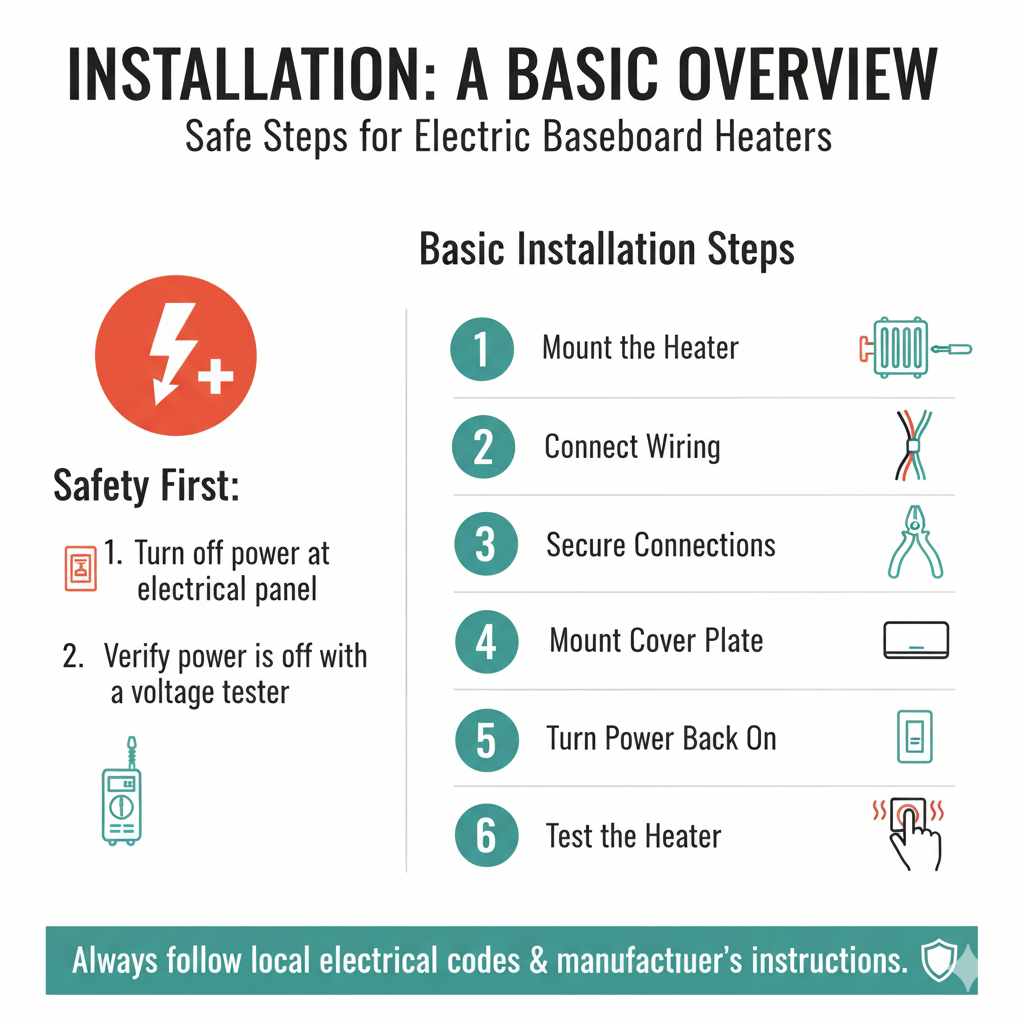
Installation: A Basic Overview
Installing an electric baseboard heater is a project that many homeowners can tackle, but it’s crucial to prioritize safety and follow electrical codes. If you’re not comfortable working with electricity, it’s best to hire a qualified electrician. The National Fire Protection Association (NFPA) provides standards for electrical installations that electricians follow.
Basic Installation Steps:
- Safety First: Turn off the power to the circuit you’ll be working on at the main electrical panel. Verify the power is off using a voltage tester.
- Mount the Heater: Position the heater on the wall according to the manufacturer’s instructions, typically near the floor and beneath a window. Ensure it’s level.
- Connect Wiring: Open the junction box on the heater. Connect the house wires to the heater’s wires according to the wiring diagram provided. Usually, this involves connecting the black wire (hot), white wire (neutral if applicable, though many baseboards are 240V single-phase requiring only hot and ground), and green wire (ground). Follow the specific instructions for your model and thermostat wiring if applicable.
- Secure the Connections: Use wire nuts to make secure connections and tuck the wires neatly into the junction box.
- Mount the Junction Box Cover: Reattach the junction box cover securely.
- Turn Power Back On: Once everything is securely in place, turn the power back on at the electrical panel.
- Test the Heater: Set the thermostat (if built-in) or the wall thermostat to a suitable temperature to ensure the heater is working correctly.
Always consult your specific heater’s installation manual for detailed instructions and diagrams. If your heater requires an external thermostat, that will add an extra step involving mounting and wiring the thermostat to the circuit. Remember, improper installation can be a fire hazard.
Frequently Asked Questions (FAQ)
Q1: Are Dimplex and Cadet baseboard heaters safe to leave on all the time?
A1: Yes, both Dimplex and Cadet baseboard heaters are designed for continuous operation when used according to the manufacturer’s instructions and installed on dedicated circuits. They come equipped with safety features like overheat protection to prevent hazards.
Q2: How do I choose the correct wattage for my room?
A2: A common guideline is 10 watts per square foot for standard ceiling heights (8 feet). For example, a 100 sq ft room would need approximately 1000 watts. Factors like insulation, window type, climate, and ceiling height can influence this. It’s always better to slightly overestimate than underestimate.
Q3: Can I use a smart thermostat with both Dimplex and Cadet baseboard heaters?
A3: Yes, you generally can. Many Cadet models are designed specifically to work with external thermostats, making them easily compatible with smart thermostats.