Electric Baseboard Heater vs Oil Filled Radiator: Essential Guide
Choosing between an electric baseboard heater and an oil-filled radiator depends on your needs. Electric baseboards offer quick room heating and clean operation, ideal for targeted warmth. Oil-filled radiators provide consistent, moist heat, excellent for spaces needing longer warmth and a cozy feel. Compare their pros and cons to find your best fit.
For a related heater topic, Micathermic Vs Oil Filled Radiator: Essential Choice gives readers a useful next step.
For a related heater topic, Electric Baseboard Heaters Vs Oil Filled gives readers a useful next step.
Welcome! Choosing the right heater can feel a bit tricky when you’re looking to keep your home toasty and comfortable. You might be wondering about the best way to heat a specific room or your whole house. Two popular choices are electric baseboard heaters and oil-filled radiators. They both heat your home, but they do it in different ways and have unique benefits. This guide is here to help simplify everything, so you can make a confident decision that keeps you warm all winter long. Let’s explore these options together to find the perfect heat for your space!
Electric Baseboard Heater vs Oil Filled Radiator: Your Essential Guide
When it comes to staying warm, especially in those chillier months, having reliable heating is key. Many homeowners and renters look for supplementary heating solutions or ways to improve their current setup. Two common and effective options are electric baseboard heaters and oil-filled radiators. But what’s the real difference between them? Which one is right for you? This guide will break down everything you need to know in a simple, easy-to-understand way. We’ll look at how they work, their pros and cons, and how to choose the best option for your comfort and budget.
How Do Electric Baseboard Heaters Work?
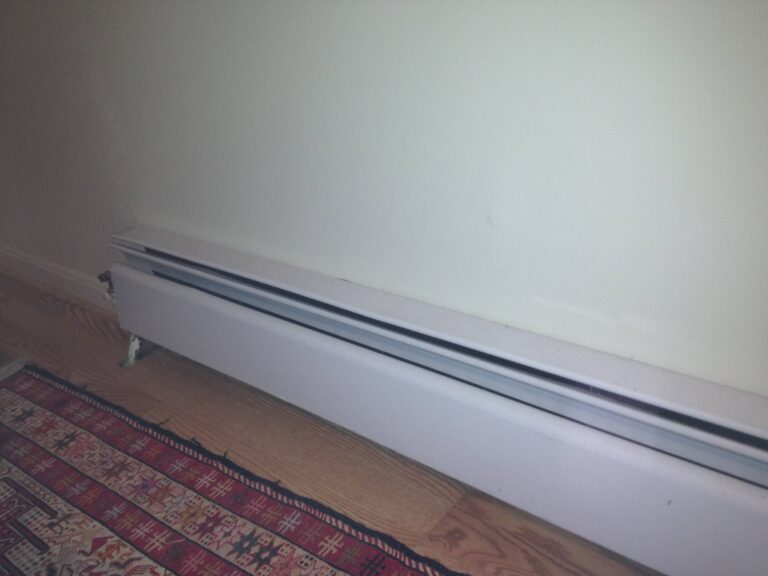
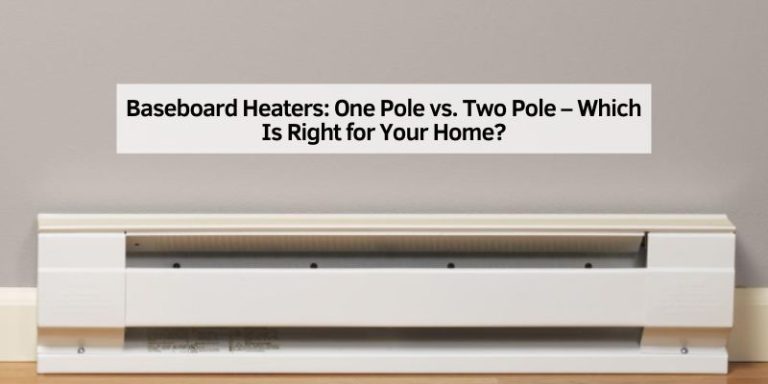
Electric baseboard heaters are a common sight in many homes, often found running along the bottom of walls. They work by drawing in cool air from the room, heating it up with an electric heating element, and then releasing the warm air back into the room. This process creates natural convection, where warm air rises and cool air sinks, circulating the heat throughout the space.
There are two main types:
- Convection Baseboard Heaters: These are the most common. They use a fan to push air over a heating element, which helps to warm the room more quickly.
- Radiant Baseboard Heaters: These heaters radiate heat directly from the heating element, providing a more focused warmth.
Installation is usually straightforward, as they connect directly to your home’s electrical system and are mounted beneath windows to counteract cold drafts. They are energy-efficient for spot heating an individual room.
Pros of Electric Baseboard Heaters:
- Quick Heating: They can warm up a room relatively quickly, especially convection models with fans.
- Clean Operation: Since they don’t burn fuel, they don’t produce any fumes or require ventilation, making them a safe choice indoors.
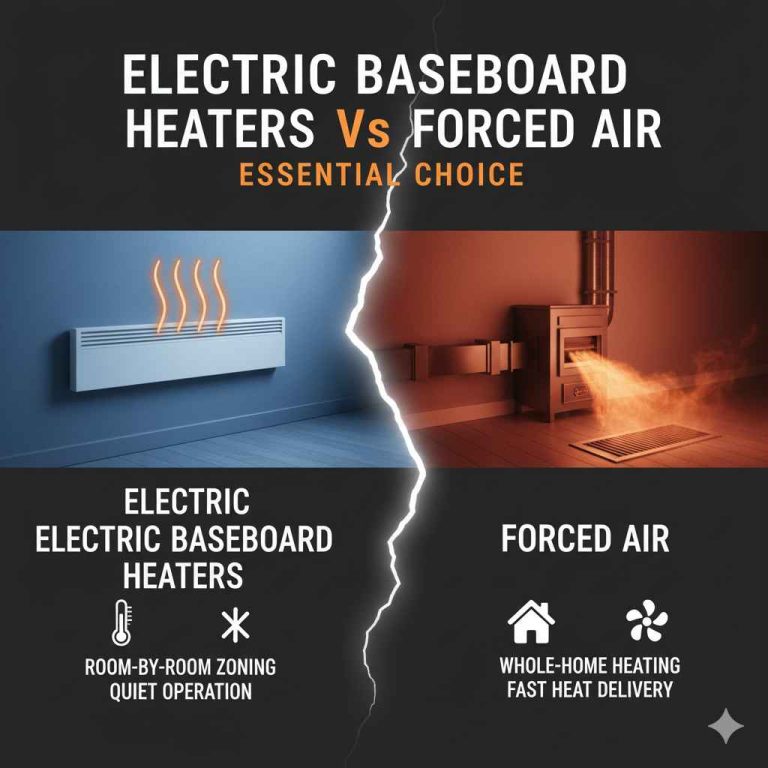
- Zone Heating: They are excellent for heating individual rooms or specific areas, allowing you to control the temperature in different parts of your home independently. This can save energy if you only need to heat occupied spaces.
- Easy Installation: Typically, they are a one-time installation that fits neatly under windows.
- Quiet Operation: Most models operate very quietly, especially radiant types. Convection models with fans may produce a slight hum.
- No Maintenance: They generally require very little maintenance.
Cons of Electric Baseboard Heaters:
- Higher Running Costs: Electricity can be more expensive than other heating fuels, so running them for extended periods can increase your utility bills.
- Can Dry Out Air: Like many electric heaters, they can sometimes dry out the air in a room.
- Aesthetics: Some people find their look less appealing than other heating options.
- Safety: While generally safe, they can pose a burn risk to children or pets if touched directly due to their hot surfaces. Proper placement and guarding are important.

How Do Oil-Filled Radiators Work?
Oil-filled radiators, often called oil-filled space heaters, look like traditional cast-iron radiators but are powered by electricity. Inside their sealed metal casing is a special diathermic oil. When you plug the unit in and turn it on, an electric heating element submerged in the oil heats the oil. This heated oil then circulates within the radiator, warming the metal fins. The heat is transferred to the surrounding air through both convection and radiation. The oil stays inside the unit, so it doesn’t need refilling and is designed to last the lifetime of the radiator.
The benefit of the oil is that it retains heat for a long time. Even after the unit is turned off, the stored heat in the oil and radiator continues to radiate warmth into the room, providing a more consistent and gentle heat compared to some other electric heaters.
Pros of Oil-Filled Radiators:
- Moist, Gentle Heat: The oil-filled design tends to produce a more moist heat compared to other electric heaters, which can be more comfortable and reduce dryness in a room.
- Consistent Warmth: They provide a steady, even heat output. The retained heat means they continue to warm a room for a while even after being switched off, offering a lingering cozy feeling.
- Quiet Operation: They are virtually silent as they operate, making them ideal for bedrooms, nurseries, or any space where quiet is desired.
- Safety Features: Many models come with safety features like automatic shut-off if they overheat or tip over, and cool-touch exteriors (though still warm, less likely to cause severe burns than direct heating elements).
- Portability: Most are portable and come with wheels, allowing you to easily move them from room to room as needed.
- No Fumes: Like all electric heaters, they operate without producing any combustion byproducts.
Cons of Oil-Filled Radiators:
- Slower Heating: It takes longer for the oil to heat up and for the radiator to start producing noticeable warmth compared to some other electric heaters.
- Higher Energy Consumption (for continuous use): Because they retain heat, they can sometimes be less energy-efficient if you need rapid heating or only use them for short bursts. However, their consistent output can be a pro for maintaining steady temperatures.
- Bulky and Heavy: They can be quite bulky and heavy, especially larger models, which can make them less convenient to store when not in use.
- Permanent Installation Not Possible: They are designed to be portable units and are not permanently installed.
- Surface Can Be Very Hot: While some parts might be cooler, the finned surfaces can become very hot to the touch.
Electric Baseboard Heater vs Oil Filled Radiator: Key Differences
To help you see the distinctions clearly, here’s a breakdown of how these two heater types stack up against each other in various aspects:
| Feature | Electric Baseboard Heater | Oil-Filled Radiator |
|---|---|---|
| Heating Method | Electric element heats air (convection) or directly radiates heat. | Electric element heats oil, which then heats the unit and the air via convection and radiation. |
| Heat Delivery | Quick, direct heat. Can feel localized. | Gentle, consistent, and sustained warmth. Heat lingers after shutdown. |
| Room Size Suitability | Excellent for targeted heating of individual rooms. | Good for small to medium-sized rooms, providing ambient warmth. |
| Speed of Heating | Fast (especially convection models). | Slower initial heat-up time. |
| Air Quality Effect | Can potentially dry out air. | Tends to produce more moist heat, less drying. |
| Noise Level | Generally quiet. Convection models with fans can have a slight hum. | Virtually silent. |
| Portability | Stationary; permanently mounted. | Highly portable with wheels. |
| Installation | Requires professional electrical installation. | Plug-and-play; no installation needed. |
| Running Cost | Can be higher for extensive use due to electricity price, but efficient for zone heating. | Can be high for continuous operation, but good for sustained comfort. |
| Safety Concerns | Hot surfaces pose burn risk. Keep clear of obstructions. Safety guidelines from the Consumer Product Safety Commission are essential. | Hot surfaces. Many come with tip-over and overheat protection. |
| Maintenance | Minimal; dusting. | Minimal; dusting. |
When to Choose an Electric Baseboard Heater
You might lean towards an electric baseboard heater if you’re looking for the following:
- Targeted Room Heating: If you only need to warm up a specific room, like a home office or a guest bedroom that isn’t used all the time, baseboard heaters are perfect. You can turn them on only when needed.
- Fastest Warmth: When you need to heat a space quickly, a convection baseboard heater with a fan can provide warmth faster than an oil-filled radiator.
- Permanent Solution: If you prefer a clean, out-of-the-way heating option that’s permanently installed and doesn’t take up floor space.
- Supplementing Existing Heat: They are great for adding extra heat to rooms that your main heating system struggles to warm sufficiently, especially those near exterior walls or big windows.
- Modern or Renovated Homes: Many modern homes are already fitted with baseboard heating, or it’s chosen during renovations for its sleek, unobtrusive profile.
Remember to always keep curtains and furniture at least a few inches away from baseboard heaters to ensure proper airflow and prevent any fire hazards. Following safety guidelines from manufacturers and organizations like the National Fire Protection Association (NFPA) is crucial for safe operation.
When to Choose an Oil-Filled Radiator
An oil-filled radiator might be your best bet if you need:
- Gentle, Consistent Heat: For spaces where you want a steady, comfortable, and cozy temperature rather than rapid blasts of heat.
- Moist Warmth: If you find that electric heaters tend to make your home feel too dry, the oil-filled radiator’s more humid heat can be a real comfort.
- Quiet Operation: Ideal for bedrooms, nurseries, or any area where silence is golden.
- Portability: If you need a flexible heating solution that can be moved from room to room as your needs change throughout the day.
- Quick Setup: No installation is required! Just plug it in, and you have heat. This is perfect for renters or anyone who wants an immediate heating solution without complex setup.
- Supplementing for Longer Periods: If you want to maintain a comfortable temperature in a room for several hours, the sustained heat from an oil-filled radiator can be very effective.
When using an oil-filled radiator, place it on a level surface and ensure it has adequate clearance around it, just as you would with any portable heater. Always check the manufacturer’s instructions for specific safety and usage guidance.
Installation and Usage Tips
Getting the most out of your chosen heater involves proper installation and smart usage.
Electric Baseboard Heater Installation:
This is typically a job for a qualified electrician. They will:
- Determine Placement: Usually installed below windows to block cold air from entering.
- Wire Connections: Connect the heater to your home’s electrical circuit.
- Thermostat Setup: Install and connect a thermostat to control the temperature.
- Safety Check: Ensure all connections are secure and safe.
You can learn more about electrical safety and common installations from resources like the Electrical Safety Foundation International (ESFI).
Electric Baseboard Heater Usage:
- Keep areas around the heater clear of furniture, curtains, and any flammable materials.
- Use the built-in or wall-mounted thermostat to set your desired temperature.
- For maximum efficiency, close doors and windows in the room you are heating.
- Consider programmable thermostats for energy savings.
Oil-Filled Radiator Usage:
- Place the radiator on a flat, stable surface, away from obstructions.
- Ensure there is at least 3 feet of clearance on all sides.
- Plug it directly into a wall outlet; avoid using extension cords if possible, as they can be a fire hazard.
- Set the thermostat to your desired temperature.
- Turn the unit off and unplug it when not in use or when leaving the room for an extended period.
- Store it in a dry place when not in use.
Both types of heaters require regular dusting to keep them working efficiently. A simple damp cloth is usually sufficient.
Energy Efficiency and Cost Considerations
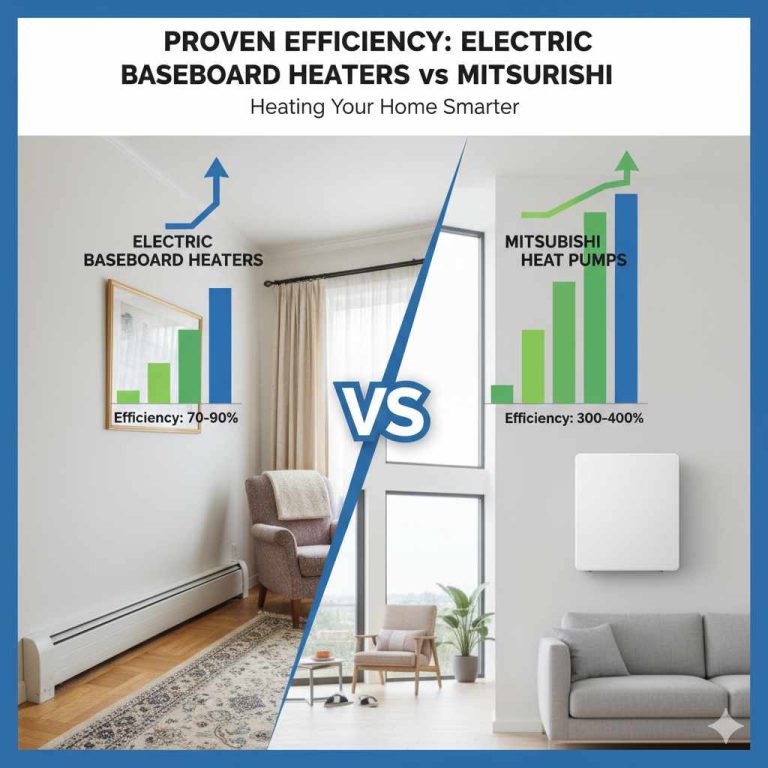
When thinking about heating, energy efficiency and cost are usually top concerns. Both electric baseboard heaters and oil-filled radiators are electric heating devices, meaning they convert electrical energy into heat with a 100% efficiency rate within the unit itself. However, the cost to run them can differ based on how you use them and the price of electricity in your area.
Electric Baseboard Heaters:
- Pros for Efficiency: Their efficiency shines when used for zone heating. Heating only the room you’re in can be much cheaper than heating your entire home with a central system, especially if your central system uses a less efficient fuel source or is undersized.
- Cons for Cost: If you use them to heat multiple rooms for long periods, especially in areas with high electricity rates, the costs can add up quickly.
Oil-Filled Radiators:
- Pros for Efficiency: Their ability to retain heat means they can provide warmth even after being turned off, potentially reducing on-time. This steady heat can also prevent temperature dips, which might make your thermostat cycle less frequently.
- Cons for Cost: Because they heat up more slowly and aim for consistent warmth, they might consume more energy over a long period to maintain a temperature compared to a baseboard heater that cycles on and off more rapidly to reach a set point for a specific zone.
Overall Energy Tip: The most significant factor in energy cost is often insulation and drafts. Ensure your home is well-insulated and seal any air leaks. This will reduce the workload for any heating system, making it more efficient and cheaper to run. For tips on home energy saving, check out the U.S. Department of Energy’s Energy Saver website.
Safety First!
Safety is paramount when using any type of heater. Here are some general safety tips:
- Clearance: Always maintain a safe distance between heaters and any combustible materials like furniture, curtains, bedding, and paper.
- Placement: Use heaters on a hard, level, and stable surface. Never place them on carpets, which can block airflow and potentially overheat.
- Supervision: Never leave portable heaters unattended, especially around children or pets.
- Damaged Cords: Do not use a heater with a damaged power cord.
- Overheating: Ensure your heater has an automatic shut-off feature for overheating and/or tip-overs.
- Electrical Safety: Plug heaters directly into a wall outlet. Avoid using extension cords, as they can get hot and pose a fire risk.
- Professional Installation: For permanent installations like baseboard heaters, always use a qualified electrician.
Following these guidelines will help ensure safe and effective heating.

Frequently Asked Questions (FAQ)
Q1: Which heater is better for a very cold room?
For rapid heating in a very cold room, an electric baseboard heater, especially a convection model with a fan, is often quicker to get the room to a comfortable temperature. Oil-filled radiators are better for maintaining a consistent, gentle warmth over time.
Q2: Can I use an oil-filled radiator as my primary heat source?
While an oil-filled radiator can effectively heat a small to medium-sized room, it’s generally best used as a supplementary heat source or for infrequently used.