Electric Baseboard Heaters Vs Mitsubishi: Essential Insights
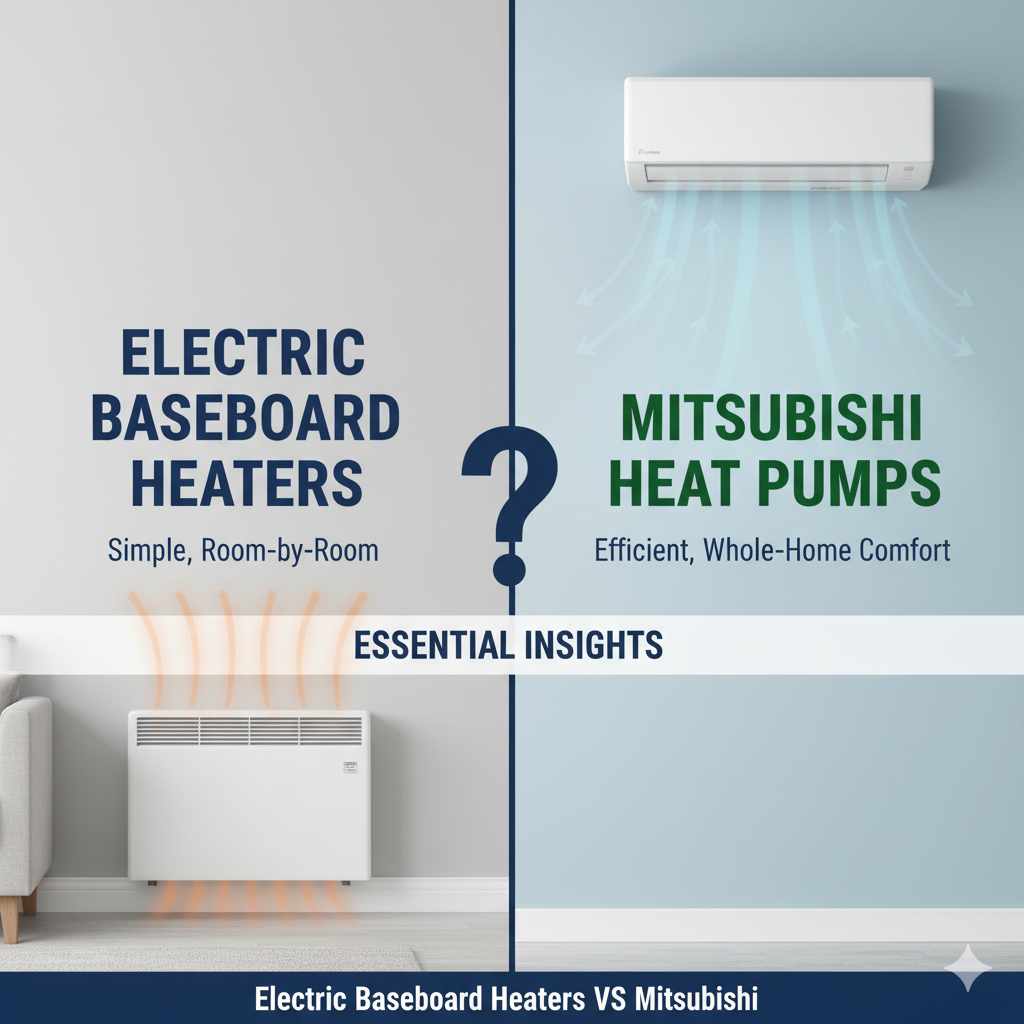
Electric baseboard heaters are a common, budget-friendly option for spot heating, while Mitsubishi offers advanced ductless mini-split systems known for efficiency and comfort. The best choice depends on your needs for whole-home heating, energy savings, and installation complexity.
Choosing the right heating system for your home can feel overwhelming. You want to stay warm and cozy, but you also need to keep an eye on your energy bills and ensure everything is safe and easy to manage. Many homeowners find themselves comparing common electric baseboard heaters with sophisticated systems like those from Mitsubishi. It’s a common puzzle, but the solution doesn’t have to be complicated. This guide will break down the differences, helping you understand which might be the best fit for your home and lifestyle. Let’s dive in and make your home heating decisions clear and confident!
Understanding Electric Baseboard Heaters
Electric baseboard heaters have been a go-to heating solution for decades, especially in areas where central heating isn’t available or for supplemental warmth. They are known for their straightforward design and relative affordability.
How Electric Baseboard Heaters Work
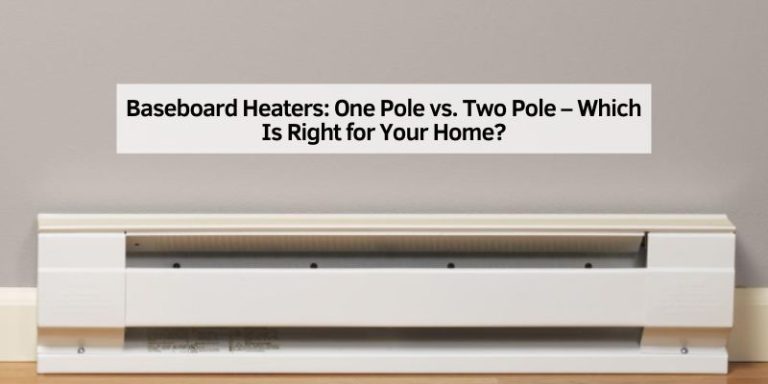
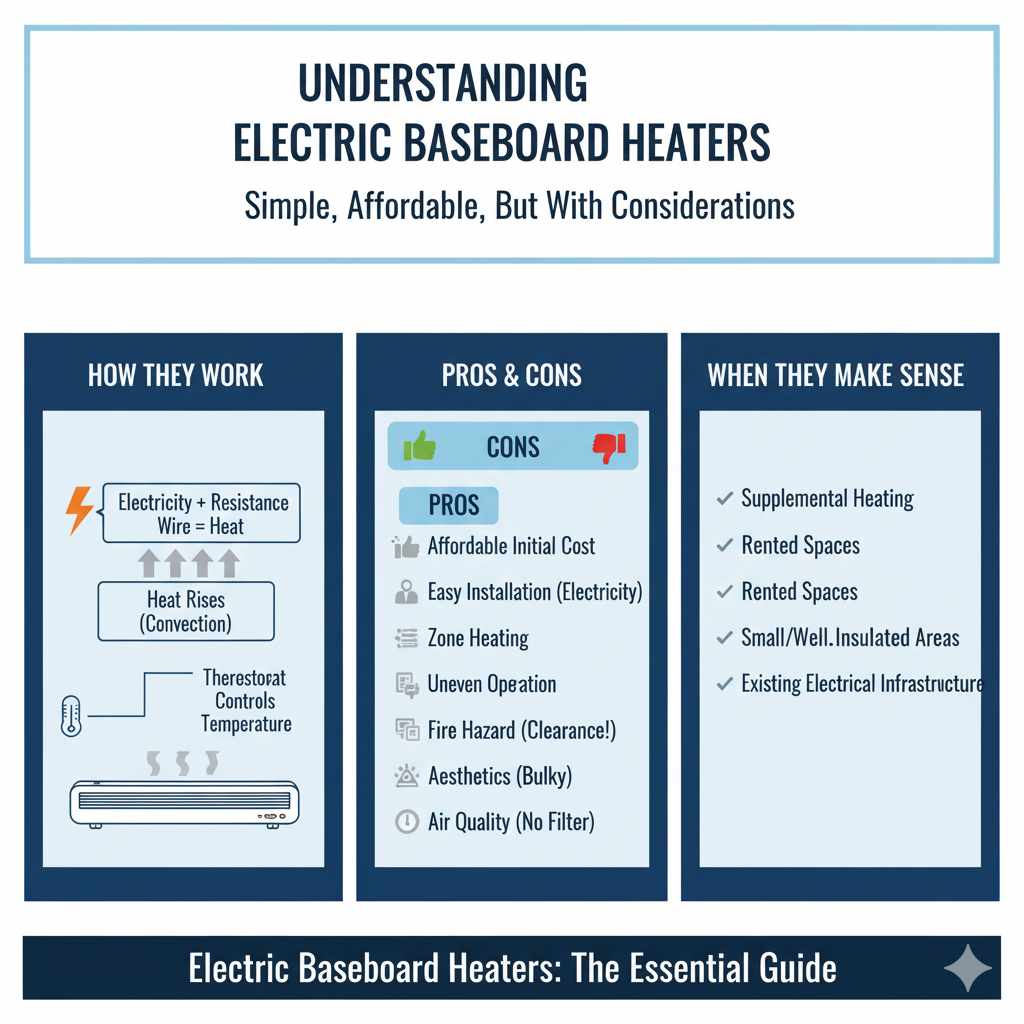
At their core, electric baseboard heaters are quite simple. They contain a heating element, often a resistance wire, enclosed within a metal casing. When electricity flows through the wire, it heats up. This heat then rises and circulates into the room, warming the air through convection. The unit typically has a built-in thermostat or can be connected to a wall-mounted thermostat that controls its on/off cycles to maintain a set temperature.
Here’s a simple way to think about it:
- Electricity + Resistance Wire = Heat Production
- Heat Rises + Air Circulates = Room Warms Up
- Thermostat Controls Temperature
Pros of Electric Baseboard Heaters
Electric baseboard heaters offer several advantages, making them a popular choice for certain applications:
- Affordable Initial Cost: They are generally less expensive to purchase than more complex heating systems.
- Easy Installation: Installation is usually simpler and requires less structural modification to your home compared to central systems. They often just need a dedicated electrical circuit.
- Zone Heating: Each heater can be controlled independently, allowing you to heat only the rooms you are using, which can save energy if used strategically.
- Quiet Operation: Most baseboard heaters operate very quietly, as they don’t have fans that blow air.
- DIY Friendly (with caution): For those comfortable with basic electrical work, installing or replacing a unit can sometimes be a DIY project, though hiring an electrician is always recommended for safety and compliance.
Cons of Electric Baseboard Heaters
Despite their pros, electric baseboard heaters also have some drawbacks to consider:
- High Running Costs: Electricity is often a more expensive energy source, and baseboard heaters can consume a significant amount of it, leading to higher electricity bills.
- Uneven Heating: They heat a room from the floor up, which can sometimes lead to cooler ceilings and warmer floors. They are also most effective in smaller, well-insulated spaces.
- Can Be a Fire Hazard: Because they are a source of direct heat, it’s crucial to keep flammable materials like curtains, furniture, and blankets away from them to prevent fires. Always ensure they are installed according to manufacturer and local building codes. For more on electrical safety, consult resources like the U.S. Consumer Product Safety Commission (CPSC).
- Aesthetics: The design is functional rather than decorative, and many homeowners find them less visually appealing than other heating options.
- Air Quality: They don’t filter or improve indoor air quality; they simply heat the air.
When Electric Baseboard Heaters Make Sense
These heaters are often a good choice for:
- Supplemental Heating: Wanning up a specific room that’s always cold.
- Rented Spaces: Where major system upgrades aren’t possible.
- Small, Well-Insulated Areas: Like bathrooms, small offices, or workshops.
- Homes with Existing Electrical Infrastructure: Making them easier to add without extensive rewiring.
Introducing Mitsubishi Electric Heating & Cooling Systems
Mitsubishi Electric is a leading name in ductless mini-split technology. These systems offer a modern, highly efficient alternative to traditional heating and cooling methods, providing both comfort and significant energy savings.
How Mitsubishi Ductless Systems Work
Mitsubishi’s popular models are ductless mini-split heat pumps. They work by transferring heat rather than generating it. In heating mode, they extract heat from the outside air and move it inside. In cooling mode, they reverse the process, moving heat from inside your home to the outside.
A ductless system consists of two main parts:
- Outdoor Unit: This unit houses the compressor and condenser. It’s typically mounted on an exterior wall or a concrete pad.
- Indoor Unit(s): These wall-mounted (or sometimes ceiling-recessed) units contain the evaporator coil and a fan. They distribute the conditioned air into the room.
Unlike conventional systems, there are no air ducts required, hence the name “ductless.” A conduit containing power and refrigerant lines connects the indoor and outdoor units, requiring only a small hole in the wall. Each indoor unit can be controlled independently with its own remote, allowing for precise temperature control in different zones of your home.
Pros of Mitsubishi Ductless Systems
Mitsubishi systems are praised for their advanced technology and performance:
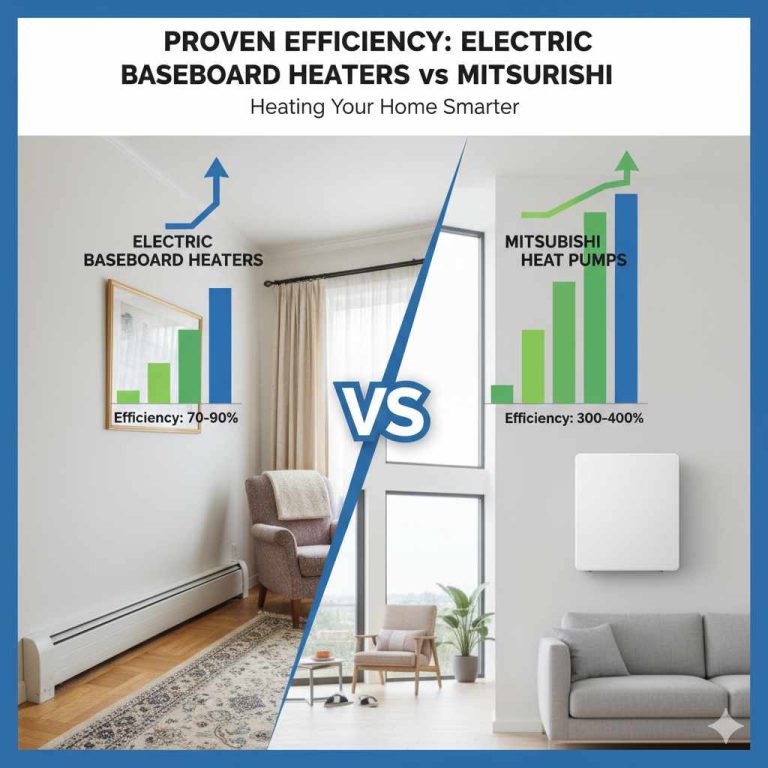
- Exceptional Energy Efficiency: Heat pumps, especially modern inverter-driven models like those from Mitsubishi, are incredibly efficient. They can often provide 3-4 units of heat for every unit of electricity consumed. This can lead to substantial savings on energy bills compared to electric resistance heating. According to the U.S. Department of Energy, heat pumps can help reduce energy bills by up to 50% compared to furnaces and air conditioners. Check out Energy.gov’s guide on heat pumps for more details.
- Zoning Capabilities: Each indoor unit acts as a separate zone, allowing you to set different temperatures in different rooms or turn off heating/cooling in unoccupied areas. This maximizes comfort and efficiency.
- Both Heating and Cooling: Most Mitsubishi systems offer both heating and cooling functions, providing year-round comfort from a single system.
- Improved Air Quality: Many models include advanced filtration systems that can capture dust, allergens, and other airborne particles, leading to cleaner indoor air.
- Quiet Operation: The outdoor units are designed for quiet operation, and the indoor units are also very discreet, often quieter than traditional forced-air systems.
- Smart Technology: Many units come with Wi-Fi connectivity, allowing for control via a smartphone app and integration with smart home systems.
Cons of Mitsubishi Ductless Systems
While highly effective, Mitsubishi systems also have considerations:
- Higher Upfront Cost: The initial purchase and installation cost for a Mitsubishi ductless system is typically higher than for electric baseboard heaters.
- Professional Installation Required: Ductless mini-splits require specialized knowledge for proper installation, including refrigerant handling and electrical connections. It’s essential to hire a qualified HVAC professional.
- Maintenance: Regular filter cleaning and professional servicing are necessary to maintain optimal performance and efficiency.
- Outdoor Unit Placement: The outdoor unit requires space and needs to be accessible for maintenance. Its performance can also be affected by extreme cold temperatures, though modern cold-climate models are highly capable.
- Aesthetics of Indoor Units: While sleeker than some alternatives, the indoor wall-mounted units are visible in the room.
Electric Baseboard Heaters Vs. Mitsubishi: A Direct Comparison
To help you see the differences more clearly, let’s compare them side-by-side based on key factors important to homeowners.
Installation and Complexity
Electric Baseboard Heaters: Generally straightforward, often requiring a dedicated circuit. Can sometimes be a DIY task for experienced individuals, but professional installation is recommended for safety and to ensure compliance with electrical codes.
Mitsubishi Ductless: Requires professional installation by a certified HVAC technician. Involves mounting indoor and outdoor units, running refrigerant lines, and handling electrical connections. The need for a small wall penetration is less invasive than ductwork.
Energy Efficiency and Running Costs
Electric Baseboard Heaters: Uses electric resistance heating, which is 100% efficient at converting electricity to heat. However, electricity is often expensive, making them one of the more costly ways to heat a home.
Mitsubishi Ductless: Uses heat pump technology to transfer heat. Highly efficient, often achieving Seasonal Energy Efficiency Ratios (SEER) and Heating Seasonal Performance Factors (HSPF) that translate to significant energy savings, especially compared to electric resistance.
Upfront Costs
Electric Baseboard Heaters: Low to moderate upfront cost per unit.
Mitsubishi Ductless: Significantly higher upfront cost per zone (system).
Heating Performance and Comfort
Electric Baseboard Heaters: Provides radiant and convective heat from floor level up. Can be uneven, especially in larger rooms or those with poor insulation. Best for small, enclosed spaces.
Mitsubishi Ductless: Distributes conditioned air evenly throughout the room via a fan. Offers precise temperature control and consistent comfort. Modern units can perform exceptionally well even in very cold climates.
Zone Control
Electric Baseboard Heaters: Excellent individual zone control if each heater has its own thermostat. Allows for very specific room-by-room temperature settings.
Mitsubishi Ductless: Excellent zone control; each indoor unit can be set to a different temperature, or turned off completely. This is a core benefit for energy savings and comfort customization.
Heating vs. Cooling
Electric Baseboard Heaters: Heating only. Requires a separate system for cooling.
Mitsubishi Ductless: Provides both highly efficient heating and cooling in one system.
Maintenance Requirements
Electric Baseboard Heaters: Minimal; occasional dusting and ensuring the vents are clear of obstructions.
Mitsubishi Ductless: Requires regular cleaning of indoor unit filters by the homeowner and periodic professional servicing (annual check-ups are recommended) to ensure efficiency and longevity.
Comparison Table: Electric Baseboard Heaters vs. Mitsubishi Ductless
Here’s a quick overview to help visualize the differences:
| Feature | Electric Baseboard Heaters | Mitsubishi Ductless Mini-Splits |
|---|---|---|
| Type of System | Electric Resistance Heating | Heat Pump (Ductless Mini-Split) |
| Primary Function | Heating Only | Heating and Cooling |
| Energy Efficiency | 100% efficient at point of use, but electricity costs are high. | Highly efficient (transferring heat), significantly lower running costs. |
| Upfront Cost | Low to Moderate | High |
| Running Cost | High | Low |
| Installation Complexity | Lower, potentially DIY (with caution) | High, requires professional technician |
| Zone Control | Excellent (per unit) | Excellent (per indoor unit/zone) |
| Air Quality Impact | Minimal/None | Improved (with filtration) |
| Noise Level | Very Quiet | Quiet (especially indoor units) |
| Best Use Case | Supplemental heat, small rooms, rentals | Whole-home or multi-zone heating/cooling, efficiency focus |
When to Choose Which System
The decision between electric baseboard heaters and a Mitsubishi ductless system hinges on your specific needs, budget, and home situation.
Choose Electric Baseboard Heaters if…
Your primary goal is immediate, low-cost heating for a single, small room or a specific area that’s always cold.
You are in a rental property and are not allowed to make significant modifications to the heating system.
You need a quick and easy way to add heat to an area that lacks existing ductwork and don’t want the expense of a full central system.
Your electricity rates are exceptionally low, making resistance heating more viable than in most areas.
You are looking for a backup heating solution for power outages (if you have a generator).
Aesthetics are not a major concern, and you need a simple, functional heater.
Choose Mitsubishi Ductless Mini-Splits if…
You are looking for an energy-efficient solution to manage both heating and cooling costs for your entire home or multiple zones.
You want precise temperature control and customized comfort in different areas of your house.
You are undertaking a renovation or building a new home and want to install a modern, efficient HVAC system without the complexity and cost of ductwork installation.
You desire improved indoor air quality and are looking for systems with advanced filtration.
You are willing to invest more upfront for long-term savings on energy bills and higher comfort levels.
You want a system that provides both heating and cooling from a single, integrated solution.
Installation and Safety Considerations
Both heating types require attention to installation and ongoing safety.
Installing Electric Baseboard Heaters
While often simpler, proper installation is crucial for safety and efficiency:
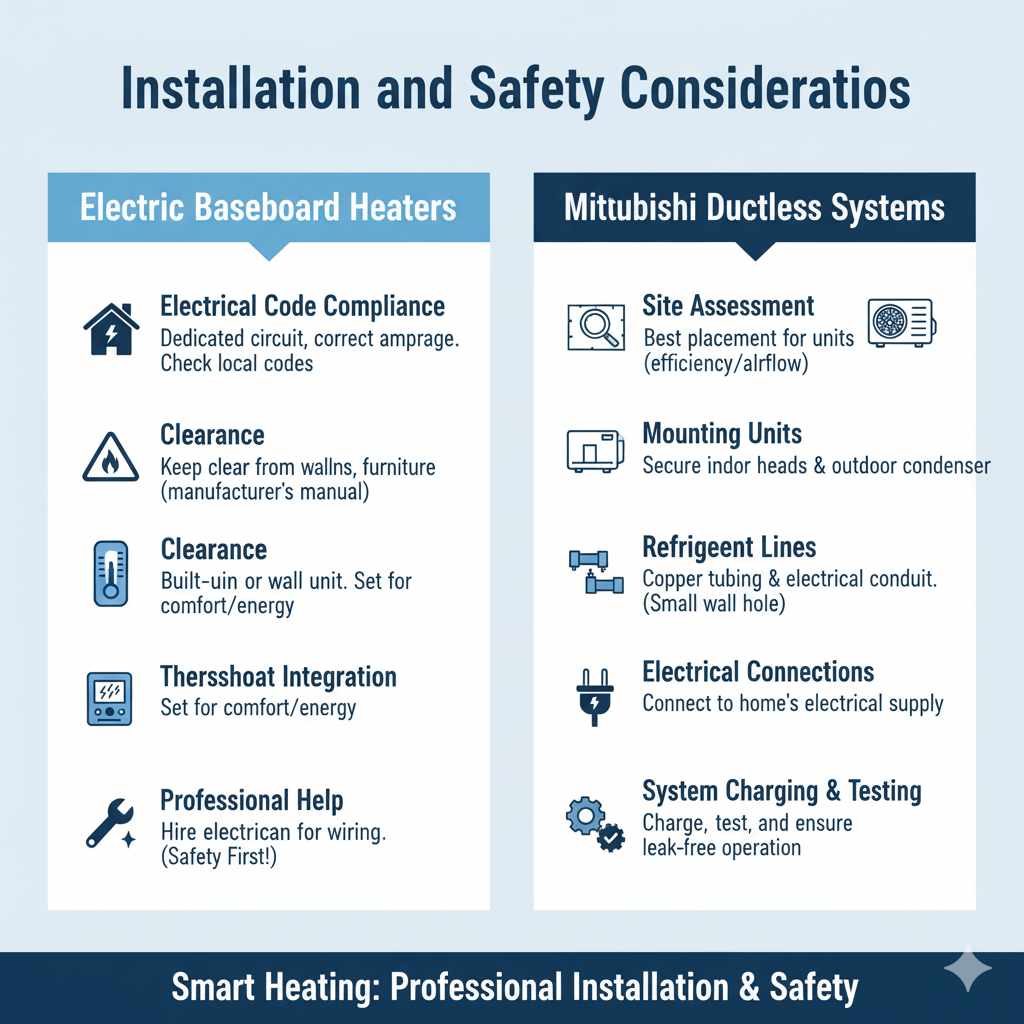
- Electrical Code Compliance: Ensure the unit is installed on a dedicated circuit with the correct amperage rating as specified by the manufacturer. Check local building codes; some areas have specific regulations regarding baseboard heater installation.
- Clearance: Maintain proper clearances from walls, curtains, furniture, and other flammable materials. The manufacturer’s manual will detail these requirements.
- Thermostat Integration: Most units will have a built-in thermostat or connect to a wall thermostat. Ensure it’s functioning correctly and set appropriately for your comfort and energy goals.
- Professional Help: If you’re not comfortable with electrical work, hire a qualified electrician. Improper wiring can be a serious fire hazard.
Installing Mitsubishi Ductless Systems
This is a job for the professionals. A qualified HVAC technician will:
- Site Assessment: Determine the best placement for indoor and outdoor units to maximize efficiency and airflow.
- Mounting Units: Securely install indoor heads on walls and the outdoor condenser unit on a pad or bracket.
- Refrigerant Lines: Connect the indoor and outdoor units with copper tubing for refrigerant and a conduit for electrical wiring. This typically involves drilling a small hole through an exterior wall. Companies like Mitsubishi Electric’s own dealer locator can help find certified installers in your area.
- Electrical Connections: Connect the system to your home’s electrical supply.
- System Charging and Testing: Properly charge the system with refrigerant and test all functions to ensure optimal performance and leak-free operation.
Frequently Asked Questions (FAQ)
Q1: Are electric baseboard heaters expensive to run?
Yes, electric baseboard heaters can be expensive to run because they use electric resistance heating, which converts electricity directly into heat. Electricity is typically more costly than natural gas or other fuel sources for whole-home heating, making them less efficient from a cost perspective for continuous use.
Q2: Can I heat my whole house with electric baseboard heaters?
While you can technically heat a whole house with electric baseboard heaters by installing them in every room, it’s generally not recommended as the primary heating source due to their high running costs. They are best suited for supplemental heating in specific rooms or for smaller, well-insulated living spaces.
Q3: Are Mitsubishi mini-splits a good investment?
Yes, Mitsubishi mini-splits are widely considered a good investment. Although the upfront cost is higher, their exceptional energy efficiency, precise zone control, and dual heating/cooling functionality lead to significant long-term savings on energy bills and improved home comfort.
Q4: How long do Mitsubishi ductless systems last?
With proper installation and regular maintenance, Mitsubishi ductless mini-split systems typically last between 15 to 20 years, and sometimes even longer. Consistent filter cleaning and annual professional check-ups are key to maximizing their lifespan and efficiency.