Heaters Propane Vs Kerosene: Essential Showdown
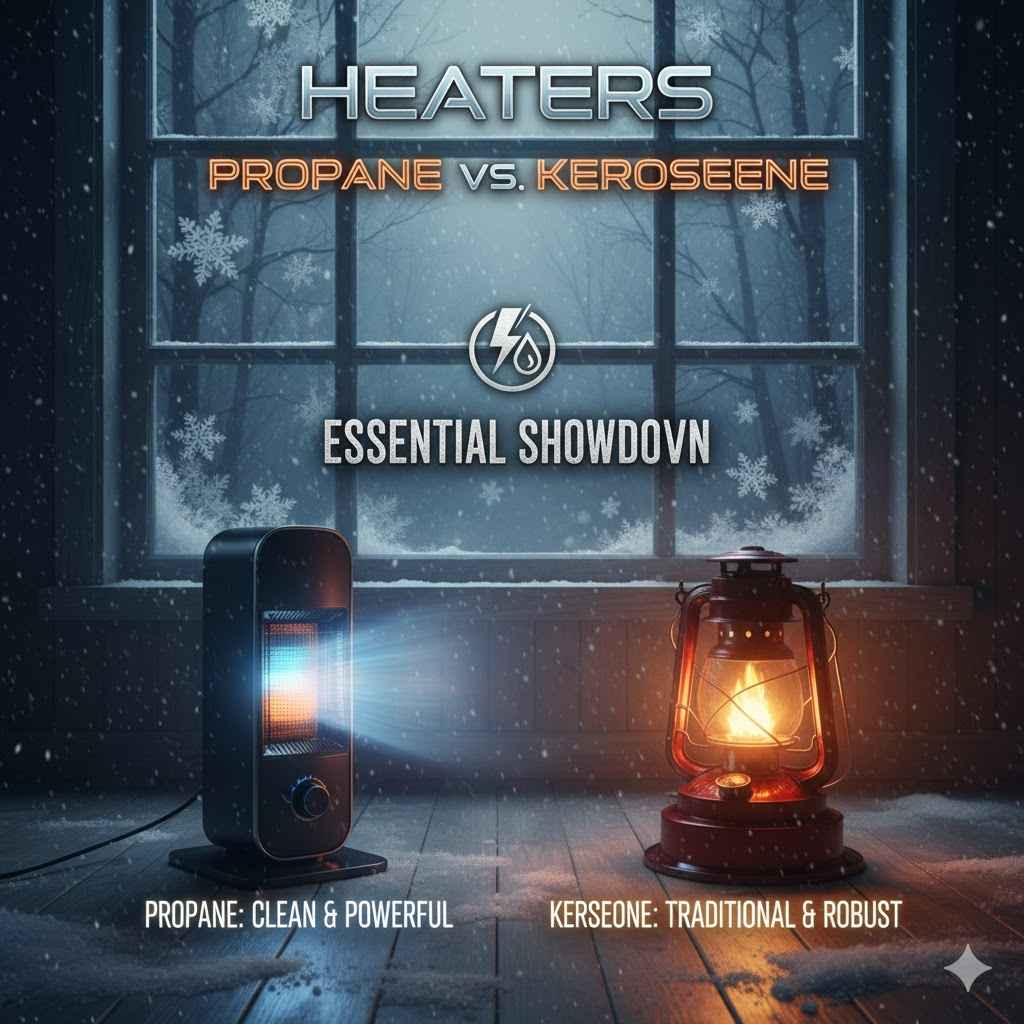
Propane heaters generally offer cleaner burning, easier portability, and nearly odorless operation, making them excellent for indoor/outdoor use, while kerosene heaters provide longer run times and higher heat output, often favored for heavy-duty, semi-permanent emergency heat sources.
For space-specific heating decisions, Garage Heater Kerosene Vs Propane gives readers another practical setup to compare.
For portable or electric heater comparisons, Kerosene Radiant Heaters vs Portable: Showdown gives readers another helpful angle before buying or using one.
For a closely related heater topic, Indoor Heater Propane Vs Kerosene gives readers a useful next step.
Feeling chilly and facing the winter heater decision? You are not alone. Choosing between propane and kerosene heaters can feel confusing when all you really want is dependable warmth. These two fuels are popular for garages, workshops, and emergency home backup, but they behave very differently.
Don’t worry about complicated settings or confusing fuel specs! As your trusted heating guide, I’m here to break down propane versus kerosene in a simple, clear way. We will look at costs, safety, ease of use, and how much heat each one delivers. By the end of this guide, you’ll feel totally confident picking the perfect heater to keep your space warm and cozy this season.
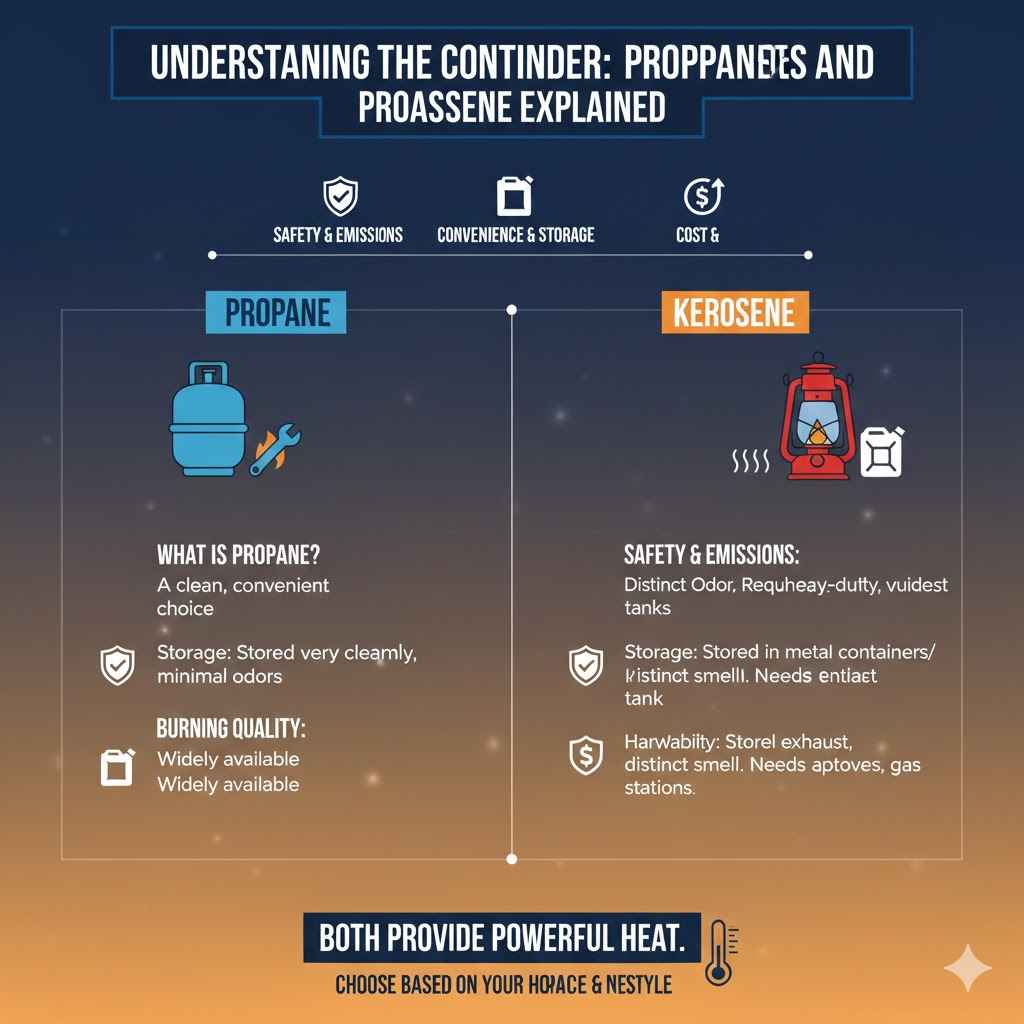
Understanding the Contenders: Propane and Kerosene Explained
Before we dive into the head-to-head comparison, let’s quickly meet our two powerful fuels. Understanding what they are helps you know where and how to use them safely.
What is Propane? A Clean, Convenient Choice
Propane (often called Liquefied Petroleum Gas or LPG) is a colorless, odorless gas stored under pressure in tanks. Because it burns so cleanly, it’s incredibly popular everywhere from BBQs to large industrial heaters. Think of propane as the reliable choice for on-demand heat.
- Storage: Stored in refillable tanks (small portable tanks or large above-ground tanks).
- Burning Quality: Burns very cleanly, producing minimal odors or soot.
- Availability: Widely available through local suppliers or hardware stores.
What is Kerosene? The Heavy-Duty Workhorse
Kerosene is an oil-based fuel, similar to diesel or heating oil, but refined to burn cleaner than those heavier oils. Kerosene heaters are known for putting out serious heat over long periods, making them great for heating large, drafty areas or during extended power outages.
- Storage: Stored in metal containers or directly in the heater’s integrated tank.
- Burning Quality: Produces more exhaust (and a distinct smell) compared to propane. Needs proper ventilation.
- Availability: Usually purchased at hardware stores or gas stations that carry heating fuels.
Heaters Propane Vs Kerosene: The Head-to-Head Showdown
This is where we put them side-by-side to see which fuel wins based on what matters most to you: safety, running cost, heat output, and convenience.
1. Heat Output & Efficiency
How Hard Can They Work?
When you need serious, rapid warmth, the power of the heater matters. Kerosene often wins on raw heat power for unvented portable units, but propane is perfectly efficient for its size.
- Kerosene: Generally produces more BTUs (British Thermal Units) per gallon of fuel. Kerosene heaters are often rated higher for heating large spaces quickly.
- Propane: While output varies greatly by model, a typical propane unit might run slightly cooler or for shorter bursts unless hooked up to a very large tank.
2. Safety and Odor (The Indoor Comfort Factor)
This is often the deciding factor for homeowners. Safe, low-odor heat means better indoor comfort.
- Kerosene: Kerosene produces a distinct odor, which becomes noticeable when the heater starts, stops, or if the wick needs adjustment. It also produces more exhaust, meaning excellent ventilation is non-negotiable. If the wick isn’t maintained, it can produce more carbon monoxide.
- Propane: Propane is much cleaner. It has almost no smell (an additive, mercaptan, is added so you can detect leaks, but the actual gas is odorless). Because it burns so completely, it is often considered safer for use in well-ventilated indoor spaces like garages or workshops, provided required safety shutoffs are active.
3. Portability and Ease of Use
If you need to move your heater from the basement to the patio, portability is key.
- Propane: Highly portable. Often uses small, disposable 1 lb tanks known as a green bottle. These are easy to swap out quickly, making them excellent for quick jobs or moving between short-term areas.
- Kerosene: Less portable in daily use. You have to fill a tank attached to the unit, which involves handling liquid fuel. While the unit itself can be moved with care, refilling is messier than swapping a propane canister.
4. Fuel Cost and Availability
The ongoing cost of keeping warm is a major concern for every budget.
- Propane: The price of propane fluctuates based on seasonal natural gas prices. It is often slightly more expensive per BTU than kerosene when heating massive areas non-stop. However, small tanks are very easy to access.
- Kerosene: Kerosene pricing can also change based on petroleum markets. While the fuel itself might be cheaper per gallon than a portable propane tank, it burns faster, potentially balancing out the cost difference for extended use.
For the most current cost comparison, you should always check local supplier prices. Fuel costs are dynamic!
Comparison Table: Propane vs. Kerosene
Use this table to quickly see where each fuel type excels:
| Feature | Propane Heaters | Kerosene Heaters |
|---|---|---|
| Odor | Almost none (odorant only) | Noticeable, especially during start-up/shut-down |
| Ventilation Need | Required, but less demanding than kerosene | Crucial and mandatory for safe indoor use |
| Portability (Daily Use) | Excellent (easy tank swaps) | Good (must manage liquid fuel refills) |
| Best For | Workshops, quick spot heating, covered patios | Garages, large spaces, emergency backup heat |
| Fuel Source | Pressurized Gas (LPG) | Refined Liquid Fuel |
Choosing Your Winner: Which Heater is Right for Your Task?
The “best” heater isn’t about absolute power; it’s about matching the fuel to your specific heating need. Think about where you need the heat and how long you need it to last.
Scenario 1: The Workshop Warrior
If you spend weekends in an unheated garage building furniture or working on cars during cold snaps, you need steady, strong heat that doesn’t require constant refueling.
Recommendation: Kerosene. Kerosene heaters often offer higher BTUs suitable for larger, less insulated spaces (like a typical detached garage), and their built-in tanks hold fuel for many hours, keeping you warm for a full 8-hour session without interruption.
Scenario 2: The Weekend Rooftop or Patio Warmer
If you want instant, clean heat for a covered porch, job site, or while camping semi-seasonally.
Recommendation: Propane. Propane’s quick startup, near-odorless burn, and ease of swapping a small 1 lb cylinder make it perfectly suited for portable, shorter-term heating tasks where air quality is a top priority.
Scenario 3: The Power Outage Backup Plan
When the grid goes down, you need reliable heat that runs efficiently for days.
Recommendation: Depends on System. For small, immediate indoor needs, a safe, vented propane heater might be fine. For long-term, high-output heat during a multi-day outage, a large, professionally installed vented kerosene or propane furnace system using a large external tank is the safest and most effective solution. Always check local fire codes regarding unvented options during emergencies.
Safety First: Essential Operational Rules for Both Fuels
Whether you pick propane or kerosene, heat safety is non-negotiable. Heaters are wonderful tools, but they must be respected to prevent accidents. Keep this simple checklist handy.
Critical Safety Steps for Any Fuel Heater
- Ensure Fresh Air (Ventilation): This is essential for all combustion heaters used indoors. Always crack a window or door slightly—even a small amount—to allow fresh air exchange. Proper ventilation prevents the buildup of dangerous carbon monoxide (CO).
- A Carbon Monoxide (CO) Alarm is Required: Install and test battery-operated CO detectors near any room where you use a portable fuel heater. This is the single most important safety measure you can take. You cannot see, smell, or taste carbon monoxide.
- Maintain Distance: Keep all flammable materials—curtains, bedding, paper, chemicals—at least three feet away from the heat source at all times.
- Check Fuel Quality (Especially Kerosene): Never use contaminated or old kerosene (more than one year old). Old fuel burns poorly and creates excessive soot and odor. Ensure you only use fuel specifically rated for your heater.
- Never Refuel Indoors (Liquid Fuels): Always turn off liquid-fueled heaters (kerosene) and let them cool completely before attempting to refill their tanks. Refueling a warm appliance near its open fuel hatch can lead to spills and fire hazards. Refill tanks outdoors if possible.
Propane Specific Checks
Propane tanks must be stored upright and always check connections for leaks using soapy water periodically.
Kerosene Specific Checks
Kerosene wicks must be clean and properly matched to the heater model for optimal burning. If you notice excessive smoke or smell strong fuel odors while running, the wick likely needs cleaning or replacement. You can find guidelines on wick maintenance from organizations like the U.S. Consumer Product Safety Commission for reference on safe appliance operation, though always check your specific heater manual first.
Step-by-Step: Setting Up Your New Kerosene Heater for First Use
If you choose the muscle of kerosene heat, taking a few moments to set it up correctly ensures clean performance from day one. This process builds your confidence!
Tools You Will Need:
- New, fresh K-1 Kerosene (Never use gasoline or older grades!)
- A Kerosene pouring can with a standard spout
- Protective gloves (optional, but they keep hands clean)
The Initial Setup Process:
- Inspect the Unit: Before adding fuel, check the wick assembly, drip tray, and safety shutoff. Ensure the surrounding metal housing is clean.
- Fill the Tank: Carry the heater carefully to your designated fueling area (preferably outdoors or in a well-ventilated storage area). Remove the fuel cap and slowly pour the K-1 kerosene into the reservoir using your pouring can until you reach the recommended fill line. Do not overfill.
- Replace and Wait: Securely replace the fuel cap. Now, wait—this is important for wicks. Allow the wick 15 to 30 minutes to fully absorb the fresh kerosene. This saturation prevents the wick from immediately burning itself up or scorching.
- Light the Pilot: Follow your manufacturer’s instructions to raise the wick slightly and ignite the pilot light or primary heating element. Most kerosene heaters require a short ignition period to warm up.
- Adjust for Clean Burn: Within 5 to 10 minutes, you should adjust the wick height until the flame is steady and burns with only a faint, blue-tinged light and minimal visible smoke/odor. If it smokes heavily, drop the wick height slightly.
- Monitor Ventilation: Once running, confirm you have a window cracked open nearby to ensure continuous fresh air supply.
Step-by-Step: Connecting and Initializing Your Propane Heater
Propane heaters are often simpler for beginners because you are dealing with a standardized gas canister swapping system.
Tools You Will Need:
- The Propane Heater Unit
- Fresh 1 lb disposable Propane Cylinder (or connection gear for a larger refillable tank)
- Optional: Soapy water solution (for advanced leak checking)
The Quick Connection Process:
- Pre-Check Safety: Ensure the heater’s control valve is set to the “OFF” or “Pilot” position before attaching the tank.
- Install the Cylinder: Screw the base of the 1 lb propane cylinder into the heater’s regulator assembly. Twist firmly until you feel resistance. It should be snug but do not overtighten, which can damage threads.
- Leak Test (Recommended): If you have soapy water, brush generously onto the connection point. Slowly turn the valve partially open. If bubbles rapidly form, you have a leak. Quickly shut off the valve, unscrew the tank, and try re-seating it or use a new cylinder.
- Ignition: Once secure, follow the unit instructions. This usually involves turning the variable control knob slightly past the initial “light” mark and depressing the electronic igniter button (or using a long match/lighter near the burner head).
- Stabilize Heat: Once lit, adjust the knob slowly to your desired heat setting. You will notice instant heat output compared to the warm-up time for a kerosene wick.
- Shutdown: Always turn the control knob fully to the “OFF” position first. Wait for the pilot light or burner to extinguish before disconnecting the propane cylinder.
When to Hire a Pro: Vented vs. Unvented Systems
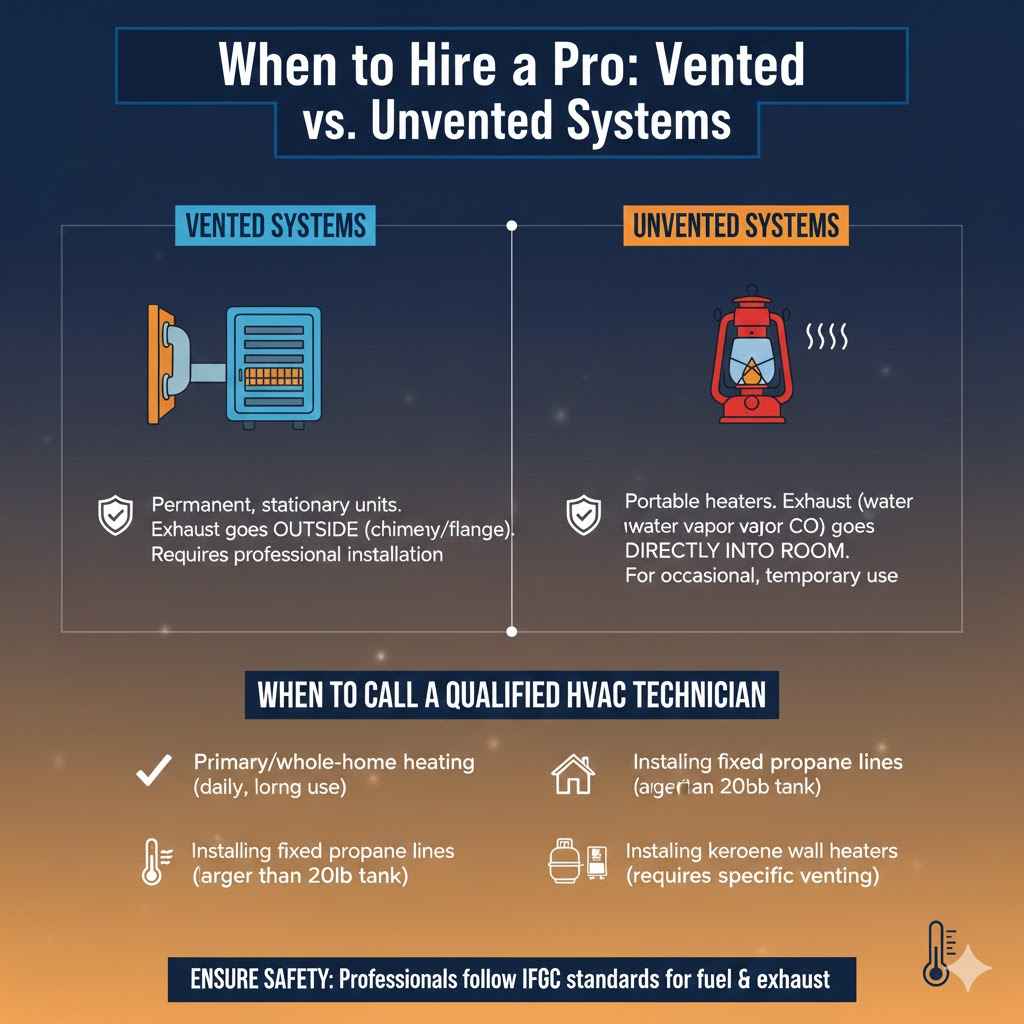
For the most reliable, safest heat, especially for primary or whole-home backup heating, you should always look toward vented systems. Portable heaters are almost always unvented, meaning they release their combustion byproducts (including water vapor and CO) directly into the room.
Vented vs. Unvented Heaters
Vented systems are typically stationary furnaces or large wall units that are permanently vented through a chimney or wall flange to expel all exhaust gases safely outside. These are more complex and require professional installation.
When to Call a Qualified HVAC Technician:
- If you plan to use a heater system for daily, long-term heat in a living space, not just occasional workshop warmth.
- If you are installing any fixed propane line connection larger than a standard 20 lb grill tank adapter.
- If you are installing a kerosene wall heater (these require specific, non-combustible wall structures and chimney connections).
Consulting certified HVAC professionals ensures your setup meets crucial safety standards, especially concerning fuel storage and exhaust routing. Organizations like the International Fuel Gas Code (IFGC) provide standards that professionals follow to ensure safety.
Frequently Asked Questions (FAQ) About Fuel Heater Choices
Q1: Can I use propane in a kerosene heater, or vice versa?
A: Absolutely not. Propane and kerosene are completely different fuels with different combustion properties. Putting propane in a kerosene heater will cause severe damage, poor burning, and potential explosions. Kerosene cannot even run in a propane appliance. Always match the fuel to the heater type.
Q2: Is kerosene fuel safe to store indoors?
A: Yes, but with strict rules. K-1 kerosene can typically be stored indoors (like a closet or utility room in specific approved containers) provided it is kept away from heat sources and ignition points. However, federal and local fire codes often limit the maximum volume you can store inside your main living space. Check your local fire department guidelines regarding storage limits.
Q3: Which fuel is better for long, continuous cold nights?
A: Kerosene usually wins here. Kerosene heaters tend to house larger fuel tanks and burn hotter, allowing them to run for 10 to 20 hours straight on a single tank, making them the heavy-duty option for overnight emergency backup.
Q4: Do I still need a CO detector if my heater has an Oxygen Depletion Sensor (ODS)?
A: Yes, always run a separate CO detector. While many modern propane heaters include an ODS (which shuts the heater off if oxygen levels drop too low), these sensors protect against asphyxiation, but they do not detect carbon monoxide itself. Carbon monoxide can build up even when oxygen levels are still adequate if the combustion is poor. A dedicated CO alarm is essential backup protection.
Q5: Which fuel type will cost me less money overall?
A: It depends on local availability and runtime. Generally, when comparing similar BTUs, kerosene tends to be slightly cheaper per energy unit burned than the portable 1 lb propane tanks. However, if you are using a large, refillable propane tank (like one used for a BBQ), the overall running cost of propane can become very competitive or cheaper.