Propane Vs Kerosene Heaters Cost: Proven Essential Guide
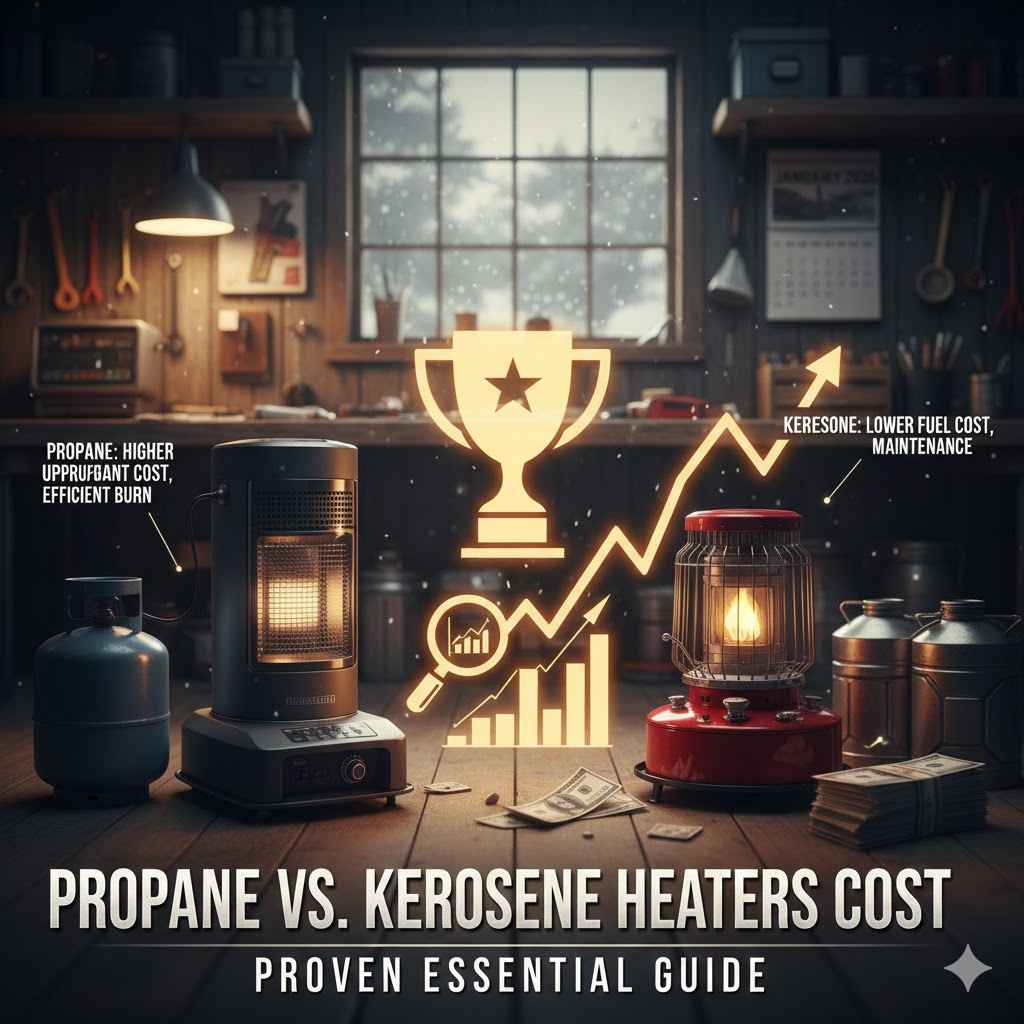
When comparing propane vs kerosene heaters cost, propane generally proves more expensive upfront for the unit but offers more stable, slightly cheaper fuel prices and cleaner burning, while kerosene heaters provide lower initial purchase prices but fuel costs fluctuate more, requiring careful efficiency management.
Choosing between propane and kerosene for your supplemental or emergency heating needs can feel confusing. You want warmth, but you also need to keep your wallet happy! Many homeowners worry about hidden fuel costs or big installation fees. It is easy to get lost in technical specs.
Don’t worry! Today, we make this simple. We’ll break down the true expenses—from buying the unit to paying the monthly fuel bill. By the end of this guide, you will clearly know which option saves you the most money based on how you plan to heat your space safely.
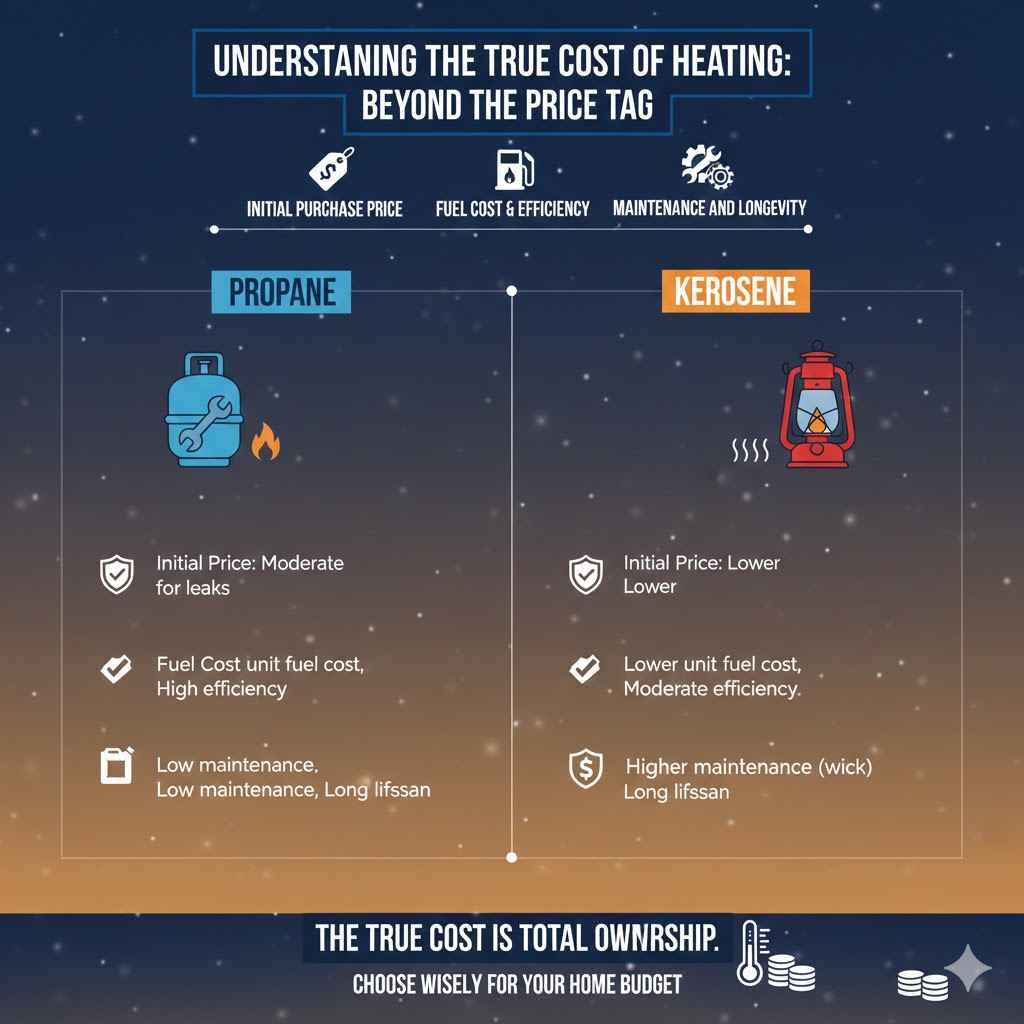
Understanding the True Cost of Heating: Beyond the Price Tag
When we talk about the “cost” of a heater, we look at more than just the price tag in the store. A cheap heater that burns expensive fuel quickly might cost you much more over a winter than a pricier unit that runs efficiently. We need to look at three main cost areas:
- Initial Purchase Price: What you pay for the unit itself.
- Fuel Cost & Efficiency: How much the fuel costs and how much heat you get for that money (the Unit Cost of Energy).
- Maintenance and Longevity: How much you spend keeping the heater running safely year after year.
Let’s dive deep into how propane and kerosene stack up in these crucial areas.
Propane Heaters: The Reliable, Clean Burn
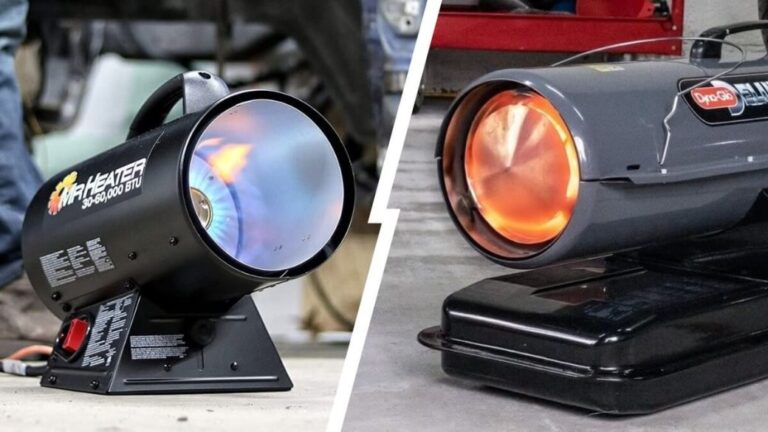
Propane heaters are incredibly popular for workshops, garages, and even some full-time home heating needs, especially in areas without natural gas lines. Propane (also known as LP gas) is stored in tanks, much like what you use for a gas grill, though usually much larger for serious heating needs.
Initial Purchase Price for Propane Heaters
Propane heaters often require a slightly higher initial investment than comparable kerosene models. This is due to the more complex ignition systems and required safety features for handling pressurized gas.
- Portable/Vent-Free Models: These can range from $150 to $500 for smaller space heaters.
- High-Capacity/Forced-Air Models: Professional units, often used in construction or large barns, can cost $800 to over $2,000.
Propane Fuel Costs and Budgeting
Propane fuel prices are often more stable than kerosene, though they are certainly affected by national supply and demand. The major advantage here is efficiency and cleanliness.
Propane burns very cleanly, meaning less soot buildup inside the unit, which translates to fewer emergency cleanings and better long-term efficiency. You can buy propane in bulk (large tanks), maximizing volume discounts.
Key Consideration: Propane needs to be delivered and filled into storage tanks. While this is convenient, you are locked into the price set by your supplier at the time of delivery. Many homeowners use services that monitor fuel levels automatically.
Pros and Cons: Propane Costs
Here is a quick comparison of the cost implications for using propane:
| Aspect | Propane Heater Cost Impact | Guidance for Savings |
|---|---|---|
| Upfront Unit Cost | Moderate to High | Choose high-efficiency models, even if they cost slightly more upfront. |
| Fuel Cost Stability | Generally Stable | Buy large tanks during off-peak seasons (spring/summer) for lower per-gallon rates. |
| Maintenance Costs | Low to Moderate | Clean burning means less frequent parts replacement. |
| Installation/Setup | Can include tank rental/purchasing fees | Look for package deals that include tank installation with your first fill-up. |
For homeowners looking for consistent, budgetable long-term heating, propane’s stability often wins, even with the higher initial purchase price.
Kerosene Heaters: The Budget Starter Option
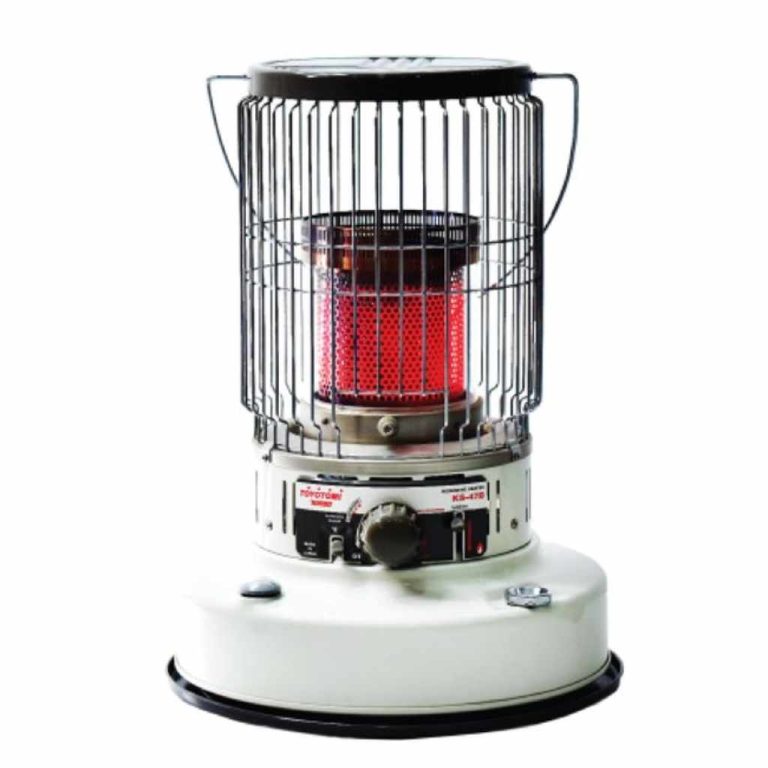
Kerosene heaters are the traditional standby for emergency heating. They are renowned for being easy to buy, simple to use, and offering excellent heat output per BTU relative to their fuel burn rate.
Initial Purchase Price for Kerosene Heaters
One of the biggest initial draws to kerosene is the low barrier to entry. You can find reliable, portable kerosene heaters for surprisingly little money.
- Basic Wick Models: Often available for under $100.
- Advanced Convection Models: Usually range between $150 and $350.
This low upfront cost makes kerosene very attractive for renters or those seeking strictly emergency backup heating who might not use the unit often.
Kerosene Fuel Costs and Budgeting
Kerosene fuel (K-1 grade is required for most modern heaters) is often cheaper per gallon than propane at the pump, generally speaking. However, this is where the cost picture can become tricky.
Kerosene is more volatile in price than propane, often tracking closely with crude oil prices. Furthermore, kerosene burns less cleanly. Over time, this means:
- Soot Buildup: Wicks need regular replacement and cleaning to maintain peak efficiency. A clogged wick wastes fuel.
- Odor: While modern portable units are much better, burning kerosene can sometimes produce a noticeable odor, especially during startup or if adjustments are needed.
While you pay less per gallon, you might burn more gallons over the season due to decreased efficiency or needing more fuel to achieve the same level of comfort compared to propane’s extremely clean burn.
Pros and Cons: Kerosene Costs
Here is how kerosene stacks up financially:
| Aspect | Kerosene Heater Cost Impact | Guidance for Savings |
|---|---|---|
| Upfront Unit Cost | Low | Great for emergency preparedness where the heater only runs a few days a year. |
| Fuel Cost Stability | Volatile | Buy fuel only when prices are historically low; store it properly (refer to safety guidelines on fuel storage). |
| Maintenance Costs | Moderate to High | Factor in the cost of new wicks and cleaning supplies yearly. |
| Safety & Installation | Minimal installation, but requires careful fuel handling | Avoid buying uncertified heaters, as replacement parts or safety failures can quickly escalate costs. |
Calculating the Unit Cost of Energy (How to Really Compare Savings)
To make a fair, true comparison of home heating fuel comparison, we need to calculate the Unit Cost of Energy based on the heat output (BTUs).
This calculation helps reveal the real cost of keeping your workshop an extra 10 degrees warmer for an hour.
The basic formula is:
$$text{Unit Cost of Energy} = frac{text{Cost per Gallon or Cubic Foot}}{text{BTU output per Gallon or Cubic Foot}} times 1,000,000$$
(We multiply by 1,000,000 to get the common metric: Dollars per Million BTUs (MMBtu)).
Example Cost Comparison (Hypothetical Figures)
Let’s use generalized, typical figures (always check local prices!):
| Fuel Type | Approx. Efficiency | Approx. Price (Example) | Approx. Usable BTUs per Gallon/Unit | Estimated MMBtu Cost |
|---|---|---|---|---|
| Propane (LPG) | 90% | $2.50 per Gallon | 91,500 BTUs per Gallon (90% efficiency applied) | $27.32 per MMBtu |
| Kerosene (K-1) | 85% | $3.50 per Gallon | 133,000 BTUs per Gallon (85% efficiency applied) | $26.32 per MMBtu |
In this simplified, generalized example, the fuel cost per unit of heat produced is nearly identical, assuming everything runs perfectly.
The Takeaway: Don’t just look at the price on the pump. Look at how efficiently the heater converts that fuel into wearable heat. Kerosene often has more BTUs per gallon, but propane’s high-efficiency burn keeps the MMBtu costs very close.
Installation and Venting Costs: A Major Price Divergence
This is perhaps the single biggest cost factor separating propane and kerosene if you plan on using the unit inside a structure where air quality matters.
Venting Requirements
Kerosene Heaters:
- Vent-Free (Unvented): Most portable models are vent-free. They are convenient and cheap to run initially but must use oxygen from the room. This requires caution and adequate ventilation (opening a door or window slightly). Not approved for all living spaces.
- Vented Kerosene: These need a chimney or dedicated vent, significantly increasing installation costs.
Propane Heaters:
- Vent-Free (Unvented): Like kerosene, vent-free propane heaters exist. They are very common for garages. They often have oxygen depletion sensors (ODS) built-in, offering slightly higher safety peace of mind than older vent-free kerosene units.
- Vented (Direct-Vent or Central): Propane systems designed for more permanent installation (like a furnace replacement) require professional venting, running gas lines, and often permitting fees. This can cost thousands but provides the cheapest, safest, whole-house heating solution long-term.
When budgeting, if you are comparing a simple $150 vent-free kerosene heater to a $2,000 direct-vent propane wall unit, the installation cost difference is enormous. Always match the required venting with your use case.
Safety Features and Insurance Implications
Safety features directly impact your long-term cost through risk mitigation. A fire or carbon monoxide incident is the most expensive outcome possible.
Propane Safety
Propane is stored under pressure, which requires robust tanks and regulators. Modern propane heaters are designed with excellent safety cut-offs. Because propane burns cleaner, the risk of carbon monoxide (CO) production from a well-maintained unit is generally lower than with poorly maintained kerosene.
Kerosene Safety
Kerosene fuel itself must be kept clean and stored appropriately, away from ignition sources. Wicks must be trimmed or replaced regularly. In older units, the risk of soot buildup related to improper burning presents a higher potential (though manageable) CO risk if maintenance slips.
Note on CO Alarms: Regardless of your choice, always install tested, working Carbon Monoxide alarms when using any fuel-burning appliance to heat an occupied space. The Consumer Product Safety Commission emphasizes this crucial step.
When Does Propane Win on Cost?
Propane is the more cost-effective choice when:
- You Need Consistent, Daily Heat: For heating a workshop five days a week all winter, propane’s clean burn minimizes maintenance downtime, leading to lower lifetime operating costs.
- Whole-Home Backup Is Required: If you plan to eventually connect a professional-grade, high-BTU sealed unit, propane systems offer better integration and overall efficiency than comparable vented kerosene systems.
- Fuel Price Stability Matters: If you dislike monitoring fuel markets constantly, propane pricing tends to be more predictable over a heating season.
When Does Kerosene Win on Cost?
Kerosene takes the cost lead when:
- Emergency or Infrequent Use: If you only need heat for a weekend power outage or a few cold nights in the garage, the low starting price of the heater is the dominating factor.
- Upfront Budget is Tight: Kerosene heaters have the lowest entry cost, allowing immediate access to supplemental heat without significant investment.
- Fuel is Conveniently Available: If you can easily buy smaller jugs or tanks of K-1 at a local hardware store without waiting for a delivery truck, the immediate portability of fuel can offset minor operating inefficiencies.
Propane vs. Kerosene Heater Cost Comparison Table (Feature Summary)
This side-by-side look summarizes the major financial and practical differences for the average homeowner:
| Feature | Propane Heaters | Kerosene Heaters |
|---|---|---|
| Average Initial Unit Cost | Higher ($200 – $2,000+) | Lower ($80 – $350) |
| Fuel Cost Volatility | Lower (More Stable) | Higher (Tracks Crude Oil) |
| Fuel Burn Cleanliness | Excellent (Minimal Soot) | Good (Requires More Maintenance) |
| Maintenance Frequency | Lower (Simpler Parts) | Higher (Wick Replacement Needed) |
| Best For | Regular operation, efficiency over time | Emergency heat, low initial barrier |
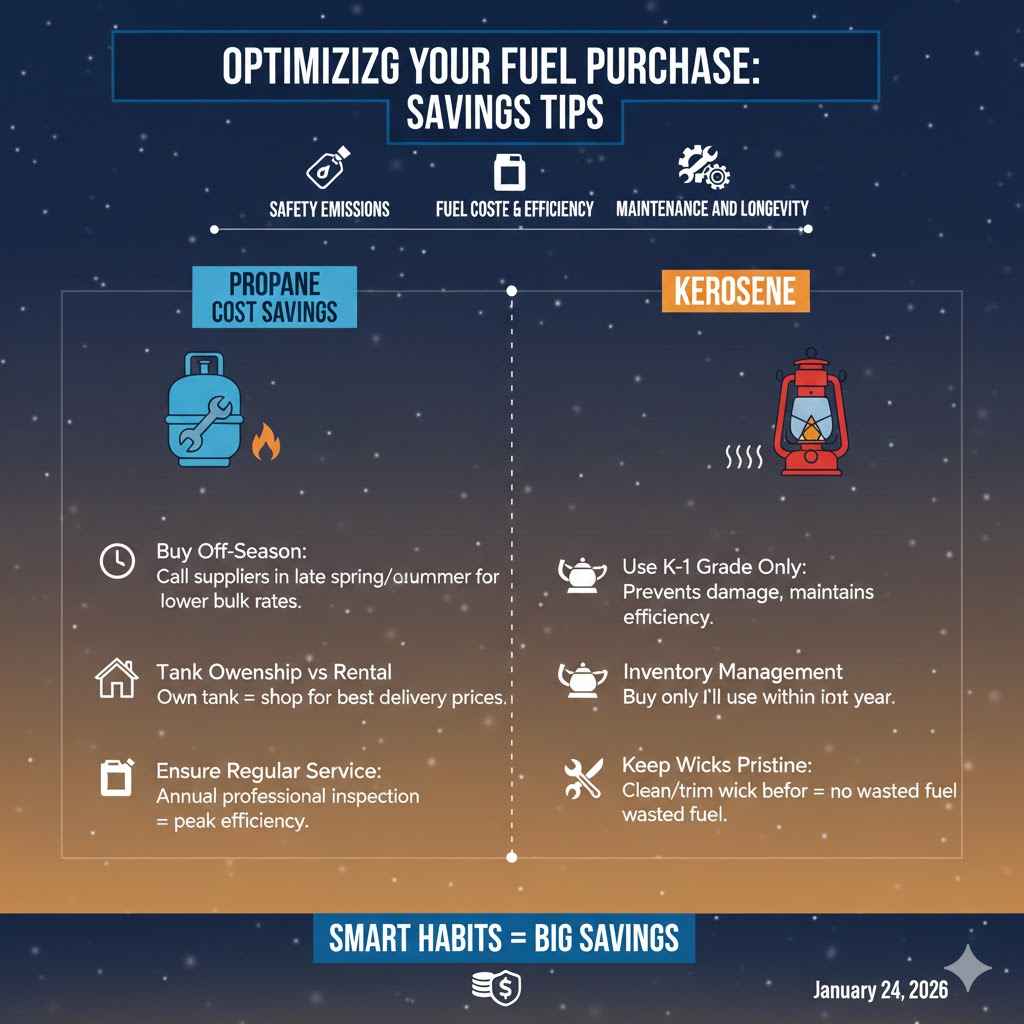
Optimizing Your Fuel Purchase: Savings Tips
Whether you choose propane or kerosene, smart purchasing habits can drastically reduce your annual heating bill costs.
Tips for Propane Cost Savings
- Buy Off-Season: Propane demands surge in the fall and winter. Call your supplier in the late spring or early summer when demand is low to lock in a lower bulk rate.
- Tank Ownership vs. Rental: While renting is easy, purchasing your own tank usually saves money over the long run, as you are free to shop around for the best delivery price instead of being tied to a specific supplier’s rental contract.
- Ensure Regular Service: A furnace or heater needing professional inspection once yearly ensures it is running at its peak BTU output, meaning less fuel is wasted converting heat.
Tips for Kerosene Cost Savings
- Use K-1 Grade Only: Never use kerosene meant for lamps or older, lower-grade fuel in modern heaters, as it can damage the unit and significantly reduce efficiency, costing you more fuel overall.
- Inventory Management: Kerosene degrades over time, especially if stored improperly (it can clog filters and wicks). Only buy what you anticipate using within one year. Never overstock cheap fuel that might go bad.
- Keep Wicks Pristine: Dedicate 15 minutes before lighting your kerosene heater each time it’s been sitting for a while to clean or trim the wick. This simple act prevents sluggish, incomplete burning, which wastes fuel.
Frequently Asked Questions on Heater Costs
Q1: Is it cheaper to run a propane heater or a kerosene heater daily?
It depends on current fuel prices, but often, a high-efficiency propane heater comes out cheaper over the long run due to stable fuel costs and lower maintenance demands that keep efficiency high.
Q2: Which heater has the cheaper purchase price?
Kerosene heaters generally have a significantly lower initial purchase price, often costing far less than comparable propane models.
Q3: Do I need a permit or professional installation for either heater type?
Vent-free portable models of both types usually do not require permits. However, if you install any vented or permanent unit (connected to gas lines or dedicated flues), professional installation and necessary local permits are usually required, adding several hundred to thousands of dollars to the cost.
Q4: Which fuel burns cleaner, reducing odor costs?
Propane burns significantly cleaner than kerosene. This means propane produces less soot and odor, potentially leading to lower long-term cleaning costs and fewer complaints if used near living areas.