Portable Heater with Overheat Protection: What It Does
A portable heater’s overheat protection cuts power when internal temperature gets too high. If it shuts off repeatedly, stop using the heater until you find the cause. Ignoring repeated trips can mean melted parts, damaged wiring, or a fire risk. This guide explains how the cutoff works, what it does not protect against, and what repeated shutdowns usually signal.
What overheat protection does
Overheat protection is an automatic safety cutoff. It shuts the heater down when internal parts reach an unsafe temperature, before heat can damage wiring, insulation, or nearby combustible materials. Its job is to stop overheating before it starts a fire, not to control room comfort.
What you may notice in use
In normal use, the shutdown can feel abrupt. The heater may click off, the fan may keep moving for a moment, and an indicator light may change or go dark. Some models restart on their own after cooling. Others stay off until you press a reset button.
Say your ceramic heater runs on high for an hour, then clicks off while the fan slows and the power light changes color. That pattern usually means the internal cutoff opened, not that the room reached the set temperature.
Why fire risk goes down
An overheat shut-off device automatically shuts off a portable heater when components reach an unsafe temperature. That matters because excess heat can deform plastic parts, stress wiring, and lead to short-circuit conditions. It also helps protect carpets, curtains, and wooden furniture close to the unit.
How the cutoff mechanism works
Portable heaters use different cutoff parts, but the job is the same: detect unsafe heat and stop power. The shut-off system uses temperature sensors, thermal fuses, and circuit breakers. Some models also pair this protection with a manual reset switch so the heater cannot restart until you check it.
Thermistor sensing
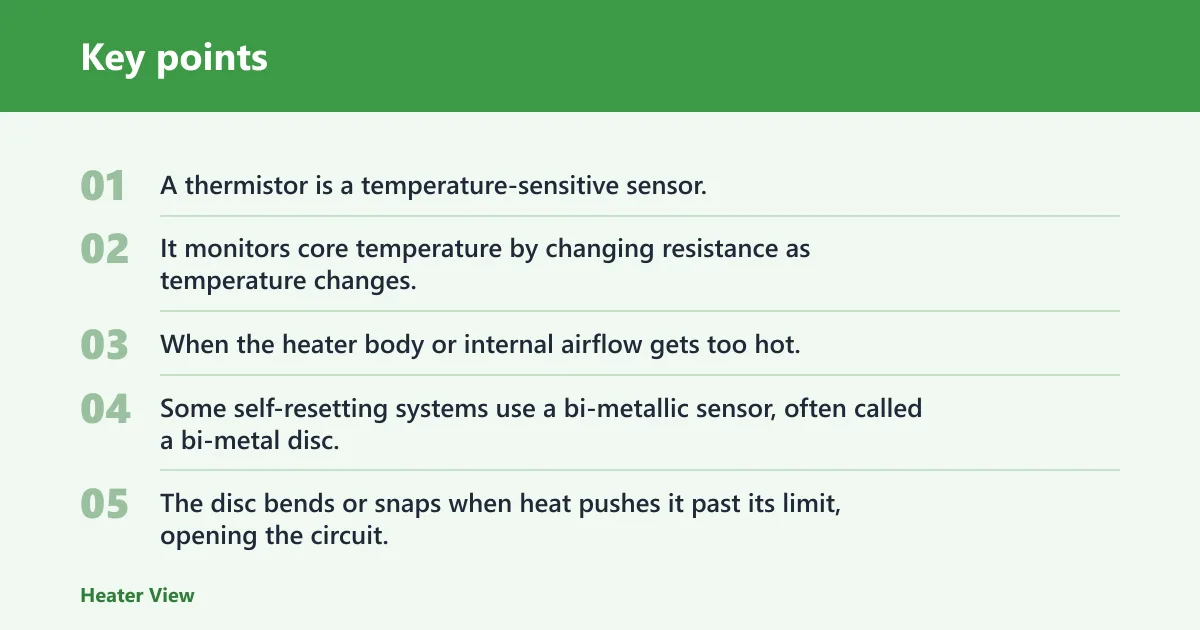
A thermistor is a temperature-sensitive sensor. It monitors core temperature by changing resistance as temperature changes. When the heater body or internal airflow gets too hot, the control circuit can read that change and trigger shutdown at the threshold.
Bi-metallic disc behavior
Some self-resetting systems use a bi-metallic sensor, often called a bi-metal disc. The disc bends or snaps when heat pushes it past its limit, opening the circuit. After the heater cools, the disc snaps back and may restore operation without user action.
Thermal fuse and manual reset
A thermal fuse is a one-time safety cutoff. It can melt or break when it reaches a set temperature, then the heater typically stays off until the fuse is replaced. Thermal fuse trip temperatures may range from 100°C to 200°C depending on model. Manual reset models require the user to push a button before reuse.
Most portable heaters shut down around 130-150°C internally, but the exact trigger point varies by model. That is an internal limit, not a room-temperature target. It also means a heater can trip even if the room still feels only mildly warm.
Is overheat protection the same as a thermostat?
No. Overheat protection is a safety cutoff, while a thermostat manages room temperature or outlet air temperature for normal heating cycles. A thermostat tells the heater when to run to meet a comfort setting. Overheat protection steps in only when something gets too hot inside the unit.
Room control versus safety cutoff
A thermostat can turn the heater on and off all day to hold a set point. Overheat protection should not do that. It should stay out of the way unless airflow fails, dust builds up, or internal parts heat beyond safe limits. That difference matters when you judge a trip.
Why both features can appear on one heater
One heater can have both. The thermostat handles normal cycling; the overheat cutoff handles fault conditions. That is why a heater may run, pause, and restart during ordinary use, then shut down hard if the intake is blocked or the internal temperature rises too far.
Heater safety table
| Symptom | Likely cause | What to do next |
|---|---|---|
| Heater shuts off after a few minutes, then runs again after cooling | Blocked intake, dust buildup, or weak airflow | Unplug it, clear vents, clean dust, and test in open space |
| No heat after cooldown | Manual reset not pressed, thermal fuse opened, or a failed cutoff part | Check for a reset button; if none restores heat, stop using the heater |
| Heater runs but trips whenever the fan speed rises | Restricted exhaust or internal dust coating the heat path | Clean the unit as directed by the maker and inspect for debris inside |
| Heater trips on a crowded power strip | Overused power strip, voltage drop, or overloaded circuit | Plug it directly into a wall outlet on the correct circuit |
| Heater shuts down after being bumped or tipped | Tilt safety or poor placement near soft surfaces | Place it flat on a hard surface and keep it clear of fabric and clutter |
| Heater never restarts after a trip | Thermal fuse may have opened permanently | Do not bypass the fuse; have the unit serviced or replaced |
Why does my heater keep shutting off?
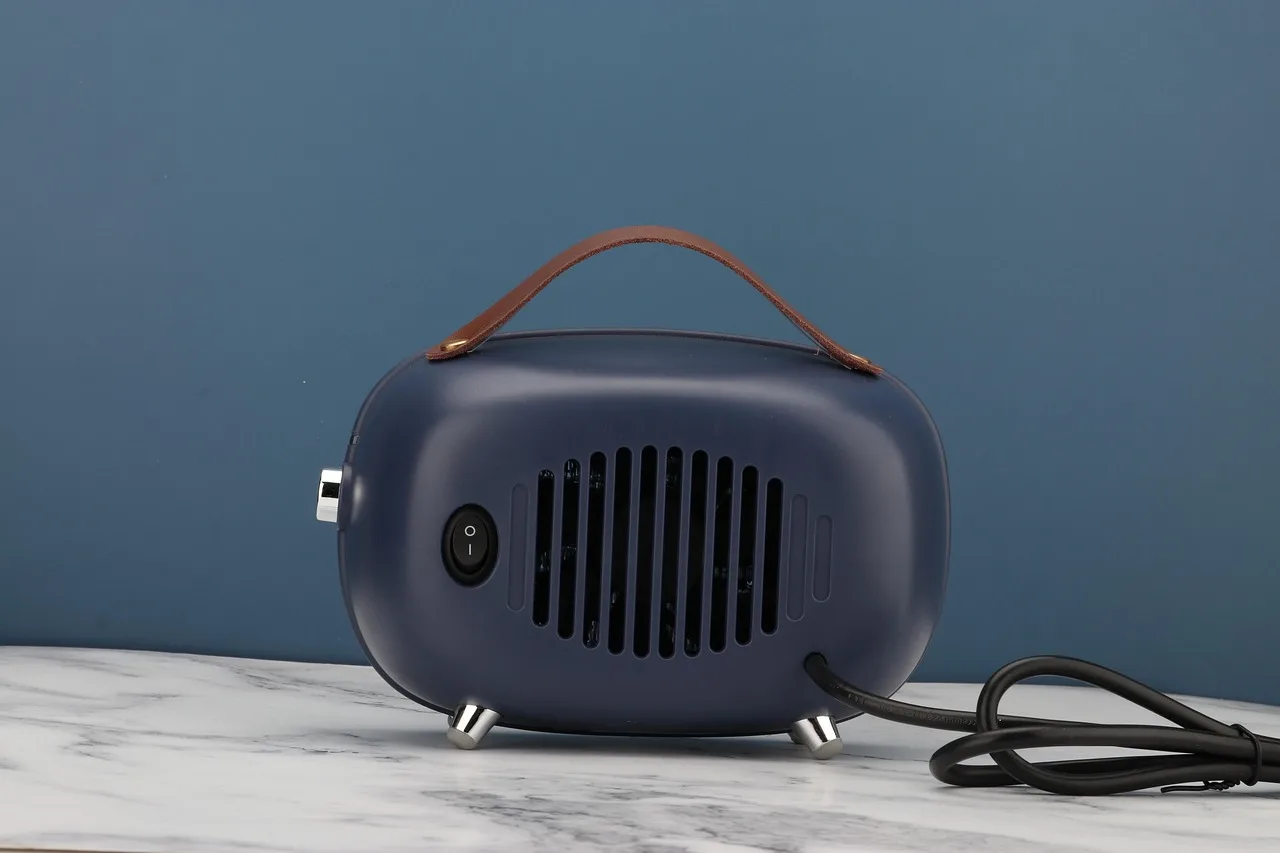
Repeated trips often mean the heater cannot shed heat fast enough, or a part in the safety chain is failing. Common causes can include blocked vents, dust buildup inside the unit, tilt, weak airflow, undersizing, overused power strips, or a damaged cord. Treat repeat shutdowns as a fault, not a nuisance.
Blocked intake or exhaust
If furniture, curtains, bedding, or a wall is too close, the heater can recirculate hot air instead of pulling in cooler air. That raises internal temperature quickly. Even a small gap can matter on compact fan and ceramic heaters with narrow vents.
A common first-timer mistake is placing a portable heater beside a sofa leg and a curtain panel. The room may still feel cold, but the intake sees warmer air and the cutoff trips anyway.
Dust buildup inside the unit
Dust on a heating element, fan blade, or intake screen reduces airflow and traps heat. That can force the thermistor or bi-metal disc past its limit. Regular cleaning helps preserve the cutoff system, because a safety device cannot cool a heater that is packed with lint.
Tilt, weak airflow, or undersizing and undersizing
Some heaters trip because they are placed on an uneven surface or their airflow is partially blocked by carpet pile. Others trip because they are too small for the space and run near full output for long periods. Oversizing can also be a problem if the heater blasts heat into a tight corner with poor circulation.
Overused power strips or damaged cords
Portable heaters draw a lot of current, so a crowded power strip can create extra heat at the plug or inside the strip itself. A frayed cord, loose plug, or hot outlet is a separate hazard. If the plug, cord, or receptacle feels warm, stop using it and inspect the circuit.
- Unplug the heater before inspection.
- Check for blocked vents, lint, or dust on the intake and exhaust.
- Place it on a level, hard surface with clear space around it.
- Plug it directly into a wall outlet, not an overloaded strip.
- Inspect the cord, plug, and outlet for heat, cracks, or discoloration.
- If it still trips, stop using it and service or replace the unit.
What to check before you buy
Look for a heater with a clearly stated reset type, a real safety listing, and a clear installation manual. A UL or ETL listing generally indicates the product was tested to a safety standard. Pairing overheat protection with tip-over protection gives you more fault coverage than a single cutoff.
Reset type and access
Check whether the heater uses automatic reset, a manual reset switch, or a one-time thermal fuse. Self-resetting systems can come back online after cooling, while manual reset models require user action before reuse. If the reset control is hard to reach, you may miss a persistent fault.
Cord, plug, and placement limits
Inspect the cord length and plug type, and read the placement instructions before you buy. Some heaters must sit on a hard floor with open space around the intake and exhaust. If a model depends on a power strip or extension cord, that is a warning sign for a high-current appliance.
Frequently asked questions
What does overheat protection do on a portable heater?
It cuts power when internal parts get too hot, so the heater stops before heat damages wiring or nearby materials. The cutoff is a safety system, not a comfort control. It is there to limit electrical fire risk and keep the heater from cooking itself.
Does overheat protection turn the heater off automatically?
Yes. In most designs, the cutoff works without user input once the internal threshold is reached. Some heaters restart automatically after cooling, while others need a manual reset button. If a heater repeatedly shuts down, the cause still needs to be found.
What temperature does a heater overheat shut off?
Portable heaters may shut down around 130-150°C internally, but the exact trigger point varies by model. Thermal fuse trip temperatures may range from 100°C to 200°C depending on model. You will not see this as a room temperature reading.
Can a portable heater overheat in a small room?
Yes. A small room can still allow blocked airflow, heat buildup, or recirculation around curtains and furniture. Room size does not prevent an internal cutoff from tripping. Placement, vent clearance, and correct heater size matter more than the room label.
Why does my heater keep shutting off on overheat protection?
Repeated trips usually point to blocked vents, dust buildup, tilt, weak airflow, undersizing, or an overused power strip. A failing thermistor, bi-metal disc, thermal fuse, or manual reset switch can also be involved. Stop using the heater until you isolate the cause.
Is overheat protection enough to make a space heater safe overnight?
No. It helps, but it is not a substitute for correct placement, safe wiring, and the user’s instructions. A heater with overheat protection can still overheat if it is covered, tipped, or plugged into a bad strip. Overnight use still depends on the model’s guidance.
What parts make overheat protection work in a portable heater?
The main parts are a thermistor, a bi-metallic sensor or bi-metal disc, a thermal fuse, and sometimes a manual reset switch. Some heaters also use circuit breakers. Together they sense unsafe heat, stop current flow, and in some designs keep the heater off until you intervene.