

Figuring out How Much Does an Electric Garage Heater Cost? can feel tricky, especially if you’re just starting. There are different types, sizes, and features to consider. Don’t worry, though! It’s actually pretty straightforward when you break it down. We’ll go step-by-step, making it easy to see what affects the price. This way, you can get a good idea of what you might spend. Let’s start with the basics.
What Affects the Price of Garage Heaters?
When you’re shopping for a garage heater, the price tag isn’t a random number. Several key factors impact the cost. These range from the type of heater you choose to its power and features. Making the right decision means exploring what will meet your needs. We’ll examine these aspects, providing you with a better grasp of the financial side. You’ll gain the information needed to make an informed choice that fits your budget.
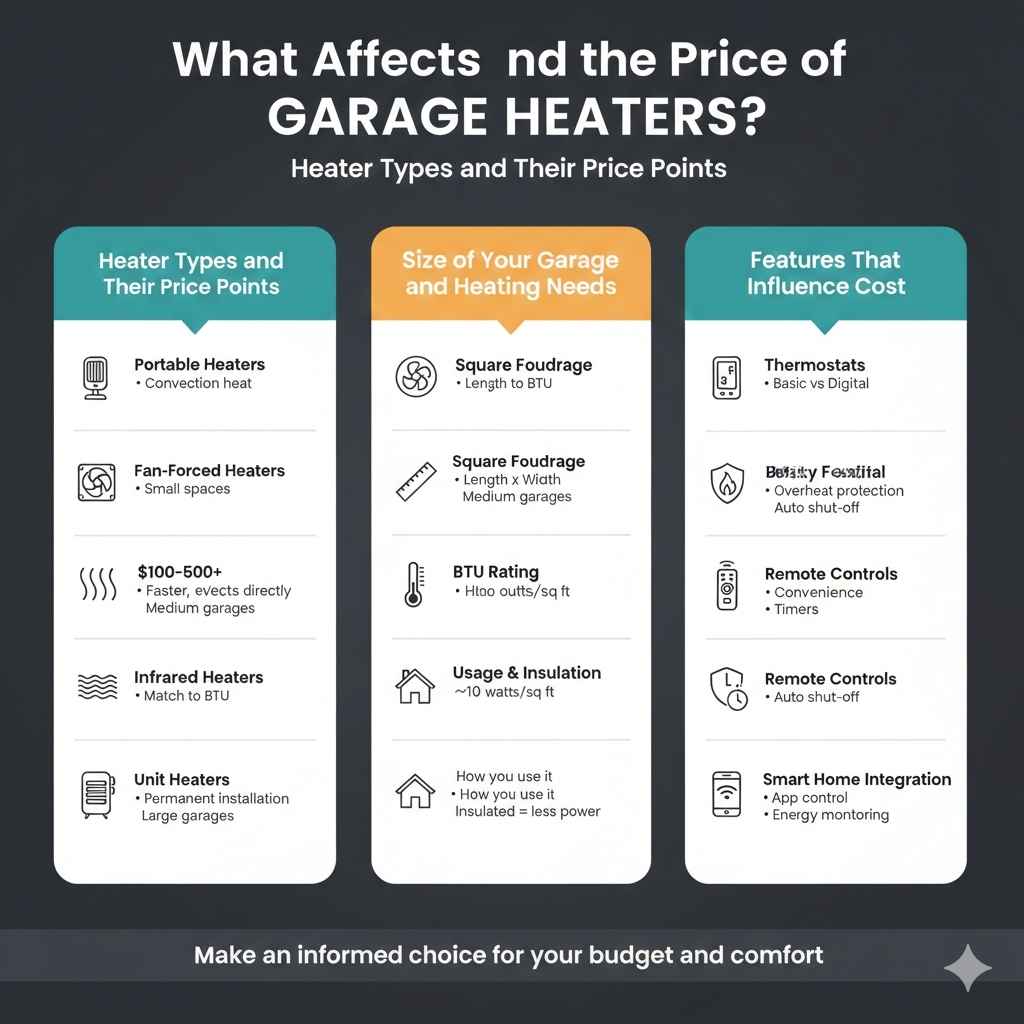
Heater Types and Their Price Points
Electric garage heaters come in a few main types, each with a different price point and set of advantages. The type of heater is one of the biggest influences on the final cost. Knowing the differences between them can help you decide which one is right for your needs. We’ll explore the common types, detailing their typical price ranges and explaining how they work.
Portable Heaters: These are usually the most budget-friendly option. They are small and easy to move around. Portable heaters typically range from $30 to $200. They are a good choice if you only need occasional heating. However, they may not be powerful enough for large garages.
Portable heaters often use convection, where they heat the air around them. They’re great for smaller spaces or warming up an area quickly. Keep in mind that their effectiveness can be limited in colder climates or large, poorly insulated garages.
Fan-Forced Heaters: These heaters have a fan to push warm air throughout the garage. They provide faster and more even heating compared to portable models. Fan-forced heaters typically cost between $50 and $400. They are a popular option for many people who want to heat a medium-sized garage.
Fan-forced heaters come in both portable and fixed models. The fan helps distribute heat more efficiently. These heaters often come with adjustable thermostats, allowing you to set your desired temperature. Make sure you select a model with the right BTU (British Thermal Unit) rating to match your garage’s size.
Infrared Heaters: These heaters warm objects directly, rather than the air. This type is very efficient. Infrared heaters usually cost $100 to $500 or more. They are a good choice if you want to heat up people or objects in a targeted area.
Infrared heaters are excellent for spot heating. They don’t waste energy heating the whole garage. Their efficiency can be especially helpful in large garages. Consider placement carefully to make sure you’re heating the areas you use most often.
Unit Heaters: These are larger, often mounted heaters, and are designed for permanent installation. They provide strong, consistent heat. Unit heaters can range from $150 to over $1,000, depending on their power and features. They are best for large garages that need reliable heating.
Unit heaters are ideal for those who spend a lot of time in their garage. They typically have higher BTU ratings and can heat large areas quickly. Since they’re permanently installed, make sure to consider your garage’s layout and electrical capacity when choosing one.
Size of Your Garage and Heating Needs
The size of your garage is key to selecting the right heater. A small, single-car garage needs less power than a large, multi-car space. Knowing the square footage helps you find a heater with the correct BTU output. In addition to the size, consider how you intend to use the garage. This will affect how much heating power you need.
Square Footage: Measure your garage to find out its size in square feet. This is the first step to figuring out how much heating power you need. Multiply the length of your garage by its width to determine the total square footage. This measurement helps you match the heater’s BTU rating to the size of the space.
For example, a standard two-car garage is often around 400 to 500 square feet. A heater with a higher BTU rating is necessary for a garage of this size. This ensures the unit can effectively heat the area.
BTU Rating: BTU (British Thermal Unit) is the unit of measurement for a heater’s heat output. You need to calculate the necessary BTU for your garage size. A general rule of thumb is to aim for around 10 watts per square foot. However, the exact BTU needed will depend on insulation and local weather.
For a garage that’s 400 square feet, you might require a heater with a BTU rating of around 15,000. It is often a good idea to seek advice from an expert if you are unsure about the required BTU rating.
Usage: How you plan to use your garage influences your heating needs. Do you use it for working, storage, or parking cars? If you spend hours working in the garage, you’ll need a more powerful heater than if you only use it for storage.
Consider the temperature you want to maintain. If you want a comfortable workspace during the winter, you will need a heater with a higher BTU than if you simply want to prevent pipes from freezing.
Insulation: Good insulation helps keep heat in. A well-insulated garage needs less heating power. This can save you money on both the initial cost of the heater and the ongoing energy bills.
Insulation in the walls, ceiling, and even the garage door helps retain heat. If your garage lacks good insulation, you might need a heater with a higher BTU rating. Improving insulation is a long-term investment that reduces energy consumption.
Features That Influence Cost
Beyond the basic heater type and power, features play a significant role in the overall price. Consider these add-ons when making your decision. These features can enhance your experience and provide more convenience, safety, and energy efficiency. They also have an impact on the initial cost.
Thermostats: Almost all electric garage heaters have a thermostat. Basic models may have a simple on/off setting. However, more advanced models offer digital thermostats that allow precise temperature control.
Digital thermostats typically provide better control and can help you save energy by only heating the garage when needed. They often have programmable settings. This feature makes them a convenient choice.
Safety Features: Safety is important when it comes to any heating appliance. Look for features like overheat protection and automatic shut-off. These features will protect you and your garage from potential hazards.
Some heaters also come with tip-over shut-off sensors. This is useful for portable models. These add-ons add to the price but enhance peace of mind.
Remote Controls: Remote controls are a handy feature. They allow you to adjust the heater’s settings without going to the unit. This can be especially useful for garage heaters mounted high up on a wall or ceiling.
Remote controls add convenience, but they also increase the price. Many models offer a range of controls. They usually come with timers. These can be used to set the heater to turn on or off at specific times.
Smart Home Integration: Some modern heaters can connect to your home’s smart system. This lets you control the heater from your smartphone or other devices. This can give you extra control.
Smart home features add to the initial cost. They can also improve energy efficiency by allowing you to monitor and adjust the heater’s settings remotely. They can be a good option for people who want ultimate control.
Breaking Down Electric Garage Heater Costs
Now that we’ve covered the factors affecting price, let’s explore actual costs. We’ll look at a range of prices. This will give you a better idea of what to expect. Keep in mind that prices can change based on the brand, where you buy, and special offers. Here’s a look at the various costs, to guide your budgeting and shopping.
Initial Purchase Price
The purchase price is the most immediate cost you’ll face. As we have seen, the price range varies. It depends on the heater’s type, power, and features. Choosing the correct size and type ensures you meet your heating needs. Consider both your immediate budget and your long-term plans. The heater’s power directly relates to the square footage of the garage. Also, remember that more features typically mean a higher upfront cost.
For example, a small, portable heater for occasional use might cost between $30 and $100. A more powerful unit heater with more features may cost over $500 or more. The upfront cost is the single largest expense. However, it is essential to consider the long-term impact on your energy bills. Quality and efficiency often correlate with a higher initial investment.
Operating Expenses and Energy Consumption
The cost doesn’t end with the purchase. You must account for operating costs, primarily the electricity used by the heater. This can be a significant ongoing expense. The amount of electricity your heater uses will vary. It depends on the heater’s wattage and how often you run it. It will also depend on the price of electricity in your area.
Look at the heater’s wattage rating to estimate its energy consumption. For instance, a 1500-watt heater uses 1.5 kilowatts of electricity per hour. To calculate the cost, multiply the kilowatts by your local electricity rate. Use this calculation to estimate how much the heater will cost to run each month. Efficient heaters, with features like thermostats, can help reduce these costs. They heat the garage only when needed.
Installation and Maintenance Costs
Installation costs can vary. A plug-in portable heater typically requires no installation, other than plugging it in. More complex installations may involve electrical work and professional help. Maintaining your garage heater is also important to ensure it runs efficiently and safely. We’ll look at the expenses associated with these aspects.
Installation: Portable heaters usually require no installation. Unit heaters and fan-forced models, however, might need professional installation. This is especially true if you are adding new electrical circuits or modifying your garage’s wiring. Installation costs can vary from $50 to several hundred dollars.
Make sure to have a qualified electrician handle the installation for safety. Proper installation is crucial for your safety. Make sure the installation follows local electrical codes.
Maintenance: Regular maintenance keeps your heater running smoothly. This includes cleaning the unit, checking electrical components, and inspecting for wear and tear. Basic maintenance can be done by yourself. It includes cleaning the vents and filters.
Professional servicing might be needed. This is often recommended every year or two. The cost of maintenance can range from $50 to $200. This depends on the unit’s type and the work required.
Lifespan and Replacement: Electric garage heaters have a lifespan, which can range from 5 to 15 years. This depends on the quality of the unit and how you maintain it. Eventually, you’ll need to replace your heater. Factor this cost into your long-term budget.
Choosing a high-quality heater from a reputable brand can extend its lifespan. Doing proper maintenance can also help. When it’s time to replace the unit, consider the latest technology. It is a good idea to consider the features that can increase energy efficiency and safety.
Choosing the Right Heater for Your Garage
Choosing the correct electric garage heater involves more than just price. You need to consider your garage’s needs and how you’ll use it. By weighing various factors, you can make an informed choice. It will allow you to find a heater that meets your needs. It will also fit your budget. Here’s how to make an ideal selection.
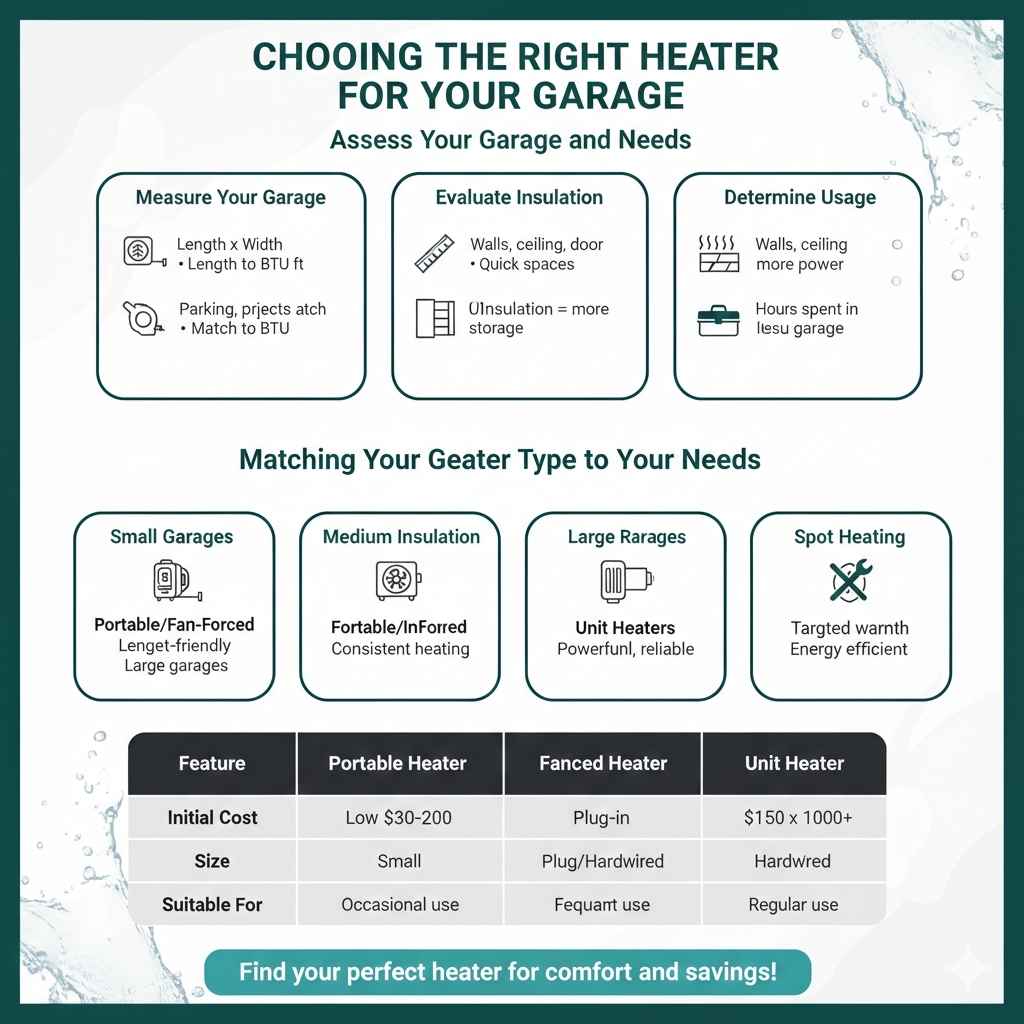
Assess Your Garage and Needs
Before buying a heater, evaluate your garage. This involves measuring its size, checking the insulation, and deciding how you plan to use the space. Doing this homework ensures that the unit you buy is both effective and efficient. Assess the current state and intended usage of your garage. That will guide your buying decisions.
Measure Your Garage: Accurately measure the square footage of your garage. Knowing the dimensions helps you determine the heating capacity needed. Measuring ensures you select a heater that can heat the space.
Measure the length and width of your garage. Multiply these figures to find the area in square feet. This measurement helps calculate the appropriate BTU rating. It also helps you determine the correct heater type.
Evaluate Insulation: Check the insulation in your garage. This includes the walls, ceiling, and garage door. Good insulation helps retain heat. It reduces the required heating power.
Poor insulation means you’ll need a higher BTU heater. It also means increased operating costs. Improving insulation can lead to long-term energy savings.
Determine Usage: Consider how you plan to use your garage. This includes parking cars, working on projects, or storage. Each use case needs a different level of heating.
If you use your garage regularly, you may need a more powerful heater than if you only use it occasionally. Take the time you plan to spend in the garage into account. This will help you decide on the features and power needed.
Matching Heater Type to Your Needs
The type of heater you choose should depend on your garage’s size, usage, and budget. Choosing the right type will ensure that you get the most value for your money. Think about what will best meet your needs. Each type offers different advantages and limitations. Take some time to carefully review your options.
Small Garages: If you have a small garage, a portable or fan-forced heater might be enough. These options are usually budget-friendly. They offer decent heating for smaller spaces.
Small garages typically require less heating power. They provide a quicker warm-up. These heaters are easy to move. They’re a good choice if you don’t need the garage to stay warm all day.
Medium Garages: For medium-sized garages, fan-forced or infrared heaters are often suitable. They provide more consistent heating and better coverage. These heaters balance performance and price.
Fan-forced heaters use a fan to push warm air throughout the space. They provide even heating. Consider both the size and the use of the garage to choose the right heater.
Large Garages: Large garages often need unit heaters. These heaters are powerful and designed for permanent installation. They provide strong, reliable heating.
Consider unit heaters if you spend a lot of time in your garage. They are more costly to buy and install. However, they provide consistent, robust heating for bigger spaces.
Spot Heating: Infrared heaters are good for spot heating. These units warm objects directly. They don’t waste energy heating the whole garage.
Infrared heaters are very useful for targeted heating. They are effective if you want to warm up a specific area. These heaters are energy-efficient. They’re a good choice for people who use a garage for short tasks.
Budgeting and Comparing Options
Once you understand your needs, set a budget and compare different heaters. This means looking at the initial purchase price, operating costs, and any installation or maintenance fees. You can compare the cost per BTU to ensure you’re getting the best value. This careful method can help you find a heater that fits your needs.
Before you commit to a purchase, research different models and brands. Read online reviews. Compare the features, warranties, and energy efficiency ratings. This process helps you to make a decision that matches both your needs and financial constraints.
| Feature | Portable Heater | Fan-Forced Heater | Unit Heater |
|---|---|---|---|
| Initial Cost | Low: $30 – $200 | Medium: $50 – $400 | High: $150 – $1000+ |
| Size | Small | Medium | Large |
| Installation | Plug-in | Plug-in or Hardwired | Hardwired |
| Energy Efficiency | Varies | Generally Good | High |
| Suitable For | Occasional use, small spaces | Frequent use, medium spaces | Regular use, large spaces |
Frequently Asked Questions
Question: What is the most energy-efficient type of garage heater?
Answer: Infrared heaters are often considered to be the most energy-efficient because they heat objects directly. This prevents wasting energy warming the whole garage. Their efficiency can be better, especially in well-insulated spaces.
Question: How do I calculate the BTU needed for my garage?
Answer: A good starting point is to aim for around 10 watts per square foot. However, other factors also come into play. This includes the level of insulation and your local climate. It’s often helpful to consult with a heating expert for the most accurate calculation.
Question: Can I install a unit heater myself?
Answer: While some electric garage heaters are designed to be plug-in models, unit heaters often require professional installation. These units are typically hardwired. This is especially true if you are modifying the existing electrical circuits in your garage. Hiring a qualified electrician is usually the safest approach.
Question: How often should I maintain my electric garage heater?
Answer: For optimal performance and safety, you should conduct regular maintenance. This includes cleaning the vents and inspecting the unit. It is best to schedule professional servicing every one to two years. Following a regular schedule ensures your heater runs efficiently and lasts longer.
Question: What safety features should I look for in a garage heater?
Answer: Essential safety features include overheat protection, which automatically shuts off the unit. Consider tip-over shut-off sensors for portable models. Make sure any heater you choose has a certification from a testing agency, such as UL or ETL.
Final Thoughts
Figuring out How Much Does an Electric Garage Heater Cost? really comes down to a few main things. The type of heater is a major factor, with options ranging from more affordable portable units to the larger unit heaters. Also, remember to consider your garage’s size and how you plan to use it. If you need it just for storage, you won’t need as much power as if you use it for working.
Don’t forget that features like thermostats and remote controls can impact the price too. The goal is to balance your needs with your budget to find the perfect match. This careful approach will help you stay comfortable and save money in the long run. Start by assessing your garage. Then, explore the different heater types. This will enable you to make the right choice.
Last Updated on January 14, 2026 by Tanim