How to Use a Fire Extinguisher on a Heater Fire
Use a fire extinguisher only if the heater fire is small, contained, and you can reach the plug or exit. If flames are spreading, smoke is thick, or you cannot cut power safely, evacuate and call 911. A wrong move can turn a minor heater fault into a room fire, smoke injury, or electrocution. This guide shows the split-second call between extinguisher, unplug, and evacuate for common heater failures.
Heater fire basics
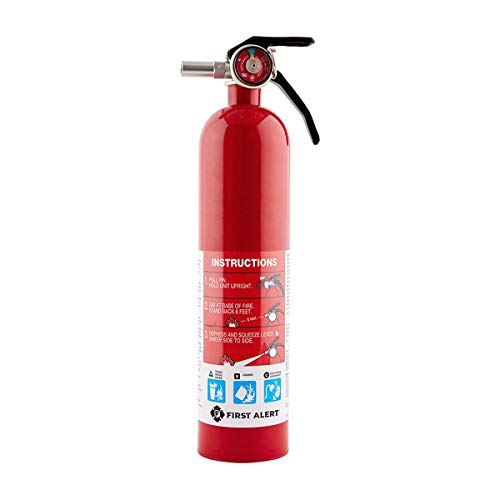
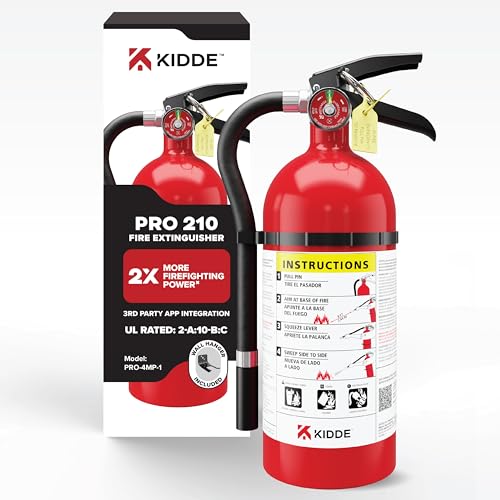

Heater fires often start with electricity, then involve dust, cords, or overheating metal parts. A small flare-up can spread fast, and smoke can cut visibility before the flames look large. Your first decision is whether you can cut power safely; your second is whether the fire is still small enough to attack.
Say your space heater starts sparking at the plug and the cord is still in reach. Unplugging may stop the heat source if you can do it without crossing the fire path. Say flames are already climbing the front grill or touching nearby curtains. That is no longer a plug-and-solve problem.
What you’ll need
- A listed extinguisher should usually have a visible pressure gauge and should be checked for damage and proper pressure on the label.
- A home unit rated for the fire types you may face, usually a multipurpose A:B:C model.
- A clear exit path with no furniture, rugs, or cords blocking the way out.
- Room lights or another way to keep visibility if smoke starts to thicken.
- Phone access for emergency services if you decide not to fight the fire, or if the fire grows while you are acting.
Can you use a fire extinguisher on a heater fire?
Yes, but only when the fire is still small, contained, and you have a clear exit behind you. If the heater is still energized and you cannot reach the plug or shut off power safely, leave it alone and get out. USFA guidance is to use an extinguisher only when the fire is small and contained, and to leave if you are unsure.
When the fire is worth fighting
A heater fire is worth fighting only if the flames are limited to the appliance or a very small nearby item, such as a paper stack or a single cord end, and the path to the door stays open. The first move is to unplug or shut off power if that can be done without crossing the flame area.
When the heater may still be energized
If the heater still hums, glows, sparks, or cycles after the flames start, treat it as energized electrical equipment. That matters because the appliance may re-ignite or keep feeding the fire. In that case, a Class C or multipurpose A:B:C extinguisher may be appropriate if the fire is still small; water is not the right choice on live electrical equipment unless the device is specifically rated for it.
Which extinguisher is safe for energized heater parts?
For energized electrical equipment, choose a Class C extinguisher or a multipurpose A:B:C unit rated for home use. Class C means the extinguisher is intended for fires involving energized electrical equipment. Many home units are multipurpose B-C or A-B-C, which helps when a heater fire starts with wiring, then involves nearby ordinary combustibles. (FEMA)
What the label rating tells you
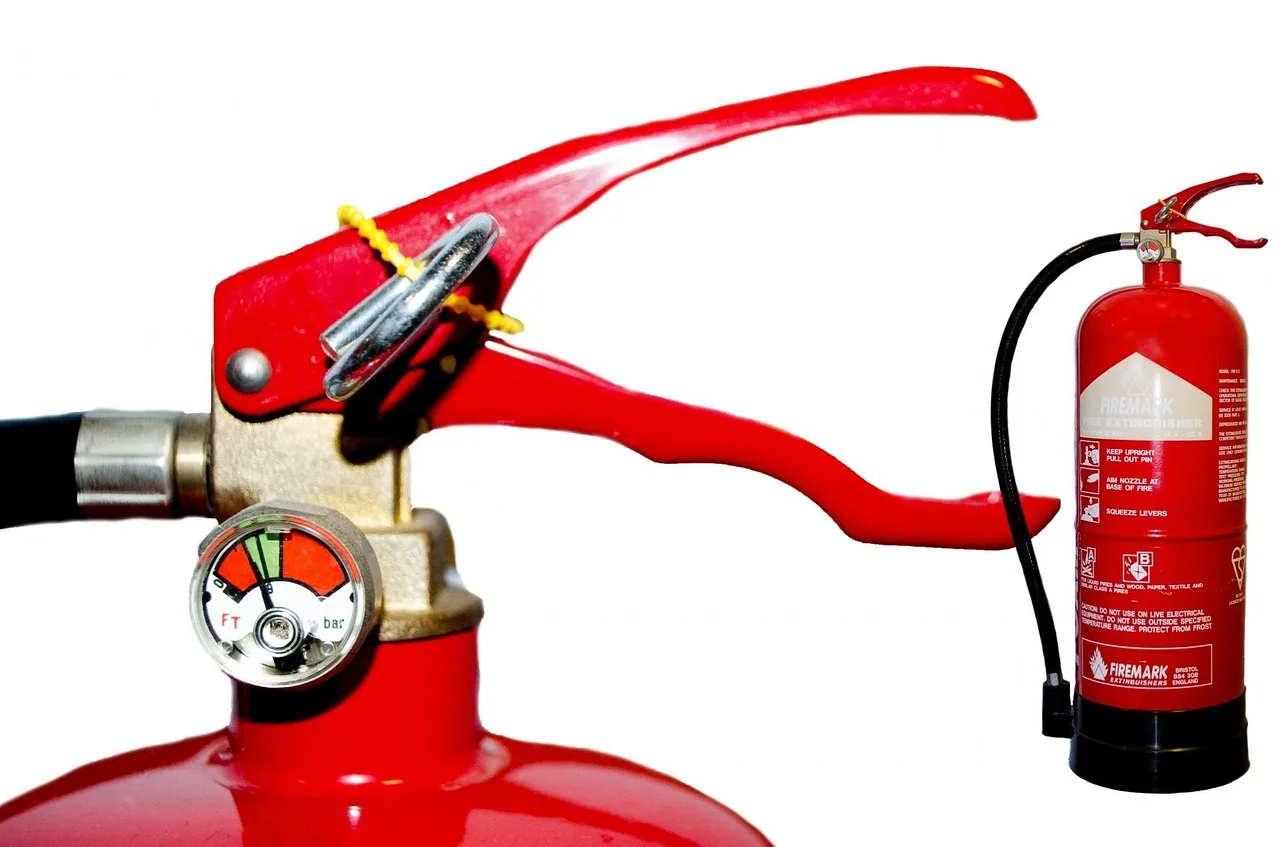
Check the label for the letter class marking, the number rating, and the listing mark. The number rating tells you the size or effectiveness of the unit, and you should choose a rating appropriate to the fire size. Many extinguishers also have a gauge showing whether pressure is too high or too low.
Why water is the wrong choice on live electrical equipment
Water can conduct electricity, which raises shock risk if the heater or its wiring is still live. For energized equipment, use a non-conductive agent such as carbon dioxide or dry chemical if the label indicates the unit is suitable. If the heater is unplugged and the fire is clearly no longer electrical, the fire type can shift, but you still need the right extinguisher for the materials burning.
Heater fire decision checklist
| Fire sign | What to do first | Is a fire extinguisher appropriate? |
|---|---|---|
| Sparks from a plug, cord, or outlet | If the plug is reachable without passing the fire, cut power or unplug, then decide whether the fire stayed tiny. | Yes, if the fire is still small and contained; use a Class C or multipurpose A:B:C unit. |
| Flames at the heater housing | Back out if the heater is still plugged in or the flames are touching nearby items. Keep your exit behind you. | Only if the fire is very small, the exit is clear, and power can be cut safely first. |
| Smoke with no visible flames | Unplug or shut off power if safe, then watch for flare-up from dust, wiring, or insulation. | Maybe. Use an extinguisher only if a flame appears and stays contained. |
| Fire spreading to curtains, bedding, or furniture | Leave immediately and close the door if you can do so without delay. | No. Evacuate and call emergency services. |
| Smoke thick enough to block your view | Get out at once; do not try to find the extinguisher if the exit is no longer clear. | No. Leave and call emergency services from outside. |
How to use the extinguisher
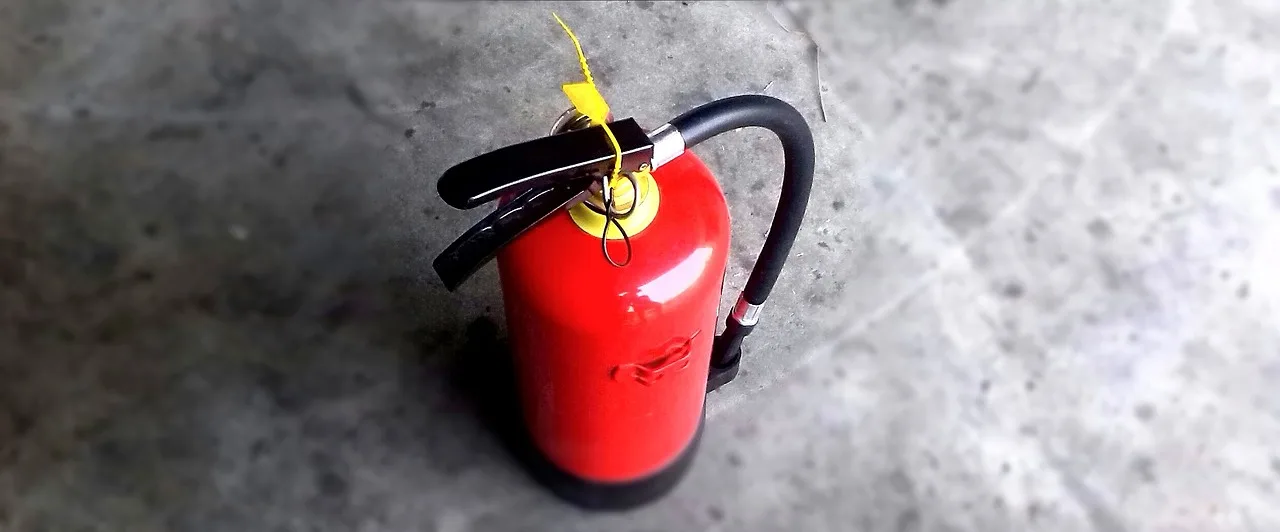
Use the extinguisher only after you have a clear exit and the fire is still small enough to control. Aim low at the base of the fire, not at the top of the flames. The PASS method is Pull, Aim, Squeeze, Sweep, and the label on your unit should guide the exact operating distance for that model.
- Pull the pin. Hold the extinguisher upright and break the seal. If the unit has a different locking device, follow the label on your model.
- Aim at the base. Point the nozzle at the lowest burning point. USFA guidance is to aim low and at the base of the fire.
- Squeeze the handle. Apply the lever or handle in a steady motion. Keep the extinguisher between you and the fire only if your exit stays open.
- Sweep side to side. Move the stream across the base until the flames are out. If the fire flares again, stop and leave unless you still have a clear, safe path and the fire remains small.
- Watch for re-ignition. Heat can remain in the heater, cord, or nearby material after the visible flames disappear. If smoke returns or the fire grows, evacuate.
A common first-timer mistake is spraying the top of the flames. That wastes agent and leaves the burning base active. Another is stepping closer just to keep spraying; follow the label distance for your model instead of guessing.
When should you evacuate instead?
Leave immediately if flames spread beyond the heater, smoke starts to obscure the room, or the fire moves toward curtains, bedding, or the exit. If you are alone and not sure the fire is still contained, do not spend time debating it. USFA says to call the fire department if unsure and leave the building.
When visibility drops or the exit is at risk
Once smoke blocks your view or the fire is between you and the door, stop fighting it. Keep an exit at your back at the start, and never let the fire get between you and your way out. If you can leave only by crossing the fire area, the extinguisher is no longer the right tool.
What to do after you leave
Get outside, close the door if that does not slow your escape, and call emergency services. Do not go back in for pets, chargers, or other items. If you used the extinguisher and the fire seemed out, wait for the fire department to confirm the heater area is safe, because re-ignition can happen after the visible flame is gone.
Choosing and keeping a home extinguisher ready
For a home, a multipurpose A:B:C extinguisher is the practical default because it covers ordinary combustibles, flammable liquids, and energized electrical equipment. Choose the largest extinguisher you can safely and comfortably operate, and keep it accessible near high-risk zones such as the kitchen, utility area, or rooms where heaters are used. Check the gauge and housing for pressure or damage on a regular basis.
Keep the extinguisher where you can reach it without passing the heater itself. That matters more than hiding it in a closet across the house. For heater use, the device should be visible, reachable, and easy to grab while keeping your exit open.
Frequently asked questions
What should I do before using a fire extinguisher on a fire?
Check for a clear exit, confirm the fire is small and contained, and decide whether you can unplug or shut off power first. If the fire blocks your way out or you are unsure it will stay small, leave and call emergency services. Do not spend time looking for a better angle if the room is filling with smoke.
What does PASS mean on a fire extinguisher?
PASS means Pull the pin, Aim at the base of the fire, Squeeze the lever or handle, and Sweep side to side. The sequence is simple, but the key judgment is before you pull the pin: the fire must still be small enough that you can leave safely if it grows.
How far should I stand from a fire when using an extinguisher?
Follow the distance on the extinguisher label and the owner’s instructions for your exact model. Do not guess a universal distance, because nozzle reach varies by unit and discharge pattern. Keep your exit behind you, and move only as needed to keep the stream on the base of the fire.
Which extinguisher class is safe for energized electrical equipment?
Class C is the class for fires involving energized electrical equipment. A multipurpose A:B:C extinguisher is common for homes because it also covers ordinary combustibles and flammable liquids. Use a unit with a non-conductive agent if the equipment may still be live, and never use water on live electrical equipment unless the product is specifically rated for that use.
Do home fire extinguishers need a UL listing?
A UL Listed marking is a practical check for a home extinguisher because it shows the unit has been listed by a recognized safety lab. Look for the label rating, the UL Listed mark, and a pressure gauge. If those are missing, choose another unit and check the manufacturer’s listing for the exact model.
Which fire extinguisher should I use on an electrical fire?
Use a Class C extinguisher or a multipurpose A:B:C unit when the electrical equipment is energized. Dry chemical and carbon dioxide units are common non-conductive options. If the item is unplugged and the fire is now burning nearby materials, you still need the right class for the actual fuel, not just the device.