Are Heaters Safe in Unfinished Basements?
Reviewed by a licensed HVAC and building-science editor. Safety recommendations below are based on manufacturer installation instructions, CPSC portable-heater guidance, NFPA/ICC/IRC basement and combustion-air principles, and EPA/DOE basement moisture and efficiency guidance. This article focuses on pass/fail safety checks first; when a heater choice depends on the exact model, follow the unit’s listed installation manual and local code.
Are heaters safe in unfinished basements?
Yes, but only in specific conditions. Unfinished basements can be heated safely when combustion appliances are vented correctly, moisture is controlled, and the heater is rated for the space; otherwise, keep the basement unconditioned. Poor heating can raise condensation, mold, and carbon-monoxide risk, and it can waste energy by warming a damp space that still loses heat quickly (EPA basement moisture guidance; DOE Energy Saver; NFPA carbon-monoxide guidance).
An unfinished basement sits below grade, often with drafts and weak insulation. It usually has concrete floors, exposed joists, storage, workshop space, or laundry equipment. Those conditions change heater safety. Humidity is often higher there, and that can affect both comfort and equipment life (EPA basement moisture guidance; DOE Energy Saver).
Method note: The checks in this article were derived from the most conservative overlap of manufacturer manuals, CPSC space-heater safety guidance, and common code concepts in NFPA/ICC/IRC references. Where a number varies by model, the article avoids a universal rule and points you back to the appliance label/manual and local code officials.
Basement heater decision table
| Basement condition | Safe heat type | Red flags | Action |
|---|---|---|---|
| Damp storage basement with cardboard boxes, no insulation, and signs of seepage | Usually none; only temporary spot heat from a portable electric heater with tip-over and overheat protection | Standing water, musty odor, rust, peeling paint, wet floor spots, extension cords, blocked egress | Fix water intrusion first, improve drainage and humidity control, and leave it unconditioned if storage is the only use |
| Workshop with no combustion air and sawdust near benches | Wall-mounted electric heater on a dedicated circuit, or a properly installed direct-vent unit if permitted | Gas heater without combustion air, dust near burner, storage within clearance zones, low ceiling height | Clear combustibles, verify electrical capacity, and avoid any fuel-burning heater unless venting and clearances are code-compliant |
| Utility room with a gas water heater or furnace already present | Direct-vent or power vent equipment designed for basement use, installed to manufacturer instructions | Backdrafting, shared air with other appliances, blocked vent piping, no CO alarms | Have the venting and combustion air reviewed before adding heat; do not assume the room can handle another gas appliance |
| Partially finished rec room with insulated walls and limited moisture | Electric space heater for spot heat, or a properly sized vented system for whole-space heating | Cold floor by itself, oversized heater cycling, outlets on a shared circuit, missing GFCI protection in damp areas | Choose the smallest heat source that meets the load, check the circuit, and keep storage outside clearance zones |
Pass/fail check: If you see standing water, active seepage, blocked egress, or a heater location that cannot maintain the appliance’s listed clearances, the answer is fail until the basement is corrected. If the space is dry, the appliance is installed exactly to the manufacturer manual, and electrical/venting conditions meet code, the answer is pass for that specific heater type (manufacturer manuals; EPA basement moisture guidance; CPSC space-heater safety).
When heating is acceptable versus when it is not
Heating is acceptable when the basement stays dry enough to protect the equipment, clearances can be maintained, and the heater type matches the use. It is not a good idea when the space has recurring water intrusion, uncontrolled humidity, or storage that would crowd the heater and block airflow (EPA basement moisture guidance; CPSC space-heater safety; manufacturer installation instructions).
Say your basement is 700 square feet with exposed joists and a dehumidifier already running. A wall-mounted electric unit may make sense for short use in one work area. If the same room floods after heavy rain, the safer answer is to fix the water issue first and keep the space unconditioned (EPA basement moisture guidance; DOE Energy Saver).
What makes an unfinished basement risky?
Moisture, drafts, and exposed construction make unfinished basements harder to heat safely than finished rooms. Heat escapes through concrete, gaps at rim joists, and leaky windows, while higher humidity can corrode heater parts and encourage condensation on cold surfaces. Storage and exposed framing also shrink safe clearance space (EPA basement moisture guidance; DOE Energy Saver; manufacturer manuals).
Moisture, condensation, and corrosion
Relative humidity is often elevated in basements, which can shorten heater life and create nuisance cycling as the appliance heats damp air and cool surfaces again. Condensation on metal housings, wiring, and burner compartments is a real issue. A heater that sits in a wet or damp floor environment needs careful electrical protection and periodic inspection (EPA basement moisture guidance; CPSC space-heater safety; manufacturer instructions).
Drafts, infiltration, and heat loss
Basements can lose heat quickly when the walls are uninsulated, the rim joist leaks air, or windows are old. A typical rule of thumb is 30–40 BTU per square foot for an unfinished basement in moderate climates, but that is only a starting point and should not be used as a code or safety rule. Actual heat loss depends on square footage, ceiling height, wall construction, window area, and infiltration (DOE Energy Saver; manufacturer sizing guidance; local energy-code practice).
Exposed framing, storage, and clearance issues
Exposed joists, ductwork, shelves, and stacked storage can place combustibles too close to heater surfaces. That matters more with gas-fired equipment, but electric units also need space around them. Keep racks, workbenches, insulation, and boxes outside the specified clearance zone. Storage that migrates into the heater area is a common failure point (manufacturer installation manuals; CPSC space-heater safety; NFPA principles on combustibles around heating equipment).
Which heater type is safest here?
The safest heater depends on the basement’s use and the fuel type. For many unfinished basements, electric heat is the simplest option because it avoids combustion products. Gas-fired units can be safe only when they have proper venting, combustion air, and clearances. Direct-vent and power vent models are usually safer than natural draft in basement installs, but the model manual controls the final requirement (CPSC space-heater safety; NFPA/ICC/IRC venting and combustion-air principles; manufacturer manuals).
Electric space heaters and spot heat
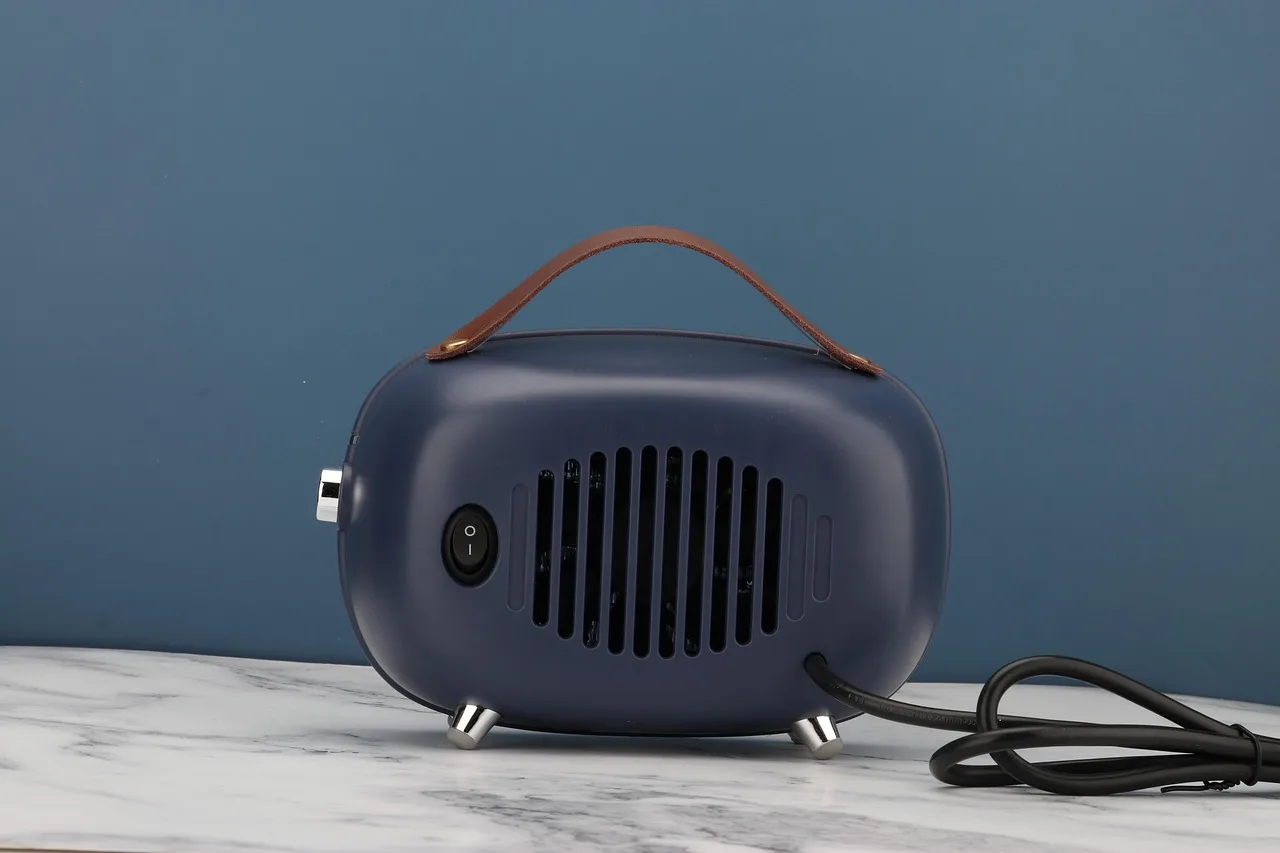
An electric space heater is often a roughly 1500-watt portable or wall-mounted unit with overheat protection and tip-over protection. It is best for spot heating, not whole-basement heating. A unit like the Dr Infrared Heater portable model is rated at about 1500 watts and lists a thermostat range of about 50–85°F, which is generally suited to local comfort use rather than a whole-house load. Use model-specific data only as an example unless the heater’s manual matches your exact installation (CPSC space-heater safety; manufacturer specifications).
Electric unit heaters need a dedicated circuit when the appliance manual calls for one, and the circuit must be sized for the nameplate load. In damp basement conditions, that circuit should be grounded and protected according to local electrical requirements, with GFCI protection where required. A portable heater can still be unsafe if it runs on an overloaded circuit or sits where water can reach it (NFPA/NEC principles as adopted locally; CPSC space-heater safety; manufacturer instructions).
Gas-fired unit heaters and venting needs
Gas-fired unit heaters deliver higher BTU output than most plug-in heaters, but they also require combustion air, outdoor venting, and clearances to combustibles. Do not rely on a generic clearance number; use the unit’s installation manual and rating plate because required spacing varies by model and listing. The same is true for mounting height and any air-distribution requirement (manufacturer manuals; NFPA/ICC/IRC combustion-air and venting principles).
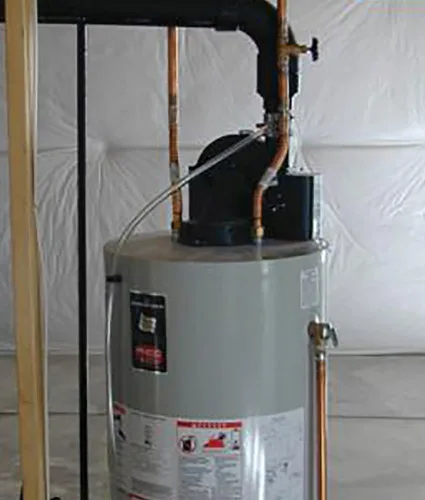
Do unfinished basements need vented heat? If the heater burns fuel, yes. Category I venting uses a vertical chimney or B-vent, while Category III venting uses a fan to push exhaust through a sidewall vent. Natural draft is often the weakest choice in a basement, where pressure differences and limited air movement can cause problems. The proper vent category is the one listed by the appliance manufacturer, not a universal basement rule (manufacturer manuals; NFPA/ICC/IRC venting guidance).
Direct-vent and power vent options
Direct vent systems draw combustion air from outside and exhaust outside, which reduces indoor combustion exposure. That makes them a better fit where carbon monoxide, makeup air, or humidity concerns are part of the safety plan. Power vent units use fan-assisted exhaust and dedicated vent piping, and they are often preferred over natural draft in basement installs, provided the manual allows that configuration (manufacturer manuals; NFPA/ICC/IRC guidance).
If combustion products are a concern, direct vent is usually the safer path. It does not remove every risk, because installation, vent routing, and clearances still matter, but it reduces dependence on room air. That is especially relevant in a basement with other appliances or limited ventilation (NFPA/ICC/IRC combustion-air principles; manufacturer manuals).
What safety checks should you perform first?
Before adding heat, check clearances, venting, the electrical supply, and water exposure. Those four items determine whether a heater is safe in the room at all. If any one of them fails, the better answer is to fix the basement conditions first rather than force the heater to work around them (manufacturer manuals; CPSC space-heater safety; EPA basement moisture guidance).
Clearances to combustibles
Read the nameplate and installation instructions before placement. Keep the heater away from side and back combustibles, and also respect bottom clearance where required. Do not place fuel-burning equipment near shelves, insulation, lumber, or workbenches just because the floor area looks open. The space above and below the unit matters too, and the listed clearance is the only reliable number for that model (manufacturer manuals; NFPA/ICC/IRC principles).
CO alarms and ventilation paths
Carbon monoxide is a key risk with gas-burning heaters, especially in spaces with limited ventilation. CO alarm placement should be part of the safety plan, not an afterthought. Place alarms according to the alarm manufacturer’s instructions and applicable code; do not assume a basement utility room needs only one alarm for all layouts. If the basement has utility appliances, verify that ventilation paths are not blocked and that no appliance can backdraft when another unit starts (UL 2034 / NFPA CO-alarm guidance; manufacturer alarm instructions; NFPA/ICC/IRC combustion-air principles).
GFCI, grounding, and circuit load
Electrical safety matters in damp basement environments. Check grounding, moisture exposure, and whether the circuit can carry the heater load without nuisance trips or overheating. Larger electric heaters may need a dedicated circuit, and any outlet near a damp floor should be treated as part of a water-intrusion risk check. If the outlet or panel condition is uncertain, call a licensed electrician before installing the heater (manufacturer manuals; NEC as adopted locally; CPSC electrical-safety guidance).
Moisture and water-intrusion checks
Look for active seepage, damp corners, rust on metal parts, efflorescence on concrete, and signs of condensation on pipes. If the floor gets wet after storms, the basement is not ready for a permanent heater. A heater placed in a wet area can corrode faster and become an electrical hazard. EPA and DOE both recommend solving moisture problems before trying to condition the basement as if it were a dry living space (EPA basement moisture guidance; DOE Energy Saver).
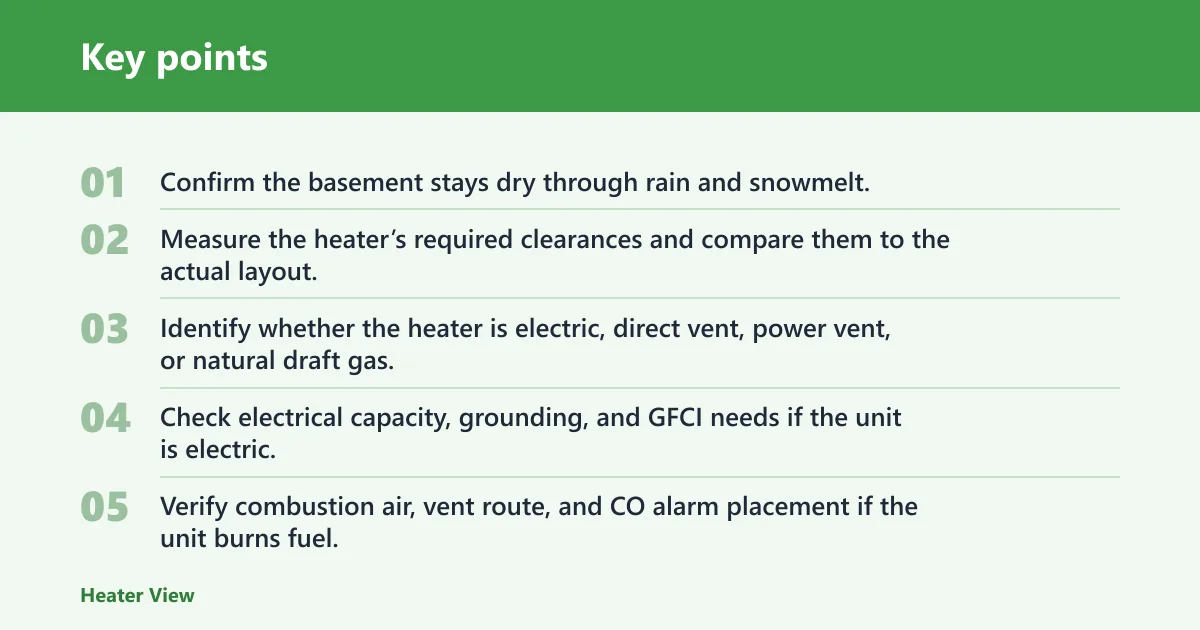
- Confirm the basement stays dry through rain and snowmelt.
- Measure the heater’s required clearances and compare them to the actual layout.
- Identify whether the heater is electric, direct vent, power vent, or natural draft gas.
- Check electrical capacity, grounding, and GFCI needs if the unit is electric.
- Verify combustion air, vent route, and CO alarm placement if the unit burns fuel.
- Keep storage, insulation, and tools outside the heater’s clearance zone.
How do you size heat for a basement?
Basement heat sizing starts with heat loss, not with guesswork. Square footage matters, but so do ceiling height, wall construction, window area, and infiltration. Under-sizing leaves the room cold and can make the heater run constantly. Over-sizing can cause short cycling, uneven comfort, and extra wear. Use a room-by-room load calculation or the manufacturer’s sizing method for the appliance type you are considering (DOE Energy Saver; manufacturer sizing guidance).
Square footage and ceiling height
A larger basement needs more heat, but ceiling height changes the total air volume too. A low-ceiling room may warm quickly yet still feel cold if the walls and slab stay chilly. Use the room’s actual dimensions, not the house’s overall size, when judging heater capacity (DOE Energy Saver; manufacturer load-calculation guidance).
Wall and window heat loss
Concrete walls without insulation lose heat differently than framed and insulated walls. Window area increases loss, especially with old single-pane units or drafty covers. If one side of the basement has exposed foundation and another side is insulated, the heater load is not evenly distributed. That affects placement as much as capacity (DOE Energy Saver; EPA basement moisture guidance).
Why under-sizing and over-sizing both matter
Under-sizing can tempt someone to add a second heater without fixing the load calculation. Over-sizing can create hot spots near the unit while the far side stays cold. A common mistake is placing a portable heater in the center of an unfinished basement because one corner feels damp and chilly, then finding that exposed joists and gaps around the rim joist are what are making the space feel unsafe and hard to heat. If the load is not obvious, a qualified HVAC pro should calculate it rather than relying on a rule of thumb (DOE Energy Saver; manufacturer sizing guidance).
How much does it cost to heat an unfinished basement?
Cost depends on fuel type, run time, heat loss, and whether the basement is dry enough to hold temperature. Electric heat is often simpler to install, but it can cost more to run than gas in a large, leaky space. Humidity control also changes the bill because damp air takes more energy to condition (DOE Energy Saver; EPA basement moisture guidance).
Electric operating cost basics
A 1500-watt electric space heater uses 1.5 kilowatts when running at full output. Actual operating cost depends on local electricity rates and how often the heater cycles. If the basement is only used occasionally, spot heating can be cheaper than conditioning the entire space (utility-rate basics; DOE Energy Saver).
Gas fuel use and install cost
Gas heaters often cost more to install because venting, combustion air, and clearances must be built into the plan. That is especially true for direct vent and power vent systems. The payback depends on basement size, use pattern, and the existing gas service, not on heater price alone (manufacturer manuals; NFPA/ICC/IRC venting principles).
Why humidity control can change the bill
If the basement stays damp, a heater has to work harder to warm cold surfaces and recover after each cycle. Dehumidification can reduce condensation and make the space easier to heat safely. In many basements, solving moisture first lowers both operating cost and equipment wear (EPA basement moisture guidance; DOE Energy Saver).
Frequently asked questions
Should you heat an unfinished basement?
Heat it only if the space is dry enough, the heater type fits the room, and the use justifies the added cost. Storage-only basements with recurring seepage are usually better left unconditioned until moisture is controlled. A partially finished or frequently used basement can be worth heating if clearances and electrical or venting limits are met (EPA basement moisture guidance; manufacturer manuals; CPSC space-heater safety).
What heater is safest for an unfinished basement?
For many unfinished basements, a properly installed electric heater is the safest option because it avoids combustion products. If you need fuel-burning heat, direct-vent or power-vent equipment is generally safer than natural draft, provided the installation meets clearance, venting, and local code requirements. Safety still depends on moisture control and circuit or vent checks (CPSC space-heater safety; NFPA/ICC/IRC principles; manufacturer manuals).
Can I use an electric space heater in a basement?
Yes, if the unit has overheat and tip-over protection, sits clear of combustibles, and runs on a circuit that can handle the load. Treat it as a spot heater, not a whole-basement solution. In damp areas, check grounding, outlet condition, and whether GFCI protection is required by code. If the outlet, cord, or breaker condition is uncertain, have an electrician evaluate it first (CPSC space-heater safety; NEC as adopted locally; manufacturer instructions).
Are gas heaters safe in unfinished basements?
They can be, but only with proper combustion air, outdoor venting, and required clearances. Gas heaters also need CO alarm planning because limited ventilation can let carbon monoxide build up. If the basement has moisture, storage crowding, or other appliances, the safety bar is higher, not lower. When in doubt, have an HVAC professional verify venting and combustion-air adequacy before operation (UL/NFPA CO-alarm guidance; NFPA/ICC/IRC combustion-air principles; manufacturer manuals).
What clearances and venting do basement heaters need?
Follow the manufacturer’s installation instructions exactly. Do not use a generic clearance or mounting-height number unless it appears in the specific model’s manual. Venting may be Category I with a vertical chimney or B-vent, Category III with fan-assisted sidewall venting, or direct vent with air drawn from outside, depending on the appliance listing and local code (manufacturer manuals; NFPA/ICC/IRC venting principles).
How do you heat a basement cheaply and efficiently?
Start by cutting heat loss: seal air leaks, manage humidity, and insulate where practical. Then choose the smallest safe heater that matches the basement’s use. For short, occasional use, a 1500-watt electric heater may be enough for spot heating. For full-time use, size the system to the actual heat loss instead of guessing, and call a qualified HVAC professional if the load is unclear or if fuel-burning equipment is involved (DOE Energy Saver; EPA basement moisture guidance; manufacturer sizing guidance).
Sources
Manufacturer installation and owner manuals; CPSC portable space-heater safety guidance; NFPA / IRC / ICC combustion-air, venting, and heating-equipment principles; UL 2034 or equivalent CO-alarm guidance; EPA basement moisture guidance; DOE Energy Saver guidance on basement moisture, insulation, and efficiency.