What Does Heating Type FWA Mean: Essential Guide
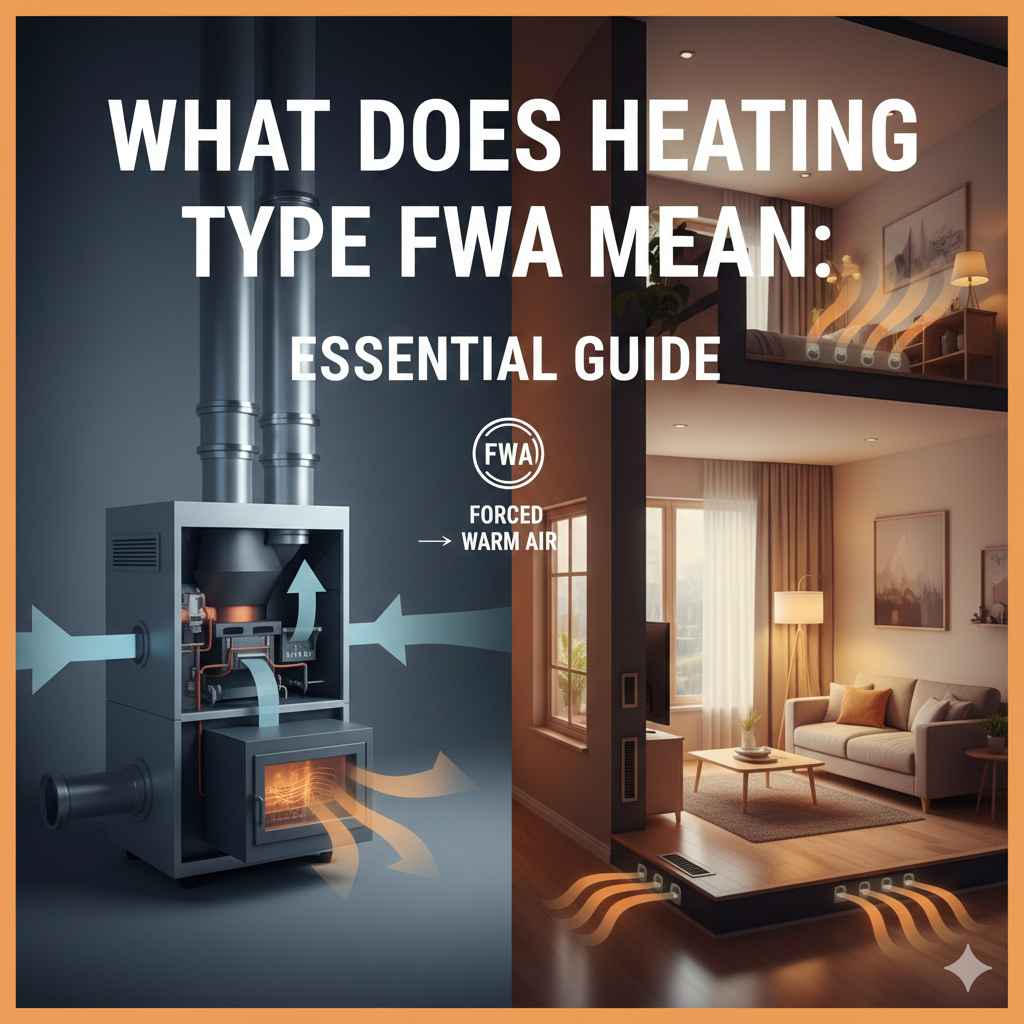
Heating Type FWA typically stands for “Forced Warm Air.” It describes a very common heating system that blows heated air through ducts in your home, similar to how your air conditioner works in the summer. Understanding this type helps you manage comfort and efficiency.
For a closely related heater topic, What Type of Portable Heater is : to Warmth gives readers a useful next step.
For a closely related heater topic, What Does Heating Type “Forced Air” Mean? A Simple gives readers a useful next step.
For a closely related heater topic, What Does Heating Type “Heat Pump” Mean? Explained Simply gives readers a useful next step.
Have you ever looked at your heating system documentation or a home inspection report and seen the term “FWA”? It can feel like learning a secret language just to keep your house warm. Seeing codes like this is frustrating when all you want is a cozy, warm home!
Don’t worry! You don’t need an engineering degree to figure this out. FWA simply describes one of the most popular ways homes get heated across the country. We are going to break down exactly what Forced Warm Air means, how it works in your home, and why it matters for your comfort and wallet.
By the end of this guide, you will be able to talk confidently about your heating system, know how to keep it running smoothly, and feel in charge of your home comfort. Let’s dive into making your heating system clear and simple!
Decoding the Jargon: What “FWA” Actually Stands For
In the world of home maintenance, acronyms rule! When you see “Heating Type FWA,” it is a shorthand way of describing the heating mechanism your home uses. It’s much easier than writing out the full name every time!
FWA stands for: Forced Warm Air.
This is perhaps the most common central heating system you will find in homes built in the last 60 years, especially in regions that experience cold winters. If your home has vents on the floor, walls, or ceiling that blow out heat, you likely have an FWA system.
How Forced Warm Air (FWA) Systems Work: A Simple Look
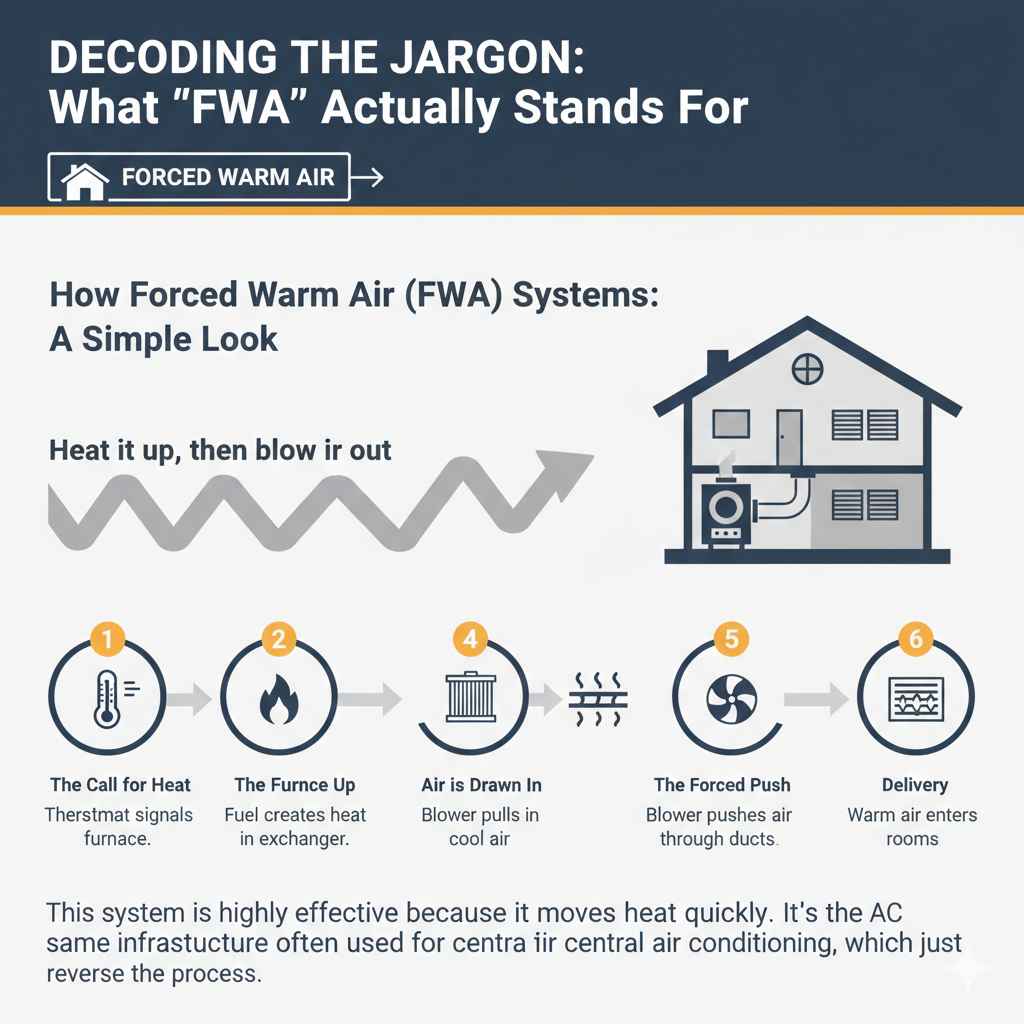
The beauty of Forced Warm Air is its simplicity and speed. It operates on a straightforward cycle: Heat it up, then blow it out. Think of it like a giant, powerful hairdryer connected to all your rooms.
Here is the step-by-step process, broken down into easy stages:
- The Call for Heat: You turn up the thermostat (your home’s command center). The thermostat senses the temperature is too low and sends a signal to the furnace (the heating unit).
- The Furnace Fires Up: Inside the furnace, a fuel source (natural gas, propane, oil, or electricity) creates heat. The heat is transferred safely within a heat exchanger.
- Air is Drawn In: A large fan, called the blower, pulls cool air from your house (usually through a return vent).
- The Warm-Up: This cool return air passes over the hot heat exchanger. The air gets warm very quickly.
- The Forced Push: The powerful blower motor then “forces” this newly heated air through the ductwork—the network of metal tunnels running through your walls and floors.
- Delivery: The warm air exits through the registers (vents) into each room, raising the overall temperature.
- The Cycle Repeats: Once the thermostat hits the desired temperature, the furnace shuts off, and the fan usually runs for a short time to push out any remaining warm air before stopping until the next cycle begins.
This system is highly effective because it moves heat quickly across large areas simultaneously. It’s the same infrastructure often used for central air conditioning, which just reverses the process (it uses the same ducts to blow cool air).
Components of a Forced Warm Air (FWA) System
To truly understand your FWA system, it helps to know the main players involved. These parts work together constantly to keep you comfortable. If any one part fails, the whole system struggles.
The Furnace (The Engine)
This is the heart of your FWA system. Furnaces vary based on the fuel they use. Here are the most common types you might have:
- Gas Furnaces: These are the most common. They burn natural gas or propane to create heat. They are generally efficient and offer fast heat delivery.
- Oil Furnaces: Used primarily where natural gas lines aren’t available, these burn heating oil stored in a tank.
- Electric Furnaces: These use electric heating elements (like a giant toaster element) to warm the air. They are generally cleaner to operate but can sometimes be more expensive to run depending on local electricity rates.
The Blower Motor and Fan
This component is crucial to the “Forced” part of Forced Warm Air. The blower motor moves the air. If the fan breaks, the furnace might heat up, but the air will sit right there, unable to reach your rooms. A healthy blower ensures even heating throughout the house.
Ductwork (The Highways)
Ductwork is the network of insulated metal or flexible tubes that carry the heated air from the furnace to the registers and return the cooler air back to the furnace. Leaky or poorly insulated ducts are a massive source of energy waste in FWA homes.
Vents and Registers (The Exits)
These are the visible grates on your floors, walls, or ceilings. Supply registers push the warm air in, while return grilles suck the cooler air back to be reheated. Controlling these is your primary way to manage localized comfort.
| Component | Primary Job | What to Check Often |
|---|---|---|
| Furnace | Creates the heat safely. | Change the air filter regularly. |
| Blower Motor | Forces air through the ducts. | Listen for strange noises or check for vibration. |
| Ductwork | Transports air to rooms. | Ensure vents aren’t blocked by furniture. |
| Thermostat | Controls the system’s operation. | Check battery life (if applicable) and calibration. |
Why FWA is So Popular: Pros and Cons for Homeowners
Understanding the popularity of Forced Warm Air systems requires weighing their clear advantages against their few drawbacks. This balance helps you decide if it’s right for your home or if you need to look elsewhere.
Advantages (The Good News)
Forced Warm Air systems are trusted for several good reasons:
- Speed of Heating: Because the air is being actively blown, these systems heat a space very quickly once they kick on.
- Easy Integration: Since the ductwork is already present for heating, you can easily add central air conditioning using the exact same ducts, saving significant installation costs later.
- Filtration Power: FWA systems are excellent at using high-quality air filters (like MERV-rated filters) to clean the air as it circulates, improving indoor air quality for allergy sufferers.
- Zoning Potential: With specialized dampers and multiple thermostats, you can divide your home into heating “zones,” meaning you only heat areas you are actively using.
Disadvantages (Things to Watch Out For)
While convenient, FWA systems aren’t perfect. Being aware of these issues lets you address them proactively:
- Duct Leaks Waste Energy: The biggest energy drain often comes from leaky ducts hidden in attics or crawlspaces. The Department of Energy estimates that poorly sealed ductwork can waste 20% to 30% of the energy used for heating or cooling.
- Noise: The sound of the blower motor starting up and the rush of air through the ducts can be noticeable, especially in older homes with metal ducting.
- Air Distribution Issues: If ducts are unbalanced, some rooms (like those far from the furnace) might stay chilly, while others overheat.
- Dry Air: Forcing air over a heat source can sometimes lead to drier indoor air, potentially requiring a humidifier during winter months.
Practical Steps: Maintaining Your FWA System for Peak Performance
As a homeowner, your main job when dealing with a Forced Warm Air system is preventative maintenance. A little bit of regular care goes a long way toward preventing costly breakdowns and keeping your energy bills low. Tanim’s top advice focuses on simplicity and safety.
Step 1: Master the Air Filter Replacement
This is the single most important task for an FWA system owner. A dirty filter chokes the furnace, forcing the blower motor to work harder, wasting energy, and potentially causing the unit to overheat and shut down.
How to Check and Change Your Filter:
- Locate the filter slot. It is usually found where the large return air duct meets the furnace cabinet (often near the blower).
- Note the size printed on the side of the old filter (e.g., 16x25x1).
- Make sure the new filter arrow points in the direction of the airflow—this arrow must point toward the furnace/blower.
- Replace filters every 1 to 3 months, depending on your filter rating (MERV) and how much you use your system. If you have pets, check monthly!
Step 2: Keep the Area Around the Furnace Clear
Your furnace needs breathing room! Clearance around the unit is vital for safe operation and easy servicing. Never store boxes, cleaning supplies, or flammable materials near your furnace.
Check the manufacturer’s recommendations, but generally, you need at least two to three feet of clear space on all sides of the unit for adequate airflow and safe access for a technician.
Step 3: Annual Professional Tune-Up
Just like a car, your heating system needs a professional check-up before the heavy heating season starts (usually late summer or early fall).
A certified HVAC technician will perform crucial safety and efficiency checks, such as:
- Checking the burners and heat exchanger for cracks or soot buildup (crucial for gas/oil units).
- Lubricating moving parts like the blower motor.
- Testing the electrical connections and gas pressure.
- Measuring system performance (combustion efficiency).
Regular tune-ups often catch small problems before they become expensive, system-stopping failures. For best practices on maintaining gas appliances safely, consult resources like those provided by the U.S. Department of Energy on energy efficiency.
Step 4: Inspect and Seal Ductwork
This step might seem complex, but small improvements make a big difference. Look in your basement or attic where the ducts run.
If you see gaps, holes, or joints that look loose, you can seal them using specialized mastic sealant or foil tape (do not use standard cloth duct tape—it fails quickly). Sealing these leaks can immediately translate into lower heating bills because less conditioned air is being wasted in unconditioned spaces.
Troubleshooting Common FWA Issues: Quick Fixes You Can Do Now
Sometimes your FWA system acts up, and you don’t need to call a repair person immediately. Here are simple troubleshooting steps to restore your warmth.
Problem 1: No Heat Coming Out
If the thermostat is set high, but nothing happens, check these items in order:
- Check Power: Make sure the furnace switch (often looks like a regular light switch near the unit) is set to “ON.”
- Check the Thermostat: Ensure the setting is switched to “HEAT” (not “COOL” or “OFF”) and the fan is set to “AUTO” (not “ON”).
- Check the Breaker: Go to your main electrical panel and ensure the circuit breaker for the furnace hasn’t tripped.
Problem 2: The Furnace Runs Constantly, But Air is Lukewarm
This usually points to one of two things:
- Dirty Filter: A severely clogged filter restricts airflow, causing the heat exchanger to get too hot, which trips a safety limit switch. The furnace then cycles on and off rapidly or runs continuously without delivering high heat. Change the filter immediately!
- Damper/Vent Blockage: Check all supply registers in the house. Are they open? Are they covered by heavy furniture or drapes? An FWA system needs all vents open to balance the airflow pressure.
Problem 3: Blower Motor is Loud or Rattling
A rattling sound often means something is loose or dirty. If you hear rattling:
- If the noise is coming from the blower cabinet, the filter might be installed incorrectly and vibrating against the frame. Turn the system off and check the filter placement.
- If the noise persists, it could be debris stuck in the fan blades or a loose belt/motor mount. This requires professional attention to prevent motor damage.
Understanding Efficiency Ratings (AFUE) for FWA Systems
When looking to upgrade or simply understand how well your existing Forced Warm Air furnace is performing, you will encounter the term AFUE. This stands for Annual Fuel Utilization Efficiency, and it’s a percentage that tells you how much of the fuel used is actually converted into usable heat.
For example, an 80% AFUE furnace means that for every dollar you spend on fuel, 80 cents goes toward heating your home, and 20 cents are lost up the chimney as exhaust. Modern, high-efficiency systems often reach 90% to 98% AFUE.
A Quick Comparison of Furnace Efficiency
| Efficiency Level | AFUE Rating Range | Typical Installation Area | Fuel Efficiency Summary |
|---|---|---|---|
| Standard Efficiency | 80% – 83% | Older homes, budget replacements. | Effective, but noticeable heat loss. |
| Mid-Efficiency | 84% – 89% | Common in homes built 1990s to early 2000s. | Good balance of cost and performance. |
| High Efficiency (Condensing) | 90% – 98.5% | New construction, modern replacements. | Captures exhaust heat using a secondary heat exchanger; uses less fuel overall. |
When upgrading, moving to a higher AFUE rating means a higher upfront cost, but it almost always results in lower monthly fuel bills. This is a long-term investment in reducing your home’s carbon footprint and operating expenses. You can find great resources detailing how to calculate potential savings on local utility provider websites or from trusted industry groups.
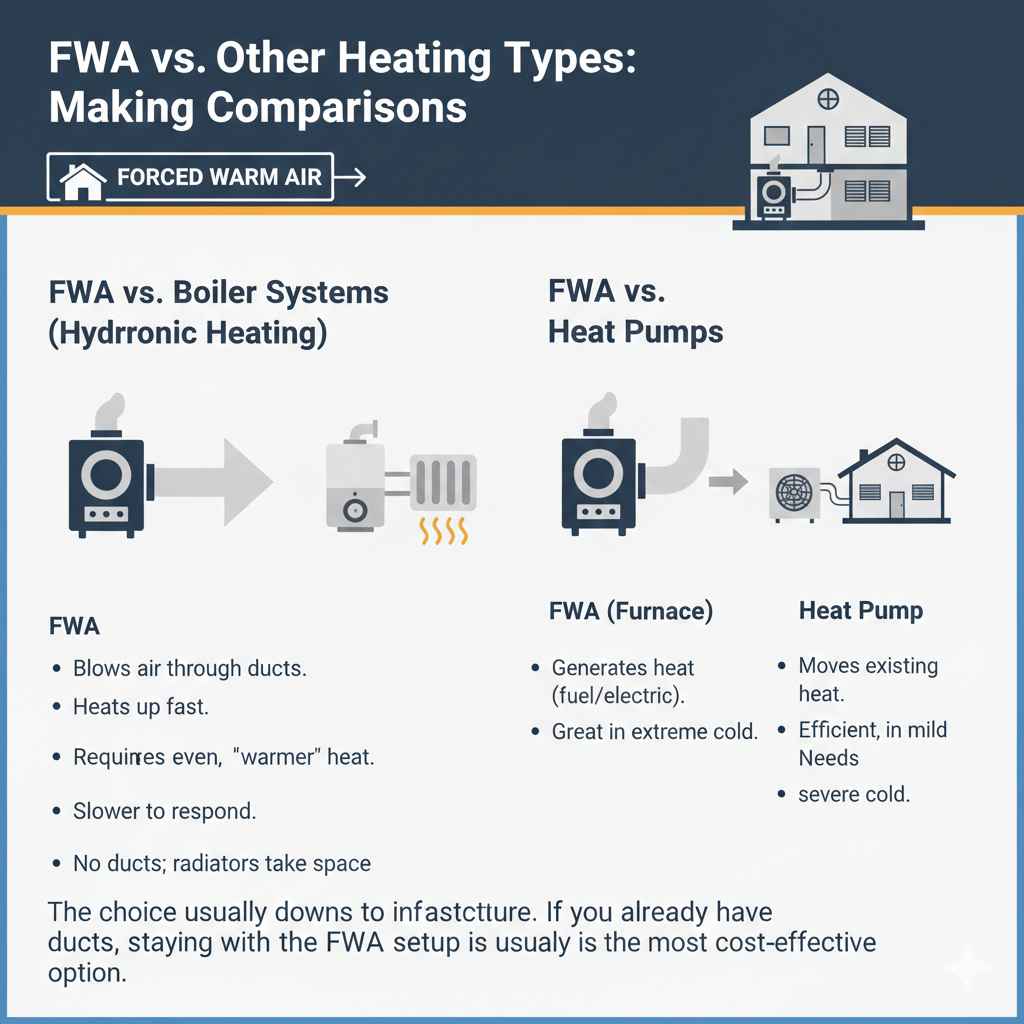
FWA vs. Other Heating Types: Making Comparisons
Forced Warm Air (FWA) is dominant, but it’s helpful to know what other systems exist so you understand why your neighbor might have a different setup.
FWA vs. Boiler Systems (Hydronic Heating)
Boilers heat water, not air. That hot water is then pumped through pipes to radiators, baseboard heaters, or radiant tubing embedded in floors (in-floor heating).
- FWA: Blows air through ducts. Heats up fast. Requires duct maintenance.
- Boilers: Circulates hot water. Provides a very gentle, even heat that often feels “warmer” to the touch. Slower to respond to thermostat changes. No ductwork needed, but large radiators take up space.
FWA vs. Heat Pumps
A modern heat pump can function as both a heater and an air conditioner. In heating mode, it pulls latent heat from the outside air (even when it’s cold) and transfers it inside. While many heat pumps use the existing ductwork (making them FWA systems by delivery method), the generation method is different.
- FWA (Furnace): Generates heat by burning fuel or using electric resistance. Great in extreme cold.
- Heat Pump: Moves existing heat. Extremely efficient in mild to moderate climates but may require a backup (auxiliary) heat source when temperatures drop severely.
The choice usually comes down to infrastructure. If you already have ducts, staying with the FWA setup (perhaps by upgrading the furnace) is usually the most cost-effective route.
Frequently Asked Questions About Forced Warm Air (FWA)
Q1: How often should I run my FWA system fan?
For best comfort and filtration, set your fan switch to “AUTO.” The fan only runs when the system is actively heating or cooling. If you set it to “ON,” the fan runs constantly, which uses more electricity and can cause uncomfortable drafts or circulate unheated air if the furnace isn’t firing.
Q2: Can I put my thermostat on a smart system if I have FWA?
Absolutely! Most modern smart thermostats are fully compatible with standard Forced Warm Air furnace wiring. Smart thermostats learn your habits, can be controlled remotely, and often provide detailed energy usage reports, helping you manage your FWA system better.
Q3: Why does my FWA system feel dusty when I first turn it on for the season?
This is common. Dust settles inside the ductwork over the summer when the system is off. When you first turn the heat on, the powerful blower circulates this settled dust. Change your filter right before the first heating cycle, and the dustiness should decrease rapidly after a few hours of continuous running.
Q4: What is the most energy-efficient FWA furnace I can buy?
The most energy-efficient Forced Warm Air systems are high-efficiency condensing gas furnaces, achieving AFUE ratings up to 98.5%. These systems utilize a secondary heat exchanger to recover heat that would normally escape through the flue, drastically cutting fuel consumption.
Q5: Is my FWA system safe?
FWA systems are generally very safe when properly maintained. The primary safety concern with gas or oil units is the potential for carbon monoxide leaks due to a cracked heat exchanger. This is why annual inspections by a professional are non-negotiable. If you smell rotten eggs (mercury-based gas odorant) or exhaust fumes, shut the system down immediately and evacuate.
Q6: My upstairs rooms are always colder than downstairs. What should I do?
This is a classic FWA balancing issue. First, make sure all registers are fully open. Second, check that return air grilles aren’t blocked downstairs. If the problem persists, you might need professional help installing motorized dampers inside the ductwork to redirect more warm air specifically to the upper floors.
Conclusion: Taking Control of Your Forced Warm Air Home
You’ve successfully decoded “Heating Type FWA”! We’ve established that it means Forced Warm Air—a fast, efficient delivery method that relies on blower motors pushing heated air through ducts.
Understanding this system moves you from being a passive recipient of warmth to an active manager of your home comfort. Remember the golden rules: Change that air filter diligently, keep the area around the furnace clear for safety, and invest in an annual tune-up. These small, consistent actions ensure your FWA system runs reliably for many years.
With this essential guide in hand, you have the confidence to troubleshoot minor hiccups and engage meaningfully with HVAC professionals when major service is needed. Enjoy the warmth and efficiency you’ve earned by taking the time to learn about your home’s vital systems!