How to Choose a Garage Heater for an RV Garage
Choose a garage heater for an RV garage by matching heat output and clearance to the space’s real use: storage-only, maintenance bay, or workshop. A leaky garage with a high ceiling usually needs more output than a standard square-foot chart suggests. Pick the wrong unit and you waste energy, leave cold zones, or create a fire and ventilation hazard around the RV. This guide explains how to size, fuel, vent, and place the heater for your garage type.
What counts as an RV garage heater?
An RV garage heater is any unit sized and mounted to warm a space that holds or supports an RV, not just a normal car bay. The right choice depends on whether you only need the bay above freezing, a comfortable maintenance area, or steady heat for long projects at a bench.
Match the heater to the garage use
Storage-only garages need enough heat to protect plumbing, batteries, tools, and finishes from cold swings. Maintenance bays need focused heat near the RV’s service side, especially around slide-outs, ladders, and open compartments. Workshops need more even heat because you spend more time in the space and may want the whole air volume warm.
That split matters. A unit that can keep a workbench comfortable may still leave the far side of a tall RV bay cold, especially if the door leaks or the ceiling is high. In that case, radiant heat often fits better than a small plug-in unit that only warms the air near it.
Why RV height and door gaps change the choice
Many RV garages are partially insulated, but the bay door is still a weak point. Door leakage and high ceilings let warm air escape fast, so the heater has to work harder than a square-foot chart suggests. Tall RVs also create a clearance problem around ladders, roof lines, and storage racks.
Picture a 450 square foot garage with an RV parked inside and a 12-foot ceiling. A heater sized only for the floor area may warm the lower air, then lose that heat above the vehicle roof. In that case, a wall- or ceiling-mounted radiant unit can be a better fit than a small portable heater.
How do you size it correctly?
Start with square footage, then adjust for insulation, air leakage, and ceiling height. For a moderately insulated garage, electric heat is about 10 watts per square foot, and combustion heat is about 34 BTU per square foot. High ceilings and a leaky door push the needed output upward, while good insulation pulls it down.
Start with the floor area
Common garage sizes give a practical first pass. A 1-car garage is listed at about 250 square feet and 2,500 watts electric. A 2-car garage is listed at about 450 square feet and 4,500 watts electric. A 3-car garage is listed at about 650 square feet and 6,500 watts electric.
Adjust for insulation and ceiling height
If the garage is well insulated and the door seals tightly, the baseline may hold. If the garage is drafty, detached, or only partly insulated because of the RV bay door, plan on more output than the baseline. A tall ceiling also changes the result because more heat sits above the occupied zone unless the unit is aimed or mounted to serve the right area.
Translate the load into watts or BTUs
Electric heaters are usually easiest to size by wattage. Combustion heaters are usually sized by BTU. A 1,500W plug-in heater produces about 5,120 BTU, which is enough for spot heat or a small, well-sealed area, but not for a large, leaky RV garage.
- Measure the heated floor area of the RV bay.
- Decide whether the space is insulated, partially insulated, or drafty.
- Check ceiling height and whether the heater will warm the whole bay or only a work zone.
- Match the output to the fuel or power available in the garage.
- Confirm the model’s installation and clearance instructions before buying.
RV garage heater decision matrix
Use this table to match the heater type to the garage conditions you actually have. The best choice changes with insulation, door leakage, ceiling height, use pattern, and available power or gas. Model instructions still override any general rule.
| Condition | Best-fit heater type | Recommendation | Safety notes |
|---|---|---|---|
| Insulated garage, attached, low or moderate ceiling, maintenance-only use, 120V available | 1,500W electric infrared | Good for spot heat near the RV service area or workbench | Keep combustibles away, use a thermostat, and do not rely on an extension cord |
| Insulated garage, attached, moderate ceiling, all-day use, 240V available | 240V hardwired electric | Best for steady heat without combustion byproducts | Above 1,500 watts, a dedicated 240V circuit is needed; use an electrician for installation |
| Drafty detached garage, tall ceiling, maintenance-only use, no gas line | Infrared or propane, depending on ventilation | Infrared is often the cleaner fit for people and work zones | Combustion heaters need fresh-air ventilation and a working CO detector |
| Drafty detached garage, tall ceiling, all-day use, natural gas available | Natural gas fixed heater | Better for larger spaces that need repeated heating | Check gas line sizing, venting, and local code before installation |
| Partially insulated RV bay door, moderate ceiling, mixed storage and maintenance use | 240V electric or ceiling-mounted infrared | Choose based on whether you want air heat or radiant heat | Mind slide-outs, ladders, racks, and door swing clearances |
| Small, enclosed bay with limited power and only short visits | 1,500W plug-in electric | Useful only for light duty and close-range comfort | A standard wall outlet tops out around 1,500 watts; avoid overloads and long cords |
Should I choose electric, propane, or natural gas for an RV garage?
Choose electric if you have enough circuit capacity and want simple operation with no fuel storage. Choose propane if you need portable heat and can ventilate the garage well. Choose natural gas if the garage is set up for a fixed installation and you want a larger unit for regular use.
When a 120V heater is enough
A standard wall outlet tops out around 1,500 watts, so a plug-in heater is best for spot heating, a small insulated bay, or short sessions at a workbench. It is not a whole-garage answer for most RV bays. It is also the least flexible choice if the space leaks air around a large overhead door.
When a 240V dedicated circuit makes sense
Above 1,500 watts, a dedicated 240V circuit is needed. That gives you access to higher-output electric heat, which fits a larger RV garage far better than a small plug-in unit. A 240V hardwired heater usually needs an electrician, but it avoids the output ceiling of a standard outlet.
When fuel-fired heat fits better
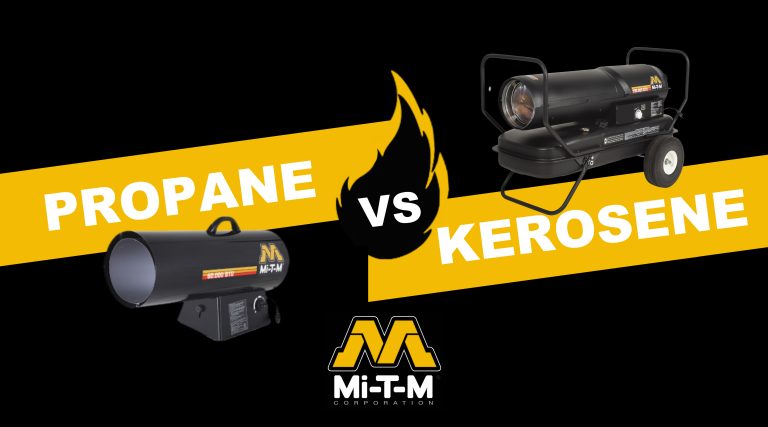
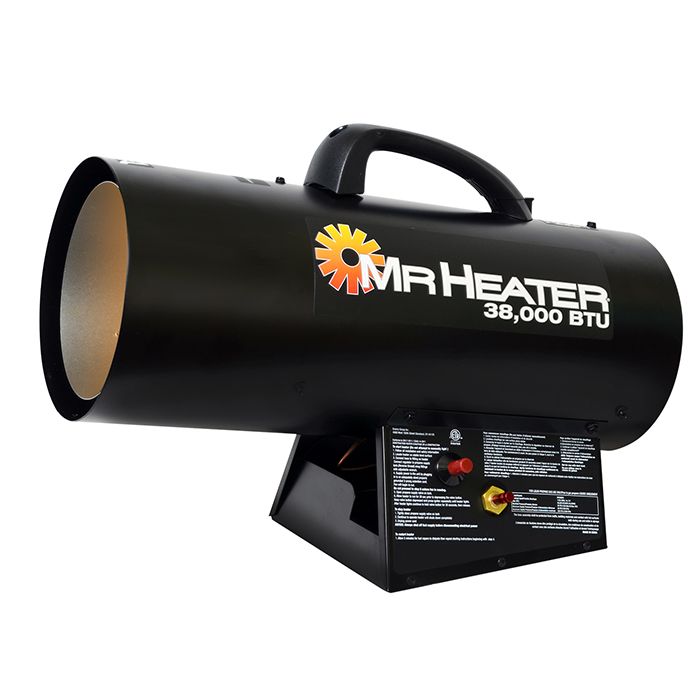
Combustion heaters suit larger or draftier garages where electric output would be expensive or limited by panel capacity. Natural gas is fixed in place and often works well for frequent, long run times. Propane adds portability, but it also adds ventilation needs, moisture, and combustion byproducts.
Say your garage is 650 square feet, detached, and used all day for RV service work. A 240V electric heater may handle the load if the panel can support it, but a natural gas unit can make more sense if the garage has gas service and the installation is already planned for fixed heat.
Is infrared heat better for tall garages?
Infrared is often a strong choice for tall or drafty RV garages because it heats people, tools, and surfaces directly instead of trying to warm every cubic foot of air. That makes it useful near a bench, under an RV sidewall, or in a bay with a high ceiling and open door leakage.
Radiant heat for people and work zones
If you only need one part of the garage warm, infrared is often the more practical pick. It is a good fit when the RV blocks airflow, when the ceiling is high, or when you only want comfort near the work area. A 1,500-watt infrared model such as the Heat Storm HS-1500-PHX is a common example of this class.
Wall or ceiling mounting tradeoffs
Wall mounting is easier to aim at a work zone. Ceiling mounting keeps the heater out of the path of doors, ladders, and stored gear, but it must still respect the manufacturer’s required mounting height and clearance distances. The TEMPWARE ceiling-mount unit is rated up to 25,590 BTU, which shows how ceiling-mounted models can scale for bigger spaces.
Suppose the garage has a 12-foot ceiling and a workbench under the RV side door. A ceiling-mounted radiant heater can warm that area without trying to heat the full air volume above the roofline. That is often a better use of power than a small fan heater aimed into a big open bay.
Clearance and safety rules
Keep at least 3 feet from flammables unless the heater’s own instructions call for more. That includes cardboard, solvents, oil, fuel cans, tire racks, storage bins, extension cords, and anything piled near the RV. The model’s listed clearances always beat a generic rule.
Ventilation and moisture for combustion heaters
They also add moisture to the space, which can matter in a closed RV garage with tools, batteries, and metal storage. A garage that is tight enough to hold heat may still need air exchange for safe combustion.
Carbon monoxide and garage placement
Carbon monoxide is odorless, so a detector is a necessary safety layer, not an optional extra. Follow the heater instructions and local rules for detector placement in attached garages and nearby living spaces. Do not assume the same detector setup works for every garage layout.
RV-specific hazard zones
Clear the area around slide-outs, ladders, mirrors, vents, and roof accessories before placing a heater. Keep extension cords out of tire paths and away from water, fuel, and battery charging areas. If the heater is near stored jacks, leveling blocks, or spare parts, check that heat cannot reach them during normal operation.
Installation choices that affect performance
Installation affects both heat output and safety. A well-placed heater can warm the occupied zone without wasting power on the upper air. A poorly placed heater can create dead spots, trip a breaker, or sit too close to stored gear.
Plug-in versus hardwired electric units
Plug-in units are simple, but a standard outlet caps the output. Hardwired 240V units can deliver much more heat and are better for larger RV garages. If the heater needs more than 1,500 watts, plan on a dedicated circuit rather than an extension cord.
Mounting height and airflow
Mount the heater so airflow is not blocked by cabinets, racks, or the RV body itself. High mounting can help keep the unit out of the way, but it also changes how heat reaches the floor level. Follow the manufacturer’s mounting height, side clearance, and front clearance rules exactly.
Features worth buying
Look for a thermostat, tip-over shutoff on portable units, and overheat protection. Those features do not replace correct sizing, but they help control run time and reduce risk.
Frequently asked questions
What is a garage heater?
A garage heater is any fixed or portable unit used to warm a garage space. For an RV garage, the better question is what the space is for: storage, maintenance, or workshop use. That answer determines whether you need spot heat, whole-space heat, or a combustion-free option.
How do I size a heater for an RV garage?
Start with square footage, then adjust for insulation, leakage, and ceiling height. For a moderately insulated garage, electric heat is about 10 watts per square foot and combustion heat is about 34 BTU per square foot. A drafty RV bay usually needs more than a standard chart suggests.
Do I need 240V power for an RV garage heater?
If you want more than 1,500 watts, yes, a dedicated 240V circuit is needed. That matters in RV garages because a standard wall outlet tops out around 1,500 watts. Larger spaces and taller ceilings usually benefit from the extra output of hardwired electric heat.
How much clearance does a garage heater need near an RV?
Clearance depends on the model, but keep at least 3 feet from flammables unless the instructions require more. In an RV garage, that means checking space around ladders, slide-outs, cords, fuel containers, and storage racks. Model instructions always override a generic spacing rule.
How do I avoid carbon monoxide risk in an RV garage?
Use fresh-air ventilation with any propane or natural gas heater, and install a working carbon monoxide detector. Do not run combustion heat in a closed garage without following the manufacturer’s instructions and local code. A garage may feel warm long before it is safe.