Portable Heater with Timer: How Useful Is It?
Yes, a timer is worth paying for if you want the heater to shut off automatically after a set period or fit a routine like a bedtime or work session; otherwise a thermostat usually does the heavier lifting. Used badly, a heater can run longer than needed, waste power, or stay on after you fall asleep. This guide explains how timer controls work, when they beat a thermostat, and which rooms get the most value.
Portable heater timer basics
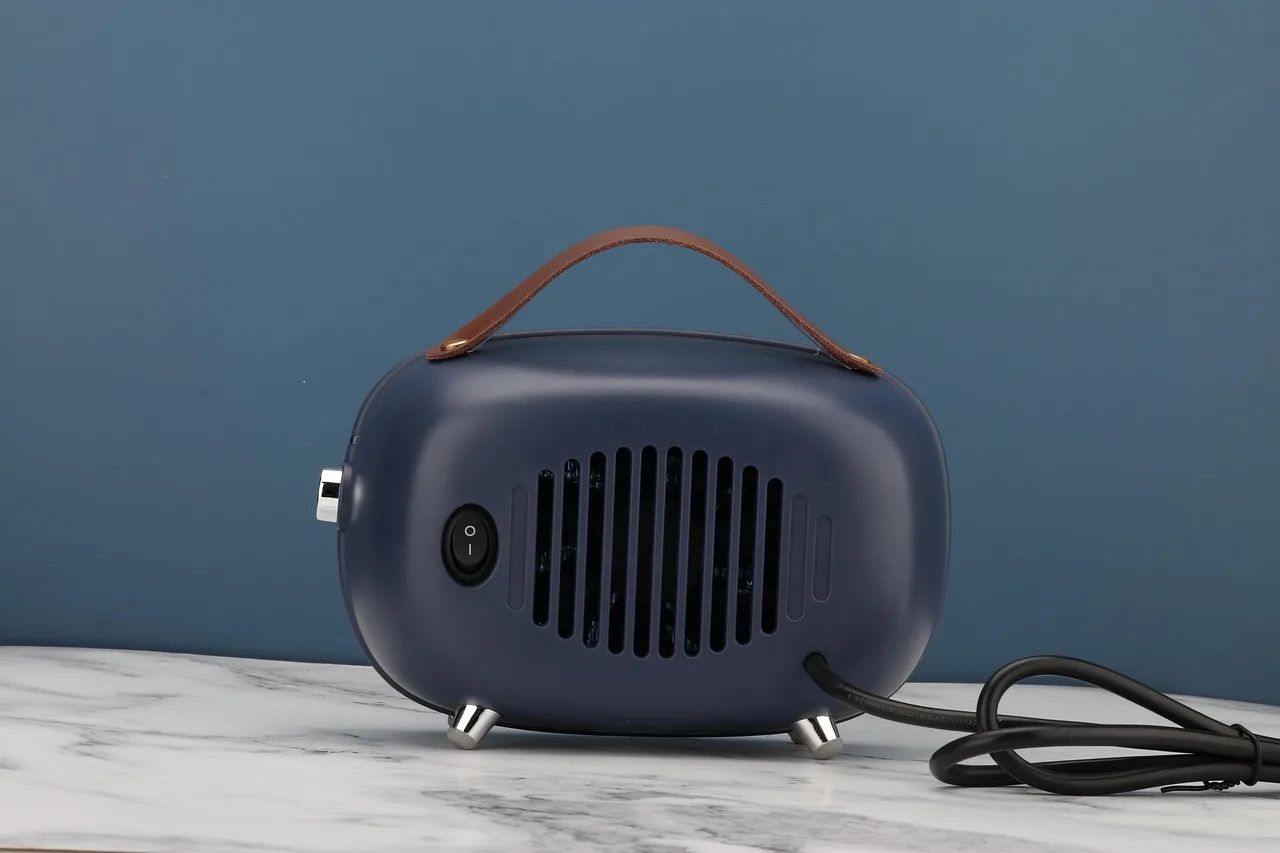
A timer helps when you want heat to stop on its own or start on a fixed schedule. The main split is simple: a countdown timer shuts the heater off after a set period, while a true schedule timer turns it on and off at exact times of day. Those controls do different jobs.
Most portable heaters with timers use that timer as a support control, not the main heat-management tool. The thermostat sets the target room temperature, ECO mode trims power once the room nears that target, and the timer limits how long the unit can run. That order matters.
Countdown shutoff vs. programmable schedule
A countdown shutoff fits “run this long, then stop.” A programmable schedule fits repeating routines, such as turning heat on before a morning desk session. Many consumer heaters only offer a countdown, so timer marketing can sound more flexible than the control panel really is.
That split matters because a countdown timer does not know whether the room is already warm. A schedule timer may help with routine comfort, but it still should not replace thermostat control. If you want steady spot heat, the thermostat and ECO mode usually matter more than timer length.
What 12-hour and 24-hour timers actually mean
A 12-hour timer gives you a shorter shutoff window. A 24-hour timer usually lets the heater stay enabled for a full day cycle, which can suit shift work or repeated daypart use. Neither one is automatically better. The useful one matches your use pattern without nudging the heater into longer runtime than needed.
Some models are more limited than the label suggests. For example, the Lasko Ellipse timer uses 30-minute increments up to 2 hours, and another listing extends to 12 hours. BREEZOME is presented with a 24H timer. Those differences matter more than the headline number.
Where the timer fits in the controls
A good control stack looks like this: setpoint temperature, ECO mode, then timer. The thermostat senses ambient temperature and helps prevent overheating and cycling waste. ECO mode shifts power automatically so the heater does not stay at full output longer than needed. The timer is the shutoff control at the end.
PTC ceramic heating elements are common in modern portable heaters because they heat quickly. Many are paired with fan-forced airflow, which moves warm air faster. That setup can make a timer more practical, because the room reaches comfort sooner before shutoff.
When a timer is worth it
A timer earns its keep when you need the heater to stop automatically, or when you want repeatable pre-warm behavior without leaving the unit running longer than needed. It matters most for short, predictable sessions. It matters less for steady background heat in a room that already has a good thermostat.
Bedroom or nursery use
For bedrooms and nurseries, a timer can help with shutoff discipline, but it should not be treated as the safety feature that makes leaving heat unattended acceptable. Use it as a limit, not as permission to ignore safety basics. In these rooms, quiet operation, careful placement, and reliable shutoff matter more than a long timer number.
A DREO heater is described as operating at 34dB, which sits in the quiet range many buyers want for sleep spaces. Noise level still depends on fan and motor design. A heater that runs cooler, with a stable thermostat and ECO mode, can be more useful than one with a longer timer but louder airflow.
Desk heat in an office or home workspace
For office desk heat, a timer is often practical because work sessions are usually bounded. A short countdown can keep the heater from running through breaks or after the desk is empty. This is one of the clearest cases where a timer adds real value, especially if the room is small and the heat need is temporary.
Suppose your roughly 120-square-foot office gets chilly for about a two-hour morning work block. A 2-hour or 3-hour shutoff window makes sense. If the heater already has a good thermostat and ECO mode, the timer mainly adds discipline. It does not need to carry the main load.
Occasional pre-warm use in a garage or workshop
For occasional garage or workshop use, a timer can prevent the heater from running long after you leave the space. That matters when the room is used in bursts rather than all day. A timer helps most when the heater warms one work zone, not the entire room.
Coverage still matters. BREEZOME is described as covering 250 square feet, which is in the practical range for many small rooms, but drafty garages can overwhelm that kind of output. A timer cannot make up for poor room fit. It only limits runtime.
Does a timer save electricity?
Sometimes, yes, but the savings depend on what the heater would have done without the timer. A timer saves electricity when it cuts off wasted runtime in an empty room or shortens a session that would otherwise continue too long. If the heater already cycles down well on thermostat and ECO mode, the extra savings can be small.
Timer vs. thermostat savings
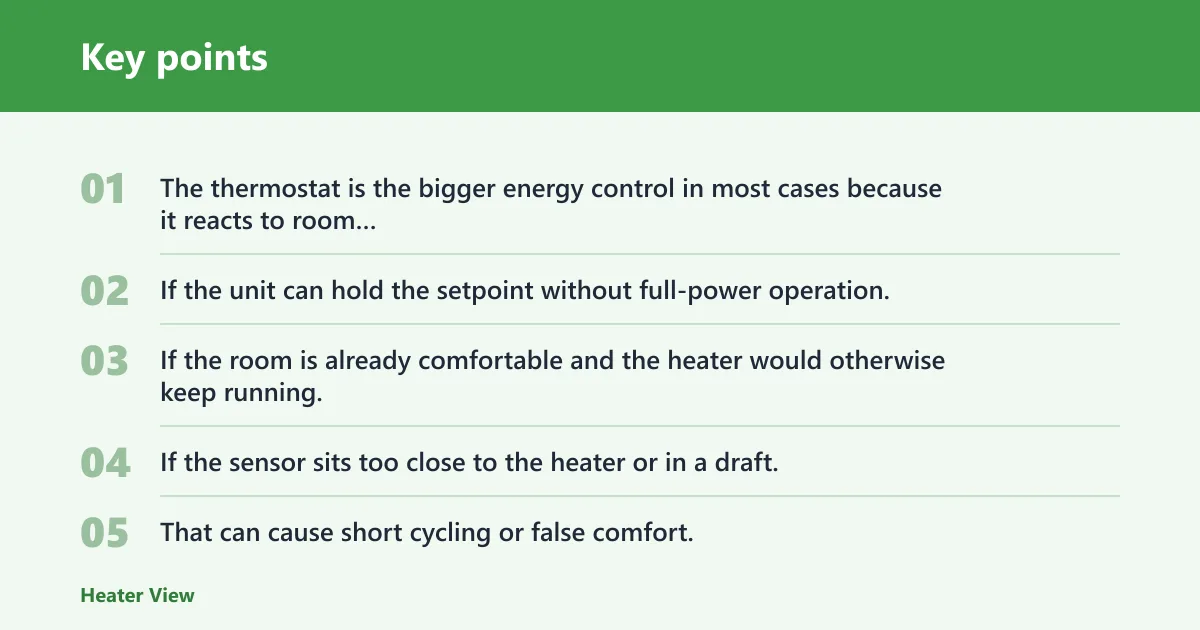
The thermostat is the bigger energy control in most cases because it reacts to room temperature. If the unit can hold the setpoint without full-power operation, the timer may only shave off a little runtime. If the room is already comfortable and the heater would otherwise keep running, the timer can save more.
Thermostat placement matters. If the sensor sits too close to the heater or in a draft, it may read the room incorrectly. That can cause short cycling or false comfort, which makes timer savings look better than they really are. The real fix is better placement and a better match between heater and room.
How ECO mode changes runtime
ECO mode changes runtime by lowering output once the heater is close to the target. That means less full-power use and more temperature holding. In that setup, the timer is secondary. The thermostat and ECO mode keep the heater from burning power needlessly while still maintaining comfort.
A DREO model is listed with a 12-hour timer and ECO mode, and one DREO heater has a 1500W PTC ceramic element with 41°F to 95°F control. Another cited DREO model has 41°F to 95°F in 1°F increments. Those figures show that the control system matters as much as the timer.
When timer savings are small or none
If the heater is used for a short, fixed task and then switched off manually, the timer adds little. If the thermostat is badly positioned, the timer may stop waste but not fix poor control. And if the room is drafty or much larger than the heater’s coverage area, the unit may run hard no matter the timer length.
A common first-time mistake is buying a long timer for a room that never stabilizes. The heater keeps cycling because the room shape, draft load, or placement is wrong. A timer cannot fix that. It only limits how long the unit stays on.
When timer heater value is low
The timer is least useful when the heater already has to work hard to keep the room comfortable. In that case, thermostat quality, ECO mode, coverage area, and placement matter more than shutoff timing. A timer is a support control, not a cure for a poor setup.
False comfort from a bad thermostat position
If the thermostat is near the heater outlet, it may sense warm air too soon and shut the unit down before the rest of the room warms. If it sits in a corner or draft, it may call for more heat than the room really needs. Either problem weakens the value of a timer because the heater is not managing the room well.
Oscillation can help here. One DREO heater has 60° vertical plus 90° horizontal oscillation, and Lasko Ellipse offers 120° oscillation. A wider sweep can move warm air into corners and odd-shaped rooms, which reduces the chance that the thermostat “sees” one hot spot while the rest stays cold.
Drafty rooms and corner placement
Drafty rooms punish small heaters. Corner placement can also trap heat against one wall and leave the rest of the room cool. In those cases, a timer may cut runtime, but the bigger issue is whether the heater can reach the target zone at all.
Coverage area is the practical filter. A heater described around 200 to 250 square feet can suit many small rooms, but drafty spaces or open layouts shrink that effective range. Timer length does not fix underpowered heat output.
Rooms that need constant heat instead of a shutoff window
Some spaces need steady low-level warmth rather than short bursts. In that situation, a thermostat and ECO mode are doing the main job, and a timer can get in the way if it cuts off heat before comfort is restored. For continuous use, the timer is more of a backup than a core feature.
That is why the right question is not “does it have a timer?” but “does the timer match the actual use pattern?” If the answer is no, pay more attention to thermostat quality, coverage, noise, and safety listing.
Timer value decision table
Use this matrix to judge whether a timer is worth paying extra for. The key is fit. A timer makes the most sense when the heater is used in short, predictable blocks and when shutoff discipline matters more than continuous background heat.
| Room type | Usage pattern | Recommended timer length | Whether ECO mode matters | Whether timer adds real value |
|---|---|---|---|---|
| Bedroom | Short pre-bed use, then shut off | 1 to 2 hours | Yes | Yes, for shutoff discipline |
| Nursery | Brief warm-up before occupancy | 1 to 2 hours | Yes | Yes, if the unit is not left running unattended |
| Office desk heat | Morning work block or meeting block | 2 to 4 hours | Yes | Yes, often worth it |
| Bathroom pre-warm | Only for a heater explicitly rated for that use | 15 to 30 minutes | Sometimes | Yes, but only with the correct rated unit |
| Occasional garage use | Short task or project session | 2 to 4 hours | Maybe | Yes, if the room is within coverage |
| Open living area | Longer background heating | Usually low value | Yes | Often limited |
What safety features should it have?
A timer heater should still have the core safety layers first: ETL or UL listing, tip-over protection, overheat protection, and cool-touch housing. The timer does not replace any of them. It only controls duration.
ETL or UL listing
ETL or UL listing is an independent safety verification signal. It tells you the unit has been evaluated against a recognized standard rather than only the maker’s own claims. That matters for any portable heater, and it matters even more if the heater may run while you are not right beside it.
Do not treat the timer as a substitute for this. A long timer on an unlisted heater is not a good trade.
Tip-over and overheat protection
Tip-over protection shuts the heater down if it is knocked over. Overheat protection shuts it down if internal temperature becomes unsafe. Those are baseline features, especially for bedrooms and homes with pets. A timer should sit on top of those protections, not in place of them.
Overheat protection is especially important when the heater runs for longer sessions. It reduces fire risk if airflow is blocked or internal temperature climbs too high. That is the sort of failure a timer cannot prevent.
Cool-touch housing and unattended-use limits
It is useful near fabrics and children, and it is common in bedroom heaters. It still does not replace shutoff protections, because a cool outer shell does not prevent internal overheating or tipping.
Also note the use limits. A timer can turn a heater off after a set period, but that does not make the heater suitable for unrestricted unattended use. If the room needs heat while nobody is present, the safer plan is still careful heater placement, a verified listing, and the correct timer length.
Frequently asked questions
Is a portable heater with a timer worth it?
Yes, if you need automatic shutoff or repeatable short sessions. The timer is most useful in bedrooms, offices, and other rooms where you want the heater to stop without relying on memory. If you only want steady spot heat, a good thermostat and ECO mode matter more.
How does a timer on a portable heater work?
Most portable heater timers are countdown shutoffs. You set a duration, and the heater turns off when that time expires. Some models also offer scheduled start and stop times, but many do not. That difference matters because a countdown is not the same as a daily program.
What is the timer meaning on a portable plug-in heater?
It usually means the heater can stop running automatically after a chosen period. In practice, that helps limit wasted runtime and adds shutoff discipline. It does not mean the heater manages room temperature by itself. The thermostat still does that job.
Should I get a heater with a programmable timer or just a thermostat?
If you want steady comfort, start with a thermostat and ECO mode. If you want the heater to stop after a set block of time or fit a routine, add a timer. The thermostat handles temperature control; the timer handles duration. The best choice depends on which problem you are trying to solve.
How long should I set a portable heater timer for at night?
Use the shortest period that covers the actual pre-sleep need, often 1 to 2 hours. The goal is shutoff discipline, not continuous nighttime heat. For sleep spaces, safety features and quiet operation matter more than a long timer. Do not use the timer as a reason to leave a heater running all night.
Does a heater with a timer save electricity?
Sometimes. It saves electricity when it prevents wasted runtime in an empty room or ends a session earlier than you would manually. If the thermostat and ECO mode already keep the heater efficient, the timer may only add a small extra reduction. Room fit and placement still matter more.