Common Infrared Heater Problems and Fixes
For common infrared heater faults, begin with the least expensive likely fix: restore power, clear dust, and reset the unit. Replace parts only after a failed thermal cutoff, element, or control proves the fault. Ignoring the symptom can waste money on parts that do not solve a no-heat, shutoff, or cycling problem. This guide sorts infrared heaters by symptom and type, then walks you through the most likely fix before you buy replacement parts.
Infrared heater troubleshooting matrix

| Symptom | Likely cause | Safe first check | Tools needed | DIY fix | Replace or call a pro threshold |
|---|---|---|---|---|---|
| No heat from an electric unit | Tripped breaker, unplugged cord, bad outlet, failed plug, open element, or thermostat set too low | Confirm power at the outlet and check the setpoint | None, then multimeter | Reset breaker, move to a compatible outlet, raise the control setting, then test continuity with power off | Replace the element if continuity is open; call a pro if the cord, plug, or outlet is heat-damaged |
| Weak radiant output | Dust on the emitter, reflector discoloration, aging carbon or quartz element, low line voltage | Look for dust, soot, or browning on the emitter and reflector | Flashlight, soft brush, multimeter | Clean the reflector and emitter surfaces, then verify resistance is within the unit’s expected range | Replace a discolored or cracked emitter; call a pro if the unit shows repeated low-voltage symptoms |
| Runs, then shuts off | Overheat cutoff, blocked airflow, tip-over switch, dirty fan on models with airflow assist | Check for a reset button and clear the intake and exhaust paths | None, then vacuum or brush | Let it cool, reset it if the design allows, and remove dust or blocked vents | Call a pro if it trips again after cleaning or if the cutoff will not reset |
| Intermittent heat or cycling | Loose cord, marginal outlet, thermostat drift, failing switch, internal wiring issue | Wiggle the plug only after power is off; check whether the outlet feels loose | Multimeter | Test outlet voltage and continuity in the cord and switch path with power disconnected | Replace a worn control or cord; call a pro if you find heat damage or arcing |
| No heat on a gas-fired model | Gas supply closed, weak pilot, dirty pilot area, failed igniter, bad thermocouple or flame sensor | Check that the valve is open and look for a flame | Flashlight, soft brush, multimeter | Clean the pilot area, verify the igniter clicks, and test the sensor circuit with power off | Call a pro for gas odor, repeated flame loss, or a burner that will not light cleanly |
Why is my infrared heater not heating?
If an infrared heater runs but does not heat, the cheapest cause is usually power, control, or fuel supply, not the element itself. On electric models, check the breaker, outlet, plug, thermostat, and cord before opening the cabinet. On gas-fired models, confirm gas flow, pilot ignition, and burner lighting first.
Start with the heater type
Carbon, quartz, and ceramic infrared heaters fail in different ways. Carbon and quartz models often show weak output or a dead element. Ceramic units may still glow while heating poorly if the element is damaged or the reflector is dirty. Gas-fired units usually fail at the pilot, igniter, thermocouple, or burner path.
If the heater is portable, check the plug and outlet rating too. If it is wall-mounted, verify that the installation has not blocked the rear intake or the clearance around the front face. A small placement error can make a good heater act failed.
Check the element or burner path
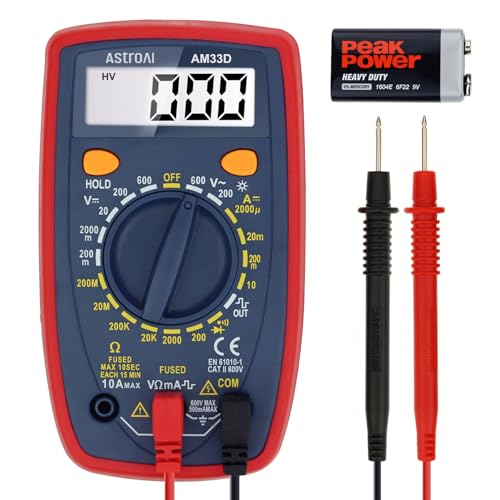
On electric heaters, a visible-glow element that is dark may be burned out. A no-glow model can still fail without an obvious visual clue, so a multimeter matters. With power disconnected, it is commonly checked for continuity across the element terminals. An open reading usually means replacement rather than cleaning.
On gas-fired units, look for soot, a weak pilot flame, or a burner that lights and then drops out. A dirty pilot area can interrupt sensing. Igniter problems can often be identified by lack of clicking, while a weak pilot flame can cause shutdown issues.
Look at controls before parts
Thermostat drift can make the heater seem dead when it is only set too low or reading inaccurately. Turn the control well above room temperature and see whether the unit responds. If the heater cycles oddly, the control may be misreading the room and turning the unit off too soon.
Suppose a 1,500-watt portable quartz heater clicks on, glows briefly, and then shuts down every few minutes. If the outlet is sound and dust is clear, the next likely suspects are the overheat cutoff, a loose internal connection, or a drifting control rather than the emitter itself.
Why does my infrared heater keep shutting off?
Repeated shutoffs usually point to a safety device, blocked airflow, a placement problem, or a weak gas flame. Many heaters need a reset after a safety cutoff trips. If the shutoff repeats after cleaning and correct placement, the fault is often in the switch, sensor, or supply path.
Check the overheat cutoff first
Locate the reset button if the model has one. Some cutoffs sit on the rear housing or near the power path. Let the heater cool fully, clear dust from vents and grilles, then reset only once. If it trips again right away, stop using the heater.
Dust build-up is a common cause on fan-assisted infrared heaters because the airflow path matters even when the heat is radiant. A blocked intake, covered grille, or clogged fan blade can raise internal temperature fast enough to trigger a shutdown.
Rule out tip-over and placement issues
Portable heaters often commonly include a tip-over switch. A floor that is uneven, soft, or vibrating can move the heater enough to trip it. Keep the unit upright on a hard, level surface and away from curtains, furniture, and rugs that can distort airflow or trigger safety devices.
Wall-mounted units need clear front and side space. If furniture, drapes, or stored items sit too close, the heater may overheat or reflect heat back into the housing. The symptom looks like a bad part, but the fix is placement.
Use the reset only after the cause is gone
Resetting without fixing the root cause invites repeat trips. Clean the emitter, reflector, intake, and fan path before you press anything. If a heater continues to trip after cleaning and correct placement, the cutoff, thermostat, or internal wiring may need replacement or professional service.
What should you check first if your infrared heater stops working?
Check the power source or fuel supply first. For an electric infrared heater, inspect the breaker, plug, cord, and outlet before you touch internal parts. For a gas-fired model, confirm gas supply and valve position before chasing sensors, burners, or ignition parts.
Electric power checks
- Verify the breaker has not tripped.
- Check that the plug is fully seated and not heat-damaged.
- Confirm the outlet has power with a multimeter or a known-good load.
- Inspect the cord for cuts, flattening, or softened insulation.
- Make sure the heater is on a compatible circuit and not overloaded by other appliances.
Extension cords are a common problem. Many infrared heaters draw enough current that a light-duty cord can cause voltage drop and heat buildup. If the manufacturer does not allow extension-cord use, do not use one. If it does allow one, the cord must match the current demand and stay fully uncoiled.
Gas-fired supply checks
For propane or gas-fired models, check that the gas bottle or supply valve is open and the fuel source is not empty. That basic check matters because a closed valve or low fuel can look like an igniter failure. If the heater has a pilot assembly, confirm there is flame and that it is steady.
A weak flame, a dirty pilot area, or gas flow restriction can reduce heat and cause shutdowns. If the unit smells strongly of gas, stop immediately and call a professional. Do not keep cycling the ignition.
Heating element and emitter problems
Heating elements fail in different ways depending on whether the heater uses carbon, quartz, or ceramic. Some emit visible glow when they work. Others do not. That means a dark heater is not always enough information; you need the symptom pattern, a visual check, and often a continuity test.
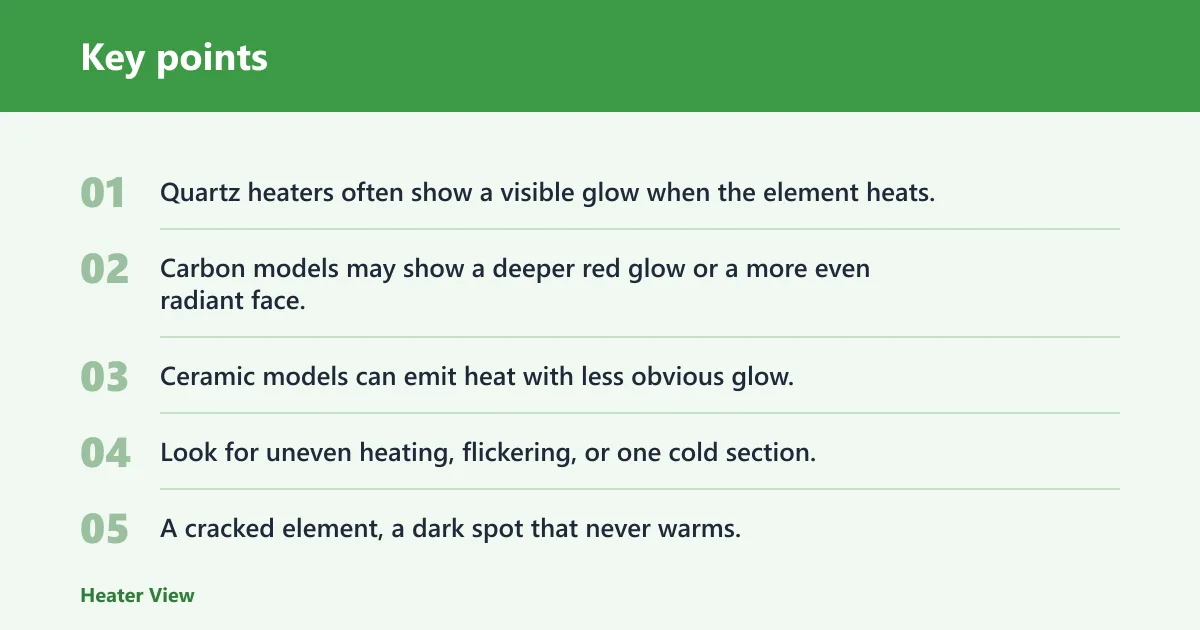
Visible glow versus no-glow units
Quartz heaters often show a visible glow when the element heats. Carbon models may show a deeper red glow or a more even radiant face. Ceramic models can emit heat with less obvious glow, so a lack of bright light does not always prove failure. Look for uneven heating, flickering, or one cold section.
A cracked element, a dark spot that never warms, or a heater that works only after tapping the housing points to element or connection trouble. That is especially true if the breaker is fine and the thermostat is calling for heat.
How to test safely with a multimeter
Turn the heater off, unplug it, and let it cool. Use the multimeter only on a de-energized unit. Check continuity across the element terminals. An open circuit usually suggests the element may be done. You can also compare resistance between a good-looking section and a suspect section if the design allows access.
If continuity is present but the heater still underperforms, the problem may be a loose lead, a burned connector, or a control issue. At that point, replacement may make sense only if the part cost is low and the heater has not already had repeated faults.
When replacement makes sense
Replace the element when it is open, visibly damaged, or repeatedly failing after cleaning and proper power checks. If a wall-mounted unit has a burned reflector, a damaged socket, or scorched wiring near the emitter, the repair is no longer a simple part swap. Have a pro inspect the unit before it goes back into service.
Gas-fired infrared heater faults
Gas-fired infrared heaters add pilot, igniter, burner, and flame-sensing parts to the usual thermostat and safety controls. That means the failure can look electrical even when the root cause is fuel-side. A heater that lights, then drops out, often points to the sensor or flame quality, not the thermostat alone.
Pilot, igniter, and burner checks
Listen for the igniter. Lack of clicking can point to igniter trouble, wiring issues, or a control fault. If the pilot lights but will not stay lit, the thermocouple or flame sensor may be dirty or weak. If the burner lights weakly, dust or insects in the burner path can restrict gas flow and heat output.
Clean the pilot area carefully and remove obvious debris around the burner openings. Do not poke deep into gas passages with sharp tools. That can enlarge ports or damage a sensor.
Thermocouple or flame sensor symptoms
A weak thermocouple or flame sensor can let the pilot light but force shutdown once the control stops seeing flame. The heater may restart, run briefly, and fail again. If cleaning does not restore stable flame sensing, replacement is often the next step.
Call a pro if you smell gas, see soot buildup that returns quickly, or cannot keep the pilot lit after cleaning and correct gas supply checks. Gas faults deserve a lower repair threshold than electric dust problems.
Should I repair or replace a failing infrared heater?
Repair the cheap, common faults first: dirty reflectors, blocked vents, a loose plug, a bad outlet, a resettable cutoff, or a simple control issue. Replace the heater or call a pro when the fault is repeated, unsafe, or tied to a high-cost part such as the element, control board, thermocouple system, or burned wiring.
A practical decision rule
If the heater has one isolated failure and the part is easy to reach, repair usually makes sense. If the same problem returns after cleaning and reset, the odds shift toward a deeper electrical, gas, or sensing fault. If the cabinet is heat-damaged or the cord is compromised, replacement is often the safer path.
For older units, a second failure in the same season is a warning sign. The heater may still run after a partial repair, but repeated trips or repeated element problems can mean the unit is no longer worth maintaining, especially if the replacement part is expensive or hard to source.
Frequently asked questions
How safe are infrared heaters?
Infrared heaters are safe when you use them with the right clearance, cord rating, and outlet capacity, and when you keep vents clean. The main risks are overheating, tip-over, and misuse of extension cords. Gas-fired models add combustion risks, so gas odor or unstable flame should end use immediately.
Do infrared heaters heat the air?
Infrared heaters mainly warm people and objects in the beam path. The room air warms more slowly as those surfaces give off heat. That is why a heater can feel effective in one spot while the far side of the room stays cool. Placement matters more than with some convection heaters.
Do infrared heaters degrade over time?
Yes. Elements weaken, reflectors discolor, cords wear, and controls drift. Repeated overheating can shorten the life of the cutoff and wiring. If output drops or shutdowns become frequent, compare the repair cost with the age of the unit and the price of the element or control before buying parts.
Infrared heater vs electric heater?
An infrared heater is one kind of electric heater, but it heats mainly by radiation instead of relying on warmed air. If you need direct spot heat, infrared usually fits better. If you want whole-room air warming, a different electric heater style may be a better match.
Why is infrared heating not popular?
It is popular in some settings, but many people expect a heater to warm air quickly across an entire room. Infrared feels different because the heat is directional. That makes it seem less effective if you expect uniform room warming or place it where the beam cannot reach you.