Why a Block Heater May Not Warm the Cabin
A block heater warms engine coolant and nearby metal, but it usually cannot fix weak cabin heat. If the engine is warm and the vents stay cool, look at coolant flow, the heater core, or HVAC airflow. Skipping that split can send you after the wrong part, waste time, and raise overheating risk or leave you with no heat on the drive.
What a block heater does

A block heater warms the engine block, coolant, or both, depending on design. It does not heat cabin air directly. Common units draw about 400 to 1,500 watts.
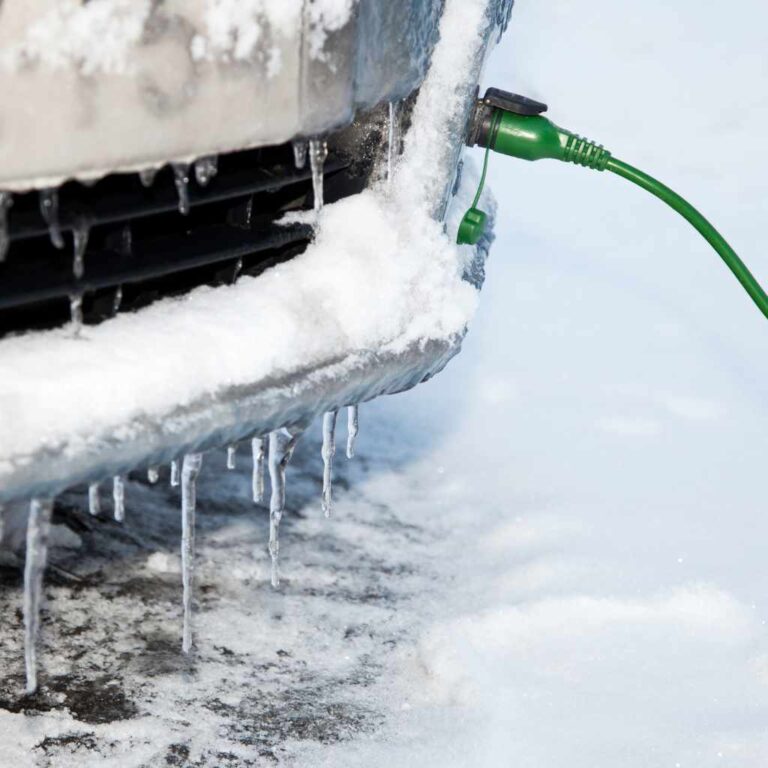
The heater needs an external power source. It is most useful before a cold start, especially in freezing conditions, because it helps the engine reach operating temperature sooner and eases cranking load on the battery.
What it warms, and what it does not
Think of the block heater as an engine preheater. It can warm the coolant jacket and surrounding metal, which helps the engine make usable heat sooner after start-up. It cannot push warm air through the dashboard vents by itself. That job belongs to the cooling and HVAC system.
Block heaters and oil pan heaters can both help cold starts, but neither one fixes a heater core, blower, or blend door problem. If the cabin stays cold after the engine warms, the fault is usually elsewhere.
How long to plug it
A common rule of thumb is about two to four hours for many cars in severe cold, though some vehicles may need more or less time. The right answer depends on ambient temperature, engine size, and heater wattage. A diesel truck in deep cold often benefits more than a mild-weather gasoline car.
Do not assume longer is always better. If the engine already reaches normal temperature quickly, extra plug-in time may add little cabin benefit. It only uses more electricity.
Why is the cabin still cold?
The cabin stays cold when the engine and the HVAC system are not doing the same job. The block heater may raise coolant temperature before start, but the heater core still needs hot coolant flow, the blower must move air, and the blend door must route that air through the core.
Idle warm-up is slower than driving warm-up. Very low ambient temperatures stretch the warm-up time even more. Diesel engines usually make cabin heat later than gasoline engines because they can take longer to reach useful coolant temperature, especially at idle.
Engine heat versus cabin heat
Engine heat starts at the coolant. Cabin heat starts at the heater core. If the engine reaches normal temperature on a scan tool but the vents stay cold, the engine side is not the only place to look.
That is why a block heater can work as intended and still leave you with no heat inside the car.
Common cold-start patterns
Say your 3.0-liter diesel idles for 15 minutes in subzero weather, but the dash gauge barely moves and the vents stay cool. That points more toward slow engine warm-up, low coolant, or a thermostat problem than a failed block heater.
Suppose the engine reaches normal temperature after five miles of driving, yet the defrost still blows cool. That pattern points away from the block heater and toward heater-core flow, blower output, or a blend door fault.
Cabin heat matrix
This matrix helps separate engine warm-up problems from HVAC faults. Start with the symptom pattern, then check coolant level, hose temperature, blower output, and defrost performance before replacing parts.
| engine temp rises? | defrost works? | blower strong? | upper/lower hose hot? | likely fault | final action |
|---|---|---|---|---|---|
| No or very slow | No | Usually normal | Both cool or uneven | Low coolant, trapped air, or stuck-open thermostat | DIY check coolant level; scan coolant temp; shop diagnosis if it stays cool |
| Yes | No or weak | Normal | Inlet hot, outlet much cooler | Heater core blockage or restricted flow | Flush if serviceable; shop diagnosis if flush fails |
| Yes | No | Weak | Hot | Blower motor, resistor, or fan control issue | DIY check fan speeds and fuses; shop diagnosis if speeds do not change |
| Yes | No | Strong | Hot | Blend door stuck on cold | Actuator test or scan-tool diagnosis |
| Yes | Yes | Strong | Hot | No major HVAC fault; heat loss may be from outside air or a control issue | Check mode doors, set temperature calibration, then reassess |
Check coolant and thermostat
Low coolant and trapped air can reduce heater output even when the block heater is working. A stuck-open thermostat can keep the engine below normal operating temperature, which can leave too little heat for the heater core. A scan tool that shows coolant temperature is often more reliable than the dash gauge.
Low coolant and trapped air
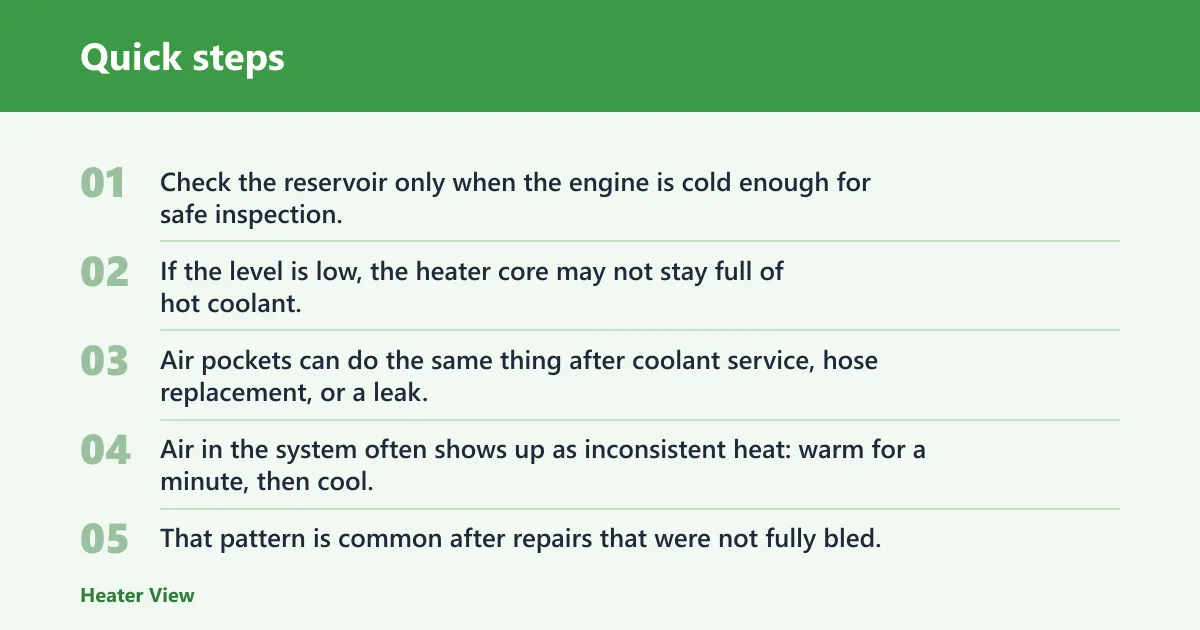
Check the reservoir only when the engine is cold enough for safe inspection. If the level is low, the heater core may not stay full of hot coolant. Air pockets can do the same thing after coolant service, hose replacement, or a leak.
Air in the system often shows up as inconsistent heat: warm for a minute, then cool, then warm again. That pattern is common after repairs that were not fully bled.
Stuck-open thermostat signs
A stuck-open thermostat lets coolant circulate too soon, so the engine never reaches a stable operating temperature. The gauge may sit low on the scale, and cabin heat may stay weak even on the highway. If the upper radiator hose warms too early, that is another clue.
Normal operating temperature is the goal. If the scan tool shows a coolant temperature that stays well below normal after several minutes of driving, the thermostat belongs near the top of the list.
To check a block heater, verify power first. Inspect the cord for damage, confirm the outlet has power, and feel for slight warmth near the block after a proper plug-in period. On many vehicles, the coolant or block should be noticeably less cold than surrounding parts after a few hours in freezing weather.
- Confirm the outlet has power with a known-good lamp or tester.
- Inspect the cord, plug, and extension lead for damage.
- Plug in for the recommended time before start-up.
- After unplugging, check whether the block area is warmer than ambient air.
- Start the engine and watch coolant temperature rise on a scan tool if available.
Do not judge the heater only by whether the cabin gets warm. That test mixes two systems and can point you at the wrong fault.
Is the heater core blocked?
Yes, a blocked heater core can cut cabin heat even when the engine is hot. Sediment, rust, and scale can restrict flow through the core, especially in older or high-mileage vehicles. Weak heat and poor defrost are common signs, and the cabin may never warm fully at idle.
How to spot a restricted core
Feel the heater hoses after the engine is warm. If the inlet hose is hot and the outlet hose is much cooler, flow through the core may be restricted. If both hoses are hot but the cabin air is still cold, look harder at airflow or the blend door.
A typical cabin tank flush may take 10 to 20 minutes, but a flush only helps when the core is partially restricted and still passable. If sediment accounts for roughly 60 percent of cold-water complaints in one service context, that is a reminder that contamination matters. Severe blockage may need replacement.
When a flush helps
Use a flush when the heater core shows partial restriction and the cooling system is otherwise sound. If the core remains cold on one side after the flush, replacement is more likely. Do not keep flushing a core that is internally plugged solid.
Could airflow be the problem?
Yes. A weak blower can feel like a dead heater even when coolant is hot. GenAuto notes that heater issues may show up as weak airflow from the vents, and a heater not producing enough heat is also a warning sign. A failing blower motor, resistor, fuse, or fan-speed control can cause that pattern.
Blower speed checks
Run the fan through every speed setting. If one or more speeds do not work, the resistor or control circuit may be at fault. If all speeds are weak, check the battery and charging system too, because low system voltage can reduce blower output after start-up.
Cold weather lowers cranking performance, and a weak battery can make recovery slower after the engine starts. The alternator must carry the load once the engine is running.
Defrost and vent mode checks
Weak defrost is useful evidence. The same source says a weak heater can leave you struggling to defrost your windshield, and a working heater helps clear the windshield on cold mornings. If defrost airflow is poor while floor and panel modes seem normal, the problem may be in the mode door or its control.
Could the blend door be stuck?
Yes. The blend door directs air through or around the heater core. If it sticks on cold, you can get cold air only even when the coolant is hot. This failure is often mistaken for a bad block heater because the engine seems warm enough.
Signs of a blend door fault
Watch for temperature changes that do not match the control knob or touchscreen setting. Clicking behind the dash, inconsistent vent temperature, or air that never turns warm are common clues. A scan tool with HVAC actuator commands can help confirm the problem on many vehicles.
Do not skip actuator tests on vehicles that support them. A door that never moves will leave you chasing coolant parts that are already doing their job.
Block heater vs oil pan heater: which helps cabin heat more?
A block heater usually helps cabin heat more because it warms coolant and nearby engine metal, which supports faster heater-core output. An oil pan heater mainly warms engine oil. That can help cranking and cold lubrication, but it has a smaller effect on how quickly hot coolant reaches the heater core.
Neither heater fixes a bad thermostat, clogged heater core, weak blower, or stuck blend door. If the cabin heat is the goal, the cooling system still has to do the real work.
When is a block heater needed?
A block heater is most useful in very cold weather, especially for overnight parking and cold starts. It helps diesel engines, high-mileage engines, and vehicles parked outside in freezing conditions. If your climate is mild, the heater may offer little cabin benefit compared with a proper HVAC repair.
Use it as a cold-start aid, not as a cure for no-heat symptoms. The same source recommends heating and A/C checks every one to two years, which is a practical interval for catching weak airflow, low refrigerant, and other HVAC issues before winter. GenAuto also notes refrigerant can slowly leak over time.
Frequently asked questions
Why is my block heater not warming the cabin?
Because it is not supposed to warm the cabin directly. It only heats engine coolant or nearby metal. If the engine warms but the vents stay cool, check coolant level, thermostat operation, heater-core flow, blower speed, and blend door movement before blaming the block heater.
Can a block heater warm the inside of the car?
Only indirectly. It can pre-warm the engine so the heater core has hot coolant sooner, but it does not send warm air into the cabin on its own. Cabin heat still depends on coolant circulation, airflow through the core, and the blend door opening to heat.
Do block heaters have a thermostat?
Some do not, and many simple block heaters run whenever they are plugged in. Others may include internal temperature limiting or control features, but that is not the same as a cabin thermostat. If the engine still stays cold, test the cooling system and power supply first.
Why is my car heater not blowing hot air after plugging in the block heater?
The block heater may be working fine while the HVAC system is not. Common causes include low coolant, trapped air, a stuck-open thermostat, a clogged heater core, weak blower output, or a blend door stuck on cold. Each one can leave the cabin cold after start-up.
Can a blocked heater core cause overheating?
It can contribute to heat management problems, but it usually causes weak cabin heat first. Overheating often points more strongly to low coolant, a stuck thermostat, a fan problem, or a larger circulation fault. If both heat loss and overheating appear, the cooling system needs prompt diagnosis.