Do Portable Gas Heaters Need Ventilation?
Yes. Portable gas heaters need ventilation unless the heater is specifically rated for fully indoor, unvented use and the instructions allow it. Even then, you still need the minimum air changes and clearance the manufacturer specifies. Poor ventilation can build carbon monoxide, lower oxygen, and turn a small heater into a serious hazard; this guide gives a simple decision matrix for indoor rooms, tents, caravans, patios, and garages, plus a safety checklist.
Portable heater decision matrix
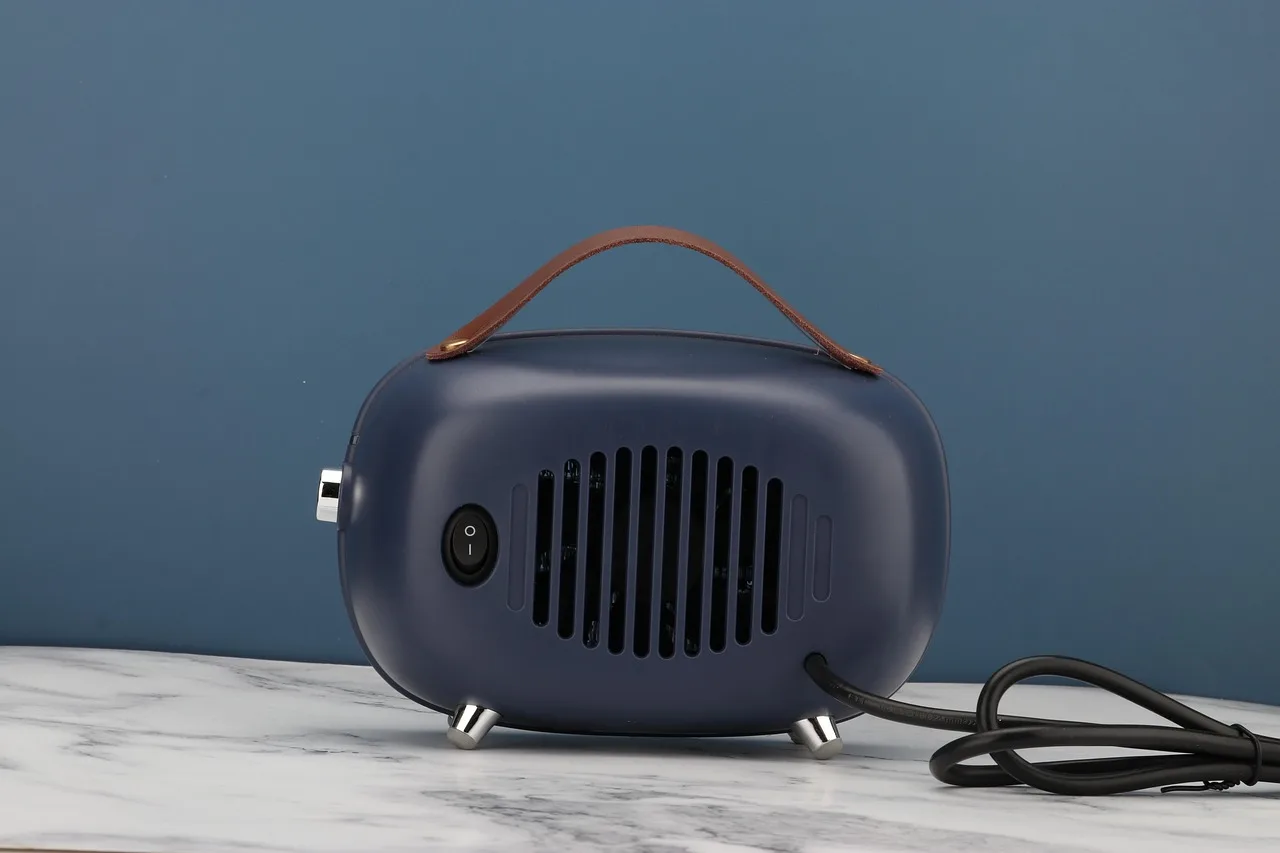
The short answer changes by location. A portable gas heater burns propane or butane, and that combustion can produce carbon monoxide, so the key question is where the heater will be used and how much air exchange the space allows.
| Use case | Heater type | Ventilation needed | Safe or unsafe status | Required safety controls |
|---|---|---|---|---|
| Indoor room | Vented indoor unit only; vent-free portable gas heater only if the label and instructions allow it | Yes. Some air exchange is required even for indoor-rated units | Potentially safe only if the product is rated for indoor use and the room is not sealed | CO alarm, clear intake/exhaust path, tip-over switch, manufacturer’s clearance distances, never for sleep use |
| Tent | Portable gas heater generally not recommended unless the product is specifically approved for tent use | Yes. Open vents or leave flaps partially unzipped | High-risk if fully zipped or used for sleeping | CO alarm, continuous ventilation, shutoff feature, stable floor placement, off before sleep |
| Caravan or camper | Indoor-rated propane heater only if the vehicle maker and heater instructions allow it | Yes. Air exchange is required because the space is enclosed | Use with caution; unsafe in a sealed vehicle or while sleeping | CO alarm, roof vent or window gap as instructed, tip-over protection, shutoff before sleep |
| Patio | Outdoor portable gas heater | Yes, if the patio is partially enclosed or sheltered | Generally safer outdoors, but not safe in a screened-in or tightly enclosed patio | Stable base, clearance from walls and ceilings, no blocked exhaust, no use near overhangs that trap fumes |
| Garage | Only a heater approved for the space; many garages are treated like enclosed rooms | Yes. Garages can trap exhaust quickly | Unsafe if the garage is closed, cluttered, or used for sleep | CO alarm, door or vent opening as specified, tip-over shutoff, no fuel vapors nearby, never unattended |
Indoor room
An indoor room can be suitable only if the heater is labeled for indoor use and the room is not sealed. A vent-free portable gas heater is still not a free pass to ignore airflow; the room needs the air changes and clearances listed by the manufacturer, and a CO alarm belongs nearby.
A common first-timer mistake is assuming a small bedroom or study is “large enough” because the heater is only on low. That misses the core issue: combustion keeps using oxygen and makes exhaust gases every minute it runs.
Tent
Tents need ventilation because fabric walls do not remove combustion risk. If a portable gas heater is used at all, the tent should have vents open or flaps partially unzipped, and the heater should be off before sleeping. A fully zipped tent is a bad setup for combustion appliances.
Suppose a camper closes a two-person tent on a cold night and runs a propane heater to stay warm. The temperature may rise quickly, but so can carbon monoxide, especially if the tent is sealed tight and the heater keeps pulling oxygen from the air.
Caravan or camper
Caravans and campers sit between indoor and outdoor use. They are enclosed spaces, so the heater must be approved for that setting, and the vehicle still needs some air exchange. CO alarms matter here because exhaust can concentrate fast in a small volume.
Propane is usually the better cold-weather fuel choice because propane heaters work across a wider temperature range than butane. But fuel choice does not replace ventilation, and it does not make sleep use safe.
Patio
A patio is safer than a sealed room only when air can move freely. If the space is partially enclosed, has a low roof, or is blocked on several sides, treat it like a semi-enclosed area and follow the same ventilation logic you would use indoors.
Outdoor use is where ceramic heaters and catalytic heaters are often compared. Ceramic heaters produce radiant heat that warms objects and people directly, while catalytic heaters generate heat without flames and consume less oxygen than traditional flame-based heaters. Even so, both still need open air around them.
Garage
A garage is risky because it can trap carbon monoxide and often contains ignition hazards such as fuel, solvents, or stored equipment. If the garage door is closed or mostly closed, ventilation may be inadequate even if the heater itself has safety features.
Tip-over protection is useful here, because tip-over switches automatically shut off gas flow when a heater is knocked over. That protects against spills and fire, but it does not make a poorly ventilated garage safe.
Do all gas heaters need to be vented?
No. Some gas heaters are vented units that route exhaust outdoors, while others are vent-free and depend on room air and strict product instructions. The practical rule is simpler: if the space is enclosed, sealed, or only partly open, you still need ventilation unless the product is specifically approved for that use and the label says how to do it safely.
Why sealed spaces are risky
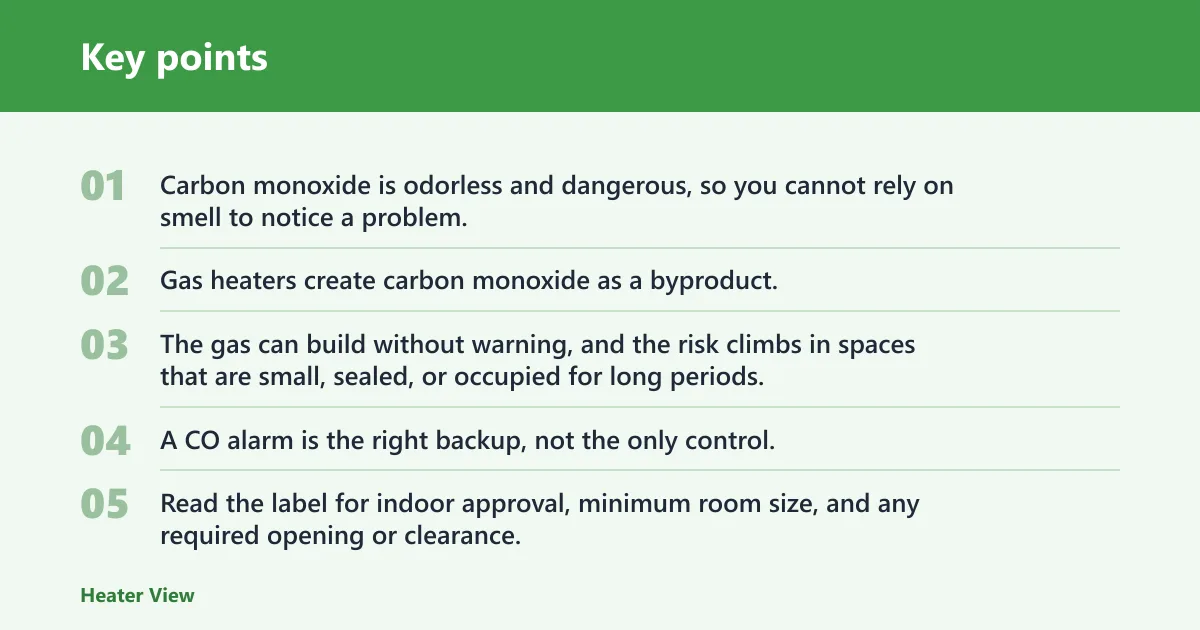
Sealed spaces are unsafe for gas heater operation because combustion uses oxygen and makes exhaust gases, including carbon monoxide. Carbon monoxide is odorless and dangerous, so you cannot rely on smell to notice a problem. The danger rises as air exchange drops. (NASA)
That is why a completely sealed space is never a good place for a portable gas heater. Even a heater with automatic shutoff can fail to protect against a gradual buildup of exhaust in a room, tent, camper, or garage.
Carbon monoxide basics
Gas heaters create carbon monoxide as a byproduct. The gas can build without warning, and the risk climbs in spaces that are small, sealed, or occupied for long periods. A CO alarm is the right backup, not the only control. (CDC)
Do not treat “vent-free” as “no ventilation needed.” It means the heater is designed differently, not that combustion stops needing air. Read the label for indoor approval, minimum room size, and any required opening or clearance.
Oxygen use and exhaust buildup
Every combustion heater pulls oxygen from the air while it runs. If the room or tent cannot replace that air fast enough, oxygen drops and exhaust rises. That is why manufacturers ask for clear openings, specified room sizes, or partially open vents.
How much ventilation is enough? Start with the product label, then add airflow if the space is small, crowded, or partially sealed. In practice, that often means a window gap, a roof vent, or tent vents left open, not a fully shut space.
Why sleeper use is a bad idea
Sleeping with a gas heater on is a bad idea unless the product and setup are explicitly approved for unattended or overnight use, which many are not. The problem is not only heat. It is reduced awareness if oxygen drops, exhaust builds, or the heater fails.
The safest routine is simple: turn heating devices off before sleeping. That applies in rooms, tents, caravans, and garages alike.
Can I use a portable gas heater in a tent?
Only with strong caution, and often the safest answer is no. Tents are semi-enclosed at best, so a portable gas heater needs continuous ventilation, a stable setup, and strict adherence to the heater’s instructions. Never use one in a fully zipped tent or as a sleeping heat source.
What to check before you buy
The best buying check is not only output or price. You need to confirm fuel type, the intended use category, the safety shutoffs, and the exact ventilation language on the label. Product pages often separate indoor and outdoor models for a reason.
-
Check the fuel type. Propane is usually the stronger cold-weather choice because propane heaters work across a wider temperature range than butane. Butane cartridges perform poorly in freezing temperatures, so they are a weak match for cold trips, tents, or unheated garages.
-
Confirm the heat format. Ceramic heaters produce radiant heat that warms objects and people directly, while catalytic heaters generate heat without flames. Catalytic heaters also consume less oxygen than traditional flame-based heaters, but neither type removes the need for airflow.
-
Look for tip-over shutoff. Tip-over switches automatically shut off gas flow when a heater is knocked over. That helps with accidental falls and unstable floors, but it should be treated as a backup safety feature, not the main protection.
-
Read the label for indoor approval. Some portable propane heaters are sold for indoor or outdoor use, and some listings show output ranges such as 6,000 to 18,000 BTU, 15,000 BTU, or 30,000 BTU. BTU alone does not tell you whether the heater is safe in a sealed room.
-
Plan ventilation before use. For tents, open vents or leave flaps partially unzipped. For campers, use the roof vent or window opening the manufacturer allows. For indoor rooms and garages, follow the minimum opening or air exchange listed on the heater and keep a CO alarm nearby.
-
Reject sleep-time use. If the heater is not specifically approved for unattended operation, turn it off before sleeping. That rule matters more in tents and campers, where people may notice symptoms too late.
Picture a garage heater used on a cold evening with the door cracked only a few inches and a lawnmower stored nearby. The heater may seem fine at first, but the real question is whether the opening is enough for combustion air and exhaust escape, not whether the garage feels warmer.
What safety features should a portable gas heater have?
At minimum, look for clear indoor or outdoor rating, tip-over protection, and instructions that spell out the ventilation requirement. A CO alarm is essential in enclosed or semi-enclosed spaces, because the heater’s built-in features cannot detect every bad setup.
Also check for automatic shutoff language, stable feet or a base, and a label that identifies whether the unit is vented or vent-free. If the product page does not say where it can be used, assume it is not meant for enclosed indoor use.
Frequently asked questions
Do portable gas heaters need ventilation?
Yes. Portable gas heaters need ventilation unless they are specifically rated for a particular indoor setup and the instructions still allow the required air changes. They burn fuel, use oxygen, and create carbon monoxide, so a sealed space is unsafe.
Do propane space heaters need to be vented?
Propane space heaters need ventilation unless the specific model and instructions say otherwise. Propane is a fuel, not a safety feature. In indoor rooms, tents, caravans, and garages, follow the label for airflow, clearances, and any CO alarm requirement.
Are portable gas heaters safe to use indoors?
Only some are. A portable gas heater can be used indoors if it is specifically approved for indoor use and the room is not sealed, but many portable models are meant for outdoor or semi-enclosed spaces only. Check the label, then add a CO alarm.
What is the difference between vented and vent-free gas heaters?
Vented heaters send combustion exhaust outside. Vent-free heaters keep the exhaust in the room and rely on the heater being designed for that condition, with limited room size and ventilation requirements. Vented and vent-free are not interchangeable, and neither type is suitable for a sealed space.
How much ventilation does a gas heater need?
There is no single number that fits every model. The correct amount of ventilation is the minimum air exchange the manufacturer lists, often through a window gap, vent, or partially open flap. If the space is smaller, sealed tighter, or used for sleep, ventilation should be increased or the heater should stay off.