Best Infrared Heaters for RVs (2026): We Compared
A 750- to 1,000-watt infrared heater is often the better choice for an RV; choose 1,500 watts only if the circuit can spare about 12.5 amps and nothing else is loading it. Pick the wrong wattage and you can trip breakers, overload cords, or lose heat when power is tight. This guide compares safe wattage limits, power draw, and the heater features that matter most for shore power, generators, and limited off-grid use.
Quick comparison
| Product | Badge | Best for | Price | ||
|---|---|---|---|---|---|
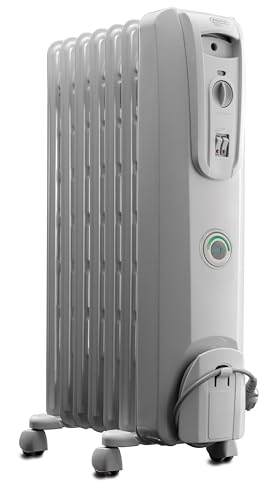 |
De’Longhi Oil filled Radiator HeaterDe’Longhi | Our pick | $129.95
Price as of 27 Nov 2026
|
View | |
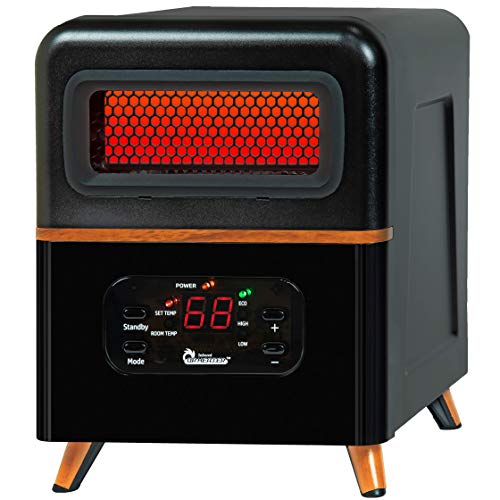 |
DR. INFRARED HEATER DR-978 New Upgraded Dual Heating HybridDR. INFRARED HEATER | Also great | 1500W · infrared hybrid · portable | $99.99
Price as of 27 Nov 2026
|
View |
 |
Heat Storm HS-1500-PHX-WIFI Infrared HeaterHeat Storm | Also great | 1500W · Wi-Fi · wall mounted | $126.99
Price as of 27 Nov 2026
|
View |
 |
Comfort Zone Indoor Space HeaterCOMFORT ZONE | Budget pick | 1500W · infrared quartz · cabinet | $126.82
Price as of 27 Nov 2026
|
View |
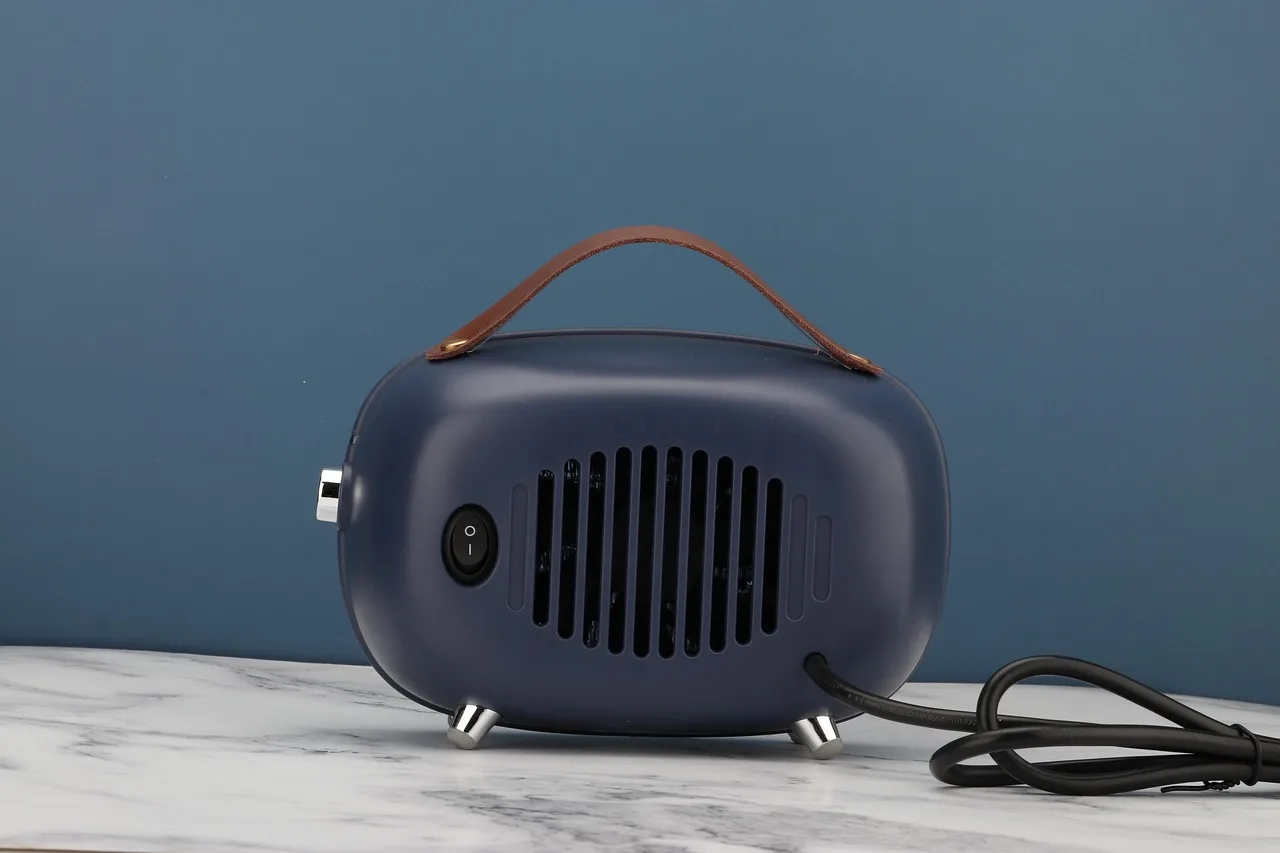
For most RVs, the safest default is a low-wattage portable infrared heater with a thermostat, tip-over shutoff, overheat cutoff, and a housing that stays cool to the touch. Wall-mounted units make sense when floor space is tight and the installation can stay within the maker’s clearance rules.
How we chose
We compared these heaters on four RV-specific points: wattage fit for common electrical service, safety features that reduce common RV failure cases, form factor in narrow interiors, and the ability to warm a single occupied zone instead of trying to heat the whole rig.
We also looked at how each unit fits real RV layouts, especially curtained windows, slide-outs, low cabinets, and sleeping areas with little clearance.
RV heater decision table
| RV setup | Recommended wattage ceiling | Must-have safety features | No-go scenarios |
|---|---|---|---|
| Boondocking | 0W on battery power; use only with generator or shore power | Tip-over switch, overheat protection, thermostat | Running from an inverter that cannot supply the load, or using a heater to drain batteries fast |
| 30-amp shore power | 750W to 1,000W is the safer default; 1,500W only with a light other load profile | Tip-over switch, overheat protection, cool-touch exterior | Using 1,500W while the air conditioner, microwave, or water heater is also drawing power |
| 50-amp shore power | 1,500W can fit more often, but only within the circuit and outlet limits | Thermostat, overheat protection, stable base or wall mount | Assuming the pedestal rating makes every outlet and branch circuit safe for any heater |
| Small travel trailer | 750W to 1,000W | Cool-touch exterior, tip-over switch, thermostat | Placing a hotter unit near bedding, curtains, or a slide-out wall |
| Class C | 1,000W to 1,500W, depending on other loads | Overheat protection, tip-over switch, clear service access | Sharing a circuit with a high-draw appliance or using a heater where movement can knock it over |
| Fifth wheel | 1,000W to 1,500W for a single zone; not for whole-rig heating | Thermostat, clear airflow path, stable placement | Trying to replace the furnace in a large, drafty layout or placing it too close to fabric |
What is the safest infrared heater for an RV?
The safest infrared heater for an RV is usually a portable unit with a tip-over switch, overheat protection, a thermostat, and a cool-touch exterior. Wall-mounted models can also be safe if they are installed with the maker’s clearance distances and kept away from curtains, bedding, cabinets, and slide-outs. Safety depends on fit as much as wattage.
Portable vs wall-mounted
Portable units are easier to place in a bedroom, dinette, or living area, and easier to move when the heated zone changes. Wall-mounted heaters save floor space, but only make sense when the RV wall has enough clearance and the install will not block storage, vents, or traffic paths.
A portable model needs a flat, stable surface. Uneven flooring is common in RVs, so a tip-over switch is not optional. It is the first safety feature to look for, because a unit that shuts off when knocked over is less likely to heat bedding, rugs, or a walkway.
Must-have safety features
- Tip-over switch. This is the minimum safety feature for portable heaters in an RV.
- Overheat protection. Look for a thermal cutoff or internal temperature monitoring that shuts the unit down if it gets too hot. Some models restart after cooling; that is normal if the manual says so.
- Thermostat control. Adjustable setpoint control reduces constant cycling and helps avoid waste on shore power.
- Cool-touch exterior. This lowers burn risk in tight interiors where people, pets, and gear move close to the heater.
Clearance and placement rules
Follow the heater manual and the RV manual, and use the stricter clearance rule if the numbers differ. In a compact cabin, keep the heater away from curtains, bedding, paper items, cabinet faces, and anything that can hang into the heat stream. Do not tuck it under a slide-out edge or inside a cramped nook where heat can build.
Say your travel trailer has a dinette on the passenger side and a cabinet wall two feet away. A 750- to 1,000-watt infrared heater can warm the occupied seat area well, but only if it sits where the radiant beam reaches the people, not the cabinet panel beside them.
How many watts can an RV heater use?
On 30-amp shore power, a heater around 750 to 1,000 watts is the safer default because other loads often share the same supply. On 50-amp service, 1,500 watts is more realistic, but the branch circuit, outlet, and total load still matter. Boondocking usually means no electric heater unless you have a generator or a power source sized for it.
30-amp shore power
A 30-amp RV service provides about 3,600 watts at 120 volts for the whole rig, not the heater alone. Air conditioning, a microwave, an electric water heater element, battery charging, and even a coffee maker can use a large share of that budget. A 1,500-watt heater draws about 12.5 amps by itself, so there is little room left for other appliances.
That is why many RV owners do better with a low-wattage heater in the 750- to 1,000-watt range. It gives some warmth without forcing every other load off the circuit. If the heater shares a circuit with outlets in the bedroom or living area, check the breaker size before you assume it is safe. For example, if a bedroom outlet goes dead when you flip the bedroom breaker in the panel, that receptacle is on that circuit and should be treated as part of the same load.
-
List every active load. Add the heater, refrigerator mode, converter charging, AC, microwave, and water heater together before turning on the heater. The breaker does not care which appliance caused the overload.
-
Leave margin on 30 amps. Keep the heater below 1,000 watts when the RV is occupied and other loads may cycle on. That margin matters because fans, compressor starts, and chargers create spikes.
-
Avoid extension cords. Do not use a light-duty cord as the default fix. If a cord is unavoidable, it must be properly rated for the load and kept short, but the better answer is to plug directly into a suitable outlet.
50-amp shore power
Fifty-amp service can provide much more total power, but that does not make every 1,500-watt heater a free choice. The important question is which branch circuit powers the outlet and what else is running on that branch. If the heater is on its own circuit and the rig is otherwise light on loads, 1,500 watts is often workable.
Even then, use the thermostat to avoid running full output nonstop. A heater that cycles on and off is easier on the electrical system and more comfortable in a sealed RV than one left pegged at maximum output.
Boondocking and generator use
For boondocking, the practical question is not only wattage but the source. Battery power alone is a poor match for electric infrared heat. A generator may support a heater, but only if its output is high enough after accounting for startup and other loads. In many off-grid cases, propane furnace heat is the better primary source, with the infrared heater used only when generator power is already available.
De’Longhi Oil filled Radiator Heater, 1500W Electric Space Heater for indoor use, portable room heater, Energy Saving, full room like office and bedroom with safety features, EW7707CM: best for steady, quiet heat
This De’Longhi unit is a quiet, oil-filled radiator rather than an infrared heater, so it is not the best match for an RV infrared-heater roundup. Based on the published specs, it is better suited to steady background heat than quick radiant warmth.
The drawback is simple: at 1,500 watts, it asks for the full upper limit many RV circuits can spare, so it is not the safest choice for a crowded 30-amp setup. It also takes floor space, so it fits better where placement is stable and traffic is light.
DR. INFRARED HEATER DR-978 New Upgraded Dual Heating Hybrid Portable Infrared Space Heater, 1500W with Remote: best for fast mixed heat
- PTC + infrared heating for stronger output
- Low-noise blower spreads heat
- Tip-over and overheat shutoff included
This DR. Infrared Heater model is aimed at owners who want infrared feel with a blower-assisted boost. Based on the manufacturer’s published details, the dual heating setup and low-noise fan can spread warmth more evenly than a plain radiant panel in a small RV zone.
The drawback is that it is still a 1,500-watt heater, so it needs a circuit with room to spare. It is a better fit for a controlled shore-power setup than for a boondocking plan or a crowded outlet strip.
Heat Storm HS-1500-PHX-WIFI Infrared Heater, Wifi Wall Mounted: best for saving floor space
- Wall-mounted design saves floor space
- Wi-Fi lets you control temperature from your phone
- Cool-to-the-touch housing helps with safer handling
This Heat Storm wall-mounted model is a strong fit when floor space is the main constraint. The wall mount keeps the heater off the walkway, and the cool-to-the-touch housing is useful in a small RV where people pass close to the unit.
The drawback is that wall mounting adds placement limits. You still need the manufacturer’s clearance distances, solid mounting, and a location that will not interfere with cabinets, curtains, or slide-out movement. It also remains a 1,500-watt heater, so load budgeting still matters.
Comfort Zone Indoor space Heater, 20 inch, 1,500 watt, cabinet heater with remote, infrared, quartz, USB charging ports, timer, tip over switch & overheat protection, ideal for home & office, CZ2062C: best for feature set on a budget
- Three heat settings, including 1500W high
- Tip-over protection shuts the heater off if knocked over
- Includes remote control and timer
This Comfort Zone heater offers a broad feature set for RV use, including a tip-over switch, overheat protection, a remote, and a timer. Those features matter because they address common failure cases like a knock to the unit during setup or a forgotten heater running longer than planned.
The drawback is that the cabinet-style design still uses 1,500 watts on high, so it is not a casual fit for every outlet in a 30-amp rig. It also needs clear space in front and around it, which can be harder to guarantee in a compact bedroom or dinette area.
Best infrared heater for a small RV
For a small travel trailer, the best choice is usually a 750- to 1,000-watt infrared heater with a thermostat and strong safety shutdowns. Small RVs warm faster as a single occupied zone, so low wattage often beats a bigger unit that can trip a breaker or overheat a cramped outlet area. The goal is comfort at the seat or bed, not whole-rig heat.
Single-zone heating
Infrared heat works well when the person is in the heater’s line of sight. That makes it useful for a dinette, couch, or bed area where you want direct warmth without trying to raise every cubic foot of air in the RV. It is less effective if the heater is pointed at empty space or a wall.
Because RVs leak heat more than houses, an infrared heater often feels best as a supplement to the furnace. It can take the chill off a small occupied zone while the furnace handles tanks, plumbing, and the rest of the coach.
When low wattage wins
Low-wattage models are the safer choice when the shore power is limited, the breaker load is already busy, or the rig has a mixed use pattern with lights, chargers, and kitchen appliances. The tradeoff is runtime and heat output. A 750-watt unit will not warm a large fifth wheel quickly, but it may be the right call for a compact trailer at night.
Best infrared heater for larger rigs
For a Class C or fifth wheel, a 1,000- to 1,500-watt infrared heater can make sense as a zone heater, especially near a sofa, desk, or bedroom. It is still not a whole-RV solution. Larger rigs need more careful load planning because they are more likely to share circuits with other appliances and to have multiple spaces that need different temperatures.
Supplementing furnace heat
In a bigger RV, infrared heat is most useful when it supports the furnace instead of replacing it. You can warm the living area without heating the entire coach to the same level. That can reduce propane use and improve comfort, especially when one room is occupied and the rest can stay cooler.
A common first-timer mistake is to place a 1,500-watt heater in the main room and assume it will solve cold spots in a bunk area down the hall. It usually will not. Infrared heat works best in a straight line to the occupied zone, not through closed doors and around corners.
When a higher-wattage unit makes sense
Choose 1,500 watts only if the electrical math works and the heater has the right safety features. That usually means a 50-amp hookup, a lightly loaded branch circuit, and a place where the heater can sit or mount with the correct clearances. If any of those pieces are missing, the safer answer is usually a lower-wattage model.
Which one should you buy?
If you want the safest default for most RV use, start with a 750- to 1,000-watt portable infrared heater that has a thermostat, tip-over switch, overheat protection, and a cool-touch exterior. Among the models in this guide, the Heat Storm HS-1500-PHX-WIFI Infrared Heater, Wifi Wall Mounted is the best overall pick for RV buyers who want a true infrared heater and need to save floor space, provided the wall-mount clearances work in the rig. Choose a wall-mounted model only when floor space is tight and the install can meet every clearance rule. Pick 1,500 watts only for 50-amp or otherwise light-load situations where the circuit can truly spare it.
If your RV is small, the best match is usually the lowest-wattage option that can still warm your seated area. If your rig is larger and shore power is stable, a 1,500-watt unit can work as a zone heater, but it should not share a crowded circuit with other big appliances. For boondocking, skip electric heat unless a generator or other source can cover the load without strain.
Frequently asked questions
What is the best electric heater for an RV?
The best electric heater for an RV is usually a low-wattage infrared unit with a thermostat, tip-over switch, and overheat protection. For most rigs, 750 to 1,000 watts is the safer range. That gives you supplemental heat without pushing too hard against 30-amp service or crowded outlet circuits.
What kind of infrared heater is safest to use in an RV?
The safest kind is a portable heater with tip-over shutoff, thermal overheat protection, and a cool-touch exterior. A wall-mounted unit can also be safe if it is installed to the maker’s clearance distances and kept away from bedding, curtains, and cabinet edges. Placement matters as much as the label.
How many watts can an RV heater use without tripping power?
There is no single number that fits every RV, because the rest of the load matters. On 50-amp service, 1,500 watts can be workable, but only when the heater’s circuit is not carrying much else.
Can you run an infrared heater on 30-amp RV power?
Yes, but with care. A 30-amp hookup gives about 3,600 watts for the whole RV, and that total must cover everything running at once. A 750- to 1,000-watt heater is usually the safer choice. A 1,500-watt unit may work if other appliances are off and the branch circuit can handle it.
Is an infrared heater better than a ceramic heater for an RV?
Infrared heaters often feel warmer faster in the line of sight, while ceramic heaters usually rely more on moving warmed air through the space. Ceramic models can still provide directional warmth if they use a fan and a focused outlet grille, but they are typically less about direct radiant heat than infrared units. In a small RV zone, either type still needs the same electrical and safety checks.
Can I leave an infrared heater on overnight in an RV?
Only if the heater has proper safety shutoffs, is placed with clear space around it, and the RV manual and heater manual both allow that use. Even then, overnight use should be conservative. Avoid putting it near bedding, curtains, or anything that can move into the heat stream while you sleep.
Will an infrared heater dry out the air in an RV?
It does not dry air in the same way a forced-air system can feel drying. What changes more often is comfort: radiant heat warms people and surfaces directly, which can make the interior feel less damp. In a sealed RV, condensation still depends on humidity, cooking, breathing, and ventilation.