Are Infrared Heaters Energy Efficient?
Yes, infrared heaters are energy efficient when you heat a small, used space directly and switch them off when you leave. They are usually a poor fit for whole-home, continuous heating. Misuse can raise your bill, because heat escapes faster in drafty rooms and long runtimes add up. This guide explains when infrared heaters save energy, when they do not, and how insulation, thermostat control, and usage pattern change the result.
How radiant heat affects comfort and runtime
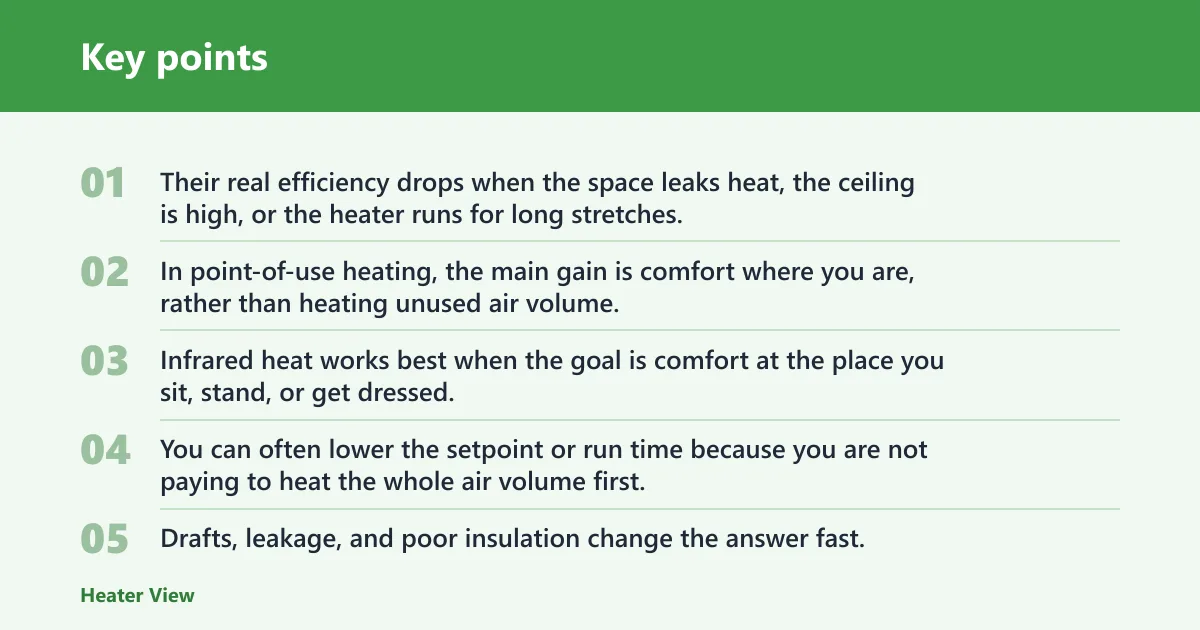


They can be. Infrared heaters use electromagnetic radiation to heat people and objects directly, so they can deliver comfort fast without first warming all the room air. That makes them a strong fit for short, targeted use in a closed or well-insulated room. Their real efficiency drops when the space leaks heat, the ceiling is high, or the heater runs for long stretches.
What efficiency means for radiant heat
With radiant heat, the useful result is comfort on surfaces and skin, not a warm air temperature everywhere in the room. That is why a person can feel warm quickly even when the thermostat has not climbed much. In point-of-use heating, the main gain is comfort where you are, rather than heating unused air volume.
The catch is simple: if the room loses heat faster than the heater can replace it, runtime rises and the bill rises with it. In that case, a radiant heater can feel efficient for a few minutes and still cost more over the day than a better-matched setup.
When direct heat transfer helps
Infrared heat works best when the goal is comfort at the place you sit, stand, or get dressed. A desk area, reading chair, bathroom, or bedroom used for a limited period can benefit because the heater warms the person and nearby surfaces directly. That faster response is what makes infrared useful for short sessions and room-by-room control.
That faster response matters. You can often lower the setpoint or run time because you are not paying to heat the whole air volume first. One common rule of thumb is that every degree less can save approximately 6% energy, so control strategy matters as much as the heater type.
When room heat loss cancels the benefit
Drafts, leakage, and poor insulation change the answer fast. In a leaky room, much of the comfort benefit disappears as soon as the heater switches off, which forces longer runtime. High ceilings have the same effect because a larger air volume and more exposed surface area pull heat away from the occupied zone.
That is why the same heater can look efficient in a bedroom and wasteful in a garage or unfinished basement. The unit may still heat people directly, but the room may never hold enough background warmth to reduce total energy use.
Infrared heat vs convection heat
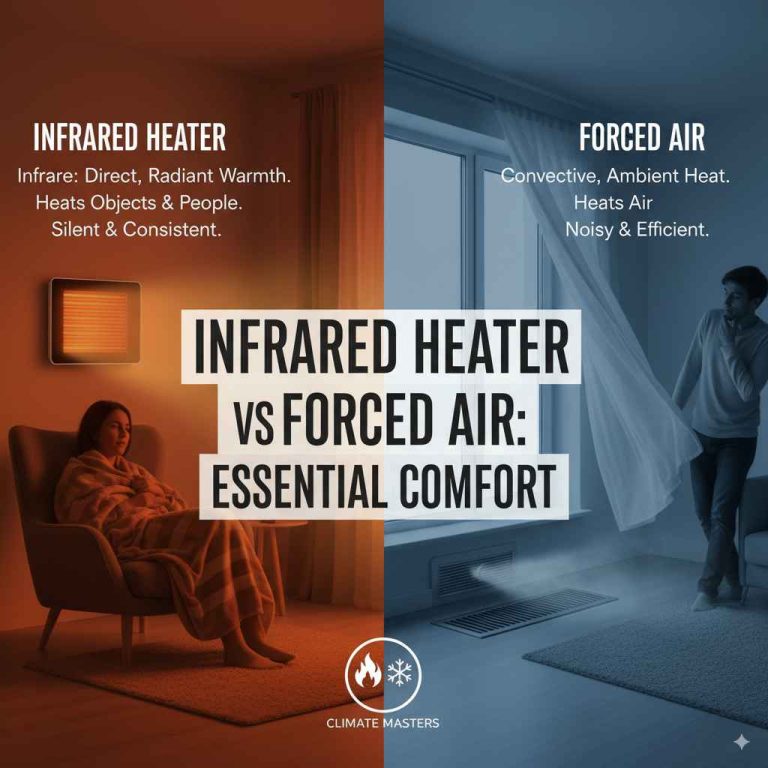
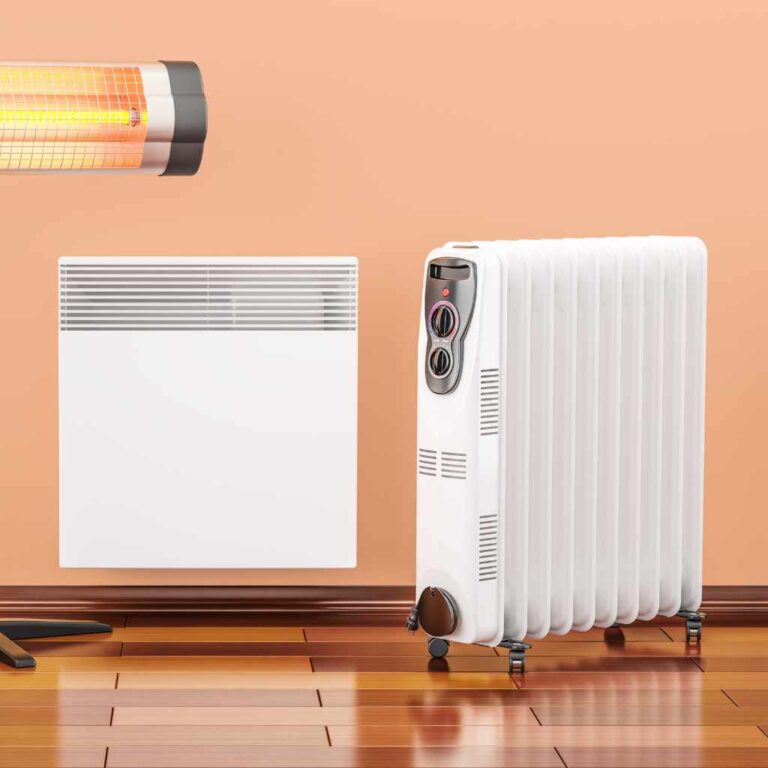
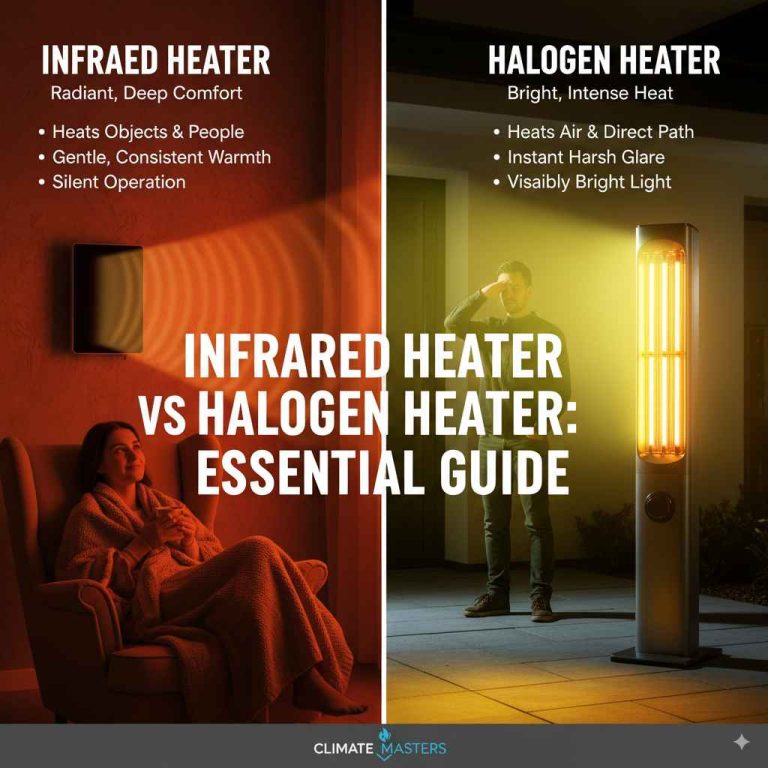
Infrared and convection heaters address the same need in different ways. Infrared heaters warm people and objects directly; convection heaters warm the air, which then heats the room. That difference matters because air leaks, drafts, and ceiling height affect convection more strongly than radiant heat.
How infrared heaters warm people and objects
Infrared waves are part of the electromagnetic spectrum, and humans detect them as heat. In homes, electric infrared heaters are the most common type, though gas-powered variants exist. The direct radiation can give quick comfort in the zone that matters, especially when the room itself does not need to be kept warm all day.
How convection heaters warm air
Convection heaters depend on heating air mass. If a room has gaps, cold surfaces, or frequent door opening, that warmed air escapes and the heater keeps cycling. That is why convection units often lose ground in drafty spaces, while infrared can keep a person comfortable with less room-wide heating.
Why drafts change the outcome
Drafts do not stop infrared heat from reaching you, but they do drain the warmth from everything around you. If the room air is constantly replaced with cold air, the heater has to run longer to keep comfort steady. In practice, that can erase the running-cost advantage that radiant heat has in a tighter space.
What makes an infrared heater efficient?
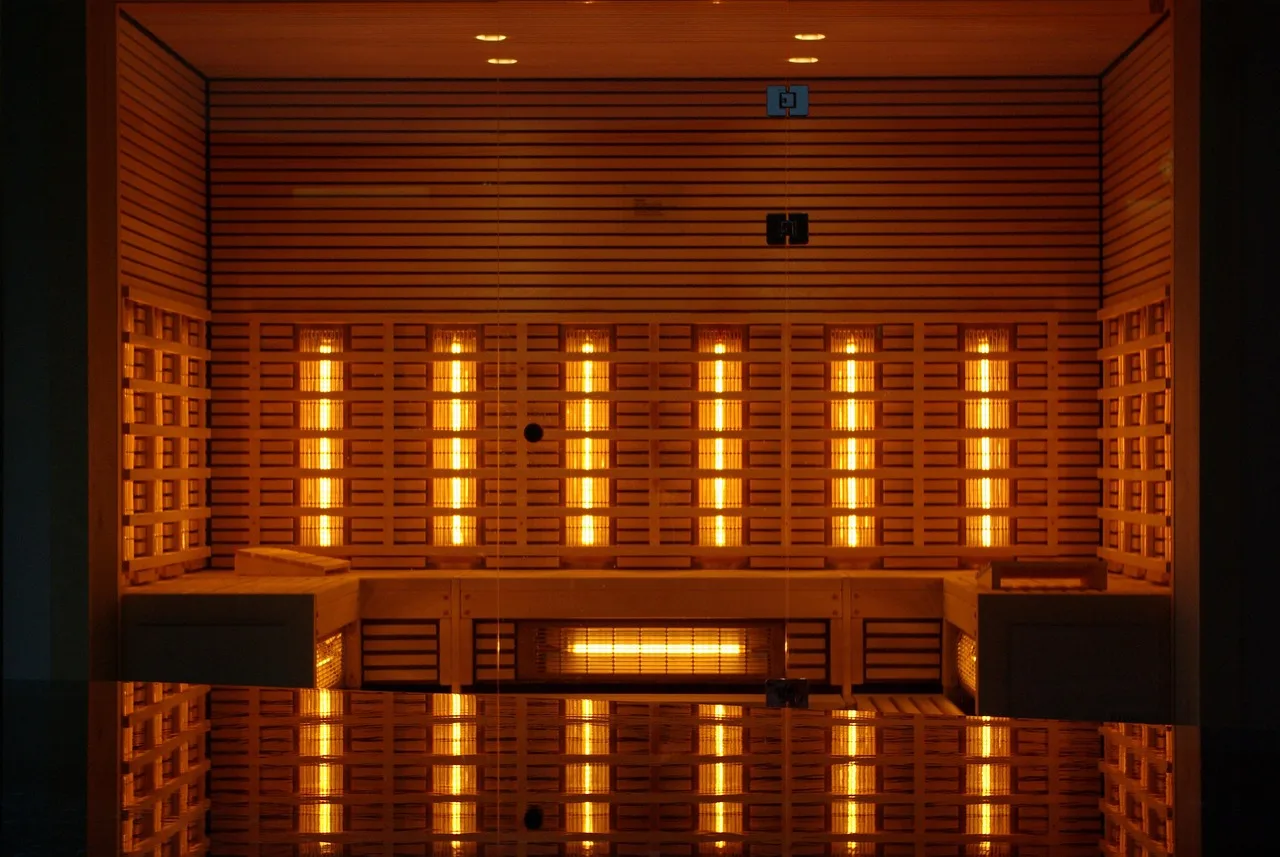
Four factors shape the bill: room insulation and leakage, control quality, heater sizing, and local electricity price. The heater type matters less than the operating conditions if the room is a poor fit. A thermostat or timer can cut wasted runtime, while the wrong wattage can push costs up by forcing either long duty cycles or unnecessary output.
Room insulation and air leakage
Room insulation is a major driver of real-world efficiency. Older rooms, garages, basements, and sunrooms often lose more heat than finished interior rooms, so the heater must stay on longer to keep the same comfort level. That is where infrared loses some of its edge.
Think of insulation as the thing that decides how long your comfort lasts after the heater cycles off. Better sealing means less wasted runtime and a clearer efficiency gain from radiant heat.
Thermostat and timer control
A thermostat stops the heater from running longer than needed. A timer does the same for short-use rooms, such as a bathroom before a shower or a home office during working hours. Automatic control cuts electricity use by matching output to occupancy instead of leaving the unit on by habit.
- Set a narrow schedule. Run the heater only during the hours you actually use the room. Short, repeated sessions are a better fit for infrared than all-day standby heat.
- Lower the target temperature. Use the lowest comfortable setting rather than chasing full-room warmth. That matters because each degree less can save approximately 6% energy.
- Stop heating early. Switch off before you leave the room or before the room reaches an air-temperature target. Infrared comfort arrives fast, so there is less need to overshoot.
Wattage per square meter and room size
One competitor gives 50-70 W/m² as an average sizing need, depending on insulation and room size. That range is only a starting point. A tighter room may need less, while a drafty or high-ceiling space may need more, or may be a poor match altogether.
Oversizing and undersizing both affect cost. An oversized heater can warm the target zone quickly, but if it lacks control it may overshoot and waste power. An undersized heater may run for long periods without reaching comfort, which raises consumption and makes the room feel inefficient even if the unit itself is efficient.
Electricity tariff and runtime
Operating cost depends on how many kilowatt-hours the heater uses and what your tariff charges for them. A low-wattage heater on an expensive tariff can cost more to run than a higher-output heater on cheaper power, simply because the local electricity price changes the math. That is why regional and supplier rates matter.
Simple running-cost formula: running cost = heater power in kilowatts × hours of use × electricity rate. For practical planning, take the heater’s rated wattage, convert it to kilowatts, then multiply by the time it runs and the tariff you pay. If the heater is on a thermostat, the actual cost depends on how long it cycles, not just on the nameplate rating.
All resistive electric heaters convert nearly all electricity to heat at the point of use. That means the main efficiency question is not whether the electricity becomes heat, but how much of that heat reaches the people or surfaces you actually want to warm.
DIN EN IEC 60675-3 and how to read heater claims
DIN EN IEC 60675-3 is a product standard used for evaluating electric room heaters, including how performance is described and compared under defined test conditions. It helps create a common basis for claims, but it does not prove that one heater will always be cheaper to run in every home.
Use the standard as a reference point, not a guarantee. A heater can meet a test method and still perform differently in a drafty room, a high-ceiling space, or a short-use bathroom. When you compare heater claims, check whether the claim comes from a standardized test condition or from a real-world usage statement.
Electric infrared heat can also make more sense when paired with green electricity or a photovoltaic system. If part of the power comes from your own PV array, the effective running cost can fall, and the sustainability case for electric radiant heat gets stronger. That does not make the heater free to run; it changes the supply side of the equation.
Infrared heater decision matrix
This matrix gives a practical way to read the same technology across common rooms. “Efficiency” here means delivered comfort per kWh in typical use, not a lab-only rating. Runtime risk means the chance that drafts, size, or control will make the heater stay on longer than expected.
| Scenario | Expected efficiency | Runtime risk | Best-fit heater type |
|---|---|---|---|
| Well-insulated bedroom | High for short use and sleep comfort | Low if scheduled and thermostatically controlled | Infrared panel heater |
| Drafty garage | Low to medium | High because heat escapes fast | Portable infrared only for spot heating |
| Sunroom | Medium if sun exposure and glazing are controlled | Medium to high in cold weather | Infrared panel or targeted quartz unit |
| Basement | Low to medium depending on insulation and moisture | High if the space is unfinished | Supplemental infrared, not sole heat |
| Home office | High for occupied-desk use | Low with timer and local control | Small panel or focused portable infrared |
| Whole-house backup | Low | Very high because of runtime and room volume | Not the main choice; use central heat backup |
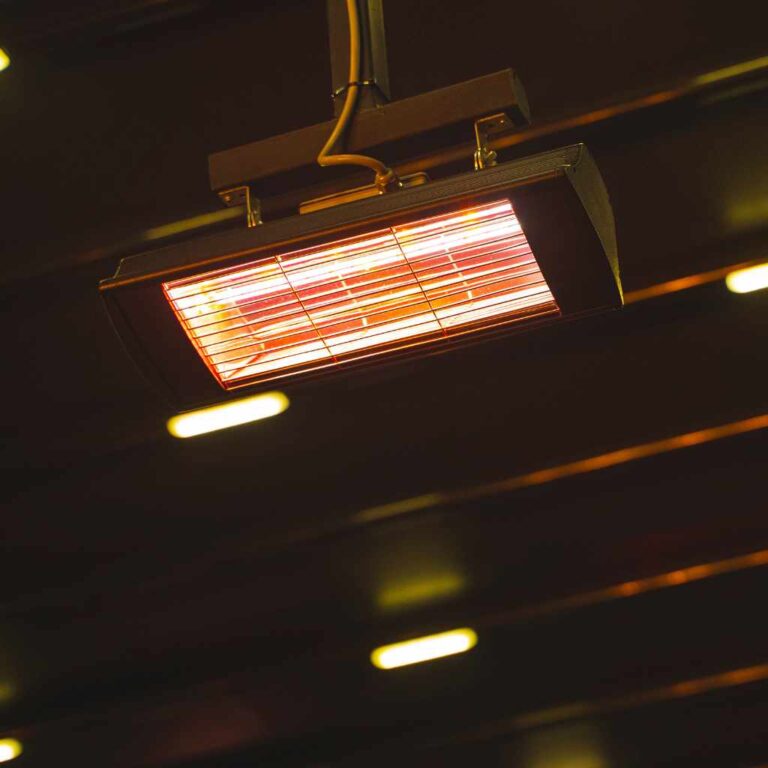
| Periodic bathroom heat | High for brief preheat sessions | Low if used only before occupancy | Ceiling-mounted infrared panel |
| Off-grid / PV use | Medium to high when power is self-generated | Medium; depends on solar supply and storage | Electric infrared panel with timer |
Say your home office is about 12 m² and the heater runs for about two hours during work time. If the room is fairly tight, a small infrared panel can deliver comfort without heating the rest of the house. Now change only one variable: add a leaky door and cold floor. The same heater may still warm your desk area, but runtime rises and the cost picture changes.
When infrared heaters are efficient vs not
- Efficient: short-use rooms, occupied zones, and spaces that hold heat well.
- Efficient: thermostat- or timer-controlled heating that stops when comfort is reached.
- Efficient: spot heating at a desk, chair, vanity, or bathroom preheat window.
- Not efficient: whole-house heating, especially with leaks, drafts, or high ceilings.
- Not efficient: long daily runtimes where room heat loss dominates the bill.
- Not efficient: use without control in spaces that cool down quickly after switch-off.
Are infrared heaters cheaper to run?
Sometimes. They are cheaper when they reduce the hours you need heat, not because they magically use less electricity than every other heater. The running cost follows kWh use, room losses, and the tariff you pay. In a small, occupied space with good control, infrared can sometimes cost less than convection heat because it avoids heating unused air.
How kWh use drives cost
Electric heaters all convert electricity into heat at the point of use, so the main difference is where that heat goes. Infrared can lower kWh use when it lets you heat a smaller zone for a shorter time. If you leave it on for whole-room heating, the cost advantage disappears quickly.
Why local electricity price matters
The same heater can feel economical in one region and expensive in another. Electricity tariff is a direct input to operating cost, so the answer changes with supplier, country, and rate structure. That is also why comparisons with gas heating need local fuel prices, not generic claims.
When PV or green electricity changes the bill
If your home has photovoltaic supply, electric infrared heating can be easier to justify for short, daytime use. Green electricity does not change the heater’s physics, but it can lower the effective cost and improve the sustainability case. This is most useful when the heater runs during solar production or on stored power that would otherwise go unused.
When infrared heating is a bad fit
Infrared heating is generally a poor match when the goal is to hold a whole house at one steady temperature, especially in leaky or high-ceiling spaces. It also struggles when you need long runtime every day, because the room loss keeps forcing the heater to cycle. In those cases, a more conventional whole-space system is usually the better tool.
Whole-home heating
For whole-house heating, radiant comfort at one spot does not solve the problem of cold rooms, hallways, and ceilings. You may feel warm near the heater while the rest of the house stays cool. That can lead to higher runtime than expected if you try to use infrared as the main source.
High ceilings and leaky rooms
High ceilings increase the air volume you are trying to warm, and leaks keep moving that heat out. Infrared can still warm people directly, but the room itself will not hold heat well. This is where the difference between comfort delivery and operating cost becomes obvious.
Long runtime needs
If you need heat for many hours each day, efficiency depends more on insulation and system fit than on the infrared label. The longer the unit runs, the more your tariff and room losses matter. Short bursts are where radiant heat tends to shine.
Suppose a bathroom gets used for about 15 minutes before school drop-off. A timer-controlled infrared panel is a strong fit because it gives fast comfort and then switches off. Now compare that with a drafty basement used all afternoon; the same kind of heater may run far longer, and the bill will reflect that.
Frequently asked questions
Are infrared heaters energy efficient?
Yes, in the right setting. They are often most efficient when they heat a small, occupied space directly, especially with a thermostat or timer. They become much less attractive in drafty rooms, whole-home use, or any setup that demands long daily runtime.
Are infrared heaters more energy efficient than other space heaters?
Not always. Compared with convection heaters, infrared can be more efficient for targeted comfort because it heats people and surfaces directly instead of warming all the air first. In leaky or open spaces, that advantage shrinks and may disappear.
Is infrared heating energy efficient in a well-insulated home?
Yes, a well-insulated home gives infrared heating its best chance. The heat stays where you need it longer, so the unit can run for fewer minutes. That makes it especially useful for bedrooms, offices, and short-use rooms inside tight buildings.
Do infrared heaters use a lot of electricity?
They can if you use them for long periods or try to heat a large space. Electricity use is mostly a function of runtime, wattage, and room losses. In short-use, well-sealed rooms, they may use less than a heater that spends more time warming unused air.
Are infrared panel heaters energy efficient?
Infrared panel heaters are often the best fit for steady, low-profile supplemental heat in closed rooms. They work well when mounted properly and controlled by a thermostat. Their advantage is strongest in bedrooms, offices, and bathrooms used in short sessions.
Are quartz infrared heaters energy efficient?
Quartz infrared heaters can be efficient for fast, focused heat where you want immediate warmth. They are usually a better match for spot heating than whole-room duty. If they are used too long or in a drafty room, their running cost can climb quickly.