
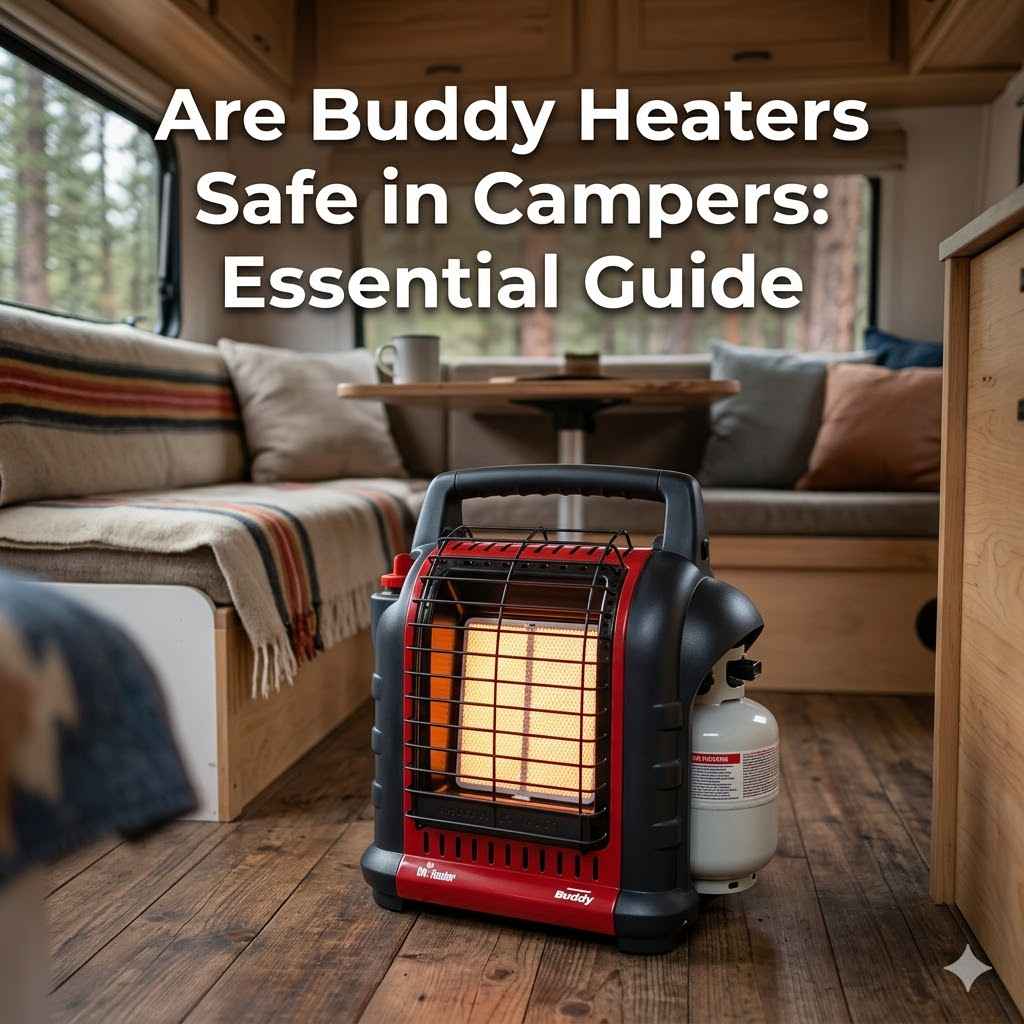
It’s a common question for anyone starting out with RVs or campers: Are Buddy Heaters Safe in Campers? Essential Guide. Figuring out how to stay warm while camping can feel tricky at first.
You want to be cozy but also super safe. This guide is here to make it easy. We’ll walk through everything you need to know, step by step, so you can feel confident about using your heater.
Get ready to learn the simple ways to keep your camper warm and safe all season long.
Understanding Buddy Heaters And Camper Safety
Buddy heaters are popular for a reason. They are portable and can quickly warm up a small space like a camper. Many campers and RV owners use them to take the chill off.
But, when you’re in a confined space like a vehicle, safety becomes even more important. This section will cover the basics of what Buddy heaters are and why their use in campers needs careful thought. We’ll explore the primary reasons people ask Are Buddy Heaters Safe in Campers?
Essential Guide and what makes it a vital topic for anyone hitting the road.
What Exactly Are Buddy Heaters?
Buddy heaters, often referred to as portable propane heaters, are designed to provide heat in temporary or outdoor settings. They work by burning propane gas, which releases heat. These heaters are known for their ease of use and portability, making them a go-to for camping, tailgating, or emergency heating.
They typically have a simple design with a fuel source, an ignition system, and a heating element. The most common models are the Mr. Heater Buddy series, which are widely recognized in the outdoor recreation market.
The appeal of a Buddy heater lies in its ability to generate a significant amount of heat without needing an electrical hookup. This makes them ideal for off-grid adventures or when power is unreliable. They come in various sizes, with the most popular being the portable versions that can heat spaces up to 200-300 square feet.
This makes them seem like a perfect fit for a camper.
Why The Safety Question Arises For Campers
The question of safety regarding Buddy heaters in campers is crucial because campers are enclosed living spaces. Unlike a large, open outdoor area where ventilation is abundant, a camper has limited airflow. Burning propane produces carbon monoxide, an odorless, colorless gas that can be deadly.
Without proper ventilation, carbon monoxide can build up to dangerous levels inside a camper.
Furthermore, the confined space increases the risk of accidental fires. Portable heaters can get hot and could potentially ignite nearby flammable materials if not used with extreme caution. Many campers are also made of materials that can be flammable.
Therefore, understanding the specific risks and necessary precautions when using a Buddy heater inside a camper is not just good practice; it’s essential for survival. This is why the query Are Buddy Heaters Safe in Campers? Essential Guide is so frequently asked by new and experienced campers alike.

Key Safety Considerations For Buddy Heaters In Campers
Ensuring the safe operation of Buddy heaters in campers involves understanding several critical aspects. These considerations are not about creating fear, but about empowering users with knowledge. We will break down the essential steps and equipment needed to mitigate risks associated with using propane heaters in a vehicle.
This section will detail the most important factors to keep in mind to answer the question Are Buddy Heaters Safe in Campers? Essential Guide with confidence and practical advice.
Ventilation Is Absolutely Crucial
Ventilation is the single most important factor when using any propane-powered heater in an enclosed space like a camper. Propane combustion consumes oxygen and releases carbon monoxide. Without adequate fresh air entering the camper and stale air escaping, oxygen levels can drop, and carbon monoxide can accumulate to dangerous levels.
This can lead to carbon monoxide poisoning, which can cause headaches, dizziness, nausea, confusion, and even death.
To ensure proper ventilation, it is recommended to open a window or vent slightly, even in cold weather. The amount of ventilation needed depends on the size of the heater and the camper, as well as how long the heater is running. A general rule of thumb is to have at least one vent or window cracked open a few inches.
Some campers have roof vents or side windows that can be used for this purpose. It is also wise to have a good quality carbon monoxide detector installed in the camper and ensure it is functioning correctly.
Importance Of Carbon Monoxide Detectors
A carbon monoxide detector is a non-negotiable safety device when using propane heaters in an RV or camper. These alarms are specifically designed to detect the presence of carbon monoxide gas. They provide an audible warning, alerting occupants to the danger before it becomes life-threatening.
It’s vital to choose a detector that is specifically designed for RVs or enclosed spaces and to test it regularly. Batteries should be
Understanding Airflow Dynamics
Airflow is more than just opening a window; it’s about creating a healthy exchange of air. Combustion appliances like Buddy heaters use oxygen from the air inside the camper. As they burn propane, they produce byproducts like carbon monoxide and water vapor.
This process reduces the oxygen content and can increase humidity.
Good airflow ensures that fresh oxygen is consistently supplied to the heater and that harmful gases are expelled. A balanced airflow system helps maintain a safe internal environment. This can be achieved by strategically opening vents, windows, or doors to create a cross-breeze.
For instance, opening a window on one side of the camper and a roof vent on the other can create a continuous flow of air. Without this, the air inside the camper can become stagnant and unsafe.
Fire Safety Precautions
The risk of fire is another significant concern when using portable propane heaters in a camper. Heaters can get very hot, and if placed too close to flammable materials, they can easily start a fire. Campers often contain upholstery, curtains, sleeping bags, and other materials that can ignite quickly.
A small oversight can lead to a devastating outcome.
It is essential to maintain a safe distance between the heater and any combustible items. Most Buddy heaters come with guidelines on clearance distances, and these should be followed strictly. Never place the heater on soft surfaces like beds or piles of clothes, as these can obstruct ventilation and increase the risk of ignition.
Always place the heater on a stable, level, non-flammable surface.
Clearance And Placement Guidelines
Manufacturers of Buddy heaters provide specific recommendations for safe clearance distances. These are typically found in the owner’s manual. For example, a common recommendation is to keep at least three feet of clear space around the heater, free from curtains, bedding, paper, tents, or any other flammable items.
When placing the heater inside a camper, consider the layout. Ensure there are no obstructions that could accidentally fall against the heater. It’s a good idea to designate a specific, safe spot for the heater when it’s in use and to clear that area of clutter.
This proactive approach significantly reduces the chance of an accidental fire.
Using A Heat-Resistant Mat
To further enhance fire safety, consider using a heat-resistant mat beneath the Buddy heater. These mats are typically made of fireproof or fire-retardant materials and help protect the camper’s floor from excessive heat or accidental spills.
A mat can also provide a stable, non-slip surface, preventing the heater from being easily knocked over. This adds an extra layer of protection, especially if the camper is on uneven ground or if there’s movement within the vehicle. Always ensure the mat itself is placed on a stable surface and does not create a tripping hazard.
Propane Tank And Fuel Safety
The fuel source for Buddy heaters is propane, which is a flammable gas. Safe handling, storage, and connection of propane tanks are paramount. Leaks or improper connections can lead to gas buildup and pose a serious fire or explosion risk.
Understanding propane safety is a critical part of answering Are Buddy Heaters Safe in Campers? Essential Guide.
Always use the correct hoses and regulators specified for your heater. Inspect all connections before use for any signs of damage or leakage. Propane tanks should be stored upright and secured to prevent tipping.
Never store propane tanks inside a closed vehicle or living space where leaks could accumulate unnoticed.
Checking For Propane Leaks
A simple and effective way to check for propane leaks is to use a soapy water solution. Mix a generous amount of dish soap with water in a spray bottle or sponge. After connecting the propane tank and turning on the gas supply (but not yet lighting the heater), apply the soapy solution to all connections, valves, and hoses.
If bubbles form and persist, you have a leak.
If a leak is detected, immediately turn off the gas supply. Do not attempt to use the heater until the leak is fixed. Leaks can occur at the tank valve, regulator connection, hose fittings, or even from a damaged hose.
Address any leaks before proceeding with heater operation.
Proper Storage Of Propane Tanks
Propane tanks should always be stored in a well-ventilated area, preferably outdoors and upright. Never store them inside a camper, car, or garage, as a leak in an enclosed space can lead to a dangerous buildup of flammable gas. When transporting tanks, ensure they are secured so they cannot tip over.
Many campers have dedicated external storage compartments for propane tanks. If you are using a smaller, disposable propane cylinder, ensure it is properly sealed and stored away from heat sources. Always follow the manufacturer’s guidelines for propane storage and handling.
Choosing The Right Buddy Heater For Your Camper
Not all Buddy heaters are created equal, and choosing the right one for your camper is important for safety and effectiveness. Considering the size of your camper, your heating needs, and the features available can make a significant difference. This section will guide you through selecting a heater that best fits your situation, directly addressing the question Are Buddy Heaters Safe in Campers?
Essential Guide by ensuring you start with the right equipment.
BTU Output And Camper Size
Buddy heaters are rated by their British Thermal Units (BTUs) of heat output. The BTU output determines how much heat the heater can produce and, consequently, how large of a space it can effectively warm. For campers, it’s important not to overdo it with too high a BTU output, as this can make the space uncomfortably hot very quickly and increase the consumption of oxygen.
For small to medium-sized campers (up to about 25 feet), a 9,000 BTU heater is often sufficient. For larger campers or those in very cold climates, a 12,000 BTU model might be considered, but always with extra attention to ventilation. It’s better to have a heater that can run on a lower setting for longer periods than one that has to run on high constantly, which is less efficient and uses more fuel.
| Camper Size (Approximate) | Recommended BTU Output | Notes |
|---|---|---|
| Small (Tent trailers, truck campers, small travel trailers up to 20ft) | 4,000 – 6,000 BTU | Plenty for basic heating, less oxygen consumption. |
| Medium (Travel trailers, Class C RVs up to 25ft) | 9,000 BTU | Good balance for most common camper sizes. |
| Large (Fifth wheels, Class A motorhomes over 25ft, very cold climates) | 12,000 BTU (with extreme caution and ventilation) | Use only if absolutely necessary and with superior ventilation. |
Features To Look For
When purchasing a Buddy heater for your camper, several features can enhance safety and convenience. Look for models that include safety shut-off systems. These are designed to automatically turn off the heater if it tips over or if the pilot light goes out.
Some heaters also have an oxygen depletion sensor (ODS), which is another critical safety feature. The ODS monitors the oxygen level in the air and will shut off the heater if the oxygen drops below a safe threshold. Features like adjustable heat settings and a built-in fan can also help distribute heat more evenly and efficiently.
Automatic Safety Shut-Offs
An automatic safety shut-off is a critical component for any portable heater, especially in a camper. These systems are designed to detect hazardous conditions and immediately stop the flow of propane. The most common types include tip-over protection, which senses if the heater is tilted at an angle, and pilot light safety, which extinguishes the flame if the pilot light goes out.
These shut-off mechanisms are not just optional; they are essential safety features that can prevent accidents like fires or carbon monoxide buildup. When considering a Buddy heater, always verify that it is equipped with these automatic shut-off systems.
Oxygen Depletion Sensor (ODS)
The Oxygen Depletion Sensor (ODS) is a vital safety device that works by monitoring the air quality. Inside the heater’s combustion chamber, there is a sensor that measures the percentage of oxygen. If the oxygen level drops below a predetermined safe level (typically around 18-19%), the ODS triggers, causing the heater to shut down.
This feature is particularly important in enclosed spaces like campers where oxygen can be consumed quickly by the heater. It acts as a safeguard against suffocation due to low oxygen levels. An ODS is a key feature that directly contributes to answering the question Are Buddy Heaters Safe in Campers?
Essential Guide with a resounding “yes, when properly equipped and used.”
Propane Connectors And Hoses
The type of propane connection and hose you use is also a safety consideration. Buddy heaters typically connect to propane cylinders using specific regulators and hoses. It’s important to use only the connectors and hoses that are designed to work with your particular heater model and propane tank size.
Using the wrong type of hose or regulator can lead to leaks or improper gas flow, both of which are safety hazards. Always purchase accessories from reputable sources and ensure they are compatible with your Buddy heater. Regularly inspect hoses for cracks, kinks, or wear.
Best Practices For Using Buddy Heaters Safely
Beyond choosing the right heater and understanding its features, implementing consistent best practices is key to safe operation. These practices are the practical, day-to-day habits that ensure your heating solution remains a source of comfort, not concern. This section provides the actionable advice needed for the Are Buddy Heaters Safe in Campers?
Essential Guide to be truly effective.
Always Use A Carbon Monoxide Detector
We cannot stress this enough: always have a working carbon monoxide detector in your camper when using a Buddy heater. Treat it like a smoke detector; it’s a life-saving device. Install it according to the manufacturer’s instructions, typically near sleeping areas.
Test the detector regularly, at least once a month, and change the batteries annually or as recommended by the manufacturer. A detector with a digital display can show the current CO levels, giving you an added layer of awareness.
Operate With Adequate Ventilation
As discussed, ventilation is paramount. Make it a habit to crack a window or roof vent open a few inches whenever the Buddy heater is running. Even in cold weather, a small opening can make a significant difference in maintaining fresh air circulation.
Try to create cross-ventilation by opening vents or windows on opposite sides of the camper. This helps to create a steady flow of air, expelling stale air and bringing in fresh oxygen. Never run the heater in a completely sealed-off camper.
Never Sleep With The Heater On
This is a critical rule. While it might be tempting to keep the camper warm all night, it is never safe to sleep with a Buddy heater running. The risks of carbon monoxide buildup and potential fire increase significantly when you are asleep and unable to monitor the situation.
Instead, warm up the camper before you go to bed, then turn off the heater. You can also use thermal blankets and ensure your camper is well-insulated to retain heat overnight. If you are concerned about the cold, consider wearing warm pajamas or using a hot water bottle.
Regular Maintenance And Inspection
Like any appliance, Buddy heaters require regular maintenance to ensure they are functioning safely and efficiently. Before each use, and at the start of each camping season, inspect the heater for any signs of damage.
Check the ignition system, the burner assembly, and the gas connections. Ensure there are no obstructions in the vents or around the heating element. If you notice any damage or unusual behavior, it’s best to have the heater serviced or replaced.
Cleaning The Heater
Dust and debris can accumulate inside the heater over time, which can affect its performance and potentially create safety hazards. Periodically clean the exterior and accessible interior parts of the heater according to the manufacturer’s instructions.
A soft brush or compressed air can be used to remove dust from vents and around the burner. Ensure the heater is completely cool and disconnected from the propane source before cleaning.
Checking Hoses And Regulators
The hoses and regulators that connect your propane tank to the heater are vital components. Inspect them regularly for any signs of wear, cracking, brittleness, or leaks. If you find any damage,
Ensure the regulator is set to the correct pressure for your heater. Using the wrong regulator can lead to over-pressurization or under-pressurization, both of which can be dangerous.
Situational Awareness Is Key
Always be aware of your surroundings when using a Buddy heater. Keep children and pets away from the heater when it’s in operation. Be mindful of where you place the heater, ensuring it’s not in a high-traffic area where it could be accidentally bumped.
If you notice any unusual smells, sounds, or behavior from the heater, turn it off immediately and investigate. Your attentiveness is your first line of defense against potential accidents.
When Is It NOT Safe To Use A Buddy Heater?
While Buddy heaters can be useful, there are specific situations and conditions where using them becomes inherently unsafe. Understanding these limitations is just as important as knowing how to use them correctly. This knowledge is essential for anyone looking for a complete answer to Are Buddy Heaters Safe in Campers?
Essential Guide, as it covers the boundaries of safe operation.
Extreme Cold Without Proper Planning
In extremely cold weather, the temptation to rely heavily on a Buddy heater can be strong. However, this can lead to a dangerous cycle if proper precautions are not taken. The colder it is, the more likely you are to want to seal up your camper completely to conserve heat, which directly contradicts the need for ventilation.
If you are camping in extreme cold, a Buddy heater might not be the safest or most effective primary heat source. Consider alternative heating methods that are designed for such conditions or focus on superior insulation for your camper. Trying to force a Buddy heater to work in such scenarios without extreme vigilance on ventilation can be very risky.
When The Camper Is Tightly Sealed
If your camper is designed to be super airtight, or if you have sealed up all vents and windows to keep out drafts, then using a Buddy heater is not advisable. The lack of airflow is a direct invitation for carbon monoxide to build up to dangerous levels.
This is especially true for modern, well-insulated campers. While they are great for energy efficiency, they require a conscious effort to maintain proper ventilation when using fuel-burning appliances. Always ensure there’s a pathway for fresh air to enter and stale air to exit.
If The Heater Is Damaged Or Malfunctioning
Anytime you notice that your Buddy heater is not working correctly, do not use it. This includes issues like inconsistent flames, strange noises, damage to the casing or hoses, or if the safety features do not seem to function.
A malfunctioning heater is a significant safety hazard. It could be leaking gas, producing excessive carbon monoxide, or pose a fire risk. If in doubt, get it serviced by a professional or replace it.
Your safety is worth more than the cost of a new heater.
In Areas With Poor Air Circulation
Beyond just camper interiors, consider the general environment. If you are parked in a very confined space with no natural air movement, like a tight spot in a campground with large obstructions on all sides, even outdoor use might require extra caution.
The principle of air exchange applies everywhere. While a camper is the primary concern, understanding how air moves (or doesn’t move) around your heating source is always important.

Frequently Asked Questions
Question: Can I leave a Buddy heater on overnight in my camper?
Answer: No, it is strongly advised not to sleep with a Buddy heater running in your camper. Always turn it off before sleeping to prevent the risk of carbon monoxide poisoning or fire.
Question: How often should I test my carbon monoxide detector?
Answer: You should test your carbon monoxide detector at least once a month to ensure it is functioning properly. Also, replace the batteries annually or when the low-battery indicator chirps.
Question: What is the minimum ventilation required for a Buddy heater in a camper?
Answer: While specific requirements vary, a common recommendation is to have at least one window or vent cracked open a few inches. Always refer to your heater’s manual and ensure good air circulation.
Question: Can I use a Buddy heater to heat my entire RV?
Answer: Buddy heaters are best suited for smaller spaces. For larger RVs, especially in very cold weather, they may not provide adequate heat and require more significant ventilation, making them less ideal as a sole heating source.
Question: Are there safer alternatives to Buddy heaters for camper heating?
Answer: Yes, RVs often come with built-in propane furnaces or electric heaters which are designed for enclosed spaces. Other options include diesel heaters or catalytic heaters, but all fuel-burning appliances require proper ventilation and monitoring.
Wrap Up
So, are Buddy heaters safe in campers? Essential Guide? Yes, they can be, but only with strict adherence to safety rules.
Always prioritize ventilation and use a carbon monoxide detector. Never sleep with the heater on and maintain your equipment. Enjoy your warm and cozy adventures with these tips.