Best Block Heaters for Cars (2026): We Compared
The best block heater for cars depends on your engine, the cold you face, and the mounting space available: use a freeze-plug heater for severe cold, an oil-pan pad for simpler installs, or a coolant-side heater when access is tight. Choose the wrong style or skip one, and you can get hard starts, thicker oil, weaker cabin heat, and extra battery strain. This guide compares the best block heaters for cars by fitment, climate, and install difficulty so you can pick the right type quickly.
Quick answer
If your engine has a compatible block opening and you deal with harsh winter, a freeze-plug heater is the strongest all-around choice. If you want a simpler DIY install, an oil-pan pad is easier to mount. If your engine has a threaded coolant port, a threaded immersion heater is the right match.
The main trade-off is heat transfer versus install effort. Direct-in-block heaters warm fastest. Pad and hose styles fit more vehicles, but they may warm more slowly or less evenly.
Top picks
Decision matrix
| Heater type | Wattage | Compatible engine / access requirement | Climate band | Install difficulty | Electrical load | Best use-case |
|---|---|---|---|---|---|---|
| Freeze plug heater | 1000W | Engine with a matching block opening or factory-style port | 0°F to -20°F and colder | High | Higher draw at 120V | Fastest warm-up and strongest starting help for severe winter |
| Lower-radiator-hose / coolant-side style | 400W to 600W | Cooling-system access and space for hose routing | -10°F to 20°F | Moderate | Mid-range draw | Good all-around preheat when you can route into the cooling system |
| Oil-pan pad | 150W to 250W | Metal oil pan with a flat mounting surface | 10°F to 30°F | Low | Lower draw at 120V | Easier DIY install and gentler oil warming for milder cold |
| Threaded immersion heater | 400W | Engine with a compatible threaded coolant port | -20°F to 10°F | Moderate | Mid-range draw | Direct coolant warming where the engine has a compatible port |
| Magnetic heater | 250W to 400W | Temporary contact mount on suitable metal surface | Brief cold snaps above 20°F | Low | Lower to mid draw | Temporary or occasional use when permanent installation is not practical |
| Dipstick heater | 250W | Engine family that accepts dipstick-tube insertion | Near 0°F to 20°F | Low | Lower draw at 120V | Simple option when the engine family accepts this style |
This matrix keeps the choice tied to real use, not category labels. A 1000W unit makes sense in deep cold, but it can be unnecessary load for a mild climate and a small circuit.
How to choose
The comparison below focuses on fitment, not brand hype. The main filters are engine access, climate severity, heater wattage, installation burden, and whether the design matches common gas, diesel, older, and newer engine layouts.
It also weighs practical ownership cost. That includes the heater itself, any adapter or cord needs, electrical load, and whether the install is realistic for DIY or better left to a shop.
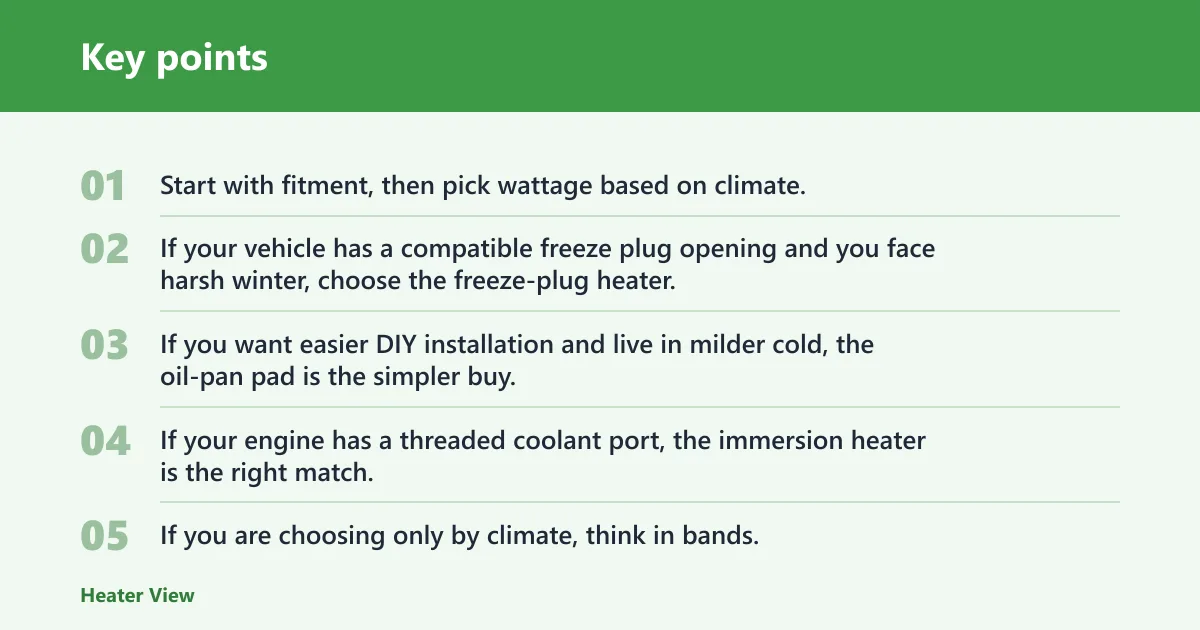
Start with fitment, then pick wattage based on climate. If your vehicle has a compatible freeze plug opening and you face harsh winter, choose the freeze-plug heater. If you want easier DIY installation and live in milder cold, the oil-pan pad is the simpler buy. If your engine has a threaded coolant port, the immersion heater is the right match.
If you are choosing only by climate, think in bands. Around 250W is better for light preheating and milder cold, 400W to 600W suits many everyday winter use cases, and 1000W is for severe cold where faster warm-up and stronger starting help matter more than electrical load.
Say your sedan sits outside in a prairie winter where mornings hit -15°F. A 1000W freeze-plug heater makes more sense than a small pad because the engine needs stronger preheat, and the battery will appreciate the reduced cranking load.
Suppose your compact car only sees a few nights around 15°F and you want the easiest install possible. A 150W oil-pan heater is the better fit because it is simpler to mount and easier on the circuit, even though it warms more slowly.
Installation and safety
Freeze plug heater: best for factory-fit engines

- Replacement for select Ford, Lincoln, Mercury, and International/Navistar
- Includes electric cord for powered engine warming
- Direct replacement style for older freeze-plug heaters
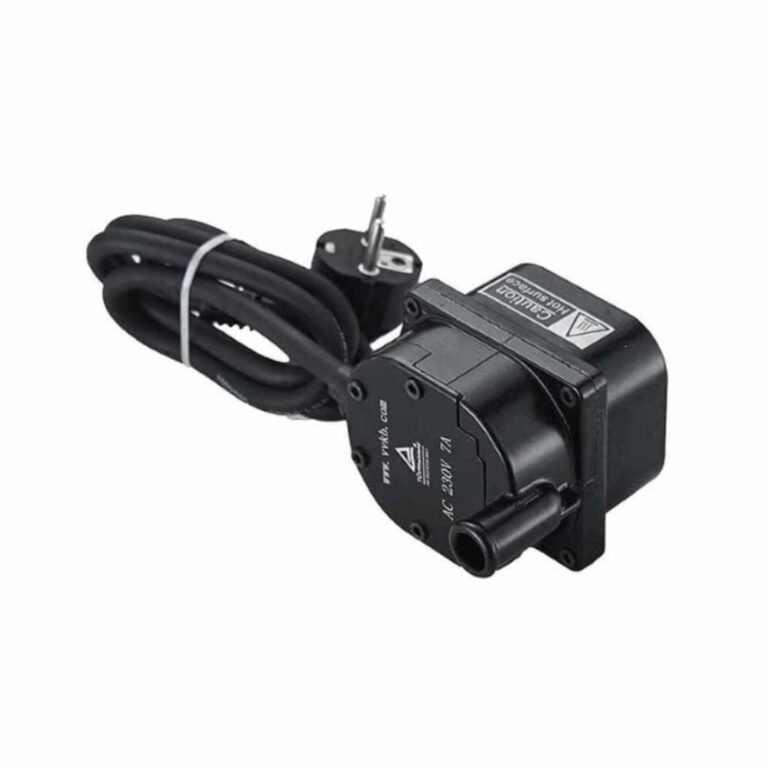
This is the strongest choice for vehicles that already have the right block opening and need serious cold-weather help. Based on the published specs, it is a 120V, 1000W replacement-style freeze plug heater, which puts it in the high-output range for severe cold and overnight use.
It fits best where the engine family already uses a freeze plug or block heater port, especially on older Ford, Lincoln, Mercury, and International/Navistar applications listed by the manufacturer. That direct placement usually gives faster heat transfer than a pad heater, and it can help the engine oil and coolant warm more evenly.
The drawback is installation complexity. Freeze plug access can require draining coolant, removing a plug, and fitting the element correctly, so it is a poor choice if you want a quick bolt-on solution or if the block opening does not match.
Oil pan heater: best for easier DIY installs

- Two self-adhesive oil pan heaters included
- Silicone pads for warming engine oil before startup
- Each pad has its own 68-inch power cord
This is often the easier pick when you want a simpler install and do not have a compatible block port. The listed design is a 5 x 4 inch silicone oil-pan pad heater with 150W output and two 68-inch power cords, which makes it better for lighter preheating than for extreme deep-freeze duty.
It makes the most sense for gas vehicles, small engines, and owners who want a low-risk DIY path. By warming the oil directly, it can reduce cranking drag and help startup when temperatures are cold enough to thicken oil but not so low that the whole cooling system needs strong preheat.
The limitation is speed. A 150W pad is gentler than higher-output block styles, so it usually needs more time and works best with a 2 to 4 hour preheat rather than a short last-minute plug-in.
Threaded immersion heater: best for coolant-access engines

- Threaded immersion style for engine coolant warming
- Includes 1 inch NPT brass adapter and power cord
- Compatible with several diesel and utility-engine applications
This option is for engines with a compatible threaded coolant port and a need for a moderate-output heater.
It stands out when you want a direct coolant warm-up without a large electrical load. A 400W unit is a middle-ground choice for colder climates where 250W may be too slow but 1000W would be more heater than the circuit or vehicle needs.
The drawback is fitment. Thread size, port access, and engine-family compatibility matter here, so this is not a universal buy. If the block does not have the right opening, the heater is the wrong match.
Cold weather and usage pattern
A block heater often matters most below about 20°F, and especially below 0°F. In that range, the benefit is not only easier starting; it also reduces battery load and can shorten the wait for cabin heat after startup.
Compatibility checklist
- Check the owner’s manual for a factory block-heater port or approved heater style.
- Confirm the engine family and model year, not just the vehicle badge.
- Look for available block plug access, coolant ports, or an oil pan surface the heater can mount to.
- Match gas or diesel use with the heater’s wattage and mount style.
- Use only a grounded outdoor-rated cord and stop using any cord with cracked insulation or damaged ends.
Wattage and load
Total cost is more than the heater price. Add the cord, timer if you use one, and any labor if the installation needs coolant drain and refill. A 1000W heater draws about 8.3 amps at 120V, while 400W draws about 3.3 amps and 250W about 2.1 amps, so circuit capacity matters.
A standard 15-amp household circuit can usually handle one heater, but a tired breaker, long extension cord, or other load on the same circuit can still trip it. A timer helps by limiting run time to the 2 to 4 hour window most drivers need instead of leaving the heater on all night.
FAQ
How much is a block heater for a car?
Prices vary by heater style, output, and whether the kit includes a cord or adapter. The listed products here range from $16.93 for a two-pack oil-pan pad set to $39.69 for a threaded immersion heater, while a higher-output freeze-plug replacement sits at $36.09. Installation can add more if coolant work is required.
Are block heaters worth it?
They are worth it when winter starts are genuinely hard. A good heater can reduce engine strain, improve startup, and help the cabin warm sooner. The payoff is strongest in subfreezing climates, on diesel engines, and on vehicles parked outside overnight.
Do modern cars need block heaters?
Some do, some do not. Modern gas engines may start fine in mild winter, but direct-injection engines, diesels, and vehicles in very cold climates can still benefit. The deciding factors are overnight temperature, battery condition, and whether the engine has a compatible heater option.
Best block heater for car?
The best choice is the one that matches your engine access and climate. For severe cold and compatible blocks, a freeze-plug heater is usually the strongest option. For simpler installation, an oil-pan heater works better. For coolant-access engines, a hose or immersion style fits best.
Best engine block heater for car?
For most drivers, that means the heater that matches the vehicle’s actual fitment, not the one with the highest wattage. If the engine has a factory block opening, a freeze-plug unit is often the best engine block heater. If not, a lower-output oil-pan or hose heater is usually the safer buy.
Do all cars have block heaters?
No. Some engines have a factory port, some have optional kits, and many warm-climate vehicles never come with one. You need to check the owner’s manual and the engine itself before buying, because fitment matters more than brand name alone.