Rent Outdoor Heaters for Backyard Parties
Yes, you absolutely can rent outdoor heaters for events, patios, or temporary needs. Renting is a cost-effective and practical solution for enjoying outdoor spaces in cooler weather without the commitment and expense of purchasing. This guide will help you navigate the process with ease.
Hoping to extend your outdoor enjoyment into the cooler months? You’re likely wondering if renting outdoor heaters is a smart move. It’s a question many homeowners and event planners ask when they need reliable warmth for a backyard party, a wedding reception, or just to cozy up the patio. Buying can be a big investment, and you might only need it for a short time. Don’t worry, the good news is that renting is not only possible but often the best choice! This guide is here to walk you through everything you need to know, making sure you can confidently get the right heating solution. We’ll break down how it works, what to consider, and how to find the perfect heaters for your needs.
Why Renting Outdoor Heaters Makes Sense
Renting outdoor heaters offers a flexible and budget-friendly way to create a warm and inviting atmosphere when the temperature drops. Imagine hosting a fall gathering, enjoying a spring evening on your deck, or making an outdoor wedding comfortable for your guests, all without the hassle of ownership. It’s a practical solution for a variety of situations.
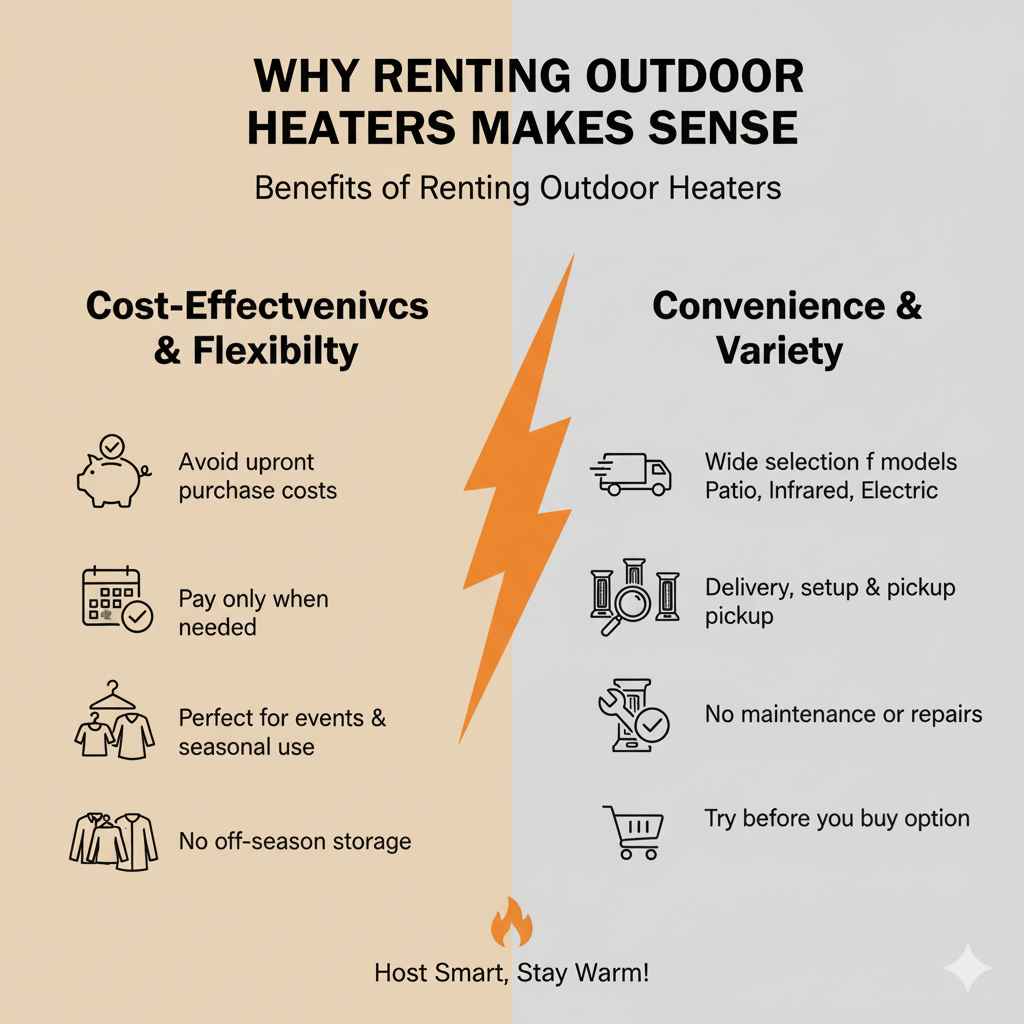
Benefits of Renting Outdoor Heaters
- Cost-Effectiveness: You avoid the significant upfront cost of purchasing new heaters, which can range from a few hundred to over a thousand dollars depending on the type and quality.
- Flexibility: Renting allows you to get heaters only when you need them, perfect for seasonal use or one-time events. You don’t have to worry about storing them during off-seasons.
- Variety: Rental companies often have a wide selection of models, including patio heaters (both propane and electric), infrared heaters, and even decorative flame heaters. This allows you to choose the best type for your specific needs and aesthetic.
- Convenience: Many rental services include delivery, setup, and even pickup, taking the logistical burden off your shoulders.
- Maintenance-Free: You don’t have to worry about the upkeep or repairs of the equipment; the rental company handles all of that.
- Try Before You Buy: If you are considering purchasing heaters in the future, renting allows you to test different types to see which works best for your space.
Types of Outdoor Heaters You Can Rent
When you explore rental options, you’ll find several common types of outdoor heaters, each suited for different spaces and needs. Understanding their differences will help you make the best choice for your event or outdoor area.
1. Propane Patio Heaters
These are the most common type you’ll see. They look like tall, mushroom-shaped units and are powered by a propane tank. They radiate heat outwards and downwards. They are excellent for open-air patios or event spaces.
- Pros: Provide significant heat, portable to different areas within your space, no power cords needed, good for larger areas.
- Cons: Require propane tank refills, can take up some visual space, potential safety concerns if not placed properly.
2. Electric Patio Heaters
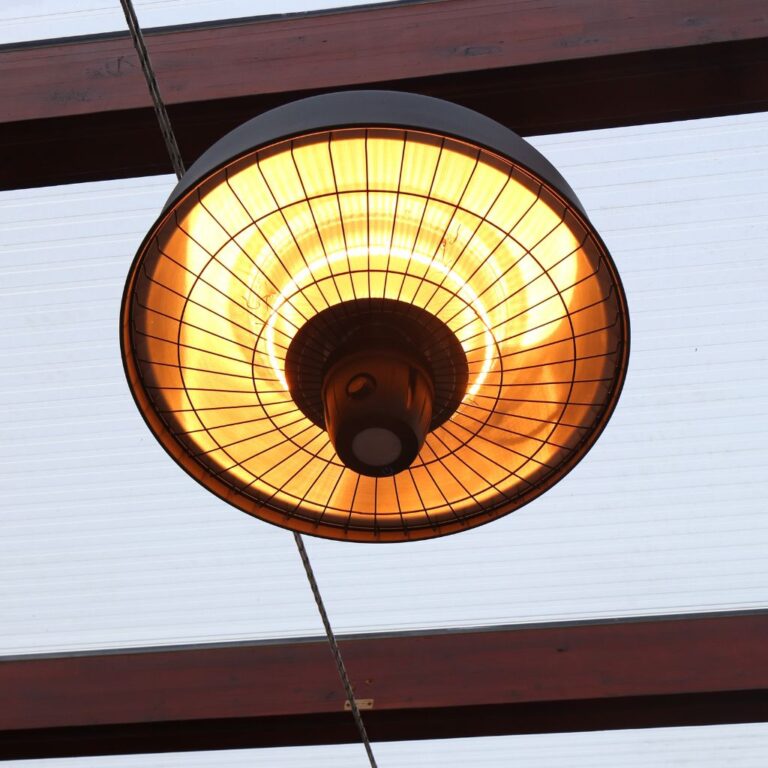
These heaters plug into a standard outdoor electrical outlet. They come in various styles, including wall-mounted, ceiling-mounted, or freestanding models. They often use infrared technology to heat objects and people directly, rather than just the air.
- Pros: No fuel tanks to manage, quiet operation, often have adjustable heat settings, can be more energy-efficient for smaller, enclosed areas.
- Cons: Require access to an electrical outlet, heating range can be more limited than propane heaters, may not be powerful enough for very large or windy spaces.
3. Tabletop Heaters
Smaller versions of propane or electric heaters, these are designed to sit on outdoor tables. They provide localized warmth for smaller groups gathered around a table.
- Pros: Portable, focus heat on a small area, good for intimate gatherings.
- Cons: Limited heating capacity, only suitable for very small spaces or direct personal warmth.
4. Infrared Heaters
These heaters emit infrared radiation, which directly heats surfaces and people. They can be electric or propane-powered and are very effective in breezy conditions because they don’t rely on heating the air. You can find them as standalone units or mounted options.
- Pros: Highly effective in windy conditions, heat is directed and efficient, quiet operation with electric models.
- Cons: Can be more expensive to rent, require careful placement to ensure directed heat, electric models need power access.
5. Decorative Flame Heaters
These often have a visual flame element, adding ambiance along with heat. They use propane and are generally more for aesthetic appeal and moderate warmth rather than powerful heating.
- Pros: Creates a beautiful ambiance, provides some heat.
- Cons: Less heat output than standard patio heaters, can be more expensive to rent.
What to Consider Before Renting
Before you pick up the phone or click “rent,” a little planning goes a long way. Thinking about these factors will ensure you get the right heaters that provide optimal comfort and safety for your event or outdoor space.
1. Size of Your Space
How large is the area you need to heat? A small balcony requires less power than a large backyard or an open-air tent. Different heaters are designed for different square footage.
- Small Patios/Balconies: Tabletop heaters or a single, smaller electric heater might suffice.
- Medium Patios/Decks: One or two standard propane patio heaters or a more powerful electric model.
- Large Areas/Event Tents: Multiple propane heaters or specialized commercial-grade heaters may be necessary.
2. Wind Conditions
Is your space exposed to a lot of wind? Wind can quickly dissipate heat. In breezy locations, propane or infrared heaters that heat objects directly are often more effective than electric heaters that primarily warm the air.
3. Power Source Availability
Do you have easy access to outdoor electrical outlets if you’re considering electric heaters? If not, propane heaters might be your only option, or you may need to arrange for extension cords that are safely rated for outdoor use and sufficient length. Always check the power requirements of electric heaters to ensure your outlet can handle the load.
4. Duration of Use
Are you renting for a single evening, a weekend, or a full week? Rental costs can vary based on the rental period. Be clear about how long you’ll need the equipment.
5. Number of Guests
If you’re hosting an event, consider how many people will be present. You’ll want enough heat to keep everyone comfortable, avoiding cold spots.
6. Budget
Rental prices can differ significantly based on the type of heater, brand, and rental company. Get quotes from a few different providers to compare prices and what’s included (delivery, fuel, etc.).
7. Ambiance and Aesthetics
Do you want heaters that are purely functional, or do you also want them to enhance the look of your space? Decorative flame heaters, for example, add visual appeal.
The Rental Process: Step-by-Step
Renting outdoor heaters is straightforward, but following these steps will ensure a smooth experience from start to finish.
Step 1: Assess Your Needs
Before you look for a rental company, decide on the factors listed above: space size, wind exposure, power availability, duration, and number of guests. This will help you narrow down the type of heater you need.
Step 2: Find a Reputable Rental Company
Search online for “outdoor heater rental near me” or “event equipment rental.” Look for companies that specialize in party rentals, event supplies, or outdoor equipment. Check their websites for available heater types and pricing.
Tip: Consider companies that have positive reviews and clear contact information. Local businesses might offer more personalized service.
Step 3: Request a Quote and Check Availability
Contact your chosen rental companies and explain your needs. Ask for a quote that includes:
- Rental cost per day/week
- Delivery and pickup fees
- Fuel costs (if applicable, e.g., propane refill charges)
- Any setup or teardown services
- Required deposit
Verify that the heaters you need are available for your desired dates, especially if you’re renting during peak seasons or holidays.
Step 4: Book Your Rental
Once you’ve compared quotes and chosen a company, book your rental. Be prepared to provide:
- Your contact information
- Event date and location
- Type and quantity of heaters needed
- Delivery and pickup details
- Payment information
Ask about their cancellation policy just in case your plans change.
Step 5: Delivery and Setup
On the agreed-upon date, the rental company will deliver the heaters. If setup is included, they will position them for you. If not, ensure you have a clear plan for where they will go. Double-check that propane tanks are full (if applicable) and that electric heaters have the necessary cords and adapters.
Safety Note: Always ensure heaters are placed on a stable, level surface, away from flammable materials. For propane heaters, ensure good ventilation and upright positioning. For electric heaters, use outdoor-rated extension cords and ensure they are not a tripping hazard.
Step 6: Use the Heaters
Familiarize yourself with how to operate each heater. Most are quite simple – turning a dial or pressing a button. If you’re unsure, ask the rental company for a quick demonstration or ensure you have their contact number for assistance.
Step 7: Return or Pickup
On the scheduled return date, either return the heaters to the rental company or arrange for them to be picked up. Ensure propane tanks are detached (if required by the company) and any accessories are accounted for. If you were responsible for fuel refills, make sure tanks are adequately filled.
Rental Costs and Factors Affecting Price
The cost of renting outdoor heaters can vary, but understanding the factors that influence pricing can help you budget effectively.
| Factor | Impact on Price | Typical Range (Estimate) |
|---|---|---|
| Type of Heater | More powerful or specialized heaters cost more. | Propane: $50-$150/day Electric: $40-$120/day Decorative/Specialty: $75-$200+/day |
| Rental Duration | Longer rentals usually have a lower daily rate but a higher total cost than short rentals. | Daily, weekly, or monthly rates |
| Delivery & Pickup | Distance and time of day can affect fees. | $50 – $200+ per trip, depending on distance |
| Fuel (Propane) | Propane tanks are often rented separately and refilled at a charge. | $25-$50 per propane tank refill |
| Add-on Services | Professional setup or teardown services will increase the cost. | Varies by company, often a flat fee or hourly rate. |
| Location & Season | Demand in your area and time of year can influence pricing. | Higher during colder months or popular event seasons. |
These are approximate figures, and actual costs will vary by region and rental company. Always get a detailed quote.
Safety First: Using Rental Heaters Responsibly
Safety should be your top priority when using any heating equipment, especially rentals. Follow these guidelines to ensure a safe and enjoyable experience:
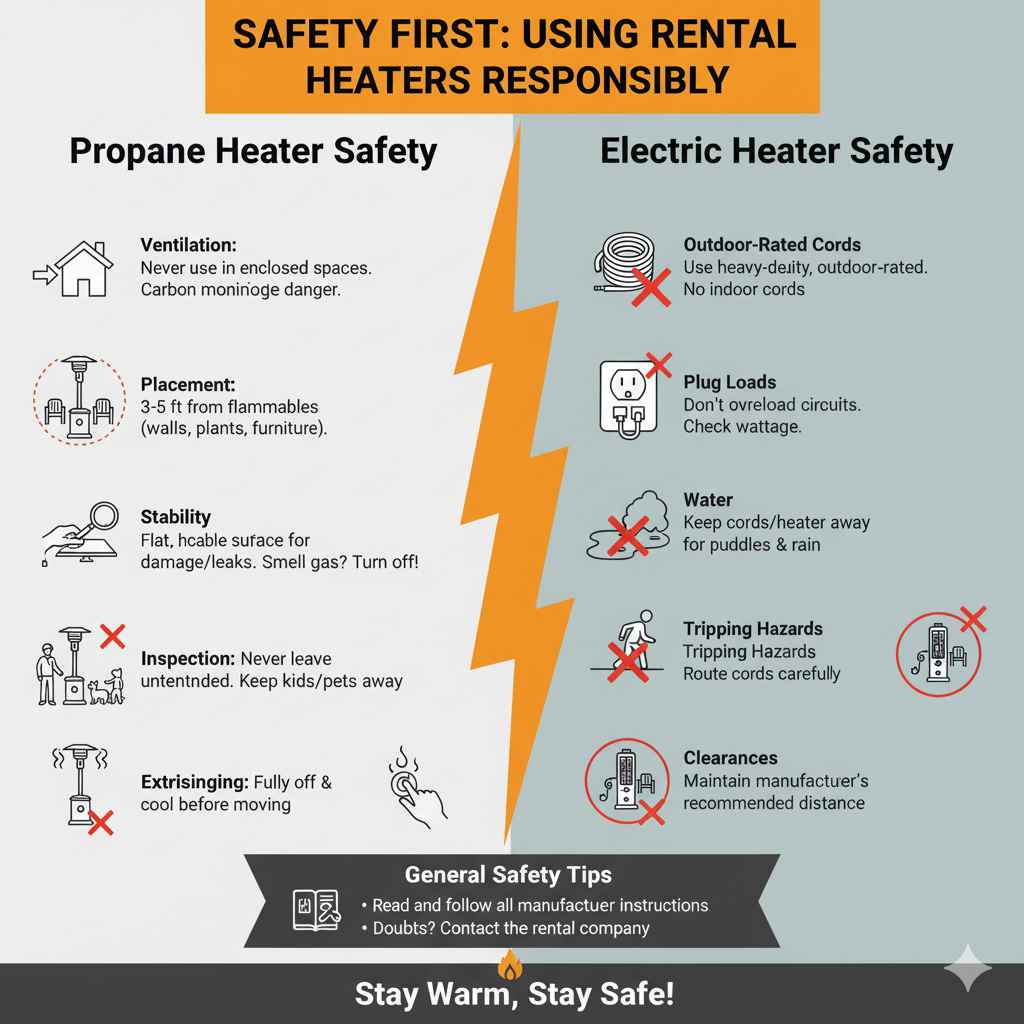
Propane Heater Safety
- Ventilation: Never use propane heaters in enclosed spaces. They produce carbon monoxide, which can be dangerous. Ensure ample airflow.
- Placement: Keep heaters at least 3-5 feet away from anything flammable, including building walls, plants, furniture, and clothing. Refer to the manufacturer’s guidelines for specific clearances.
- Stability: Place propane heaters on a flat, stable surface. A toppling heater is a fire hazard. Most units have anti-tip mechanisms, but a level surface is still crucial.
- Inspection: Before use, check the hoses and connections for any signs of damage or leaks. If you smell gas, turn off the heater immediately and contact the rental company.
- Supervision: Never leave propane heaters unattended, especially if children or pets are around.
- Extinguishing: Ensure the heater is fully extinguished and cool before moving or storing it.
Electric Heater Safety
- Outdoor-Rated Cords: Always use heavy-duty, outdoor-rated extension cords specifically designed for the wattage of the heater. Standard indoor cords can overheat and cause fires. You can find guidance on safe usage of extension cords from resources like the National Fire Protection Association (NFPA).
- Plug Loads: Ensure the electrical outlet can handle the heater’s power draw. Overloading circuits can trip breakers or cause electrical hazards.
- Water: Keep electric heaters and their cords away from water sources, including puddles, wet surfaces, and rain. While designed for outdoor use, they are not waterproof.
- Tripping Hazards: Position cords strategically to avoid people tripping over them.
- Clearances: Maintain safe distances from flammable materials as recommended by the manufacturer.
General Safety Tips
- Read and follow all manufacturer instructions provided with the rental.
- If you have any doubts or concerns about operation or safety, contact the rental company immediately.
- Have a fire extinguisher readily available as a precaution.
Comparing Rental vs. Buying Outdoor Heaters
Deciding whether to rent or buy depends on your usage frequency and long-term needs. Here’s a quick comparison:
| Factor | Renting Outdoor Heaters | Buying Outdoor Heaters |
|---|---|---|
| Upfront Cost | Low (per rental period) | High (one-time purchase) |
| Long-Term Cost | Can become expensive with frequent rentals | Lower long-term cost if used often |
| Storage | Not required | Requires space for off-season storage |
| Maintenance | Handled by rental company | Your responsibility |
| Variety & Trends | Access to different models, easy to try new tech | Limited to your initial purchase; can become outdated |
| Availability | Dependent on rental company stock and your booking | Always available when you own it |
| Best For | One-time events, occasional use, seasonal needs, testing types | Frequent, regular use; dedicated patio/outdoor space |
If you only need heating for a few events a year or for a specific season, renting is almost always the more economical and practical choice. For homeowners who use their patio or outdoor living space extensively throughout the cooler months, purchasing might offer better long-term value.
Frequently Asked Questions (FAQ)
Q1: Can I rent outdoor heaters for a wedding or large event?
Absolutely! Rental companies are well-equipped to handle events of all sizes, from intimate gatherings to large wedding receptions. They can advise on the number and type of heaters needed to comfortably warm your venue space.
Q2: Do rental companies provide the fuel for propane heaters?
Typically, propane tanks are provided, but they may be empty. You’ll either need to purchase a full tank or pay for a refill service from the rental company. Always confirm this when booking.
Q3: How much notice do I need to give for a rental?
It’s best to book as far in advance as possible, especially for popular times like fall or around holidays. For standard rentals, a few days to a week’s notice is usually sufficient, but for large events, booking weeks or even months ahead is recommended.