Convector Heater vs Fan Heater: Essential Guide
When deciding between a convector heater and a fan heater, a convector heater is generally better for maintaining consistent, ambient warmth in a room over longer periods, while a fan heater excels at quickly heating a specific area or small space. The best choice depends on your heating needs: quiet, widespread warmth for a convector, or rapid, targeted heat for a fan heater.
Getting your home cozy and warm doesn’t have to feel like a puzzle! If you’ve ever found yourself staring at heater options, wondering which one is right for your needs, you’re not alone. Two popular choices you’ll often see are convector heaters and fan heaters. They both aim to make your space warmer, but they do it in different ways, and one might be a much better fit for your situation than the other.
Don’t worry if it seems technical. Think of me as your friendly guide, here to break down exactly how these heaters work, what they’re best for, and how to use them safely and effectively. We’ll explore their pros and cons so you can feel confident in your choice, ensuring your home stays comfortably warm all season long. Let’s dive in and find the perfect heater for you!
Understanding How They Work: Convector vs. Fan Heater
At their core, both convector and fan heaters are designed to add warmth to a room. The big difference is in how they achieve this. Understanding their heating methods is key to picking the right one for your needs.
Convector Heaters: The Gentle Warmth
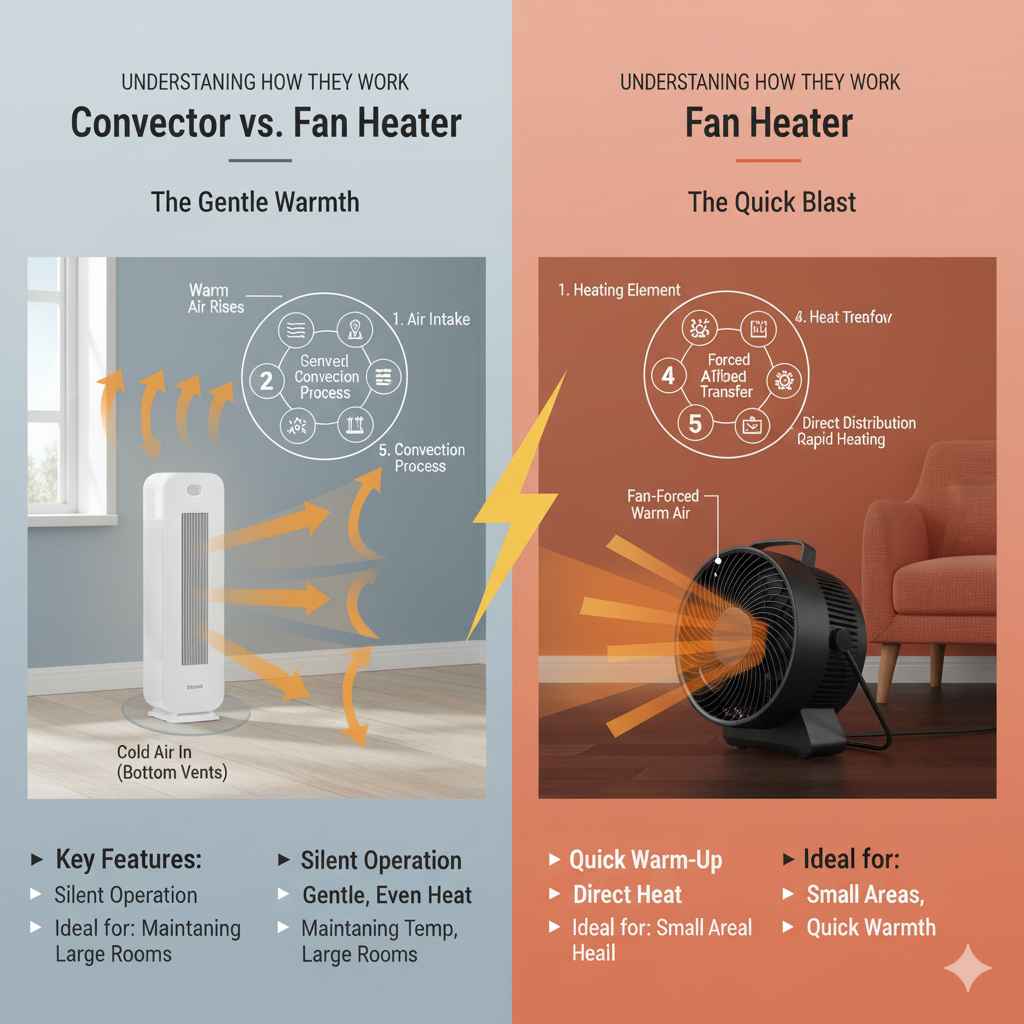
Convector heaters work by using natural convection. This means they heat the air directly around them, making it lighter. As this warm air rises, cooler air gets drawn into the heater to be warmed, creating a gentle, continuous circulation of heat throughout the room. They do this without any moving parts like fans, making them very quiet.
Think of it like a silent, invisible wave of warmth spreading out. This method is excellent for maintaining a steady, comfortable temperature without sudden blasts of hot air. They often have fins or a large surface area to maximize heat distribution.
How a Convector Heater Heats a Room:
- Heating Element: An electric element inside the heater gets hot.
- Air Intake: Cold air enters the heater through vents at the bottom.
- Convection Process: As the air passes over the hot element, it heats up and becomes less dense.
- Heat Output: The warm air rises and naturally circulates through the room.
- Continuous Cycle: Cooler air then sinks and is drawn back into the heater, repeating the cycle.
Fan Heaters: The Quick Blast
Fan heaters, also known as ceramic heaters or fan forced heaters, use a fan to actively blow air across a heating element. This forcefully pushes warm air out into the room, providing a rapid and concentrated burst of heat. They are designed to quickly warm up a specific area or small room.
The fan is the key here. It speeds up the process of distributing heat, making them great for getting a chilly room comfortable in a short amount of time. However, this fan action can sometimes create a slight noise and might dry out the air a bit more than a convector.
How a Fan Heater Heats a Room:
- Heating Element: A ceramic or metal element heats up.
- Forced Airflow: A fan draws cool air into the heater.
- Heat Transfer: The fan blows the air over the hot element, warming it up quickly.
- Direct Distribution: The warm air is then forcefully blown out into the room.
- Rapid Heating: This direct expulsion of heat warms up the immediate area fast.
Convector Heater vs. Fan Heater: Key Differences at a Glance
To make the choice even clearer, let’s compare them side-by-side. This table highlights the main distinctions you’ll find between convector and fan heaters.
| Feature | Convector Heater | Fan Heater |
|---|---|---|
| Heating Method | Natural convection (gentle air circulation) | Forced convection (fan-driven airflow) |
| Heating Speed | Slower, steady warming | Fast, rapid heating |
| Heat Distribution | Even, widespread ambient warmth | Direct, concentrated heat |
| Noise Level | Very quiet, often silent | Audible fan noise |
| Ideal Use Case | Maintaining consistent temperature in living spaces, bedrooms | Quickly warming small rooms, offices, or targeted areas |
| Air Drying Effect | Minimal | Can be more noticeable due to fan |
| Portability/Design | Often wall-mountable or freestanding with large surface area | Typically portable with a compact design |
| Energy Efficiency | Can be efficient for maintaining temp, less for quick bursts. | Good for targeted, short bursts; might use more energy overall for sustained heating. |
Pros and Cons: Which Heater Fits Your Lifestyle?
Every heater has its strengths and weaknesses. Knowing these will help you match a heater to your daily routine and home setup. Here’s a breakdown to help you decide.
Convector Heater: The Good and The Not-So-Good
Pros:
- Quiet Operation: Perfect for bedrooms, nurseries, or any space where noise is a concern.
- Even Heat Distribution: Warms the entire room gradually and consistently, preventing hot or cold spots.
- Less Air Drying: Generally doesn’t dry out the air as much as fan heaters, which can be more comfortable.
- Good for Long Periods: Excellent for maintaining a comfortable temperature throughout the day or night.
- Safety Features: Many models come with tip-over protection and overheating shut-off for peace of mind.
- Aesthetically Pleasing: Some convector heaters are designed to be slim and wall-mountable, blending into your decor.
Cons:
- Slower to Heat: Takes longer to feel the warmth compared to a fan heater.
- Less Effective for Quick Warming: Not ideal if you need to heat up a very cold room in a hurry.
- May Not Reach Very Cold Areas Quickly: If you have a large, drafty room, it might struggle to heat it evenly and quickly.
Fan Heater: The Good and The Not-So-Good
Pros:
- Rapid Heating: Quickly raises the temperature in a small to medium-sized room.
- Targeted Heat: Great for warming up a specific spot where you are sitting or working.
- Portable and Compact: Easy to move from room to room as needed.
- Versatile: Many models offer different heat settings, fan-only modes for summer cooling, and oscillation for wider heat distribution.
- Affordable: Often a more budget-friendly option upfront.
Cons:
- Fan Noise: The fan can be noisy, which might be distracting in quiet environments.
- Dries Out Air: The forced airflow can reduce humidity, potentially making the air feel dry.
- Uneven Heating: May create hot spots directly in front of it and cooler areas further away.
- Not Ideal for Constant Use: Less efficient for maintaining a steady temperature over long periods compared to convection.
- Potential Safety Hazard: Because they are portable and designed for immediate warmth, care must be taken to keep them away from flammable materials and children/pets.
When to Choose Which Heater: Practical Scenarios
Let’s put this knowledge into practice. Imagine these common situations and see which heater would be the best fit.
Scenario 1: Warming the Living Room for Family Movie Night
You want the living room to be comfortably warm for everyone. You’ll be spending a few hours there, and you want a consistent, cozy atmosphere that doesn’t feel too dry. A convector heater would be ideal here. It will gently warm the entire space over time, providing an even, pleasant warmth without making noise that distracts from the movie. Its ability to maintain a steady temperature is perfect for extended use in a living area.
Scenario 2: Heating a Home Office or Dorm Room
You work from home in a smaller room, or maybe you’re a student in a dorm. You spend a lot of time at your desk and want to feel warm quickly when you arrive, but you also need to keep the electricity costs down. A fan heater would be a good choice. You can switch it on when you start working to heat your immediate area fast. Many fan heaters are energy efficient for short bursts of heating, and their portability means you can easily move it closer to you if you start to feel a chill. Just be mindful of keeping it a safe distance from papers!
Scenario 3: Maintaining a Consistent Temperature in a Bedroom Overnight
You want your bedroom to be a comfortable temperature all night long, without any sudden noises waking you up. Safety is a top priority for you. A convector heater is the clear winner. Its silent operation ensures quiet sleep, and its natural convection method provides steady, even warmth throughout the night. Look for models with programmable timers and safety features like automatic shut-off for added peace of mind.
Scenario 4: Quickly Heating a Small Bathroom Before a Shower
You need to take the chill off a small bathroom for just a few minutes before you get in the shower. You don’t need to heat the room for hours. A fan heater is perfect for this. You can turn it on as you get ready, and it will quickly heat the space, providing immediate comfort. Ensure the fan heater is suitable for bathroom use and kept safely away from water sources.
Scenario 5: Supplementing Central Heating in a Drafty Area
Your central heating is on, but there’s a particular spot or room that still feels a bit chilly, especially during colder days. You need a solution that can boost the warmth without requiring a whole-house system upgrade. Either a convector or fan heater can work, depending on your goal:
- For a more consistent, gentle warmth in that area: Use a convector heater.
- If you need to quickly warm up that specific spot when you enter it: Use a fan heater.
Consider the size of the room and how long you’ll be in it to make the best choice.
Energy Efficiency and Cost: What to Expect
When thinking about heaters, it’s natural to consider how much they’ll cost to run. Both convector and fan heaters use electricity, and their running costs depend on a few factors, including their wattage, how long you use them, and your local electricity prices.
Both types are generally quite efficient at converting electricity into heat. However, their effectiveness in heating a space quickly or maintaining a temperature for a long time impacts overall energy use.
- Fan heaters are great for quick, targeted heating. If you only need to warm a small space for a short period (e.g., your desk area for a few hours), they can be more energy-efficient than running a larger heater for the same task. However, if you leave a fan heater on constantly to try and maintain a temperature in a larger room, it might consume more energy than a convector heater trying to do the same job.
- Convector heaters are designed for sustained heating. They use less energy to maintain a steady temperature once the room has reached your desired warmth. They are more energy-efficient for keeping a room at a comfortable level for extended periods without frequent on-off cycles.
To get the most out of any electric heater and manage costs:
- Choose the right size: Ensure the heater’s wattage is appropriate for the room size.
- Use thermostats wisely: Many heaters have built-in thermostats. Set them to your desired temperature and let the heater cycle on and off automatically.
- Insulate your home: Proper insulation, draught-proofing windows and doors, and closing curtains at night can significantly reduce heat loss, meaning your heater won’t have to work as hard.
- Use timers: If your heater has a timer, use it to heat the room just before you need it, rather than leaving it on all day.
For more tips on saving energy at home, check out resources from the U.S. Department of Energy on energy efficiency.
Safety First: Essential Tips for Using Any Heater
Safety is paramount when using any electrical appliance, especially those that produce heat. Following these guidelines will help ensure your home stays warm and safe.
General Safety Rules:
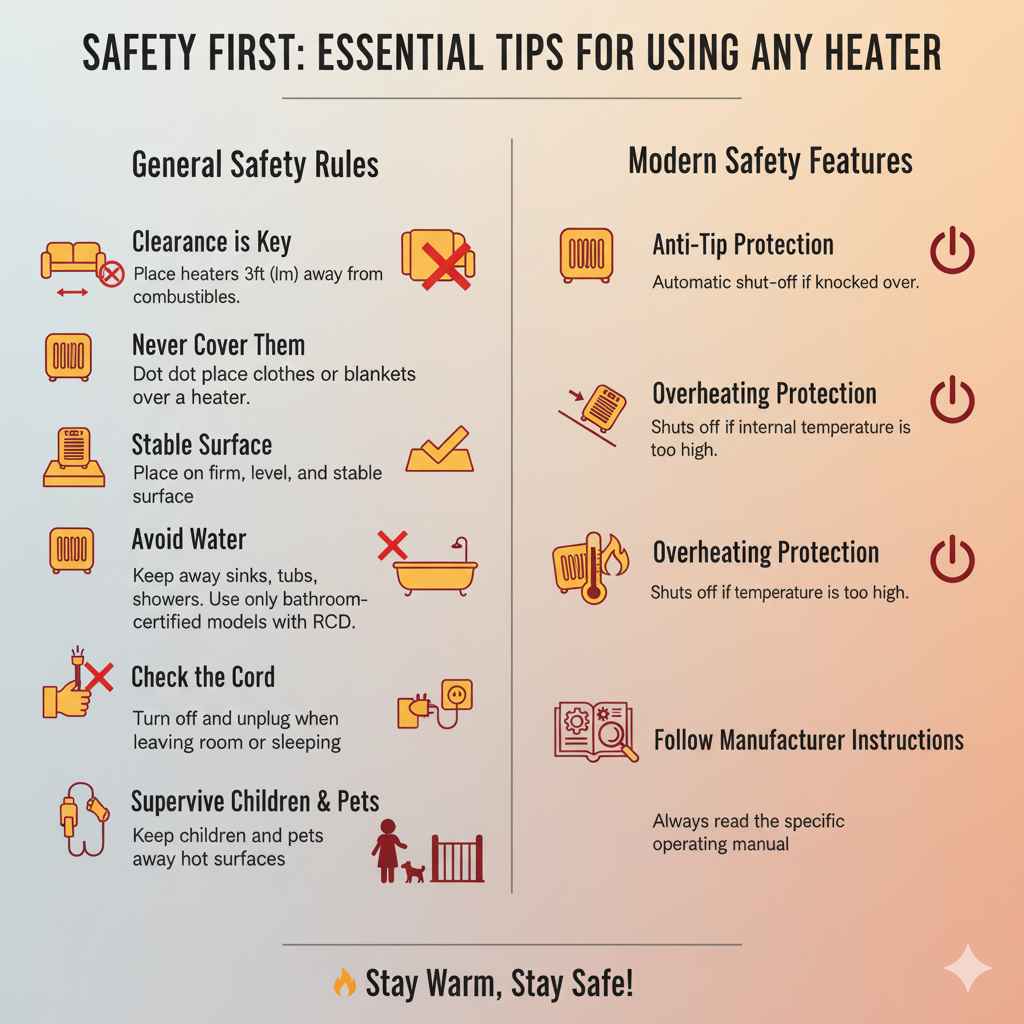
- Clearance is Key: Always place heaters at least three feet (about one meter) away from furniture, curtains, bedding, books, papers, and anything else that could catch fire.
- Never Cover Them: Do not place clothes or blankets over a heater, even to dry them.
- Stable Surface: Ensure the heater is placed on a firm, level, and stable surface to prevent it from tipping over.
- Avoid Water: Never use electric heaters in bathrooms or other damp areas unless they are specifically designed for such use and are RCD-protected. Keep them away from sinks, tubs, and showers.
- Check the Cord: Regularly inspect the power cord for any signs of damage. If the cord is frayed or damaged, stop using the heater immediately and have it repaired or replaced.
- Unplug When Not in Use: Always turn off and unplug the heater when you are not using it, especially when leaving the room or going to sleep, unless it has specific safety features designed for overnight use (like some convector models).
- Supervise Children and Pets: Keep children and pets away from heaters. Even surfaces that don’t feel scorching hot can cause burns.
- Anti-Tip Protection: Many modern heaters come with an automatic tip-over switch that shuts them off if they are knocked over. Ensure this feature is functioning.
- Overheating Protection: Look for models that have an automatic overheating shut-off feature.
- Follow Manufacturer Instructions: Always read and follow the specific operating and safety instructions provided by the manufacturer for your particular heater model.
Frequently Asked Questions (FAQ)
Q1: Can I use a convector heater in my bedroom?
Yes, convector heaters are excellent for bedrooms due to their quiet operation, which won’t disturb your sleep. They provide a gentle, consistent warmth perfect for maintaining a comfortable sleeping temperature. Just ensure you follow all safety guidelines regarding placement and unplugging.
Q2: Which heater is better for a very large, open-plan living space?
For very large or open-plan spaces, neither a single convector nor a single fan heater might be sufficient on their own. You might need a more powerful heating solution or consider using multiple heaters strategically. A convector heater would be better for trying to establish a baseline ambient temperature across a larger area, but it will take time. A fan heater could quickly warm one specific zone within that space.
Q3: Are fan heaters safe to leave on overnight?
While many fan heaters have safety features, it’s generally recommended not to leave any portable electric heater unattended for extended periods or overnight unless specifically designed for such use by the manufacturer and equipped with advanced safety systems. Always ensure it’s placed safely away from bedding and has good airflow.
Q4: Do convector heaters dry out the air?
Convector heaters heat air through natural circulation and generally do not dry out the air as much as fan heaters that force air over a heating element. This makes them a more comfortable choice for people sensitive to dry air.
Q5: How often should I clean my convector heater or fan heater?
It’s a good idea to dust your heater regularly with a dry or slightly damp cloth when it’s unplugged and cool. For fan heaters, you might need to gently vacuum the air intake and outlet vents occasionally to remove dust buildup, which can improve efficiency and air quality. Always refer to your manufacturer’s instructions for specific cleaning advice.
Q6: What wattage heater do I need?
A general rule of thumb is to have about 10 watts per square meter (or roughly 1 watt per cubic foot) of space you want to heat. For example, a 1500-watt heater is suitable for many medium-sized rooms. Higher wattage heaters provide more heat but also use more electricity. Check your heater’s manual or packaging for recommended room sizes.
Conclusion: Your Warm Home Awaits!
Navigating the world of home heating doesn’t have to be complicated. By understanding how convector heaters and fan heaters work, you can confidently choose the one that best suits your comfort, your space, and your lifestyle.