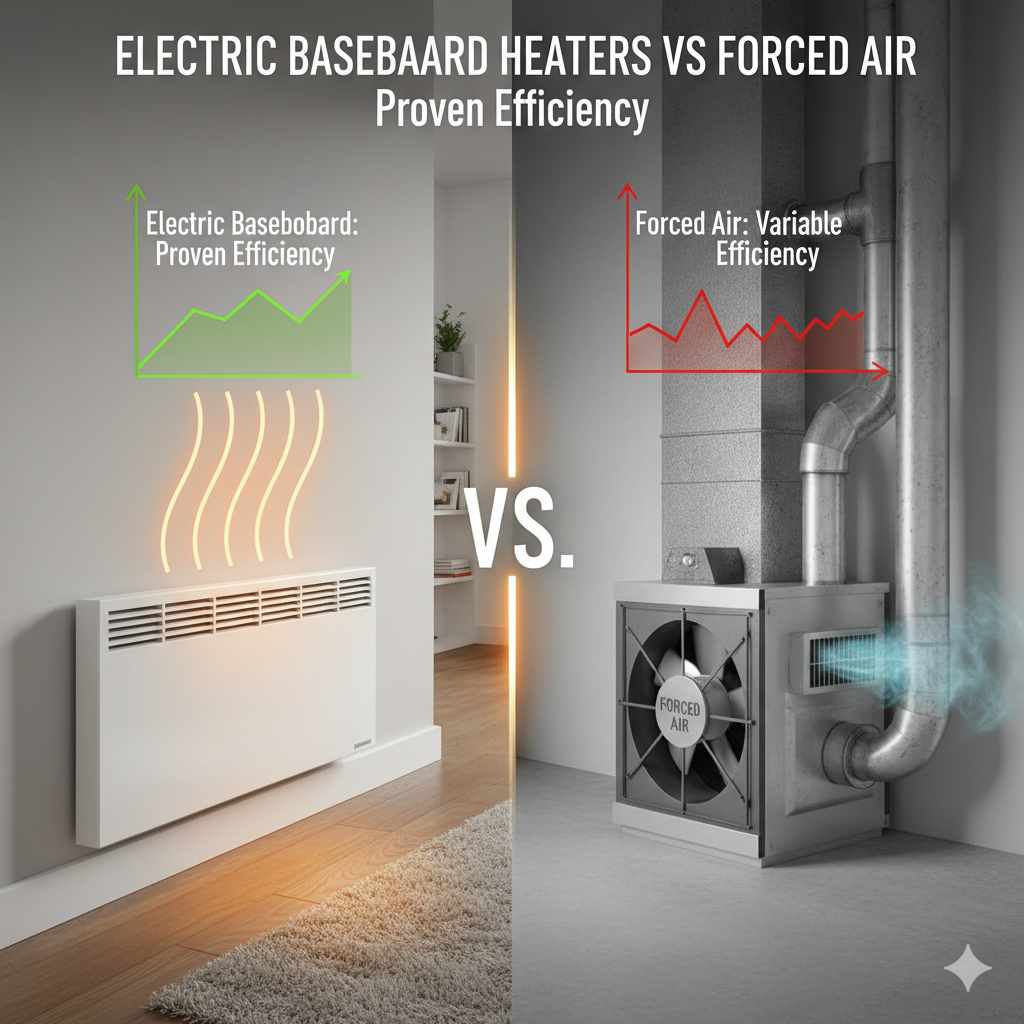
Electric baseboard heaters offer zone control for efficient heating of individual rooms, while forced air systems heat entire spaces quickly. For proven efficiency, consider your home’s layout, insulation, and usage patterns. Electric baseboards can be more efficient for smaller, less frequently used areas, while forced air may be better for rapid whole-home heating when coupled with smart thermostats.
Choosing the right heating system can feel like a puzzle. You want a home that’s warm and cozy without seeing your energy bills climb sky-high. Two common options you might be weighing are electric baseboard heaters and forced air systems. They work very differently, and understanding these differences is key to finding the most efficient and comfortable solution for your home. Don’t worry, we’ll break it all down in a way that makes perfect sense, helping you make a smart choice for warmth and savings. Let’s explore how each system heats your home and which might be the better fit for you!
Electric Baseboard Heaters vs Forced Air: Unpacking the Efficiency
When it comes to keeping your home warm, electric baseboard heaters and forced air systems are two popular choices. They approach the task of heating your living space from completely different angles, which impacts how efficient they are, how they feel, and how they fit into your lifestyle. Let’s dive into what makes each unique.
How Electric Baseboard Heaters Work
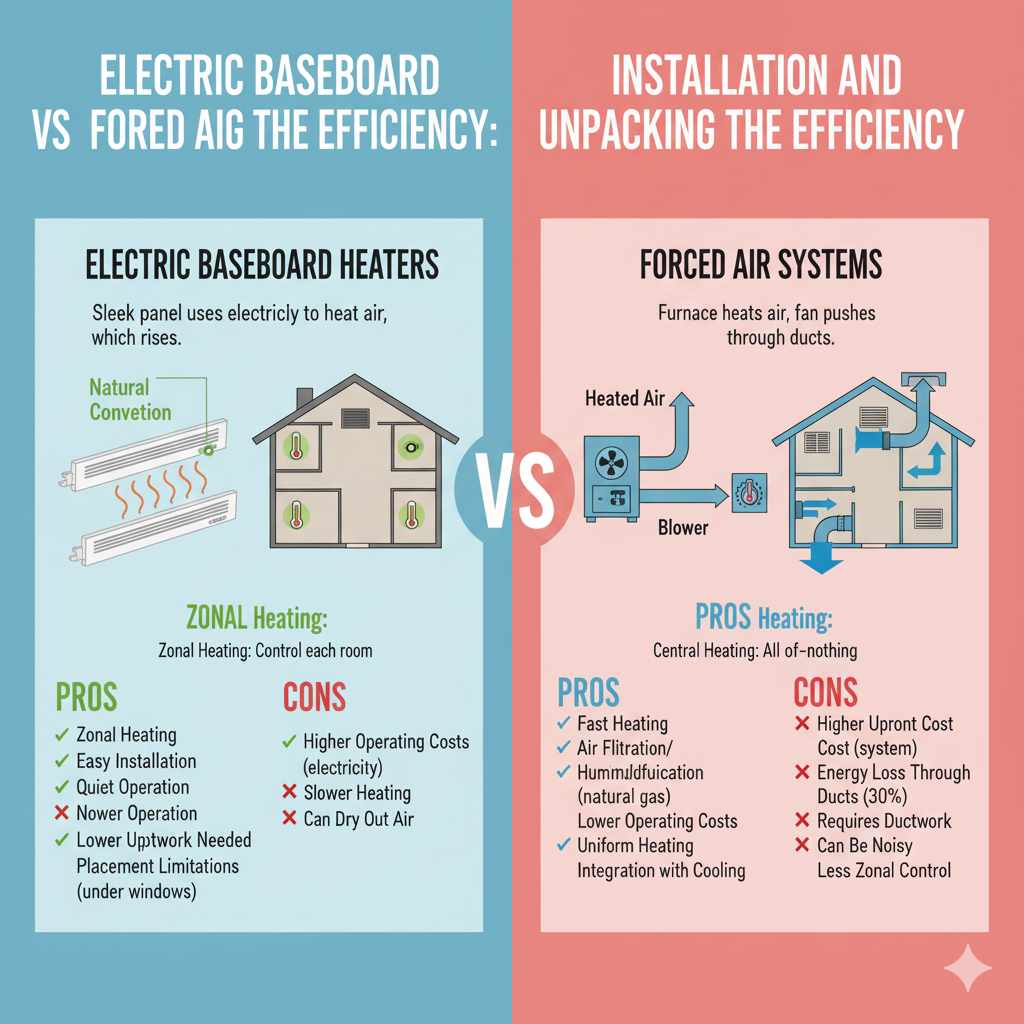
Imagine a sleek panel running along the base of your walls, often beneath windows. That’s an electric baseboard heater! These heaters use electricity to warm up a heating element inside. As the element gets hot, it heats the air directly around it. This warm air then rises naturally, circulating within the room. Because they heat the air around them, they’re essentially creating natural convection. Many homeowners also choose to add a fan to these units for a quicker spread of heat, often called fan-forced baseboard heaters.
The beauty of electric baseboard heaters is their individual control. Each unit typically has its own thermostat, allowing you to set different temperatures for different rooms. This is fantastic for energy savings. Why heat a guest room you’re not using to the same temperature as your living room? You can turn down or even turn off heaters in unoccupied areas.
Pros of Electric Baseboard Heaters:
- Zonal Heating: You can control the temperature in each room independently, saving energy in unused spaces.
- Easy Installation: Generally simpler to install than central forced air systems, especially in existing homes where running ducts is difficult.
- Quiet Operation: Most models are very quiet, with only a slight click when the thermostat engages or disengages.
- No Ductwork Needed: Eliminates the need for extensive and potentially leaky ductwork, which can lose a lot of heat.
- Lower Upfront Cost (for individual units): While outfitting an entire home can add up, individual units are typically less expensive than a full forced air furnace and duct system.
Cons of Electric Baseboard Heaters:
- Higher Operating Costs: Electricity is often more expensive per unit of heat than natural gas, leading to higher bills if used as the primary heat source for an entire home.
- Slower Heating: Can take longer to heat up a room compared to forced air, especially in very cold conditions.
- Can Dry Out Air: The natural convection process can sometimes lead to drier indoor air.
- Placement Limitations: They are typically placed under windows to counteract cold drafts, which can limit furniture placement.
How Forced Air Systems Work
Forced air heating systems are what most people think of when they hear “central heating.” At the heart of the system is a furnace (or an air handler if it’s paired with an electric heat pump). This furnace heats air, and then a fan (called a blower) pushes that heated air through a network of ducts that run throughout your home. Vents in each room allow the warm air to escape into your living spaces. A thermostat, usually located in a central area, controls the entire system.
The main advantage here is speed and coverage. A forced air system can quickly raise the temperature in your entire house. Since the heat is distributed via ducts, it can feel more uniform throughout the home, provided the ductwork is properly designed and sealed.
However, forced air systems are all-or-nothing. When the thermostat calls for heat, the entire system kicks into gear, heating all zones to the set temperature. While zoning can be added to forced air systems, it’s an advanced and often costly upgrade. For many standard setups, you heat the whole house, even empty rooms.
Pros of Forced Air Systems:
- Fast Heating: Can quickly heat up large spaces or an entire home.
- Air Filtration and Humidification: Can integrate air filters and humidifiers/dehumidifiers for improved indoor air quality.
- Lower Operating Costs (if using natural gas): Natural gas is often a more cost-effective fuel source for heating in many regions compared to electricity.
- Uniform Heating (potential): When well-designed, can provide consistent temperatures throughout the home.
- Integration with Cooling: The same ductwork can be used for air conditioning during warmer months.
Cons of Forced Air Systems:
- Higher Upfront Cost: The initial investment for a furnace, ductwork, and installation is significant.
- Energy Loss Through Ducts: Leaky or poorly insulated ducts can lead to substantial heat loss, reducing overall efficiency. According to the U.S. Department of Energy, approximately 30% of warm air can be lost through duct leakage.
- Requires Ductwork: Installation is more complex and intrusive, especially in older homes.
- Can Be Noisy: The fan and air rushing through ducts can create noise.
- Less Zonal Control: Standard systems heat the entire home at once, potentially wasting energy in unoccupied areas.
Efficiency Showdown: Electric Baseboard vs. Forced Air
When we talk about “proven efficiency,” it’s not a simple one-size-fits-all answer. It depends heavily on how you use your heating system and your home’s characteristics. The U.S. Environmental Protection Agency (EPA) highlights that the most efficient system is the one that uses the least amount of energy to achieve the desired comfort level for your specific needs. Let’s break down where each system shines.
Understanding Energy Efficiency Metrics
Efficiency for heating systems is often measured differently:
- Electric Resistance (Baseboards): These are essentially 100% efficient at the point of use. Every watt of electricity consumed is converted directly into heat. The “inefficiency” comes from the cost of electricity and potential heat loss from the room if not well-insulated or if rooms are unnecessarily heated.
- Forced Air Furnaces: Measured by AFUE (Annual Fuel Utilization Efficiency). An AFUE of 90% means that 90% of the fuel consumed is converted into usable heat, while 10% is lost in the combustion process and exhausted.
Where Electric Baseboard Heaters Excel in Efficiency
The key to electric baseboard efficiency lies in their zonal control. If you have a smaller home, or specific rooms that are used infrequently, electric baseboard heaters can be incredibly efficient.
- Targeted Heating: Heat only the rooms you are using. If you only spend time in the living room and bedroom, you can set the baseboard heaters in those rooms to your desired temperature and keep the others much cooler or off entirely.
- Older Homes: In older homes without existing ductwork, installing electric baseboard heaters can be far more energy-efficient than the costly and intrusive process of adding ducts, which could also be poorly sealed and lead to significant heat loss.
- Supplementing Other Systems: They can be efficiently used to supplement a primary heating system, providing extra warmth in rooms that tend to be colder without running the main furnace constantly.
To maximize their efficiency, ensure:
your rooms are well-insulated.
you use programmable thermostats or manual adjustments to lower the temperature in unused rooms.
Where Forced Air Systems Excel in Efficiency
Forced air systems can be highly efficient, especially modern units, but their efficiency is often tied to their fuel source and system integrity.
- Natural Gas Efficiency: If your forced air system uses natural gas, it’s often one of the most cost-effective ways to heat a larger home. Modern natural gas furnaces can achieve AFUE ratings of 90% or higher, meaning very little fuel is wasted. The U.S. Department of Energy suggests that replacing an older furnace with a high-efficiency model can save homeowners significantly on energy bills.
- Speed and Capacity: For quickly warming a whole house, forced air is unmatched. This rapid heating can be efficient if you need to bring a cold house up to temperature quickly.
- Integrated Systems: The ability to combine heating, cooling, and air filtration in one system can be seen as an overall home efficiency gain, reducing the need for multiple appliances and duct networks.
To maximize their efficiency, ensure:
- Regular Maintenance: Keep your furnace and blower motor tuned up.
- Air Duct Sealing: Seal any leaks in your ductwork. The National Comfort Institute (NCI) offers resources and certified professionals for duct sealing.
- Programmable/Smart Thermostats: Utilize smart thermostats to schedule setbacks and optimize heating schedules.
- Proper Sizing: Ensure your furnace is correctly sized for your home. An oversized furnace cycles on and off too frequently, reducing efficiency and comfort.
Comparative Table: Electric Baseboard vs. Forced Air
To help you visualize the differences, here’s a quick comparison:
| Feature | Electric Baseboard Heaters | Forced Air Systems |
|---|---|---|
| Primary Heating Method | Electric resistance, convection, radiation | Burning fuel (gas/oil) or heat pump, distributed by fan |
| Energy Source | Electricity | Natural Gas, Propane, Oil, Electricity (for heat pumps) |
| Installation Cost | Lower per unit, moderate for whole-home | High (equipment + ductwork) |
| Operating Cost | Can be higher (depending on electricity rates) | Often lower (especially with natural gas) |
| Heating Speed | Slower per room | Faster for whole home |
| Zonal Control | Excellent (individual thermostats) | Limited (standard), possible with upgrades |
| Air Quality Impact | Can dry air | Can filter/humidify air; potential for dust circulation |
| Noise Level | Very quiet | Can be noisy (fan, air) |
| Home Suitability | Smaller homes, additions, specific rooms, supplemental | Larger homes, new construction, homes with existing ducts |
Installation and Practical Considerations
Beyond just efficiency ratings, how easy are these systems to install and live with? This is where the rubber meets the road for many homeowners.
Installing Electric Baseboard Heaters
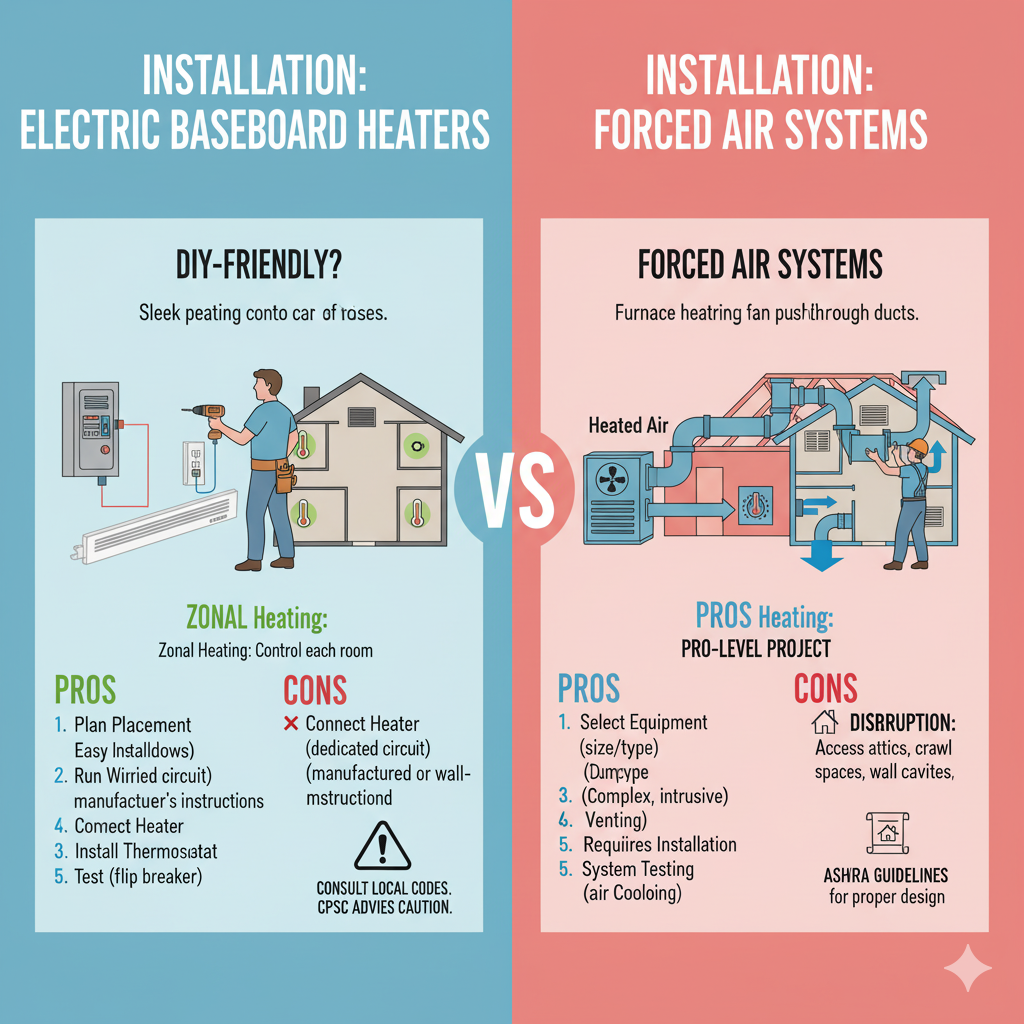
Installing electric baseboard heaters is often a DIY-friendly project for those comfortable with basic electrical work. Typically, they require a dedicated circuit from your main breaker panel. The heater then wires directly into this circuit, often controlled by an integrated thermostat on the unit itself or a wall-mounted thermostat. If you’re not electrically inclined, hiring an electrician is always the safest route. The U.S. Consumer Product Safety Commission (CPSC) advises caution when dealing with electrical work, emphasizing safety first.
You’ll need to:
- Plan Placement: Decide where each heater will go, usually below windows.
- Run Wiring: Run appropriate gauge electrical wire from the breaker box to each unit. Ensure you use the correct wire type for the amperage.
- Connect Heater: Wire the heater into the circuit according to the manufacturer’s instructions.
- Install Thermostat: Either use the built-in thermostat or wire a separate wall thermostat.
- Test: Flip the breaker and test the heater.
Remember to always consult your local building codes and the manufacturer’s installation manual.
Installing Forced Air Systems
Forced air systems, especially a full furnace and ductwork installation, are complex projects typically requiring licensed HVAC professionals. The process involves:
- Selecting Equipment: Choosing the right size and type of furnace or heat pump.
- Ductwork Installation: Designing and installing a network of ducts throughout the home. This is often the most disruptive part of the installation, requiring access to attics, crawl spaces, and wall cavities. Resources from organizations like ASHRAE (American Society of Heating, Refrigerating and Air-Conditioning Engineers) provide guidelines for proper duct design.
- Venting: Installing exhaust vents for furnaces to safely remove combustion byproducts.
- Thermostat Installation: Installing a central thermostat and wiring it to the system.
- System Testing: Ensuring all components work correctly and air is distributed properly.
The upfront cost and the disruption to your home make this a significant undertaking.
Optimizing Efficiency for Your Home
The “proven efficiency” of any heating system, whether electric baseboard or forced air, hinges on two major factors: your home itself and how you use the system.
Maximizing Electric Baseboard Efficiency
If you have or are considering electric baseboard heaters, here’s how to get the most out of them:
- Seal Drafts: Windows and doors are common culprits for heat escaping. Weatherstripping and caulking can make a huge difference.
- Insulate: Ensure your walls and attic are well-insulated. Good insulation is the foundation of any efficient heating system.
- Use Programmable Thermostats: Even simple models allow you to set back temperatures when you’re asleep or away. Smart thermostats offer even more sophisticated control.
- Close Doors: Keep doors to unused rooms closed to prevent heated air from circulating into unheated spaces.
- Consider Panel Heaters with Fans: These can accelerate the heating process in a room and offer more responsive temperature control.
Maximizing Forced Air Efficiency
For forced air systems, it’s all about maintenance and smart usage:
- Regular Filter Changes: A dirty air filter restricts airflow, making your system work harder and less efficiently. Change them at least every 1-3 months.
- Duct Sealing and Insulation: As mentioned, sealing duct leaks is crucial. Insulating ducts in unconditioned spaces (like attics and crawl spaces) prevents heat loss. Experts at sites like Energy Star offer detailed guides on duct sealing.
- Programmable or Smart Thermostats: These are essential for optimizing energy use by automatically adjusting temperatures.
- Annual Maintenance: Have a professional inspect and tune up your furnace annually to ensure it’s running at peak performance.
- Zone Dampers (Advanced): For those willing to invest, adding zone dampers to a forced air system can provide more targeted heating, similar to baseboard heaters, making it more efficient.
Frequently Asked Questions (FAQ)
Q1: Which heating system is cheaper to run: electric baseboards or forced air?
Typically, forced air systems using natural gas are cheaper to run than electric baseboards because natural gas is usually less expensive per BTU (British Thermal Unit) of heat than electricity. However, if you have to install expensive ductwork for a forced air system in an older home, the overall cost might be higher. Electric baseboards can be cost-effective if used only in specific rooms or for supplemental heat.
Q2: Can electric baseboard heaters heat a whole house efficiently?
While they can heat an entire house, it’s often not the most cost-effective primary heating solution due to electricity costs. Their true efficiency shines when used for zonal heating in specific rooms or in smaller, well-insulated homes where the cost of electricity for targeted heating is manageable.
Q3: Is forced air or electric heat better for air quality?
Forced air systems have the advantage of being able to incorporate air filters, humidifiers, and dehumidifiers into the ductwork, which can actively improve indoor air quality. Electric baseboard heaters primarily rely on natural convection and don’t inherently filter or humidify the air, which can sometimes lead to drier conditions.
Last Updated on October 11, 2025 by Tanim